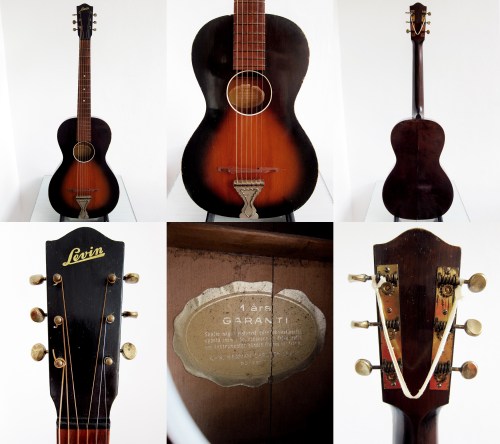
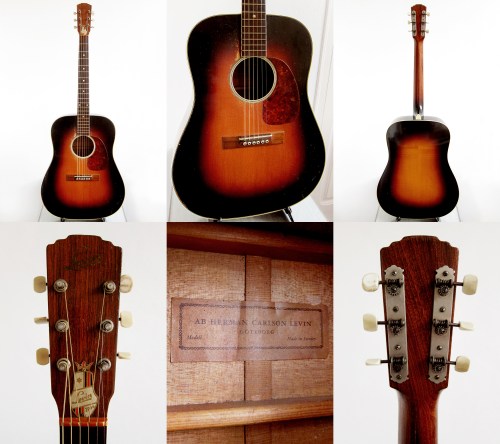
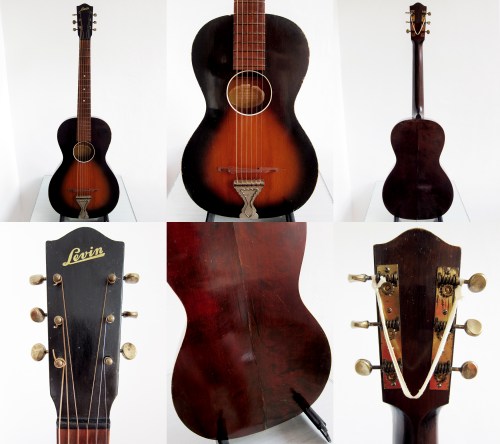
Last weekend I decided to try to improve the playability a bit on my little parlour Levin model 65 from 1942. It doesn’t have an adjustable trussrod, few guitars did before the 1960’s, and would probably benefit from a neck reset but I thought I should start with the easy things first. Like making a new bridge that is a bit lower and that way get the action down and it worked really well. The easiest would have been to just file down the original bridge but I felt I rather make a new one than mess with the old one.
Update: July 31, 2014 I actually carved a new bridge from scratch, you can read about it here: How to… carve a bridge, that worked out ten times better.
Levin Model 65
Body width: 315 mm
Spruce top, birch back and sides.
Unbound top, back and headstock.
Unbound walnut fingerboard with mother-of-pearl dot inlay
Rosewood bridge, brass tuners, nickel plated tailpiece
Dark brown finished neck, back & sides.
Sunburst finished top and one year warranty
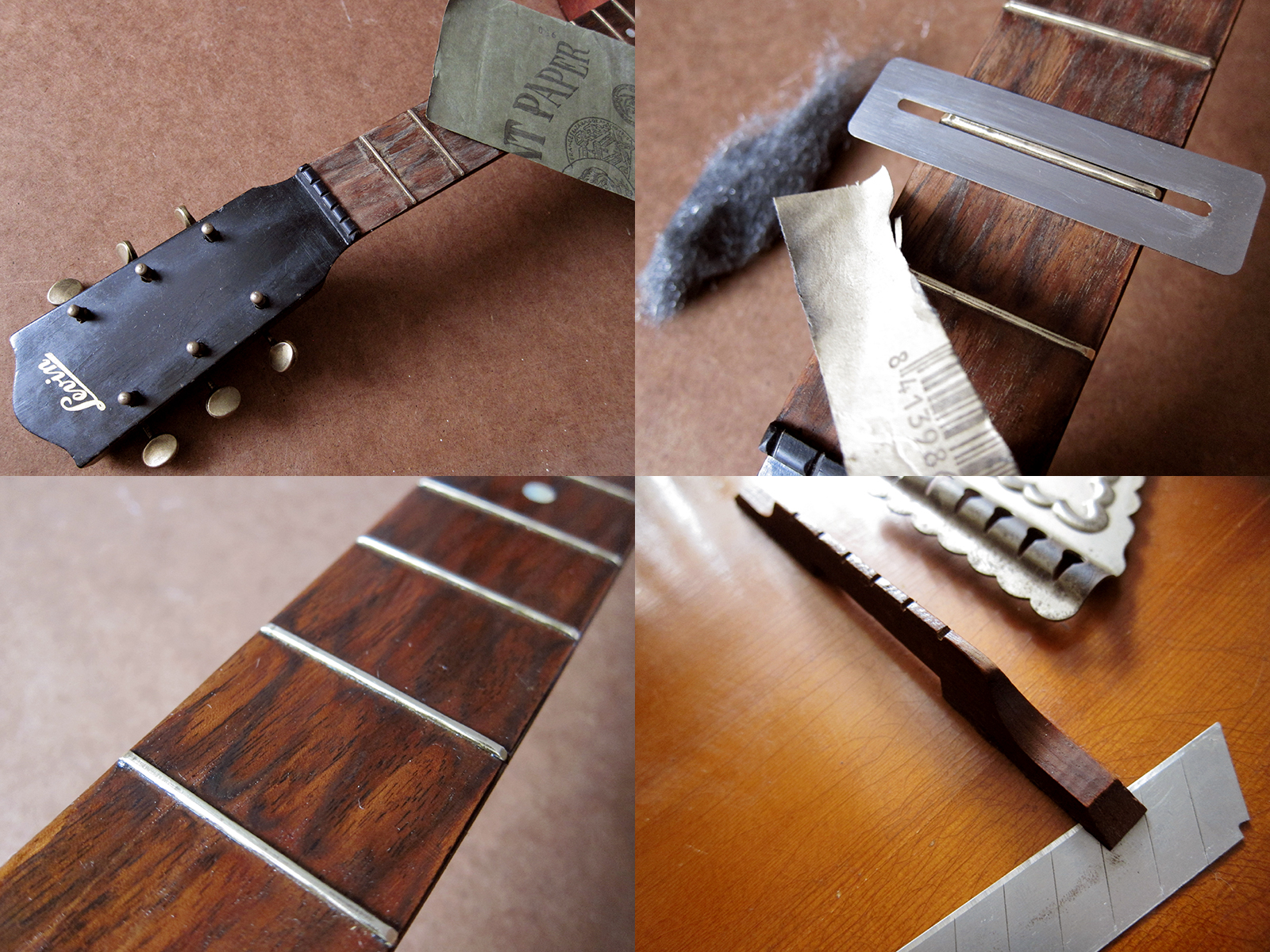
Since the strings were off I thought I mights as well even out the fretboard a bit and polish the frets. I cleaned the edges of the frets with a toothbrush and then oiled up the fretboard with lemon oil. I managed to cut through the old glue with a razor blade and that way get the old bridge off.
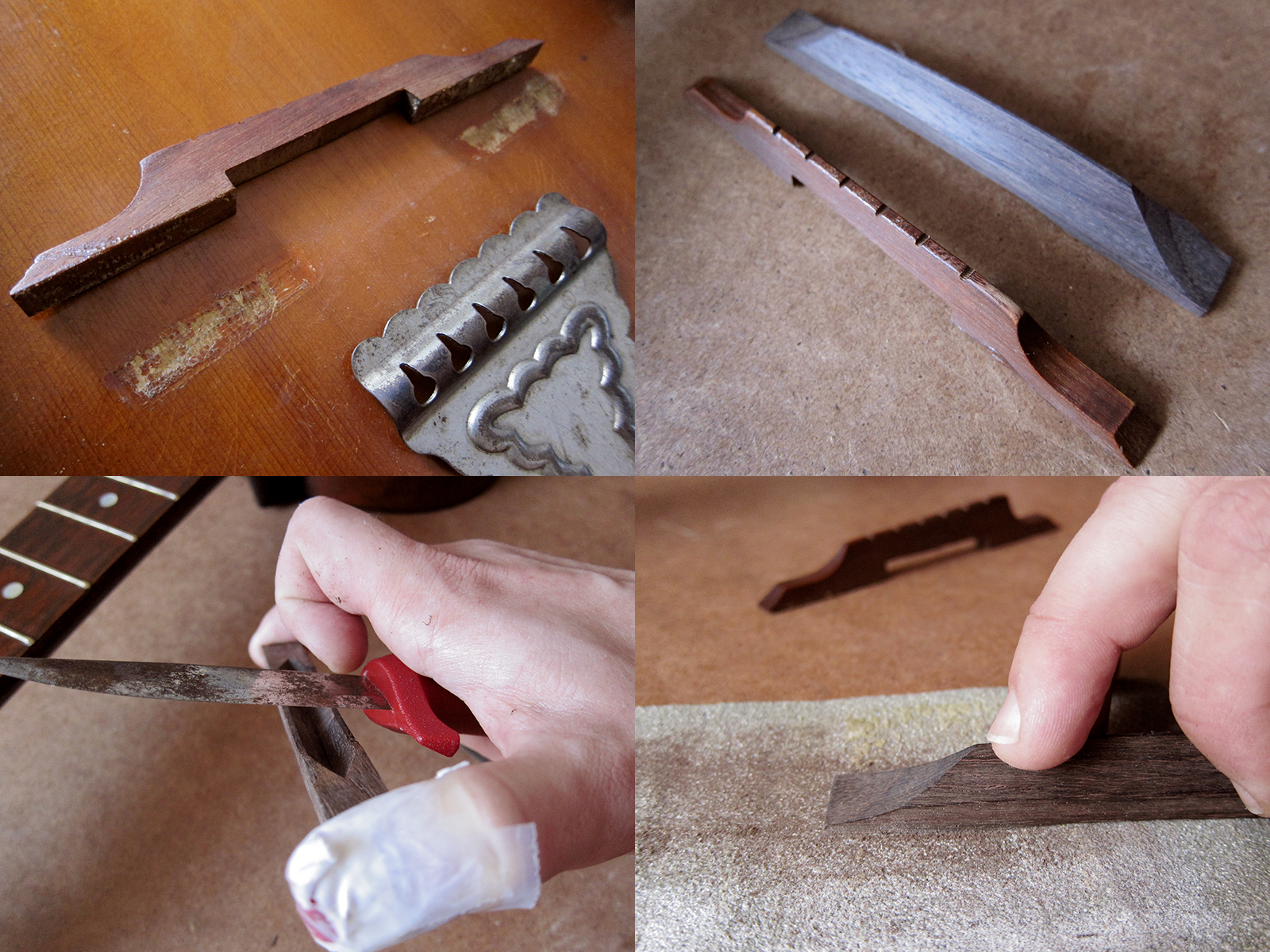
I think this bridge has been re-glued a couple of times since 1942 and that’s why some of the nitro lacquer came off. It’s hard to tell, it might have looked like that for 60 years under the bridge, who knows. Either way there isn’t much to do about it so I will just try to ignore it for now. If I can’t stand it I can always put the original bridge back. I got a cheap replacement rosewood bridge from eBay, straight from China for 3.50€. Now I just had to get the angle right, Levin always has their floating bridges in an angle, maybe it’s the same for all floating bridges. I copied the old bridge to get the angle right and started to make it as low as possible. Of course I cut my thumb after about 12 sec and had to rethink my methods of getting the bridge lower. In the end it was a combination of knife, a Swedish Morakniv of course, and sandpaper before I oiled it up with lemon oil to get it dark and nice. I read on Swedish forum that a great trick to get this parlour guitars to sound less jangly or rattly is to mute the tail piece. Apparently the main reason why these small bodied guitars sound like they do is because of the rattling tail piece. I muted mine with half a black sock that I tucked in so you can’t see it and it really made wonders to the sound. It’s a lot warmer and more woody now.
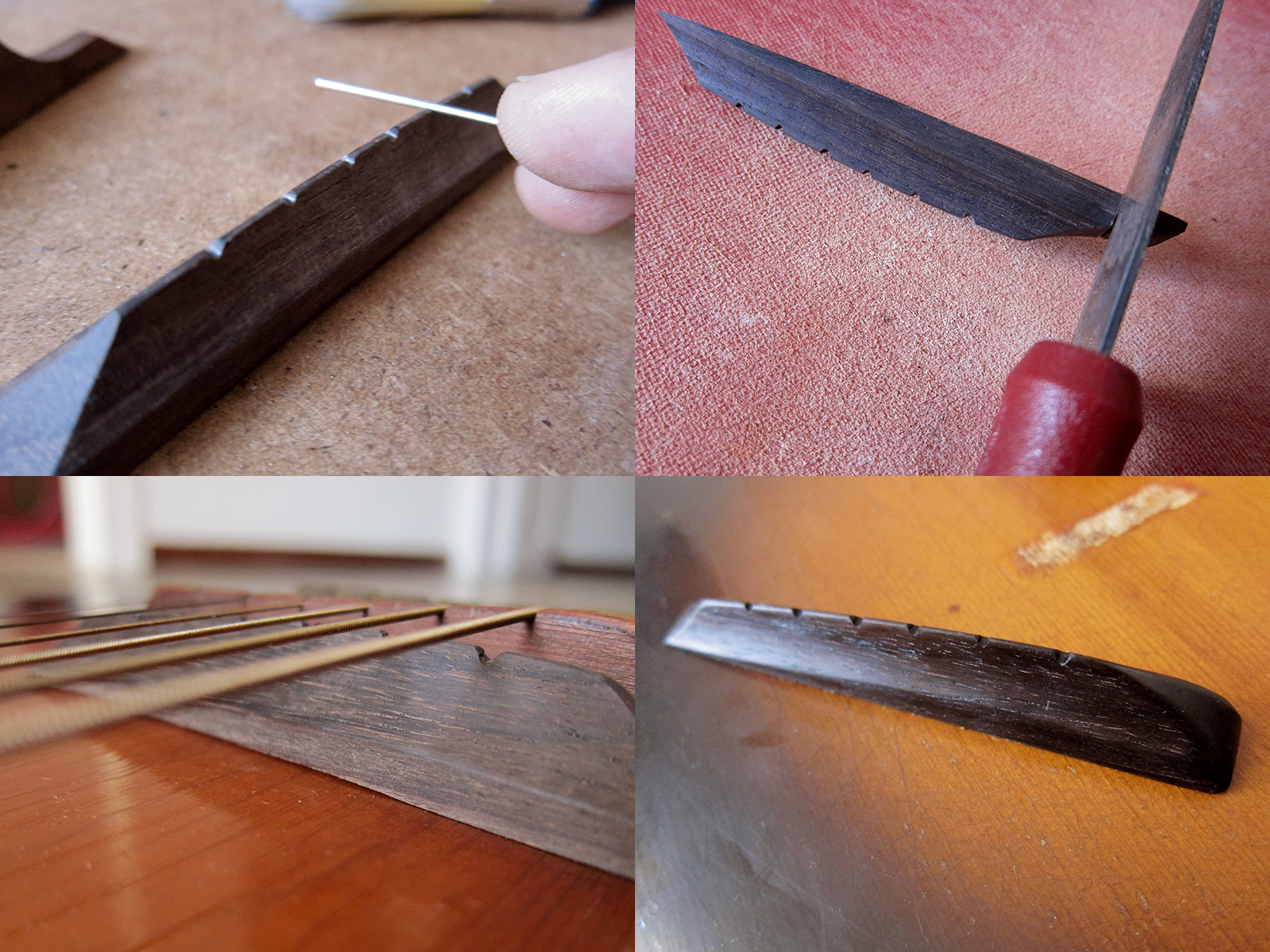
I copied the string spacing from the old bridge, made a notch with a knife and then filed it down with folded fine sandpaper and a round file. I also realised that since I had to take so much off in the bottom on the high E side, the bridge looked really unbalanced so I cut of a chunk on the other side and rounded off all the edges to try to create a nice looking bridge.
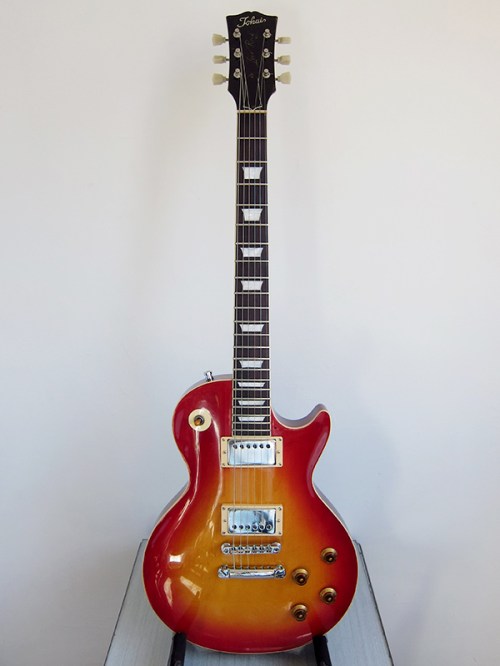
Tokai Love Rock LS-55 Les Paul Standard “Made in Japan” 1991
It’s done, it’s all over, I can retire and put my luthier’s tools on the shelf now. Everything I’ve been doing for the last year has been leading up to this moment, to refret my beloved Tokai Love Rock. I decided about a month ago to learn how to refret, crown, dress, polish and care for the frets of my guitars. A fairly wise decision I think since it turned out to not be as hard as everyone said and it has saved me ridiculous amounts of money since people charge 300-400€ for refretting guitars here. I did spend about 170€ on tools but hopefully they will last me a life time and if I refret a couple of more guitars it has soon paid for itself.
I decided to replace the humbucker rings as well since they were in such a bad state. When I got the Tokai I had to drill out the screws in order to replace them, so I could adjust the pickups, so the plastic rings was kind of super glued together and I have been meaning to replace them ever since. Now I did, with a fancy 3€ pair from China that I scratched with wire wool and then soaked over night in tea and later with coffee, to try to get them to look less new. The cat didn’t fully approve of my decision to spend 6 hours on Saturday refretting my Tokai when I could be rolling around on the floor with her instead. I tightened the pots too, I hate when the knobs feels wobbly, this is actually on my Westone Les Paul, I tightened the screws on quite a few guitars while I was at it. This is how bad the frets were before.
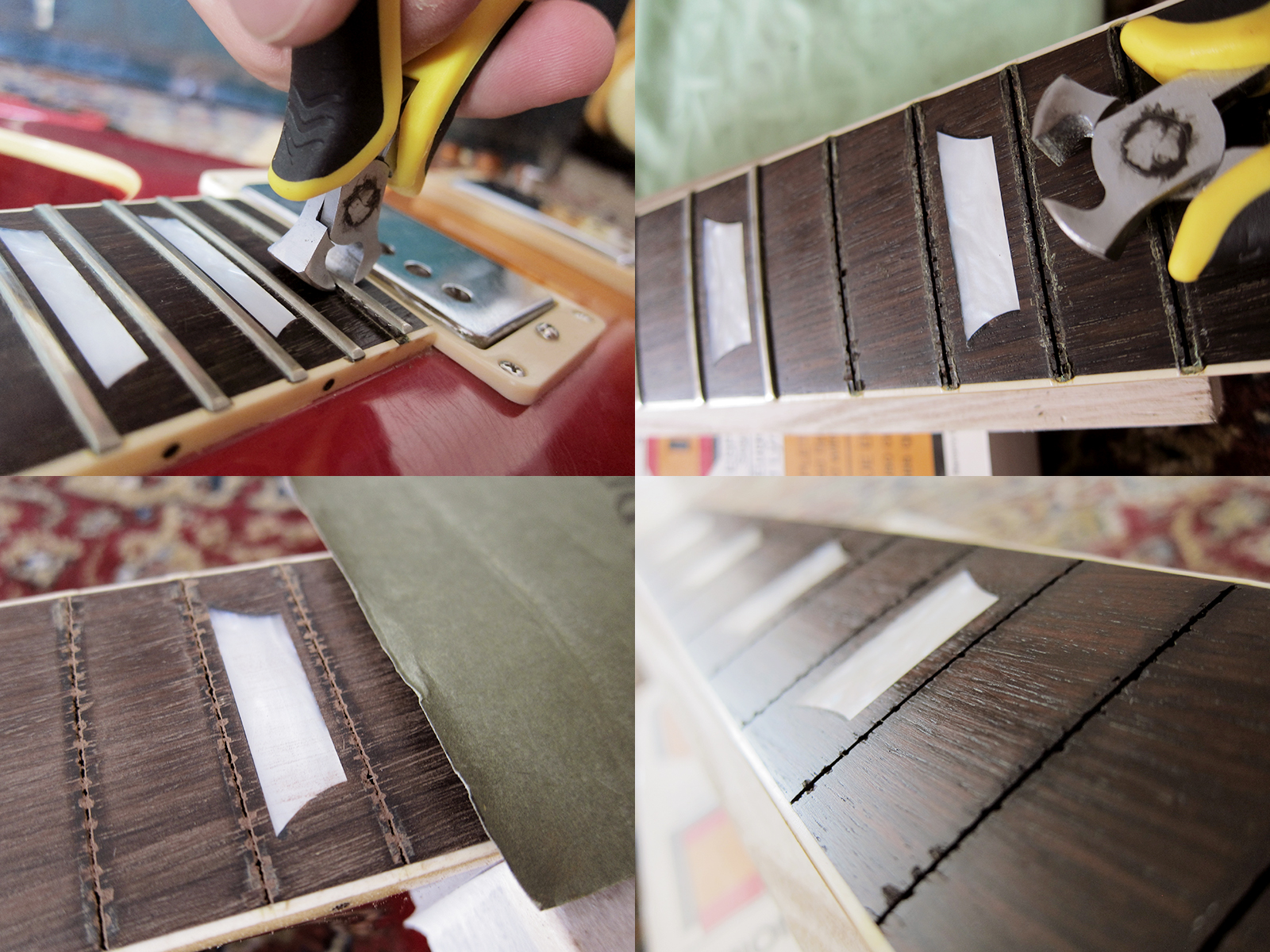
First step, removing the old frets. It went pretty easy, I was scared they would have been glued in so I would have to heat them with a soldering iron but the weren’t. I got a bit of chipping, I think it’s pretty hard to avoid on an old and well played rosewood fretboard. It wasn’t too bad and since the new frets will cover most of it I decided to just ignore it, sand the fretboard smooth like a babies bottom and the oil it up with lemon oil.
This was the part I was dreading the most, how to get the frets to fit without ruining the binding. You can get a fancy tool for doing this but I felt I didn’t want spend 85€ since I only have one guitar to refret with binding. I came up with the idea to take on fret at the time, match it to the old fret, cut it, then try to file down the under side so it wouldn’t cut in too much into the binding. I tried my best to file the edges and corners as well, since it would be hard to reach once the fret was in place. It took forever, it hurt my fingers and I hated it but it worked and I guess was worth the 85€ I saved on doing it by hand, fret by fret.
I made sure the neck was straight with my straight edge and then I marked the top of the frets with a black marker, just to see how much I was taking of when I later leveled the frets. Next step was to crown the frets, make sure everything was straight and even with a fret rocker, file the edges a bit more and then just polish the frets with sand paper and later wire wool.
How shiny, smooth and awesome is that? New Jescar FW47104 pre-radiused 12″ frets installed on a 1991 Japanese Tokai Love Rock LS-55. Just look at those freaking edges, I’m so proud I could burst. I doubt anyone could have done a better job, even if they would have charged me 400€.
I decided to go over my old Claescaster as well. This is the good part with having all the tools needed for taking care of your frets. It cost nothing to make sure that things are in a perfect state. I bought both Claescaster necks from the same guy in the UK, First Avenue Guitars. When I bought the first one it was pretty hard to find cheap necks with a vintage tint, especially with a logo fitted under the lacquer. I really like the profile of these too, it’s a normal C but it feels pretty fat and nice so I got a second one for the new Claescaster. The only problem, as with all cheap necks, is that the edges aren’t that smooth so I decided to level, crown, dress and polish them, with extra detail to the corners. Now it feels better than ever.
Looks pretty good. I decided to put a couple of drops of dry Teflon lubricate in the machine heads before I tightened all the screws and restrung the guitar. I read that these types of dry lubrication for bicycles are good because the attract less dust and crap than normal wet oils so for 4€ I thought it was worth a try. A quick adjustment of the Wilkinson brass saddles and then we are all set. Ready to play.
I finally did it, I refretted my first guitar, well I actually did it twice. First out was my old Morgan Telecaster neck, a leftover from my first Claescaster. I don’t use it so it felt like a perfect neck to practice on, especially since it doesn’t have any binding. It was actually less hard work than I expected it to be, well it took some time to get the old frets out but still, no major issues. I just had to get over that first fear that I would break something and eventually build up some confidence that I knew what I was doing.
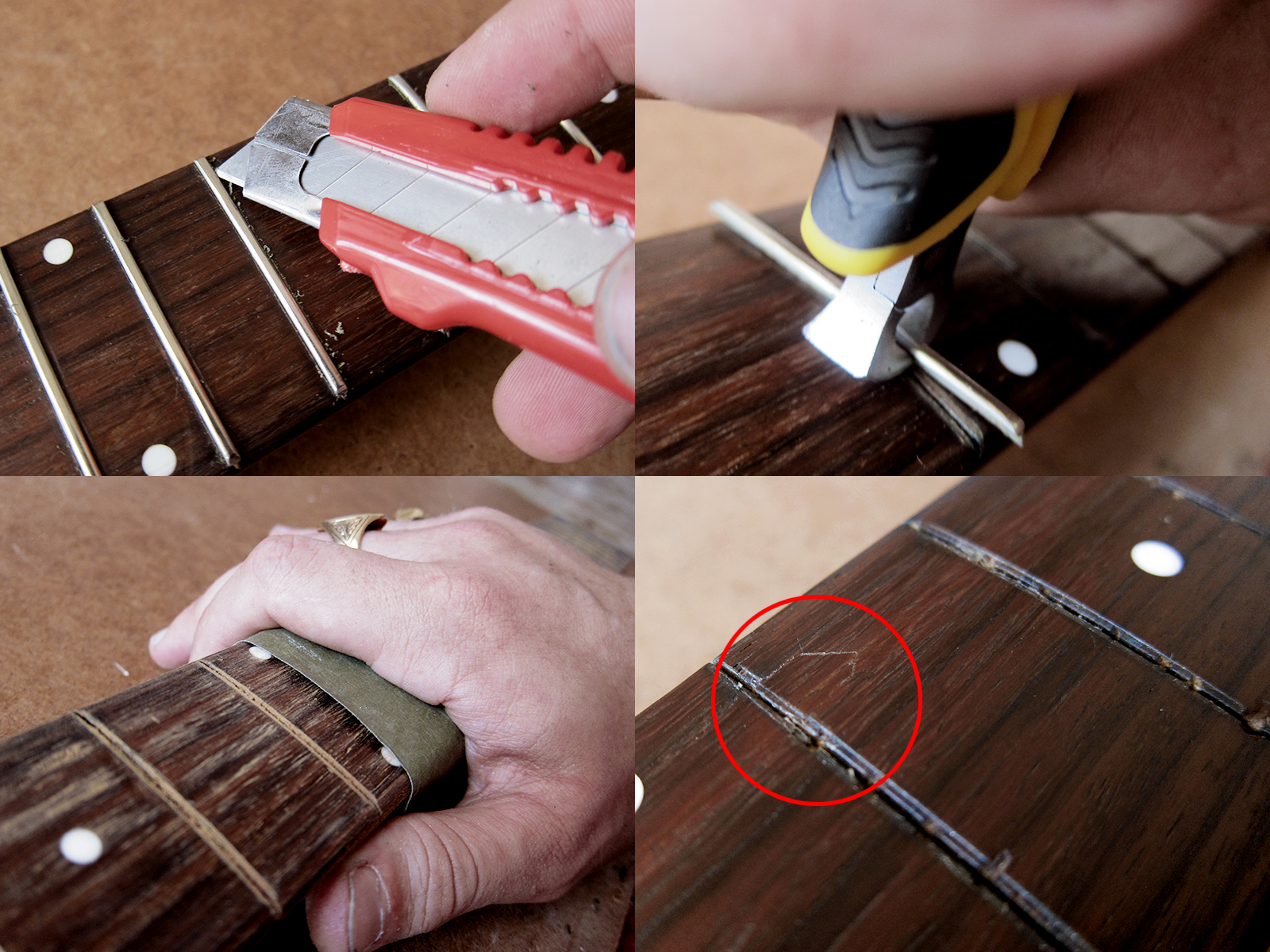
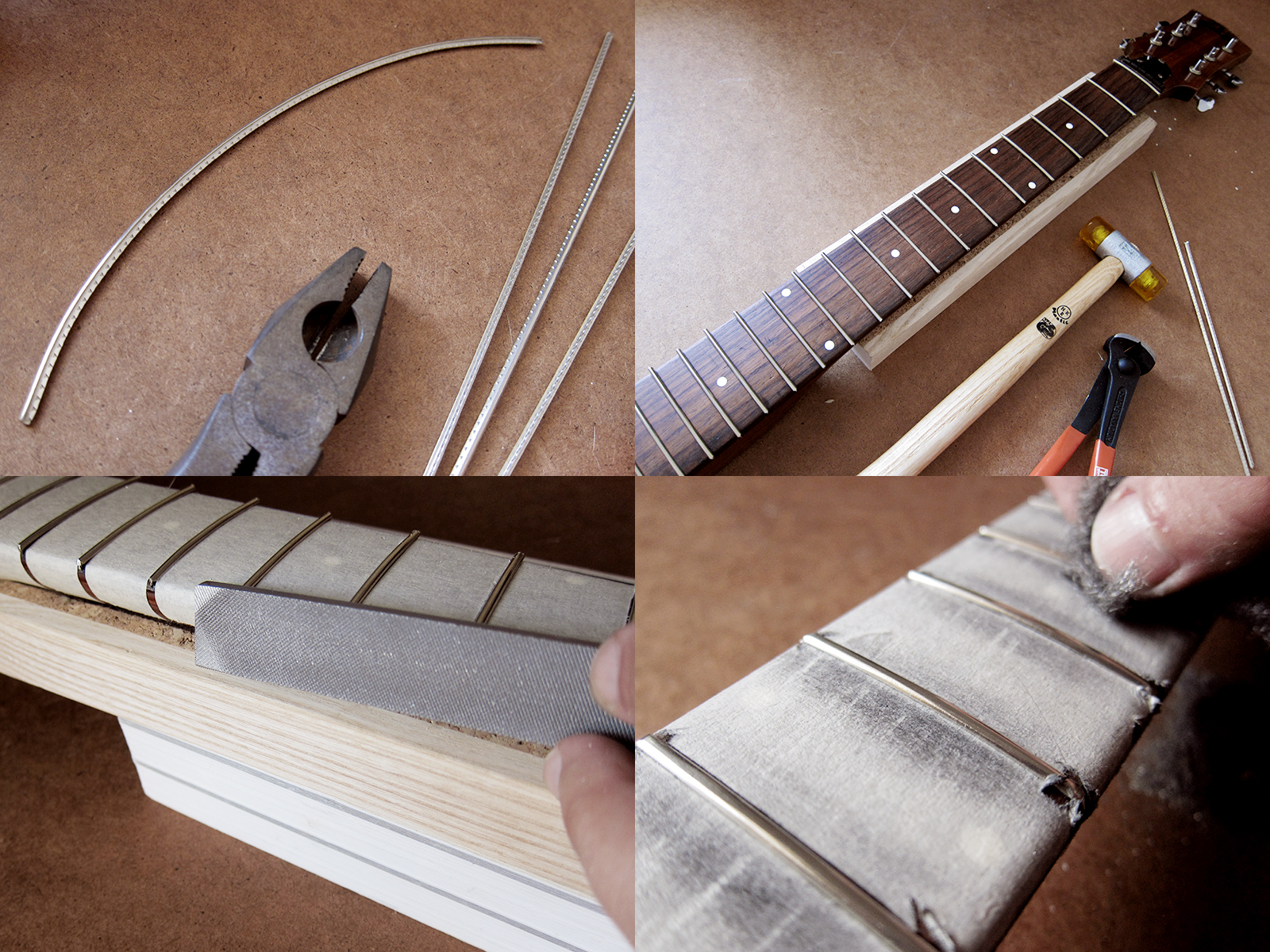
First I checked that the neck was straight with a straight edge and adjusted the trussrod until it was perfect. It was a lot easier to get the old frets out if you cut in a bit on each side with a sharp knife, it gave the pliers something to grip, but be careful so you don’t slip and scratch the fretboard, as I did. I used normal wood glue and then gently tapped the new Jescar FW43080 fretwire in place. When the fret edges were cut I taped the fretboard with masking tape and then filed down the edges, first straight and then angled the file 45°.
I checked that all the frets were the same height with a fret rocker and since they were I didn’t bother to level the frets, maybe I should have. I crowned them with a Uo-Chikyu medium fret crowning file and then softened the edges with a Uo-Chikyu edge file. I went of the frets with 400 and 800 grit and then polished until I couldn’t feel my shoulder with wire wool.
I’m pretty damn pleased and proud of my first refretted neck.
I decided to change the frets on my EKO Ranger VI as well, even thought I had just crowned and polished them two days ago. I want to get as much practice as possible before I start with the Tokai and to get a feel for the difference between rosewood and maple fretboards. I made a deep cut on the side of the frets which made it really easy to get a grip and pull out the old frets. It was actually so easy that I forgot to be careful and just ripped them out and managed to chip the fretboard. Which in a way was good so I got the chance to glue the chip down, sand down and then polish the fretboard, now I know how to deal with that as well.
Unfortunately I had bought some cheap non pre-radiused fretwire which meant that I had to try my best to get the correct radius by bending it which wasn’t that easy. I will never get that again, but at least now I know how annoying it is with fretwire that isn’t pre-radiused. I ended up with pretty rough edges, it felt like it was harder to cut than the Jescar, so I had to work a lot to file them smooth. Then I levelled the frets, crowned them, filed the corners and polished with 400, 800 grit and then wire wool.
The final result, a refretted EKO Ranger VI. It used to have some dead spots around the 12th fret which disappeared straight away with the new frets.
Tokai Love Rock LS-55 Les Paul Standard “Made in Japan” 1991
Today I did it, I decided to go all in and cross the final frontier when it comes to DIY guitar work and ordered everything needed for refretting my Tokai. It has really poor frets, well not only does the frets have big groves in it but it’s hardly any frets left. It’s such a nice guitar and she deserves to be brought back to her former 1991 glory. I have thought about this for a long time, well I’ve thought about refretting her since I bought her, but if I should pay someone 240-340€ to do it or if I should just learn how to do it myself. I have to say that my trust in the quality of any form of workmanship south of the Pyrenees is pretty low. I have seen too many people charge too much for things that I could have done better myself, hopefully I’m right this time to. I bought quite a lot of things from G.M.I. tools in Greece, a fret leveler, fret puller, hammer and then I got a neck support caul and a fret rocker from Guitars & Woods in Portugal. I always try to buy things from my Mediterranean neighbours if I can to help their economy out during the recession, even though I doubt that any of these eBay sellers pay tax. I struggled a lot when it came to what type of crowning file I should get, I watched a lot of Youtube videos to see what people were using but everyone had a different opinion. In the end I went for two fancy Japan made Uo-Chikyu files from Japarts in Canada, mainly because they were made in Japan and I’m gay for Japanese guitar things, and they had a cute fish as their logo which made me happy. I read a lot of good things about Dunlop’s fret wire on European forums, they seem to be pretty standard here, and a lot of bad things about them on American forums so in the end I trusted the Yanks and bought Jescar fret wire instead from Philadelphia Luthier. All in all I spent 172.73€ for tools that hopefully will last me a lifetime, two sets of fret wire, one for my Tokai Les Paul and one for a Strat/Tele, I don’t think you can get Jescar here so I thought I might as well get an extra set. I also got a cheap set of fret wire to practice with, I was going to refret my old Morgan neck, the original neck to the first Claescaster, just to try to get used to pulling frets and hammering new ones in. If I would just refret one guitar I guess I could just have paid someone 300€ to do it for me, but the main thing for me is to be able to crown and polish the frets on all my guitars, before they get big groves in the frets so I can’t play them. I’ve also notice that I tend to not play some guitars just because they have a bit of fret wear, not because they are hard to play, just because I don’t want them to get worse. That’s a ridiculous excuse for not playing your favourite guitars. I prefer to learn how to do it myself so the cost of refretting a guitar is 12-14€ for the fret wire, and then of course a huge amount of my time but that’s not as precious as having to pay 300€ for someone else to do it for me. Wish me luck!
Here is a list of what I ordered: Hiroshima Files Uo-Chikyu Medium Radius Fret Crowning File Hiroshima Files Uo-Chikyu Fret End Dressing File G.M.I. fret-fingerboard LEVELER 400mm(15.75”) G.M.I. fret puller-luthier’s tool-MADE IN GERMANY G.M.I. fret hammer-luthier’s tool-MADE IN GERMANY G.M.I. fretboard guards Bahco replacment files for G.M.I. fret bevel(3 different cuts) Guitar Neck Support Caul Stainless Steel Guitar Fret Rocker Laser Cut – Luthier Set 2.5mm Wide Nickel Silver Fretwire Jescar FW47104 Electric Medium/Jumbo Fretwire Pre-radiused 12″ Jescar FW43080 Electric Medium Fretwire Pre-radiused 9.5″
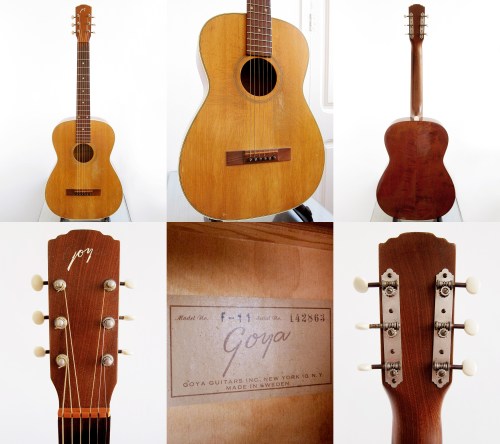
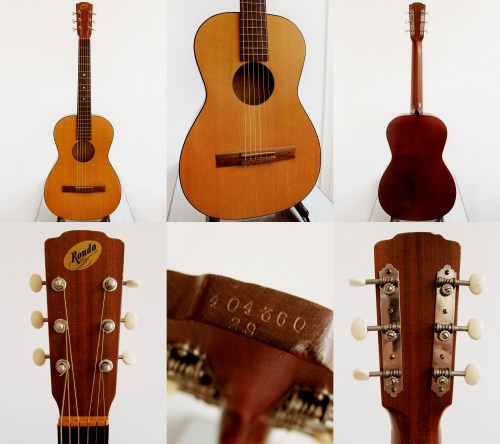
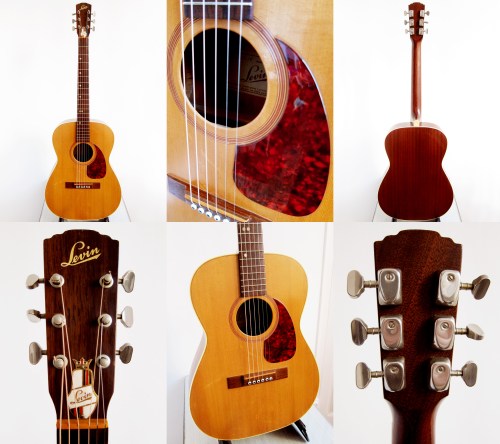
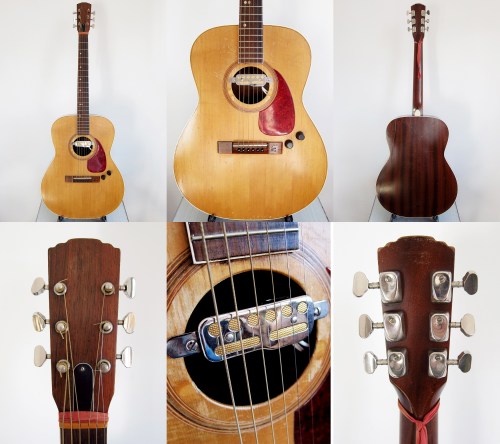
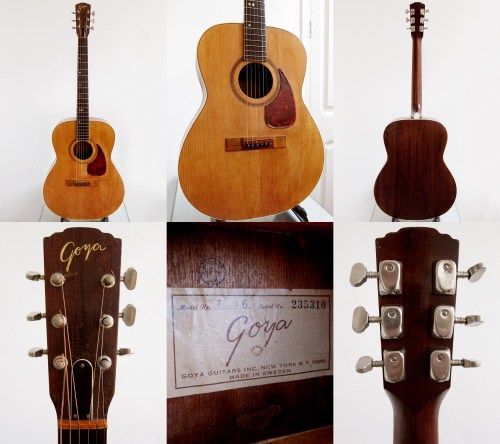
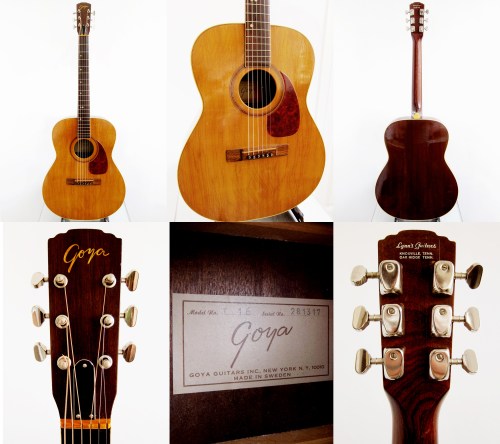
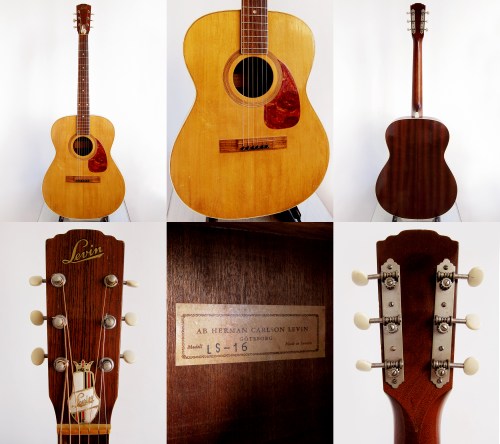
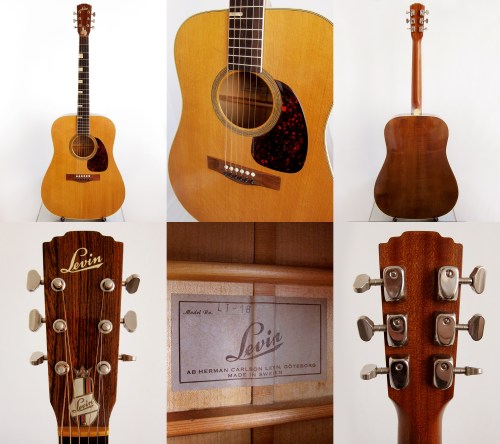
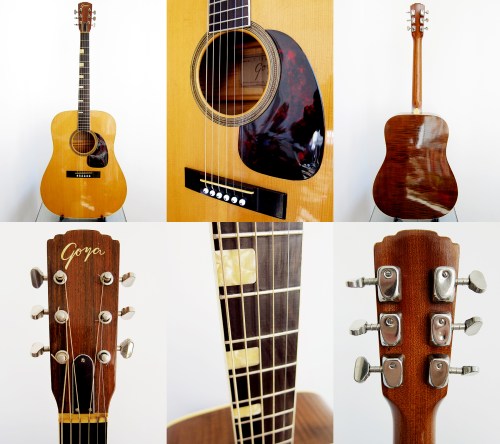
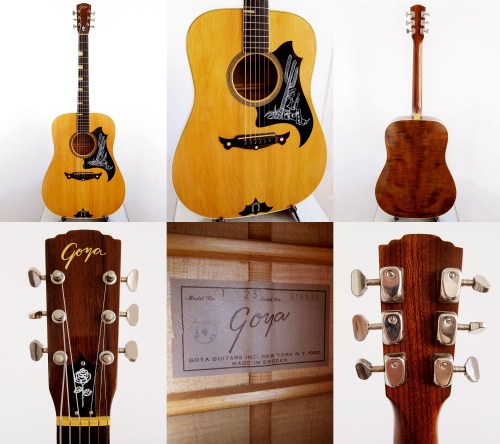
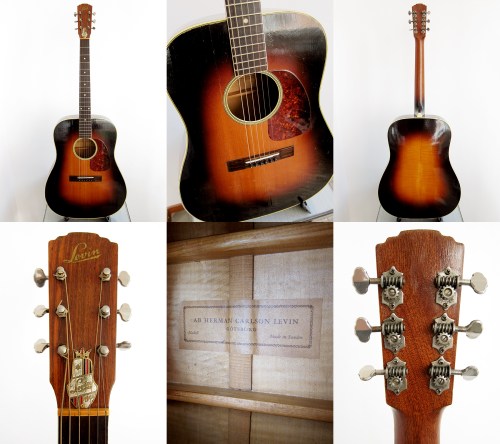
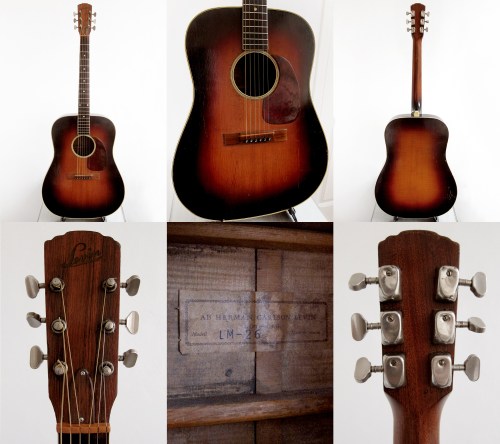
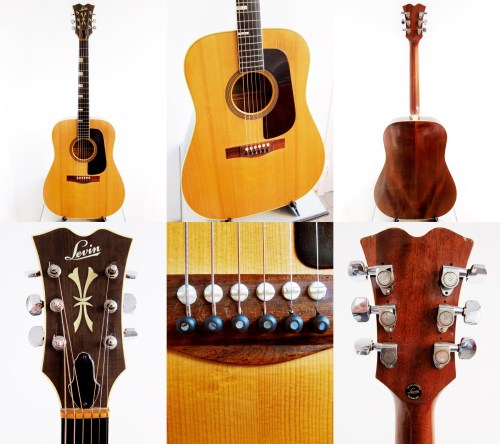
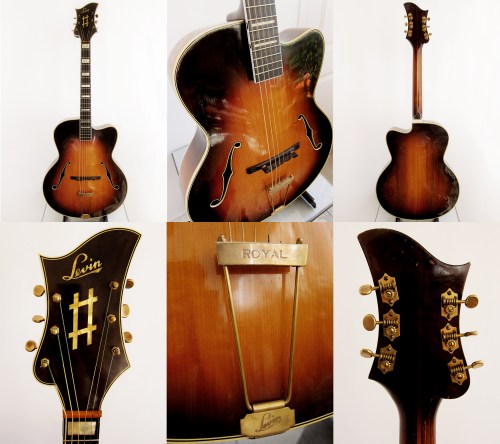
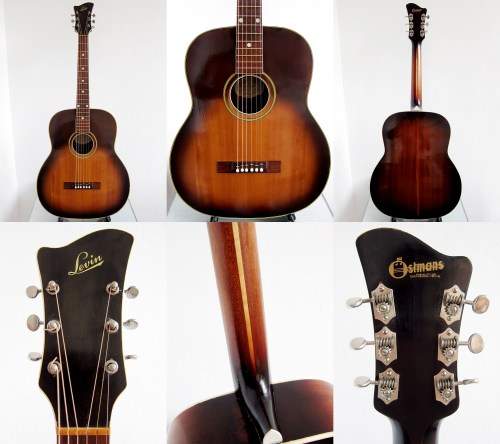
Last week I managed to become the proud owner of two new, or rather very old, Levin guitars. With some persistence, a huge dose of luck and some money changing hands I managed to get them both here safe and I already love them. I have always been a huge fan of Hagström, also built in Sweden, but didn’t know how much I loved Levin until I figured out that my dad’s old guitar was actually a Levin. It doesn’t have any markings on it but you can read about my Levin epiphany here. The problem with old guitars is that they quite often forgot to mention the model anywhere, so you have to do a lot of detective work. Luckily for me there is an awesome guitar shop, Vintage Guitars Stockholm, that has more or less everything Levin has ever made listed on their Levin information pages. They also have some info on Hagström and the brands built by Bjärton, and the rest of the brands built by Levin: C. F. Martin & Co, Clangiton, El-Goya, Goya, Kay-Tone, Klangola, Torres, Zandelin, Nivello, Rondo. I managed to track mine down to a Levin LT-16, Levin Model 65 and the amazing Levin Model 13 Ambassadör. These Levin guitars are a bit thin sounding compared to other guitars, well I don’t have any other guitars that are 70 years old, but still. Then again they aren’t full sized so no wonder that they lack a bit of bass compared to a dreadnought, but they are very light and extremely resonant in the higher register so they are perfect for finger picking. Either way I’m super happy to have found four so old and amazing guitars that have been built in the country where I grew up, Sweden.
Maybe I should add a little disclaimer here, this was originally posted back in August 2013, the Levin collection and my appreciation and understanding of the brand has grown a bit since then.
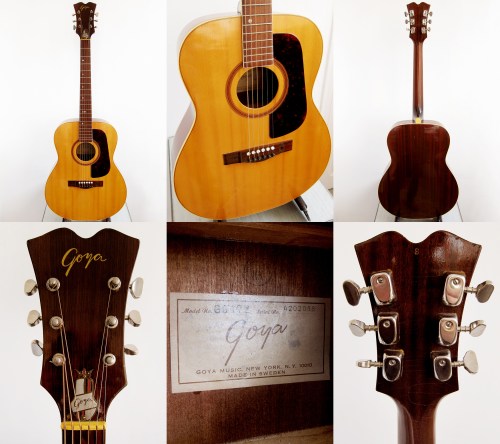
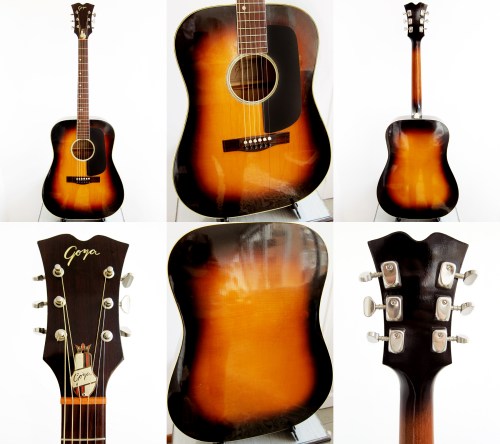
Herman Carlson Levin was a young furniture maker that moved from Gothenburg to America and got a job at a guitar manufacturer in 1888. He soon started his own company in New York building instruments and while he was back visiting Sweden he realised that the demand was even higher there. He moved back home and in 1895 started Herman Carlssons Instrumentfabrik in Gothenburg. They were only five instruments makers in 1903 when they built their 1000th guitar but they soon grew bigger and bigger. The factory was one of the best in Europe and between 1904 and 1912 Levin received many awards including the gold medal in Madrid in 1907 for best guitar as well as the exhibition’s Grand Prix price. By 1936 the 100,000th instrument had left the plant and Levin was marketing a successful line of archtop guitars, like the world famous Levin De Luxe 1938. Shortly before 1940 Levin employed a crew of 45 in facility of a 1000 m². In the 1950s, Levin launched a line of inexpensive guitars intended for schools and novice guitar players. These guitars were of lower quality than the rest of the Levin line up. In 1952 Jerome Hershman a guitar distributor from America noticed Levin guitars at a trade show in Germany and convinced the Levin company to let him market their guitars in America under the name Goya, Levin apparently sounded too Jewish. He also got Hagström to make some fine electric guitars for the US market as well. These nylon stringed Levin / Goya guitars got quite popular in the late 1950’s and especially with the folk singers in the 1960’s when they started to produce steel stringed guitars on a typical nylon stringed body. When Goya was sold in 1968 the Goya export was approximately 70% of Levin’s total production. They had a huge contract with Goya that they lost in this sale, something that took really hard on Levin and they had to close down the second factory they opened in Lessebo and let half of its work force go. A lot of companies got bought and sold over the next few years, Kustom bought Goya, Dude bought Kustom and in the end C. F. Martin & Co bought them all. In 1973 when Martin bought Levin, it became the headquarters for Martin Guitars and their Japan import brand Sigma Guitars in Europe, as well as actually producing a run of some 200 Martin D-18 acoustic guitars, which were labelled “LD-18 – Made In Gothenburg, Sweden. These are quite rare and expensive today. The last “real” Levin built in Sweden left the factory in 1979, they are still building nylon stringed Levin guitar in Sweden to this day. In 1982 Svensk Musik AB bought the name Levin and the remaining stock from C. F. Martin & Co and in 2000 they changed their name to Svenska Levin AB. They are now producing steel stringed guitars in the far east and have a small batch of nylon stringed guitars being built in Sweden. Here is the whole story about Levin together with some amazing photos, Levin History.
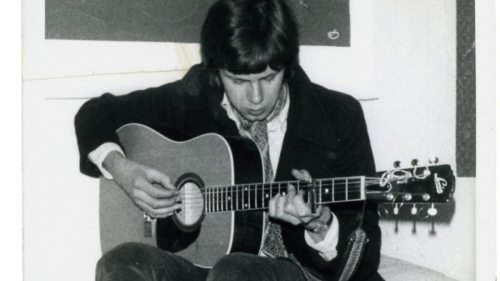
Hootenanny Singers sure liked their Levin guitars. Björn Ulvaeus, the guy on the far right got a bit famous later on with his next band, ABBA.
Levin was pretty much the main brand for acoustic instruments in Sweden back in the days. We also had Bjärton but they mainly made nylon stringed guitars and of course Hagström but they were more famous for their electric instruments, even though they built some really nice acoustic guitars together with Bjärton like the legendary Hagström J-45.
I’m not sure if it was the handsome chap to the left that built my Levin Model 13 Ambassadör. The Levin guitar factory on Kvillegatan 9 in Gothenburg in the late 1940’s.
Taken from the Levin catalogue 1968
In 1972 negotiations between the C. F. Martin & Co. and Levin results in that C. F. Martin & Co. purchases Levin in June 1973 and Levin got to make some 200 Martin D-18 acoustic guitars, which were labelled “LD-18 – Made In Gothenburg“
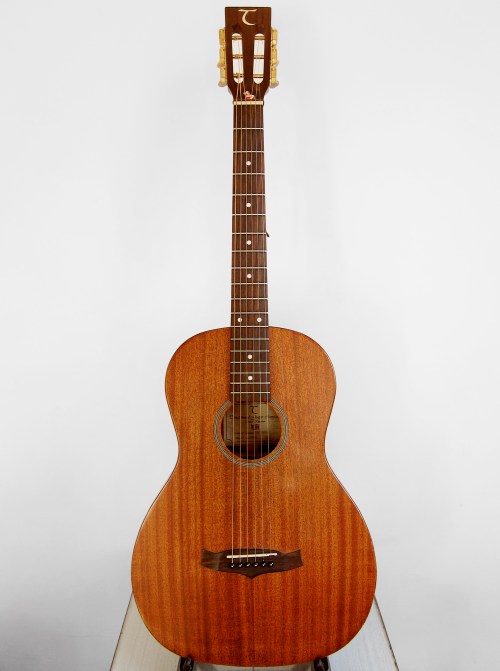
Vintage V880N Parlour acoustic, newly fitted with a ARTEC PP-607 undersaddle Piezo pickup
I got the basic ARTEC PP-607 undersaddle Piezo pickup cheap of eBay, I think it was 15€ with the endpin jack including shipping. I got around to install it last night and I have to say that I’m well pleased with the result. I had read that Piezo’s without a preamp isn’t much but I have to say I disagree. This pickup is way louder than some magnetic soundhole pickups I’ve used in the past and sounds ten times more acoustic and natural. It’s without any doubt my favourite way to amplify an acoustic guitar, well I still haven’t tried fancy things like the LR Baggs M1, I have been thinking of investing in one of those. However, this is a cheap, discrete and really nice way of playing electric with an acoustic guitar.
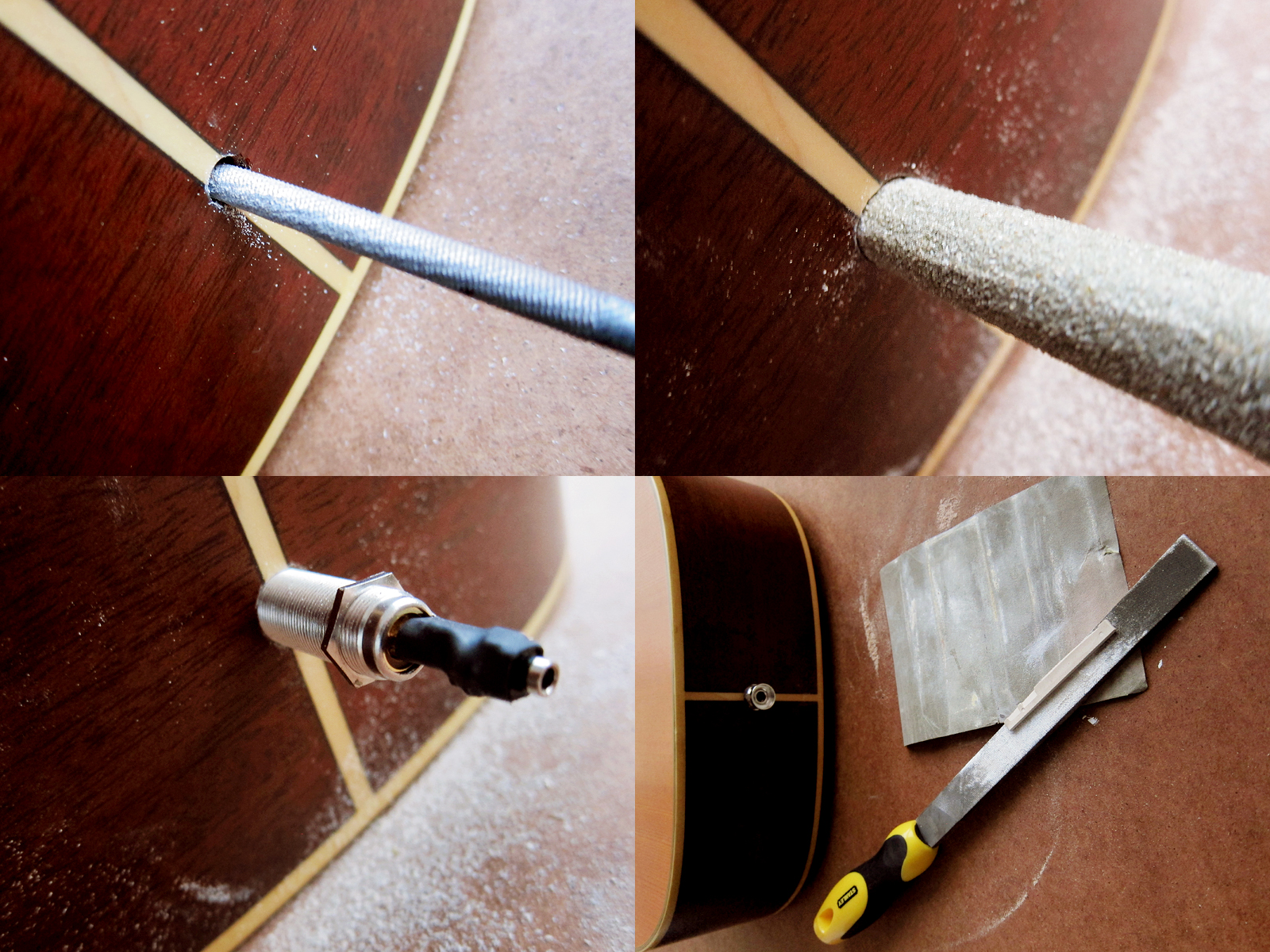
I just drilled a 2 mm hole through the bridge. I wish I wouldn’t have been so lazy and gone and bought a 3 mm drill because the 2 mm was too small and the next size up in my tool box was a 4 mm which would have been too big. I tried to widen the hole with a screw, which worked but it was still a bit tight so when I was fiddling with getting the plug through the hole the plug came off. I was so happy to have purchased a solder free pickup that you could just plug in to the endpin jack, but no, not this time. I had to take the soldering iron out and fix it. I managed to figure out that the thin wire in the middle, the one shielded with plastic, should be connected to the top of the plug and the wide braided wire should be soldered to the side. It worked.
I start to get used to making holes in acoustic guitars now to fit the endpin jack, this was the third one I did. I normally use a round file first to make the hole big enough and then even it out with some sandpaper rolled up, just to get the hole perfectly round. It’s important to check all the time with the plug from the outside so you don’t make the hole too big. Next I had to file down the saddle to compensate the extra height from the pickup.
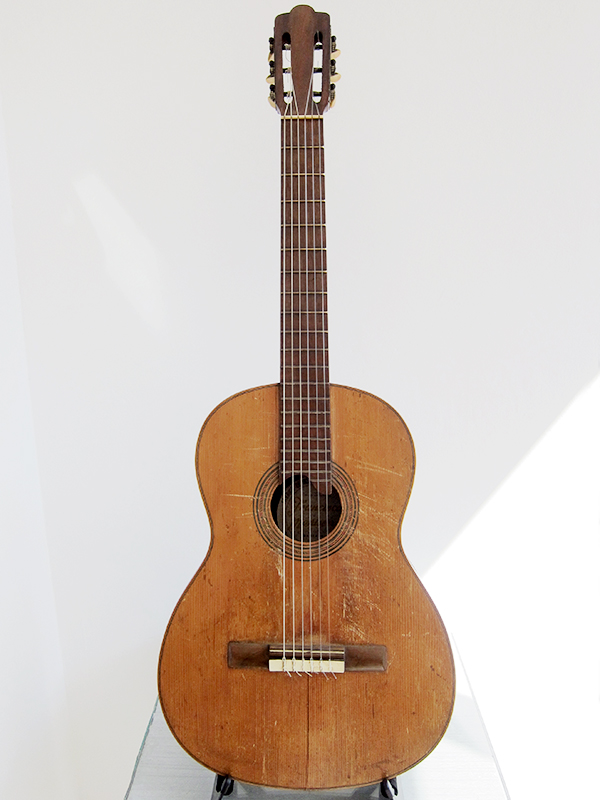
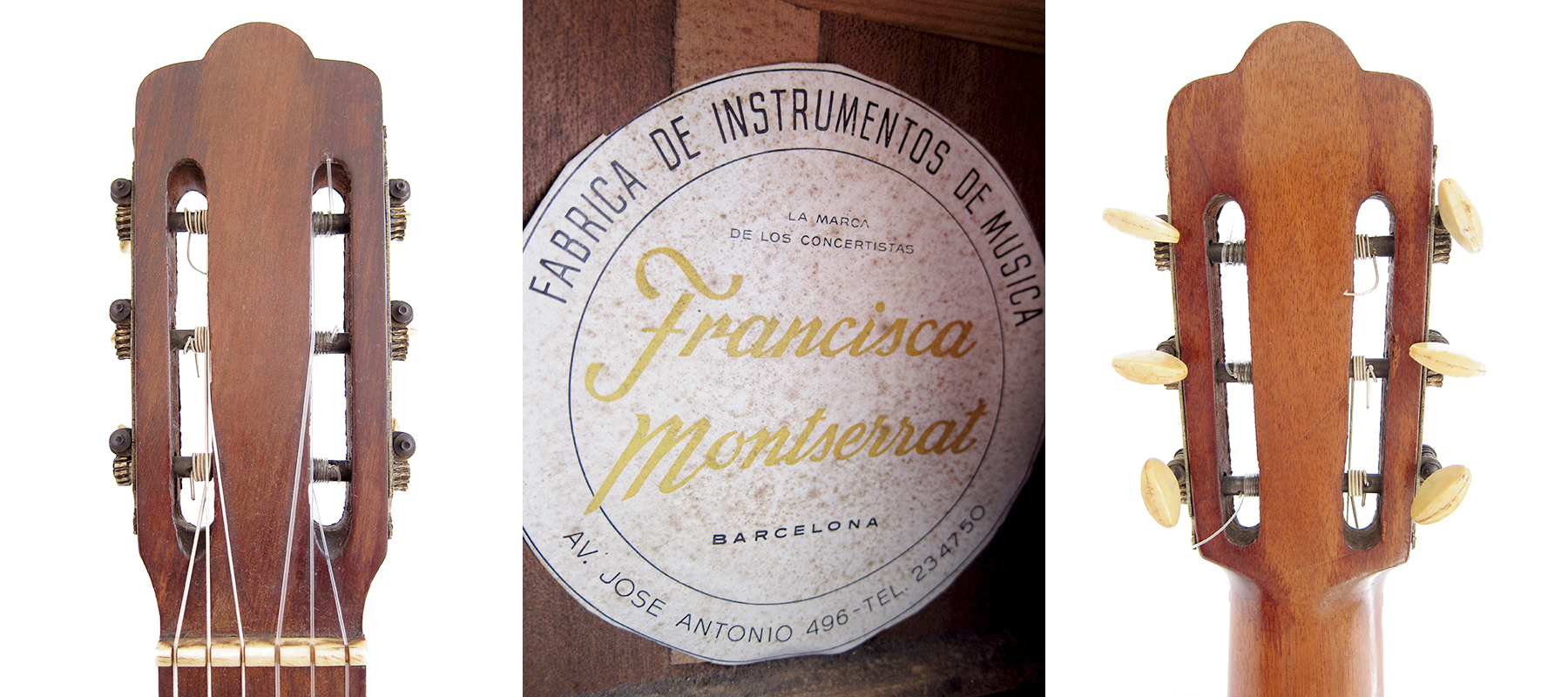
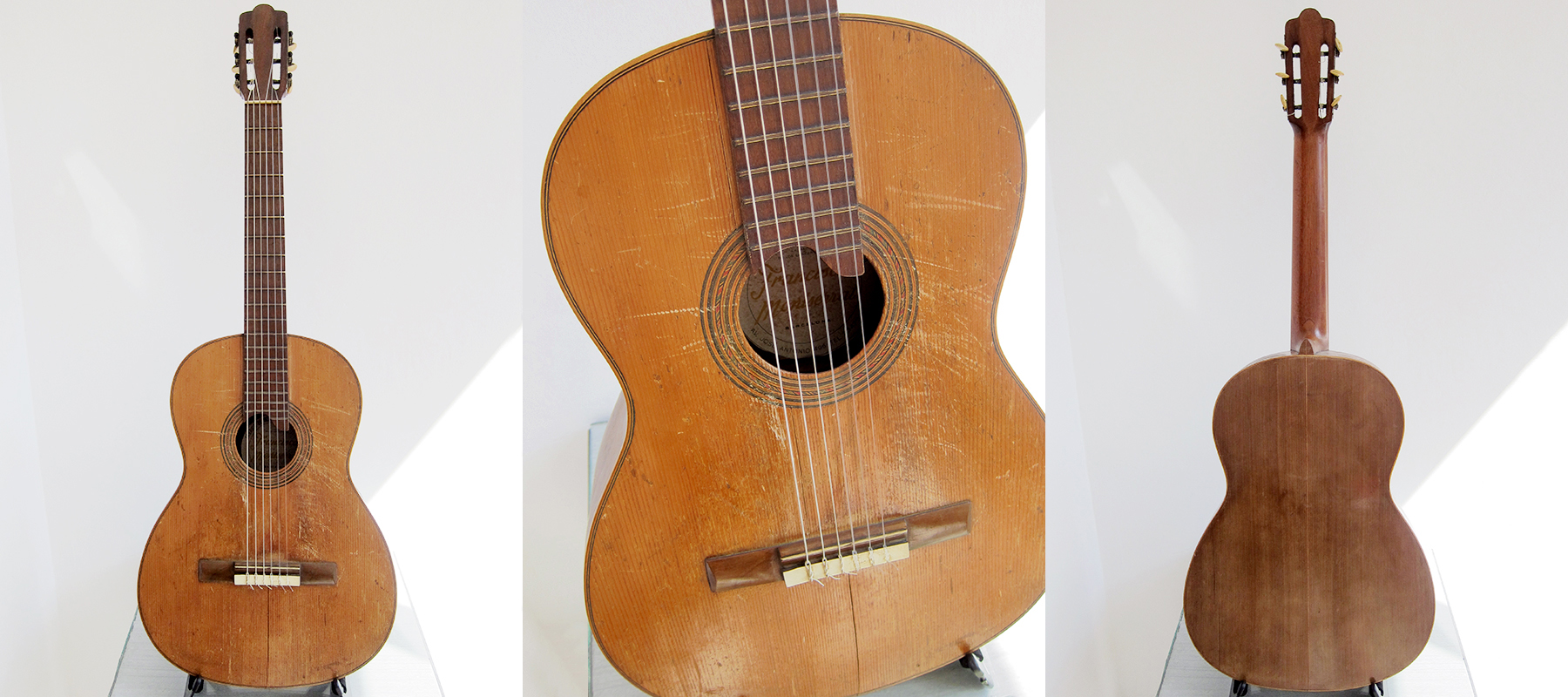
The crisis has taken hard on the Spaniards and I think especially here in Barcelona you can really see the difference between the people with and without jobs. I have never seen so many men rummaging through the rubbish bins and collecting things to sell, ideally scrap metal. At the same time I have never seen so nice things being thrown out like they are worth nothing just because they are old. A couple of month ago my friends and I passed a guy with a shopping trolley full of scrap metal and an old guitar on top. I stopped him and asked how much he wanted for the guitar, without actually having any idea what it was or what shape it was in. He said 10€ and I bought it straight away. It was very dirty and in bad shape but after a bit of cleaning and new strings it turned out to be an amazing sounding and very easy to play little Flamenco guitar. I’m just happy that I managed to save a really nice guitar from a faith that could be way worse than being cherished and played by me and my friends.
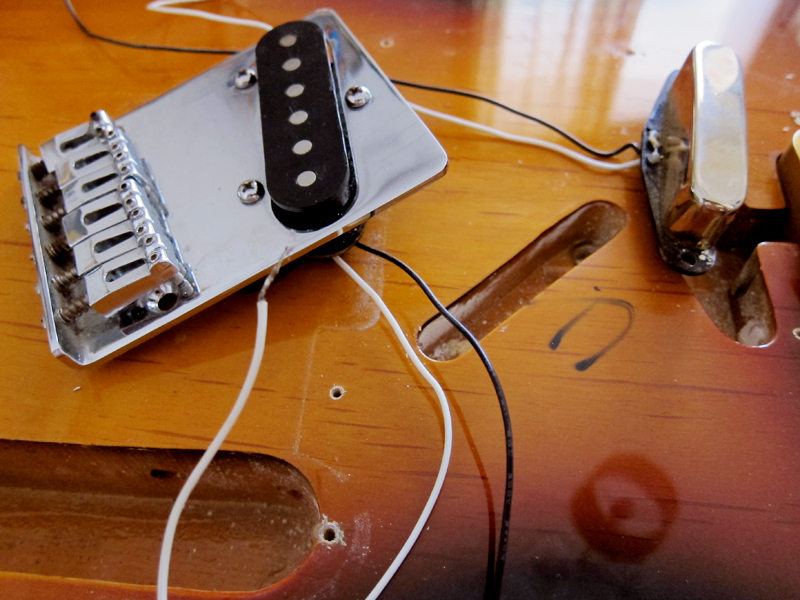
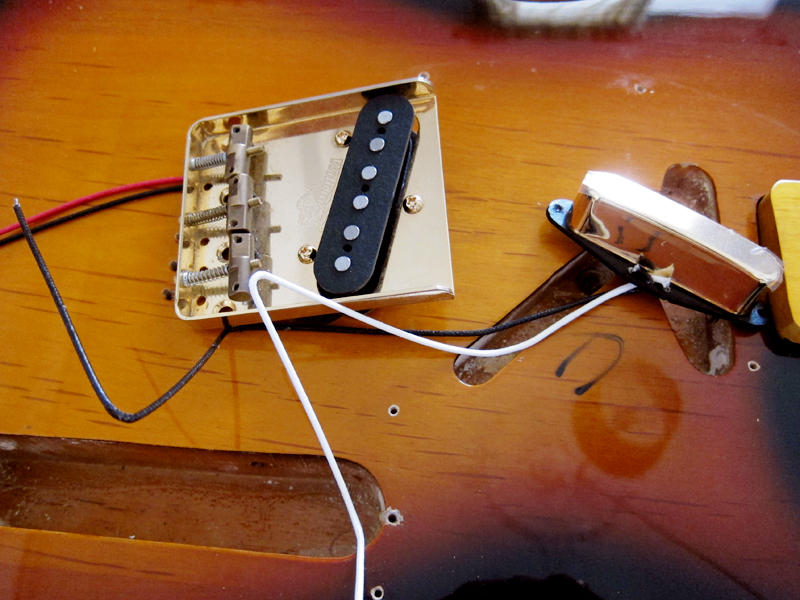
Last Sunday I decided to change the pickups on my old Claescaster. I had ordered a cheap $24.00 set of Artec ones, just regular Alnico V pickups from EY Guitars. I also ordered a new Wilkinson vintage bridge, without any doubt my favourite Telecaster bridge, since I took the old one and put on the new Claescaster. It was a pretty straight forward procedure as usual, I didn’t even have to check Seymour Duncan’s wiring diagram this time.
The old stock pickups and bridge from my Morgan Telecaster, aka the old Claescaster
The new Artec Alnico V pickups in gold, mounted on a Wilkinson WTB bridge, in gold of course
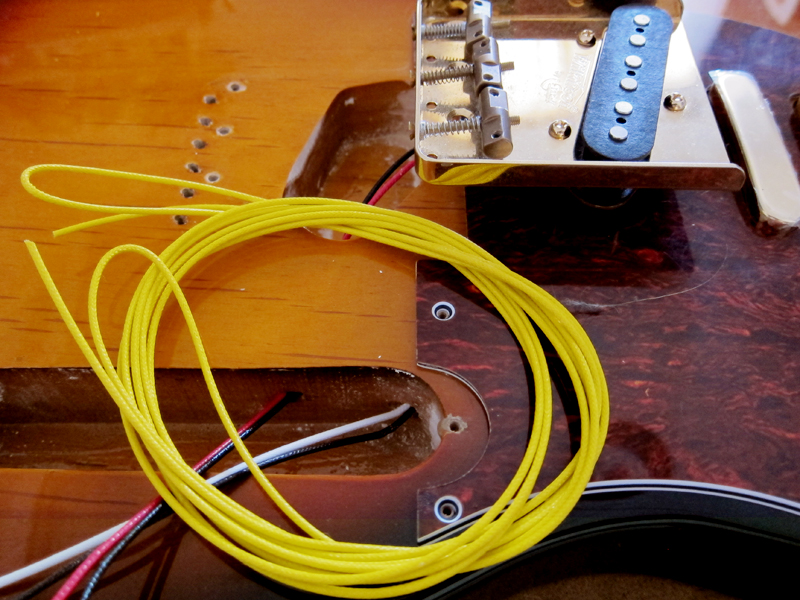
I got 3 Meters (9.8 Feet) of wax coated cloth wire, 22awg, for $1.70, that’s about a tenth of the price here
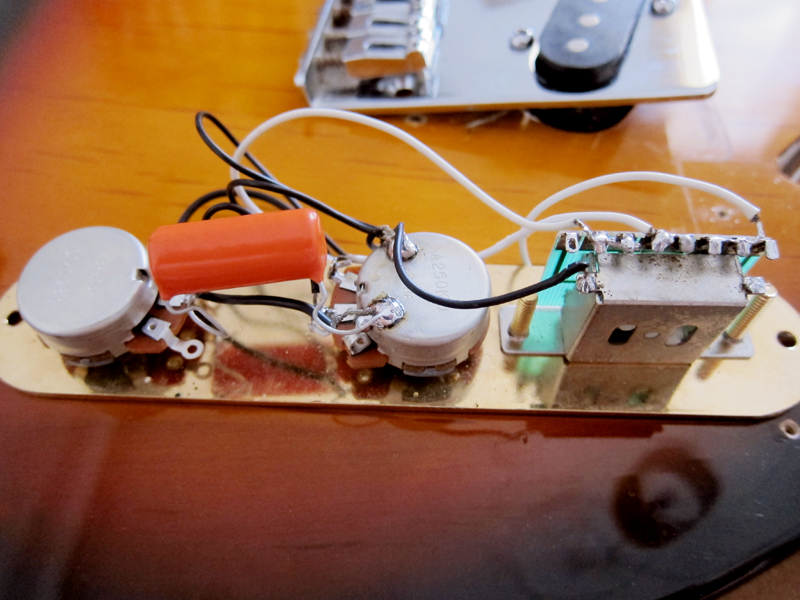
I changed the pots a while ago to nice full size Alpha 250k audio pots. I should probably get a new switch as well but the old one is still working fine
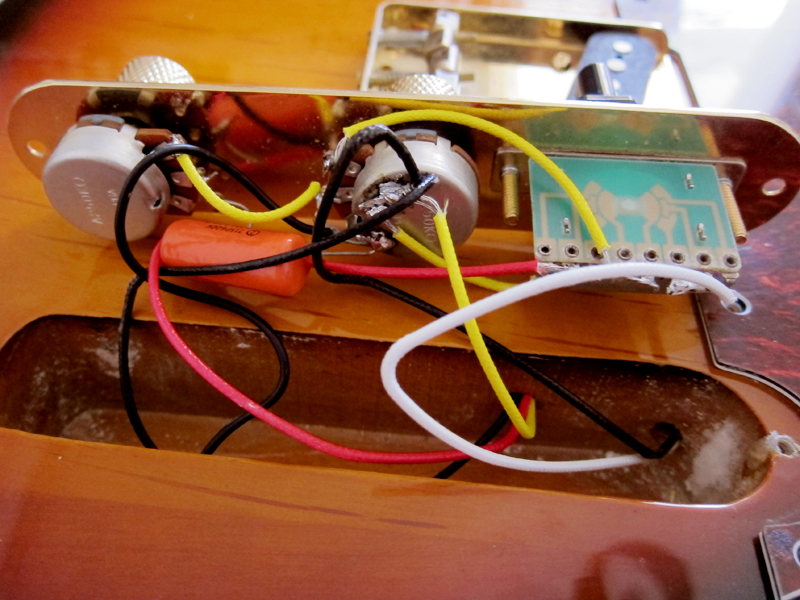
Since the new Artec pickups came with cloth wire I thought I should change all the old crappy pvc wires for some fancy 22awg cloth wire, not sure why I chose yellow though. I stuck to the old 50′s vintage wiring like I had it before
I haven’t tried them properly yet, just plugged them in to see if they worked, well I did a quick little sound clip just to see if there was any difference. I really like the bridge sound of the new ones, really twangy but the neck might be a bit too muffled. I’m rehearsing tonight so then I will get a chance to play loud and see if it was worth $24.00 or not. Hopefully the neck pickup will sound less muffled when I play it through my Fender Blues Deluxe which tends to make even humbuckers sound clear and crisp. Please don’t judge my guitar playing too hard, it was after all a Sunday morning after a long weekend. I think you can hear both my cat and my woman going about their business in the background.
Claescaster Morgan stock pickups (Neck, middle, bridge)
Claescaster ARTEC pickups (Bridge, middle, neck)
Update 2013-07-12I might have got a bit too carried away last night because the two sound clips I recorded are very LOUD. I guess I had more fun with my new pickups than I expected. I think they sound pretty good, I’m not the worlds greatest guitar player but to me they sound way better than the old stock pickups. The neck pickup didn’t sound muffled at all through my Fender Blues Deluxe, and the middle sounds sweat like hell, well worth $24.00.
We were up in Vitoria last weekend for the Azkena rock festival, I had to see The Black Crowes, and I managed to find this little beauty in a Cash converter. It’s a Fernandes The Revival RST-50 ’57 Stratocaster made in Japan probably in 1988. It’s a bit of detective work left to do, I’m still not sure if these were made in the FujiGen or the Tokai factory. It’s most likely made in 1988, well if you can trust Guitar world crazy in Japan, but he seems to know his stuff. The number on the back plate has nothing to do with the year but the first digit of the number stamped on the neck seems to indicate the production year, at least during the 1980’s. Mine has #Y80801 and ’57 stamped and the heal so that should be a Fernades RST-50 ’57 Strat from 1988. However, this guy on eBay claims that Fernandes changed from the proper Fender head to a sharpier head in 1986. He claims that mine should have been made between 1982-85 since it has “Electric Sound Research Group” under the Fernandes The Revival logo on the headstock. I think I’ll go with the Guitar world crazy guy, he seems to know a thing or two. We can be pretty sure that the material is the following, both Guitar world crazy and Music-Trade Japan says the same. The RST-50 ’57 were made between 1981-90, came with Revival Logo, had a 3-piece alder body a Small head and a 1-piece maple neck, poly lacquer, L-5000 Vintage Arched PP Gray Bobbin pickups, separate Diecast & FSRG Press saddle. However, then it says that from 1984 the pickups changed to VS-2 and the saddle to non press marked which is weird since mine clearly has “Revival F.S.R.G” stamped on them. It has quite a lot of fret wear but since the neck felt so amazing I couldn’t resist. Now I finally have an awesome “Blackie” copy so you all can call me Claes Clapton from now on.
Update 2013-07-06 Fernandes have found a new dad. She got adopted this Saturday by a lovely sound engineer, that happened to live two streets away from me, so she could be the jewel in his growing collection of Japanese guitars. I wish the best to both of you.
Fender Telecaster TL52-75, ’52 re-issue, Made in Japan by FujiGen between 1987-1989
As a Roy Buchanan fan I always dreamt of owning my own “Nancy“. The story how Roy found his Nancy is pretty interesting. In 1969 Roy got fed up with the music industry and enrolled in a school to learn to be a hairdresser. One day during class he saw a guy walking pass the window carrying an old butterscotch blonde Telecaster and Roy fell in love at first site. He chased after the guy and told him that he could pick any guitar he wanted in a nearby music store and in the end bought him a new purple Telecaster to trade for the 1953 Fender Telecaster, serial number 2324, that later became his beloved Nancy. My story wasn’t that interesting. I had kept an eye out for a Japan made ’52 reissue and one day I saw that my favourite eBay seller in Japan, Tokyowax had one for sale. So in October 2012 I became the proud owner of a Fender Telecaster TL52-75, ’52 re-issue, Made in Japan by FujiGen between 1987-1989. There is no way to find the exact production year of these A-serial Telecaster with the serial number on the bridge plate. However, it must have been made between 1987 and 1989 since it’s a TL52-75. They were called TL52-70 between 1984-1986 and then changed to TL52-700 in 1990. I do love Nancy, she is an extremely heavy and amazing sounding Telecaster but I still struggle a but with the neck. She has a typical mid eighties Japan neck, really flat and fast playing, without any doubt the fastest guitar I have after my 1975 Hagström HIIN OT. The problem is that I’m not such a huge fan of slick and easy to play necks. I like quite high action and really fat necks so I have to make an effort to play, it’s a part of the feeling for me. Nancy is still an awesome guitar and sounds great from stock, everything is made in Japan, machine heads, pickups, switch and pots. However, there was one thing that really annoyed me, the brass saddles. If you live in a Mediterranean coast city like Barcelona, you will have to adjust your guitars a lot to cope with the humidity. I have to adjust the truss-rod and saddles on most of my guitar when the seasons change and with Nancy it was a nightmare. The only screwdriver that was small enough to fit for adjusting the height of the original saddles was a tiny little weak thing that I got for my watches. Since I didn’t have strength enough to move the screw while the guitar was tuned I had to loosen the string every time, then tune it again. I was also a bit disappointed with the intonation high up on the neck so I decided to change for my favourites, Wilkinson compensated brass saddles. I found a set really cheap from Swivel Electronics in Singapore and a couple of weeks ago I got around to change them.
The old ones might have had more sustain since they were heavier and seemed more solid but to be able to adjust the height with a simple Allen key, without having to loosen the string is more important to me.
All done, I’m sure they will look old in a few month and blend in perfectly with the rest of the hardware. The humidity here in Barcelona seems to age metal very quickly.
I bought Nancy because I wanted a blackguard ’52 re-issue but quite soon I realised that everyone else in Barcelona had one too, well not a Japanese but still. It suddenly felt and looked more Bruce Springsteen than Roy Buchanan so I decided to change to a tortoise shell 5 hole pickguard to make it look a bit more Country-, Swamp-, Southern rock.






 Tokai Love Rock LS-55 Les Paul Standard “Made in Japan” 1991
 The Levin family back in the days, from left to right: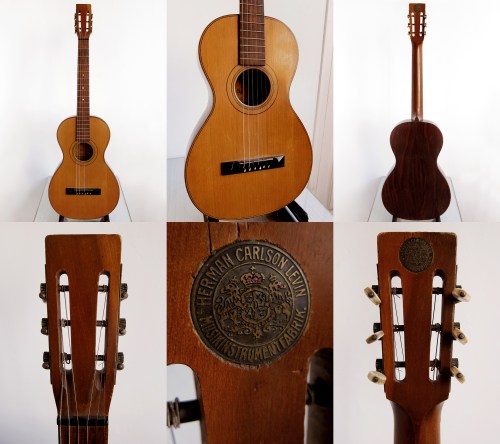
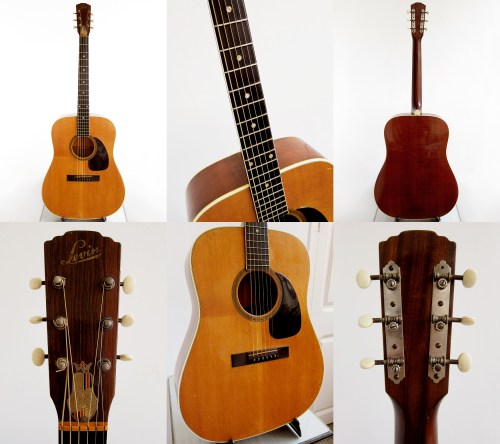
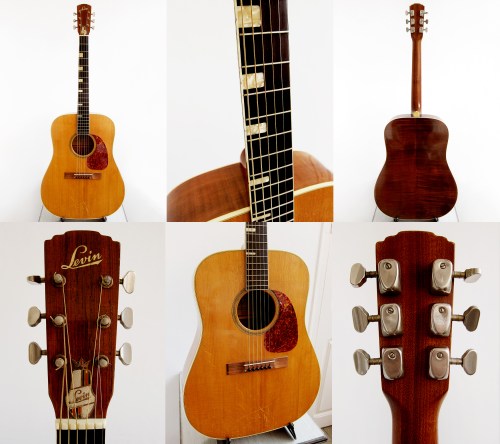
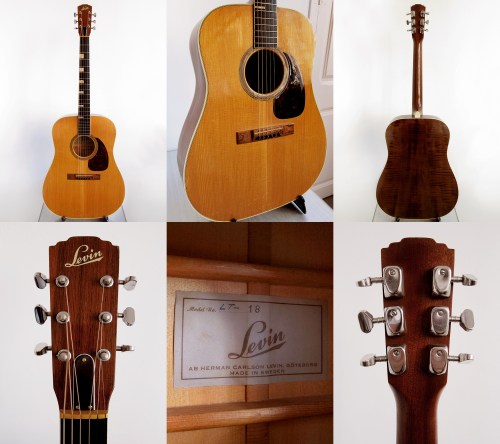
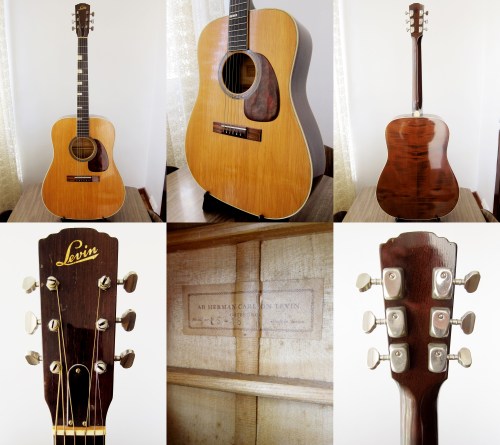




 Vintage V880N Parlour acoustic, newly fitted with a ARTEC PP-607 undersaddle Piezo pickup




 Claescaster