Most guitars come with plain plastic bridge pins and I never really thought that changing them would effect the tone, but it does. To be honest I wasn’t sure how much difference it would make to change the nut or saddle either but there I was proven wrong straight away. I’ve heard so much talk about how superior bone is to plastic and thought it was nonsense, until I actually tried for myself. Now most of my guitars have bone or Tusq nuts, both electrics and acoustics. I changed to Tusq on my Claescaster and was sold straight away, it really felt and sounded different. The only acoustic I’ve had to change nut on was the Suzuki and that guitar sounded way better with a bone nut. It’s weird but acoustics for me, up until the last couple of month, have always sounded good or bad but without any nuances. I guess what I’m trying to say is that just like with a fine red wine you need train your pallet to really understand and appreciate all the flavours and subtle differences. I have been buying more acoustics lately and really listened to them while playing and have come to realise more and more what I like and not like with acoustics. It’s not just down to brand, shape and woods, no guitar sounds the same and there is a lot subtle differences. I think that age is very important factor, I really do believe that wood needs time to open up and that it affects the sound a lot, hence why a lot of modern guitars sounds more or less the same to me. I ordered 12 bone bridge pins and 12 ebony from rockcarvings a Chinese eBay seller that was really cheap, $9.90 for 12 ebony pins. I changed the pins on my Morris W-40 first and made a little sound clip with the plastic, bone and ebony bridge pins to really be able to hear the difference. There is a difference, maybe not as big as changing the saddle to bone, but still. In my opinion the bone pins sounded too clear and sparkly on that guitar, they lacked a bit of bottom which could be more about the quality of these Chinese pins than the material itself. The Morris has a lot of warmth and bottom, which is the reason why I love that guitar so much, so I wanted to keep that rather than give it more treble. The ebony pins were perfect, they just gave such a solid tone, both playing chords and solo. I changed my dad’s Levin LT-16 to ebony as well and put on a new compensated bone saddle, which made wonders to the tone and playability. I will try the bone pins on some other guitars but I have a feeling that I will order more ebony pins in the near future. Here is a list from Maury’s Music with the tonal qualities of different bridge pin materials. I wish I could have found Mammoth or Walrus because that seems awesome but eBay only allowed for Tusq, bone, ebony and horn.
Tusq can add a moderate amount of treble, sustain, clarity and volume to your guitar.
Bone offers everything Tusq provides, but in bigger doses.
Ebony can add bass and warmth to your guitar, along with a signifigant increase in sustain and volume.
Buffalo Horn sounds almost identical to bone, and is a great choice if you want a dark looking pin with bone tone.
Walrus Jawbone offers the fundamental tone of bone but with better overtones and fatter harmonics.
Mammoth Ivory can add sustain, volume, and a transparent richness to your guitar, with an increase in harmonics and overtones.
Walrus Ivory provides the greatest increase in volume, sustain and clarity among all the pin choices.
1973 Morris W-40 and 1966 Levin LT-16 with new ebony bridge pins
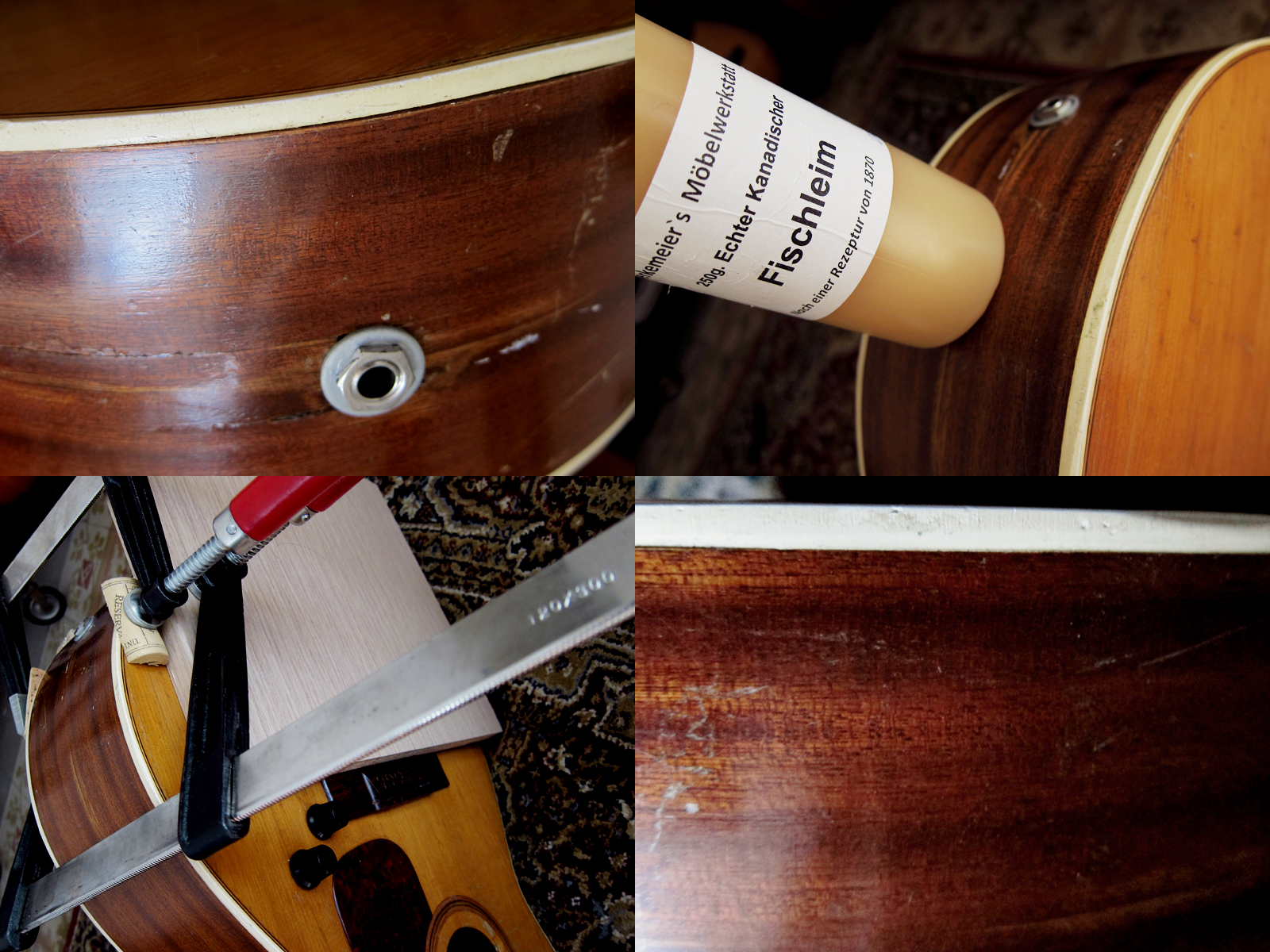
My dad’s old Levin LT-16 has quite a few crack, well it had, because now most of them are fixed. I tried to figure out what type of glue would be best for repairing wood cracks and all the articles I read said the same thing, warm hide glue. The only problem is that I didn’t feel too intrigued by the idea of having to have melted horse hoves and other animals parts on the stove so I was desperately seeking for an alternative. Then my new found guitar building friend Roger in Sweden told me about fish glue. It has the same awesome properties as warm hide glue but can be used cold. It took some time to locate someone selling fish glue but eventually I found die-moebelwerkstatt, a German eBay seller specialised products for furniture restoration. I got myself some Canadian fish glue made from a recipe from 1870 and it’s amazing. I practised on my Francisca Montserrat and some other old guitars that had cracks in them before I dared to touch my Levin. It has gone pretty well so far, no major difficulties, but I wished that the glue pulled a bit more. I read that the special thing with warm hide glue, and apparently cold fish glue too, is that it is pulling the wood together when it dries, hence why it is so good for cracks and similar repairs. It might be my glue that is a bit old, or just the recipe from 1870 not being the best, but I wished it pulled a bit more. It still works really well, way better than I expected. I feel a lot safer now, not only when it comes to buying old guitars that might have a crack or two, but to dare to use mine because if I happen to crack them I can always repair them with my fancy new fish glue.
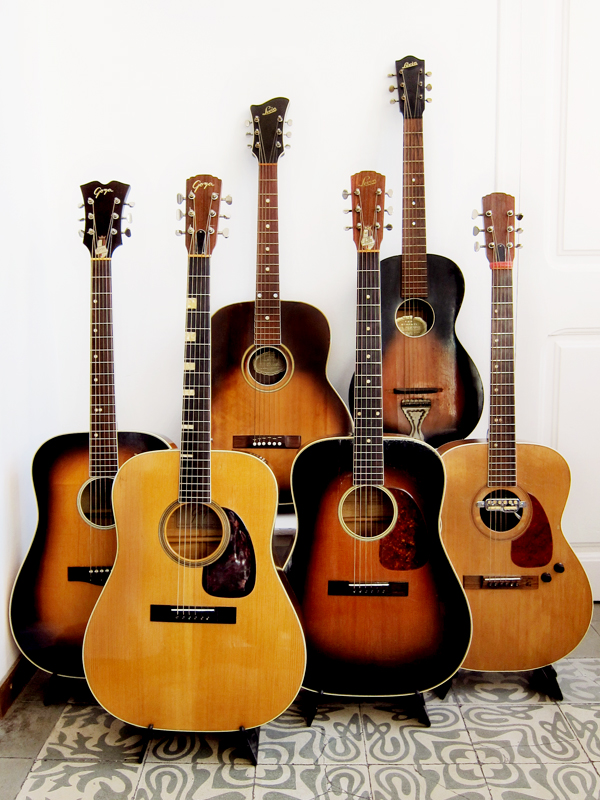
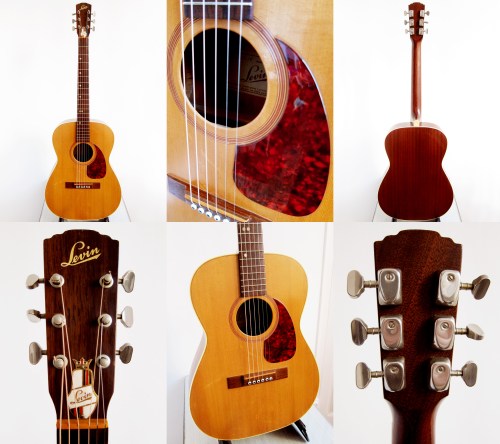
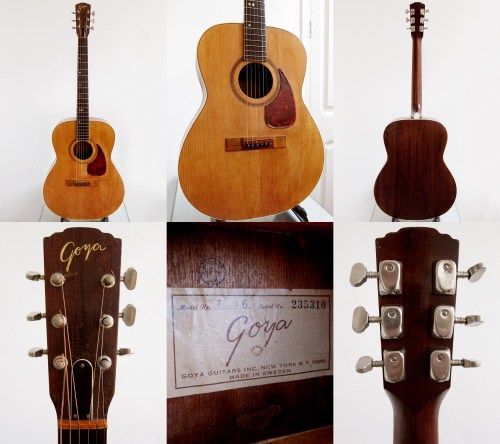
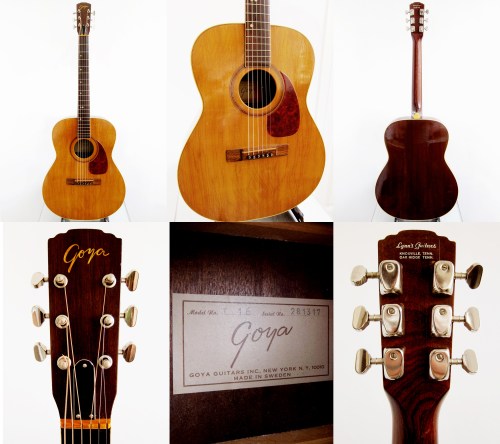
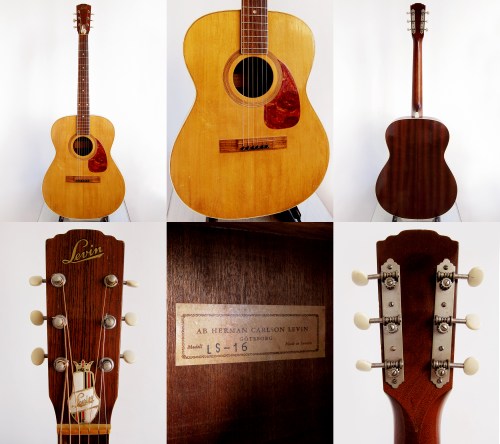
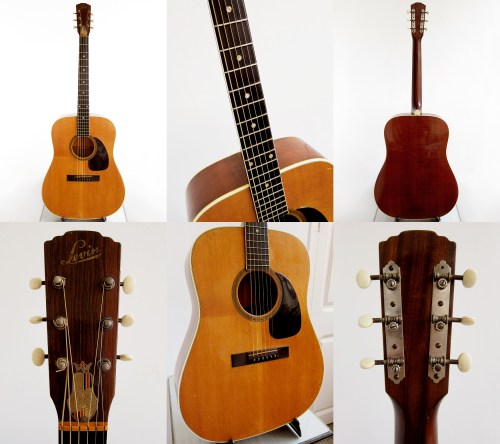
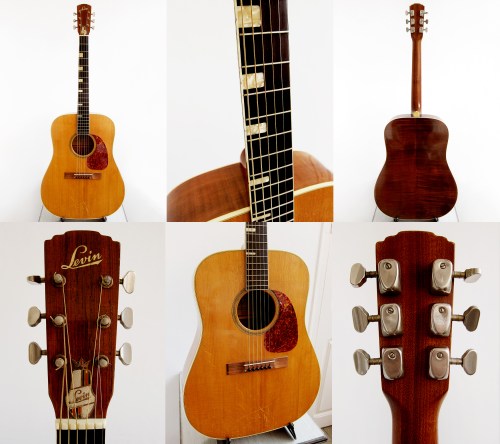
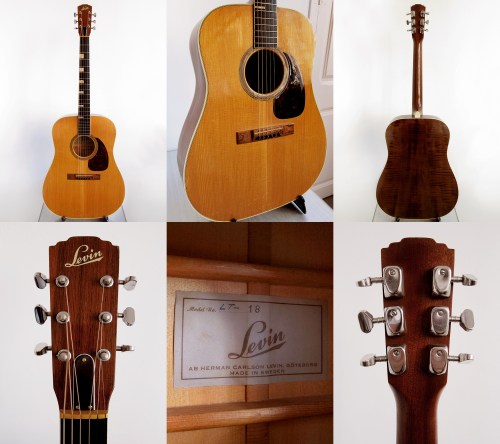
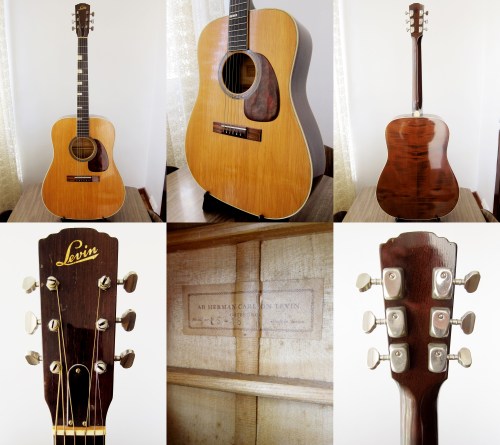
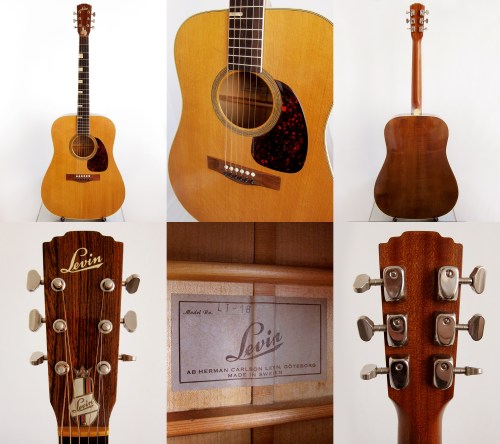
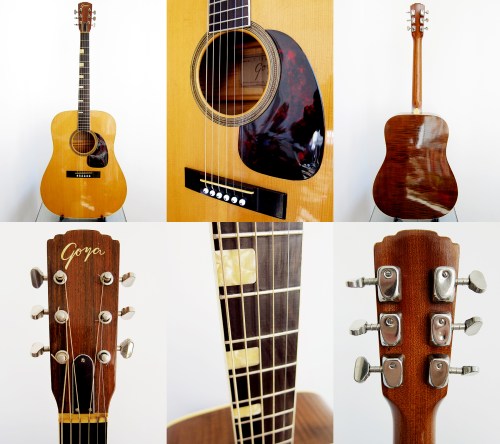
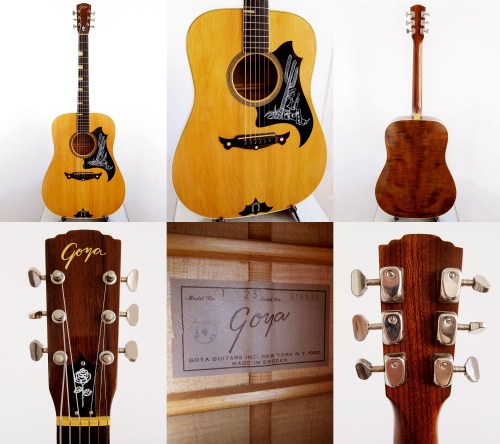
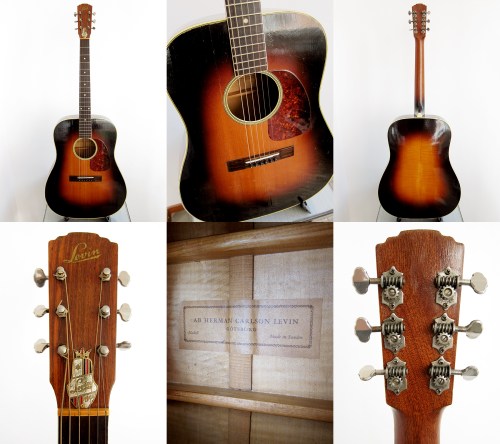
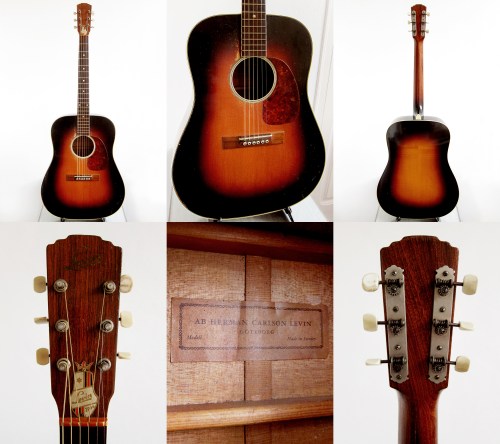
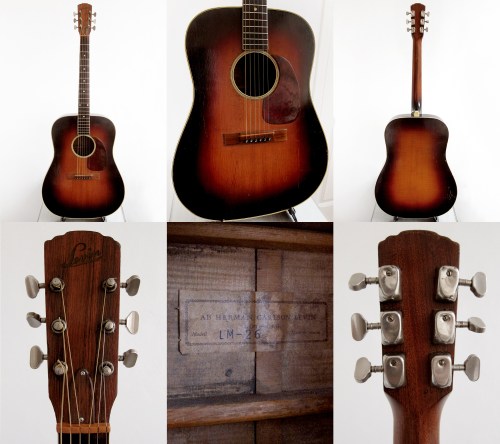
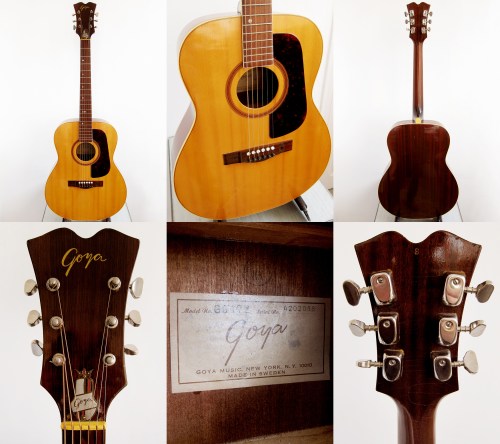
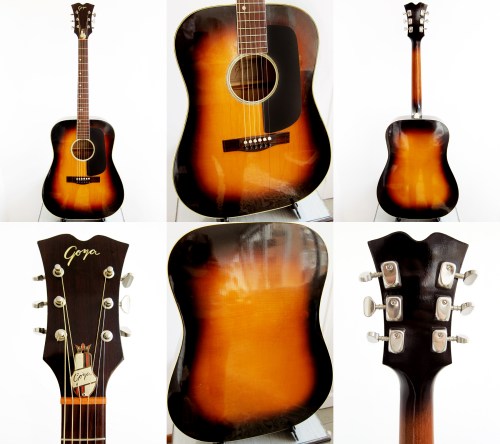
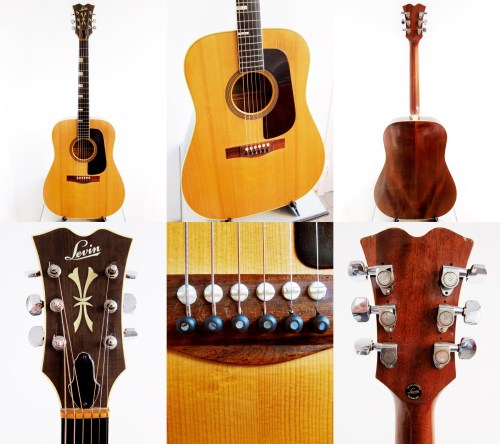
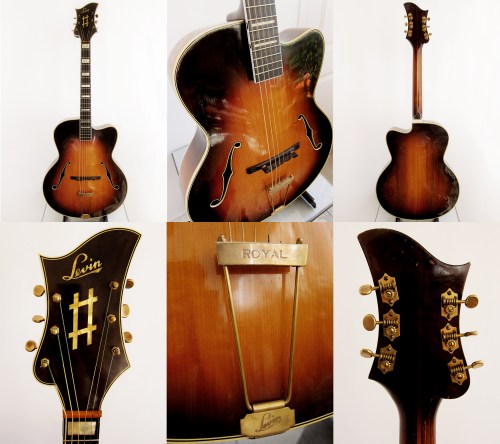
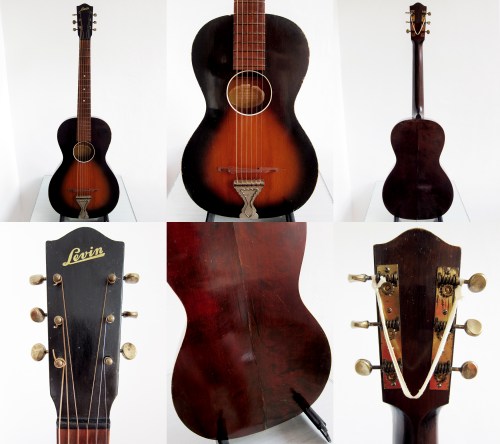
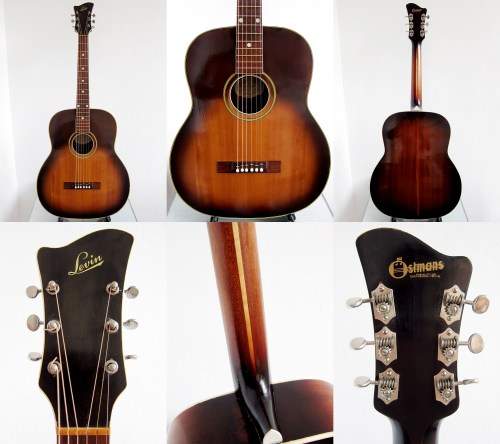
The Levin family, Goya Model 163 (1968), Goya T-18 (1966), Levin Model 13 (1950), Levin LM-26 (1959), Levin Model 65 (1941), Levin LT-16 (1966)
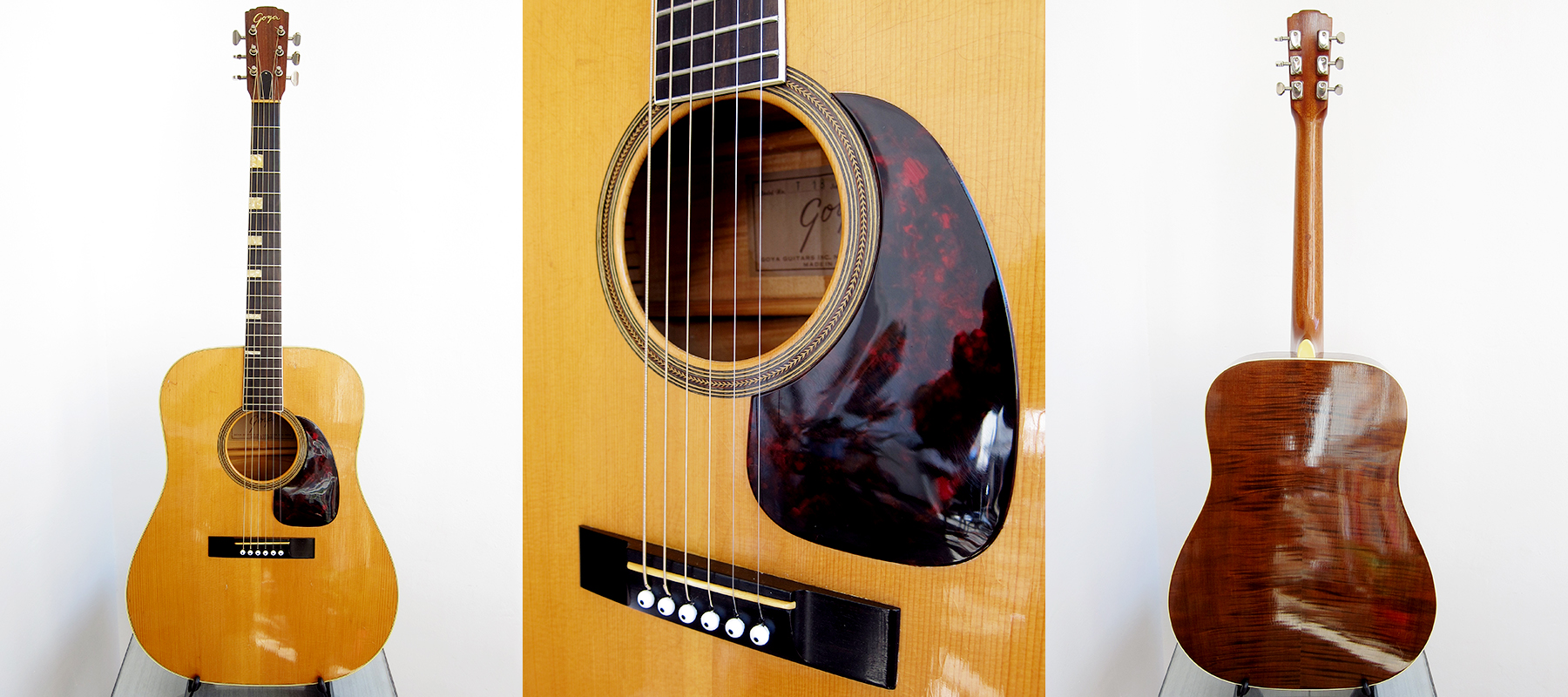
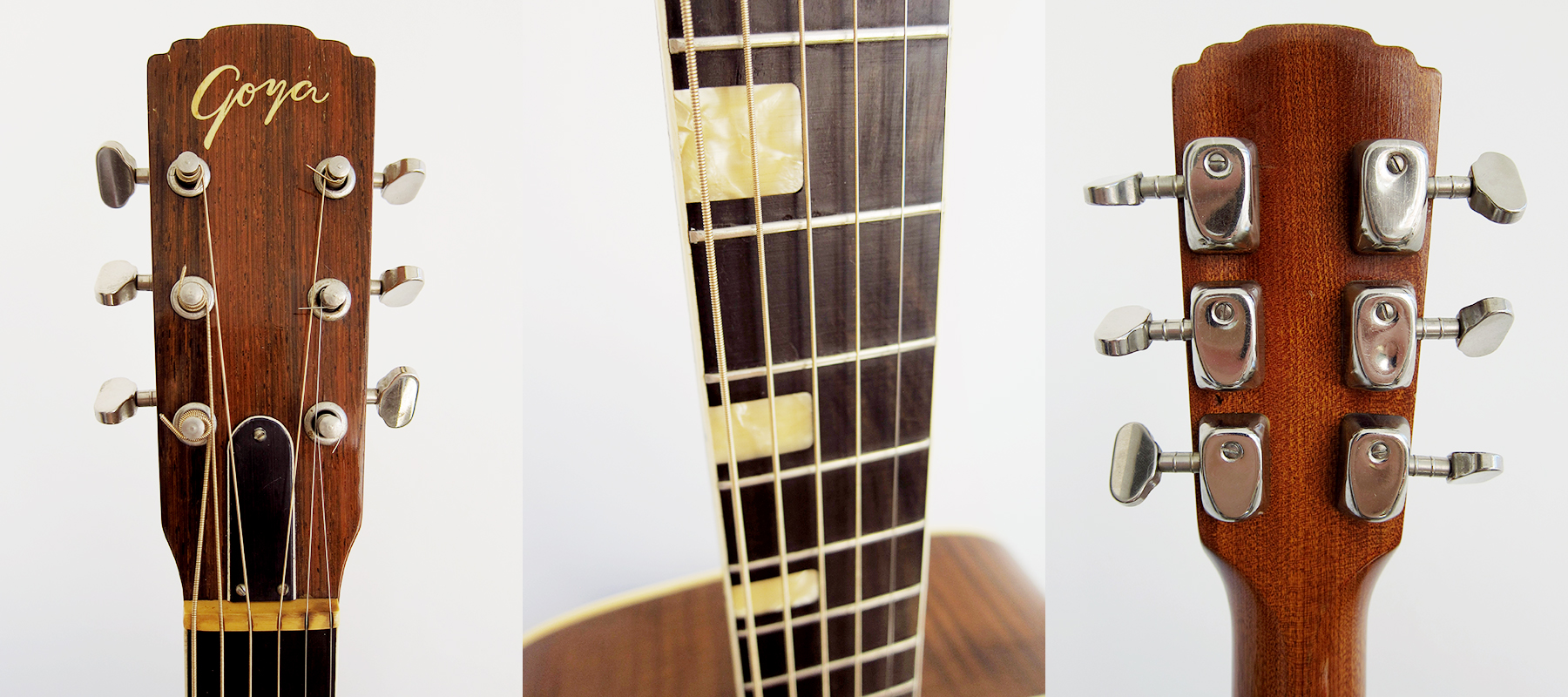
Last week I received my latest project, a lovely Goya T-18 made in Sweden by Levin in 1966. It sounds really nice and works great for cowboy chords but there are a few things that needs to be sorted before I can play her properly. First of all there are two dents on the back of the neck, it almost seems like the lacquer has melted or reacted with the the leather flap for the accessory department in the case. It came with what seems to be the original hard case and who knows, maybe she has been stored in there for decades. So these dents or groves needs to be filed with lacquer and evened out, let’s see how that goes. I also need to re-glue the pickguard, but that shouldn’t be too hard as soon as I receive my fish glue that I’ve ordered from Germany. The Van Gent machine heads looks almost new and it could be the original nut and saddle but not bridge pins. There is a few marks on her but overall she is in really good state for her age. The lacquer on the top has cracked a bit but that seems to be standard on these late 1960’s Goya T-18, but not on the Levin LT-18 so they must have used different lacquer for them. The big thing that needs to be done is to try to reset the neck. I have never done anything like it but since these are quite cleverly bolted on maybe it wouldn’t be impossible, if I just find the right square key to loosen the bolts inside. The Goya T-18 sounds a lot bigger and fuller than my dad’s old Levin LT-16 which could be down to the size more than the materials, I’m not sure. She sounds bright but still with a lot of bottom which I like, I actually think this is my best sounding acoustic after my Morris W-40. I’m trying to get the biggest Levin collection in Spain, well I might already have it, who knows.
Update: December 6, 2013
I finally managed to get my beloved Goya T-18 sorted and now it plays beautifully
An Indonesian made Yamaha FX-310 from the late 1990’s
My Art Director at work, the new proud owner of the White Falcon copy, asked me if I could bring his old Yamaha FX-310 back from the dead. There was a fair share of cleaning involved and then I tightened the screws and oiled the machine heads, polished the frets and oiled the fretboard and then I tried to correct the neck angle. I’m not sure if it was because the guitar has been without strings for so long and was missing the string tension but the action was so low that that everything just buzzed. I tried to correct the angle of the neck with the trussrod but it made no difference, it was as loose as it could be. I had to make the saddle higher but since it had the piezo pickup built in to the bottom of the saddle I couldn’t just change it for a new one. In the end I cut a matchstick in half and put under it, I guess bone or some other material would have been better for the tonal qualities but since they saddle was made of plastic anyway I don’t think it would have made any difference. It actually plays pretty well now and sounds really good for have been made in Indonesia. I’m not sure if all Yamaha’s sounds and plays this well but I was pretty impressed. When I started to play guitar 20 years ago a lot of my friends had Yamaha’s and other inexpensive Far East made acoustic guitars but I was fortunate enough to learn to play on my dad’s old Levin LT-16 so I never really tried any of these Yamaha’s back in the early 1990’s.
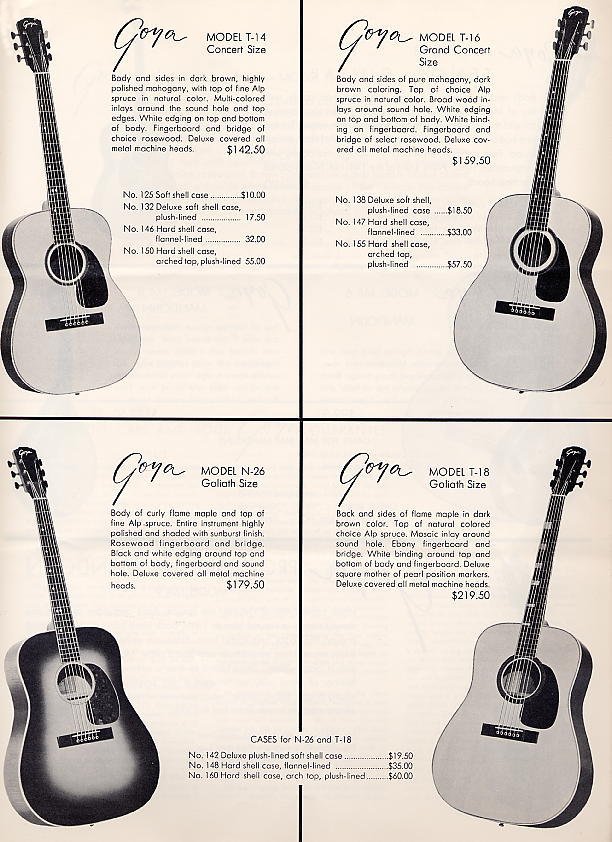
I’m very excited about my future Goya T-18 from 1966. I managed to find one in a fairly good state for a reasonable sum on eBay and couldn’t resist. I’ve decided that from now on I’m just buying Swedish made Levin acoustics, they were called Goya in the US. Since I haven’t received the guitar yet, it will probably spend a week or to in the customs office in Madrid, I have to stick to looking at old catalogues and dream. They have a review of a Goya T-18 from 1965 in the latest issue of Acoustic Guitar, under Great acoustics, 1965 Goya T-18 by Teja Gerken. I need to find a copy so I can get an idea of what I’ve got myself in to. It can’t be that different from my dad’s old Levin LT-16 also from 1966, which is among the best acoustic guitars I’ve ever played. The Levin LT-16 or Goya T-16, has alp spruce top and mahogany back and sides while the Levin LT-18 or Goya T-18, has alp spruce top and flame maple back and sides. The LT-18/T-18’s Goliath size is also a bit bigger than LT-16/T-16’s Grand Concert size so let’s see how the size in combination with maple instead of mahogany affects the sound. The LT-18/T-18The LT-18/T-18 was top of the line in the mid Sixties and cost $219.50 new in 1965.
Levin’s Goya catalogue from 1965. Next I will have to find a Goya N-26 or Goya N-22 in sunburst from the mid 1960’s.
I just ordered myself a L.R. Baggs M1 and I really hope it’s as good as people say. I have only tried cheap magnetic soundhole pickups so far, like Artec and Belcat and they worked ok both of them but sounded a bit thin, hopefully the M1 will be more full and warm without sounding muffled or muddy. I have an old Shadow humbucker from the 1970’s that I kind of like but it’s a bit too dark for dreadnought guitars. The undersaddle ARTEC PP-607 I installed in the parlour was way too uneven when played hard, and a bit thin sounding as well. My favourite magnetic pickup is still the old Japanese 1960’s one that my dad fitted in his Levin LT-16. I got the L.R. Baggs M1 new from dont_tell_the_wife_guitars on eBay and it only cost $139.00 with free shipping so I felt it was worth a try. If it’s good enough for David Gilmour then I’m sure it will be just fine for me.
Update 2013-09-10 I just received my new L.R. Baggs M1 and it looks awesome. Cheap, quick shipping and no customs issues, couldn’t be better. I noticed that the M1 Passive doesn’t have a volume control but I’m pretty sure I can live without since I have never used that on any of my acoustic pickups. I’m really excited about rehearsing with Chest Fever on Thursday so I can try it out loud. I hope it sounds as good as it looks.
Update 2013-09-20 Last night I finally got to play the L.R. Baggs M1 loud, we had to cancel the rehearsal last week since Araceli’s and I celebrated 6 years together. I fitted it in my Kiso Suzuki WE-150 and it sounded pretty good, well it sounded just like the Suzuki does unplugged. It was the first pickup I have ever tried that could handle my hard hitting solo playing and I’m really impressed with how responsive it is, loud enough when picking and not too loud when strumming. I can’t wait to put it in an even better guitar and really hear it’s full potential.
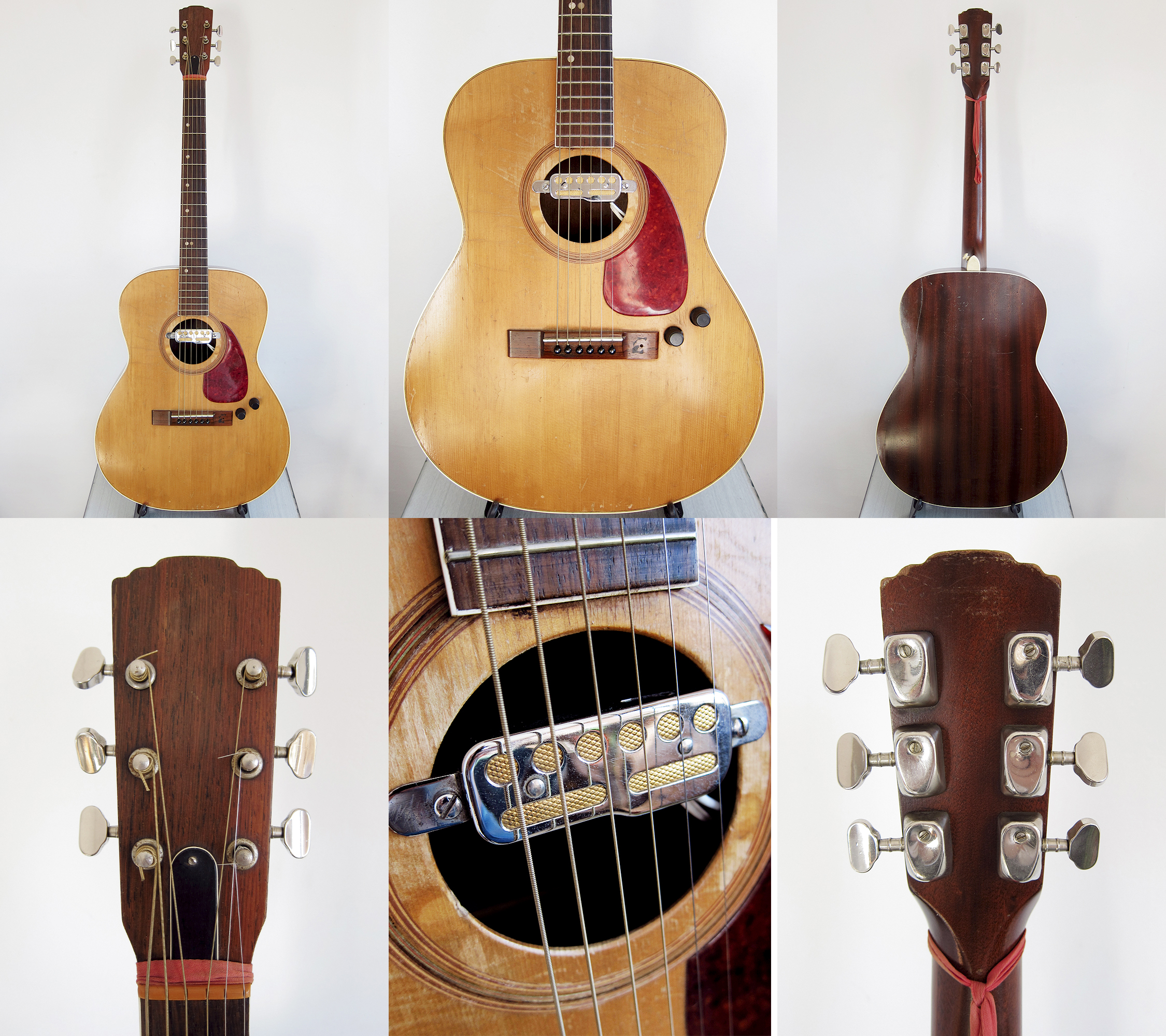
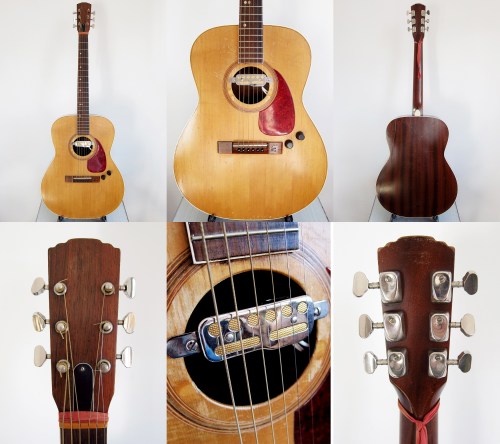
The Japanese pickup fitted in my dad’s old Levin LT-16 from 1966
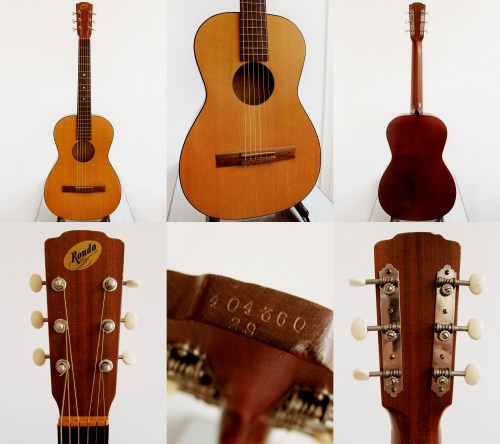
Last week I managed to become the proud owner of two new, or rather very old, Levin guitars. With some persistence, a huge dose of luck and some money changing hands I managed to get them both here safe and I already love them. I have always been a huge fan of Hagström, also built in Sweden, but didn’t know how much I loved Levin until I figured out that my dad’s old guitar was actually a Levin. It doesn’t have any markings on it but you can read about my Levin epiphany here. The problem with old guitars is that they quite often forgot to mention the model anywhere, so you have to do a lot of detective work. Luckily for me there is an awesome guitar shop, Vintage Guitars Stockholm, that has more or less everything Levin has ever made listed on their Levin information pages. They also have some info on Hagström and the brands built by Bjärton, and the rest of the brands built by Levin: C. F. Martin & Co, Clangiton, El-Goya, Goya, Kay-Tone, Klangola, Torres, Zandelin, Nivello, Rondo. I managed to track mine down to a Levin LT-16, Levin Model 65 and the amazing Levin Model 13 Ambassadör. These Levin guitars are a bit thin sounding compared to other guitars, well I don’t have any other guitars that are 70 years old, but still. Then again they aren’t full sized so no wonder that they lack a bit of bass compared to a dreadnought, but they are very light and extremely resonant in the higher register so they are perfect for finger picking. Either way I’m super happy to have found four so old and amazing guitars that have been built in the country where I grew up, Sweden.
Maybe I should add a little disclaimer here, this was originally posted back in August 2013, the Levin collection and my appreciation and understanding of the brand has grown a bit since then.
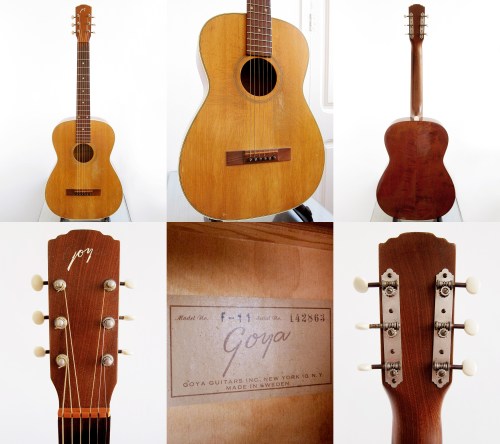
Herman Carlson Levin was a young furniture maker that moved from Gothenburg to America and got a job at a guitar manufacturer in 1888. He soon started his own company in New York building instruments and while he was back visiting Sweden he realised that the demand was even higher there. He moved back home and in 1895 started Herman Carlssons Instrumentfabrik in Gothenburg. They were only five instruments makers in 1903 when they built their 1000th guitar but they soon grew bigger and bigger. The factory was one of the best in Europe and between 1904 and 1912 Levin received many awards including the gold medal in Madrid in 1907 for best guitar as well as the exhibition’s Grand Prix price. By 1936 the 100,000th instrument had left the plant and Levin was marketing a successful line of archtop guitars, like the world famous Levin De Luxe 1938. Shortly before 1940 Levin employed a crew of 45 in facility of a 1000 m². In the 1950s, Levin launched a line of inexpensive guitars intended for schools and novice guitar players. These guitars were of lower quality than the rest of the Levin line up. In 1952 Jerome Hershman a guitar distributor from America noticed Levin guitars at a trade show in Germany and convinced the Levin company to let him market their guitars in America under the name Goya, Levin apparently sounded too Jewish. He also got Hagström to make some fine electric guitars for the US market as well. These nylon stringed Levin / Goya guitars got quite popular in the late 1950’s and especially with the folk singers in the 1960’s when they started to produce steel stringed guitars on a typical nylon stringed body. When Goya was sold in 1968 the Goya export was approximately 70% of Levin’s total production. They had a huge contract with Goya that they lost in this sale, something that took really hard on Levin and they had to close down the second factory they opened in Lessebo and let half of its work force go. A lot of companies got bought and sold over the next few years, Kustom bought Goya, Dude bought Kustom and in the end C. F. Martin & Co bought them all. In 1973 when Martin bought Levin, it became the headquarters for Martin Guitars and their Japan import brand Sigma Guitars in Europe, as well as actually producing a run of some 200 Martin D-18 acoustic guitars, which were labelled “LD-18 – Made In Gothenburg, Sweden. These are quite rare and expensive today. The last “real” Levin built in Sweden left the factory in 1979, they are still building nylon stringed Levin guitar in Sweden to this day. In 1982 Svensk Musik AB bought the name Levin and the remaining stock from C. F. Martin & Co and in 2000 they changed their name to Svenska Levin AB. They are now producing steel stringed guitars in the far east and have a small batch of nylon stringed guitars being built in Sweden. Here is the whole story about Levin together with some amazing photos, Levin History.
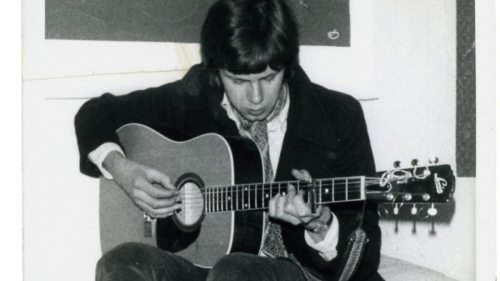
Hootenanny Singers sure liked their Levin guitars. Björn Ulvaeus, the guy on the far right got a bit famous later on with his next band, ABBA.
Levin was pretty much the main brand for acoustic instruments in Sweden back in the days. We also had Bjärton but they mainly made nylon stringed guitars and of course Hagström but they were more famous for their electric instruments, even though they built some really nice acoustic guitars together with Bjärton like the legendary Hagström J-45.
I’m not sure if it was the handsome chap to the left that built my Levin Model 13 Ambassadör. The Levin guitar factory on Kvillegatan 9 in Gothenburg in the late 1940’s.
Taken from the Levin catalogue 1968
In 1972 negotiations between the C. F. Martin & Co. and Levin results in that C. F. Martin & Co. purchases Levin in June 1973 and Levin got to make some 200 Martin D-18 acoustic guitars, which were labelled “LD-18 – Made In Gothenburg“
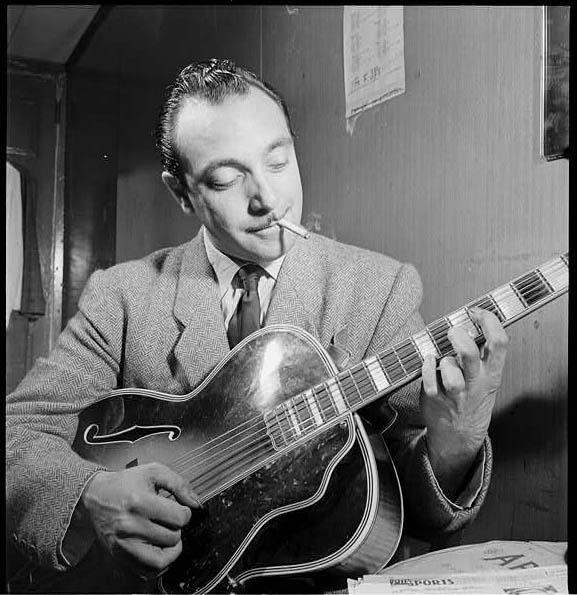
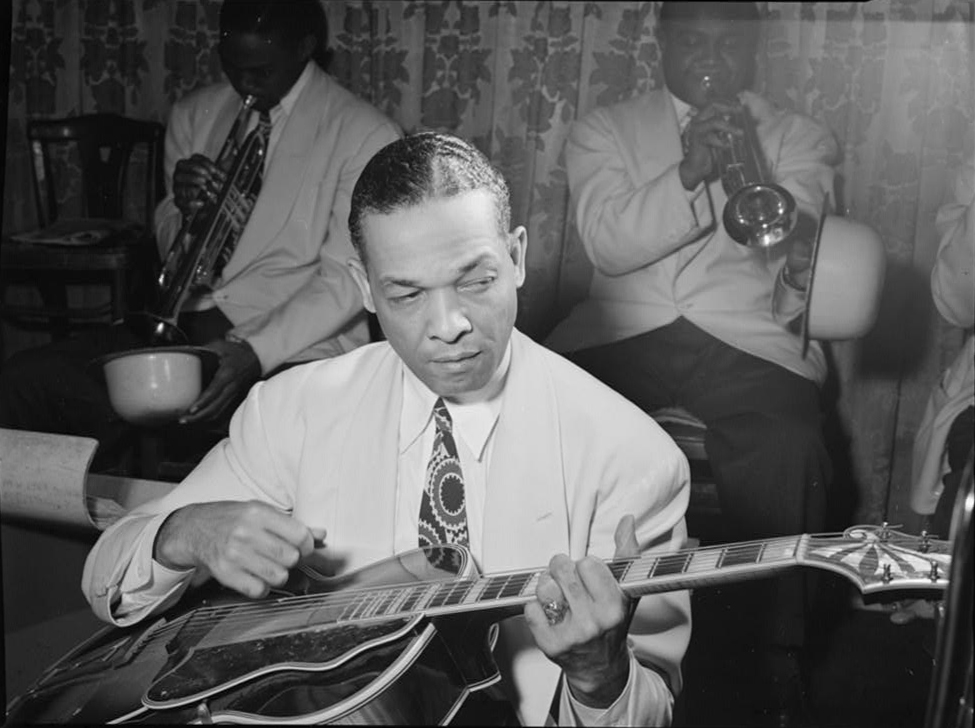
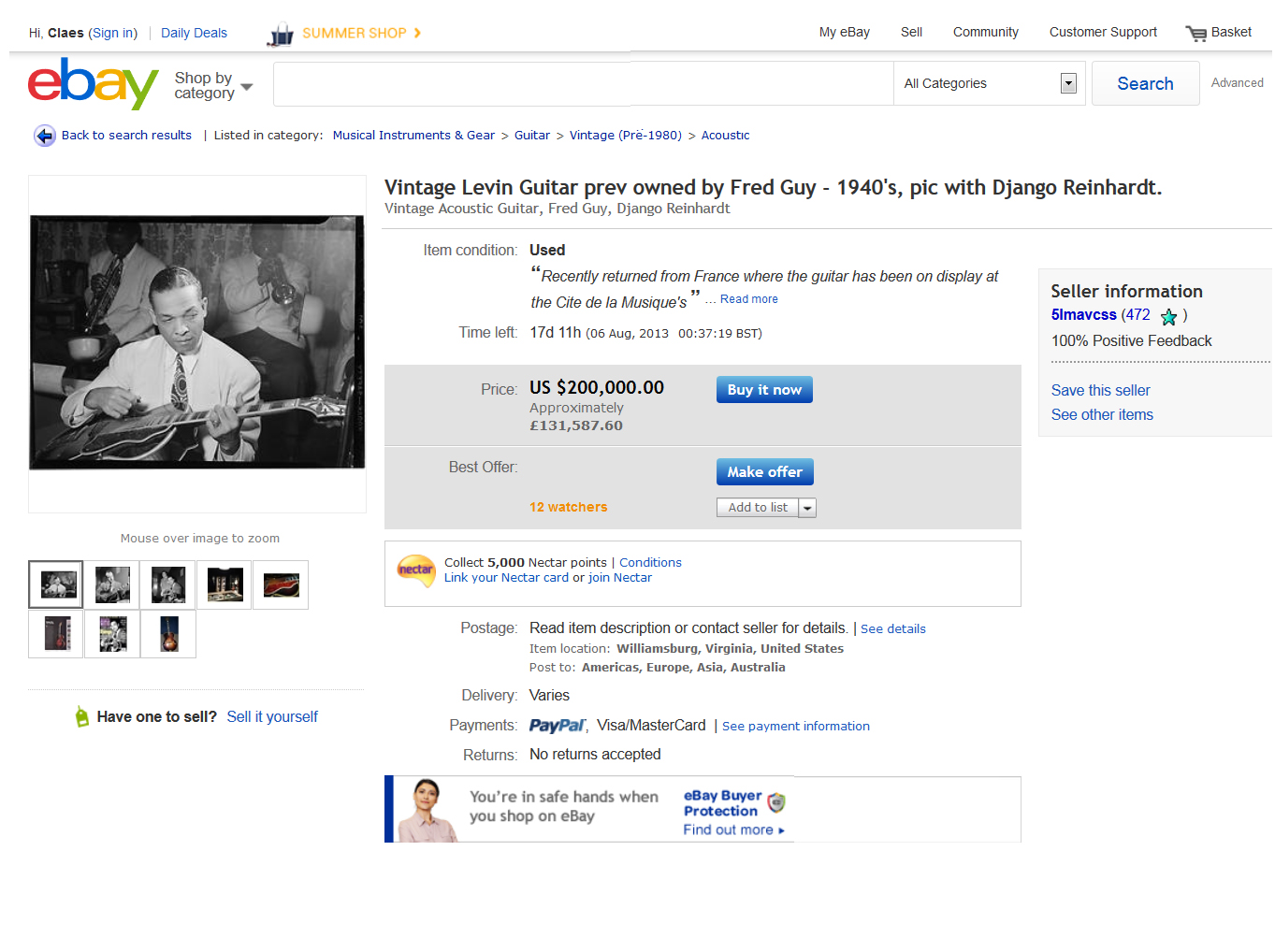
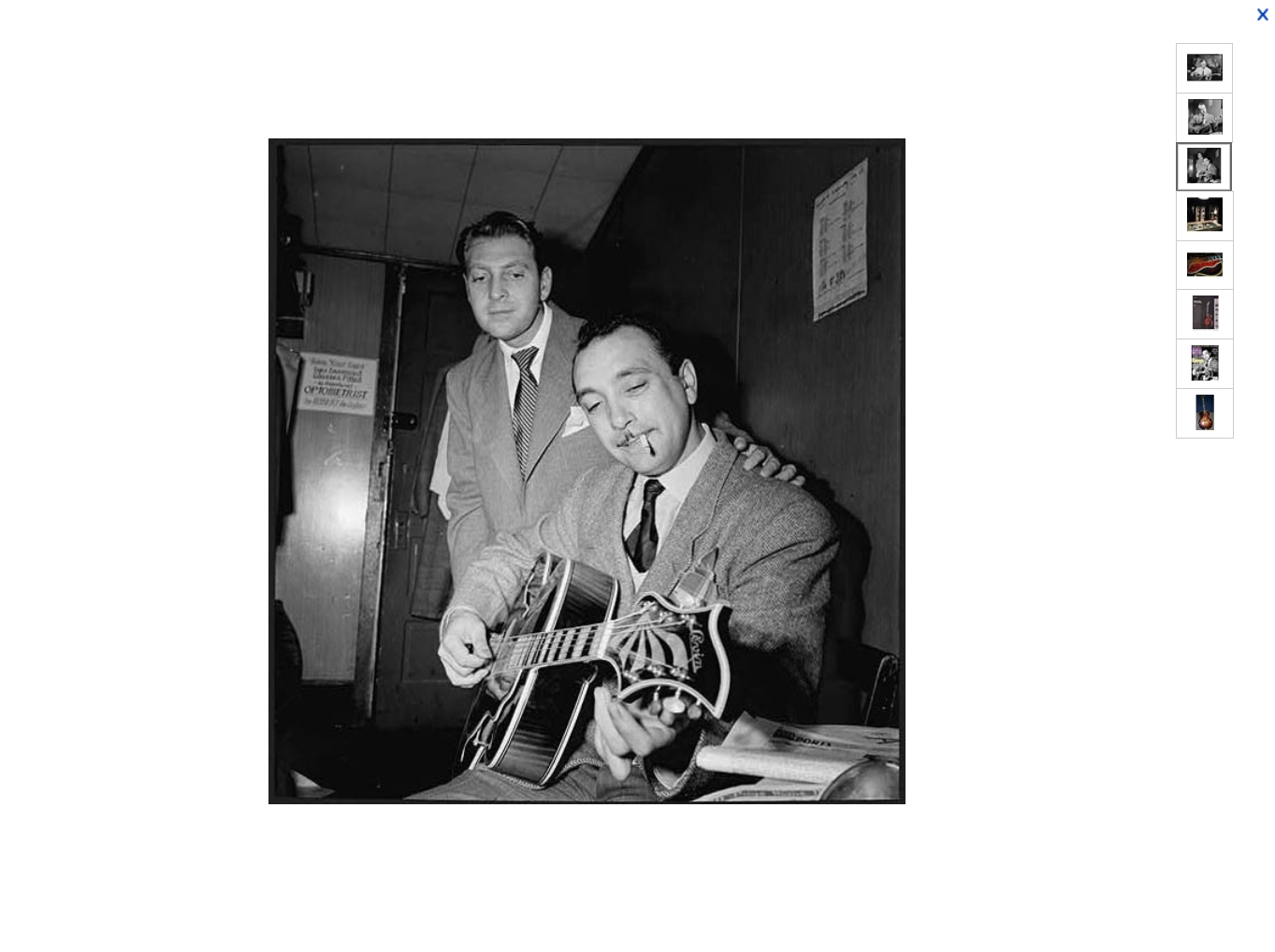
I really love my Swedish made Levin LT-16 from 1966, it’s without any doubt the most comfortable acoustic I have ever played. I tend to keep an eye out for another Levin guitars on eBay but they always go for stupid amounts of money, around £400-1000 depending on the model. Yesterday I came across one of the more famous Levin guitars, Fred Guy of the Duke Ellington band’s 1938 Levin De Luxe which is up for sale on eBay for $200,000. Here is the story how he originally got it. Taken from Vintage Guitars Stockholm, they have more photos as well. While visiting Göteborg during a tour of Sweden in April, 1939, Fred Guy, guitarist in the Duke Ellington Orchestra purchased a Levin De Luxe at Waidele. This is the guitar that Django Reinhardt is playing in the famous William Gottlieb photos. They were taken backstage at the Aquarium in New York City when Django was on tour with the Duke Ellington Orchestra in 1946.
Fred Guy with his 1938 Levin De Luxe
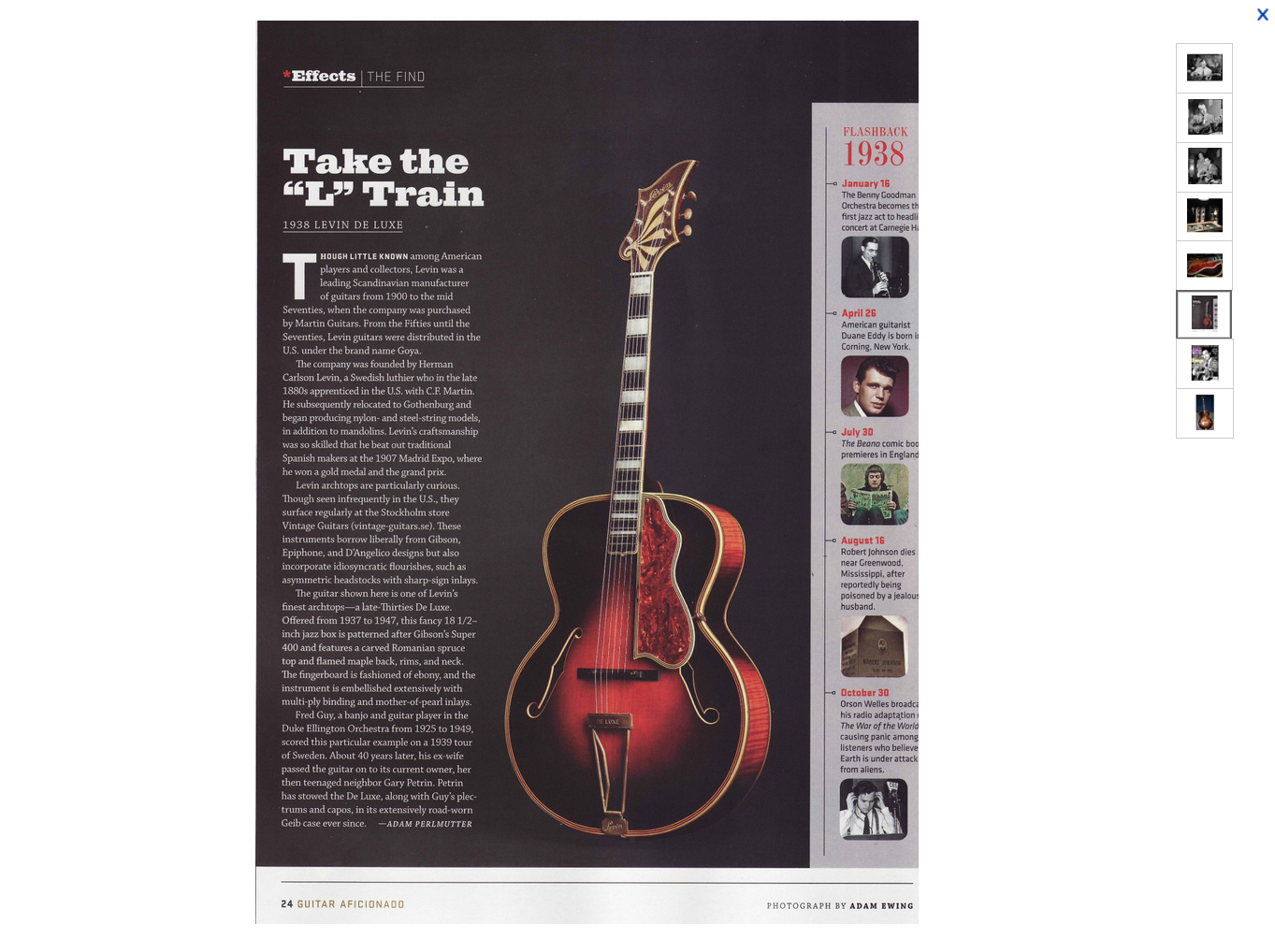
Here is the background info from the eBay listing. Recently returned from France – as it was being shown in a Django Reinhardt Exhibition for 3 months (see picture above). Also seen in the 2011 issue of the July / Aug / Sept edition of Guitar Aficionado magazine (Find section). This is the Levin Guitar previously owned by Fred Guy of the Duke Ellington band – during the 1940’s era. This is also the same guitar that Django Reinhardt is holding in the picture above when he was in New York City, backstage with the Duke Ellington Orchestra in 1946, and on the cover of Acoustic Guitar Magazine, Feb 1996 edition. The guitar was given to me by Fred Guy’s ex-wife Dorothy Guy Lynch about 30 years ago. The Levin guitar is in its original case, and the guitar itself has some small cracks in it. If you love Jazz, and want to own a piece of jazz history, this is a rare opportunity for the serious guitar collector. This is the real deal. Serious inquiries only… If you want to view the guitar, I will be glad to set up a time to do so (the guitar is being stored off premises in a secured site so arrangements will need to be made in advance). I have relisted this guitar over and over because I received many responses that provided me with additional information about the guitar, and a trip to France to show it at the Cite de la Musique for their Django Reinhardt Exhibition this past year (see picture above). So I am thankful for the opportunities! You can check out the article in the 2011 edition of Guitar Aficionado magazine.
I have never been a big fan of having straps attached to the head of acoustic guitars. Therefore I decided to fit strap buttons to the base of the neck on my acoustics. I checked some Youtube clips and got fed up with people talking too much so here is the quick version. Find a strap button you like, ideally in gold, everyone loves gold or at least I do. Find a screw that fits and a drill that is slightly smaller than the screw. Put a bit of tape on the drill to mark how long the screw is, or rather slightly shorter than the actual screw. Decide where to put the strap button and then drill the pilot hole. Put some wax or soap on the end of the screw, this makes the screw go in easier and apparently keeps the wood happy. Done.
Now some thoughts on this procedure. First of all, make sure you don’t have any extra hidden metal parts inside the neck before you start. I wasn’t aware that Levin had an extra metal plate for the truss rod running in the heel. When I tried to screw in the screw it broke in half and got stuck so I had to make a second hole just above and screw in a shorter screw. Not the end of the world maybe but still annoying and unnecessary. Second, make sure you find a good flat spot to fit the strap button. In the last example below you can see how close to the fretboard they are factory fitted on some guitars. I hate that. It’s really hard to reach if you want play solos or do some fiddly bits high up on the neck. Make sure you can fit your hand comfortably and remember there is going to be a strap attached which creates extra bulk. If you put the strap button too close to the bottom it will mess with the balance of the guitar and it will tend to fall forward when it’s not supported, the same if you fit it in the bottom of the heel.
Levin LT-16, Vintage V880N, Tanglewood Rosewood Grand Reserve TGRP 73 VS E. I installed the strap button on the first two, as low as possible to be able to reach all the way up the neck. Notice how high up, close to the fretboard they were factory fitted on the Tanglewood. In this case it’s just a 12th fret parlour guitar so you can’t play much solos up there anyway but I do find it a bit annoying.
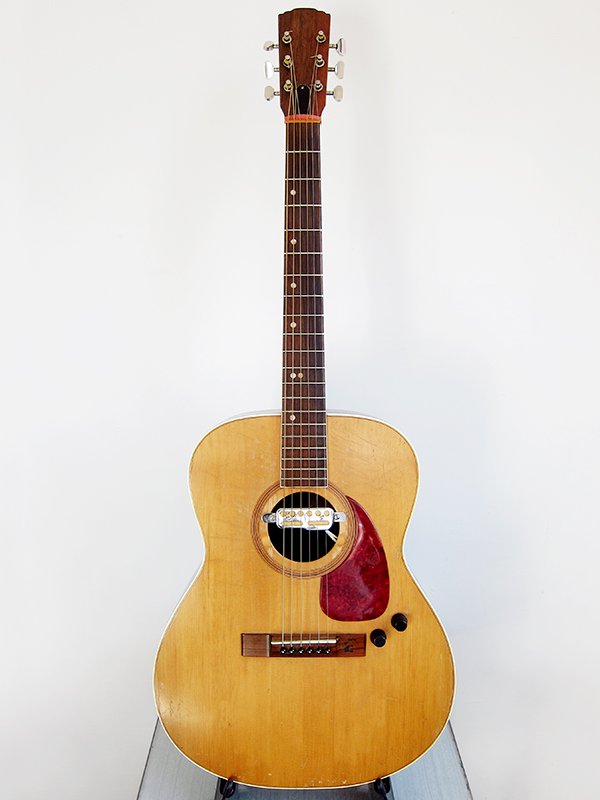
When I grew up back in Sweden we always had this old acoustic guitar standing in a corner. It was from my father and I never knew what make it was or how old it could be, my mum just told me that my dad bought it second hand in the early Seventies. Someone had sanded off the name on the headstock and taken off the sticker inside before my dad had bought it. I learned to play on this guitar and it’s still one of my favourites because of the thin neck and slightly smaller body. I recently had an epiphany and found out what guitar it is. About a month ago my girlfriend and I was watching a film and suddenly I got this weird feeling that I actually knew what make my dad’s acoustic guitar is, I recognised the head shape. I was convinced, it’s an old Levin. I have always thought that it was a Japanese guitar since the pickup looks like one of those Japanese gold foil pickups from the Sixties. I stopped the film and started to search for Sixties Levin guitars and managed to find a very similar one in a vintage guitar shop in Stockholm. I found some more info on the model and now even the serial number on top of the head made sense. It is a Levin LT-16 made in Göteborg, Sweden in 1966. The nickel plated individual Van Gent tuners with metal buttons can be found on Hagström guitars from this time as well. I wish that we would have taken better care of it over the years and that I wouldn’t have been so hard with the pic when I first learned to play but at least now after more than four decades of family confusion we know what it is. It’s a Swedish Levin.
Levin LT-16 / Goya T-16 Grand Concert size: Body width: 380 mm, body length: 480 mm, body depth: 98 mm
Fingerboard width: 43 mm, scale length: 630 mm
Spruce top, mahogany back and sides, 4-ply bound top, single-bound back
Mahogany bolt-on neck with adjustable truss rod
Single-bound rosewood fingerboard with bass side pearloid dot inlay.
Rosewood bridge, nickel plated individual Van Gent tuners with metal buttons
Matte natural finish and ten year warranty




 The Levin family back in the days, from left to right: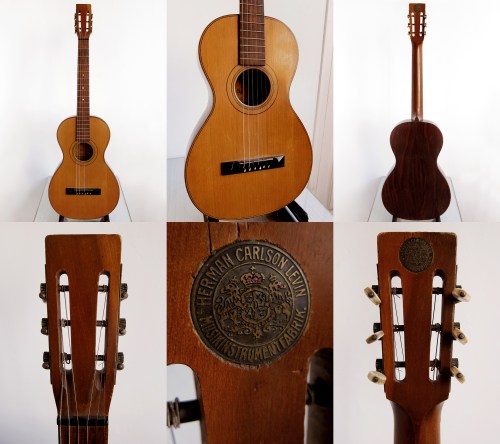





 Claescaster