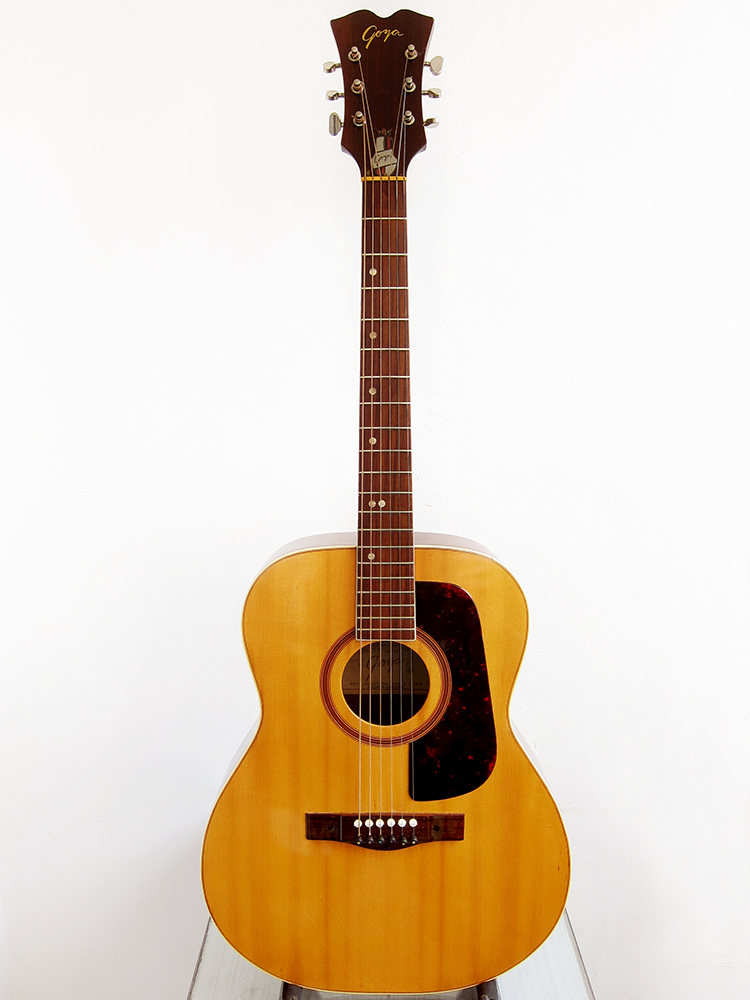
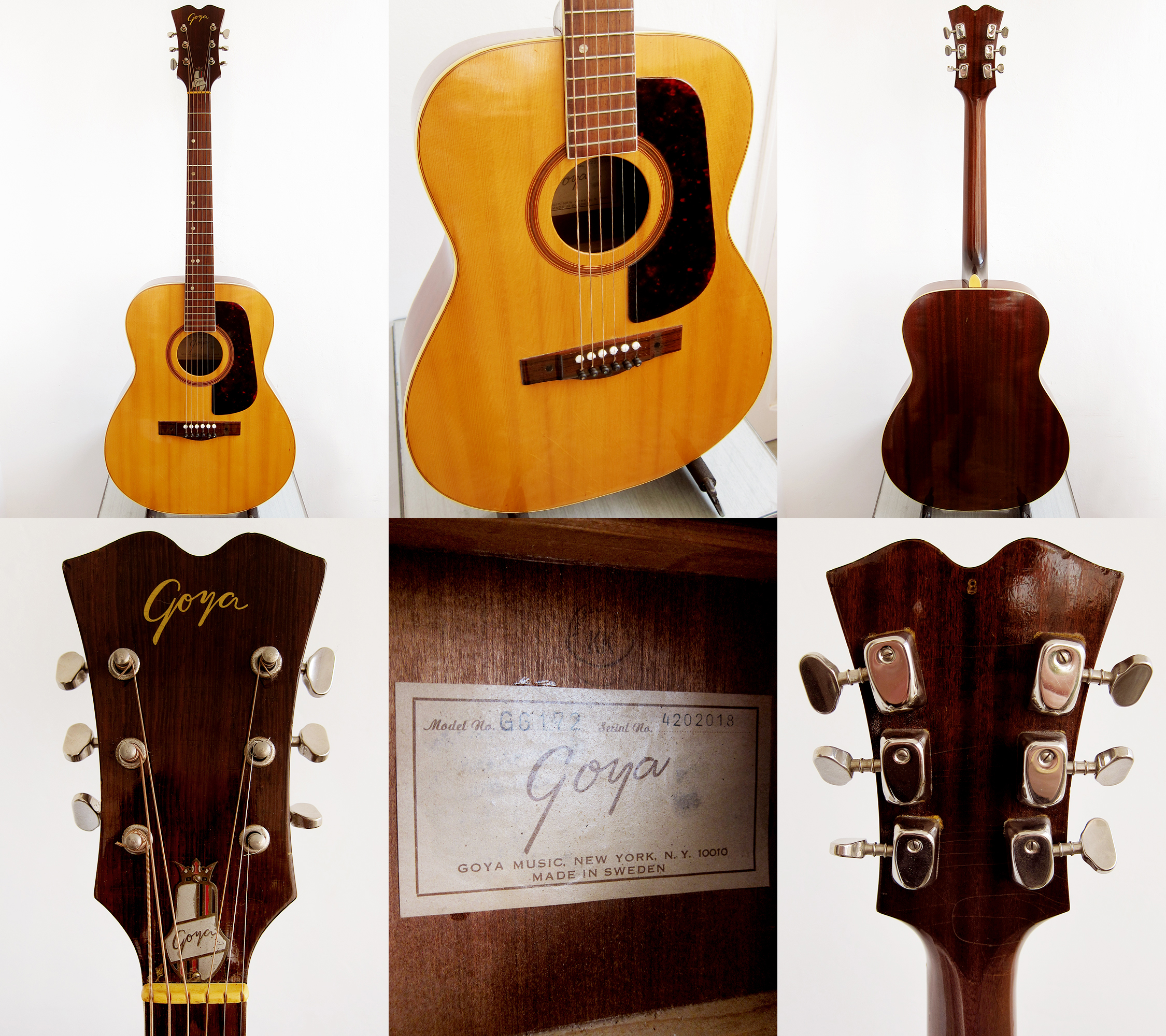
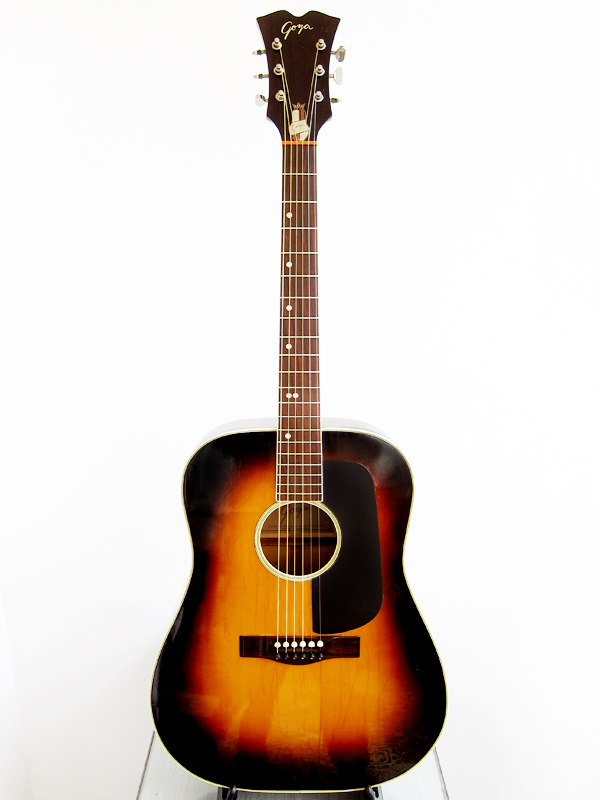
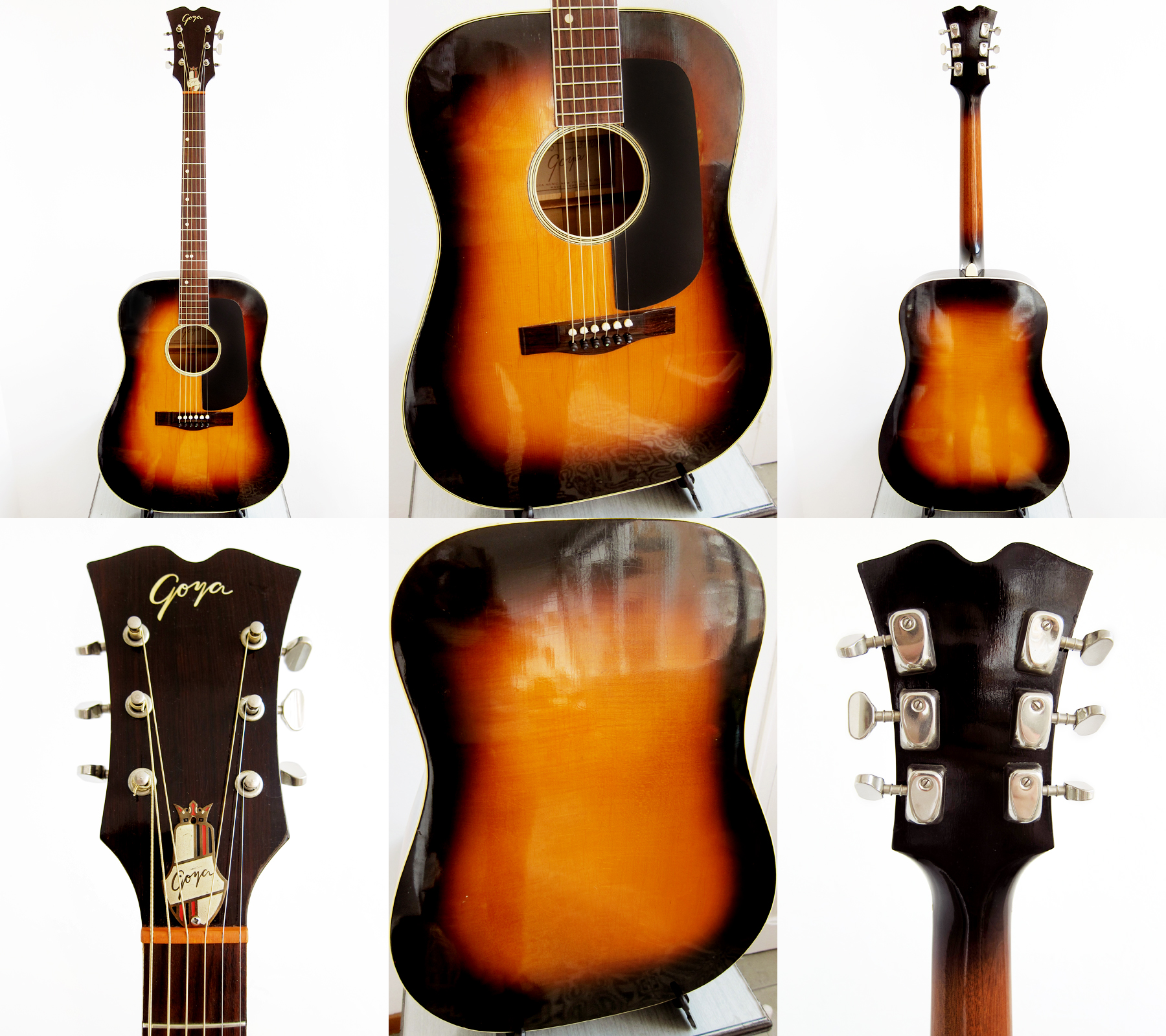
I feel really ashamed, I’ve had a beautiful Levin at home since June without fixing her up. There was a lot of things to got in the way, me building a Telecaster from scratch being the main one, but also that I had a lot of different ideas of what to do with this guitar that in the end never happened. This is my 8th Levin, or actually it’s number 9 in the collection since I got my 1951 Levin Royal after. It’s an old worn Goya Model GG-172 from 1970, according to Vintage Guitars Sweden. You can check how old your Levin / Goya is here, Levin serial numbers / Goya serial numbers. It plays very well now after my little restoration and starts to sound better and better, I have a feeling that no one has played this for a very long time. The Goya GG-172 is grand concert sized Levin, the same size as my dad’s old Levin LT-16. They are 38 cm wide just like a Martin 000, they are 15″ which is 38.1 cm. It’s a very nice size to play, slightly smaller than a normal Dreadnought but with decent bass from the solid mahogany back and sides. I bought the guitar via eBay from a pawn shop in Browns Mills, New Jersey, I freaking love the internet. I used the Global Shipping Program which worked fine this time as well, it took 2 weeks just like it did when I bought my Goya 163. I really wished that the Japanese sellers would start with this as well since it was such a mess when I bought my K.Yairi TG-40, it took 40 days to get through customs, with the Global Shipping Program you pay all the import taxes and charges straight away so it just goes straight trough customs without any delays. It’s a really nice little Levin but since I have 9 of them now and actually another on the way, I might have to consider selling it to make some room. If you are interested send me an email to claesgellerbrink@gmail.com
Levin Model 172 / Goya Model 172 / Goya GG-172 Grand Concert size: Body width: 380 mm, body length: 480 mm, body depth: 98 mm
Fingerboard width: 43 mm, scale length: 630 mm
Spruce top, mahogany back and sides, 4-ply bound top, single-bound back
Mahogany bolt-on neck with adjustable truss rod
Single-bound rosewood fingerboard with bass side pearloid dot inlay
Rosewood bridge with individual height adjustable plastic saddles
Nickel plated individual Van Gent tuners with metal buttons
Matte natural finish and ten year warranty
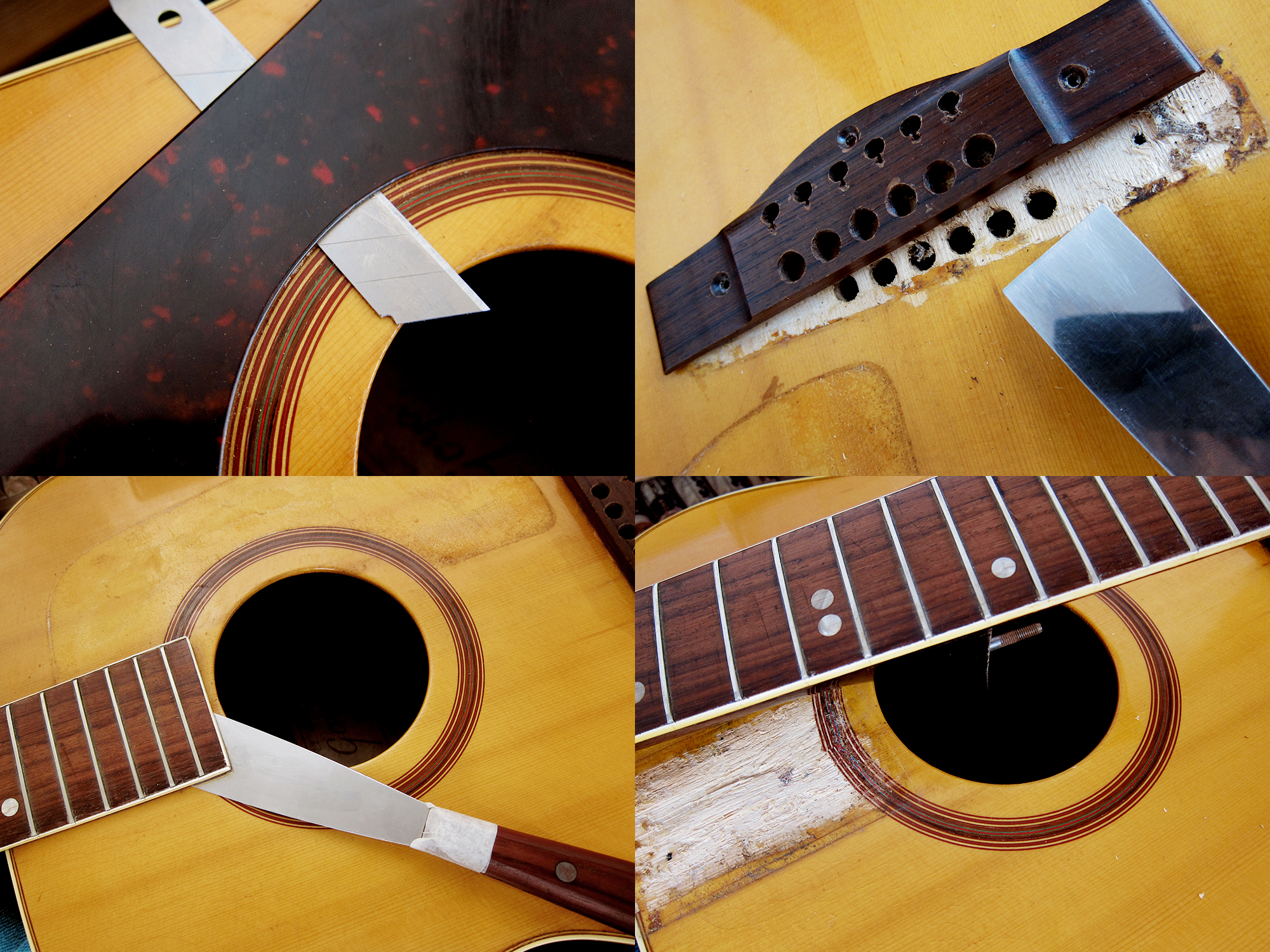
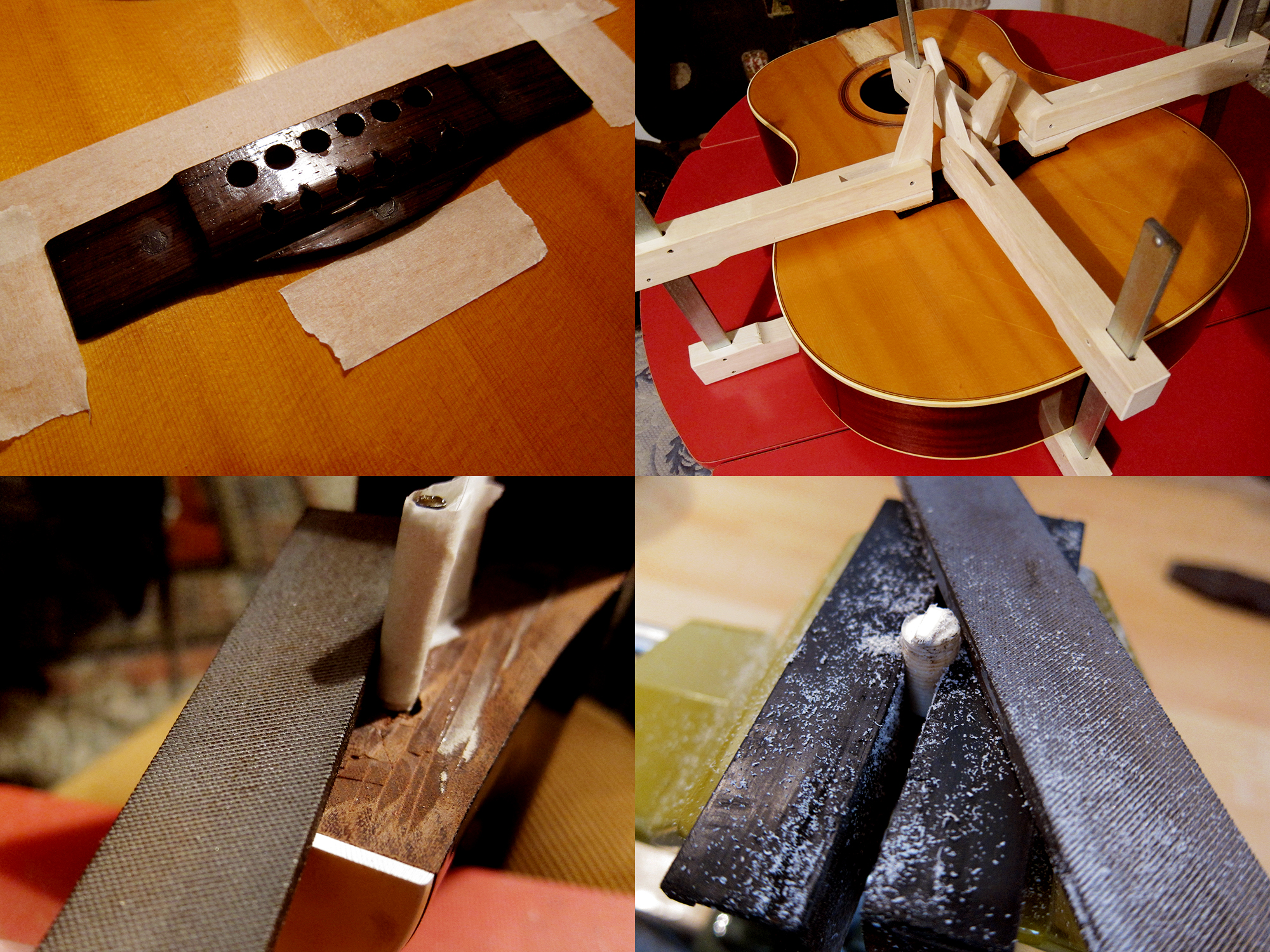
I started with taking the guitar apart. The neck needed a reset, the pickguard was loose and the previous owner had bolted the bridge to the top. I used a spatula that I heated on a normal clothes iron, worked like a charm.
I filled the holes in the bridge and then glued it back. I filed down the heel to get the neck angle correct and get guitar playable again. I re-glued the pickguard and reshaped the top on the saddle screws.
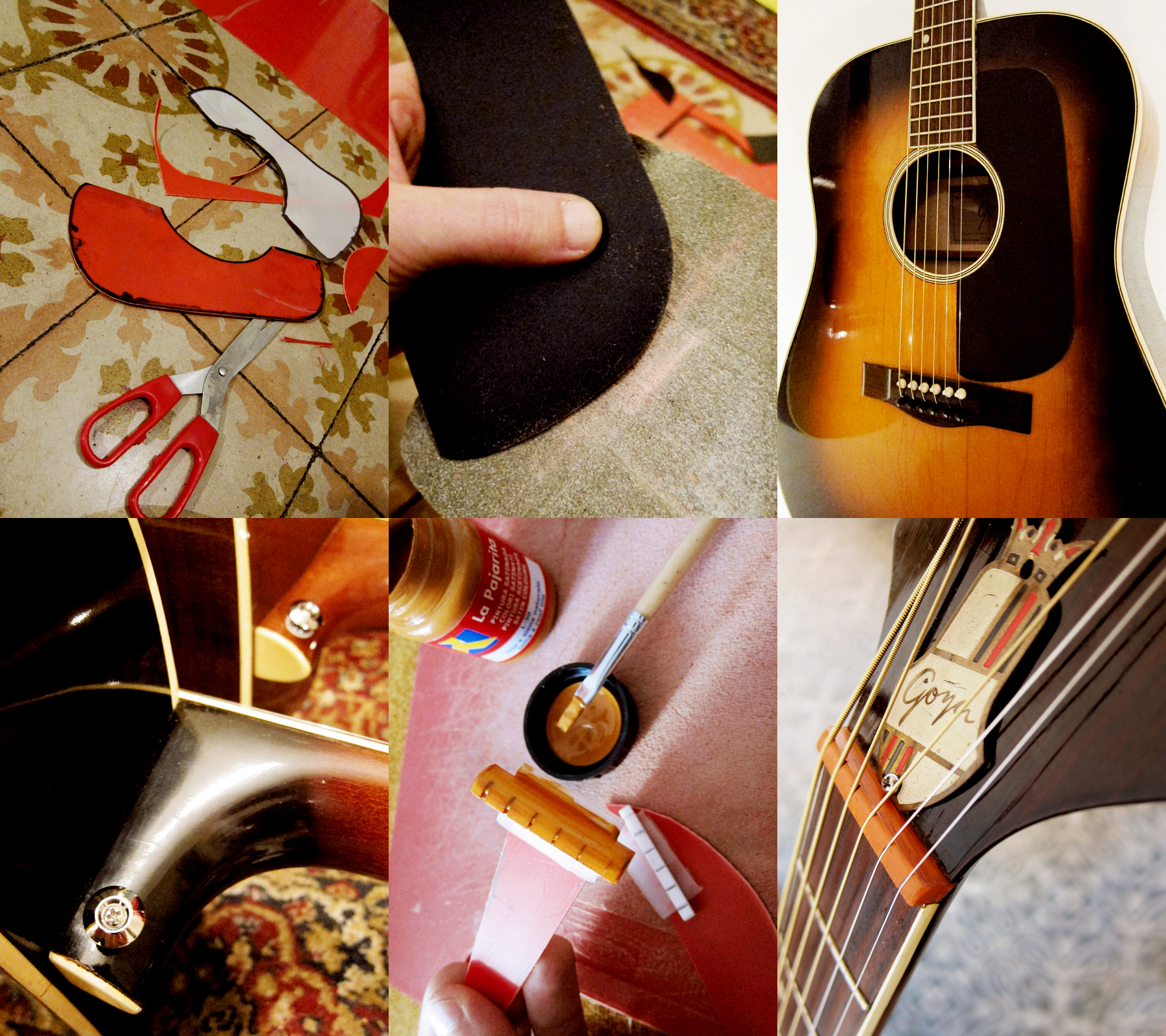
I thought I might as well post some images of the Goya 163 I received back in January. There was some work to be done, actually quite a lot. First I had to reset the neck to get the action down and then I had to remove the bridge and redo the saddle screws. I cut a new pickguard over the weekend, well it’s not perfect yet, I’m still looking for a better material but it will do for now. I bought this Goya from a girl called Marilyn Moser in Maynard, Massachusetts. She had used the guitar for some live gigs in the New York area but gave up on it because of the high action, it was fairly unplayable when I got it. The guitar came with a nice handwritten note to me, the new owner, that’s why I got curious to find out a bit more about her. Here are links to some of her music and her awesome 1960’s blog.
Levin 163 / Goya 163 Goliath size: Body width: 400 mm, body length: 505 mm, body depth: 95/120 mm
Fingerboard width: 43 mm, scale length: 630 mm
Spruce top, flame maple back and sides, 4-ply bound top, single-bound back
Mahogany bolt-on neck with adjustable truss rod
Single-bound rosewood fingerboard with bass side pearloid dot inlay
Rosewood bridge with individual height adjustable plastic saddles
Nickel plated individual Van Gent tuners with metal buttons
Sunburst finish and ten year warranty
I still haven’t found a good pickguard material. Well the red plastic that I happened to find in the street is actually perfect but who wants a red pickguard. I’ve managed to find 0.8 mm thick matt black plastic but I need something around 1-1.5 mm and preferable in high gloss jet black or even better in red tortoise. I fitted a strap button in the usual place, and then I painted the new bone nut orange to match the original Levin Galalith nut.
Update: March 21, 2014The pickguard material I ordered from China looked a lot classier than expected so I cut in to shape and put it on
I was back in Sweden over the weekend and I was really hoping to extend my Levin collection. I had seen a couple of guitars that I wanted to go and try but in the end I didn’t have time to do anything more than just visit my family, which was the reason why I went back in the first place. I really don’t need any more guitars but since I’m so happy with my Goya T-18 I can’t stop looking for other Levin’s. I actually did manage to extend my collection but not while in Sweden, I won a Levin LM-26 from 1959 on eBay the night before I left Barcelona. It needs quite a bit of work so as soon as it arrives here and I’ll start to fix it up I will post some pictures and write more about it. What I have gathered so far by talking to Levin owners on Swedish forums is that the Sixties ones sound more like old Gibson’s and the Seventies Levin’s are closer to Martin, which makes sense since C.F. Martin & Co bought Levin in 1973. It might all be in my head but I think there is a bit of Gibson sound over my Goya T-18. The three Levin models that I’ve been dreaming of, after the Levin LM-26 but that’s already sorted now, is the stupidly beautiful Levin/Goya M-50, the awesome Levin/Goya 174 and the less impressive looking but supposedly amazing sounding Levin W 32 J. To find a Levin/Goya 174 shouldn’t be too hard, I might actually have already found one that I like. It would be a lot harder to come across a Levin/Goya M-50, I think it will be almost impossible so maybe that’s more of a lifelong Holy Grail project. They were too expensive to produce with all the extra bling, gold machine heads and mother of pearl cloud shaped inlays all over the fretboard so they stopped making them in the early Sixties. The Levin W 32 J is not that rare, they actually produced quite a few but people doesn’t seem to be too inclined to sell them and when they do, they are quite expensive. I have seen one, that I actually wanted to go and try, in Jam a guitar shop in Stockholm for 9500 SEK, around 1100€, which felt a bit much. It’s actually not that overvalued since The Fellowship of Acoustics in the Netherlands are selling their Levin’s on eBay for 1400-1600€. These are top end models we are talking about but since normal people that have inherited an old Levin or want to sell their old guitar see those guitar prices they of course think that their guitar is worth over 1000€ too, which isn’t always the case. I guess this over valuation makes my guitars worth more but at the same time it’s extremely annoying when you want to buy a new one and people wants an arm and a leg for them, or 1000€.
Last week I managed to become the proud owner of two new, or rather very old, Levin guitars. With some persistence, a huge dose of luck and some money changing hands I managed to get them both here safe and I already love them. I have always been a huge fan of Hagström, also built in Sweden, but didn’t know how much I loved Levin until I figured out that my dad’s old guitar was actually a Levin. It doesn’t have any markings on it but you can read about my Levin epiphany here. The problem with old guitars is that they quite often forgot to mention the model anywhere, so you have to do a lot of detective work. Luckily for me there is an awesome guitar shop, Vintage Guitars Stockholm, that has more or less everything Levin has ever made listed on their Levin information pages. They also have some info on Hagström and the brands built by Bjärton, and the rest of the brands built by Levin: C. F. Martin & Co, Clangiton, El-Goya, Goya, Kay-Tone, Klangola, Torres, Zandelin, Nivello, Rondo. I managed to track mine down to a Levin LT-16, Levin Model 65 and the amazing Levin Model 13 Ambassadör. These Levin guitars are a bit thin sounding compared to other guitars, well I don’t have any other guitars that are 70 years old, but still. Then again they aren’t full sized so no wonder that they lack a bit of bass compared to a dreadnought, but they are very light and extremely resonant in the higher register so they are perfect for finger picking. Either way I’m super happy to have found four so old and amazing guitars that have been built in the country where I grew up, Sweden.
Maybe I should add a little disclaimer here, this was originally posted back in August 2013, the Levin collection and my appreciation and understanding of the brand has grown a bit since then.
Herman Carlson Levin was a young furniture maker that moved from Gothenburg to America and got a job at a guitar manufacturer in 1888. He soon started his own company in New York building instruments and while he was back visiting Sweden he realised that the demand was even higher there. He moved back home and in 1895 started Herman Carlssons Instrumentfabrik in Gothenburg. They were only five instruments makers in 1903 when they built their 1000th guitar but they soon grew bigger and bigger. The factory was one of the best in Europe and between 1904 and 1912 Levin received many awards including the gold medal in Madrid in 1907 for best guitar as well as the exhibition’s Grand Prix price. By 1936 the 100,000th instrument had left the plant and Levin was marketing a successful line of archtop guitars, like the world famous Levin De Luxe 1938. Shortly before 1940 Levin employed a crew of 45 in facility of a 1000 m². In the 1950s, Levin launched a line of inexpensive guitars intended for schools and novice guitar players. These guitars were of lower quality than the rest of the Levin line up. In 1952 Jerome Hershman a guitar distributor from America noticed Levin guitars at a trade show in Germany and convinced the Levin company to let him market their guitars in America under the name Goya, Levin apparently sounded too Jewish. He also got Hagström to make some fine electric guitars for the US market as well. These nylon stringed Levin / Goya guitars got quite popular in the late 1950’s and especially with the folk singers in the 1960’s when they started to produce steel stringed guitars on a typical nylon stringed body. When Goya was sold in 1968 the Goya export was approximately 70% of Levin’s total production. They had a huge contract with Goya that they lost in this sale, something that took really hard on Levin and they had to close down the second factory they opened in Lessebo and let half of its work force go. A lot of companies got bought and sold over the next few years, Kustom bought Goya, Dude bought Kustom and in the end C. F. Martin & Co bought them all. In 1973 when Martin bought Levin, it became the headquarters for Martin Guitars and their Japan import brand Sigma Guitars in Europe, as well as actually producing a run of some 200 Martin D-18 acoustic guitars, which were labelled “LD-18 – Made In Gothenburg, Sweden. These are quite rare and expensive today. The last “real” Levin built in Sweden left the factory in 1979, they are still building nylon stringed Levin guitar in Sweden to this day. In 1982 Svensk Musik AB bought the name Levin and the remaining stock from C. F. Martin & Co and in 2000 they changed their name to Svenska Levin AB. They are now producing steel stringed guitars in the far east and have a small batch of nylon stringed guitars being built in Sweden. Here is the whole story about Levin together with some amazing photos, Levin History.
Hootenanny Singers sure liked their Levin guitars. Björn Ulvaeus, the guy on the far right got a bit famous later on with his next band, ABBA.
Levin was pretty much the main brand for acoustic instruments in Sweden back in the days. We also had Bjärton but they mainly made nylon stringed guitars and of course Hagström but they were more famous for their electric instruments, even though they built some really nice acoustic guitars together with Bjärton like the legendary Hagström J-45.
I’m not sure if it was the handsome chap to the left that built my Levin Model 13 Ambassadör. The Levin guitar factory on Kvillegatan 9 in Gothenburg in the late 1940’s.
Taken from the Levin catalogue 1968
In 1972 negotiations between the C. F. Martin & Co. and Levin results in that C. F. Martin & Co. purchases Levin in June 1973 and Levin got to make some 200 Martin D-18 acoustic guitars, which were labelled “LD-18 – Made In Gothenburg“
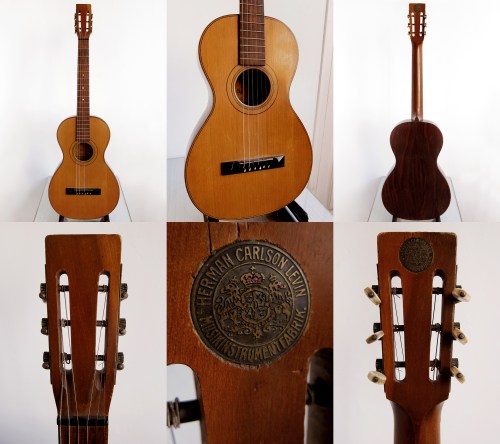 Levin Model 3 Made in Sweden 1914
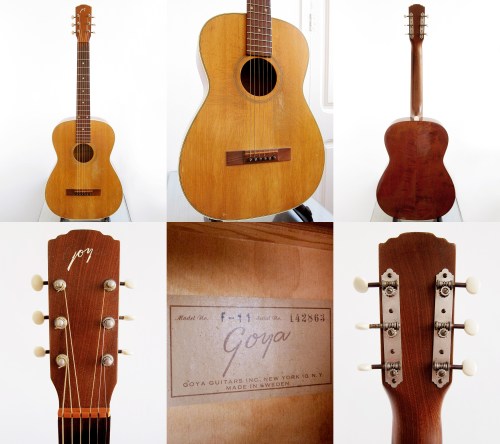 Goya F-11 Made in Sweden by Levin in 1963
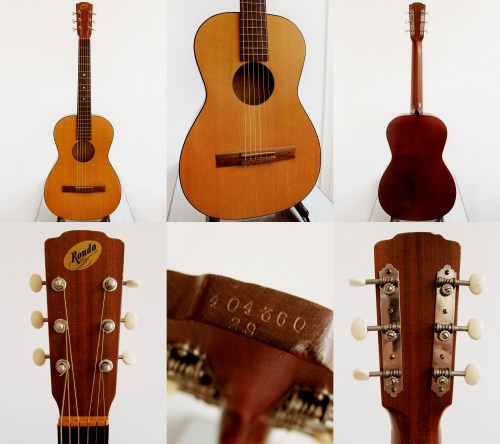 Rondo Model 29 Made in Sweden by Levin in 1960
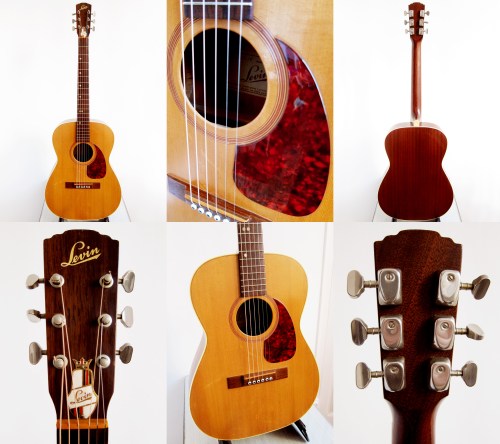 Levin LT-14 Made in Sweden 1965
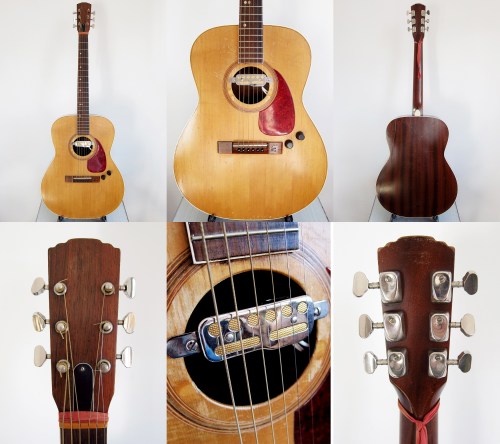 Levin LT-16 Made in Sweden 1966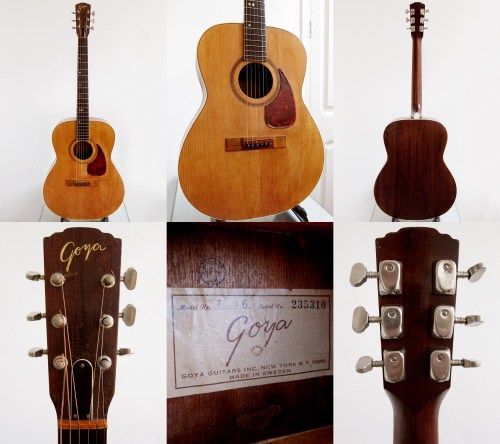
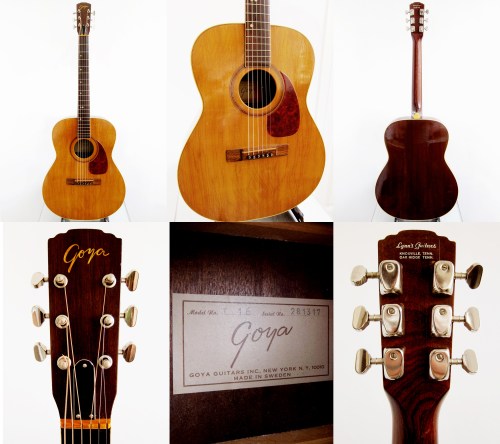
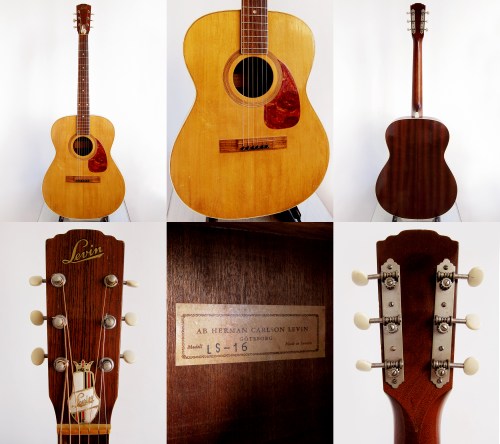 Levin LS-16 Made in Sweden in 1963
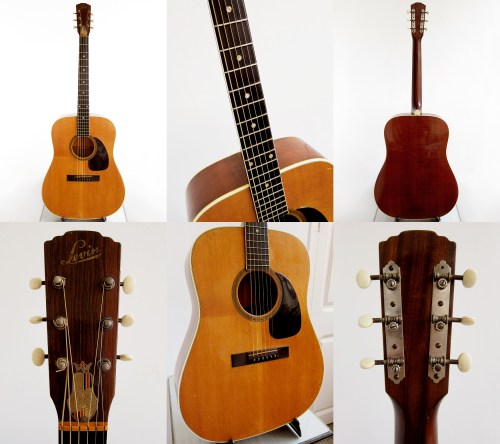 Levin LS-18 Made in Sweden 1960
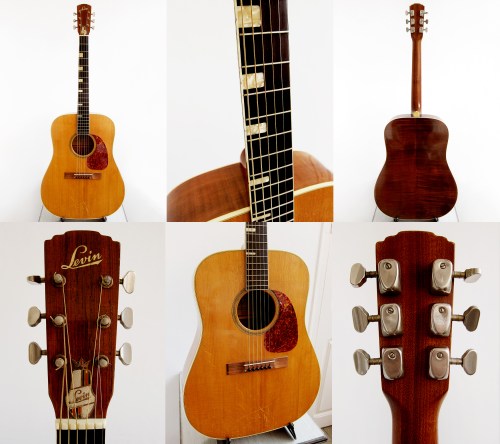 Levin LT-18 Made in Sweden 1963
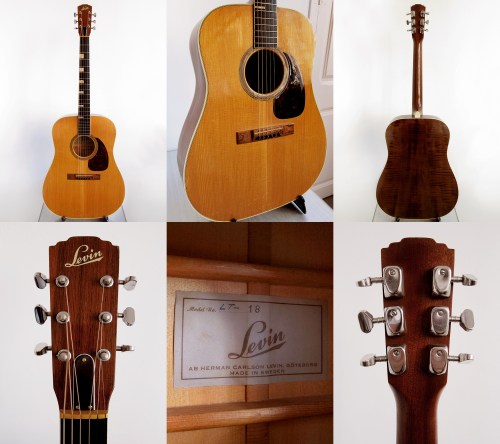 Levin LT-18 Made in Sweden 1966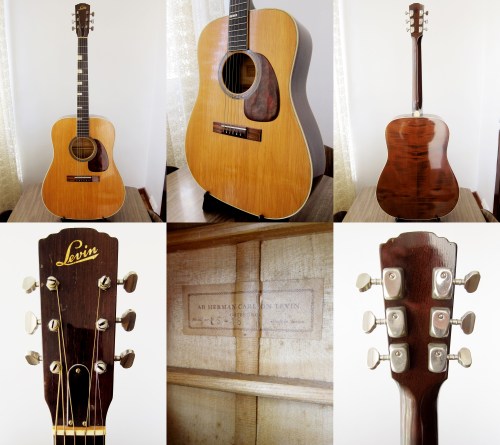
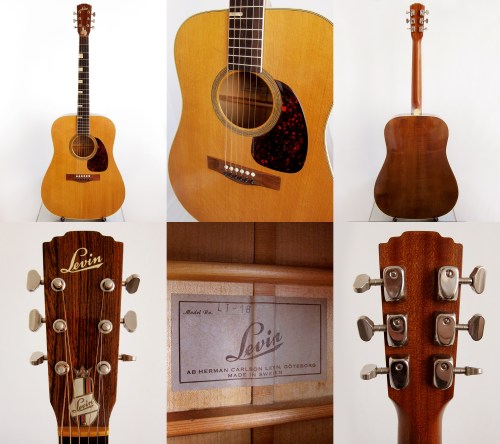
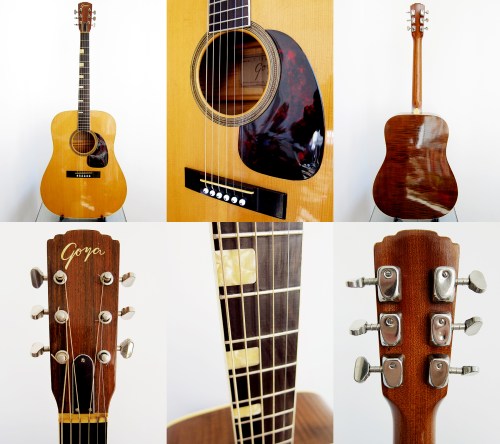 Goya T-18 Made in Sweden by Levin 1966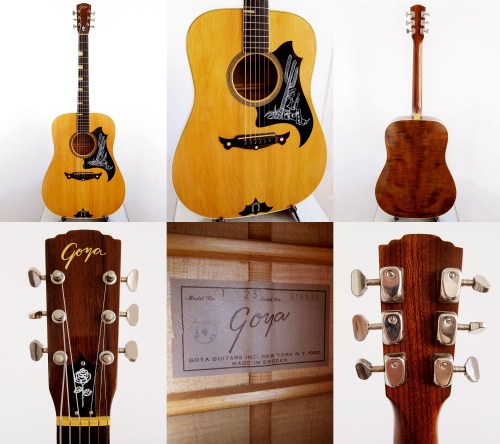
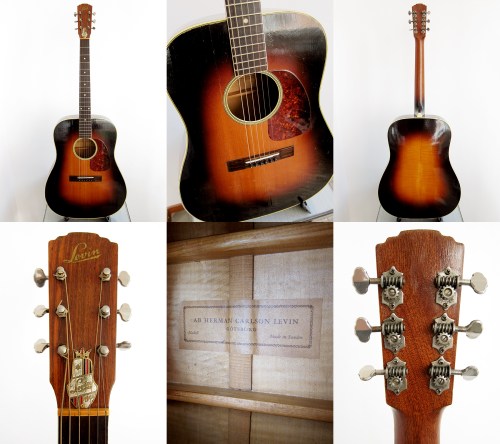 Levin LM-26 Made in Sweden 1959
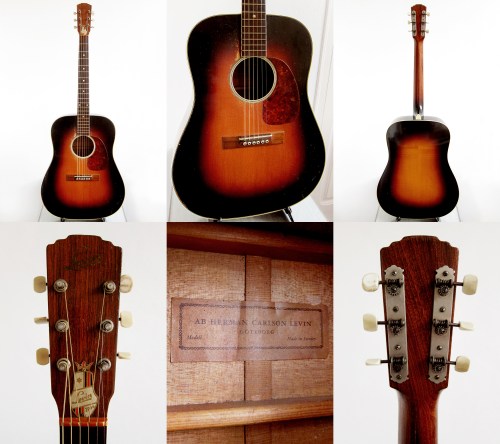 Levin LM-26 Made in Sweden 1959
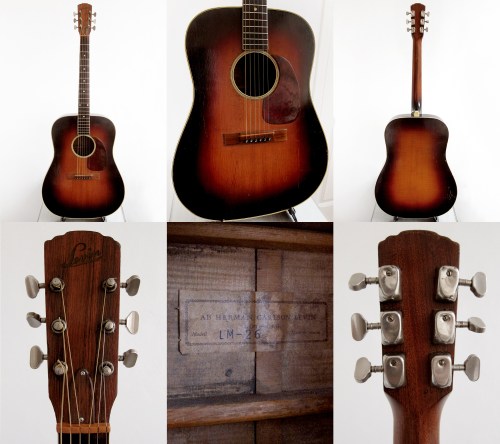 Levin LM-26 Made in Sweden 1963
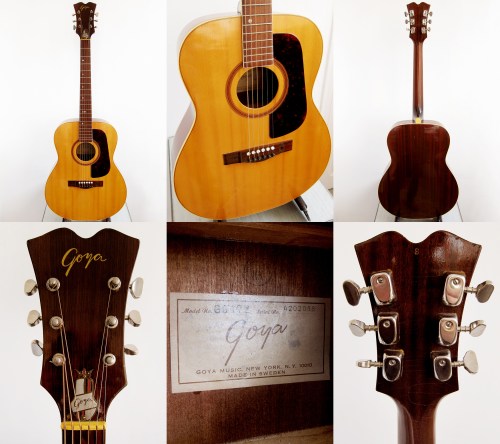 Goya GG-172 Made in Sweden by Levin 1970
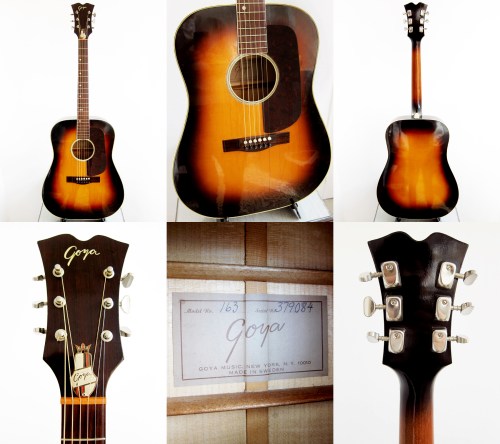 Goya Model 163 Made in Sweden by Levin 1968
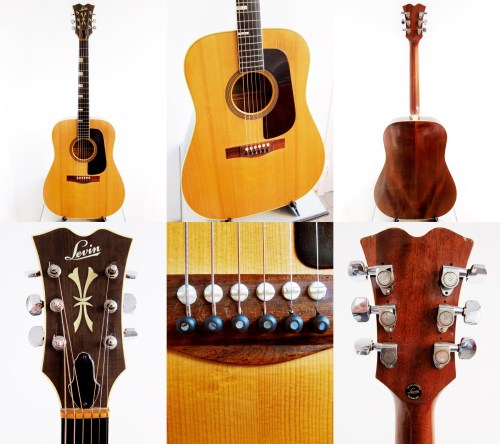 Levin Model 174 Made in Sweden 1972
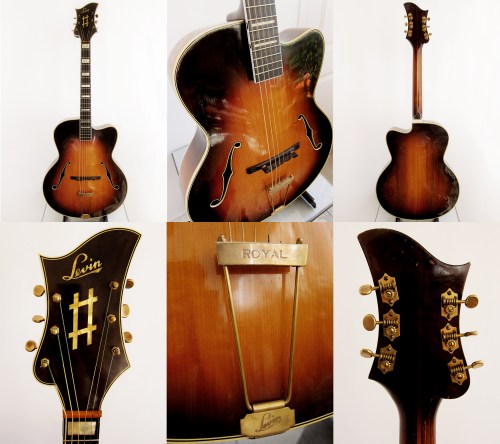 Levin Model 3 Royal made in Sweden 1951
 Levin Model 32 made in Sweden in 1946
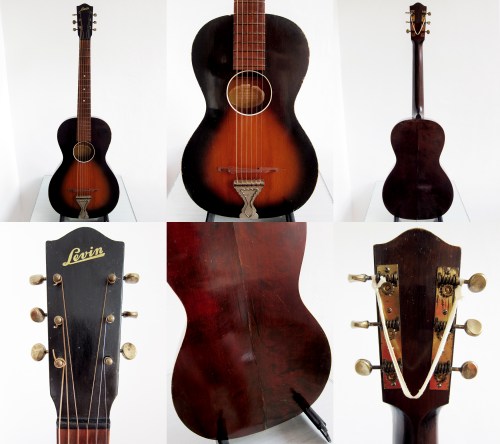 Levin Model 65 parlour guitar Made in Sweden 1942
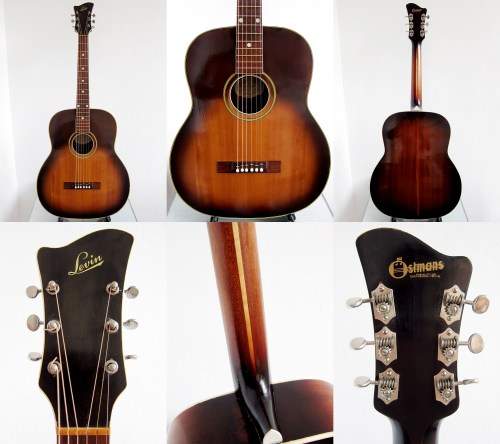 Levin Model 13 Ambassadör Made in Sweden 1950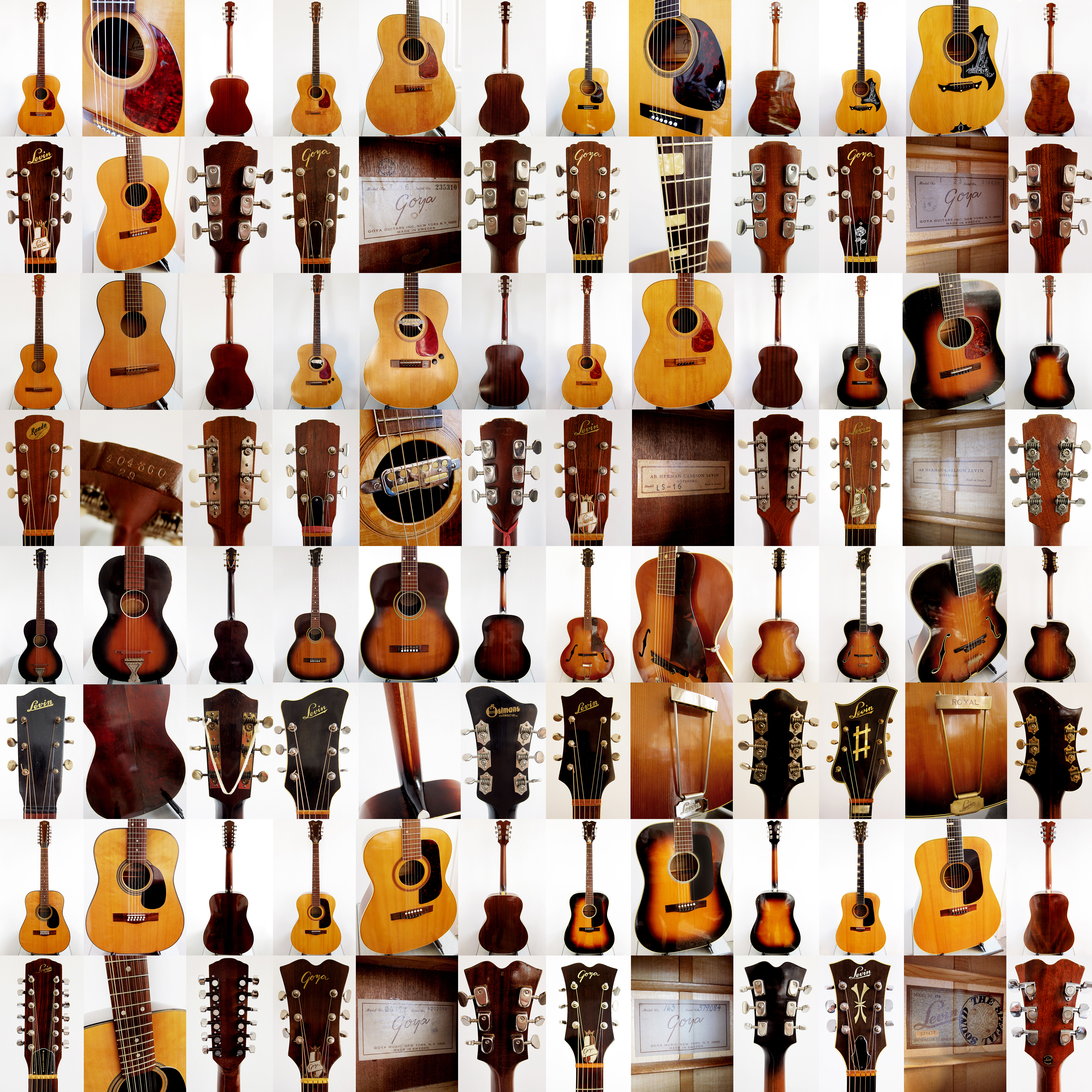




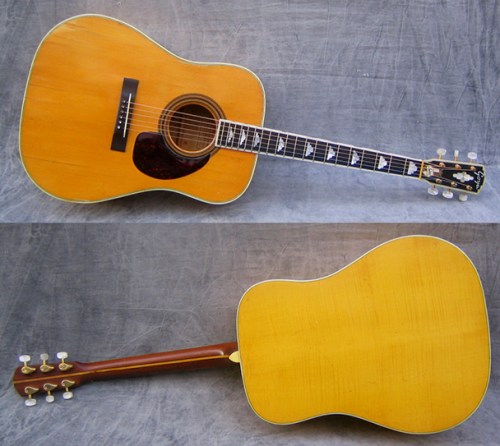
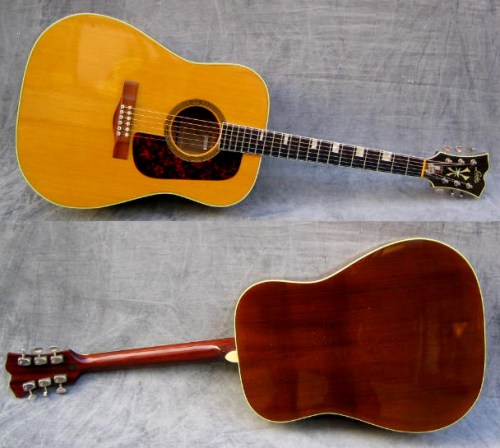
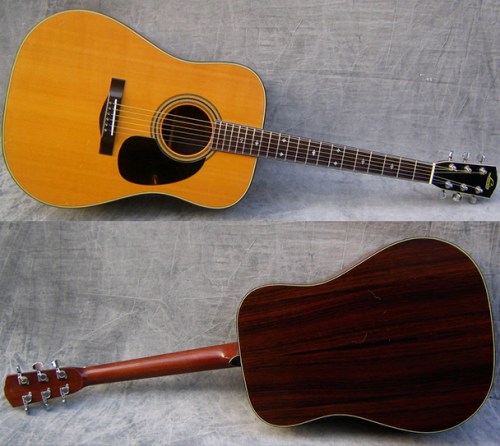
 The Levin family back in the days, from left to right: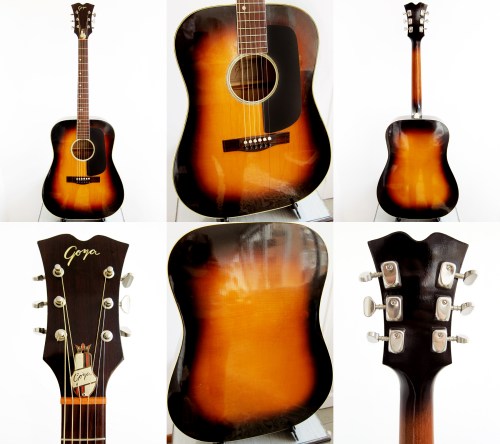



 Claescaster