Last week I got all the parts needed to try to refret my Tokai, Since I have never done any form of fret work before I thought it was a good idea to practice on some guitars before I got down to business on my beloved Les Paul. The first thing did was to crown and polish the frets on my EKO Ranger VI. It was a bit scary, like always when you do things for the first time, but I soon realised that it wasn’t harder than anything else I done in the past.
I masked the fretboard and then crowned the frets with my Uo-Chikyu medium fret crowning file. I read that was good to use 400, 600 and 1200 grit sandpaper to polish the frets but I could only find 400 and 800 here in Barcelona. Either way, it felt like the main difference was made by the last step, the wire wool.
Once the frets was shiny on smooth from the wire wool I went over them one last time with a cloth and some metal polish and the removed the masking tape and oiled up the fretboard with lemon oil. I decided to change the machine heads as well, I had a set of open back grover copies that seemed to suit fine. I think the neck almost looks like new now.
I only have on friend that likes Warren Zevon as much as me, which probably says more about my friends than the quality of Warren’s work. Warren Zevon might have been a raging lunatic, a wife beater and an alcoholic but I still thinks that he was an amazing songwriter and a great performer. It’s also pretty impressive to manage to write a song like Keep me in your heart for a while as a farewell to the world when you are about to die.
Tokai Love Rock LS-55 Les Paul Standard “Made in Japan” 1991
Today I did it, I decided to go all in and cross the final frontier when it comes to DIY guitar work and ordered everything needed for refretting my Tokai. It has really poor frets, well not only does the frets have big groves in it but it’s hardly any frets left. It’s such a nice guitar and she deserves to be brought back to her former 1991 glory. I have thought about this for a long time, well I’ve thought about refretting her since I bought her, but if I should pay someone 240-340€ to do it or if I should just learn how to do it myself. I have to say that my trust in the quality of any form of workmanship south of the Pyrenees is pretty low. I have seen too many people charge too much for things that I could have done better myself, hopefully I’m right this time to. I bought quite a lot of things from G.M.I. tools in Greece, a fret leveler, fret puller, hammer and then I got a neck support caul and a fret rocker from Guitars & Woods in Portugal. I always try to buy things from my Mediterranean neighbours if I can to help their economy out during the recession, even though I doubt that any of these eBay sellers pay tax. I struggled a lot when it came to what type of crowning file I should get, I watched a lot of Youtube videos to see what people were using but everyone had a different opinion. In the end I went for two fancy Japan made Uo-Chikyu files from Japarts in Canada, mainly because they were made in Japan and I’m gay for Japanese guitar things, and they had a cute fish as their logo which made me happy. I read a lot of good things about Dunlop’s fret wire on European forums, they seem to be pretty standard here, and a lot of bad things about them on American forums so in the end I trusted the Yanks and bought Jescar fret wire instead from Philadelphia Luthier. All in all I spent 172.73€ for tools that hopefully will last me a lifetime, two sets of fret wire, one for my Tokai Les Paul and one for a Strat/Tele, I don’t think you can get Jescar here so I thought I might as well get an extra set. I also got a cheap set of fret wire to practice with, I was going to refret my old Morgan neck, the original neck to the first Claescaster, just to try to get used to pulling frets and hammering new ones in. If I would just refret one guitar I guess I could just have paid someone 300€ to do it for me, but the main thing for me is to be able to crown and polish the frets on all my guitars, before they get big groves in the frets so I can’t play them. I’ve also notice that I tend to not play some guitars just because they have a bit of fret wear, not because they are hard to play, just because I don’t want them to get worse. That’s a ridiculous excuse for not playing your favourite guitars. I prefer to learn how to do it myself so the cost of refretting a guitar is 12-14€ for the fret wire, and then of course a huge amount of my time but that’s not as precious as having to pay 300€ for someone else to do it for me. Wish me luck!
Here is a list of what I ordered: Hiroshima Files Uo-Chikyu Medium Radius Fret Crowning File Hiroshima Files Uo-Chikyu Fret End Dressing File G.M.I. fret-fingerboard LEVELER 400mm(15.75”) G.M.I. fret puller-luthier’s tool-MADE IN GERMANY G.M.I. fret hammer-luthier’s tool-MADE IN GERMANY G.M.I. fretboard guards Bahco replacment files for G.M.I. fret bevel(3 different cuts) Guitar Neck Support Caul Stainless Steel Guitar Fret Rocker Laser Cut – Luthier Set 2.5mm Wide Nickel Silver Fretwire Jescar FW47104 Electric Medium/Jumbo Fretwire Pre-radiused 12″ Jescar FW43080 Electric Medium Fretwire Pre-radiused 9.5″
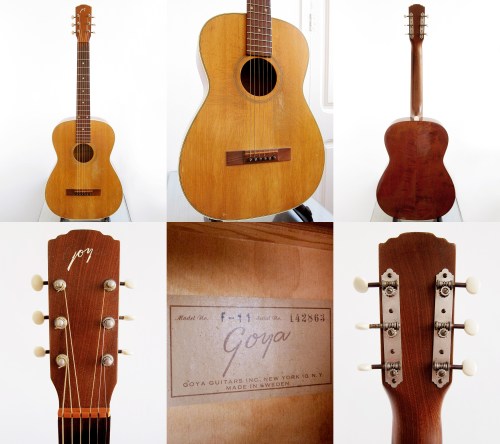
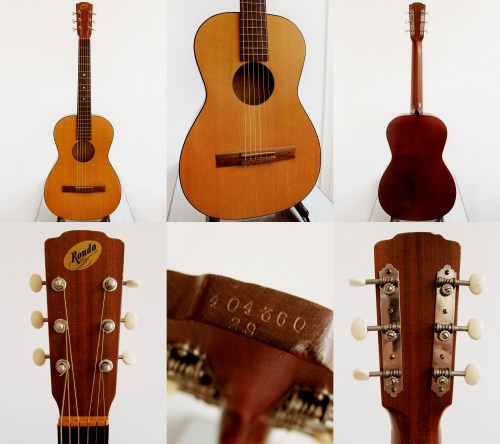
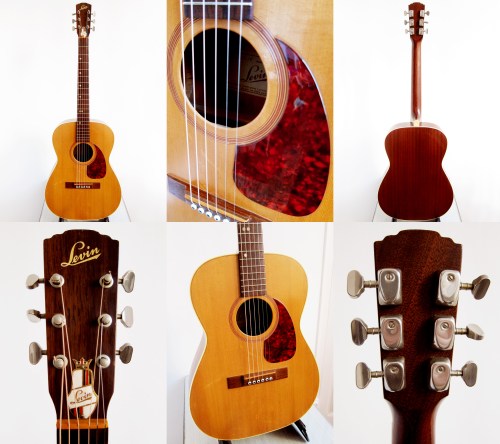
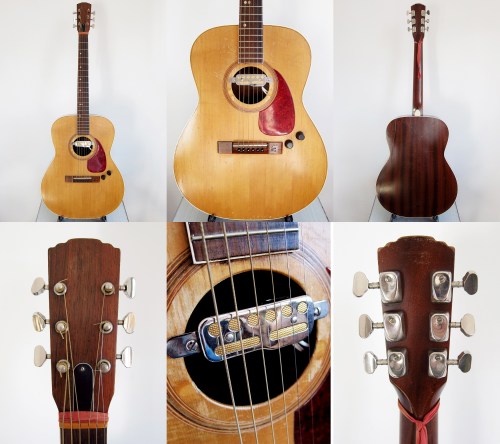
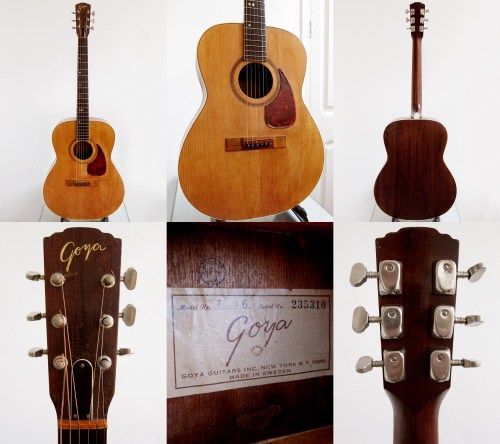
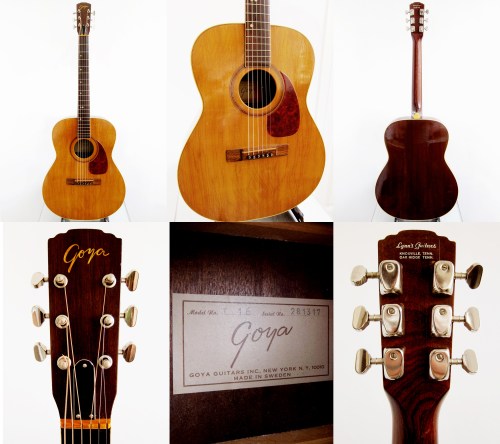
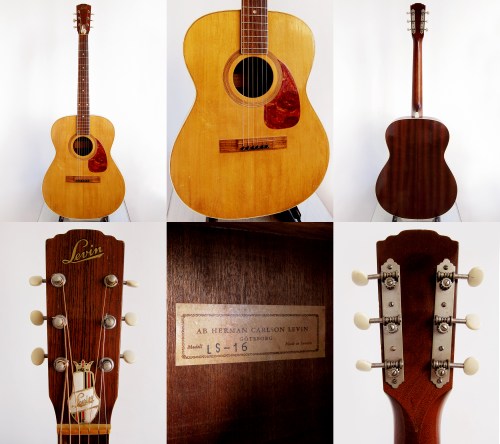
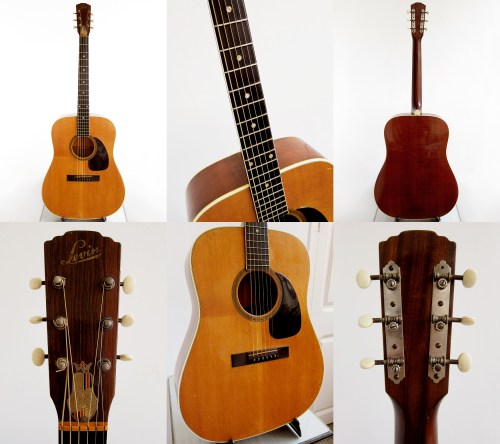
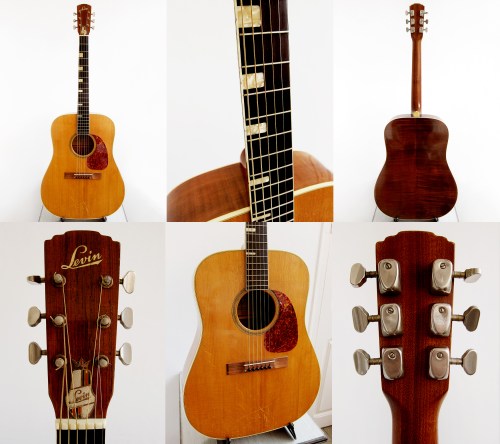
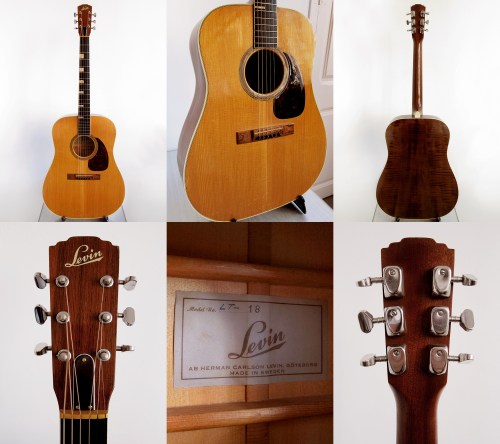
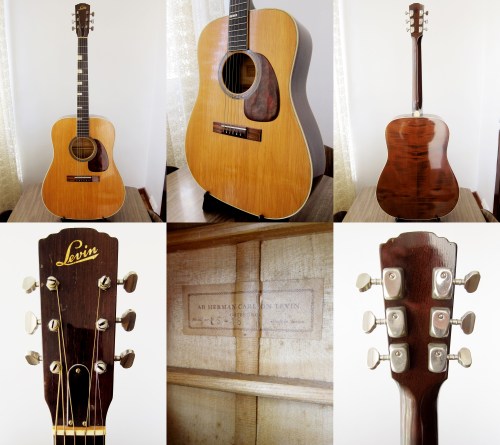
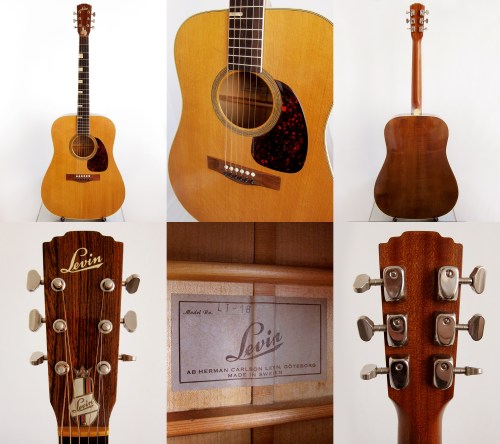
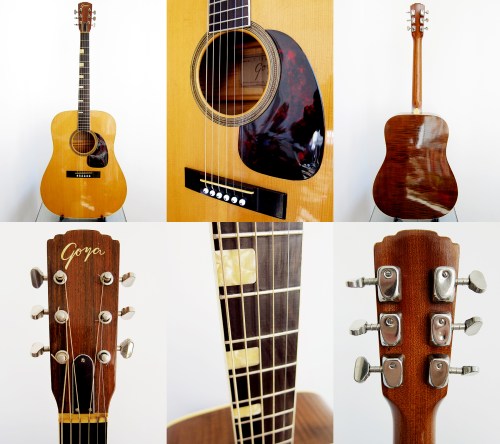
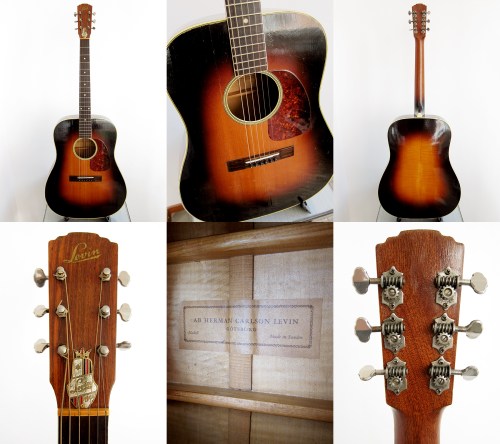
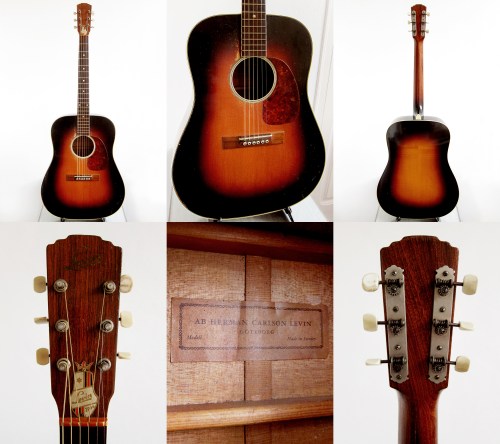
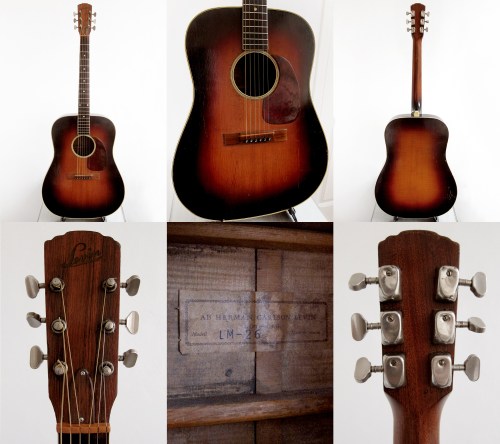
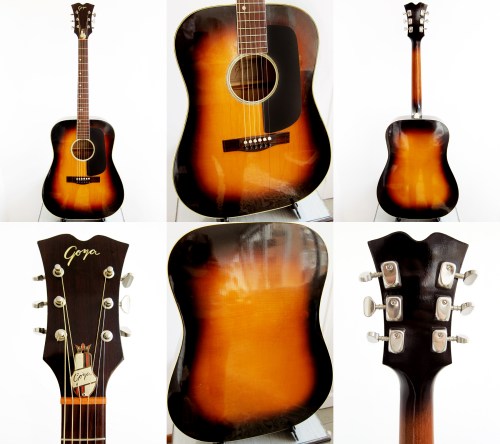
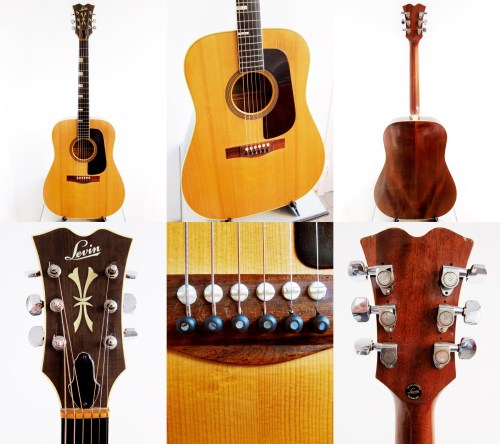
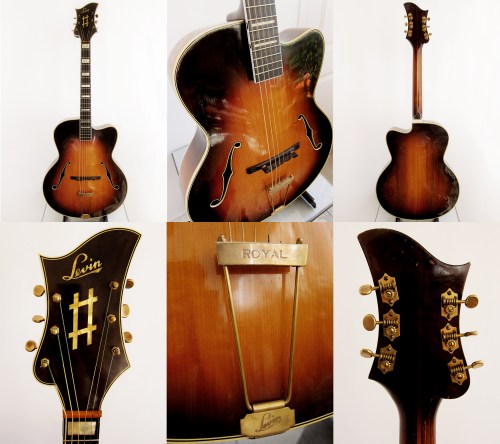
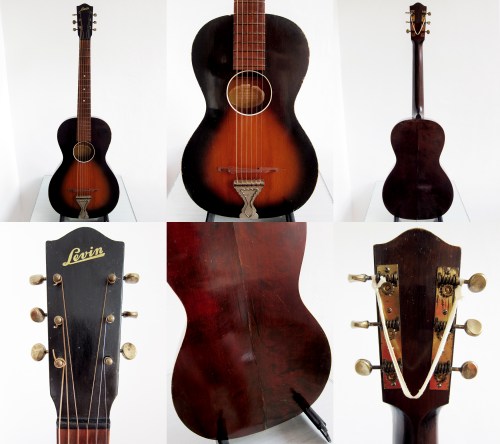
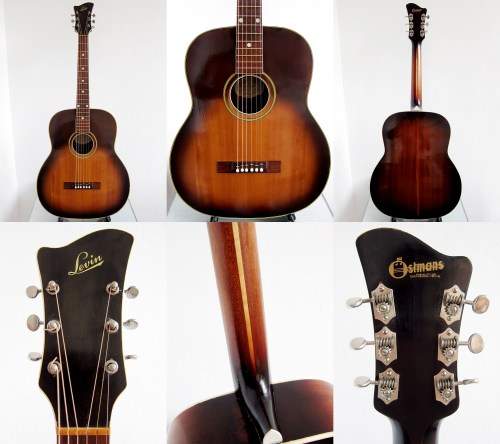
Last week I managed to become the proud owner of two new, or rather very old, Levin guitars. With some persistence, a huge dose of luck and some money changing hands I managed to get them both here safe and I already love them. I have always been a huge fan of Hagström, also built in Sweden, but didn’t know how much I loved Levin until I figured out that my dad’s old guitar was actually a Levin. It doesn’t have any markings on it but you can read about my Levin epiphany here. The problem with old guitars is that they quite often forgot to mention the model anywhere, so you have to do a lot of detective work. Luckily for me there is an awesome guitar shop, Vintage Guitars Stockholm, that has more or less everything Levin has ever made listed on their Levin information pages. They also have some info on Hagström and the brands built by Bjärton, and the rest of the brands built by Levin: C. F. Martin & Co, Clangiton, El-Goya, Goya, Kay-Tone, Klangola, Torres, Zandelin, Nivello, Rondo. I managed to track mine down to a Levin LT-16, Levin Model 65 and the amazing Levin Model 13 Ambassadör. These Levin guitars are a bit thin sounding compared to other guitars, well I don’t have any other guitars that are 70 years old, but still. Then again they aren’t full sized so no wonder that they lack a bit of bass compared to a dreadnought, but they are very light and extremely resonant in the higher register so they are perfect for finger picking. Either way I’m super happy to have found four so old and amazing guitars that have been built in the country where I grew up, Sweden.
Maybe I should add a little disclaimer here, this was originally posted back in August 2013, the Levin collection and my appreciation and understanding of the brand has grown a bit since then.
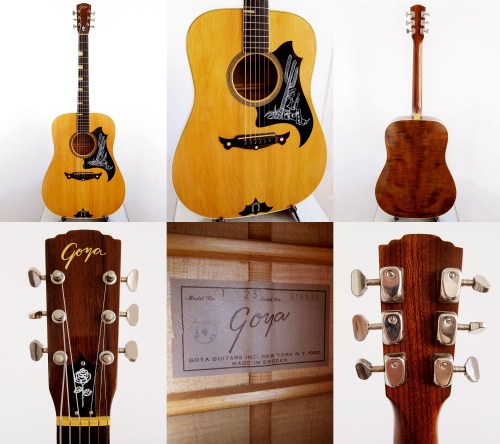
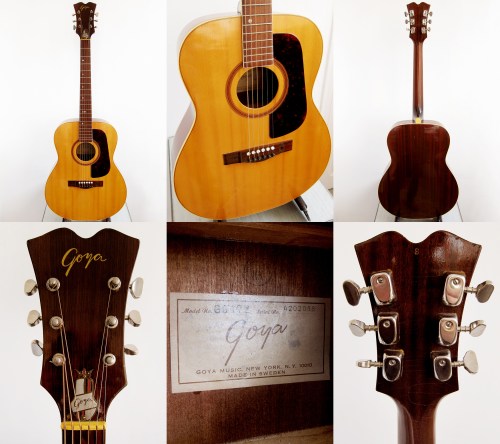
Herman Carlson Levin was a young furniture maker that moved from Gothenburg to America and got a job at a guitar manufacturer in 1888. He soon started his own company in New York building instruments and while he was back visiting Sweden he realised that the demand was even higher there. He moved back home and in 1895 started Herman Carlssons Instrumentfabrik in Gothenburg. They were only five instruments makers in 1903 when they built their 1000th guitar but they soon grew bigger and bigger. The factory was one of the best in Europe and between 1904 and 1912 Levin received many awards including the gold medal in Madrid in 1907 for best guitar as well as the exhibition’s Grand Prix price. By 1936 the 100,000th instrument had left the plant and Levin was marketing a successful line of archtop guitars, like the world famous Levin De Luxe 1938. Shortly before 1940 Levin employed a crew of 45 in facility of a 1000 m². In the 1950s, Levin launched a line of inexpensive guitars intended for schools and novice guitar players. These guitars were of lower quality than the rest of the Levin line up. In 1952 Jerome Hershman a guitar distributor from America noticed Levin guitars at a trade show in Germany and convinced the Levin company to let him market their guitars in America under the name Goya, Levin apparently sounded too Jewish. He also got Hagström to make some fine electric guitars for the US market as well. These nylon stringed Levin / Goya guitars got quite popular in the late 1950’s and especially with the folk singers in the 1960’s when they started to produce steel stringed guitars on a typical nylon stringed body. When Goya was sold in 1968 the Goya export was approximately 70% of Levin’s total production. They had a huge contract with Goya that they lost in this sale, something that took really hard on Levin and they had to close down the second factory they opened in Lessebo and let half of its work force go. A lot of companies got bought and sold over the next few years, Kustom bought Goya, Dude bought Kustom and in the end C. F. Martin & Co bought them all. In 1973 when Martin bought Levin, it became the headquarters for Martin Guitars and their Japan import brand Sigma Guitars in Europe, as well as actually producing a run of some 200 Martin D-18 acoustic guitars, which were labelled “LD-18 – Made In Gothenburg, Sweden. These are quite rare and expensive today. The last “real” Levin built in Sweden left the factory in 1979, they are still building nylon stringed Levin guitar in Sweden to this day. In 1982 Svensk Musik AB bought the name Levin and the remaining stock from C. F. Martin & Co and in 2000 they changed their name to Svenska Levin AB. They are now producing steel stringed guitars in the far east and have a small batch of nylon stringed guitars being built in Sweden. Here is the whole story about Levin together with some amazing photos, Levin History.
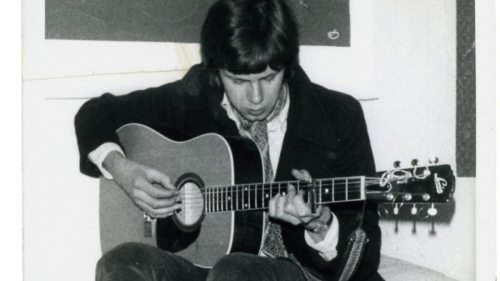
Hootenanny Singers sure liked their Levin guitars. Björn Ulvaeus, the guy on the far right got a bit famous later on with his next band, ABBA.
Levin was pretty much the main brand for acoustic instruments in Sweden back in the days. We also had Bjärton but they mainly made nylon stringed guitars and of course Hagström but they were more famous for their electric instruments, even though they built some really nice acoustic guitars together with Bjärton like the legendary Hagström J-45.
I’m not sure if it was the handsome chap to the left that built my Levin Model 13 Ambassadör. The Levin guitar factory on Kvillegatan 9 in Gothenburg in the late 1940’s.
Taken from the Levin catalogue 1968
In 1972 negotiations between the C. F. Martin & Co. and Levin results in that C. F. Martin & Co. purchases Levin in June 1973 and Levin got to make some 200 Martin D-18 acoustic guitars, which were labelled “LD-18 – Made In Gothenburg“
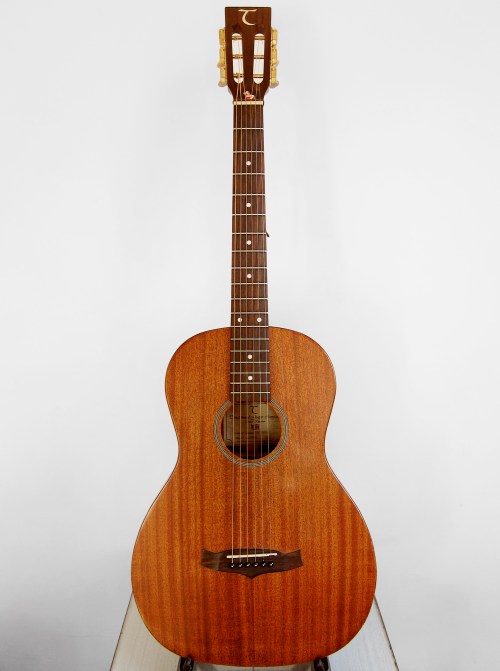
Vintage V880N Parlour acoustic, newly fitted with a ARTEC PP-607 undersaddle Piezo pickup
I got the basic ARTEC PP-607 undersaddle Piezo pickup cheap of eBay, I think it was 15€ with the endpin jack including shipping. I got around to install it last night and I have to say that I’m well pleased with the result. I had read that Piezo’s without a preamp isn’t much but I have to say I disagree. This pickup is way louder than some magnetic soundhole pickups I’ve used in the past and sounds ten times more acoustic and natural. It’s without any doubt my favourite way to amplify an acoustic guitar, well I still haven’t tried fancy things like the LR Baggs M1, I have been thinking of investing in one of those. However, this is a cheap, discrete and really nice way of playing electric with an acoustic guitar.
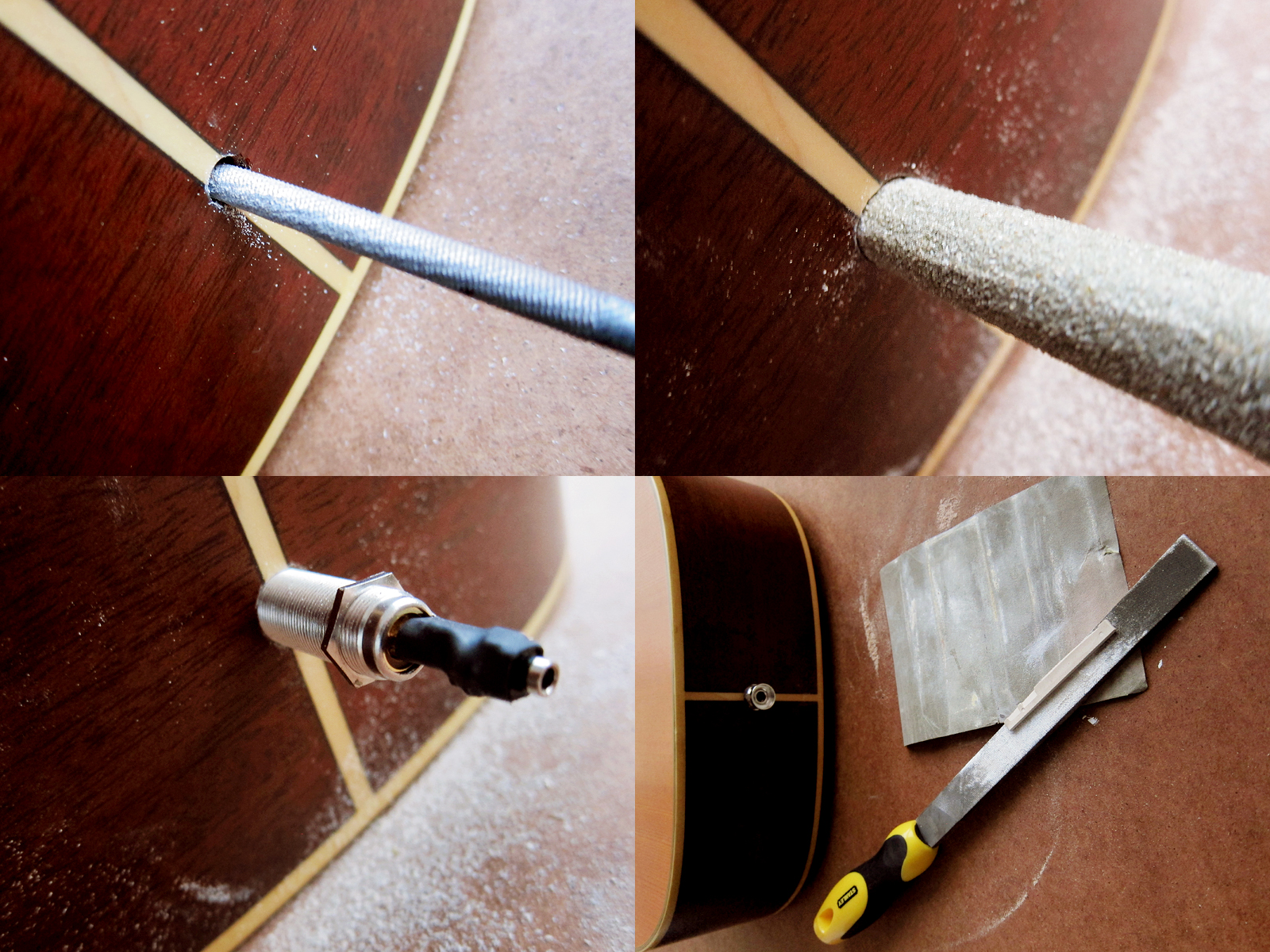
I just drilled a 2 mm hole through the bridge. I wish I wouldn’t have been so lazy and gone and bought a 3 mm drill because the 2 mm was too small and the next size up in my tool box was a 4 mm which would have been too big. I tried to widen the hole with a screw, which worked but it was still a bit tight so when I was fiddling with getting the plug through the hole the plug came off. I was so happy to have purchased a solder free pickup that you could just plug in to the endpin jack, but no, not this time. I had to take the soldering iron out and fix it. I managed to figure out that the thin wire in the middle, the one shielded with plastic, should be connected to the top of the plug and the wide braided wire should be soldered to the side. It worked.
I start to get used to making holes in acoustic guitars now to fit the endpin jack, this was the third one I did. I normally use a round file first to make the hole big enough and then even it out with some sandpaper rolled up, just to get the hole perfectly round. It’s important to check all the time with the plug from the outside so you don’t make the hole too big. Next I had to file down the saddle to compensate the extra height from the pickup.
I’m after a Japan made Martin D42/D45 copy. If anyone happens to see one for sale, please let me know. It doesn’t have to be a Alvarez or Yairi, Morris, Mountain, Suzuki, Aria and pretty much anything else would do as long as it’s made in Japan in the 1970’s or early 1980’s. However, it has to have the hexagon inlays and binding around the top and soundhole.
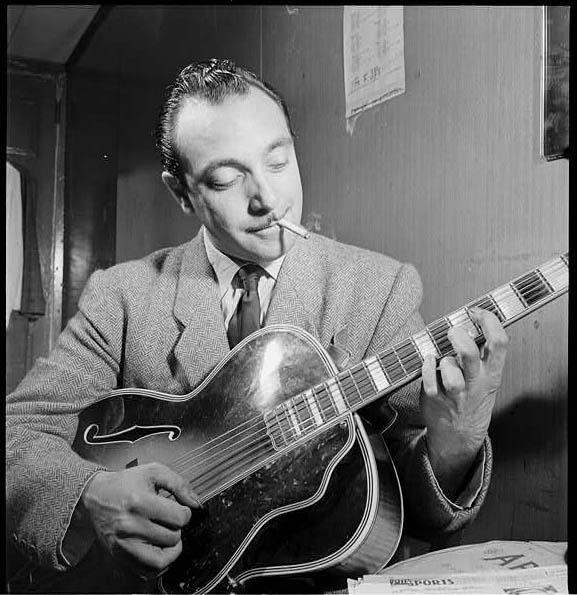
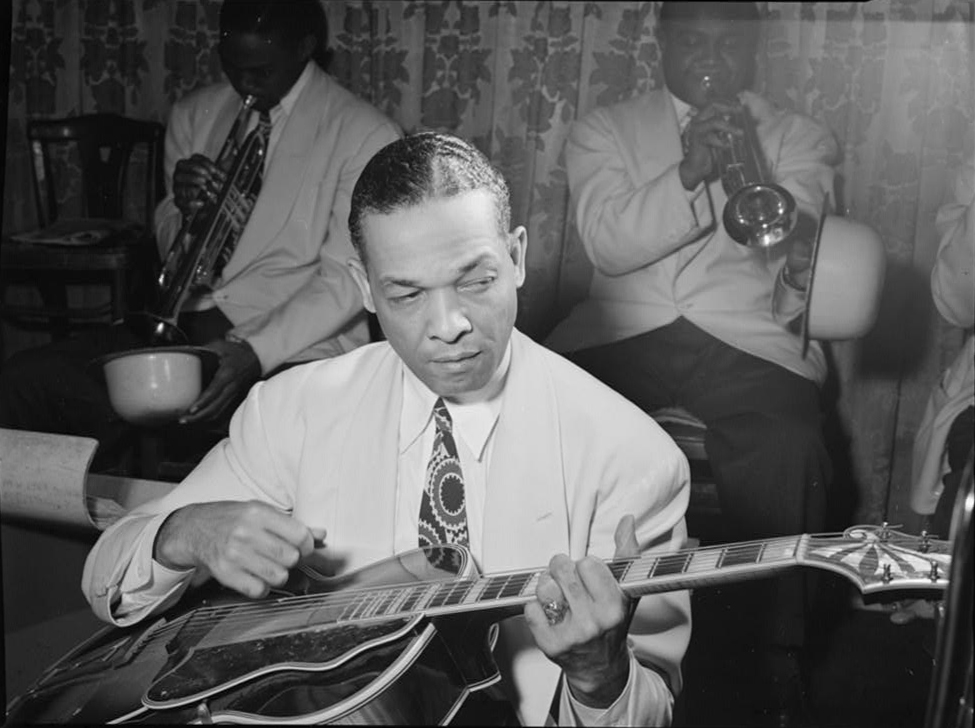
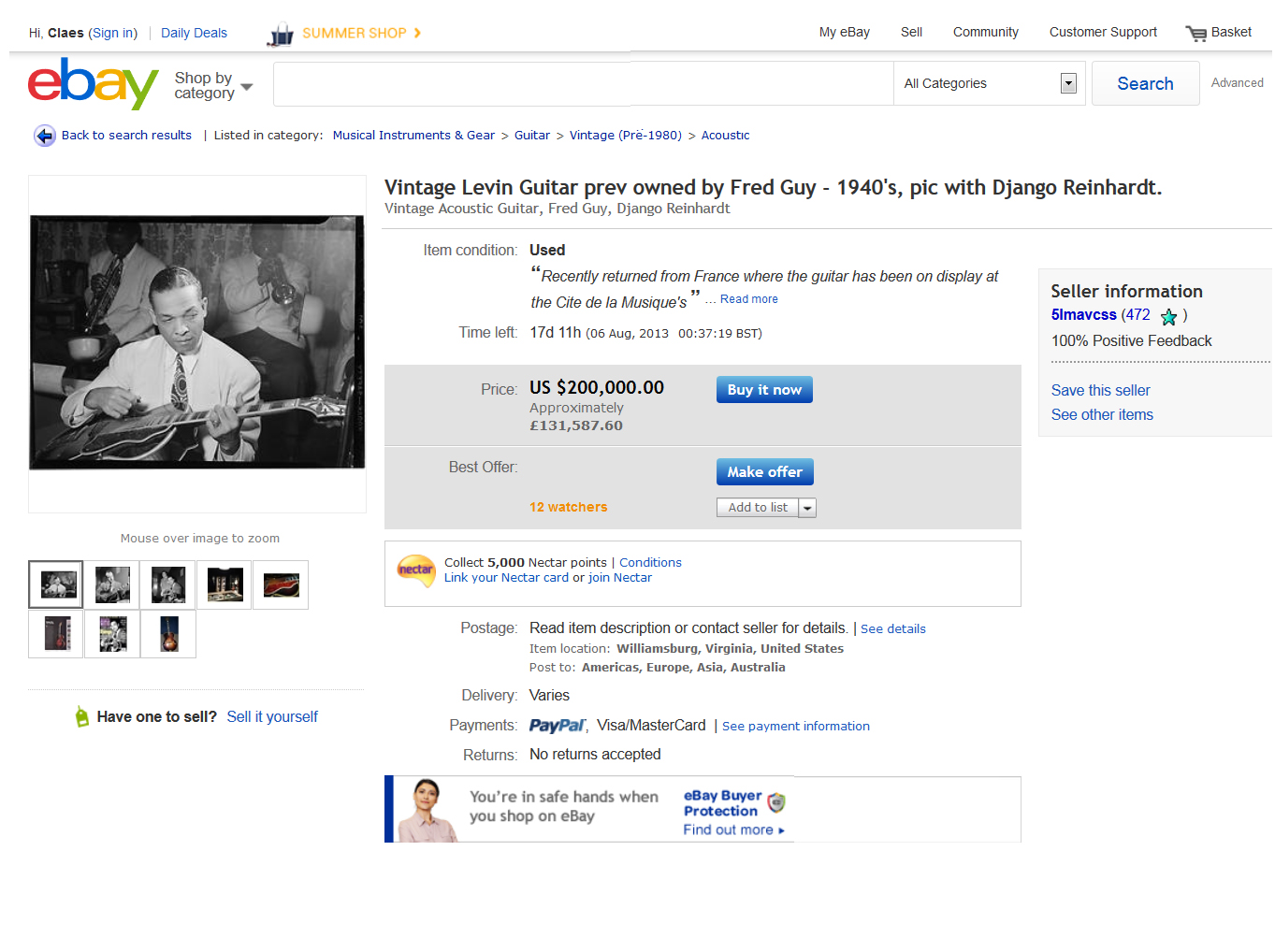
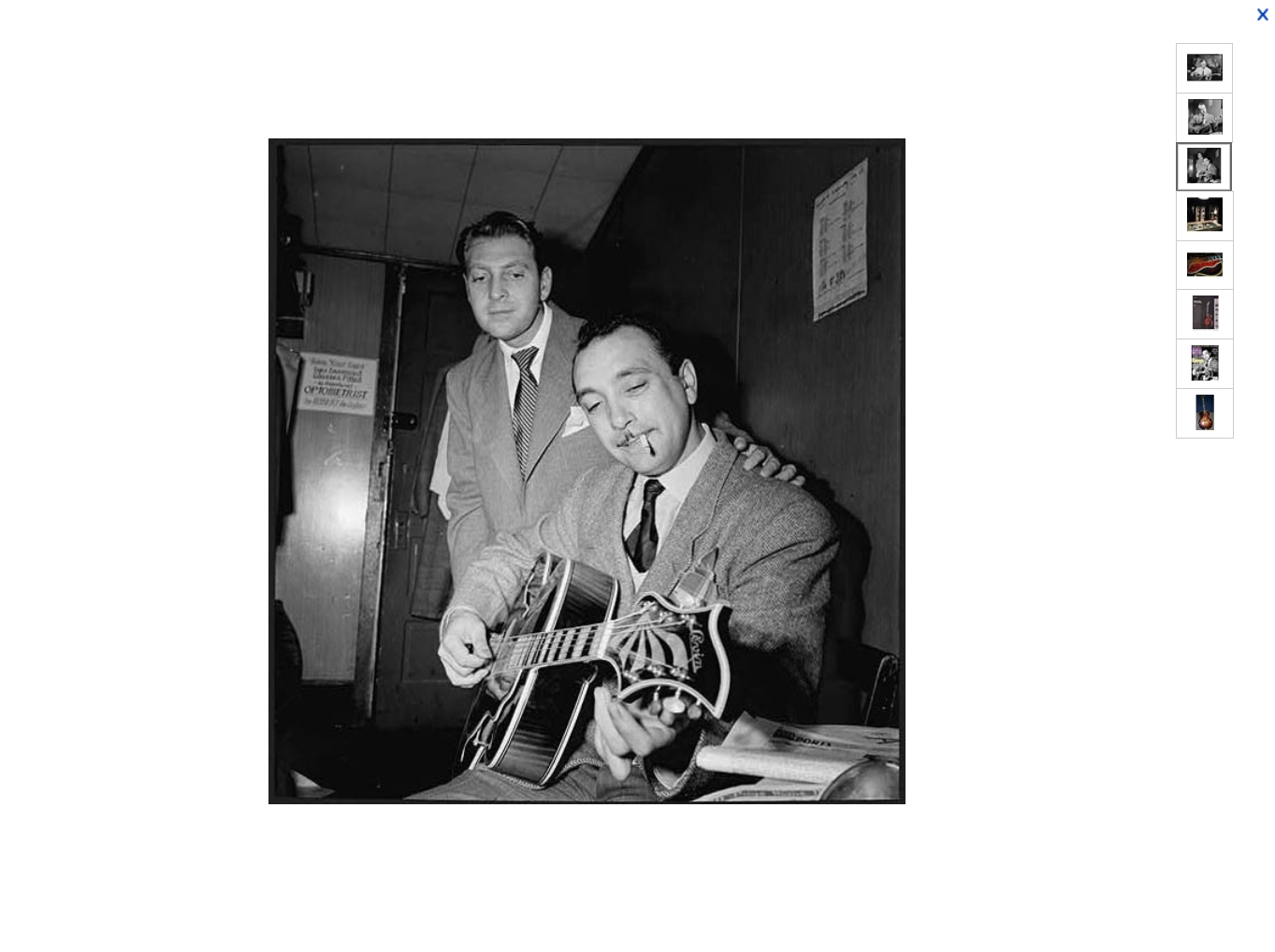
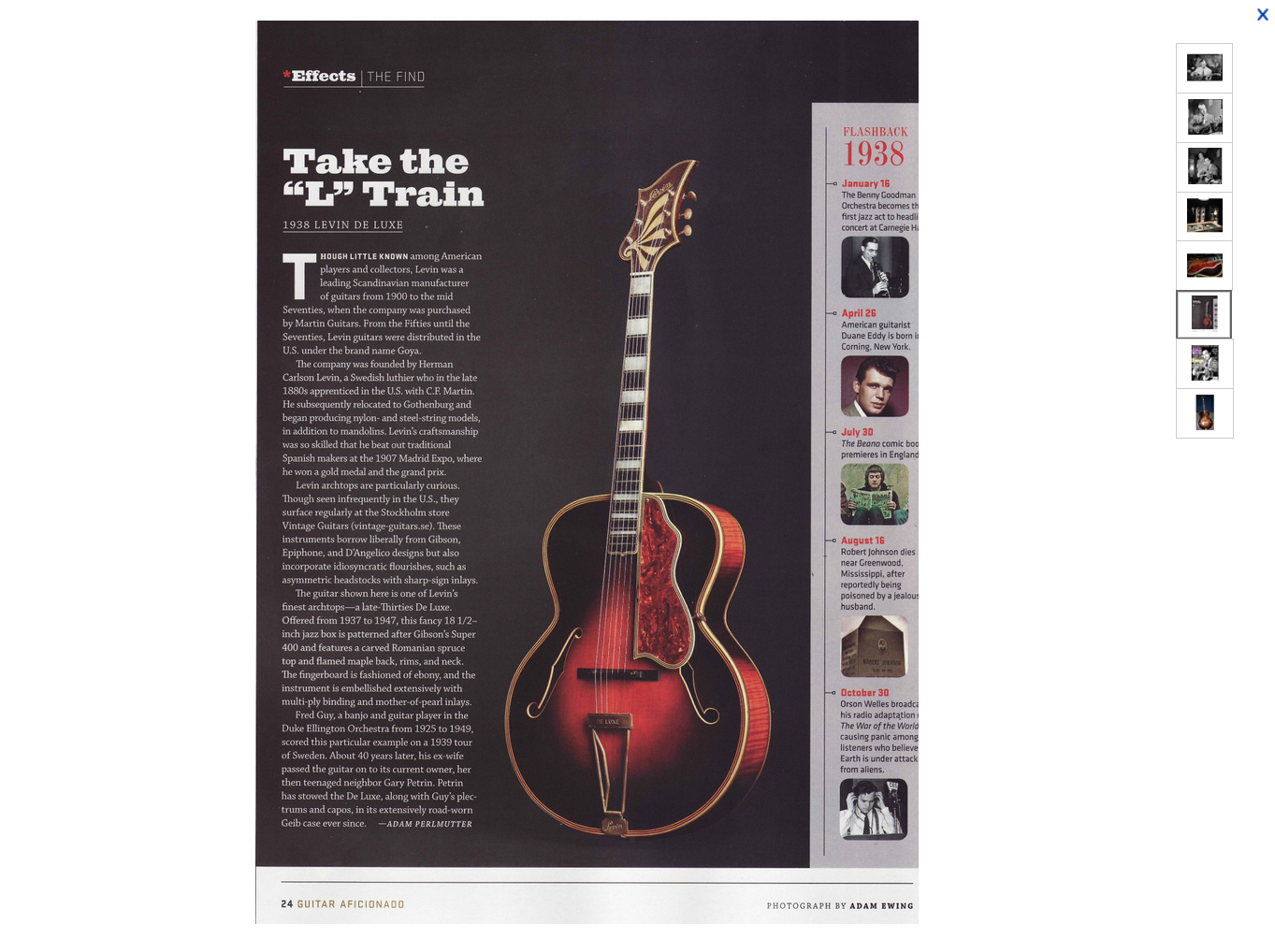
I really love my Swedish made Levin LT-16 from 1966, it’s without any doubt the most comfortable acoustic I have ever played. I tend to keep an eye out for another Levin guitars on eBay but they always go for stupid amounts of money, around £400-1000 depending on the model. Yesterday I came across one of the more famous Levin guitars, Fred Guy of the Duke Ellington band’s 1938 Levin De Luxe which is up for sale on eBay for $200,000. Here is the story how he originally got it. Taken from Vintage Guitars Stockholm, they have more photos as well. While visiting Göteborg during a tour of Sweden in April, 1939, Fred Guy, guitarist in the Duke Ellington Orchestra purchased a Levin De Luxe at Waidele. This is the guitar that Django Reinhardt is playing in the famous William Gottlieb photos. They were taken backstage at the Aquarium in New York City when Django was on tour with the Duke Ellington Orchestra in 1946.
Fred Guy with his 1938 Levin De Luxe
Here is the background info from the eBay listing. Recently returned from France – as it was being shown in a Django Reinhardt Exhibition for 3 months (see picture above). Also seen in the 2011 issue of the July / Aug / Sept edition of Guitar Aficionado magazine (Find section). This is the Levin Guitar previously owned by Fred Guy of the Duke Ellington band – during the 1940’s era. This is also the same guitar that Django Reinhardt is holding in the picture above when he was in New York City, backstage with the Duke Ellington Orchestra in 1946, and on the cover of Acoustic Guitar Magazine, Feb 1996 edition. The guitar was given to me by Fred Guy’s ex-wife Dorothy Guy Lynch about 30 years ago. The Levin guitar is in its original case, and the guitar itself has some small cracks in it. If you love Jazz, and want to own a piece of jazz history, this is a rare opportunity for the serious guitar collector. This is the real deal. Serious inquiries only… If you want to view the guitar, I will be glad to set up a time to do so (the guitar is being stored off premises in a secured site so arrangements will need to be made in advance). I have relisted this guitar over and over because I received many responses that provided me with additional information about the guitar, and a trip to France to show it at the Cite de la Musique for their Django Reinhardt Exhibition this past year (see picture above). So I am thankful for the opportunities! You can check out the article in the 2011 edition of Guitar Aficionado magazine.
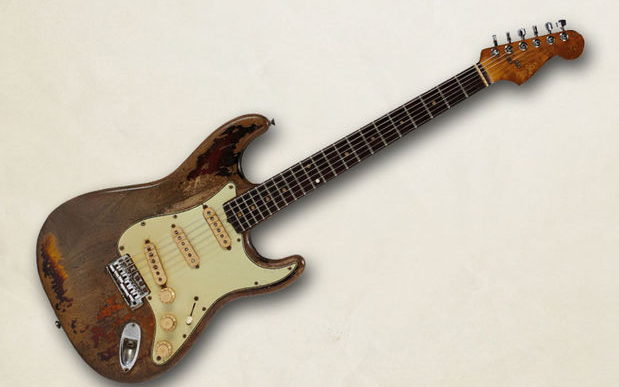
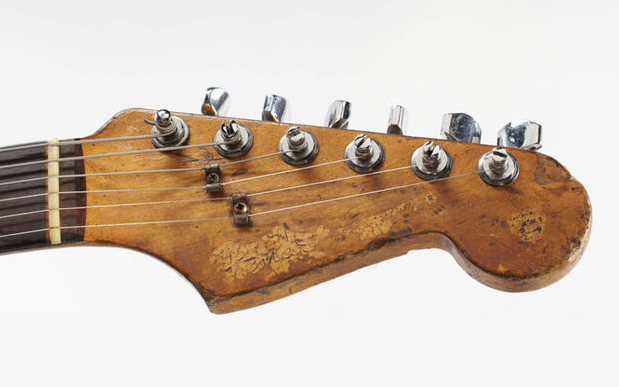
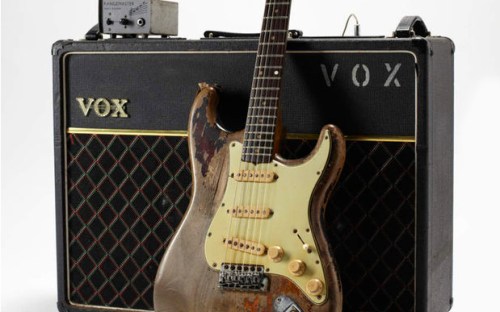
Rory Gallagher’s 1961 Fender Stratocaster with the serial number of 64351. Bought on credit from Crowley’s Music Store in Cork in 1963 for £100, this is the guitar that formed the bedrock of Rory’s sound and became synonymous with the bluesman. It was also possibly the first Fender Stratocaster to reach Ireland. Almost all of the original finish is gone, due to the heavy use, and a medical condition that caused Rory’s sweat to be acidic, which would wear away the thin nitro finish.
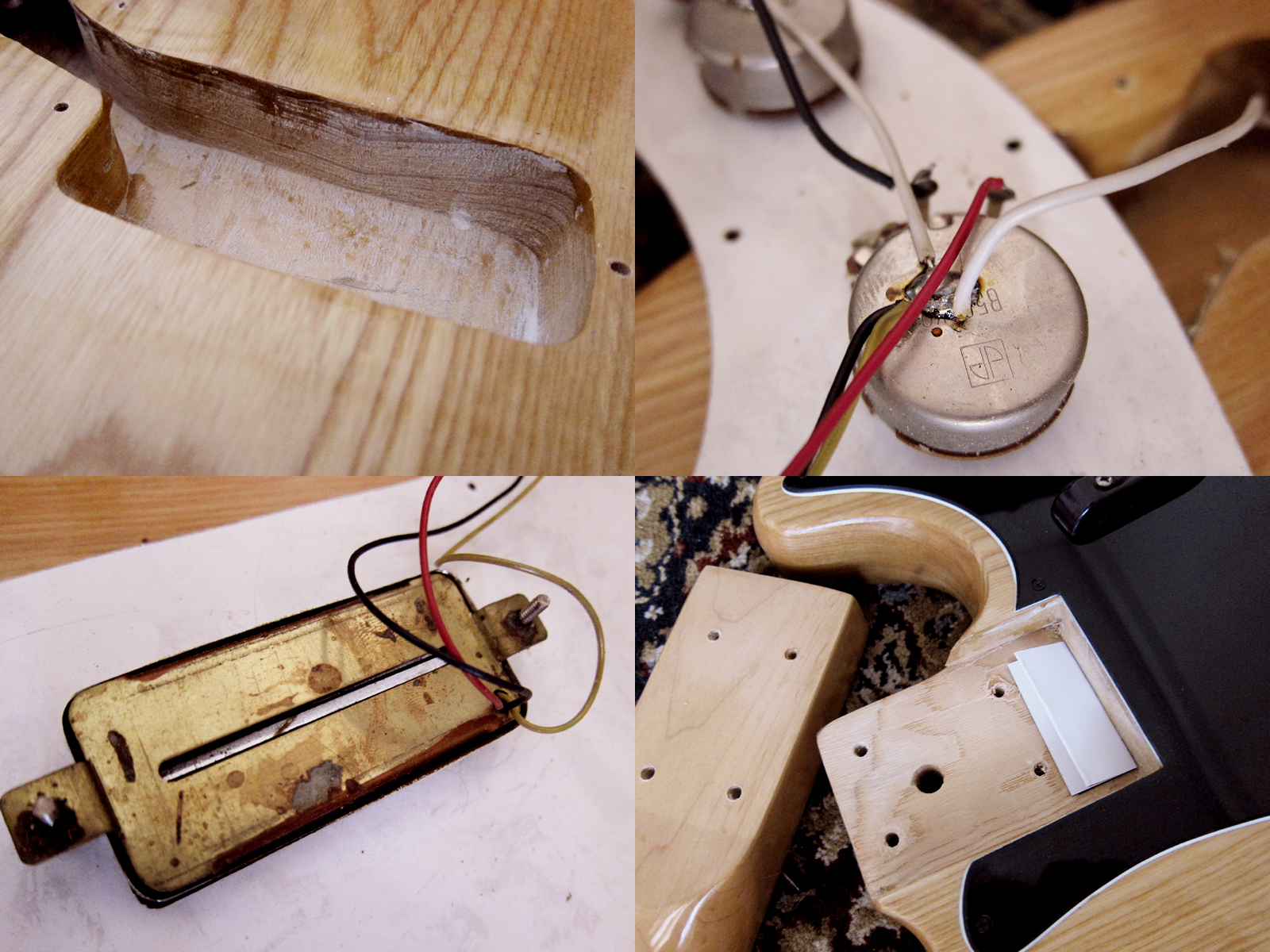
My friend Dani bought himself a Hondo II P-bass copy the other week, well I had to buy it for him since he doesn’t have a eBay account. I took it home and spent my Sunday morning with her, it wasn’t much work needed. The electronics are pretty old but it works and sounded pretty cool so I think we should keep it as it is for now. However, the actions was extremely high so I had to first adjust the trussrod a bit and then put in a shim in the neck pocket to get the angle of the neck right. Now it’s as low as it can go without any buzzing and it feels really nice to play.
I love the wood grain, really beautiful. We bought the bass from a UK seller but it seems to have been sold in Canada originally.
Pretty descent wood, good weight and really solid. I’m not really sure what type of pickup that is but it works and sounds good. I folded a business card and used as a shim to get the neck right and to lower the action. I couldn’t find any markings anywhere so we are still not 100% that it is made in Japan, it could be Korean made. Anyway, it feels really nice and seems to be pretty good quality so it doesn’t really matter.


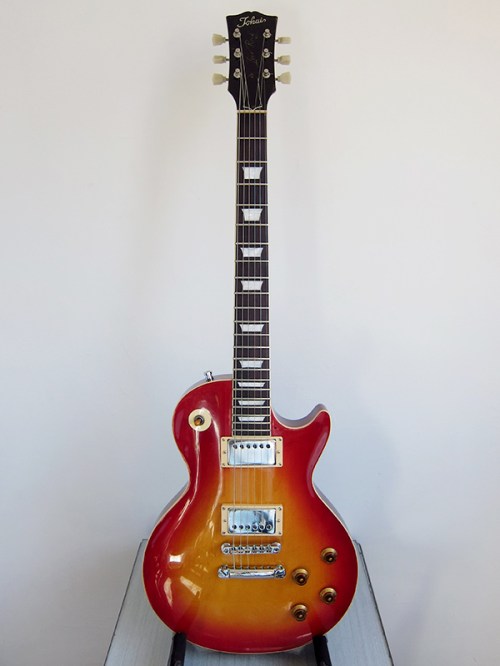 Tokai Love Rock LS-55 Les Paul Standard “Made in Japan” 1991
 The Levin family back in the days, from left to right: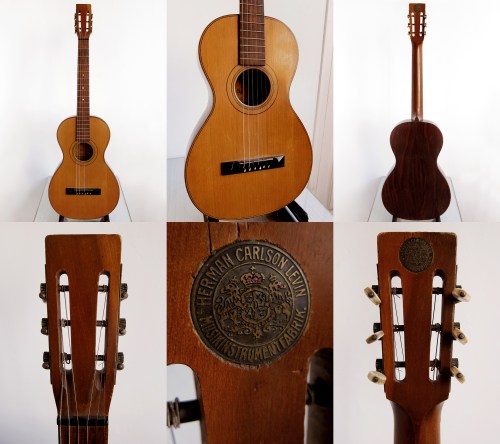




 Vintage V880N Parlour acoustic, newly fitted with a ARTEC PP-607 undersaddle Piezo pickup




 Claescaster