Claescaster

Tag: Swedish guitars

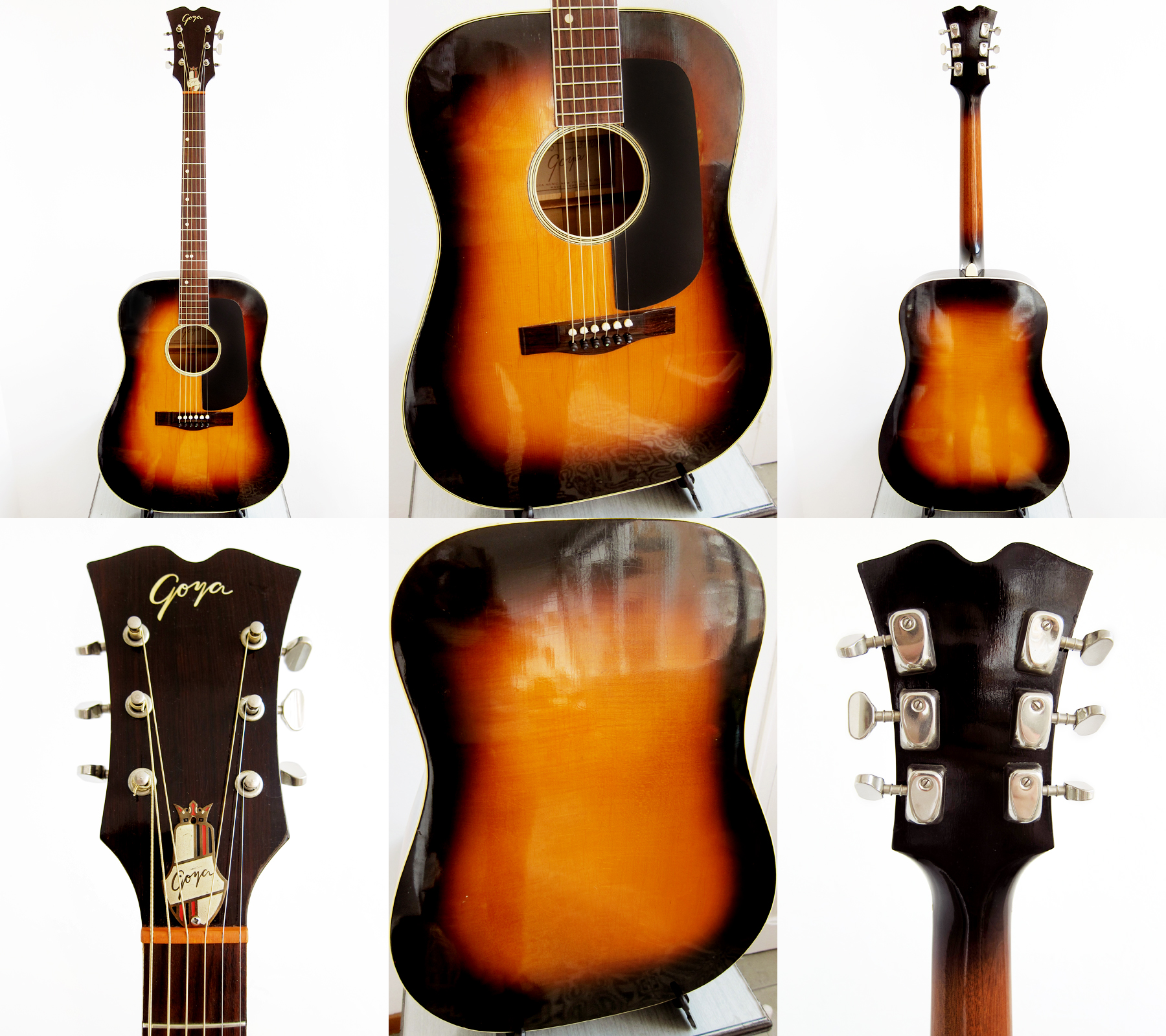
Goya GG-172

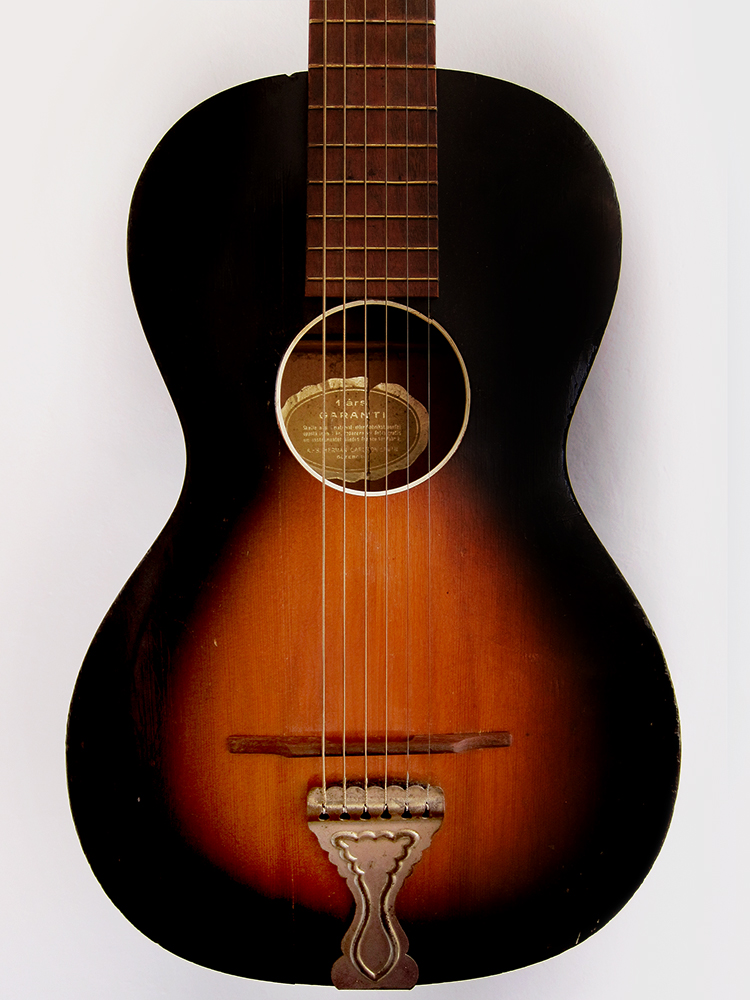
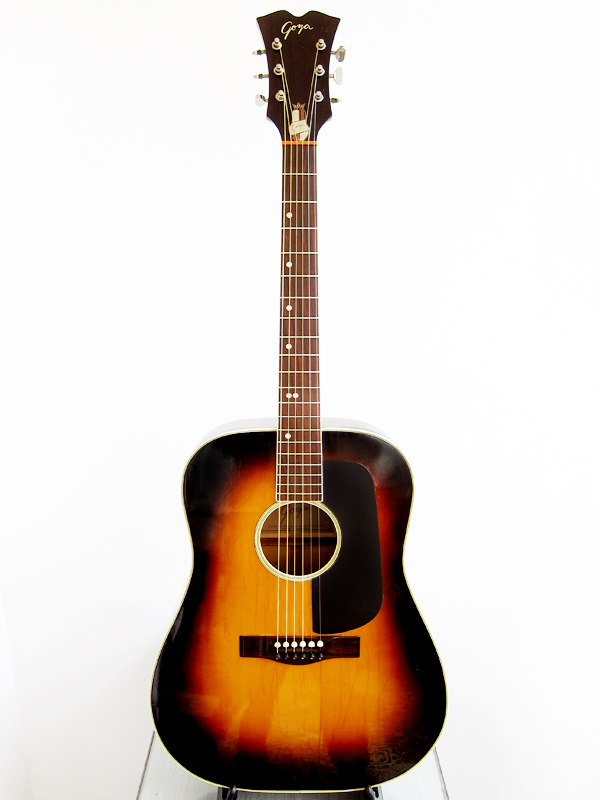
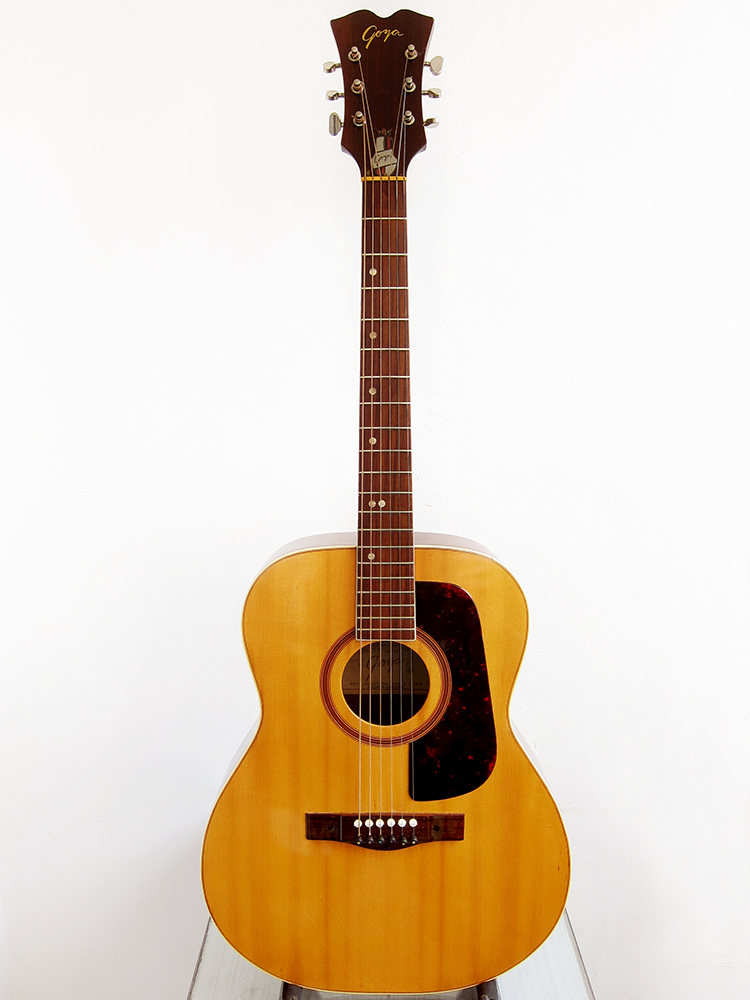
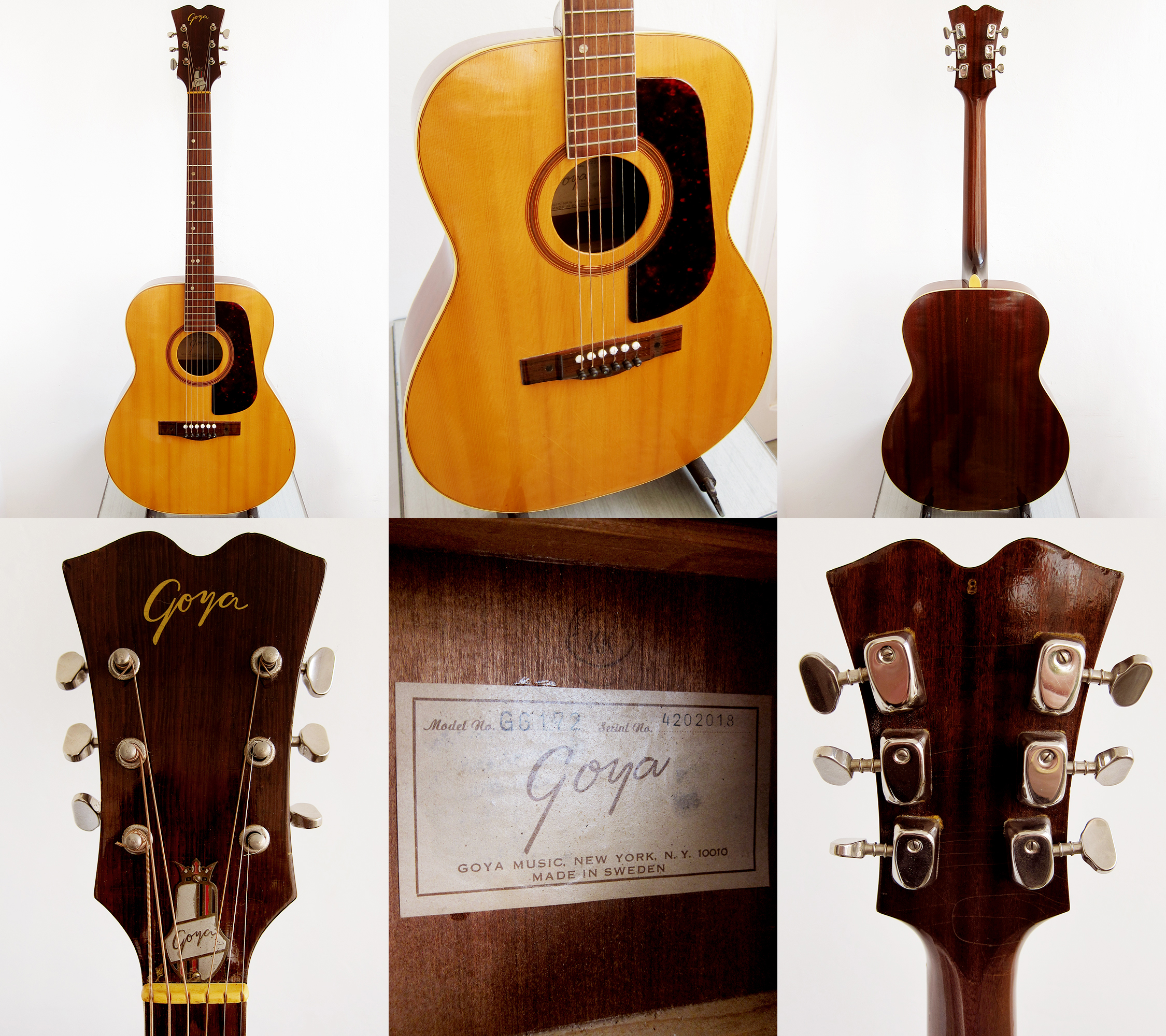
Levin Goya 172 Made in Sweden 1970 Goya GG-172 Made in Sweden by Levin in 1970

I feel really ashamed, I’ve had a beautiful Levin at home since June without fixing her up. There was a lot of things to got in the way, me building a Telecaster from scratch being the main one, but also that I had a lot of different ideas of what to do with this guitar that in the end never happened. This is my 8th Levin, or actually it’s number 9 in the collection since I got my 1951 Levin Royal after. It’s an old worn Goya Model GG-172 from 1970, according to Vintage Guitars Sweden. You can check how old your Levin / Goya is here, Levin serial numbers / Goya serial numbers. It plays very well now after my little restoration and starts to sound better and better, I have a feeling that no one has played this for a very long time. The Goya GG-172 is grand concert sized Levin, the same size as my dad’s old Levin LT-16. They are 38 cm wide just like a Martin 000, they are 15″ which is 38.1 cm. It’s a very nice size to play, slightly smaller than a normal Dreadnought but with decent bass from the solid mahogany back and sides. I bought the guitar via eBay from a pawn shop in Browns Mills, New Jersey, I freaking love the internet. I used the Global Shipping Program which worked fine this time as well, it took 2 weeks just like it did when I bought my Goya 163. I really wished that the Japanese sellers would start with this as well since it was such a mess when I bought my K.Yairi TG-40, it took 40 days to get through customs, with the Global Shipping Program you pay all the import taxes and charges straight away so it just goes straight trough customs without any delays. It’s a really nice little Levin but since I have 9 of them now and actually another on the way, I might have to consider selling it to make some room. If you are interested send me an email to claesgellerbrink@gmail.com
Levin Goya 172 Made in Sweden 1970

Levin Model 172 / Goya Model 172 / Goya GG-172
Grand Concert size: Body width: 380 mm, body length: 480 mm, body depth: 98 mm
Fingerboard width: 43 mm, scale length: 630 mm
Spruce top, mahogany back and sides, 4-ply bound top, single-bound back
Mahogany bolt-on neck with adjustable truss rod
Single-bound rosewood fingerboard with bass side pearloid dot inlay
Rosewood bridge with individual height adjustable plastic saddles
Nickel plated individual Van Gent tuners with metal buttons
Matte natural finish and ten year warranty
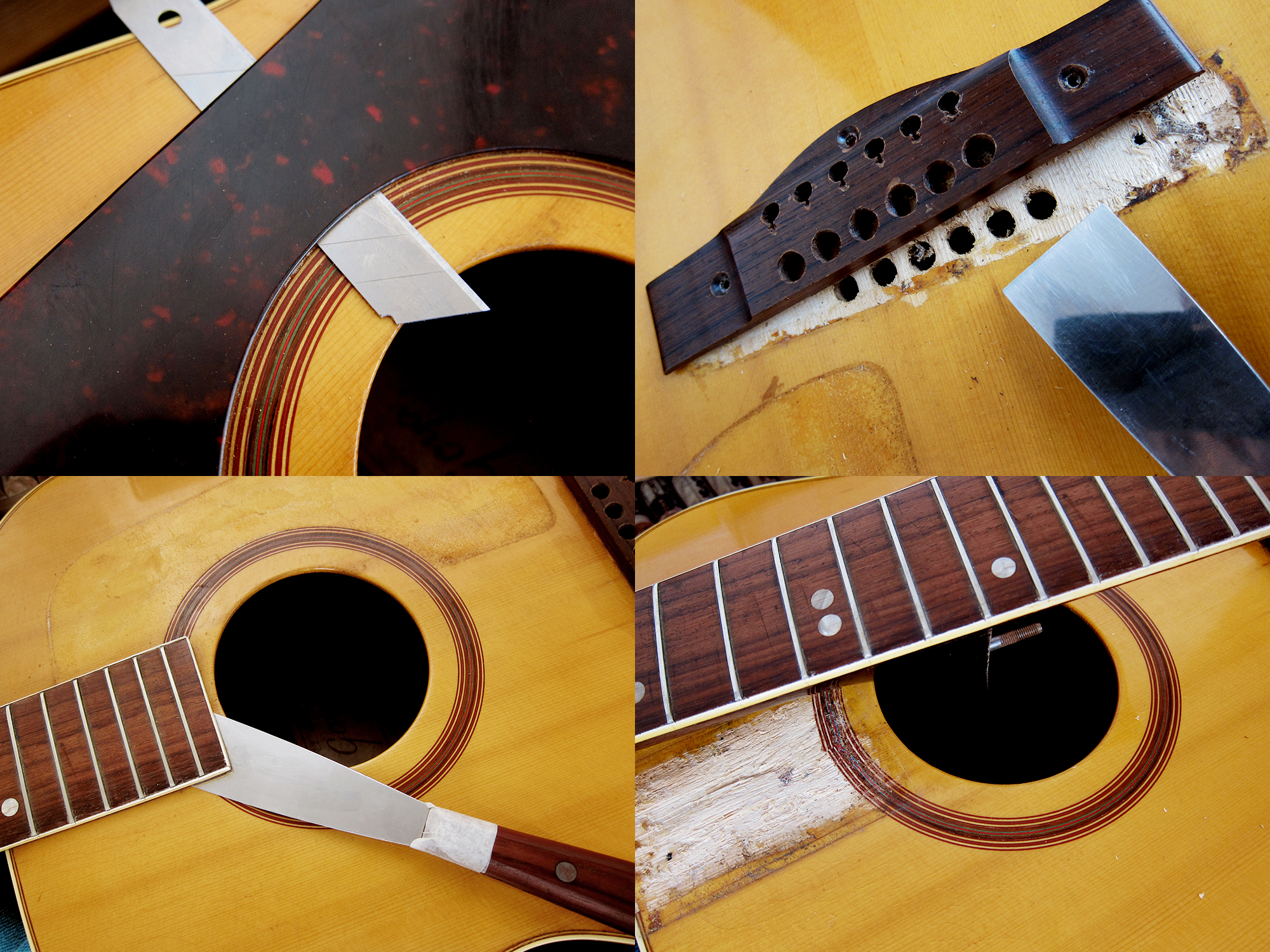
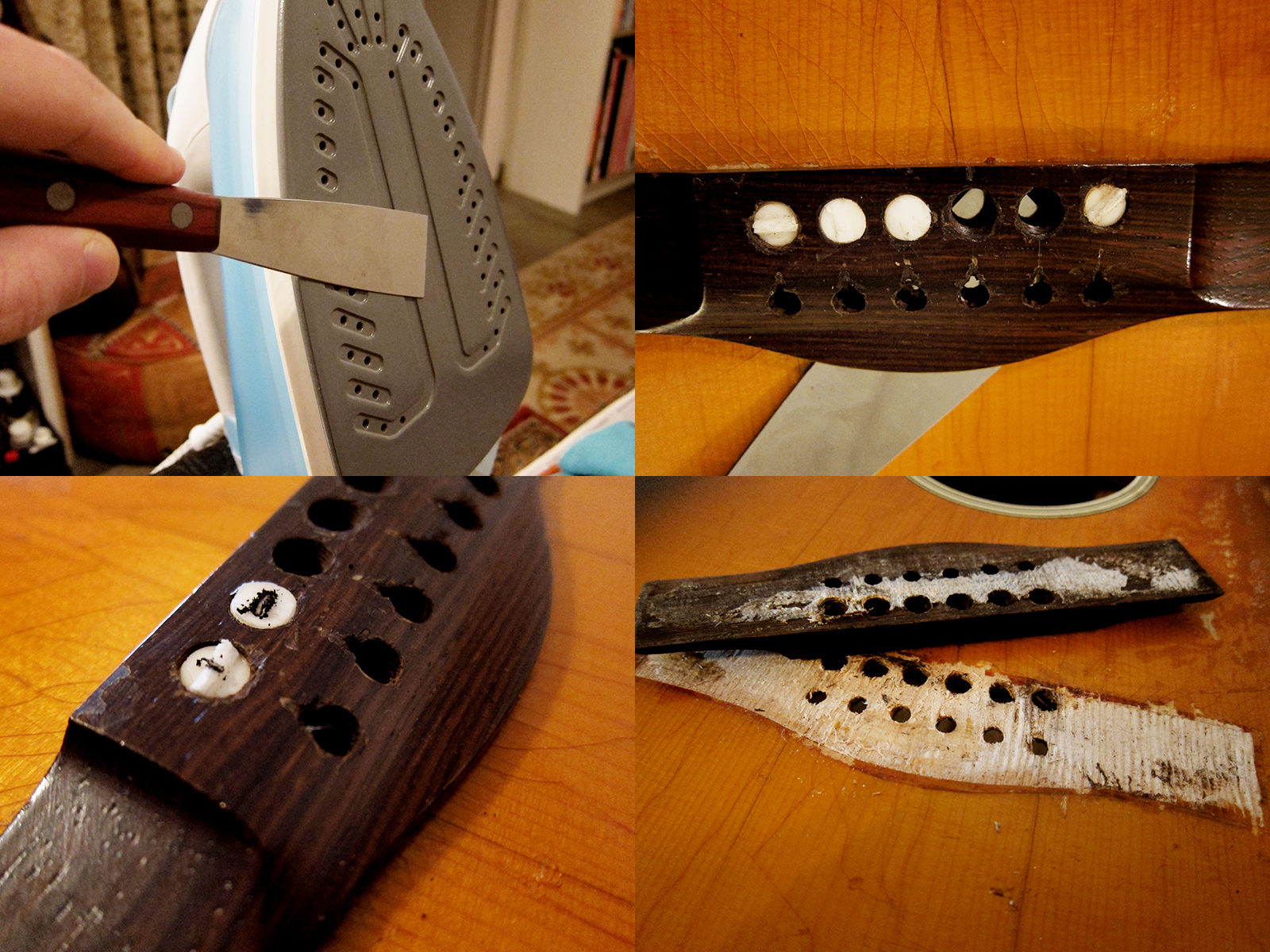
Levin Goya 172 Made in Sweden 1970 I started with taking the guitar apart. The neck needed a reset, the pickguard was loose and the previous owner had bolted the bridge to the top. I used a spatula that I heated on a normal clothes iron, worked like a charm.
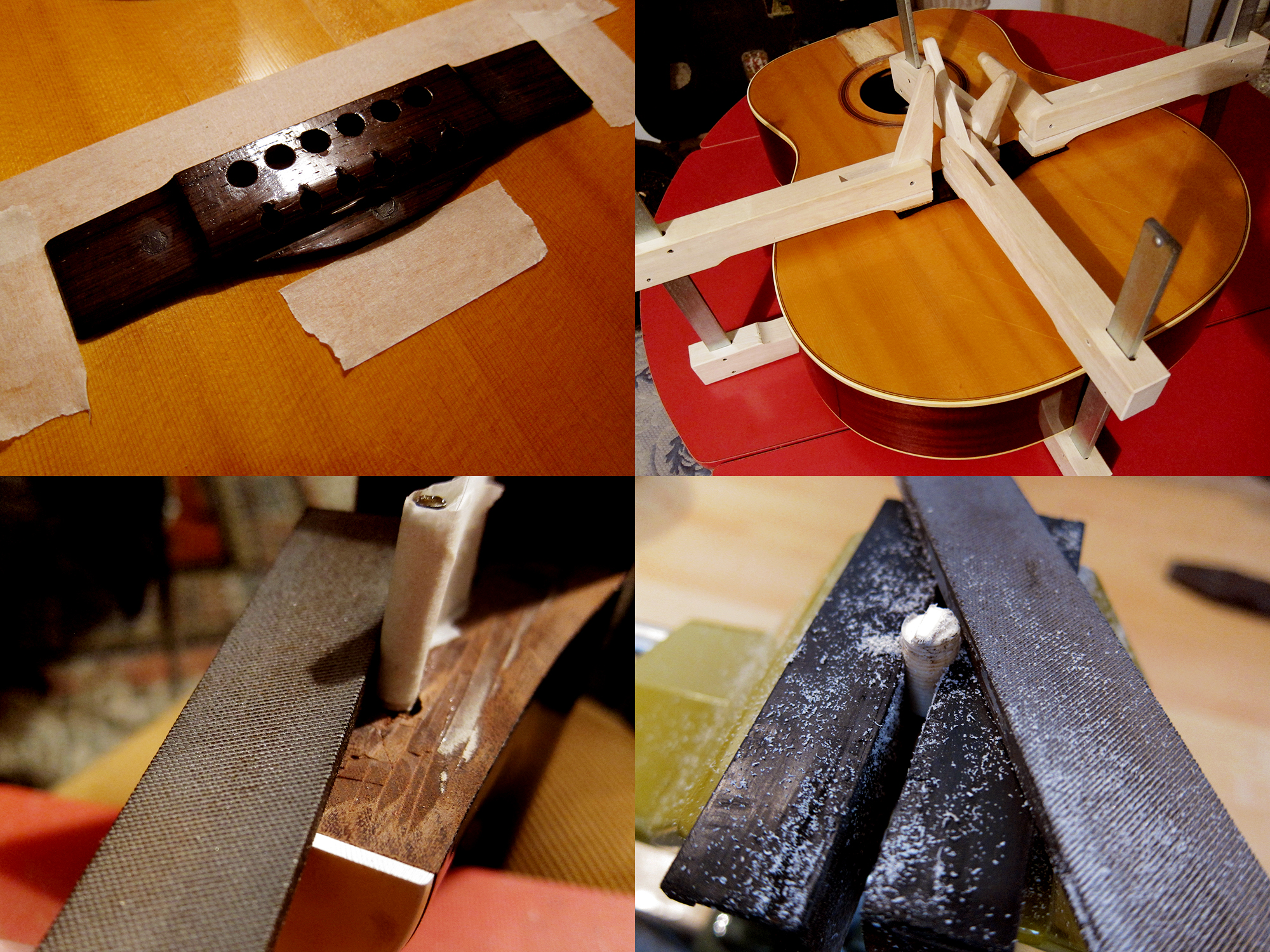
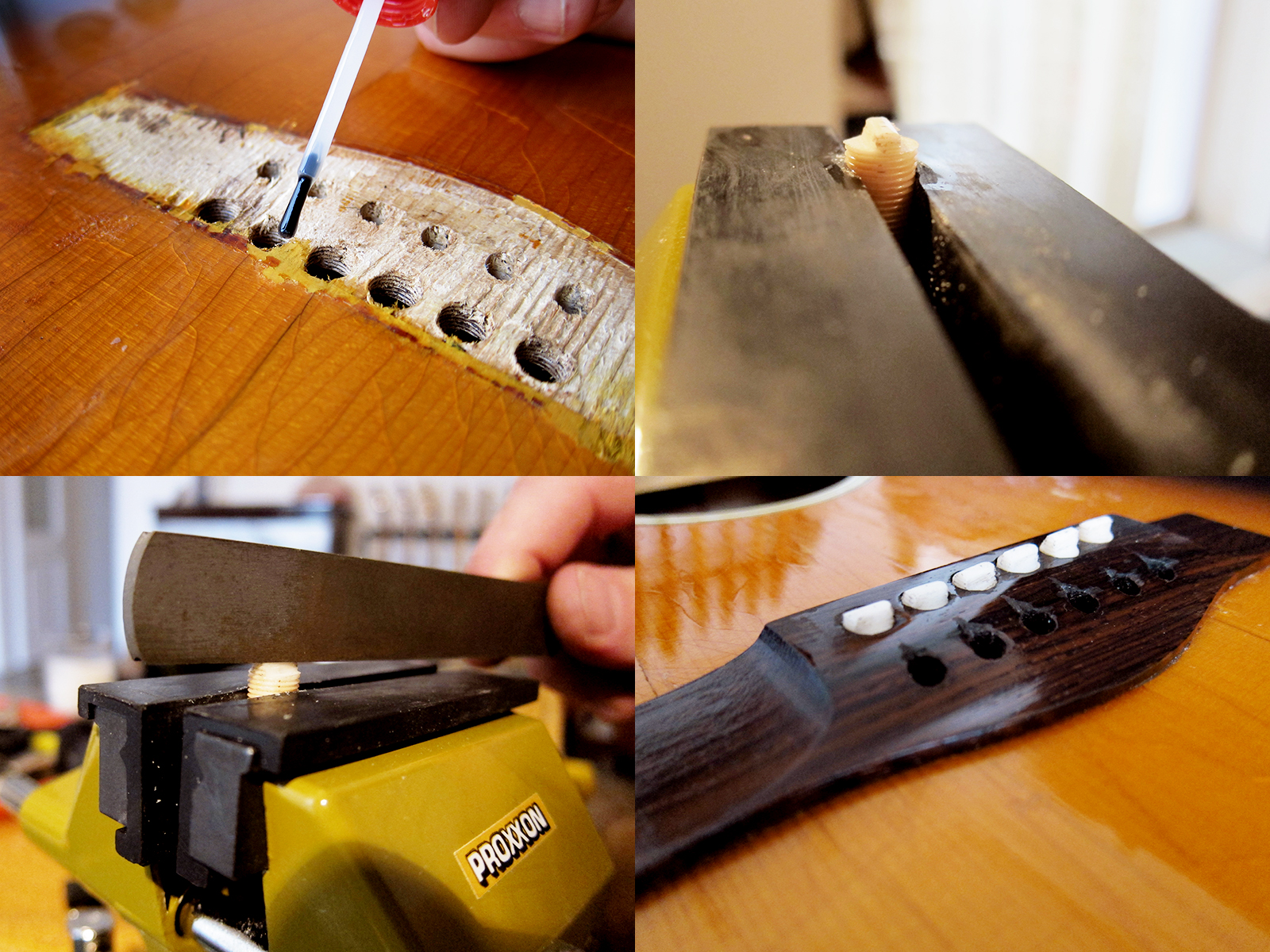
Levin Goya 172 Made in Sweden 1970 I filled the holes in the bridge and then glued it back. I filed down the heel to get the neck angle correct and get guitar playable again. I re-glued the pickguard and reshaped the top on the saddle screws.

Levin documentary

Levin - ett namn med musik / Levin - a name with music in it

The documentary film about Levin that Andreas Brink has been working on for the last couple of years is finished now and can be bought from Anakron film. The cost, including shipping to Europe, is 22€ and I think you just send an email to info@anakronfilm.se to get a copy, he could probably ship outside Europe too if you ask. There are a few people in the film that I half know via the internet, we hang on the same Swedish acoustic guitar forum. I’m sure it will be an hour of pure Levin galore.

Levin Royal

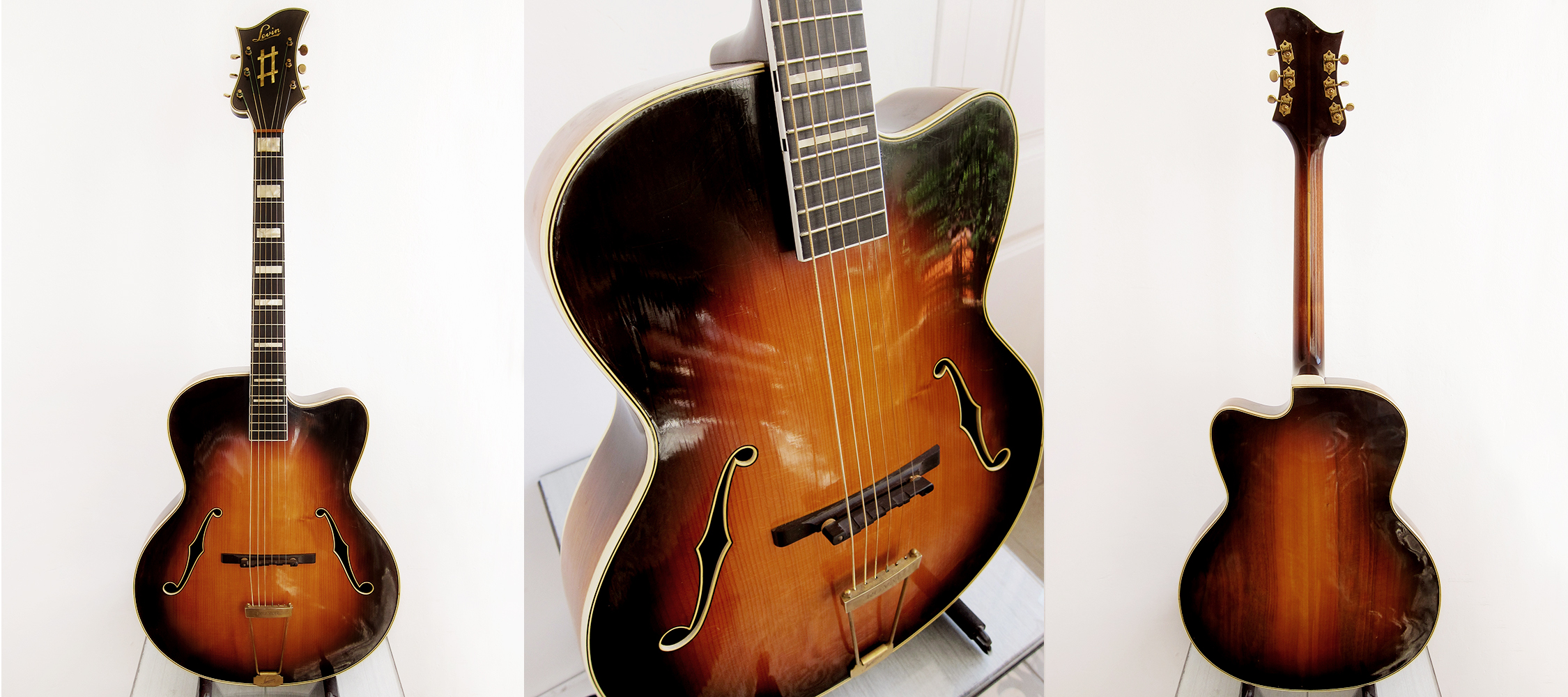
Levin Model 3 Royal Made in Sweden 1951
Levin Model 3 Royal made in Sweden by Levin in 1951

I’m so excited about my new gal, last week I received a 1951 Levin Model 3 Royal. I got it fairly cheap from Jam, a guitar shop in Stockholm and managed to get it to Spain in one piece in less than a week, very impressive. This is my 9th Levin, number 8th was a Goya GG-172 that I received back in June but haven’t had time to fix up yet. I tried one of these Levin orchestra guitars when I was back in Sweden in May and felt both confused and intrigued by it, I wasn’t sure if I was supposed to play it like an acoustic or electric guitar. Now I know that you can play pretty much anything on it, it sounds as full and rich as my other acoustic Levin’s but with the playability and feel of an hollow bodied electric guitar. I was actually really surprised how good the bass response was, perhaps because of the hand carved Rumanian spruce top and walnut back, it’s my first guitar with walnut and I really like it. Levin Royal is the 3rd fanciest orchestra guitar that Levin made during the 1930-50’s, with the De Luxe and Solist above it. The De Luxe is massive so I was worried that the Royal would be really big too, Levin Model 1 De Luxe (Body width: 475 mm), Levin Model 2 Solist (Body width: 445 mm) and Levin Model 3 Royal (Body width: 420 mm), but it’s just 2 cm wider than my Levin 174 and the other Goliath sized acoustic Levin’s I have. I’m really happy with it and will definitely look in to the possibilities of electrifying it, without ruining it, so I can use it live with Chest Fever.

Levin Model 3 Royal Made in Sweden 1951
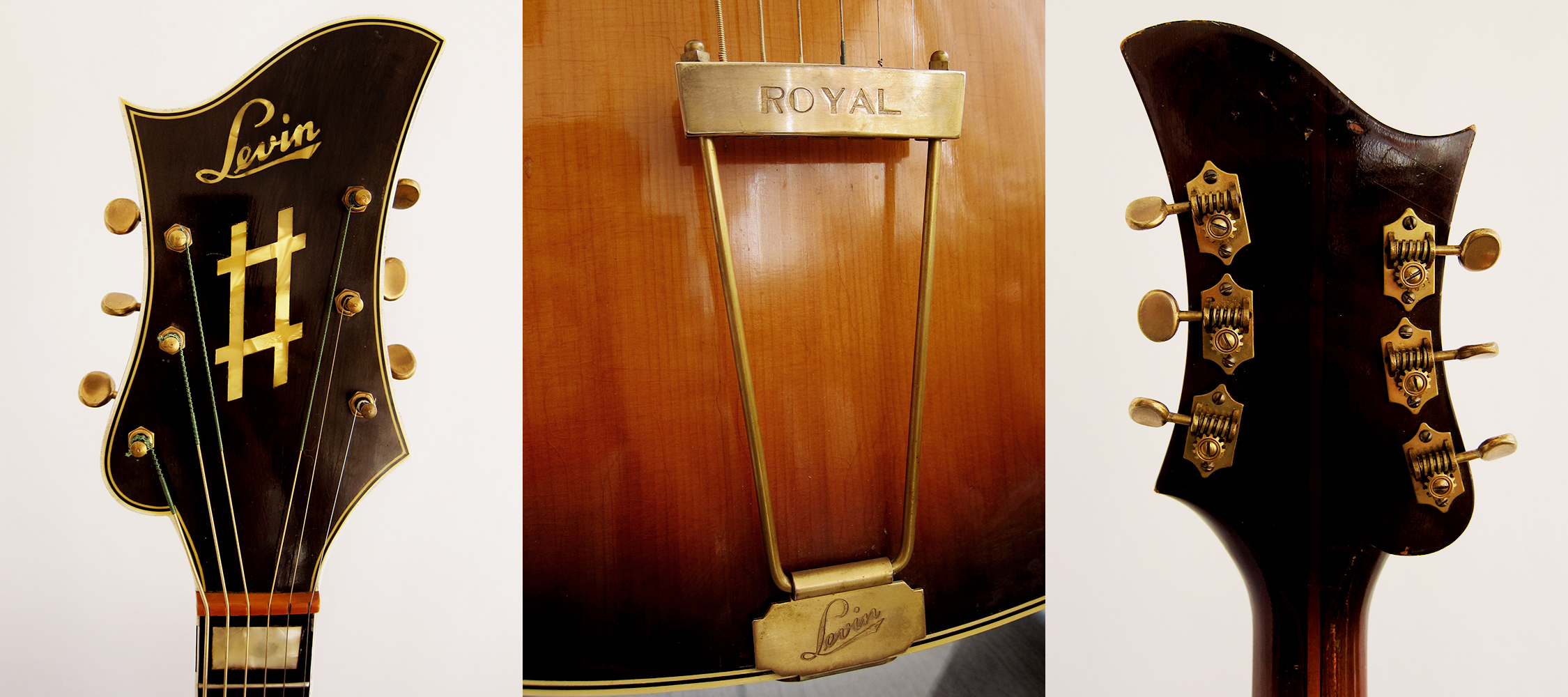
It’s in pretty good state for it’s age and almost all original, the pickguard is missing and one of the pearloid block inlays on the fretboard has been replaced with a plastic one. The only thing I had to do when I got it was to raise the action, it was way too low for me, polish the frets and even out the ebony fretboard a bit, some of the inlays was sticking up. The neck is pretty straight, it does have a  T-shaped duraluminum truss rod inside but it’s non-adjustable so there isn’t much you can do without heating and reshaping the neck but that’s not needed yet.

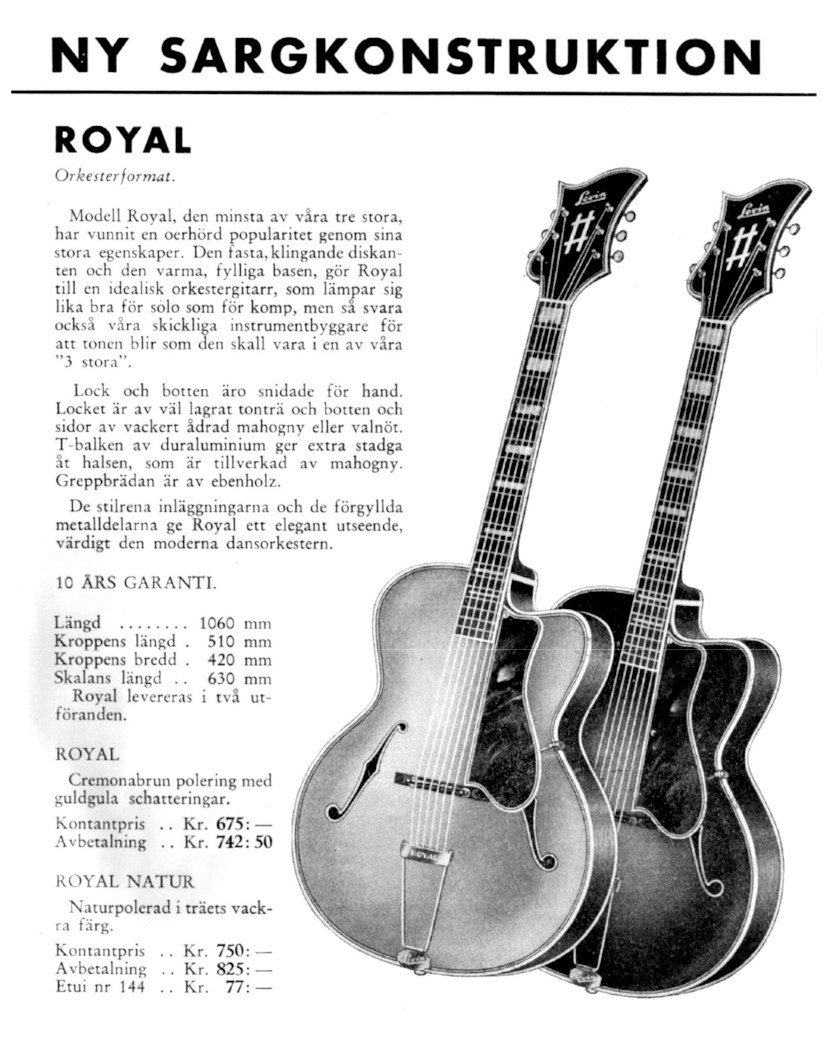
Levin Model 3 Royal, Vintage guitars SwedenLevin Model 3 Royal, Vintage guitars Sweden
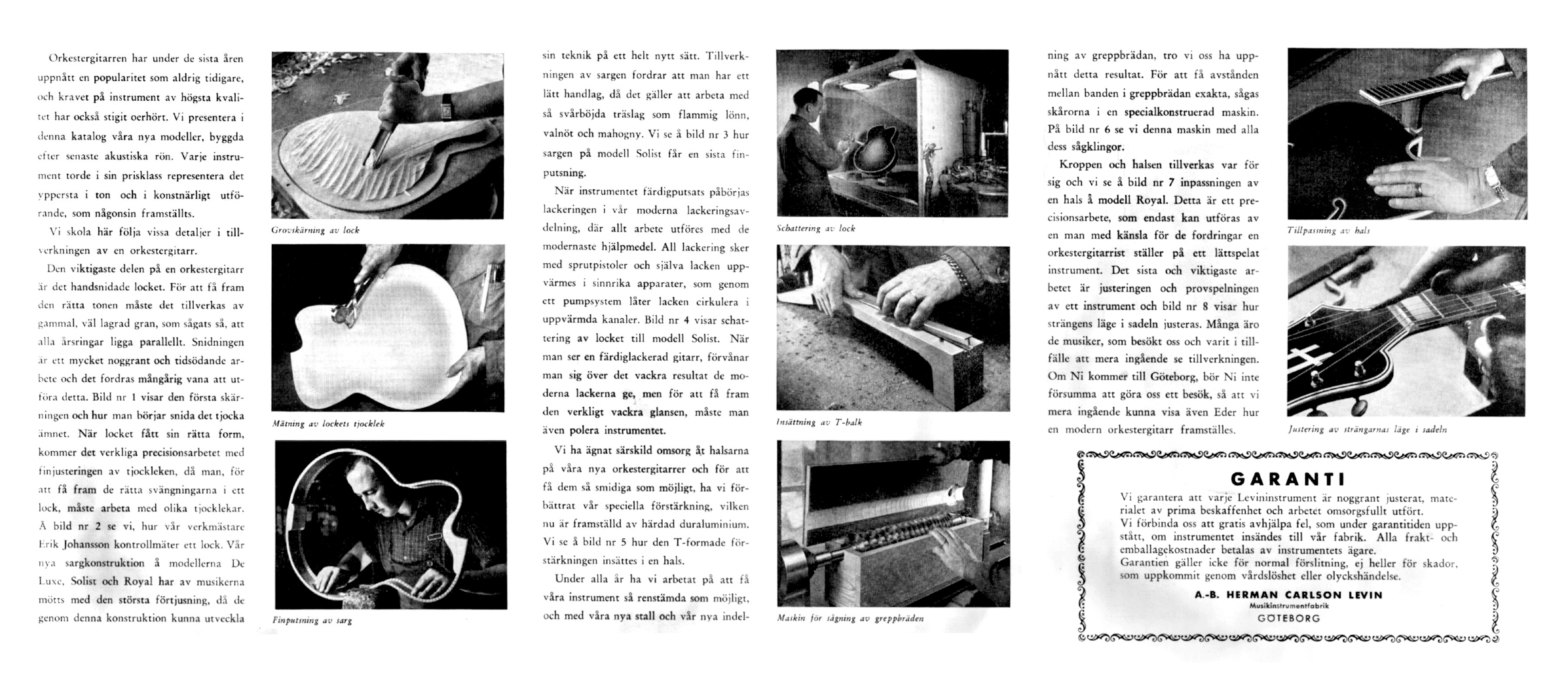
Taken from a 1948 Levin archtops catalog, thanks to Vintage Guitars Sweden

Levin Model 3 Royal
Body width: 420 mm, body length: 510 mm
Hand carved Romanian spruce top with mahogany or walnut back and sides
4-ply bound top with double-bound f-holes, 4-ply bound back, triple-bound pickguard
Mahogany neck with non-adjustable T-shaped duraluminum truss rod
Triple-bound headstock with perloid music sharp sign inlay
Single-bound ebony fingerboard with pearloid block inlay
Grover Sta-Tite style tuners, gold plated hardware
Sunburst or natural finish and ten year warranty

Django Reinhardt at the Aquarium, New York City, 1946
This is how awesome I think I look with my new guitar. Django Reinhardt is playing Fred Guy’s Levin De Luxe backstage at the Aquarium in New York City 1946. © William Gottlieb

How to… carve a bridge

Levin Model 65 parlour guitar Made in Sweden 1942

Last weekend I decided to make a new bridge for my 1940’s Levin model 65. I actually did the same thing about a year ago but with less success, you can read about it here. This time I had more tools, better material and at least some knowledge of working with wood.

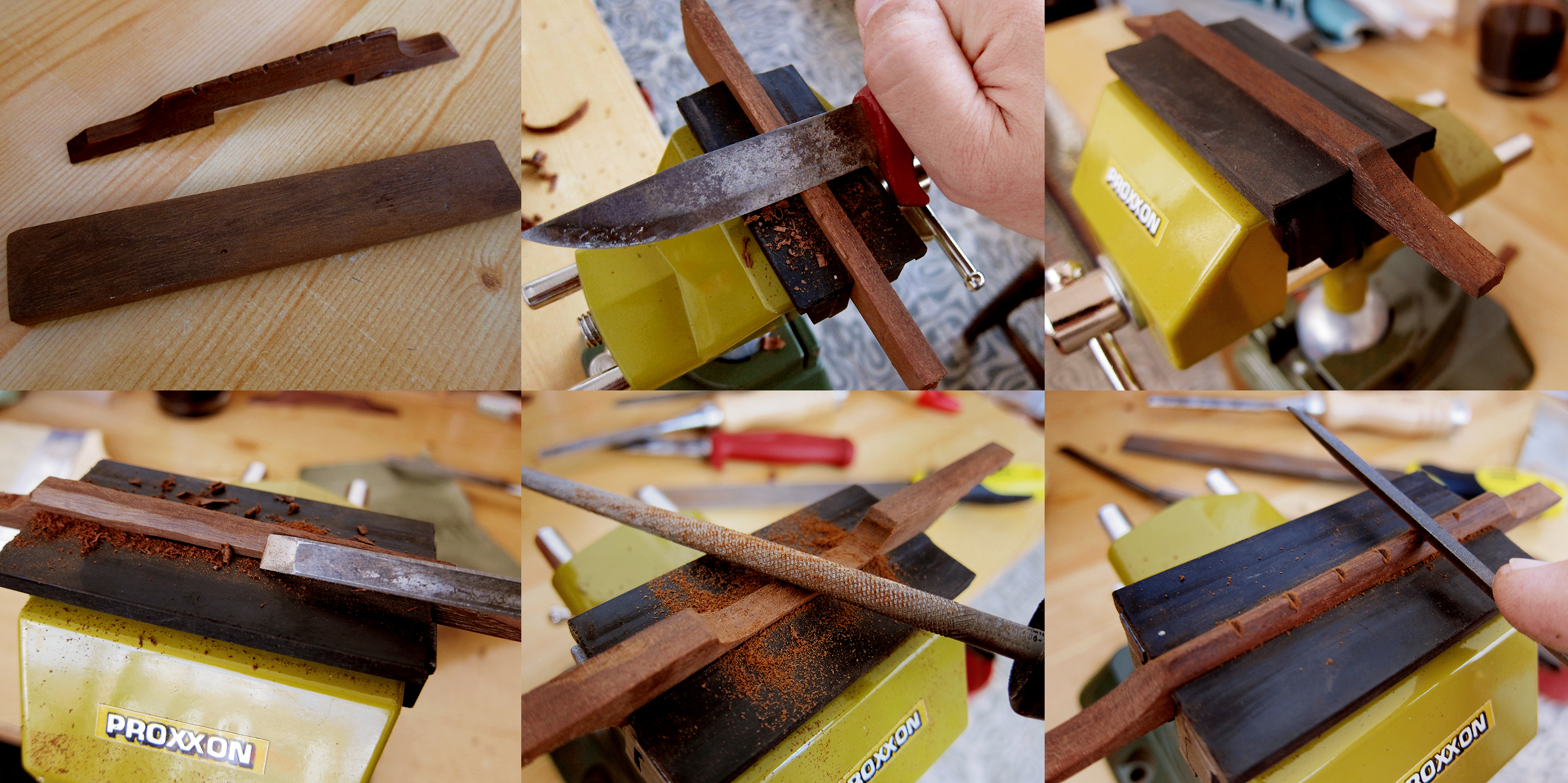
Levin Model 65 parlour guitar Made in Sweden 1942I started with a rosewood blank that I carved roughly to the right height with my trusty old Mora kniv, a cheap Swedish knife that solves most of my guitar related problems. Then I carved the shape of the edges, I just marked where to start and then carved it in to a rounded slope. I got the top in to a nice triangle shape with a narrow chisel and then cut out the arch in the bottom with a round file. I compared it to the old bridge to get the string spacing right and then just made little groves with a small triangle file. After a bit of lemon oil I was ready to try it out and it worked perfectly.  

Levin Model 65 parlour guitar Made in Sweden 1942The final result, a new bridge for not only the oldest Levin I own but the olderst guitar I’ve ever actually had in my hands.

Levin information pages

Goya Model 163 (1968), Goya T-18 (1966), Levin Model 13 (1950), Levin LT-16 (1966), Levin Model 65 (1942), , Levin LM-26 (1959), Levin Model 174 (1972)Levin guitars, from left to right: Goya Model 163 (1968), Goya T-18 (1966), Levin Model 13 (1950), Levin LT-16 (1966), Levin Model 65 (1942), Levin LM-26 (1959), Levin Model 174 (1972), might be the greatest Levin collection in Spain.

If there is anything you would like to know about Levin guitars, then Vintage Guitars Stockholm is your best bet. They have the Levin information pages where you can find pretty much every model Levin ever made, serial numbers, history, photos and information. Rikard who runs the place just put up photos of my three latest Levin guitars on their site so now you can find all seven online. Here are the links: Levin Model 65, Levin Model 13 Ambassadör, Levin LT-16, Goya T-18, Levin LM-26, Goya Model 163, Levin Model 174.

Vintage Guitars Stockholm Sweden

How to… install side dots

Francisca Montersat
Francisca Montserrat with her new side dots

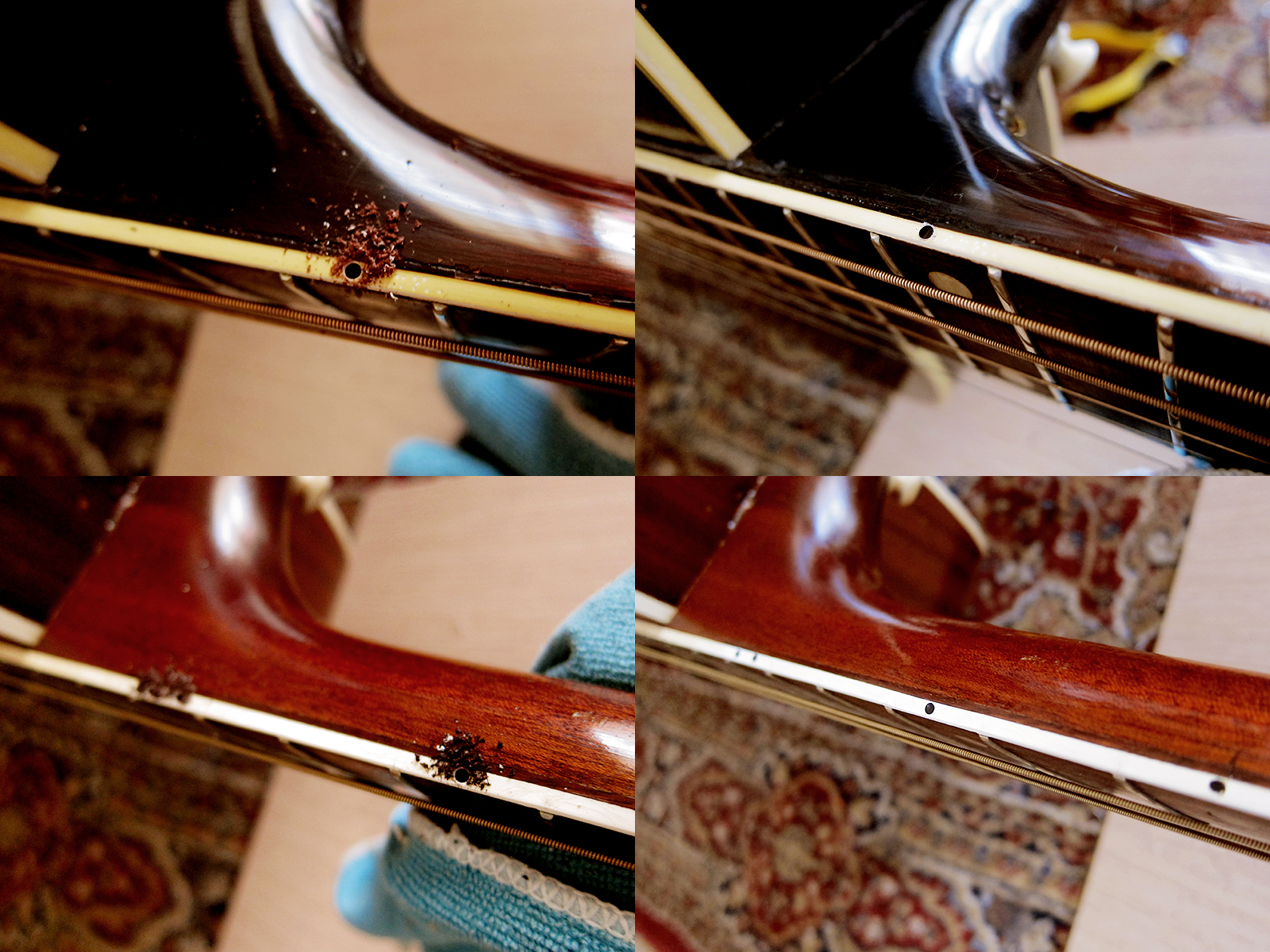
I get really confused when I play on guitars without side dots. You are playing your cowboy chords and everything is fine and then suddenly you want to play a bit of solo up on the 12th fret and you realise that there are no markers above the 5th fret and you have to guess where to put your hand. Well on a 14th fret acoustic guitar you know roughly where the 12th fret is, 2 above where the body and neck joins but say that you need to quickly find the 11th, or 9th fret. For me position markers, or side dots, are essential. Flamenco guitars seems to never have any side dots at all and a lot of Spanish or Classic guitars seems to have forgotten them too. I guess if you are used to it, if you have played your whole life without them maybe it’s fine but I come from the world of electric guitars with clear indications where you are on the neck. My Levin guitars only have side dots up until the 7th fret, it’s just my Goya T-18 that has markers up to the 12th fret, so I decided to change that. I had to order some new Jescar frets from my favourite eBay luthier supplier in the States, Philaluthiertools, so I got some 2mm side dot position markers in black as well. I was a bit scared to drill in to thin strip of binding on my 40-50 years old Levin guitars but after practising on my Francisca Montserrat I felt ready and just did it. It went pretty well, no real drama. It was interesting to see what the fretboards was really made off when you saw the sawdust. Some of the Levin’s had normal rosewood freatboards but the Levin 174 has a ebony fretboard, how fancy pants is that? My dads old Levin LT-16 is supposed to have a rosewood fretboard but I think that sawdust looks very dark for being normal rosewood.

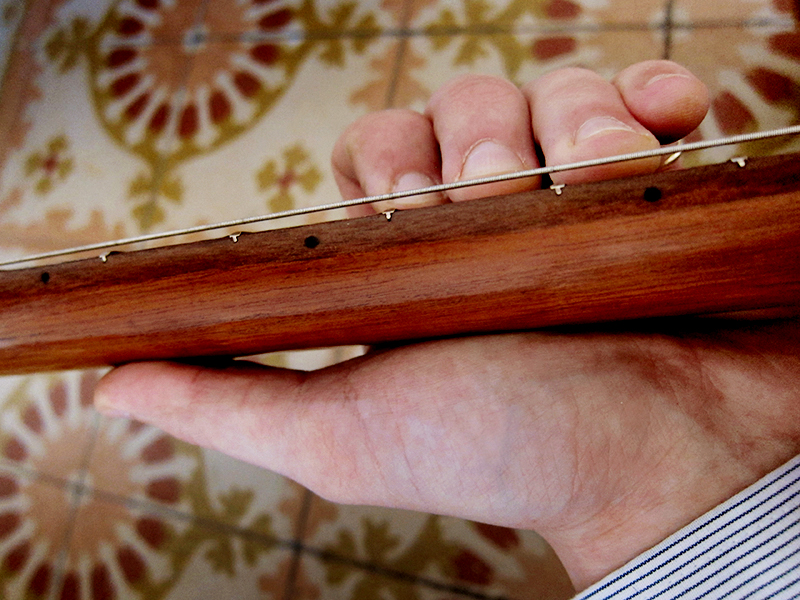
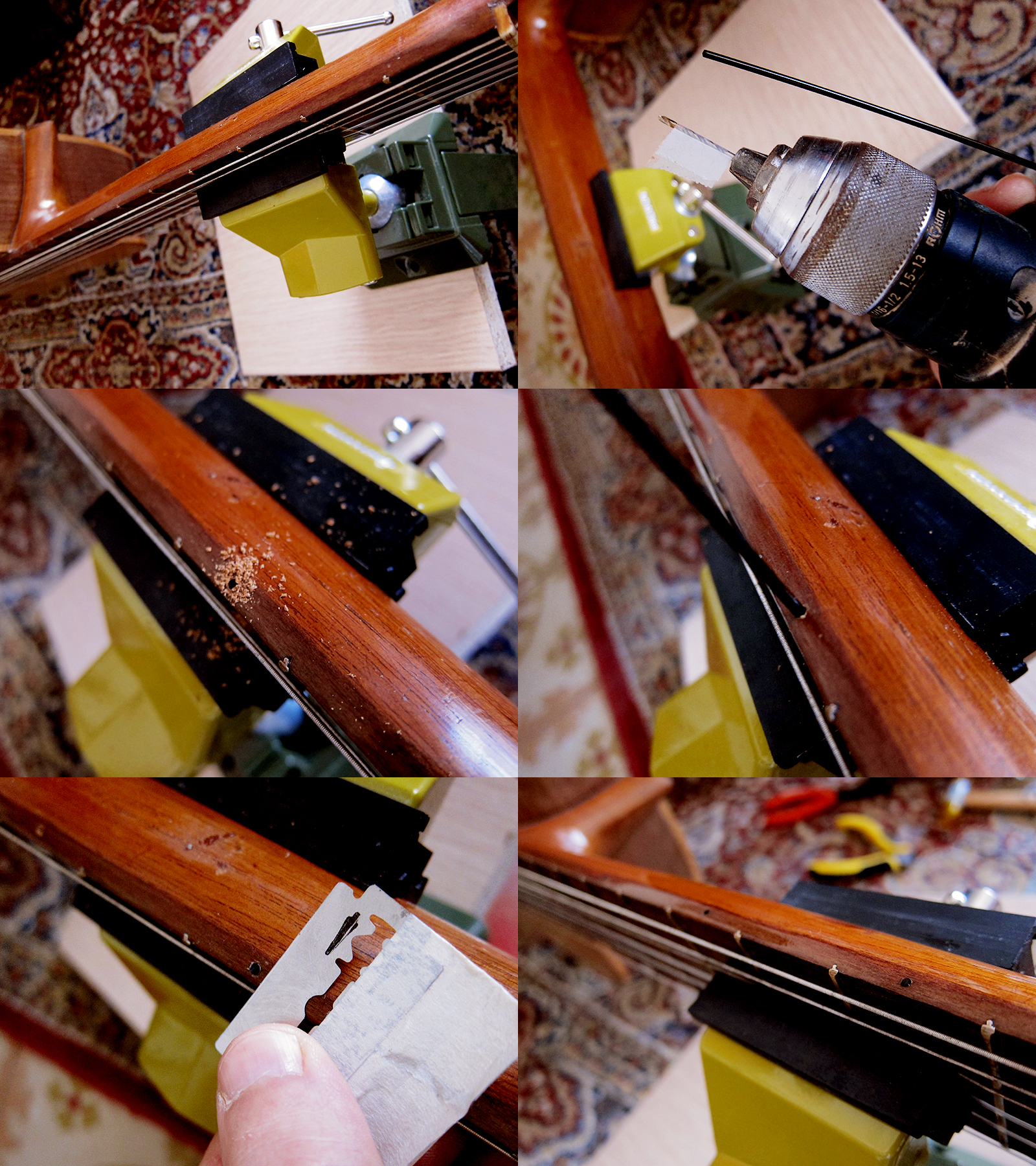
Francisca MontersatFirst I installed 3 side dots on my Francisca Montserrat just to warm up. There might be some Flamenco purists saying that I’ve ruined this guitar now but I think it was a fairly discrete modification that will make it hundred times easier for me to play it. I just drilled a 2mm hole, same as the plastic side dot, about 3-4mm deep. I didn’t use any ruler, I felt that my eyes would be the best judge to make a visual estimatation and get them to line up. I made a little mark with a black pen and then when I was happy with that I made a little pilot hole with a nail so the drill wouldn’t slip. I put some super glue in the end of the side dot stick, stuck it in and then cut it off with a pair of pliers. I got it smooth with a razor blade and then sanded it down with 400, 800, 1500, 2000 and 2500 grit paper, the same technique I use for repairing lacquer damage.

Levin LM-26, Levin LT-16
All my Levin’s got new side dots installed, here is a 1959 Levin LM-26 on top and a 1966 Levin LT-16 below. I have to say that the dots I put in on the 9th and 12th fret on my dads LT-16 looks better than the original one on the 7th fret that was installed 48 years ago at the Levin factory in Gothenburg.

Levin 174

Levin Model 174 Made in Sweden 1972Levin Model 174 Made in Sweden 1972

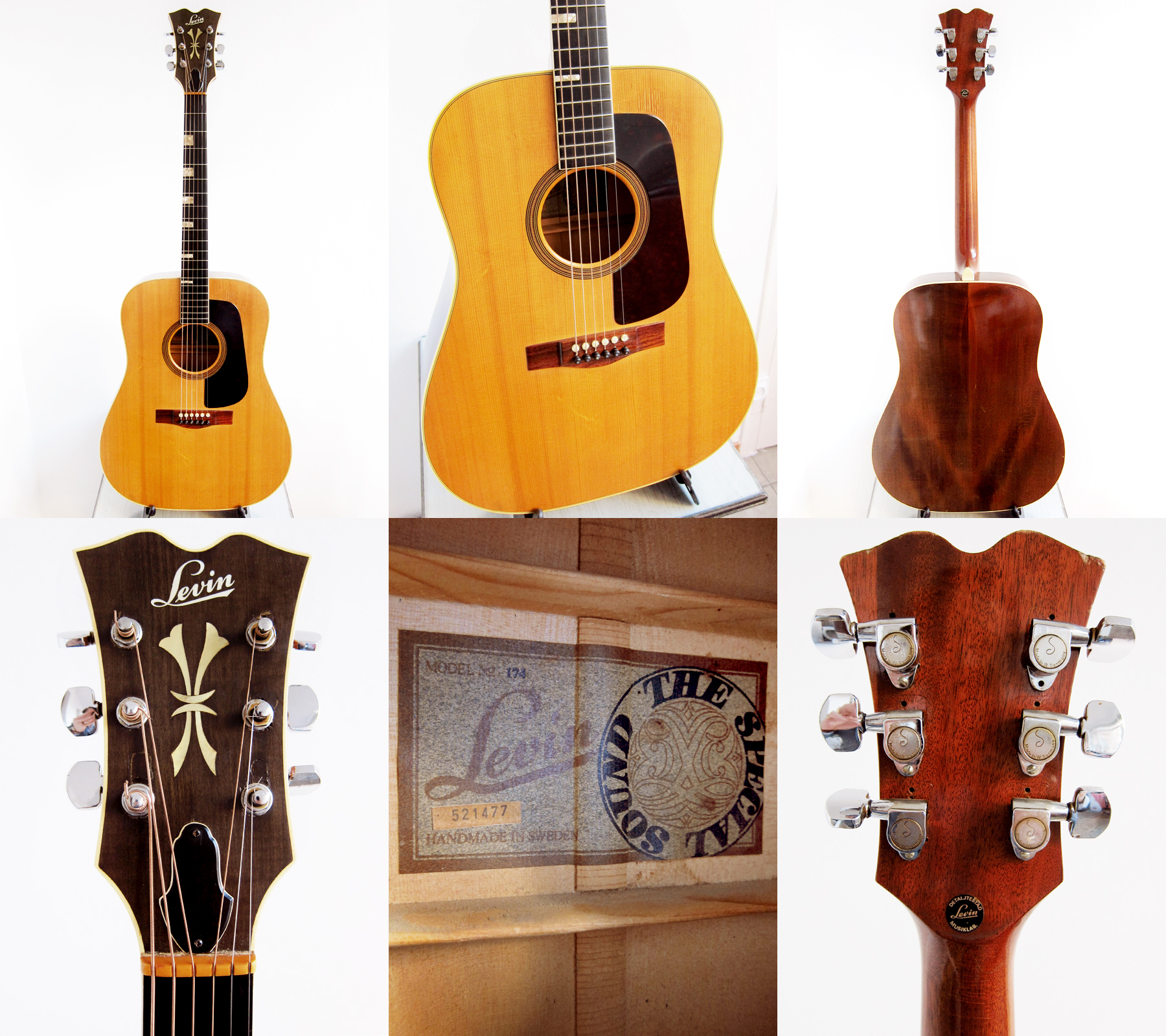
My latest acquisition, a 1972 Levin Model 174. The story how I got this guitar is pretty amazing. I wrote a post about Levin guitars back in August 2013 when I had just started to collect them. In the end of the post I mentioned that I would love to find a Levin Model 174, it’s basically a Levin LT-18 but with a massive head. There is something about that huge head that I find very appealing, I guess it reminds me of old an archtop guitar from 1930-40’s and it’s almost a bit Art Deco. Three months later, in the end of November, I got a comment from a Danish guy called Orla saying that he had one for sale. We started to email each other and he told that a few days earlier he had seen a guy about to throw a guitar case in a skip so he had gone up to him and asked if he could have it instead. Orla took the case home, opened it and found a 1972 Levin Model 174 in pretty good shape inside. He Googled the name and model and pretty soon found my blog post saying that I was looking for one. Since Orla doesn’t play guitar himself, he just wanted to save it from a certain death, he contacted me and offered me to buy it and I’m very grateful that he did. It was a bit scary to buy a guitar from a guy I didn’t know who had contacted me through my blog, it felt a bit fishy somehow. A part of me thought it was a Nigerian email scam in disguise and another part said that I should trust the good in people, especially a Northern neighbour like Orla. In the end I decided that it was an offer I really couldn’t turn down, especially since most of the 174’s I had seen for sale were all Goya labelled and made later in the 1970’s. It took some time to get the guitar down to Spain, we had some logistic issues but finally it arrived about two weeks ago and I was stunned. Since Orla doesn’t play he couldn’t give me any info about what state the guitar was in, he had sent me some pictures but it’s pretty hard to get an idea if it’s even playable from just that. Luckily it was in a really good state and it both sounds and feels great.

Levin Model 174 Made in Sweden 1972

Levin Model 174 /Goya Model 174
Goliath size: Body width: 400 mm, body length: 505 mm, body depth: 95/120 mm
Fingerboard width: 43 mm, scale length: 630 mm
Spruce top, flame maple back and sides, 4-ply bound top, single-bound back
Mahogany bolt-on neck with adjustable truss rod
Single-bound headstock with mother-of-pearl inlay
Single-bound ebony fingerboard with bass side pearloid block inlays
Rosewood bridge with individual height adjustable plastic saddles
Nickel plated individual Van Gent tuners with metal buttons
Natural finish and ten year warranty

Introduced circa 1969 as a replacement for LT 18

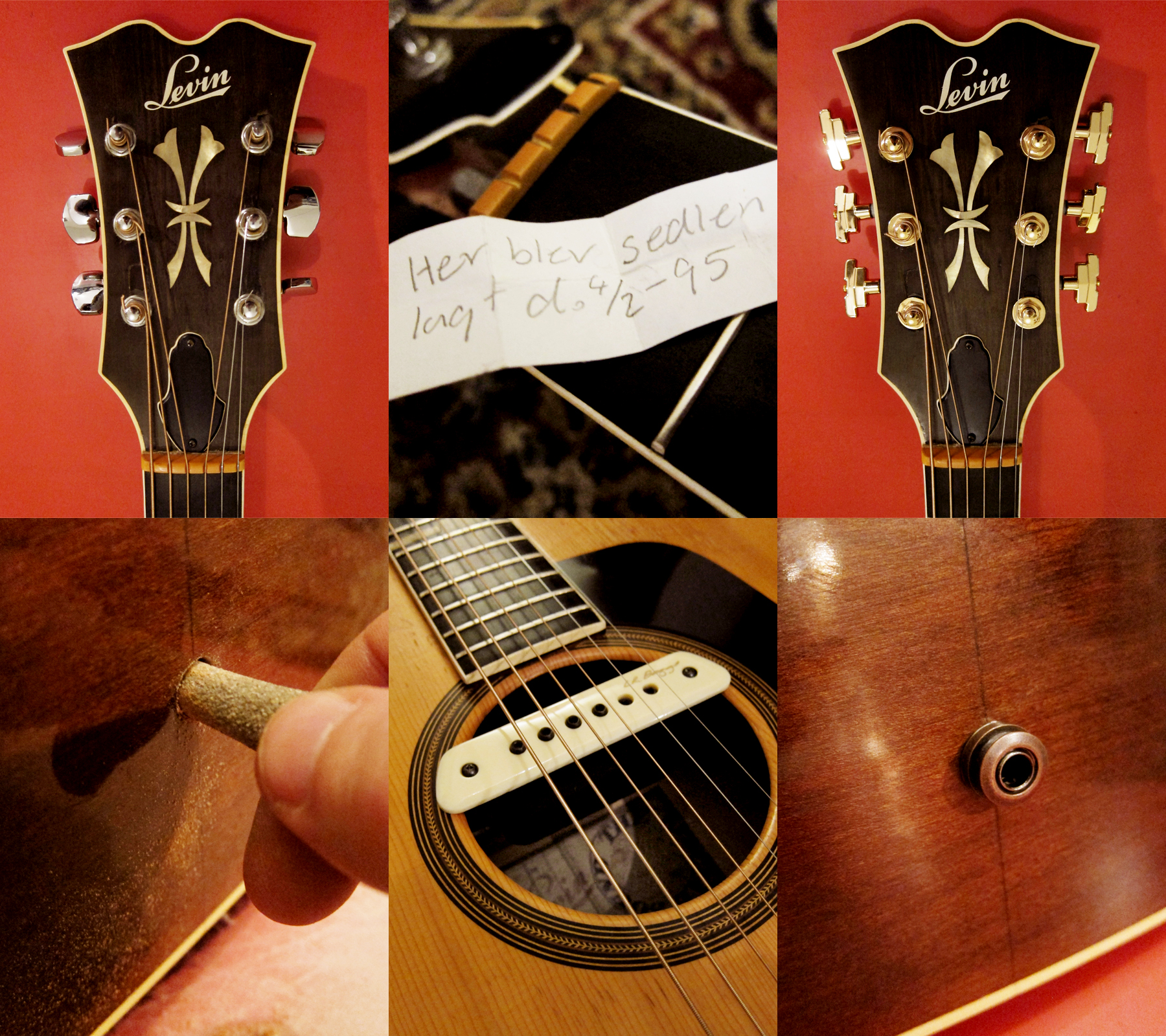
Levin Model 174 Made in Sweden 1972I didn’t have to do much to it, the action was really good as it was. Which was very lucky because this 174 doesn’t have the Levin bolt-on neck system, they stopped with that in the early Seventies. The original Van Gent machine heads had been changed at some point, probably in the 1970’s, to Schaller’s and I really don’t like these type of buttons so I changed them for Wilkinson WJ-309 in gold, to make it look even more Art Deco. I also installed an endpin jack so I can use it live with my LR Baggs M1. I had to clean it a bit, polish the frets and oil the fretboard but overall it was pretty good from the start. There was a note hidden under the trussrod cover saying, Her blev sedlen lagt 4th of February 1995. I assume that’s referring to that the nut was raised a bit 19 years ago, something I need to redo at some point because they seem to have used some paper like material instead of bone.

Goya Model 163 (1968), Goya T-18 (1966), Levin Model 13 (1950), Levin LT-16 (1966), Levin Model 65 (1942), , Levin LM-26 (1959), Levin Model 174 (1972)The whole Levin family, Goya Model 163 (1968), Goya T-18 (1966), Levin Model 13 (1950), Levin LT-16 (1966), Levin Model 65 (1942), Levin LM-26 (1959), Levin Model 174 (1972).

Goya 163

Goya Model 163 Made in Sweden 1968
A very early Goya Model 163, they were introduced in 1969 but the serial number puts this one to 1968. That would make it the earliest known example on the Vintage Guitars Sweden site. Levin serial numbers / Goya serial numbers

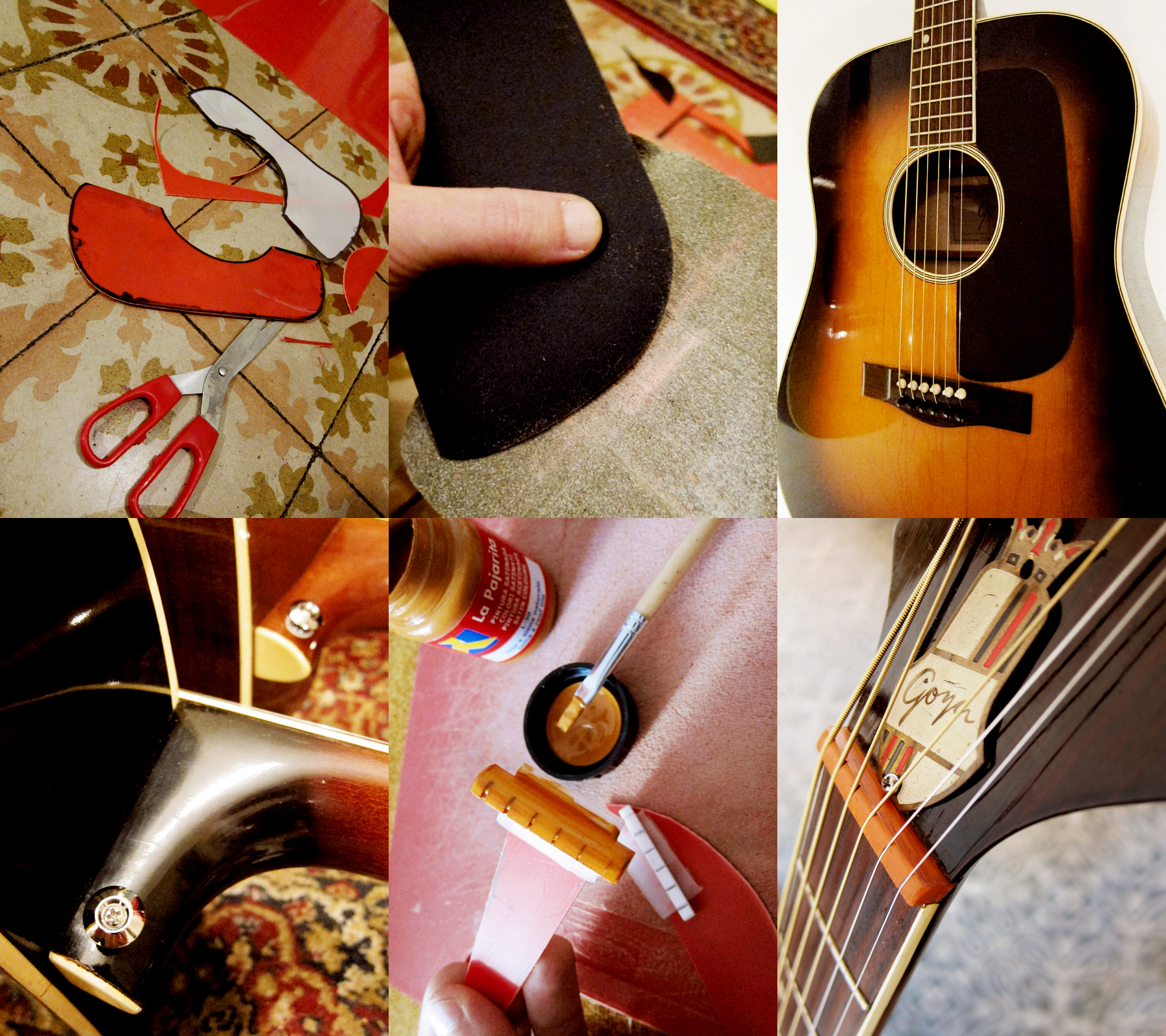
I thought I might as well post some images of the Goya 163 I received back in January. There was some work to be done, actually quite a lot. First I had to reset the neck to get the action down and then I had to remove the bridge and redo the saddle screws. I cut a new pickguard over the weekend, well it’s not perfect yet, I’m still looking for a better material but it will do for now. I bought this Goya from a girl called Marilyn Moser in Maynard, Massachusetts. She had used the guitar for some live gigs in the New York area but gave up on it because of the high action, it was fairly unplayable when I got it. The guitar came with a nice handwritten note to me, the new owner, that’s why I got curious to find out a bit more about her. Here are links to some of her music and her awesome 1960’s blog.
Goya Model 163 Made in Sweden 1968
Goya Model 163, made in Sweden by Levin in 1968

Levin 163 / Goya 163
Goliath size: Body width: 400 mm, body length: 505 mm, body depth: 95/120 mm
Fingerboard width: 43 mm, scale length: 630 mm
Spruce top, flame maple back and sides, 4-ply bound top, single-bound back
Mahogany bolt-on neck with adjustable truss rod
Single-bound rosewood fingerboard with bass side pearloid dot inlay
Rosewood bridge with individual height adjustable plastic saddles
Nickel plated individual Van Gent tuners with metal buttons
Sunburst finish and ten year warranty

Goya Model 163 Made in Sweden 1968
I still haven’t found a good pickguard material. Well the red plastic that I happened to find in the street is actually perfect but who wants a red pickguard. I’ve managed to find 0.8 mm thick matt black plastic but I need something around 1-1.5 mm and preferable in high gloss jet black or even better in red tortoise.  I fitted a strap button in the usual place, and then I painted the new bone nut orange to match the original Levin Galalith nut.

Levin Goya Model 163 1968
Update: March 21, 2014 The pickguard material I ordered from China looked a lot classier than expected so I cut in to shape and put it on

Ad of the day

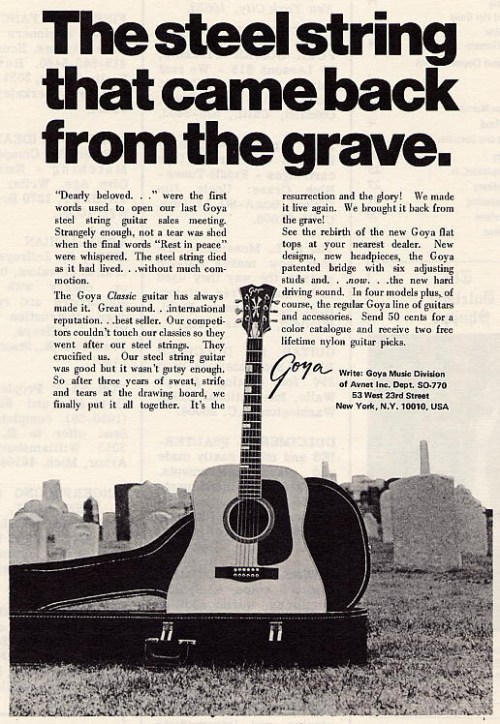
Back from the grave, Goya 174 ad from 1970 2
Back from the grave, Goya 174 ad from 1970

It seems like I will soon be the proud owner of an early 1970’s Levin 174. A nice Danish chap by the name of Orla wrote a comment on my previous post about Levin, saying that he had one for sale. I will write more about it as soon as I get it but for now, enjoy this Goya ad for the same guitar from 1970.

How to… remove a bridge

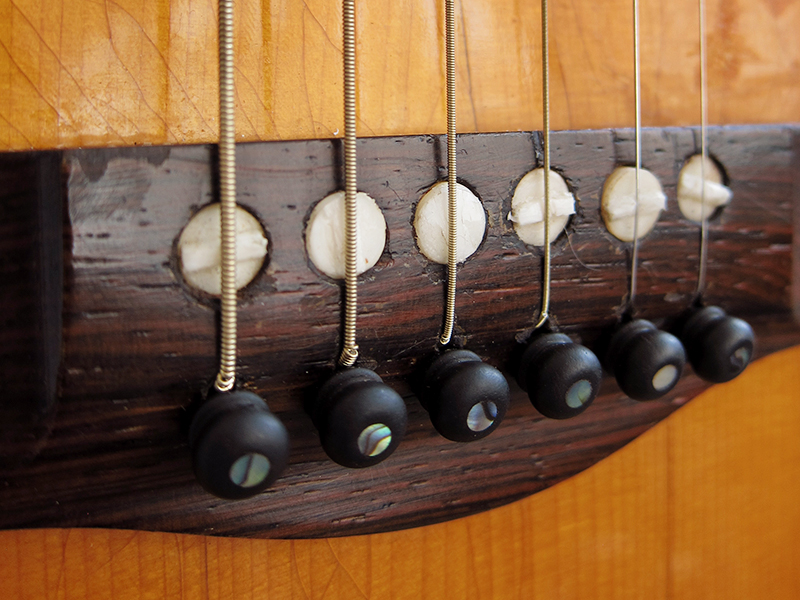
Levin / Goya 163 individual height adjustable plastic saddles
The old plastic saddles before I removed the bridge on my Goya Model 163 from 1968.

I recently had to remove my first bridge on an acoustic guitar, after removing my first neck it just felt like a natural next step. It turned out to be both harder and easier than I first thought it would be. I needed to do this for two reasons, first because the bridge started to come loose, it felt like the glue had dried up and started to fall apart. Second, I wasn’t too excited about the extremely low individual height adjustable plastic saddles, as Levin calls them, that the previous owner had left me. They were too low to adjust and made some strings sound muted and dull. I watched a Youtube clip before I started with Julyan Wallis, who happened to be working on a Levin guitar as well, and learned a few good tricks. He was heating up the spatula on an normal clothes iron and that way managed to loosen the old glue under the bridge. It worked extremely well.

Goya 163 bridge removal
I heated up the spatula on a normal clothes iron and touched it with my fingers to make sure it didn’t get too hot, I was scared to scorch the lacquer. As soon as you loosened the corners and worked your way around the whole bridge you can keep the tip of the spatula quite hot if you are quick to get it in under the bridge and not resting it on the lacquer. This could have been such a smooth and and easy job if I would have realised earlier that that saddle screws went all the way through and was actually screwed in to the top as well, something that kept the bridge secure even when all the glue was loosened. I tried over and over and even managed to damaged the lacquer in two places in my desperate attempts to get the bridge off. Since I couldn’t get a grip of the saddle screws, two was filed down smooth and the others were too low to hold on to with any pliers. I had to heat up a screwdriver on a candle, I should probably have used the clothes iron, and then melt the tip in to the saddle and that way get a grip and unscrew them. Once all the saddle screws were out the bridge came off straight away. It could have been a cleaner removal if I had realised that the saddles were attached to the top but still, I’m pretty pleased with the result for being my first time.

Goya 163 bridge removal
I painted the wood where the finish had come off and then added a bit of nitro lacquer to seal it. Since I had to burn the tip of the saddles to get them out I thought the best I could do in order to save as much material as possible was the flip them over and reshape the bottom instead. I used a normal hand file to shape the saddles, I made the tip both higher and wider to get a better grip with the pliers when I adjust them. Once the shape was good I rounded them off with my fret crowning file. I glued the bridge back in place with fish glue and a couple of clamps and let it set for 24 hours. It worked pretty well, the tone is better and I can now easily adjust the string height like Levin intended 46 years ago.