Claescaster

Tag: Levin guitars

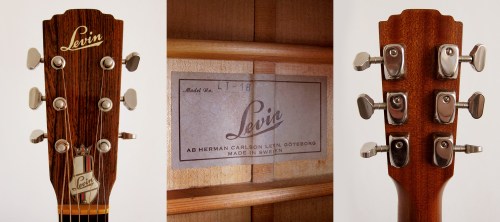
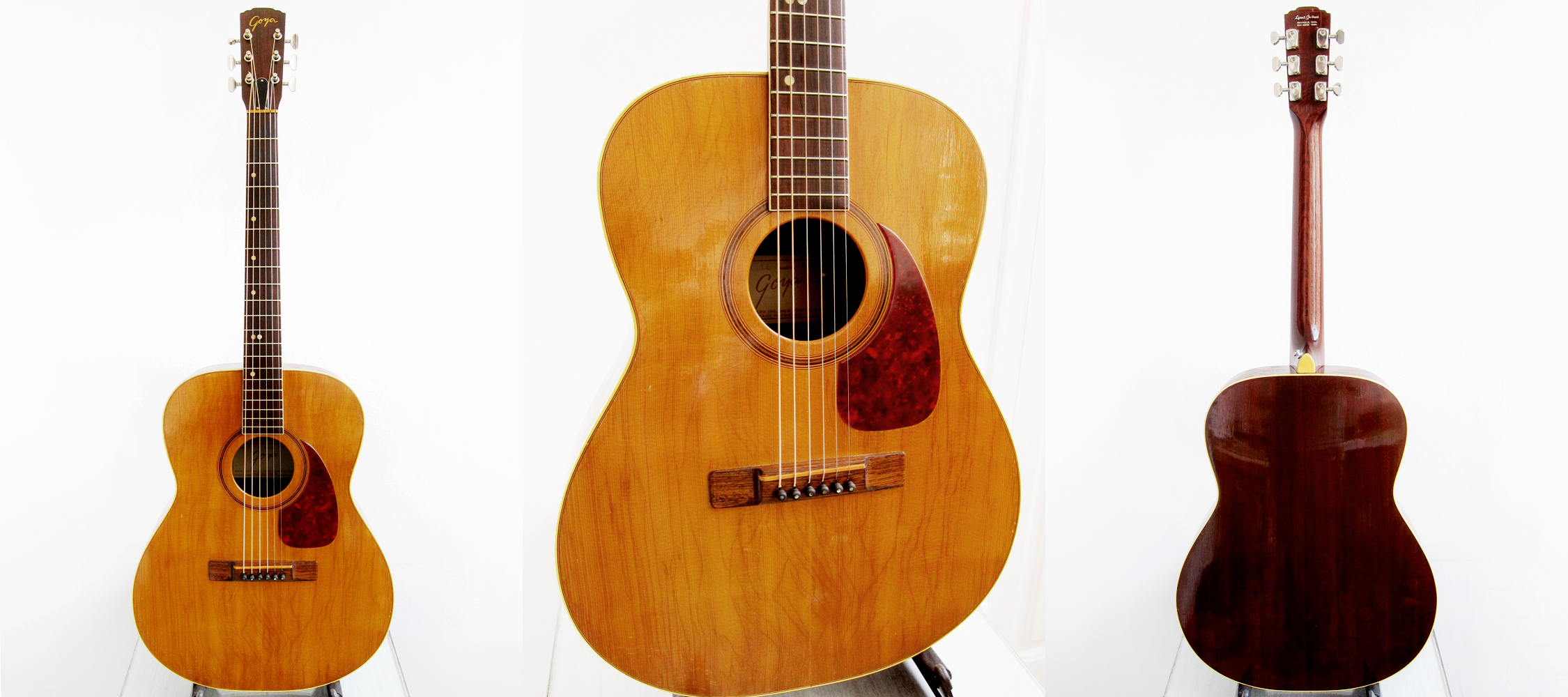
Levin LT-18

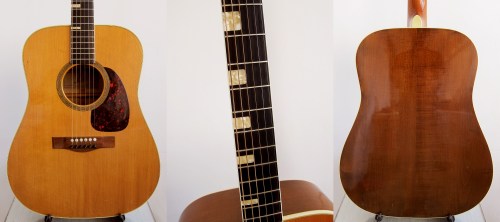
Levin LT-18 Made in Sweden 1963 Levin LT-18 Made in Sweden in 1963

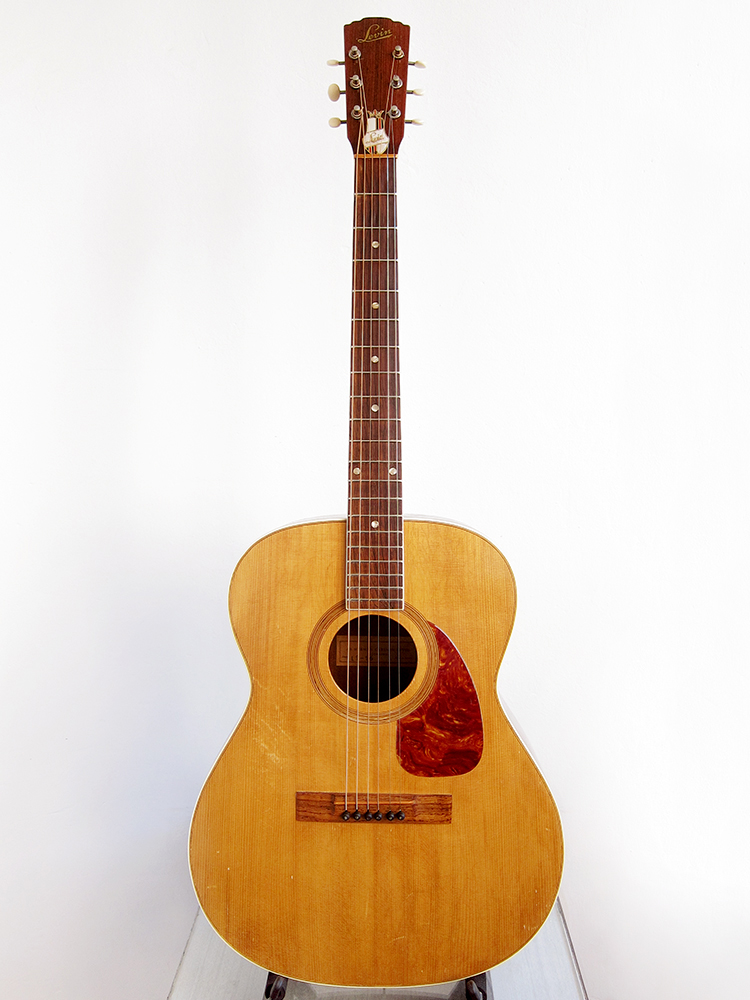
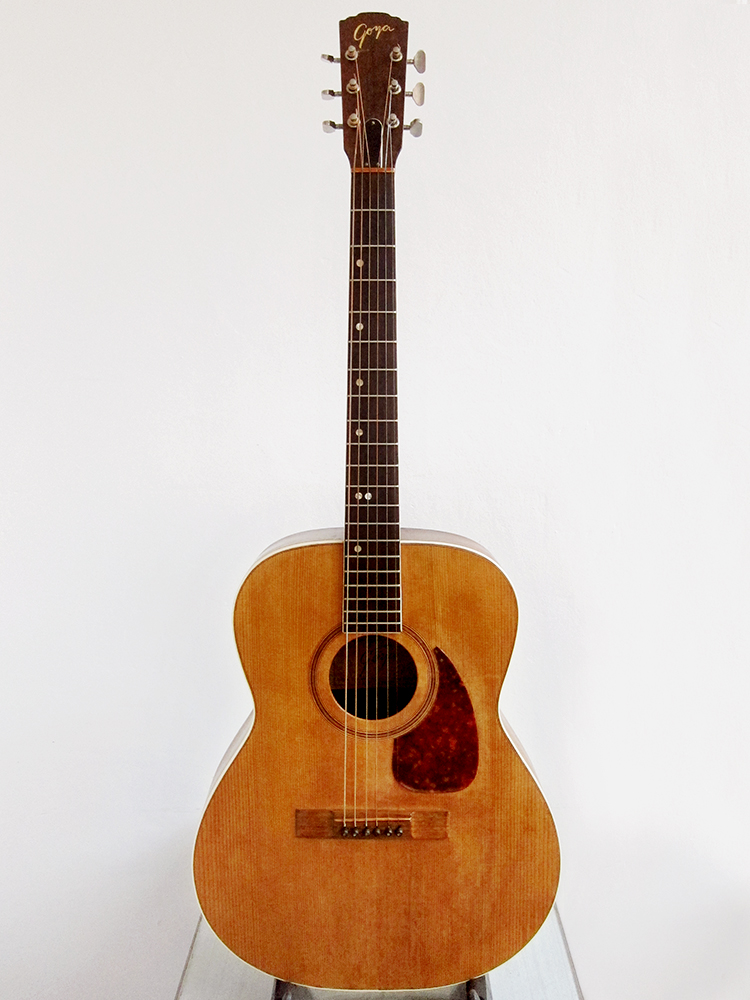
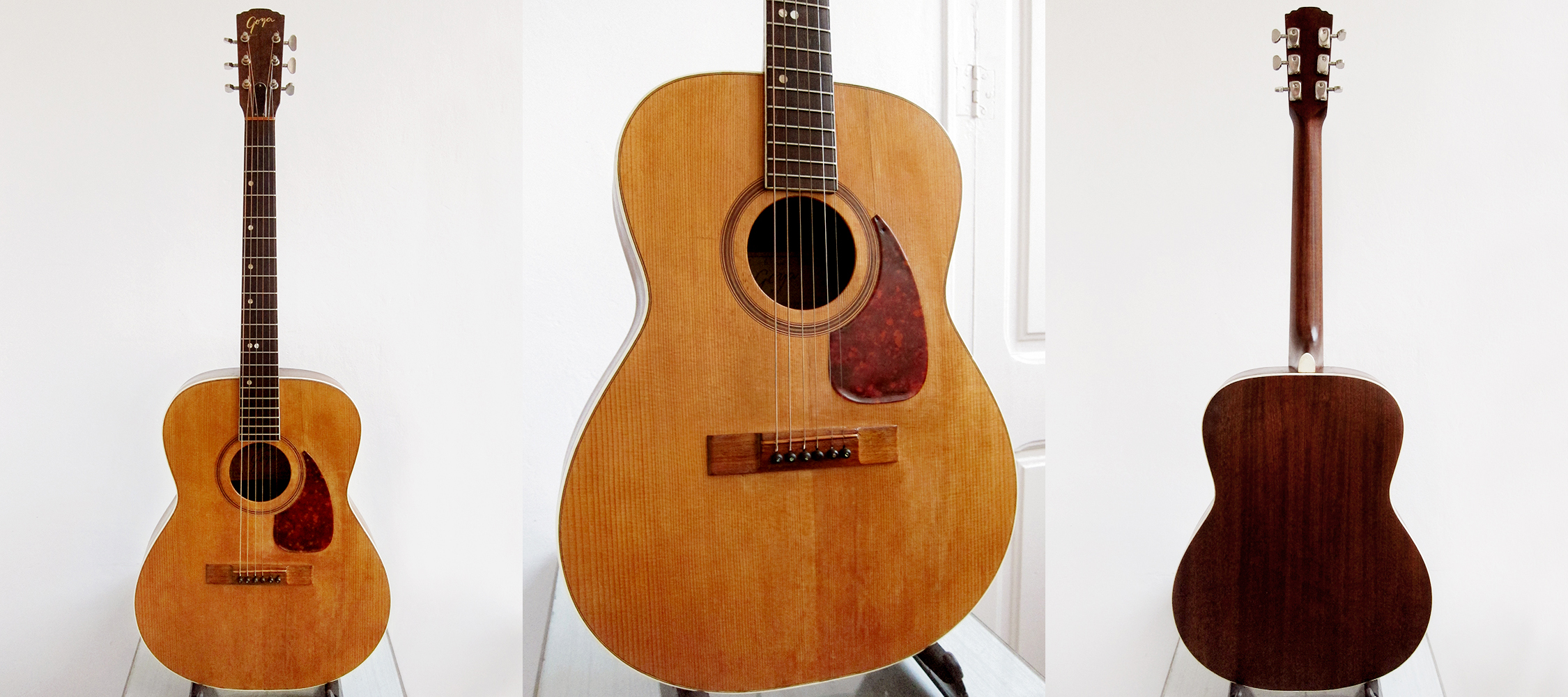
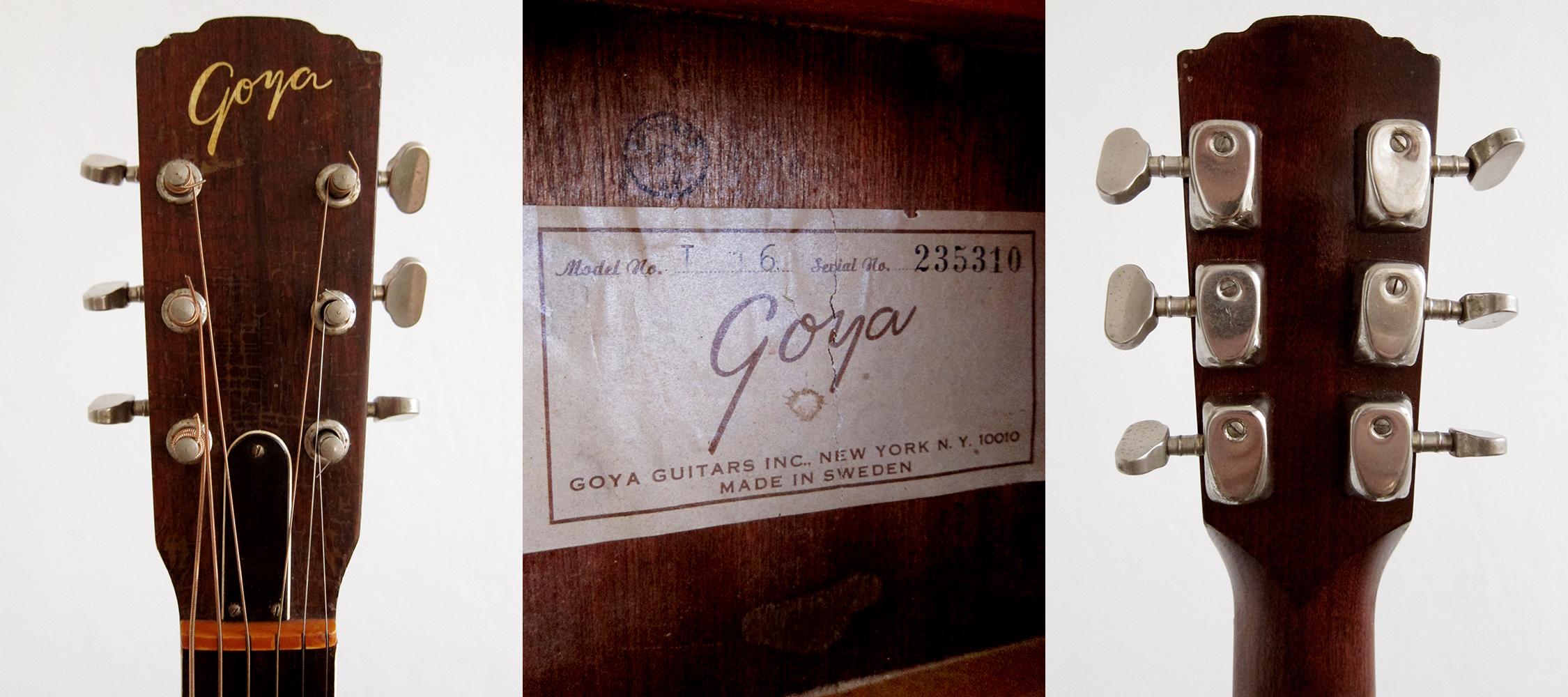
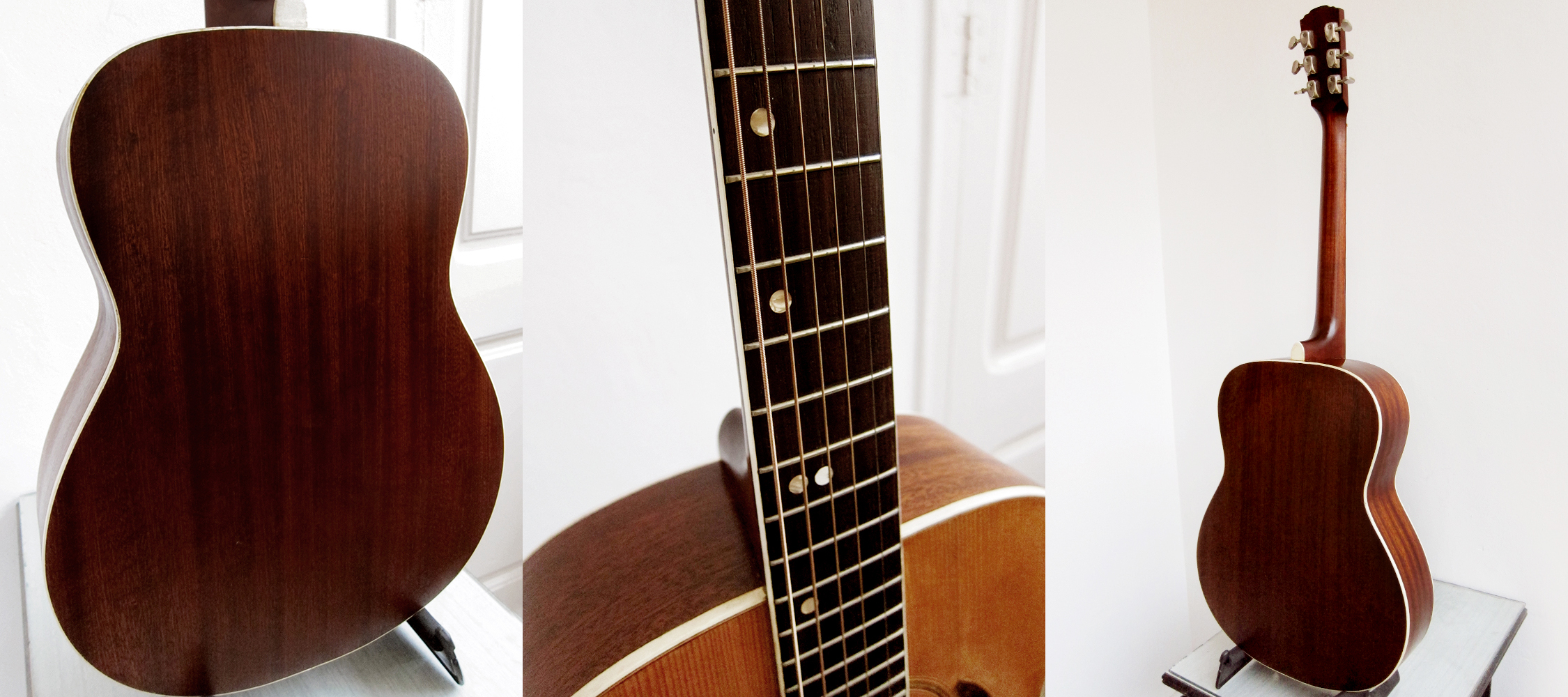
2016 might have been the worst year ever when it comes to good musicians dying, last out was Leonard Cohen who meant so much for me in my late teens. Having said that, 2016 has also been the most amazing year ever when it comes to me getting my hands on some mighty fine Levin guitars. I’ve been trying to find another Goliath sized Levin for the past 3 years without much luck, except for the lovely 1968 Levin LT-18 that I found a couple of weeks ago. The full sized Levin guitars don’t come up for sale that often, especially not in Sweden or Germany where people seem to keep them until they die. The 1966 Goya T-18 that I bought back in 2013, which started my obsession with the Levin brand, was imported from USA and they seem to be quite rare there too. I have seen a couple on eBay in the UK but the sellers always want £1000 for them which for me as a Swedish collector is way too much. I was raised with this brand, my first guitar was a Levin and even though they might be worth what they deserve in the rest of Europe, the cheaper models can still be found on yard sales in Sweden for close to nothing. We have to remember that Levin had produced 500,000 guitars by 1970, something that C. F. Martin & Co completed in 1990, so there are still quite a few lying around in peoples attics in Sweden. I must have done something right lately because I’ve been very lucky when it comes to guitars, both these Levin LT-18 was actually offered to me, the sellers had seen my blog and contacted me to see if I was interested in buying them and of course I was. You feel a bit honoured too, when someone offers you a guitar because they know you will restore it, take care of it, play it and cherish it for years to come. This 1963 Levin LT-18 has spent it’s life in Ireland and came to me from a guy called Fintan. It has had some repair work done to it, apparently by a luthier in Dublin about 10 years ago. The pickguard was replaced and a new bridge was cut and for some reason screwed down to the top, madness if you ask me. I just adjusted the neck a bit, cleaned it up and it was ready to go. The guitar sounds pretty damn amazing, not as strong in the mid-range as the 1968 Levin LT-18, especially not after I changed the bridge to ebony, but the highs are great with really nice overtones.
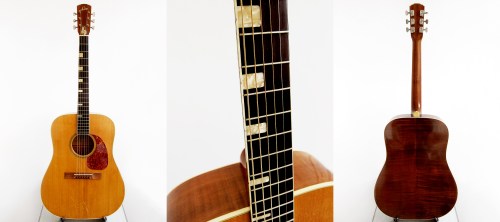
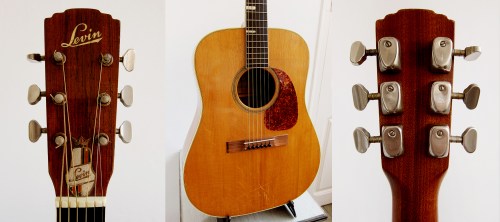
Levin LT-18 Made in Sweden 1963

Levin LT-18 / Goya T-18
Goliath size: Body width: 400 mm, body length: 505 mm, body depth: 95/120 mm
Fingerboard width: 43 mm, scale length: 630 mm
Spruce top, flame maple back and sides, 4-ply bound top, single-bound back
Mahogany bolt-on neck with adjustable truss rod
Single-bound ebony fingerboard with bass side pearloid block inlay
Nickel plated individual Van Gent tuners with metal buttons
Ebony bridge, natural finish and ten year warranty

Marketed by U.K. distributors as Super Goliath Model 1855
How to… carve a bridge

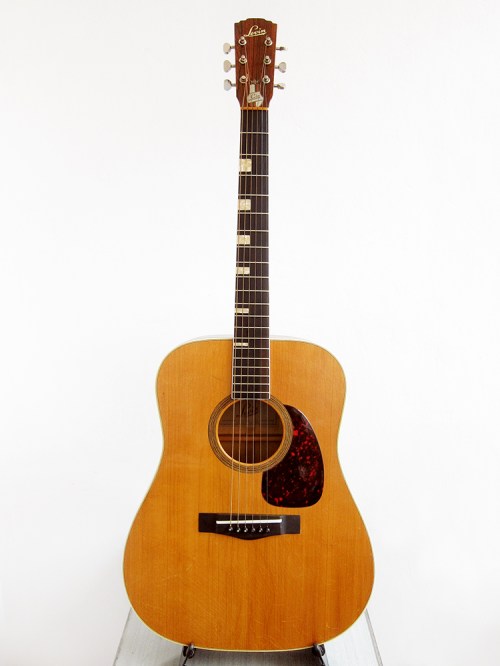
Levin LT-18 Made in Sweden 1968Levin LT-18 Made in Sweden in 1968

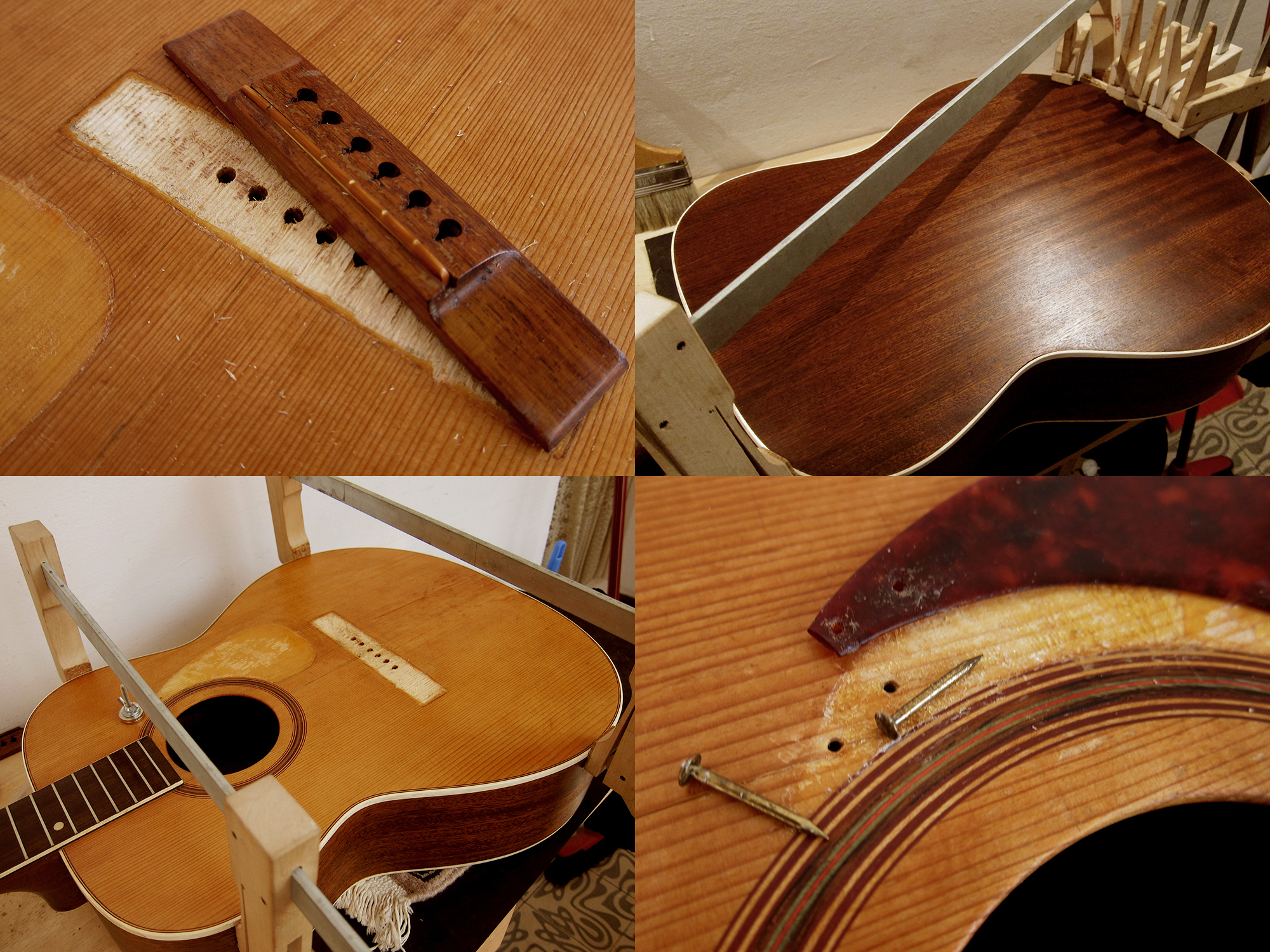
I decided to carve a new bridge for my 1968 Levin LT-18. The old bridge needed to be re-glued anyway so I thought it was a good time to create a new one in ebony instead. I did this once, I carved a new bridge for my 1973 K. Yairi YW-1000. This was a pretty similar job, both ebony and roughly the same shape. I’m really happy with the sound of this guitar now, so much richer than with the original bridge.

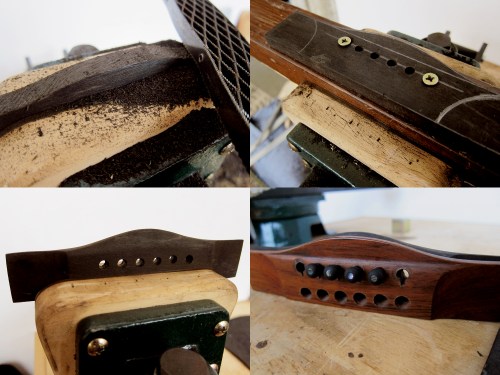
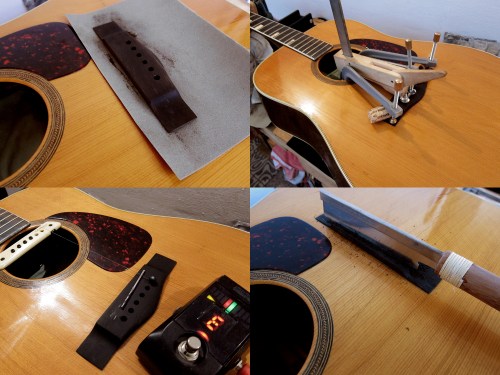
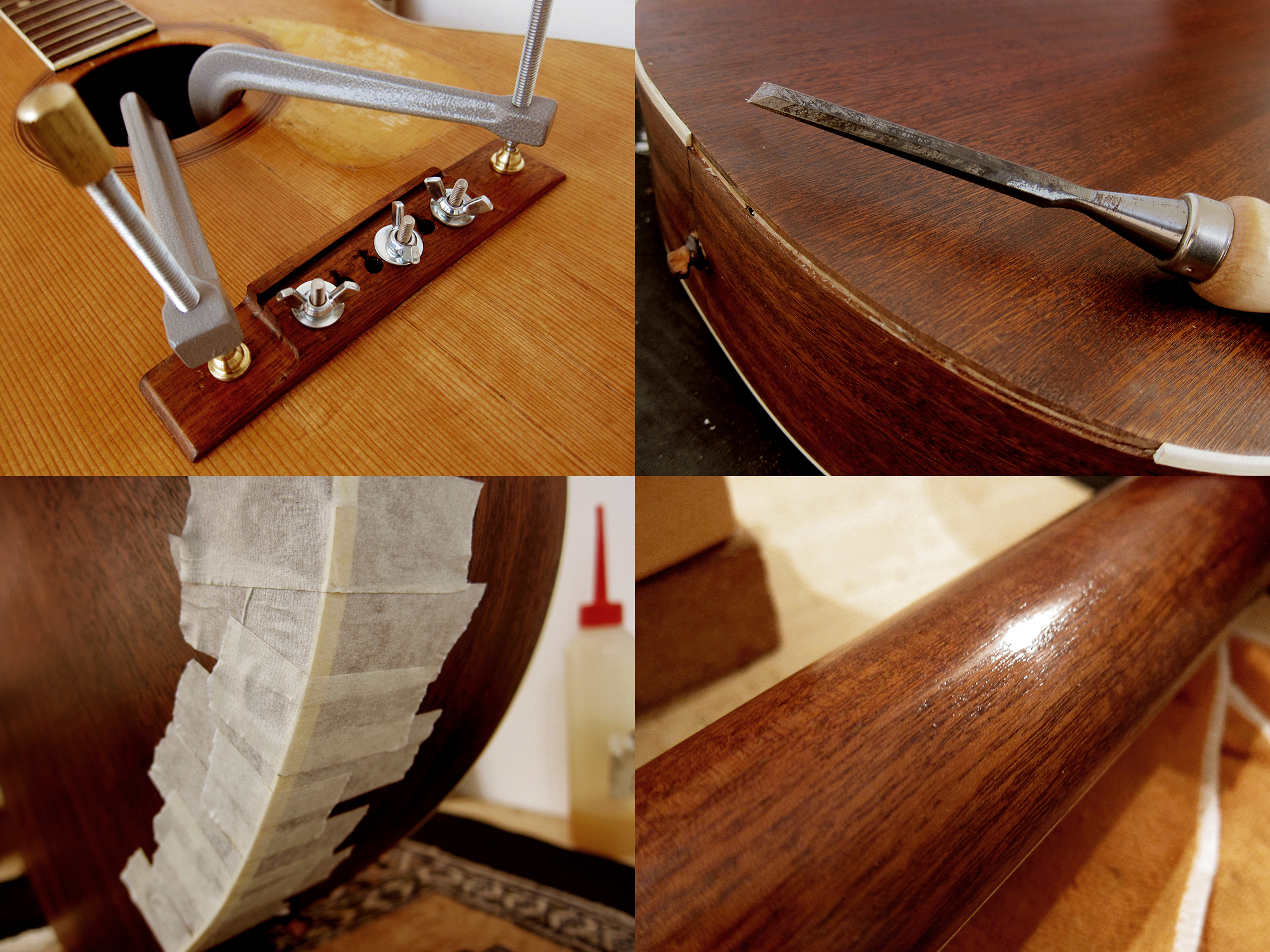
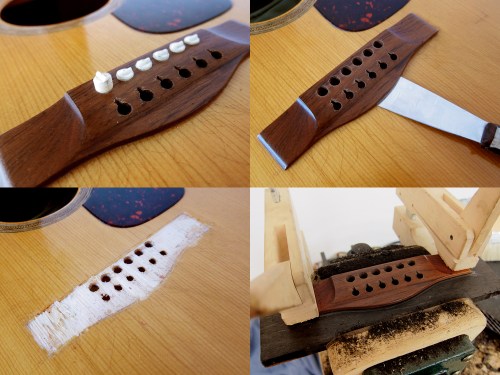
Levin LT-18 Made in Sweden 1968First step was to remove the old bridge with a heated spatula and then copy the bridge and drill the holes.

Levin LT-18 Made in Sweden 1968Then shape it as close to the original as possible using my Japanese saw rasp and different files.

Levin LT-18 Made in Sweden 1968Last step, fit the bridge and glue it down. Once the bridge was in place I could check the intonation to get the saddle slot in the perfect spot. Unfortunately I cut the slot 1 mm too wide so the bone saddle got a bit fatter than I had planned. Perhaps that gives tonal qualities I would have missed with a thinner saddle, let’s hope so. I also installed a LR Baggs M1A so I can use the guitar for gigs.

Before: with the original rosewood bridge and the individual height adjustable plastic saddles

After: with the ebony bridge I carved and a bone saddle

Levin LT-18

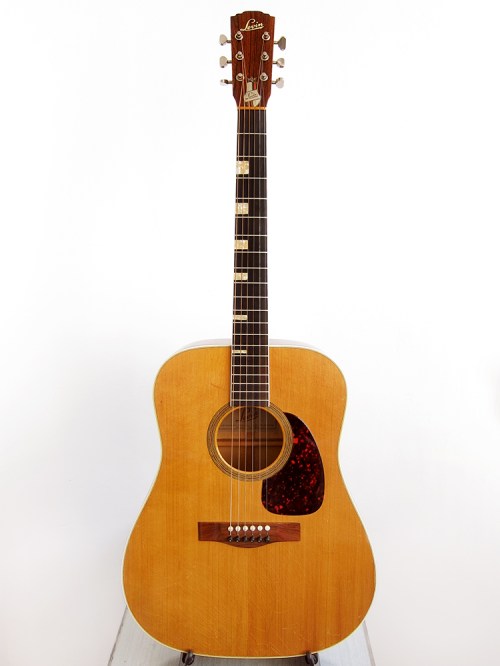
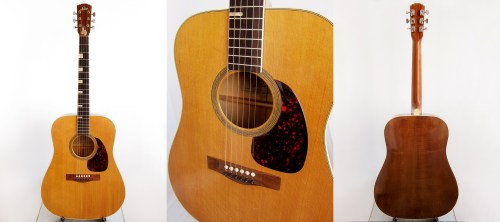
Levin LT-18 Made in Sweden 1968
Levin LT-18, Made in Sweden in 1968

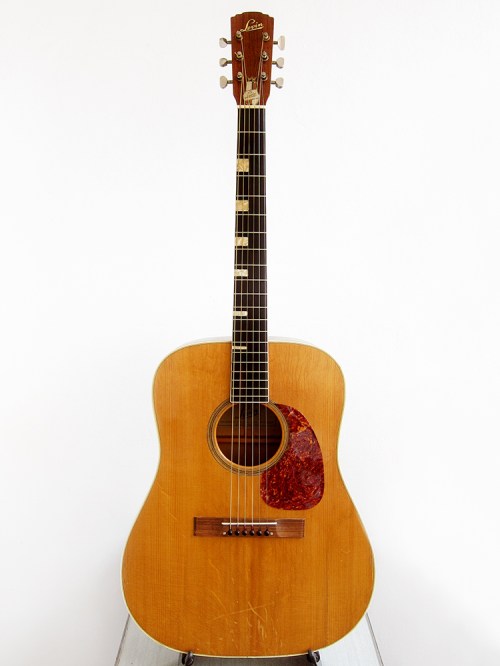
I’ve tried my best not to buy more guitars, hence why I’m selling most of my Japanese acoustics. Having said that, if a Levin LT-18 shows up on eBay and the seller contacts me via email, after a couple of shamefully low best offers from my part, and I happen to lie at home with pneumonia, it was just impossible to resist. I’m so weak for these top of the line Levin flat tops from the 1960’s, they sound amazing and they are pretty rare to find, people tend to cling on to them until they die, and then their kids will sell them. It’s also quite rare to see a Levin branded LT-18 for sale, I already have a Goya T-18 which is the same guitar but branded Goya for the US market and they tend to be a bit easier to come across. I always prefer early to mid 1960’s Levin guitars, before they opened the new factory in Lessebo in 1965, having said that, most of my Levin guitars are actually from 1965-1966 and they sound pretty damn amazing. This one from 1968 is pushing it a bit, I thought it was from 1967 until I got it home and could check the serial number properly. The problem after 1967 is the new invention of Levin, the individual height adjustable plastic saddles, I hate them. I will have to carve a new bridge in ebony, to match the fretboard, and cut a slot for a real bone saddle.

Levin LT-18 Made in Sweden 1968

Levin LT-18 / Goya T-18
Goliath size: Body width: 400 mm, body length: 505 mm, body depth: 95/120 mm
Fingerboard width: 43 mm, scale length: 630 mm
Spruce top, flame maple back and sides, 4-ply bound top, single-bound back
Mahogany bolt-on neck with adjustable truss rod
Single-bound ebony fingerboard with bass side pearloid block inlay
Nickel plated individual Van Gent tuners with metal buttons
Ebony bridge, natural finish and ten year warranty

Marketed by U.K. distributors as Super Goliath Model 1855
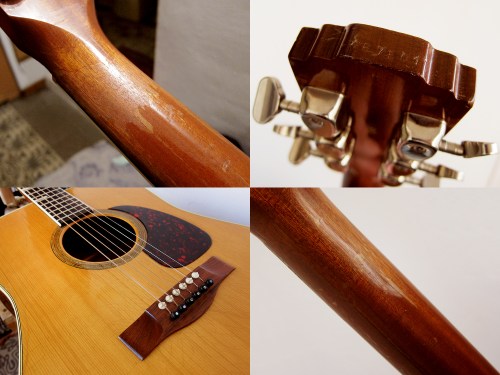
Levin LT-18 Made in Sweden 1968There were two things that I couldn’t stand with this Levin, first the lack of lacquer on the back of the neck, and then the rosewood bridge with the individual height adjustable plastic saddles. I’m not sure how they managed to loose most of the lacquer on the back of the neck but that was easily filled in with a couple of layers of Nitrocellulose lacquer. The second part, with the rosewood bridge and the plastic saddles is something we are going to have to deal with. The sound is not terrible with the plastic saddles, it ads a kind of 1960’s Gibson bass to it but it lacks a lot of clarity in the trebles and I always prefer a bone saddle. I also don’t like the look of a rosewood bridge to a ebony fretboard, they should match. I will try to carve a new bridge in ebony as soon as I get time.  

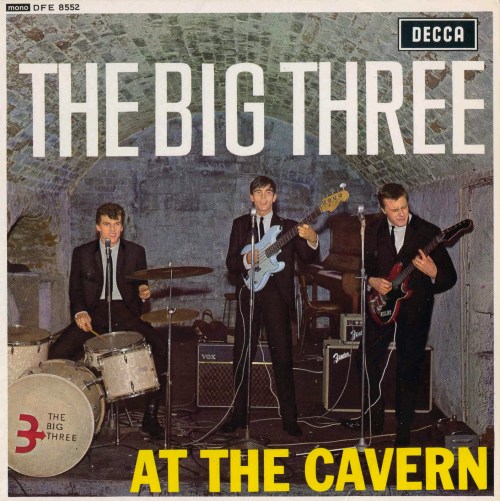
the-big-three-at-the-cavern-decca
This Levin LT-18 was apparently owned by Brian Griffiths from The Big Three, a Liverpool band that was active during the days of The Beatles. However, since the guitar was made in 1968 he must have bought it long after the Liverpool glory days were over.

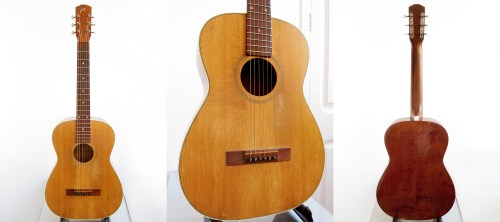
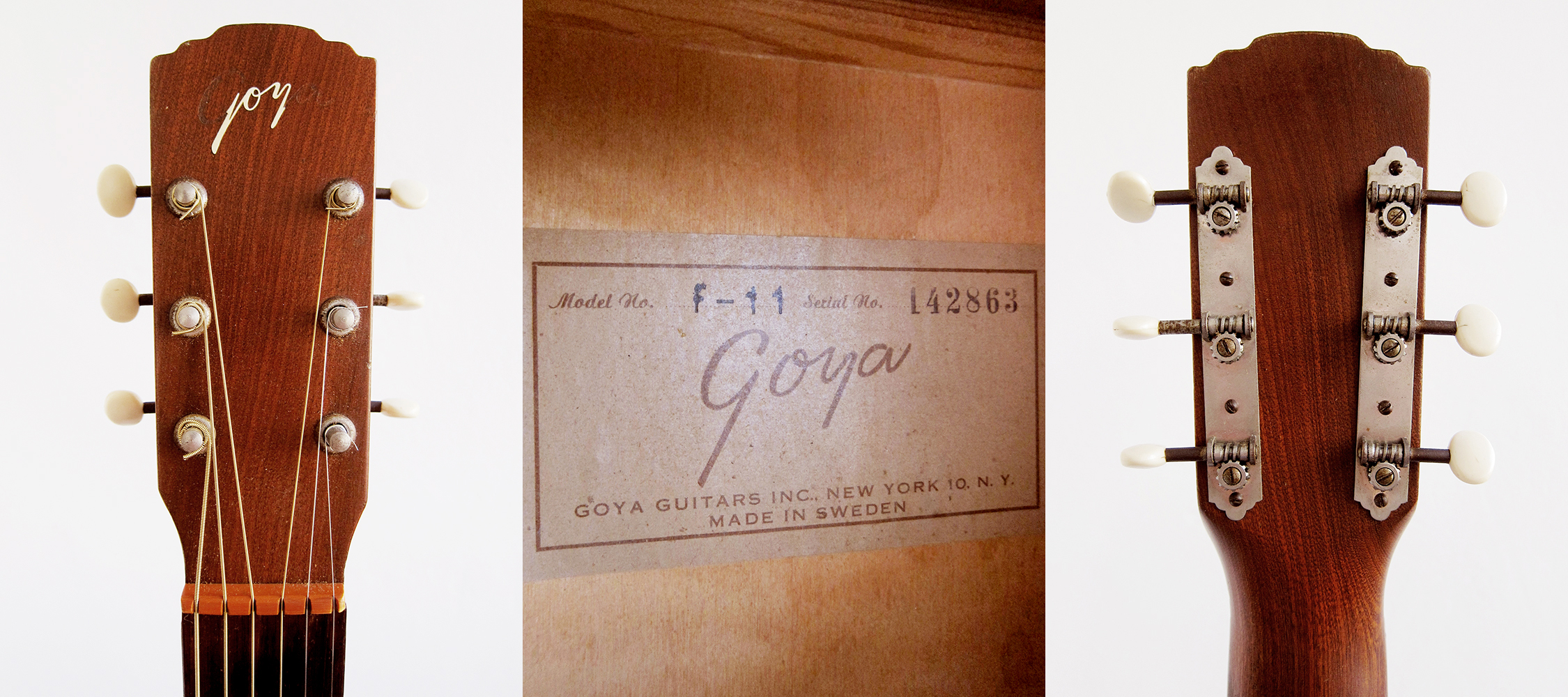
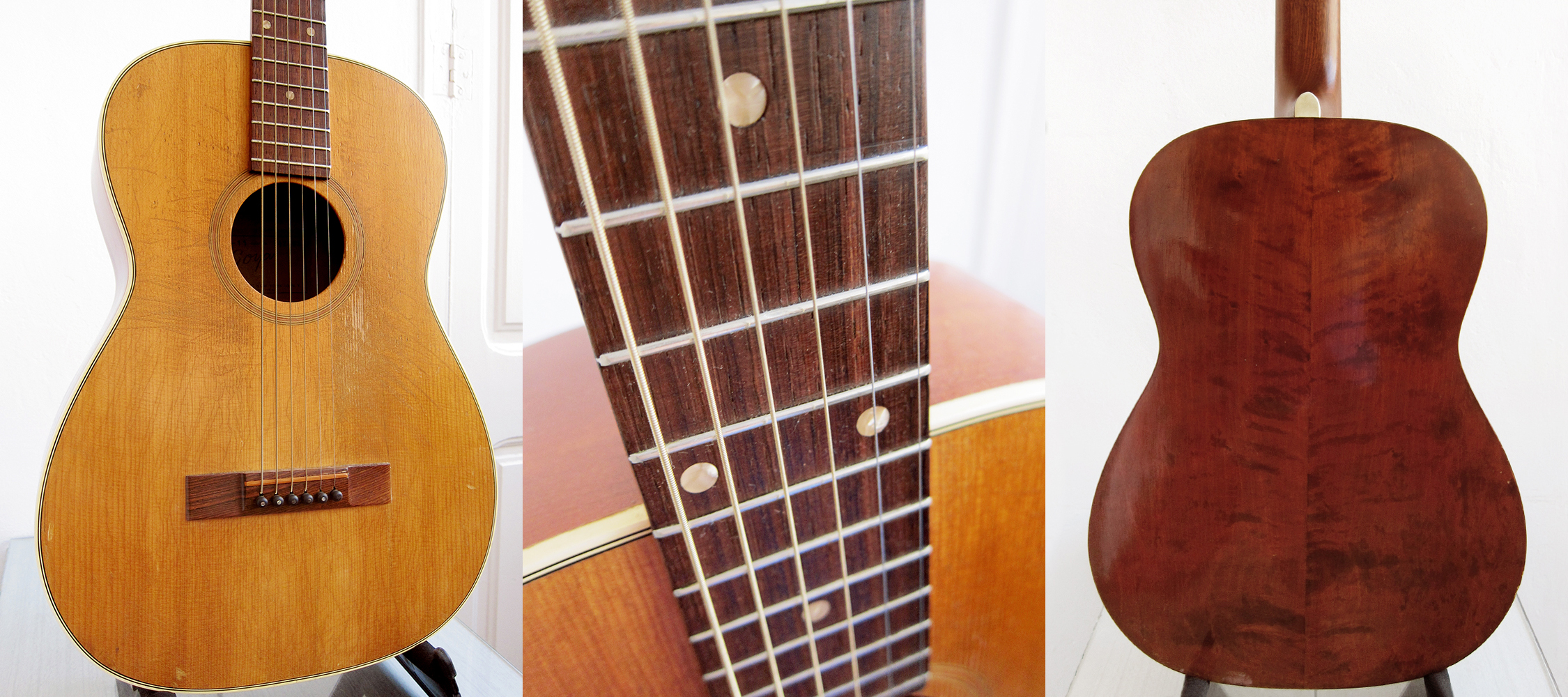
Goya F-11

img_7029-2Goya F-11, made in Sweden by Levin in 1963

Back in May I bought a 1963 Goya F-11 from a pawn shop San Diego, California. It’s my 18th Levin so far but my first steel stringed classical guitar, or it’s actually more of a Flamenco shape than a normal Spanish guitar. It’s an awesome little finger picker with a wide nut and pretty small body, very comfortable to play in the sofa. The sound is very different, I guess because it’s a steel stringed but fan braced and built like a classical guitar. These type of guitars got really popular in the mid 1960’s during the folk boom in the US and Levin built quite a few under the Goya brand to compete with the Gibson F-25 and other concert sized steel stringed folk guitars of the time. I have never played anything like this before and really like it, even though it doesn’t sound as good as a Goya T-16 for chord playing, it has something almost ladder braced like in the sound that makes it pretty unique.
levin-goya-f-11-1Levin Goya F-11 Made in Sweden 1963Levin Goya F-11 Made in Sweden 1963A 1963 Goya F-11, worn, bruised and beaten but still very beautiful, I love the flamed back. It’s fun that half the logo has been removed to read Joy instead of Goya.

Goya F-11
Concert size: Body width: 360 mm, body length: 465 mm, body depth: 98 mm. Fingerboard width: 43 mm, scale length: 630 mm. Spruce top with fan bracing, birch back and sides, 4-ply bound top, unbound back. Mahogany neck with non-adjustable T-shaped duraluminum truss rod. Unbound rosewood fingerboard with pearl dot inlay. Rosewood bridge, double pickguards and nickel plated strip tuners.  Matte natural finish

Goya Catalog 1964Taken from a 1964 Goya catalogue

Sigma DR-35

Sigma DR-35, Made in Japan 1980, MIJ, C. F. Martin & CoSigma DR-35, Made in Japan 1980

I finally managed to find another Japan made Sigma, this time a 1980 Sigma DR-35. It’s a beautiful looking Martin D-35 copy with a 3-piece rosewood back. They are pretty hard to come by these early 1980’s Japan made Sigma’s and sometimes very expensive too, between 500-1500€ depending on the model. I didn’t buy this for myself, I’m way too happy with my Sigma DR-41 at the moment and on top of that I’m actually trying to thin out my Japanese guitar collection. I got it for my friend Wolf who just like me have gone from a pretty solid Gibson obsession to realise that perhaps that Martin sound is not that bad after all. There is something of that punchy mids and clear ringing highs in the Martin sound that these Japanese made Sigma’s have too, after all they were commissioned by C. F. Martin & Co. I thought my Sigma DR-41 was loud and had a very punchy midrange but this Sigma is one step beyond, I guess because of the 3-piece back. I like the highs and the overtones better in mine but still, this is an amazing sounding guitar that I thought long and hard about keeping for myself. I was sure that my Sigma DR-41 was made in 1982 since the serial number starts with E82 but since this Sigma DR-35’s serial number also starts with E82 and came with a receipt that proves that it was sold in September 1980 it must have been made that year, or earlier.

Sigma DR-35, Made in Japan 1980, MIJ, C. F. Martin & CoSigma DR-35, Made in Japan 1980, MIJ, C. F. Martin & CoThis guitar had apparently been in storage for the last 30 years, since the original owner died and that seems plausible, it’s in really good shape for it’s age.

Sigma DR-35, Made in Japan 1980, MIJ, C. F. Martin & CoThe classic Made in Japan football stamp, burnt in to the back brace that was used from 1978-1983 on Japan made Sigma’s stating: Sigma Guitars – Made in Japan for – C.F. Martin & Co, just like on mySigma DR-41. The rosewood looks really nice on this Sigma, even better than on mine.

Wolf asked me to install a LR Baggs iBeam in the Sigma before he received it and since I recently installed the LR Baggs Lyrics in my Sigma DR-41 it was a pretty easy task. We actually got to try them both out last Saturday when we played live with Cherry & Wolf at La Sonora, it sounded something like this. I did two tests to make it easier to compare the Sigma DR-35 with the iBeam to the Sigma DR-41 with the Lyrics. They both sounds pretty darn great, but in different ways.

Sigma DR-35, Made in Japan 1980, MIJ, C. F. Martin & CoThe original receipt from 26 September 1980. The guitar cost 475 Deutsche Mark which would be around 245€ today and probably a lot more 36 years ago. Taken from my Instagram

Goya T-16

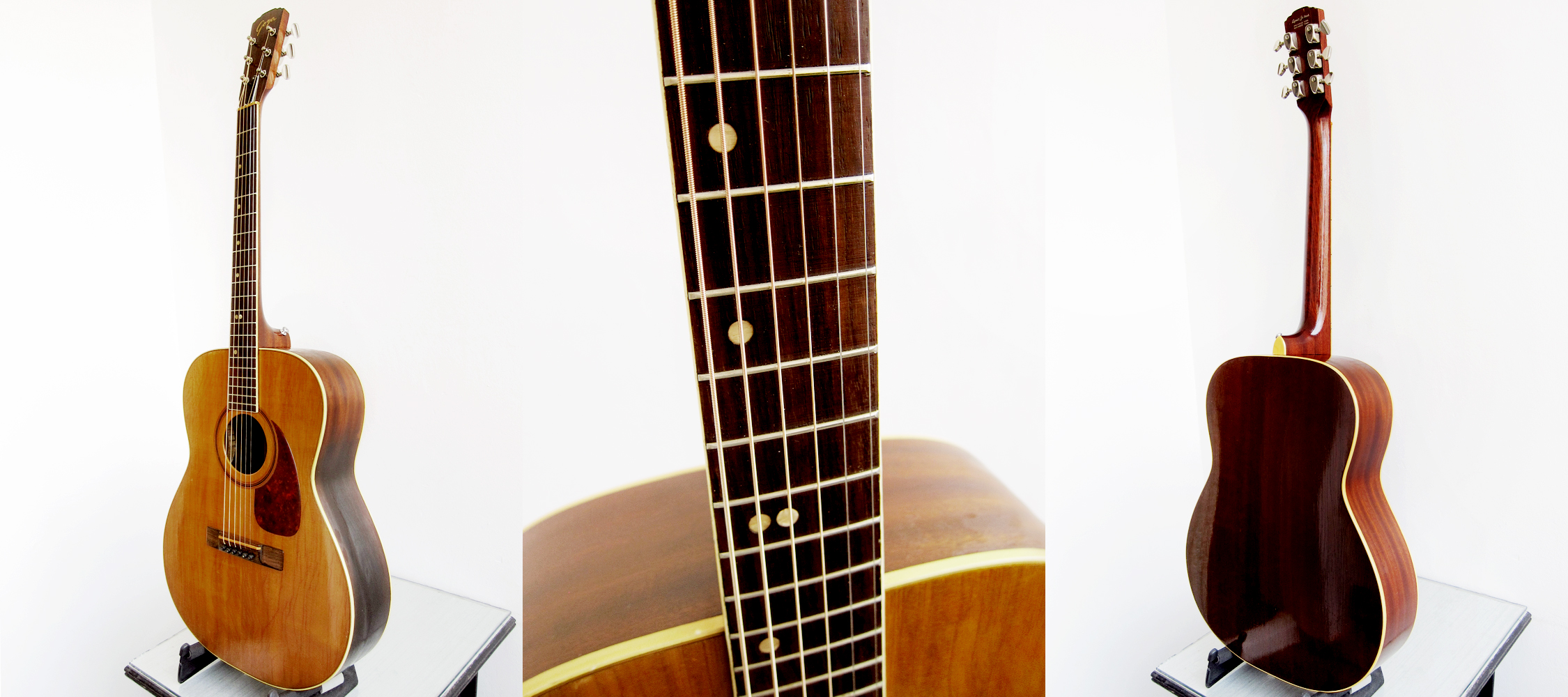
Goya T-16, made in Sweden by Levin in 1966Goya T-16, made in Sweden by Levin in 1966

I found another Goya T-16 that I couldn’t resist. I’m not sure why I love these so much, if it’s the sound, shape or the fact that my dad’s old Levin LT-16 was my first guitar. This one seems to have had a crack in the lower bout on the bottom side and when that was fixed they gave the side a light burst to cover it and then lacquered the whole guitar. Back in the 1960’s when these guitars left the factory in Sweden, the Levin LT-16 came with a really nice satin finish and the Goya T-16 with a high gloss that cracked over time. The previous Goya T-16 was sanded down and this one had an extra coat of lacquer so I guess people weren’t entirely happy with the finish on these. They both sounds very different, the old one sounds more woody and dry and this one has a clearer snappier sound, I presume because of the lacquer. I really like the look of the top, more orange and pre-war Martin looking than the normal Goya T-16.

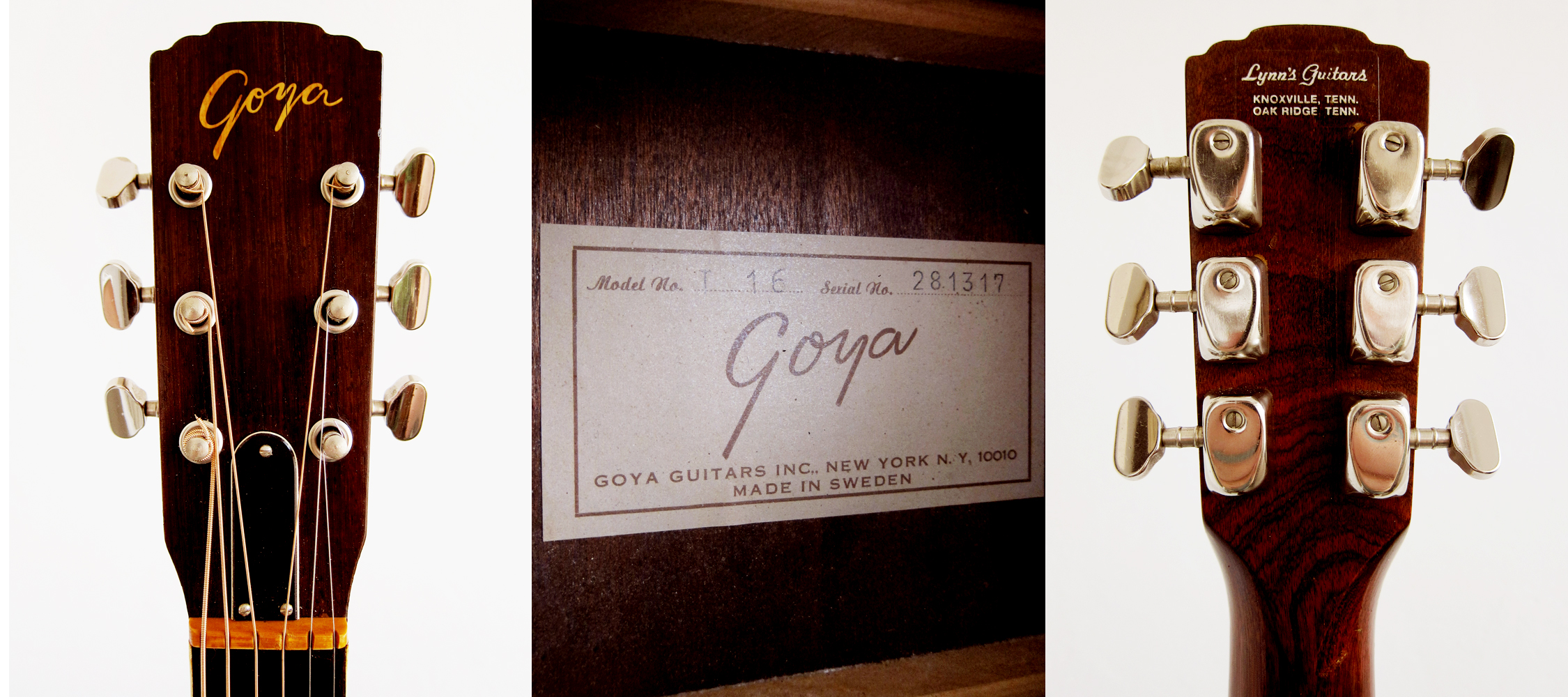
Goya T-16, made in Sweden by Levin in 1966Goya T-16, made in Sweden by Levin in 1966Goya T-16, made in Sweden by Levin in 1966I bought this 1966 Goya T-16 from an eBay seller in Illinois but I guess it first landed at Lynn’s Guitars in Knoxville Tennessee when it came from Sweden in the 1960’s.

Levin LT-16 / Goya T-16
Grand Concert size: Body width: 380 mm, body length: 480 mm, body depth: 98 mm. Fingerboard width: 43 mm, scale length: 630 mm. Spruce top, mahogany back and sides, 4-ply bound top, single-bound back. Mahogany bolt-on neck with adjustable truss rod. Single-bound rosewood fingerboard with bass side pearloid dot inlay. Rosewood bridge, nickel plated individual Van Gent tuners with metal buttons. Matte natural finish and ten year warranty

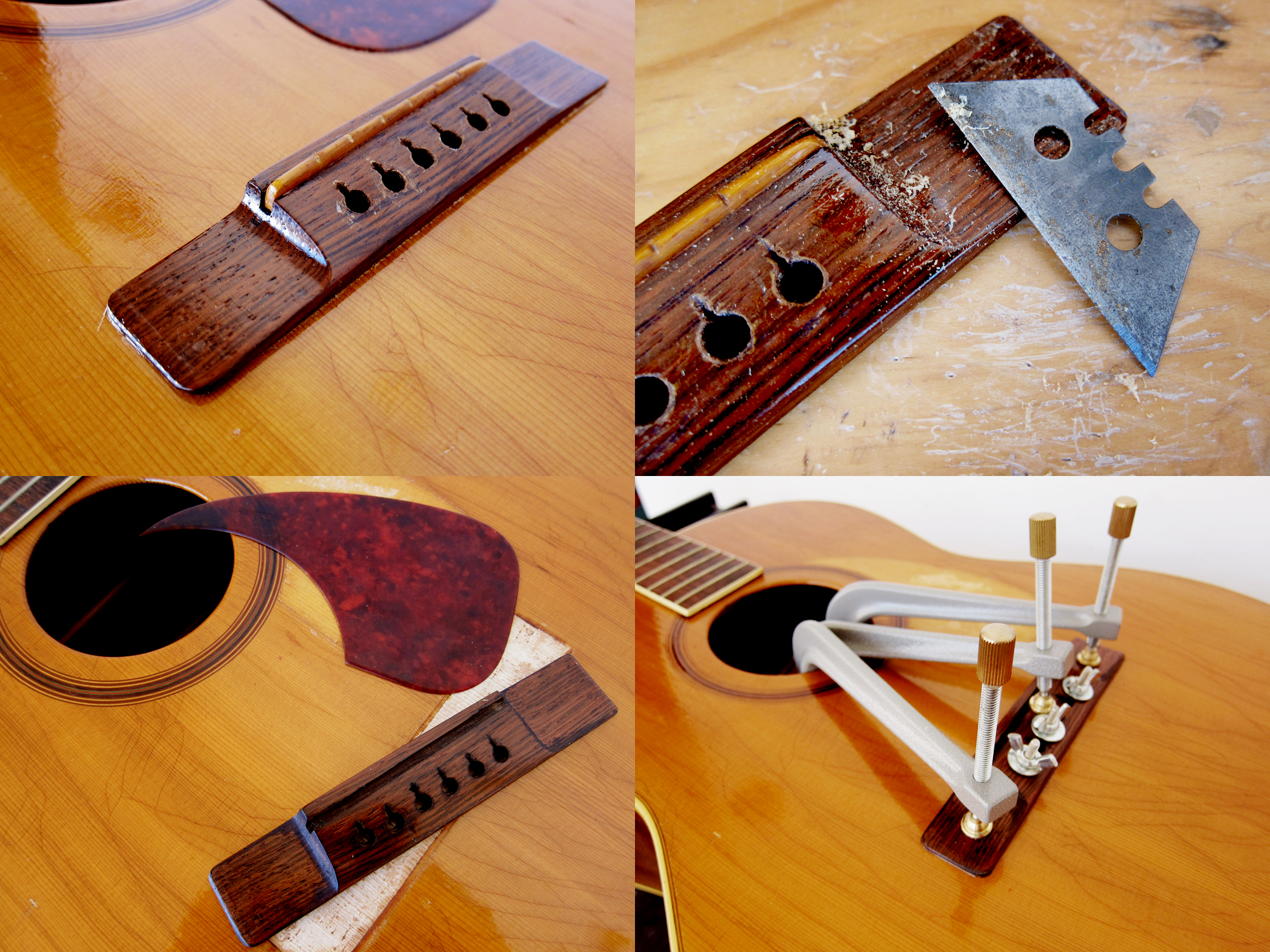
Goya T-16, made in Sweden by Levin in 1966I removed the bridge and pickguard, scraped of the lacquer and then re-glued them. I also adjusted the neck angle by removing the bolts inside and then sanded down the heel a bit with a sandpaper, just like I did on the old Goya T-16.

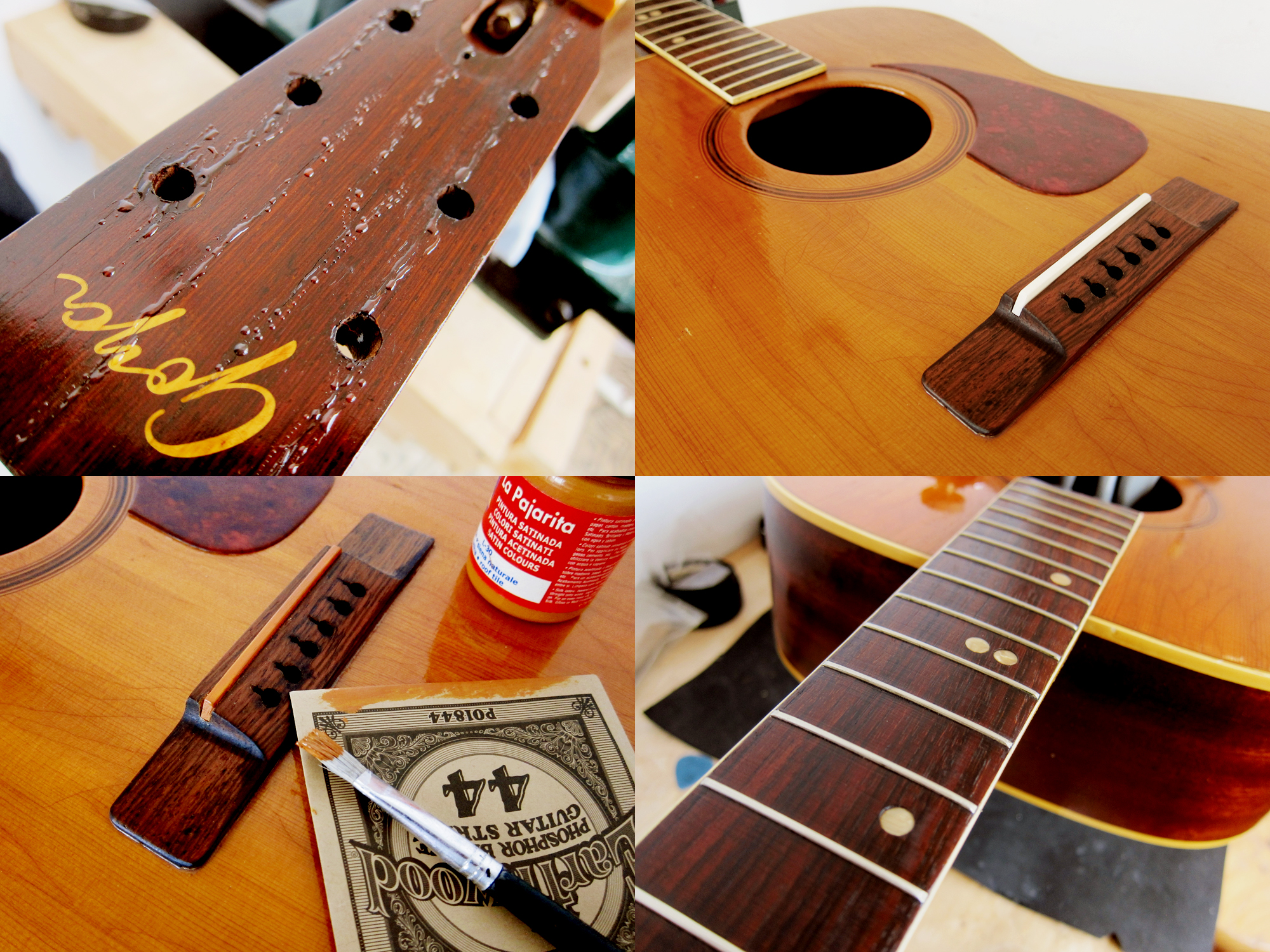
Goya T-16, made in Sweden by Levin in 1966The headstock had some fine cracks that I filled with fish glue and then polished up. I cut a new bone saddle that I painted to match the old Levin Galalith saddle and then I cleaned up the fretboard and polished the frets.

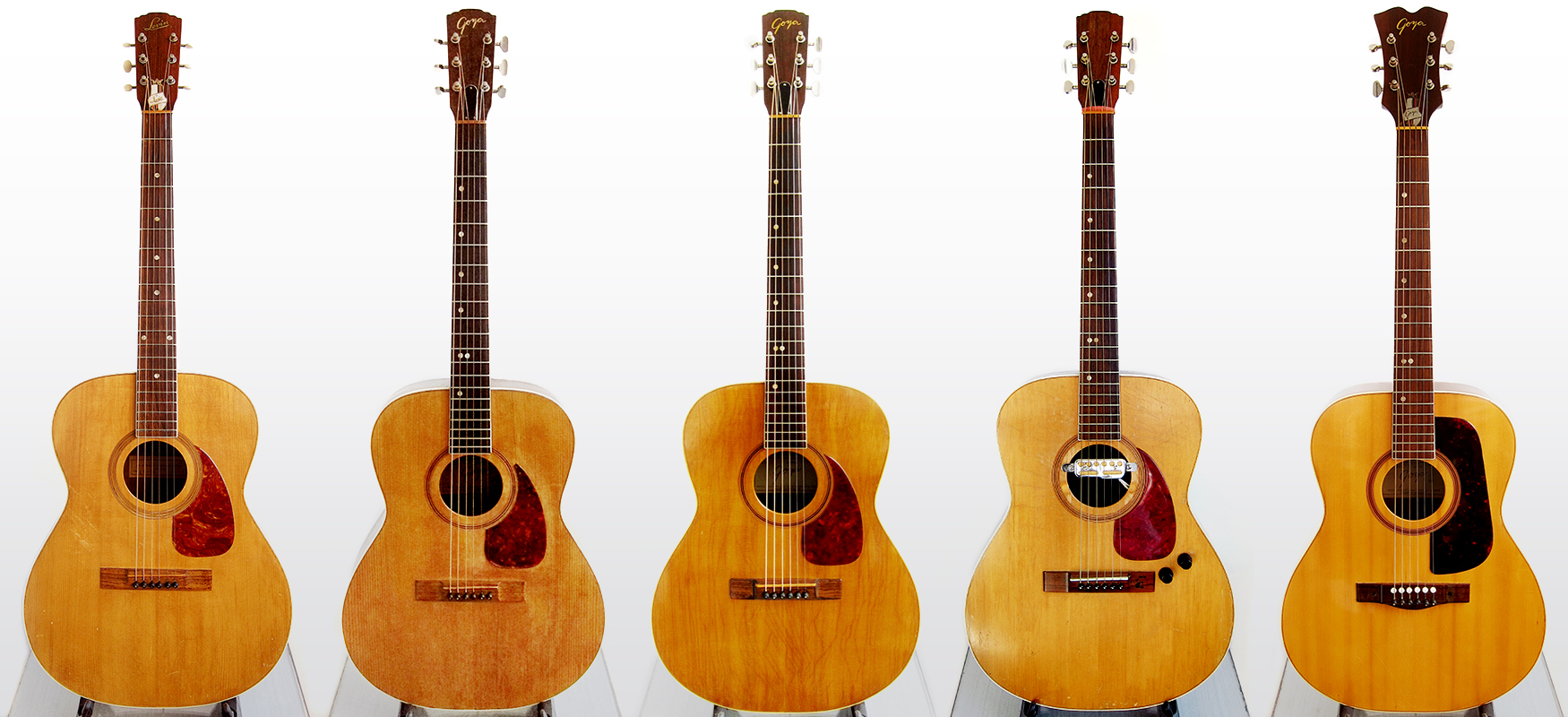
Goya T-16, made in Sweden by Levin in 1966My collection of 000-sized Levin guitars so far, from left to right: Levin LS-16 (1963), Goya T-16 (1965), Goya T-16 (1966), Levin LT-16 (1966), Goya GG-172 (1970)


Levin W32 NS

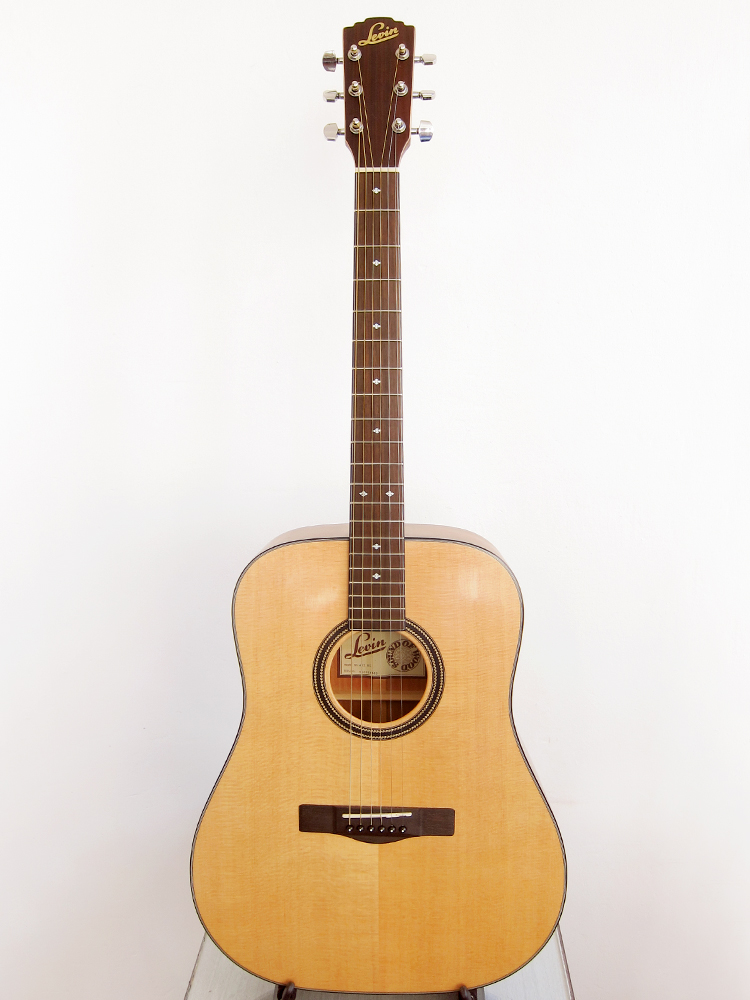
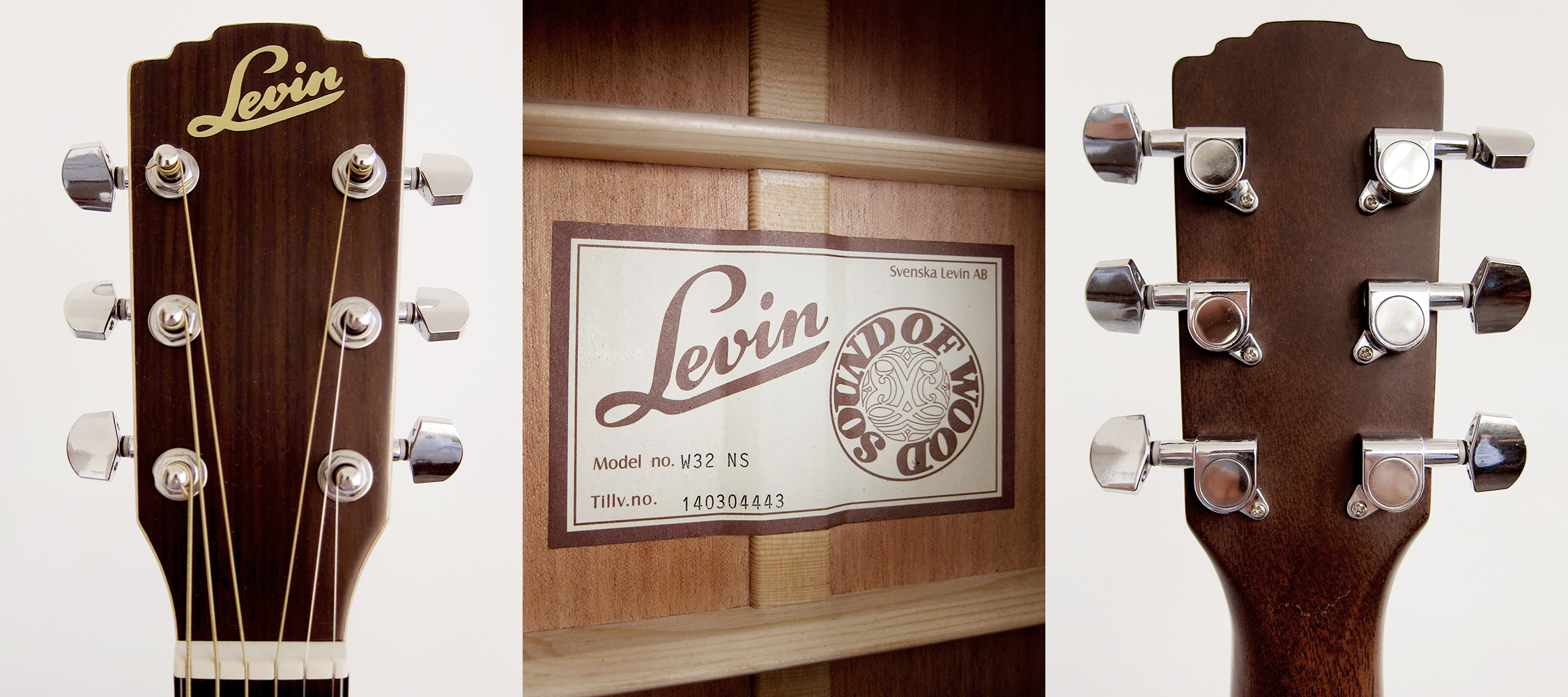
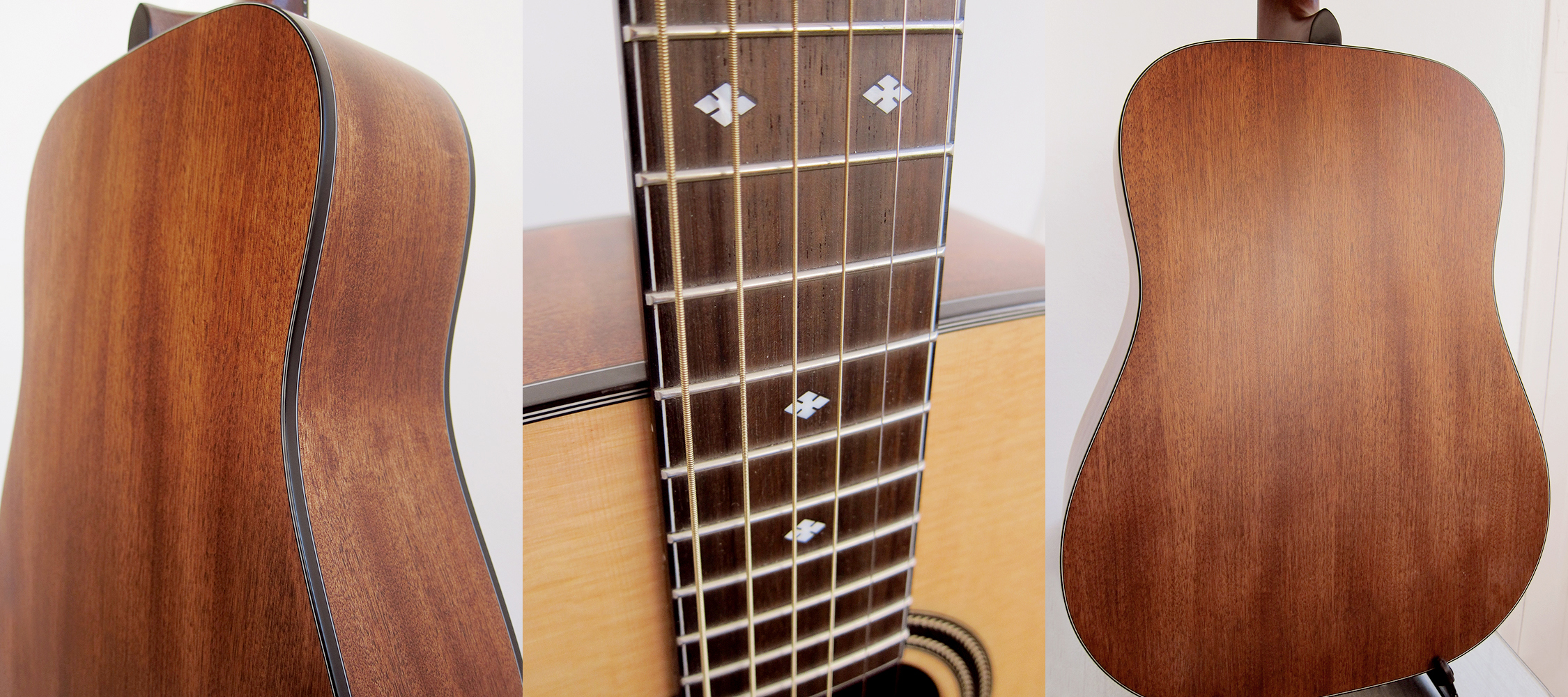
Levin W32 NS, Made in China, Svenska Levin AB, 2014Levin W32 NS, Made in China in 2014 by Svenska Levin AB

I finally got a chance to try one of the new Chinese made Levin guitars. Levin closed down the factory in Gothenburg, Sweden back in 1981 when Svenska Levin AB bought the name and the remaining stock. A small batch of classical guitars continued to be made in Sweden by Lugnås Gitarr AB, and are still made there today. During the 1990’s there were some electric guitars and amps being produced in the far east under the Levin name, my first amp that I bought around 1997 was Levin branded. It took another 10 years until we started to see some Levin steel string acoustic guitars, these being produced first in Korea, then Indonesia and later China. Of course it’s impossible to compare a Swedish made guitar from the 1960-70’s with something being produced nowadays in Asia but I’m still quite impressed with these new Levin guitars. I emailed the owner and he told me that they had some issues in the beginning to get the finish right and I have to admit that the build quality is far from a Swedish Levin but still, if you see it for what it is then it’s a pretty great guitar for the price.

Levin W32 NS, Made in China, Svenska Levin AB, 2014Levin W32 NS, Made in China, Svenska Levin AB, 2014Levin W32 NS, Made in China, Svenska Levin AB, 2014A modern Levin, built in China for Svenska Levin AB

Levin LS-16

Levin LS-16 Made in Sweden 1963Levin LS-16 Made in Sweden in 1963

I was offered to buy a 1963 Levin LS-16 from a Swedish collector just before Christmas last year. Of course I jumped on the chance, not only is it a really rare bird, most of them were branded Goya S-16 and sent off to the US, but I had also been looking for another guitar like my dad’s old 1966 Levin LT-16 for quite a while. Unfortunately this Levin LS-16 got stuck in Sweden for a year, my mum didn’t want to send it so I couldn’t bring it back to Spain until I went back home for a funeral now in November. In the time of it’s absence I managed to find and restore a really nice sounding 1965 Goya T-16  so now I suddenly have 3 Grand Concert sized Levin guitars from the mid-60’s. Not that I complain, I really like both the sound and the playability of these guitars and this last one is probably the best sounding of all of them. According to Vintage Guitars Sweden, the most resourceful site about Levin guitars, the main difference between the Levin LS-16 and Levin LT-16 is the bracing pattern. The LS is supposed to be ladder braced but mine is X-braced just like the LT-series, I think that became standard in the early 1960’s. They also have different machine heads, dot inlays in the fretboard and I think that the LS-series have a bit more V-shaped neck profile.

Levin LS-16 Made in Sweden 1963Levin LS-16 Made in Sweden 1963

Levin LS-16 / Goya S-16
Grand Concert size: Body width: 380 mm, body length: 480 mm, body depth: 98 mm. Fingerboard width: 43 mm, scale length: 630 mm. Spruce top, mahogany back and sides, 4-ply bound top, single-bound back. Mahogany bolt-on neck with adjustable truss rod. Metal Levin truss rod cover with a star and “1900”. Single-bound rosewood fingerboard with centred pearl dot inlay. Rosewood bridge, nickel plated strip tuners. Natural finish and ten year warranty


Goya T-16

Levin Goya T-16 Made in Sweden 1965Goya T-16, made in Sweden by Levin in 1965

I finally managed to get another Levin LT-16, just like my dad’s old guitar that I learned to play on as a kid. His is a 1966 Levin branded one and this one is from 1965 and has the Goya logo on the head stock. These guitars normally don’t come up for sale that often, I guess because they are really well sounding and perhaps the 000-size is very sought after too. It took two years but finally I managed to get my hands on one, in bad shape when it arrived but now fully playable again.

Levin Goya T-16 Made in Sweden 1965Levin Goya T-16 Made in Sweden 1965Levin Goya T-16 Made in Sweden 1965

Levin LT-16 / Goya T-16
Grand Concert size: Body width: 380 mm, body length: 480 mm, body depth: 98 mm. Fingerboard width: 43 mm, scale length: 630 mm. Spruce top, mahogany back and sides, 4-ply bound top, single-bound back. Mahogany bolt-on neck with adjustable truss rod. Single-bound rosewood fingerboard with bass side pearloid dot inlay. Rosewood bridge, nickel plated individual Van Gent tuners with metal buttons. Matte natural finish and ten year warranty

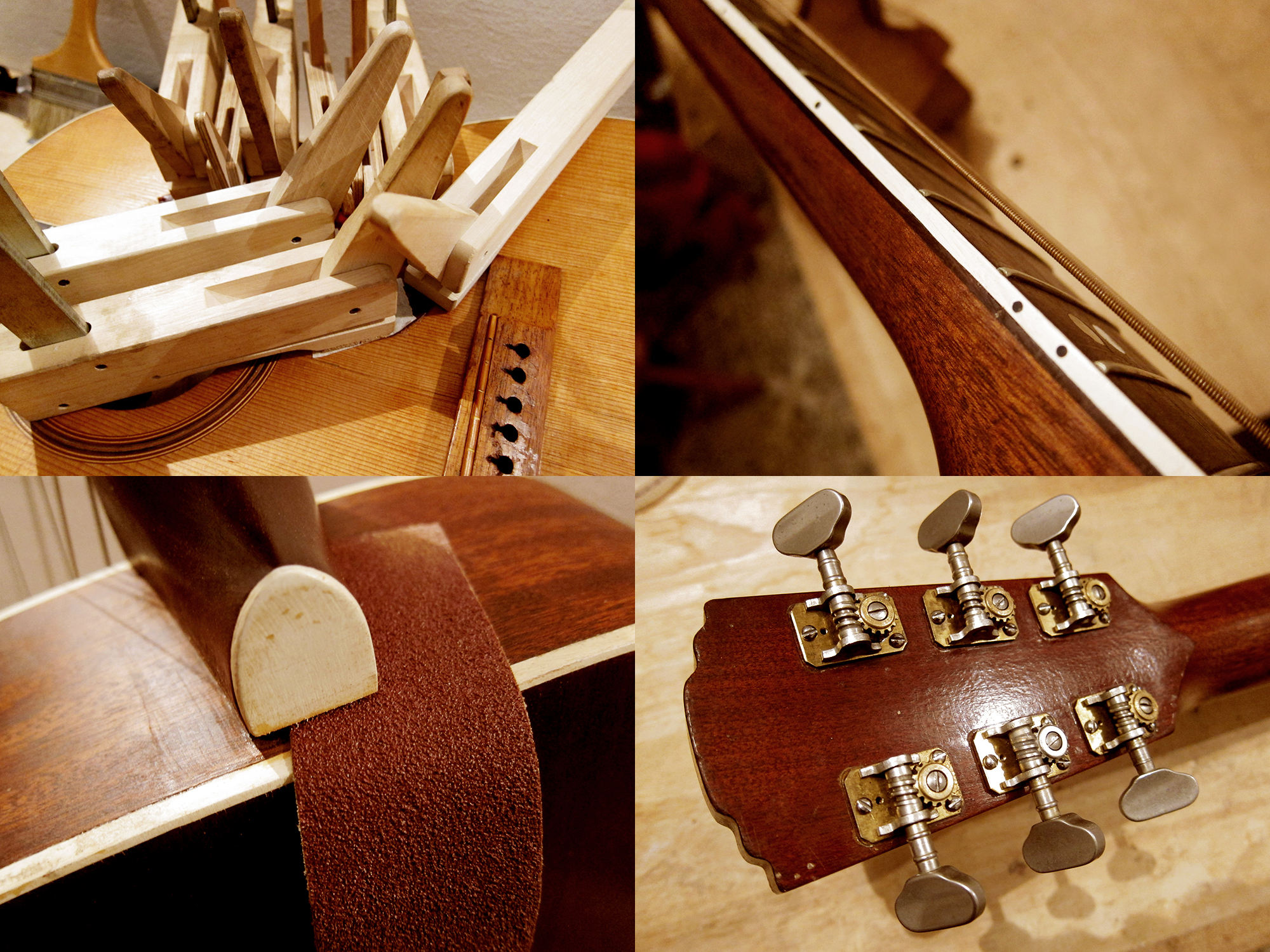
Levin Goya T-16 Made in Sweden 1965There was quite a lot of work on this one. First I re-hydrated the guitar for a week, just a wet sock in a bowl inside, which made the cracks close up quite a lot. I removed the bridge and the pickguard and glued all the cracks on the top and reattached the back that was coming loose. I also flattened the top, it had a bit of a belly that I managed to get down with a flat piece of wood covering the top that I clamped down for a couple of days.

Levin Goya T-16 Made in Sweden 1965I re-glued the bridge and replaced the 10 cm of missing binding. Someone had also sanded down the neck, which I hate, so lacquered it with a couple of coats of Nitro and sanded it smooth. 

Levin Goya T-16 Made in Sweden 1965Levin guitars normally lack side dots for the 9th and 12th fret, which always confuse me while playing, so I added 3 dots. I reattached the pick-guard and cleaned up the original Van Gent machine heads. Levin uses a rather clever bolt-on neck system which makes neck-resets very easy. You just loosen the two bolts inside and then you can sand down the heel, it takes time but it was easier than removing the whole neck.

Sigma DR-41

Sigma DR-41 Made in Japan 1980, MIJ, C. F. Martin & CoSigma DR-41, made in Japan in 1982

I have heard a lot of good, and some not so good, things about Sigma guitars over the years but never actually tried one. To be honest, I really didn’t know anything about the brand until this beautiful Sigma DR-41 arrived and I felt curious and started to read up on them. I guess one big reason why there are both avid supporters and fierce haters of Sigma could be the big changes in production over the past 45-years. The brand was Created in 1970 by C.F. Martin & Co as a line of inexpensive guitars to compete with all the far east brands that flooded the market at the time. The first generation of Sigma’s from 1970-76 were made in Japan but came with adjustable bridges and looks very inexpensive to me, I haven’t tried one so they might be great. When the second generation of Sigma’s arrived in the later half of the 1970’s they really started to look like Martin guitars and the build quality seems to have improved a lot, at least by the look of it. From around 1976-1984 Sigma produced the now classic DR-line, these guitars seems to be ridiculously collectable and very popular because you rarely see them up for sale. I have a feeling that most of them live somewhere in the US and are owned by middle aged men that bought them new as their first proper guitar around 1980 and since they still sounds really good they would never sell them. I have nothing against middle aged men or guitar hoarders, I’m 35 and an avid guitar hoarder and of course I still have the first guitar I bought back in 1993.

Sigma D-41 Made in Japan 1982I have had at least 20 different Japanese acoustics in my house over the last couple of years and this 1980 Sigma DR-41 is easily my favourite so far.

The DR line consisted of DR-8, DR-9, DR-11, DR-14, DR-15, DR-28, DR-28S, SDR-28, DR-35, DR-41 and DR-45. I’m not entirely sure what DR-8 to DR-15 were based on, but DR-28 to DR-45 were pretty accurate copies of the Martin models with the same number. The guitar I’ve managed to find, the Sigma DR-41 looks very close to a Martin D-41 and I’ve seen pretty convincing Sigma versions of Martin D-28 and D-35’s too. Apparently there is a very rare version called Sigma DR-14, which is a DR-41 but with a 3-piece back, that was imported through Levin in Sweden, which makes sense since C.F. Martin & Co bought Levin in 1973. There are actually quite a few of the earlier 1970’s low end Sigma’s that were imported through Levin for the European market as well. It seems like the earlier Sigma guitars were made by Tokai through Kasunga Gakki but I really don’t know if all Japan made Sigma’s were produced by them or not. I have a feeling they might have used a lot of different factories during their 13 years in Japan.

Sigma DR-41 Made in Japan 1980, MIJ, C. F. Martin & CoI couldn’t resist so of course I changed the machine heads for Wilkinson WJ28NGD as soon as I got the chance. I just can’t stand those big bulky Japanese 1970’s machine heads.

Sigma stopped the production in Japan around 1983 and moved everything to Korea, later Taiwan and finally Indonesia. Martin claims that all Sigma’s where sent to them in Nazareth, Pennsylvania to be inspected and adjusted by Martin personnel before they sent them out to the dealers, which I doubt for the later Taiwan and Indonesian guitars. In 1981-1982, Martin imported partially assembled Sigma guitars from Japan and then put them together themselves in Nazareth, these were labelled Sigma Martin USA DR-28N and DR-35N. The Sigma story seems to be a bit shady from the 1990-2000, C.F. Martin & Co lost the rights to the name for a while and there seems to have been other companies producing Sigma guitars and then Martin got it back and closed it down in 2007. In 2011 the German company AMI Musical Instruments GmbH purchased the rights to the name and relaunched Sigma Guitars that are now being produced in China. There is quite a lot of information on Wikipedia about Japanese Sigma guitars. I also found this Sigma site really helpful.

Sigma D-41 Made in Japan 1982 guitar ad1980’s ad for Sigma guitars, with my beloved Sigma DR-41 far right

I really didn’t know what to expect when I got myself this Sigma DR-41. I just bought it because I’m so insanely gay for any guitar that looks like a Martin D-41 or D-45, or actually any guitar with a volute on the back of the head, hexagon markers and a lot of mother of pearl inlays. At first I didn’t like this Sigma much, I thought it sounded stiff and boring but after two days with the pump and a week of heavy playing I was sold. I’m not sure if all Japanese Sigma’s are this good, but this guitar is freaking amazing. It’s easily up there with Morris and K. Yairi, perhaps even better, see the second video where I compare it to my K. Yairi YW-1000.