Claescaster

Tag: acoustic guitars

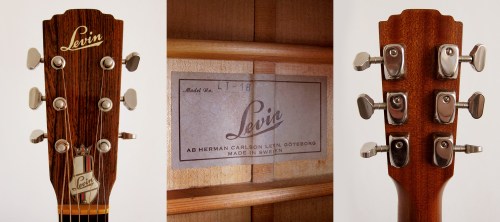
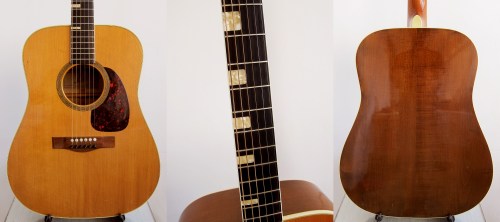
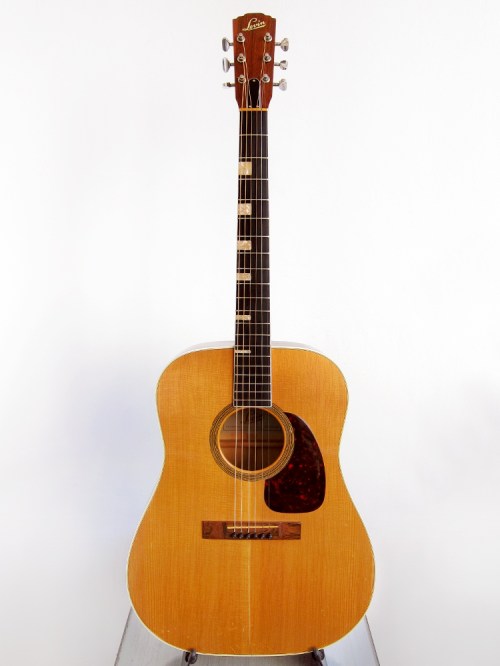
Levin LT-18

Levin LT-18 Made in Sweden 1966Levin LT-18 Made in Sweden 1966

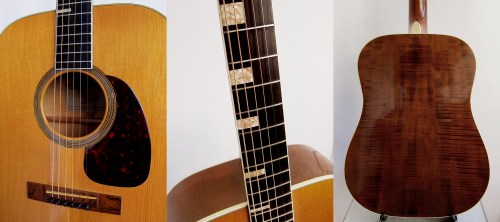
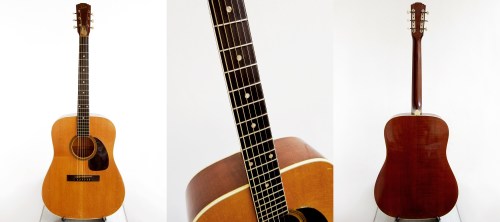
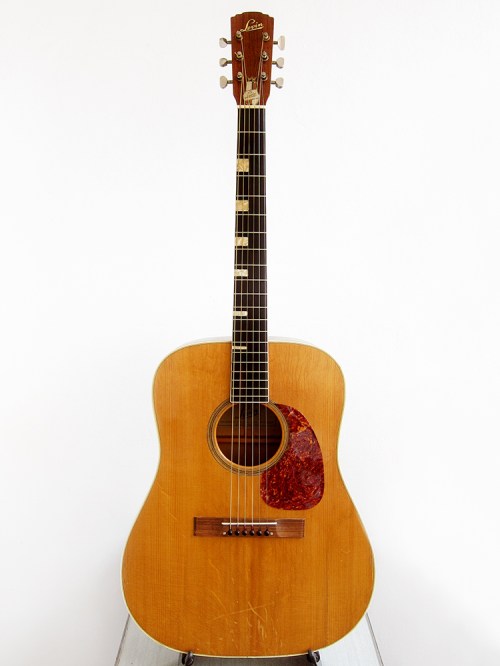
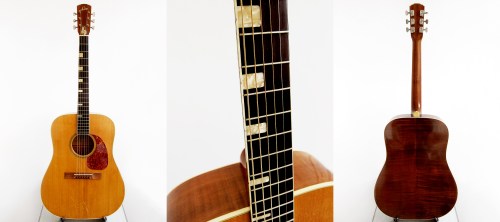
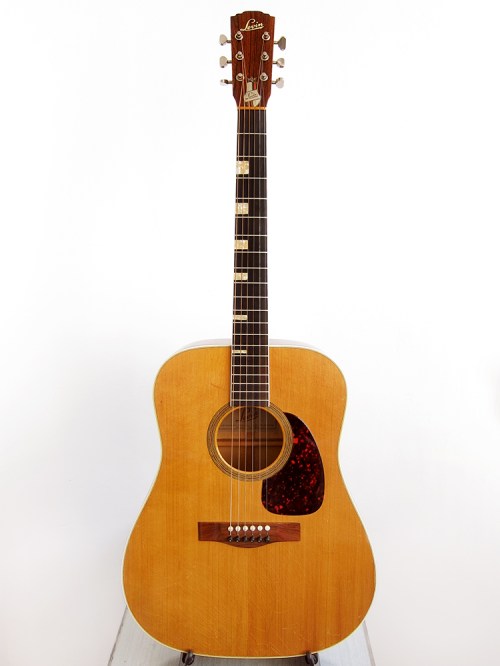
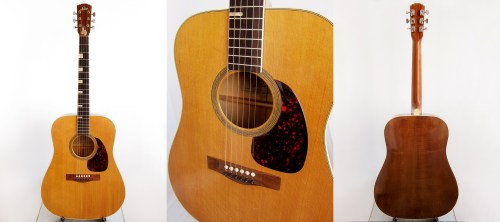
When I bought my first Goliath sized Levin guitar back in September 2013, a 1966 Goya T-18, I was amazed by the sound of it. They aren’t that easy to come by so I have pretty much bought every Levin LT-18 I got my hands on. Now I’m the proud dad of seven, 3 Levin LT-18, 1 Levin LS-18, 1 Goya T-18, 1 Goya T-23 and 1 Levin 174, they are all the same model with the same specifications, it’s just small details that have changed over the years. They have an X-braced alpine spruce top with flame maple back and sides. I first thought I was a mahogany back and sides type of guy, then I believed that rosewood was really my thing, when the truth is that I was a flamed maple guy all the time, who would have guessed? It’s a pretty odd tone wood, we have classics like the Gibson J-200 and quite a few of Guild’s jumbo models that are built with maple back and sides, but not that many dreadnoughts and especially not in the 1960’s. To my ears the Levin LT-18 is the love child of a Gibson J-45 and a Martin D-28, it’s somewhere in between, a perfect mix and I just love them.
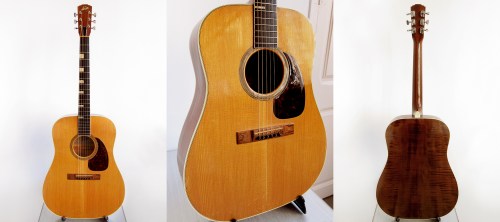
Levin LT-18 Made in Sweden 1966

Levin LT-18 / Goya T-18
Goliath size: Body width: 400 mm, body length: 505 mm, body depth: 95/120 mm
Fingerboard width: 43 mm, scale length: 630 mm
Spruce top, flame maple back and sides, 4-ply bound top, single-bound back
Mahogany bolt-on neck with adjustable truss rod
Single-bound ebony fingerboard with bass side pearloid block inlay
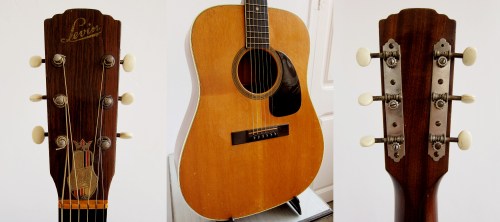
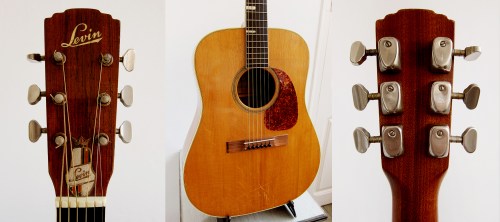
Nickel plated individual Van Gent tuners with metal buttons
Ebony bridge, natural finish and ten year warranty

Marketed by U.K. distributors as Super Goliath Model 1855
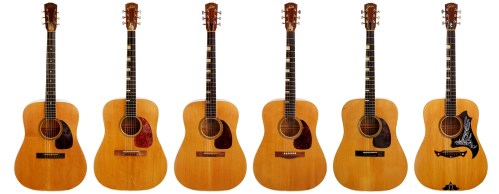
Levin LS-18 (1960), Levin LT-18 (1963), Levin LT-18 (1966), Levin LT-18 (1968), Goya by Levin T-18 (1966), Goya by Levin T-23 (1966)The Goliath sized Levin collection so far: Levin LS-18 (1960), Levin LT-18 (1963), Levin LT-18 (1966), Levin LT-18 (1968), Goya T-18 (1966), Goya T-23 (1966). I didn’t include my 1972 Levin 174 in the picture since the head shape is different and it didn’t really match the others, even though it’s technically the same guitar.
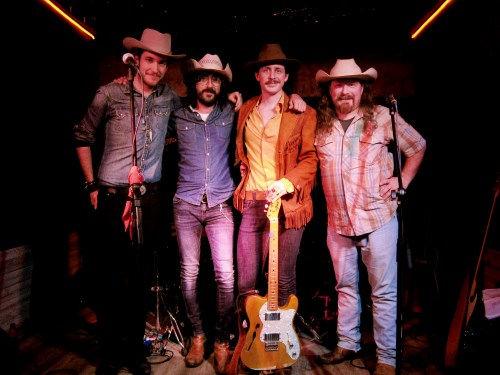
Claes Anderson Band

img_7979-copy3Claes Anderson Band at Legends Dance Hall in Terrassa 4th February 2017, photo by Meritxell

We had a gig last weekend and it was great fun. It was our second gig ever, actually our first one with a drummer so things are still a bit shaky. Jordi from Rodeo Rose has joined us on drums and it feels like we are slowly finding our roles in the band. I got a chance to play electric guitar on 8 out of 19 songs which was great fun, I haven’t played electric for 2-3 years. I played on my 1968 Levin LT-18, like last time and my 1977 Greco Spacey Sounds TE-500N which sounded pretty great. I’m already looking forward to our next gig, I think we will play in Barcelona in the beginning of April. Thanks again to Toni from Legends for booking us without actually knowing what he got himself in to, we really appreciate it.


Levin Model 3

Levin Model 2 Parlour Made in Sweden 1914
Levin Model 3 Parlour Made in Sweden 1914

In the year of our Lord 1914 a terrible war broke out in Europe, at the same time this beautiful guitar was made in Sweden. I finally found myself an old Levin parlour, a 1914 Levin Model 3. When I sold the Levin Model 65 back in December I promised myself to find another Levin parlour, but older, and nicer. I did, it took 10 days. I was super lucky and managed to win this Model 3 on an auction the day before Christmas, perhaps that’s why the competition wasn’t so fierce. It’s in pretty decent original shape for being 103 years old, no real damage to it. It looks like the back has been removed and glued back at some point so I guess someone has re-glued some lose braces. I can’t see any signs of a neck reset but since it’s so playable after 100 years I assume that someone has done that too. I love the original machine heads with their bone buttons and the brass medallion on the back of the head is just beautiful. It sounds way better than I expected. I’ve had a couple of early German parlours at home and they have sound very thin, weak and boxy somehow. This Levin is loud, clear and warm at the same time, even though it’s ladder braced. For being one of Levin’s cheapest models I think it’s an amazing guitar and it looks stunning in it’s simplicity.

Levin Model 2 Parlour Made in Sweden 1914
The back and sides are made of birch that is painted to look like Brazilian rosewood. I would have preferred the real deal but I guess it was both expensive and hard to come by exotic woods at the time.

Levin Model 3
Body width: 315 mm, length: 460 mm, depth: 78 mm
Spruce top with ladder bracing, birch back and sides
Unbound walnut fingerboard with mother-of-pearl dot inlay
Triple wood bound top, unbound back and headstock
Brass frets, brass tuners, pyramid bridge, bridge pins and strap button with mother-of-pearl inlay. Rosewood finished back and sides with an orange finished top.

Introduced circa 1900

Levin Model 2 Parlour Made in Sweden 1914The stamp on the right side is from Frälsningsarmén, The Salvation Army in Stockholm. I assume a lot of songs about Jesus has been played on this guitar over the years.

The old Levin factory on Norra Larmgatan 4 in Gothenburg, Sweden 1910-20The old Levin factory on Norra Larmgatan 4 in Gothenburg, Sweden, around 1920. Taken from Vintage Guitars Sweden

Levin LS-18

Levin LS-18 Made in Sweden 1960Levin LS-18 Made in Sweden 1960

I finally got my hands on a Levin LS-18. Around Christmas 2015 I was offered to buy a Levin LS-16 that I’ve loved since the first time I played it. Therefore I’ve been really curious to hear what a full sized LS sounded like. These guitars seems to be fairly rare, I’ve seen one or two up on eBay in the last year but they have both gone for upwards of a £1000. I’m not sure why there aren’t more of these around in Europe, perhaps people refuse to sell them or they all got badged like Goya S-18 and shipped off to USA. The Levin LS-18 was introduced in 1958 and replaced by the LT-18 in 1964. The only difference sound vice that I’ve noticed between the LS-18 and the LT-18, both of them have flamed maple back and sides, is that the LS-18 seems a bit deeper in the bass. Perhaps it’s just this guitar, or the year, or the wood, it’s impossible to know without trying ten others. Other noticeable differences is that the LS-18 has thicker neck profile, different machine heads and centred pearl dot inlay instead of the LT-18’s bass side pearloid block inlay. It basically looks a bit more 1950’s and I love it.

Levin LS-18 Made in Sweden 1960Levin LS-18 Made in Sweden 1960There was quite a lot of work to do on this when I first got it. The action was so high that I couldn’t even get it in tune properly, the intonation was way off. I reset the neck and cleaned it up and now it both sounds and plays great.

Levin LS-18 / Goya S-18
Goliath size: Body width: 400 mm, body length: 505 mm, body depth: 95/120 mm
Fingerboard width: 43 mm, scale length: 630 mm
Spruce top, flame maple back and sides, 4-ply bound top, single-bound back
Mahogany bolt-on neck with adjustable truss rod
Single-bound ebony fingerboard with with centred pearl dot inlay. Nickel plated strip tuners with plastic buttons. Ebony bridge, metal Levin truss rod cover, natural finish and ten year warranty

Marketed by U.K. distributors as Super Goliath Model 1855

Levin LT-18

Levin LT-18 Made in Sweden 1963 Levin LT-18 Made in Sweden in 1963

2016 might have been the worst year ever when it comes to good musicians dying, last out was Leonard Cohen who meant so much for me in my late teens. Having said that, 2016 has also been the most amazing year ever when it comes to me getting my hands on some mighty fine Levin guitars. I’ve been trying to find another Goliath sized Levin for the past 3 years without much luck, except for the lovely 1968 Levin LT-18 that I found a couple of weeks ago. The full sized Levin guitars don’t come up for sale that often, especially not in Sweden or Germany where people seem to keep them until they die. The 1966 Goya T-18 that I bought back in 2013, which started my obsession with the Levin brand, was imported from USA and they seem to be quite rare there too. I have seen a couple on eBay in the UK but the sellers always want £1000 for them which for me as a Swedish collector is way too much. I was raised with this brand, my first guitar was a Levin and even though they might be worth what they deserve in the rest of Europe, the cheaper models can still be found on yard sales in Sweden for close to nothing. We have to remember that Levin had produced 500,000 guitars by 1970, something that C. F. Martin & Co completed in 1990, so there are still quite a few lying around in peoples attics in Sweden. I must have done something right lately because I’ve been very lucky when it comes to guitars, both these Levin LT-18 was actually offered to me, the sellers had seen my blog and contacted me to see if I was interested in buying them and of course I was. You feel a bit honoured too, when someone offers you a guitar because they know you will restore it, take care of it, play it and cherish it for years to come. This 1963 Levin LT-18 has spent it’s life in Ireland and came to me from a guy called Fintan. It has had some repair work done to it, apparently by a luthier in Dublin about 10 years ago. The pickguard was replaced and a new bridge was cut and for some reason screwed down to the top, madness if you ask me. I just adjusted the neck a bit, cleaned it up and it was ready to go. The guitar sounds pretty damn amazing, not as strong in the mid-range as the 1968 Levin LT-18, especially not after I changed the bridge to ebony, but the highs are great with really nice overtones.

Levin LT-18 Made in Sweden 1963

Levin LT-18 / Goya T-18
Goliath size: Body width: 400 mm, body length: 505 mm, body depth: 95/120 mm
Fingerboard width: 43 mm, scale length: 630 mm
Spruce top, flame maple back and sides, 4-ply bound top, single-bound back
Mahogany bolt-on neck with adjustable truss rod
Single-bound ebony fingerboard with bass side pearloid block inlay
Nickel plated individual Van Gent tuners with metal buttons
Ebony bridge, natural finish and ten year warranty

Marketed by U.K. distributors as Super Goliath Model 1855

How to… carve a bridge

Levin LT-18 Made in Sweden 1968Levin LT-18 Made in Sweden in 1968

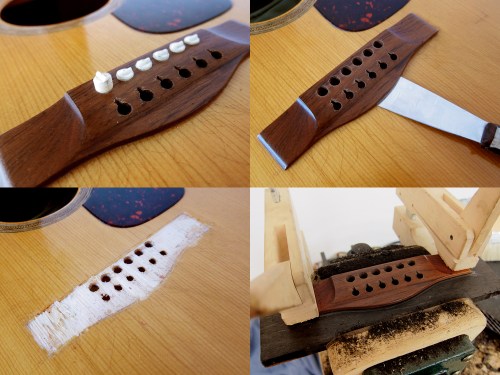
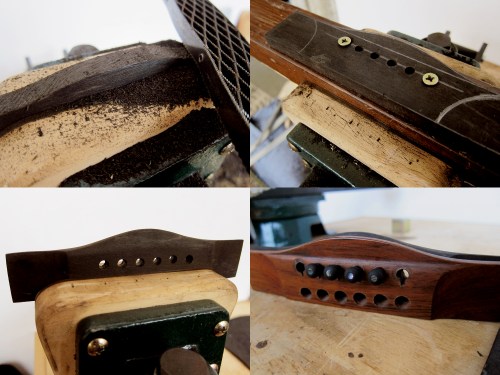
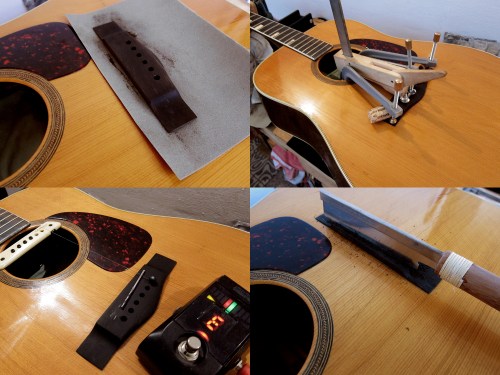
I decided to carve a new bridge for my 1968 Levin LT-18. The old bridge needed to be re-glued anyway so I thought it was a good time to create a new one in ebony instead. I did this once, I carved a new bridge for my 1973 K. Yairi YW-1000. This was a pretty similar job, both ebony and roughly the same shape. I’m really happy with the sound of this guitar now, so much richer than with the original bridge.

Levin LT-18 Made in Sweden 1968First step was to remove the old bridge with a heated spatula and then copy the bridge and drill the holes.

Levin LT-18 Made in Sweden 1968Then shape it as close to the original as possible using my Japanese saw rasp and different files.

Levin LT-18 Made in Sweden 1968Last step, fit the bridge and glue it down. Once the bridge was in place I could check the intonation to get the saddle slot in the perfect spot. Unfortunately I cut the slot 1 mm too wide so the bone saddle got a bit fatter than I had planned. Perhaps that gives tonal qualities I would have missed with a thinner saddle, let’s hope so. I also installed a LR Baggs M1A so I can use the guitar for gigs.

Before: with the original rosewood bridge and the individual height adjustable plastic saddles

After: with the ebony bridge I carved and a bone saddle

Levin LT-18

Levin LT-18 Made in Sweden 1968
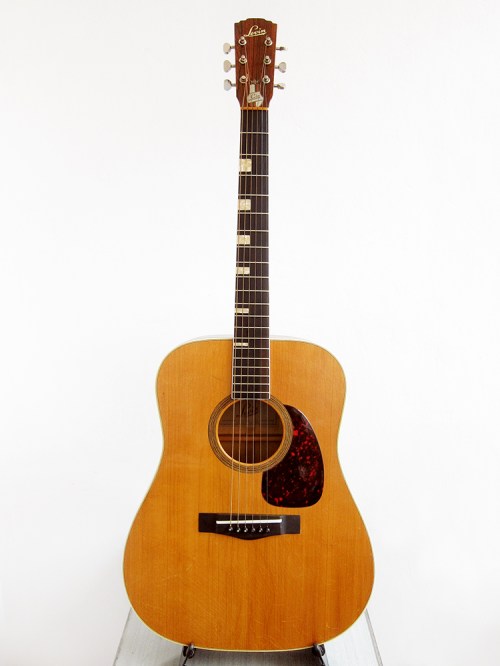
Levin LT-18, Made in Sweden in 1968

I’ve tried my best not to buy more guitars, hence why I’m selling most of my Japanese acoustics. Having said that, if a Levin LT-18 shows up on eBay and the seller contacts me via email, after a couple of shamefully low best offers from my part, and I happen to lie at home with pneumonia, it was just impossible to resist. I’m so weak for these top of the line Levin flat tops from the 1960’s, they sound amazing and they are pretty rare to find, people tend to cling on to them until they die, and then their kids will sell them. It’s also quite rare to see a Levin branded LT-18 for sale, I already have a Goya T-18 which is the same guitar but branded Goya for the US market and they tend to be a bit easier to come across. I always prefer early to mid 1960’s Levin guitars, before they opened the new factory in Lessebo in 1965, having said that, most of my Levin guitars are actually from 1965-1966 and they sound pretty damn amazing. This one from 1968 is pushing it a bit, I thought it was from 1967 until I got it home and could check the serial number properly. The problem after 1967 is the new invention of Levin, the individual height adjustable plastic saddles, I hate them. I will have to carve a new bridge in ebony, to match the fretboard, and cut a slot for a real bone saddle.

Levin LT-18 Made in Sweden 1968

Levin LT-18 / Goya T-18
Goliath size: Body width: 400 mm, body length: 505 mm, body depth: 95/120 mm
Fingerboard width: 43 mm, scale length: 630 mm
Spruce top, flame maple back and sides, 4-ply bound top, single-bound back
Mahogany bolt-on neck with adjustable truss rod
Single-bound ebony fingerboard with bass side pearloid block inlay
Nickel plated individual Van Gent tuners with metal buttons
Ebony bridge, natural finish and ten year warranty

Marketed by U.K. distributors as Super Goliath Model 1855

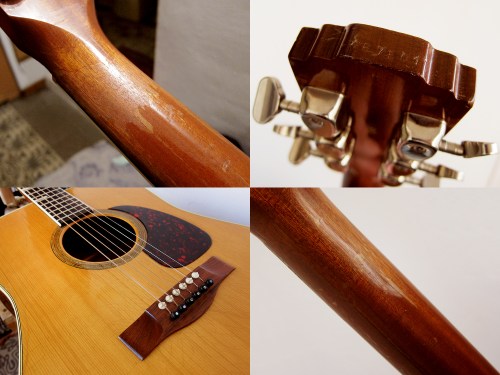
Levin LT-18 Made in Sweden 1968There were two things that I couldn’t stand with this Levin, first the lack of lacquer on the back of the neck, and then the rosewood bridge with the individual height adjustable plastic saddles. I’m not sure how they managed to loose most of the lacquer on the back of the neck but that was easily filled in with a couple of layers of Nitrocellulose lacquer. The second part, with the rosewood bridge and the plastic saddles is something we are going to have to deal with. The sound is not terrible with the plastic saddles, it ads a kind of 1960’s Gibson bass to it but it lacks a lot of clarity in the trebles and I always prefer a bone saddle. I also don’t like the look of a rosewood bridge to a ebony fretboard, they should match. I will try to carve a new bridge in ebony as soon as I get time.  

the-big-three-at-the-cavern-decca
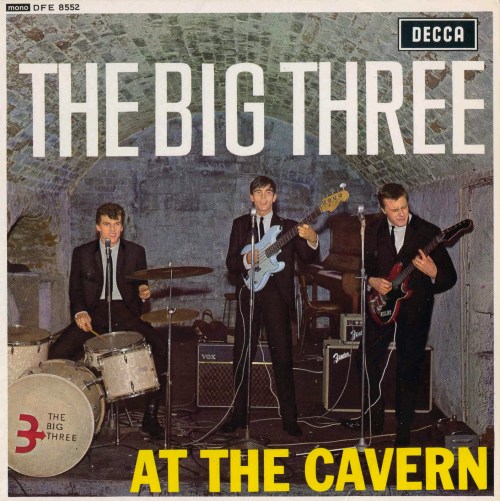
This Levin LT-18 was apparently owned by Brian Griffiths from The Big Three, a Liverpool band that was active during the days of The Beatles. However, since the guitar was made in 1968 he must have bought it long after the Liverpool glory days were over.

LR Baggs Lyrics

Sigma DR-41 Made in Japan 1980, MIJ, C. F. Martin & CoSigma DR-41 Made in Japan 1980, now with a LR Baggs Lyrics installed

As I mentioned before I ordered myself a LR Baggs Lyrics a couple of month ago and finally got around to install it in my Japanese Sigma DR-41 from 1980. I couldn’t really decide which guitar to put it in that’s why it took so long to get it done. The actually installation was very straight forward and easier than I expected. I just drilled a 13 mm hole in the end block, installed the endpin jack, stuck the microphone to the bridge plate inside the guitar and then just fitted the volume control at the sound hole and the battery pouch to the neck block. I did two tests to show the difference between my old LR Baggs M1 and this new LR Baggs Lyrics. I thought it would be a great idea to keep both systems in at the same time so the clips would be identical and easier to compare, but ended up getting quite a lot of noise. I’m not sure if it was a dodgy cable or if the systems interfered with each other, perhaps the magnets was causing havoc? Either way, neither sounds like this on their own. I played some nice chords in the first example and the normal things I play in my Youtube videos in the second, plus some little blues licks in the end. You can really hear the limitations of the M1, even though it has other advantages like the fact that it never feedback. I have a feeling that this Lyrics might be more sensitive for that on stage. I have to say that I really like to woody and open sound of the Lyrics and it seems to handle my attack as well when I play licks. Overall, the best and most natural sounding pickup system I’ve heard so far. I understand why Sturgill Simpson is using it.

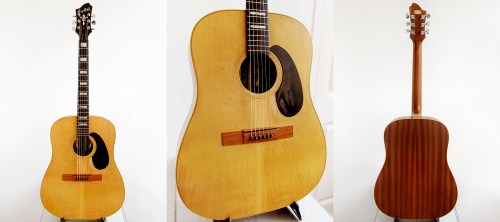
Hagström Western 6

Hagström Western 6 Made in Sweden 1978Hagström Western 6 Missouri, Made in Sweden 1978

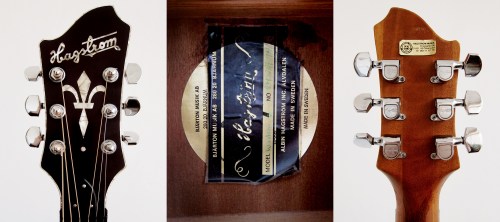
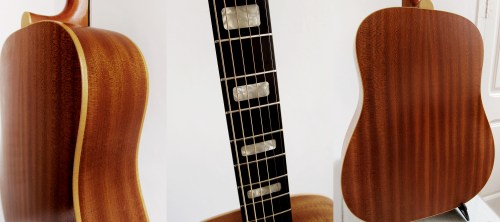
Last week a new Hagström acoustic arrived from Sweden. Just like my 1975 Hagström B-60 this was made by Bjärton in the south of Sweden.  Hagström / Bjärton guitars feels pretty different from Levin, a bit more boxy somehow, less refined. Having said that they are very well sounding guitars with a pretty unique tone, not quite the Gibson bass but that’s the best comparison I can think of. This Hagström Western 6 comes with more or less a Hagström Swede electric guitar neck. Same head shape, inlays and ebony fretboard, I love ebony. These actually came not only with ebony fretboard and bridge, they had ebony nut and saddle too. Mine has a rosewood bridge for some reason but it doesn’t seem to have been re-glued so I assume that someone at the factory took the wrong bridge or just preferred rosewood. Everything can happen in a guitar factory, hence all the mismatched mystery guitars that doesn’t exactly match the catalogue images. I really like this guitar, it looks awesome, sounds great and has something quite Swedish Country about it, a bit like me I guess.

hagstrom-western-6-made-in-sweden-1978-1
hagstrom-western-6-made-in-sweden-1978-2
Hagström Western 6 Made in Sweden 1978The guitar has quite a few battle scars, I presume it has lived through a Swedish midsummer or two. The head has been glued at some point, looks to have been done a very long time ago. There are quite a lot of scratches on the top and the back of the neck had some dents but I filled them so now you can hardly feel it. Notice the double sticker inside, one for Bjärton and then a Hagström on top.
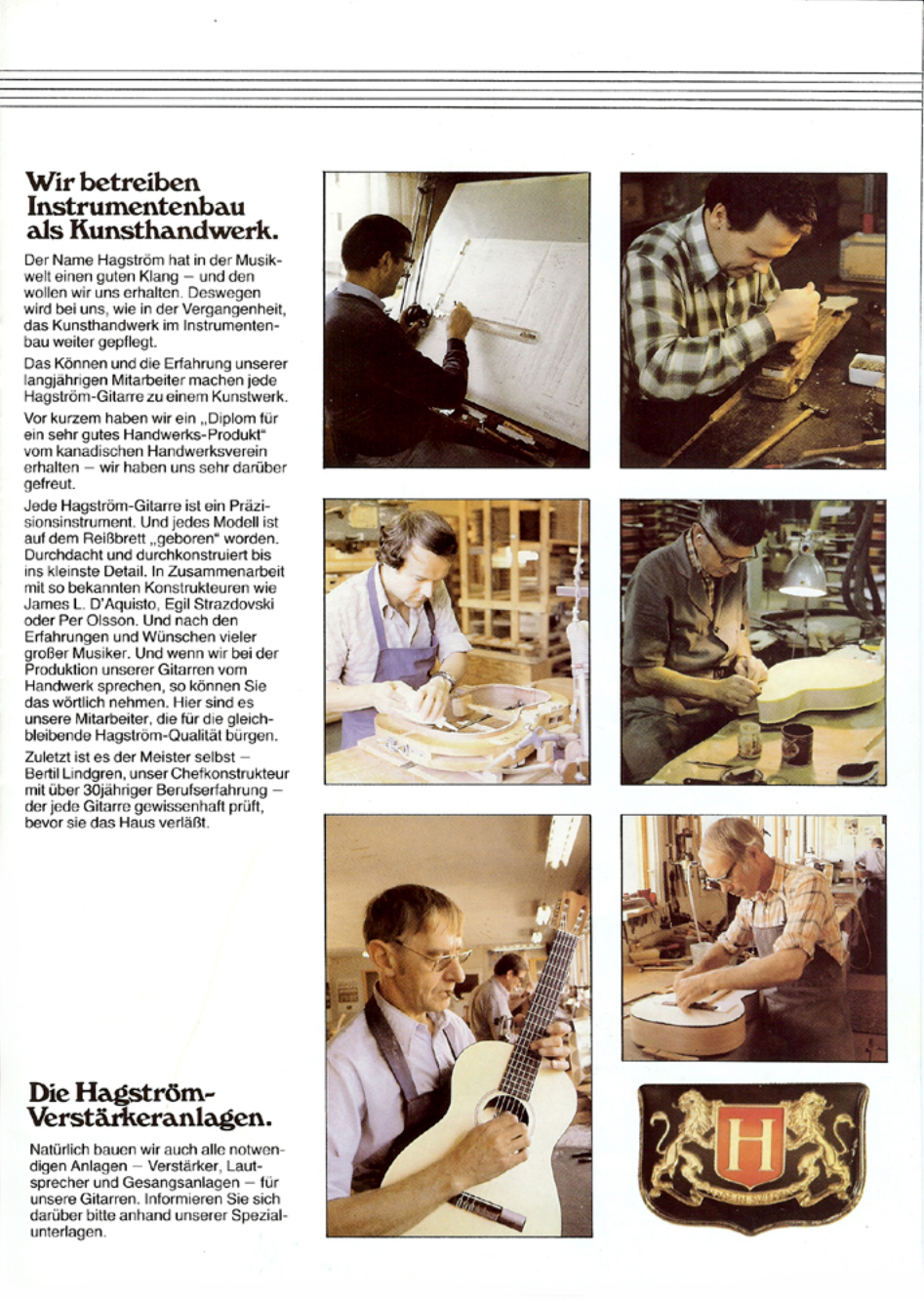
Hagström Western 6 Made in Sweden 1978Hagström Western 6 Made in Sweden catalogue 1978Hagström Western 6 Made in Sweden 1978Hagström Western 6 in a 1979 German Hagström catalogue

Hagström Western 6
Specifications:  Body width: 410 mm, body length: 510 mm, body depth: 120 mm, scale length: 630 mm. Spruce top with X-bracing, mahogany back and sides. 4-ply bound top and bound back. Unbound ebony fingerboard and ebony bridge, mahogany neck.  Matte natural finish and 10 year warranty.  Offered in two versions: Fully acoustic (Western 6) or with pickup and controls (Western 6 EL).  Marketed in Germany as Missouri.  Introduced around 1977.

Hagström Western 6 Made in Sweden 1978Hagström Western 6 and 12 in a 1979 Hagström catalogue

I tried the guitar last night at Alfa en Viu and it sounded pretty good, even with just a cheap removable Belcat pickup

Alvarez 5014

Alvarez 5014 Made in JapanAlvarez 5014, made in Japan in 1973

I recently found a 000-sized Alvarez for my friend Wolf. It’s a really nice little guitar that we both were impressed by. These guitars were made in Japan for the US market and imported by St. Louis Music in Missouri, the guys behind Westone. According to Wikipedia and Alvarez own site it was the legendary Kazuo Yairi that founded the brand in 1965 to make cheaper Yairi guitars for the US market. Having said that, it’s still unclear if all Alvarez guitars were really made in the K. Yairi factory in Kani, Gifu in Japan or outsourced on other factories in Japan, see Jedistar. These early 1970’s Alvarez are a bit different to the later Alvarez-Yairi guitars that got famous in the late 1970’s and 1980’s when musicians like Crosby, Stills & Nash and Bob Weir endorsed them. Not only is the label inside and head inlays different, but they also seems to have their own models, the later Alvarez-Yairi are exact copies of the Yairi models of the time but made for export to the US. Since there is a sticker with a serial number inside that correspond perfectly to the Emperor code that K. Yairi uses things point towards the Yairi factory. As with everything made in Japan during the 1970’s, there are some questions we might never find the answer too. Either way we have an awesome Japan made Martin 000-18 copy that Wolf is very excited to play, especially with my Bill Lawrence A-300 in the soundhole.

Alvarez 5014 Made in JapanAlvarez 5014 Made in JapanThe serial number starts with 48 which signify the 48th year of the reign of emperor Shōwa, which was in 1973. You can check the serial numbers of your Yairi or Alvarez here