I have been trying to find a 100-years old Levin parlour for some time now, something built before 1920 and with a pin bridge. If anyone has one that they would like to sell then please get in touch, claesgellerbrink@gmail.com. I would also be interested in any guitar that came out of the greater Chicago area built by Swedish builders, like an Ideal by August Carlstedt or a Maurer or a Prairie State built by the Larson Brothers, if I could afford it. It doesn’t really matter if the guitar is playable or not.
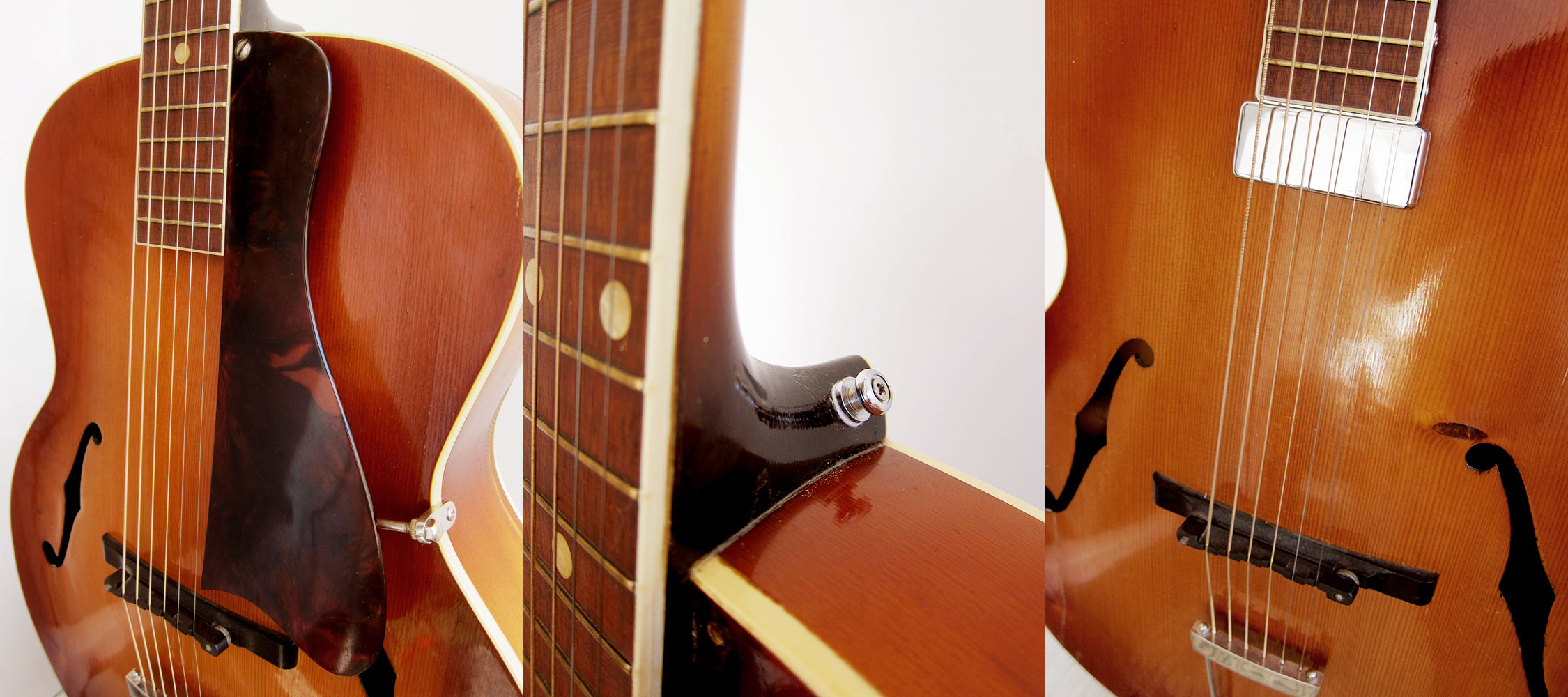
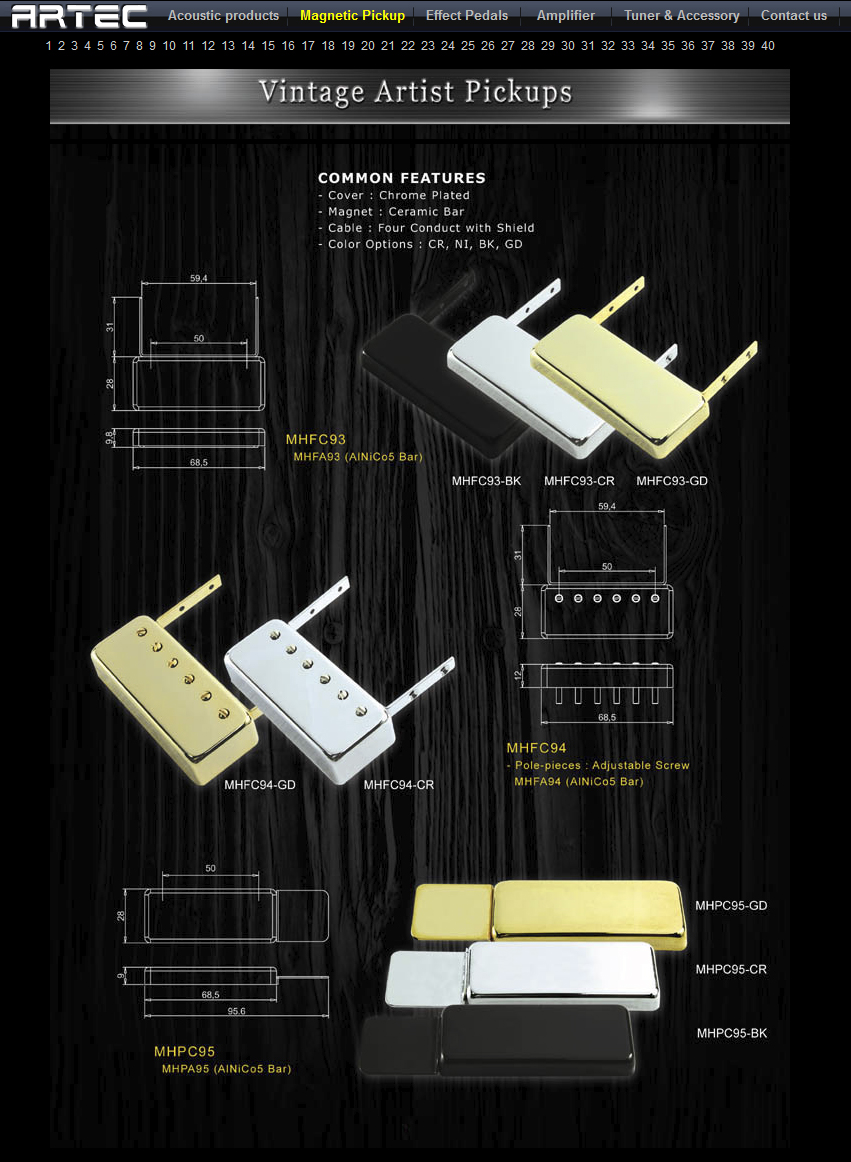
I’ve finally received my Artec MHFC93-CR from EY Guitar, the order got lost and took 3 months to arrive. Last weekend I got around to install it on my 1946 Levin Model 32 and I’m pretty impressed with how good it sounds for being so inexpensive.
Unfortunately I had to remove the pickguard, well it was actually quite annoying and always in the way when I played so it was more of an aesthetic loss. I also installed an old vintage strap button while I fitted the pickup so now the guitar is ready to be gigged.
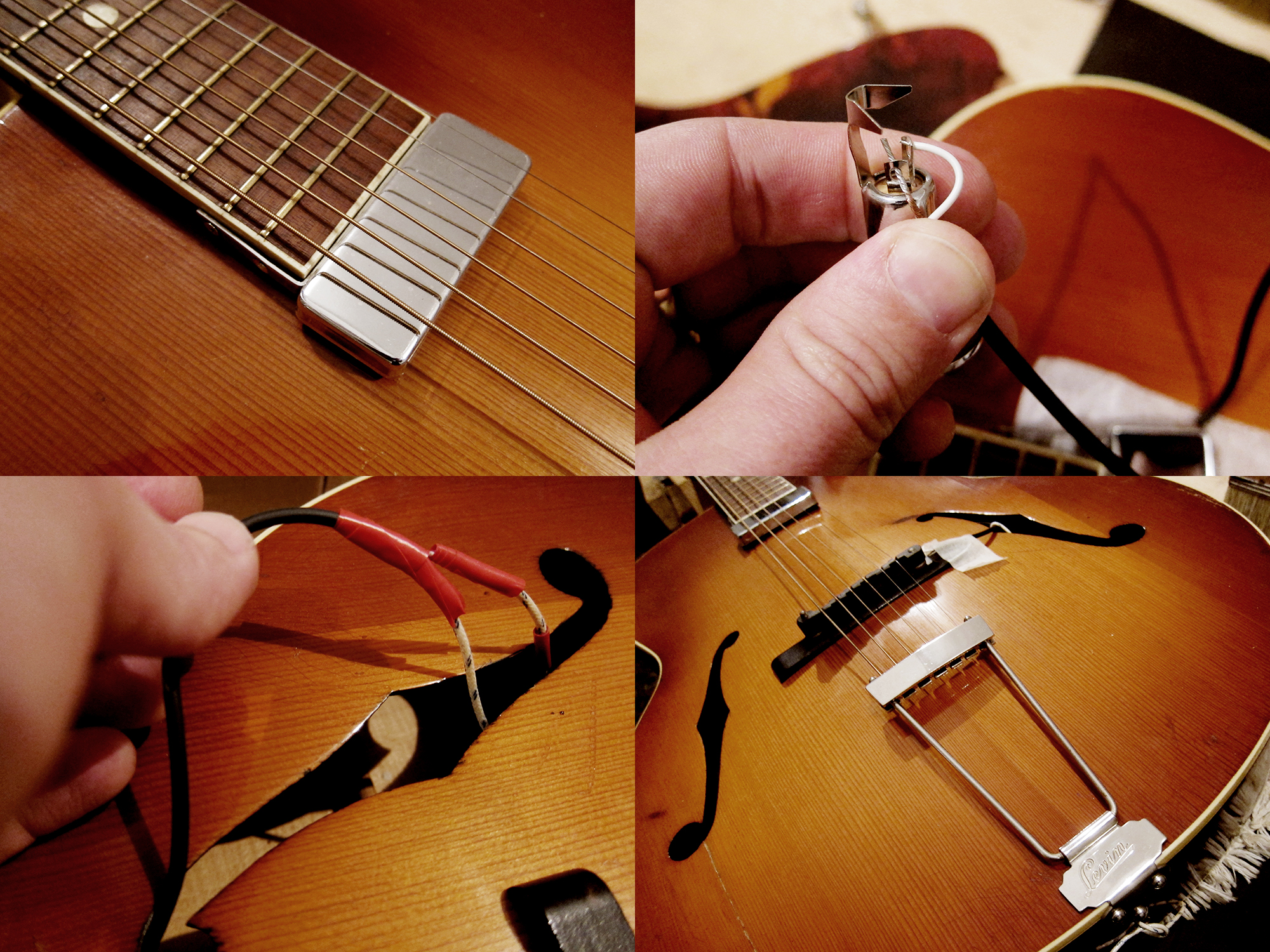
The installation was pretty straight forward in the end but it took a bit of figuring things out so I completely forgot to take more pictures. First I made a small hole under the fretboard extension on the right side, where the cable from the pickup could enter the body without being visible. Then I drilled a hole for the endpin jack, just like a do when I install the endpin jacks for my LR Baggs, with a 1/2 inch or 13 mm flat spade drill bit straight through the end block. I measured two cables from the endpin to the f hole, fished them up before I cut them and then soldered them to the endpin while taped to the top for not disappearing inside. Once the cable from the pickup was fished up I checked which was which and then soldered them together and stuck them to the top on the inside with a little clip on the bottom side of the f hole so they can’t be seen.
Artec is perhaps not the worlds fanciest brand, especially not if you judge them by their website, but I like them and they sound very good for being so cheap.
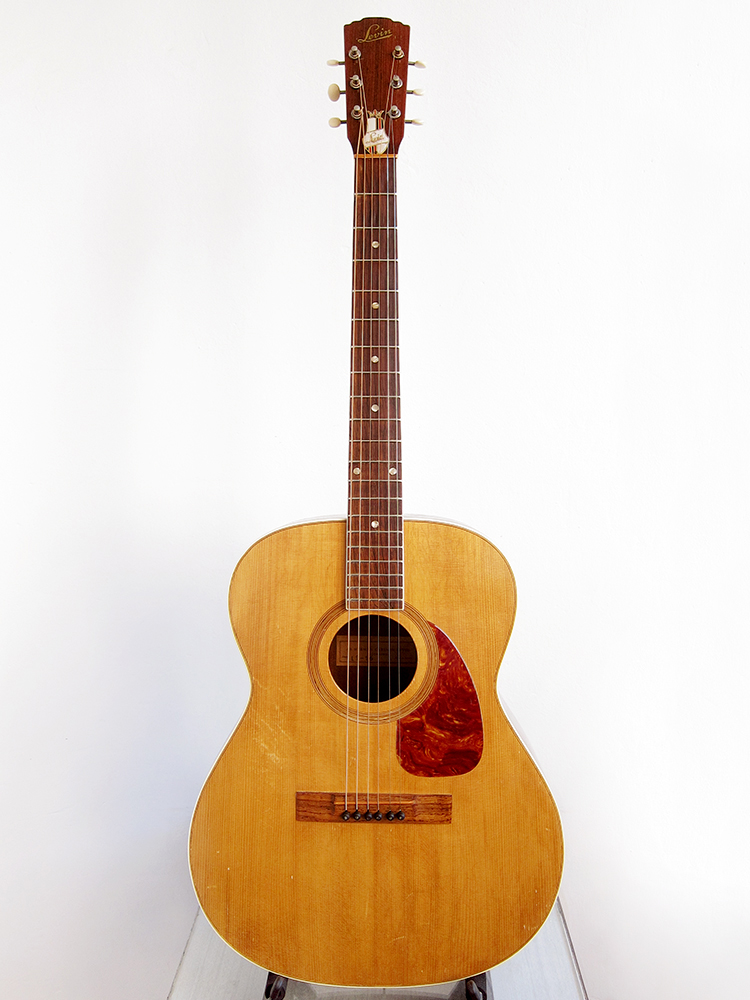
I was offered to buy a 1963 Levin LS-16 from a Swedish collector just before Christmas last year. Of course I jumped on the chance, not only is it a really rare bird, most of them were branded Goya S-16 and sent off to the US, but I had also been looking for another guitar like my dad’s old 1966 Levin LT-16 for quite a while. Unfortunately this Levin LS-16 got stuck in Sweden for a year, my mum didn’t want to send it so I couldn’t bring it back to Spain until I went back home for a funeral now in November. In the time of it’s absence I managed to find and restore a really nice sounding 1965 Goya T-16 so now I suddenly have 3 Grand Concert sized Levin guitars from the mid-60’s. Not that I complain, I really like both the sound and the playability of these guitars and this last one is probably the best sounding of all of them. According to Vintage Guitars Sweden, the most resourceful site about Levin guitars, the main difference between the Levin LS-16 and Levin LT-16 is the bracing pattern. The LS is supposed to be ladder braced but mine is X-braced just like the LT-series, I think that became standard in the early 1960’s. They also have different machine heads, dot inlays in the fretboard and I think that the LS-series have a bit more V-shaped neck profile.
Levin LS-16 / Goya S-16 Grand Concert size: Body width: 380 mm, body length: 480 mm, body depth: 98 mm. Fingerboard width: 43 mm, scale length: 630 mm. Spruce top, mahogany back and sides, 4-ply bound top, single-bound back. Mahogany bolt-on neck with adjustable truss rod. Metal Levin truss rod cover with a star and “1900”. Single-bound rosewood fingerboard with centred pearl dot inlay. Rosewood bridge, nickel plated strip tuners. Natural finish and ten year warranty
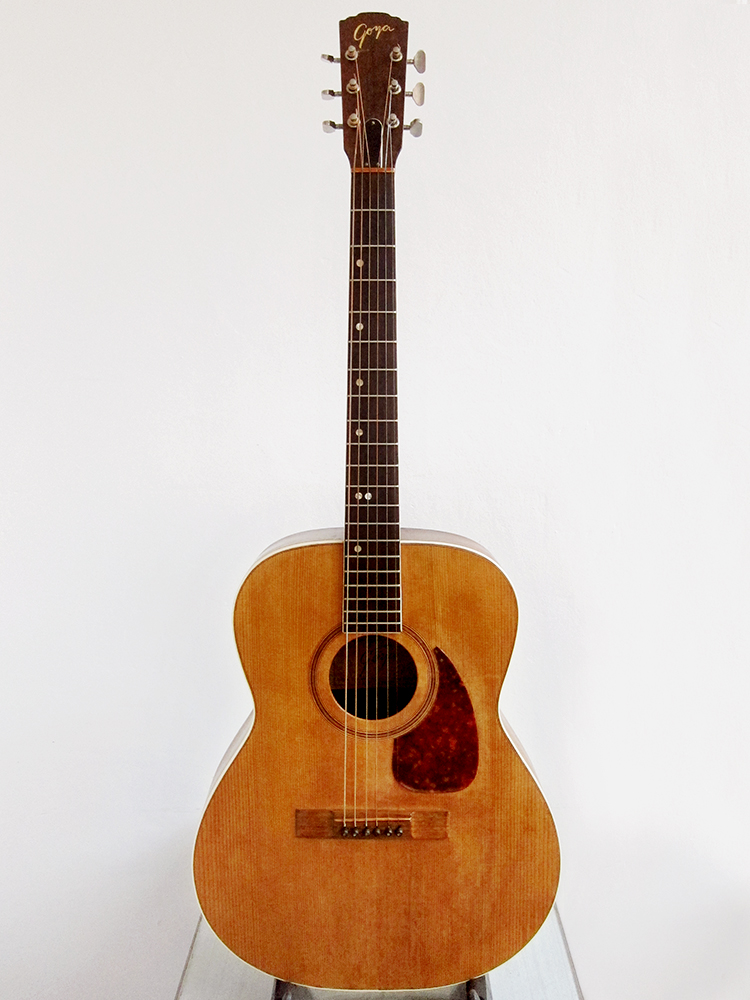
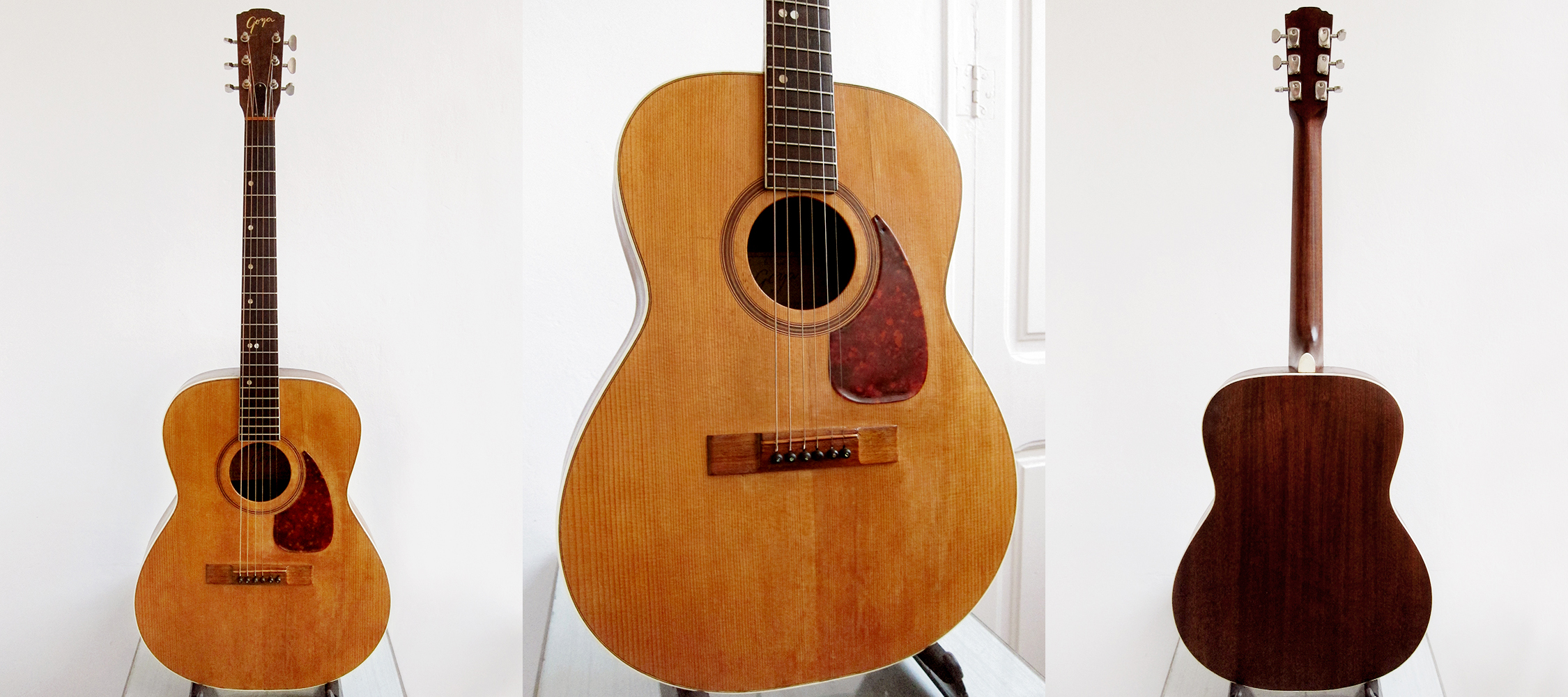
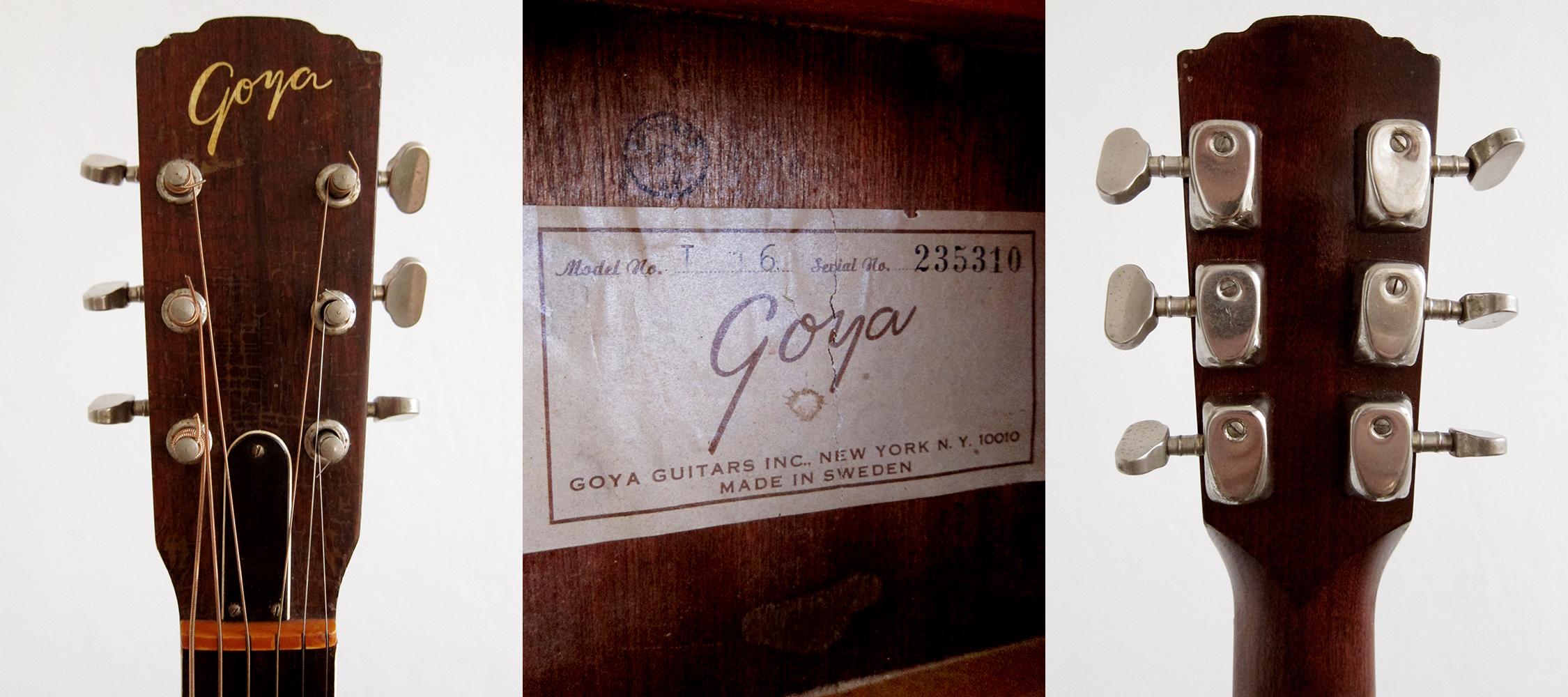
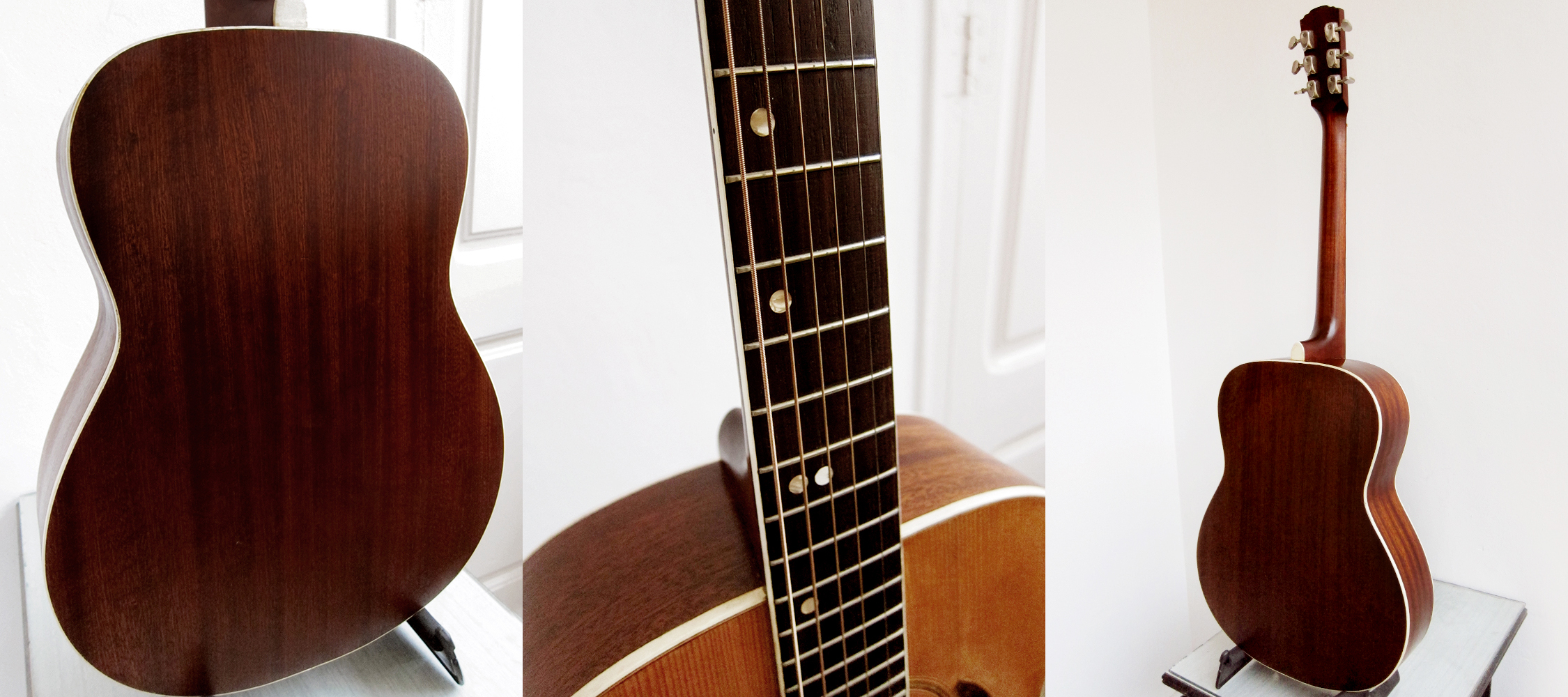
I finally managed to get another Levin LT-16, just like my dad’s old guitar that I learned to play on as a kid. His is a 1966 Levin branded one and this one is from 1965 and has the Goya logo on the head stock. These guitars normally don’t come up for sale that often, I guess because they are really well sounding and perhaps the 000-size is very sought after too. It took two years but finally I managed to get my hands on one, in bad shape when it arrived but now fully playable again.
Levin LT-16 / Goya T-16 Grand Concert size: Body width: 380 mm, body length: 480 mm, body depth: 98 mm. Fingerboard width: 43 mm, scale length: 630 mm. Spruce top, mahogany back and sides, 4-ply bound top, single-bound back. Mahogany bolt-on neck with adjustable truss rod. Single-bound rosewood fingerboard with bass side pearloid dot inlay. Rosewood bridge, nickel plated individual Van Gent tuners with metal buttons. Matte natural finish and ten year warranty
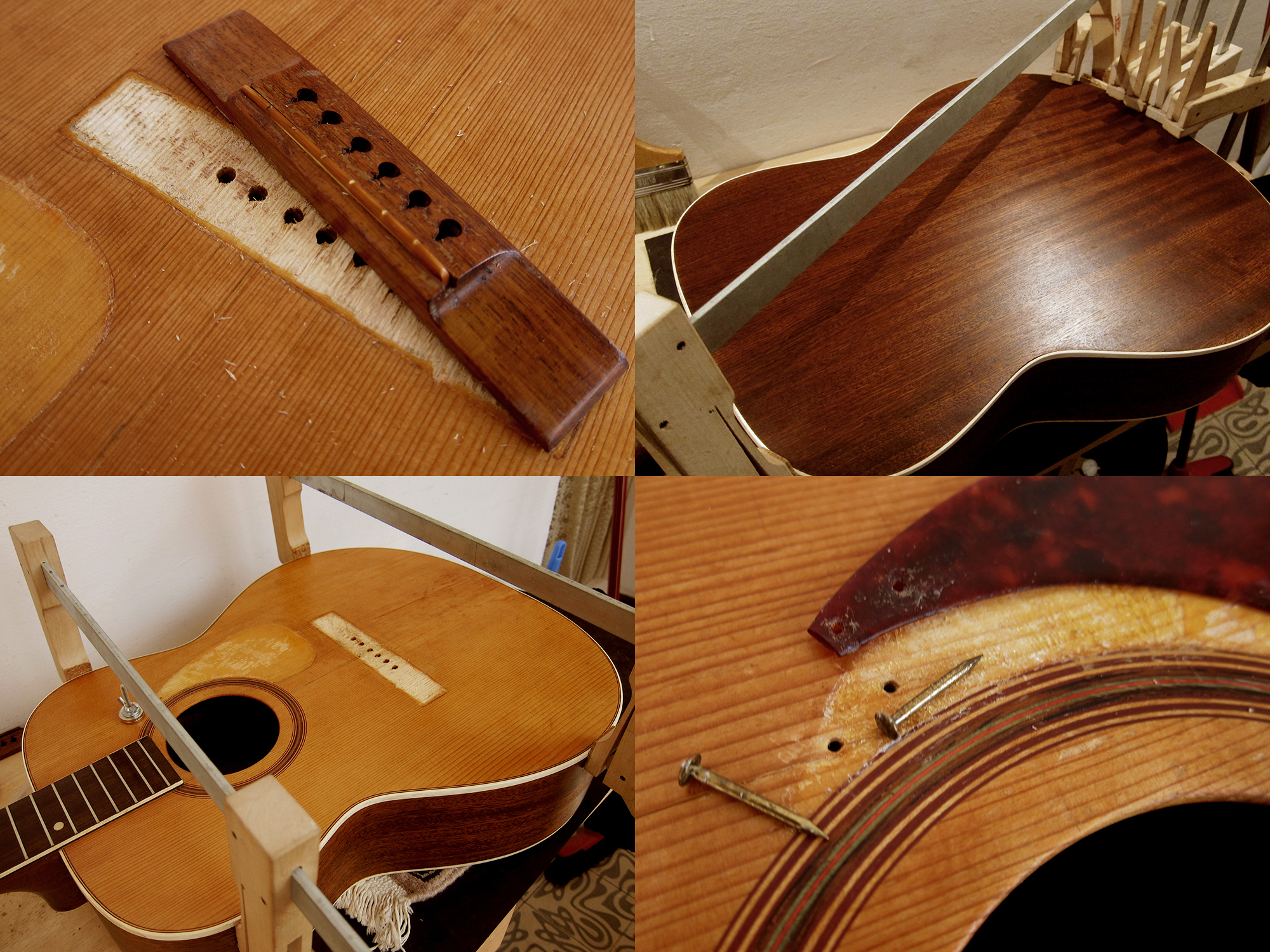
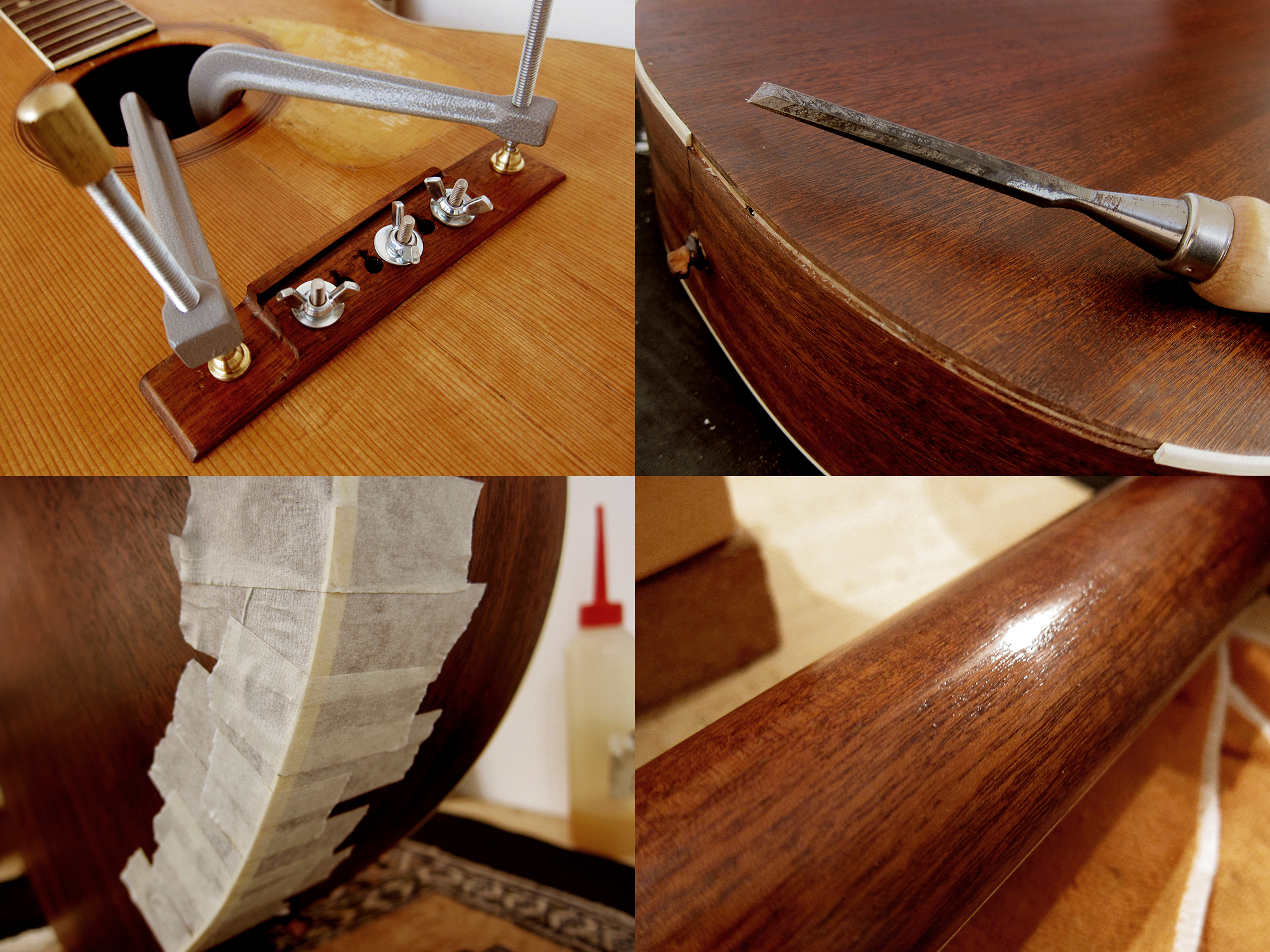
There was quite a lot of work on this one. First I re-hydrated the guitar for a week, just a wet sock in a bowl inside, which made the cracks close up quite a lot. I removed the bridge and the pickguard and glued all the cracks on the top and reattached the back that was coming loose. I also flattened the top, it had a bit of a belly that I managed to get down with a flat piece of wood covering the top that I clamped down for a couple of days.
I re-glued the bridge and replaced the 10 cm of missing binding. Someone had also sanded down the neck, which I hate, so lacquered it with a couple of coats of Nitro and sanded it smooth.
Levin guitars normally lack side dots for the 9th and 12th fret, which always confuse me while playing, so I added 3 dots. I reattached the pick-guard and cleaned up the original Van Gent machine heads. Levin uses a rather clever bolt-on neck system which makes neck-resets very easy. You just loosen the two bolts inside and then you can sand down the heel, it takes time but it was easier than removing the whole neck.
Rondo, built by Levin in Gothenburg Sweden in 1960
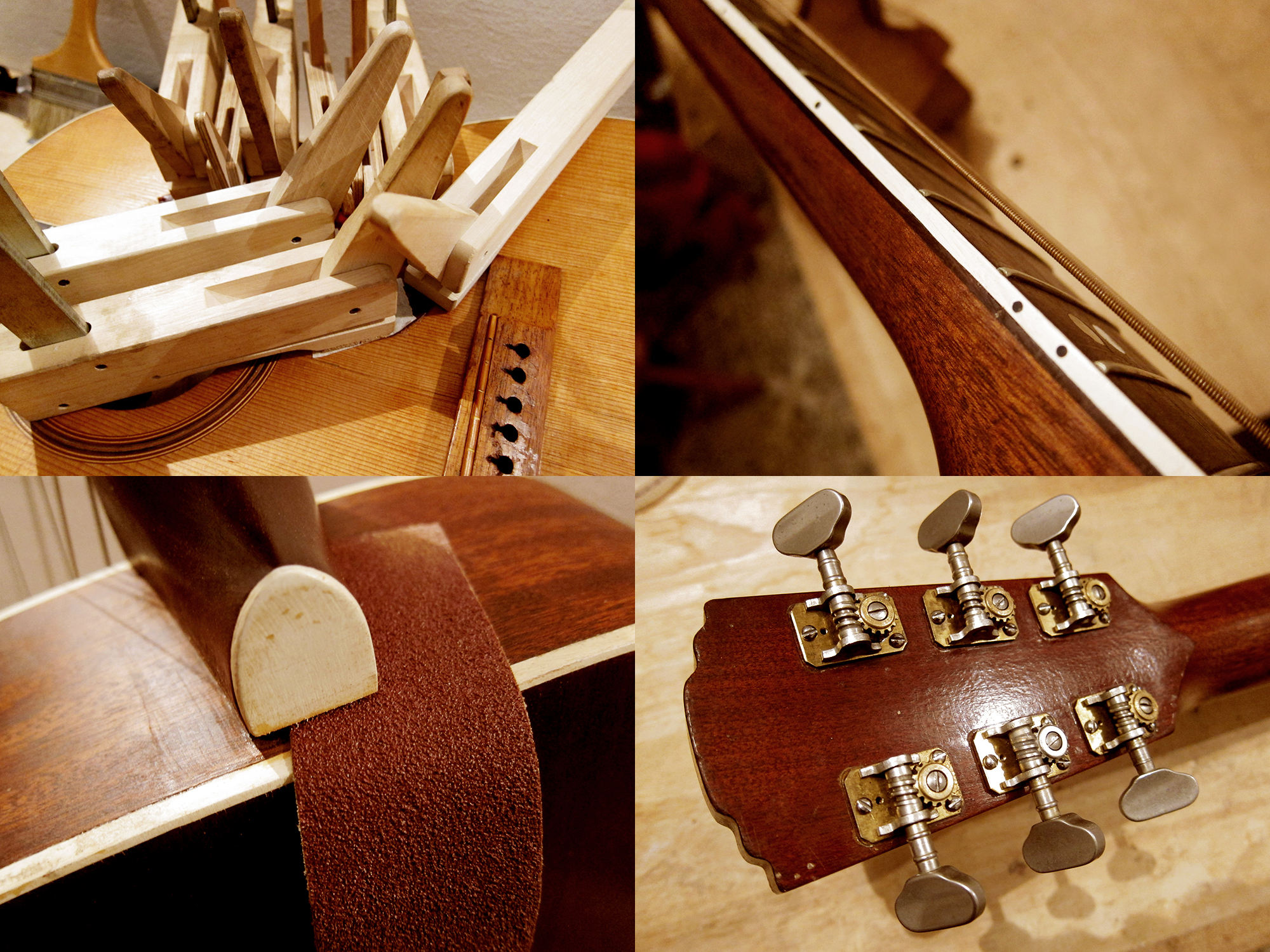
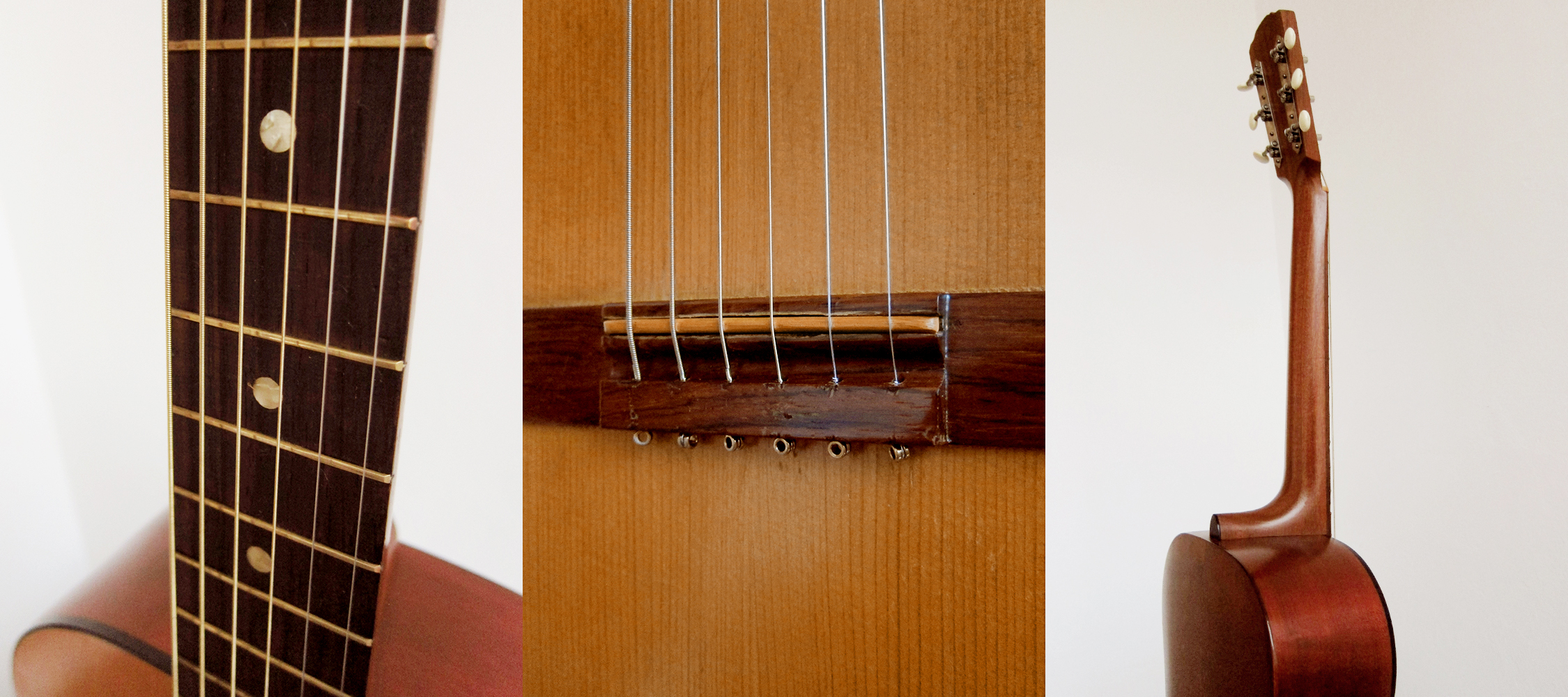
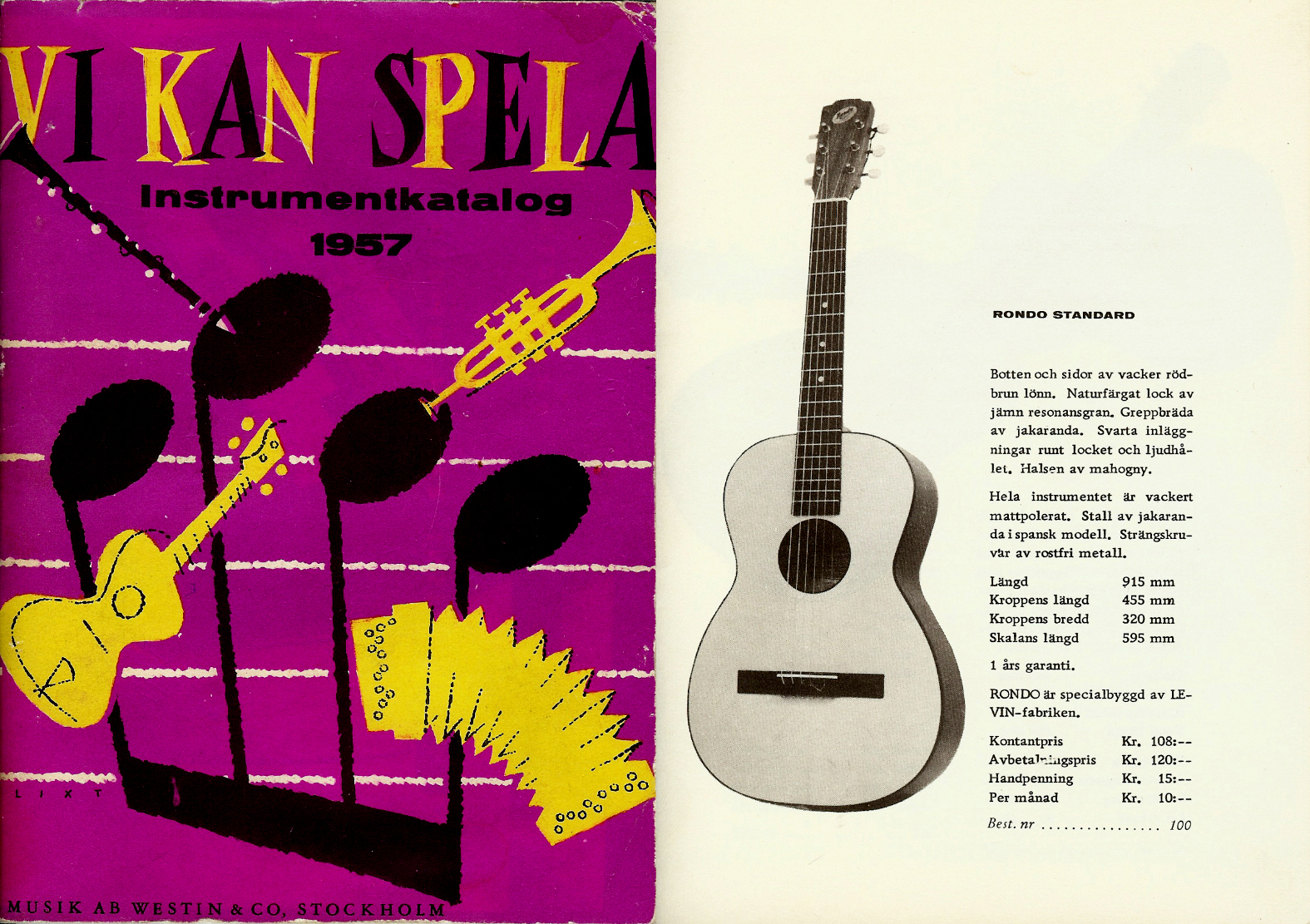
Today is wife’s birthday so tried to be a good husband and got here an old guitar. I found her a little Rondo, a mail order guitar built by Levin in the late 1950’s. I have actually never seen one of these before so I was quite exited when it arrived. It surely feels, plays, smells and sounds like a Levin. Rondo was made by Levin for Musik AB Westin & Co, a music store and publishing company in Stockholm with a large mail order business. It looks pretty similar to a Levin 119 and was made for both steel and nylon strings, this was pretty common on smaller Levin guitars in the 1950-60’s. It’s a very nice little guitar to play and it has more volume and sounds sweeter than I expected, perhaps because it’s fan braced instead of ladder braced. My wife seemed very happy with it too when she got it this morning.
Rondo
Non-cutaway. Body width: 320 mm, body length: 455 mm
Body depth: 95 mm, scale length: 595 mm
Spruce top, maple back and sides, fan braced
Single-bound top, unbound back, unbound headstock
Unbound rosewood fingerboard with pearl dot inlay
Mahogany neck with non-adjustable T-shaped duraluminum truss rod, rosewood bridge, stainless tuners
Natural finish, one year warranty
It was in pretty good shape when it arrived. I had to glue a couple of small cracks, polish the frets, oil fretboard and machine heads and give her a good clean but that was it. The only problem was that this had to be done when my wife wasn’t around so I’ve been a guitar repairing ninja for the last week.
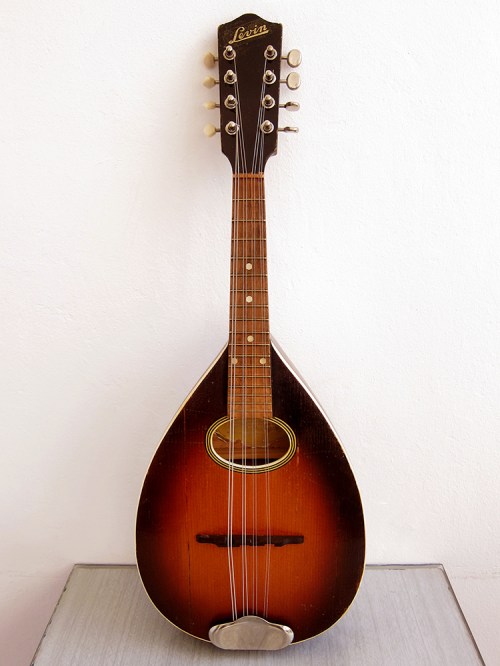
A couple of weeks ago I found a little Levin Model 46 Classic, 8-string mandolin. This is one of the less fancy ones that Levin made in the 1940’s but it’s still a great little mandolin. Someone has unfortunately changed the machine heads on one side during it’s life but the rest is original. I had a cheap Thomann mandolin before and this is a world of difference, I wonder how good Levin’s top of the line mandolins sound if a simple one like this could be so strong and powerful.
Levin Model 46 Classic
8-string Mandolin, flat back
Body width: 225 mm
Spruce top with birch back & sides
Single-bound top and back, unbound headstock
Unbound walnut fingerboard with pearloid dot inlay
Nickel plated tuners, sunburst finish, one year warranty
Now I just have to learn how to play mandolin properly
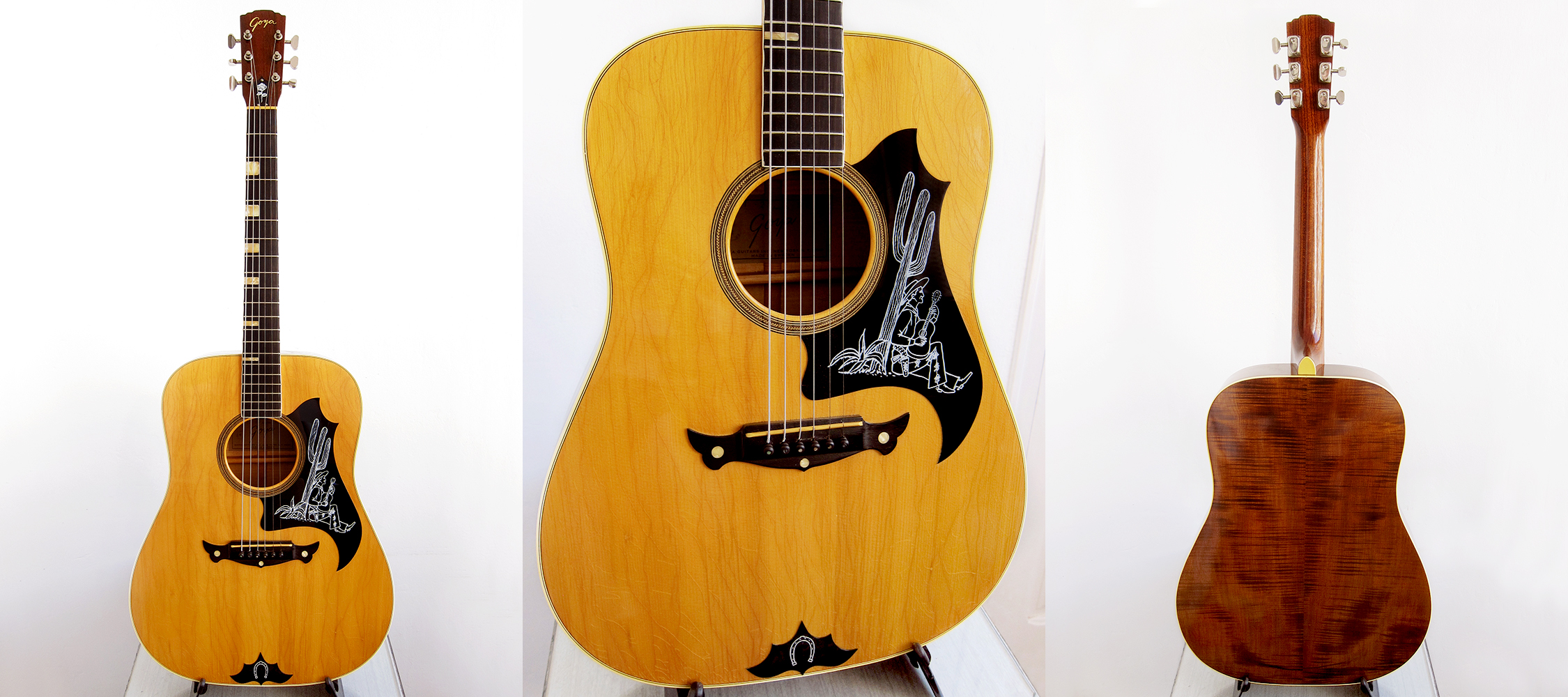
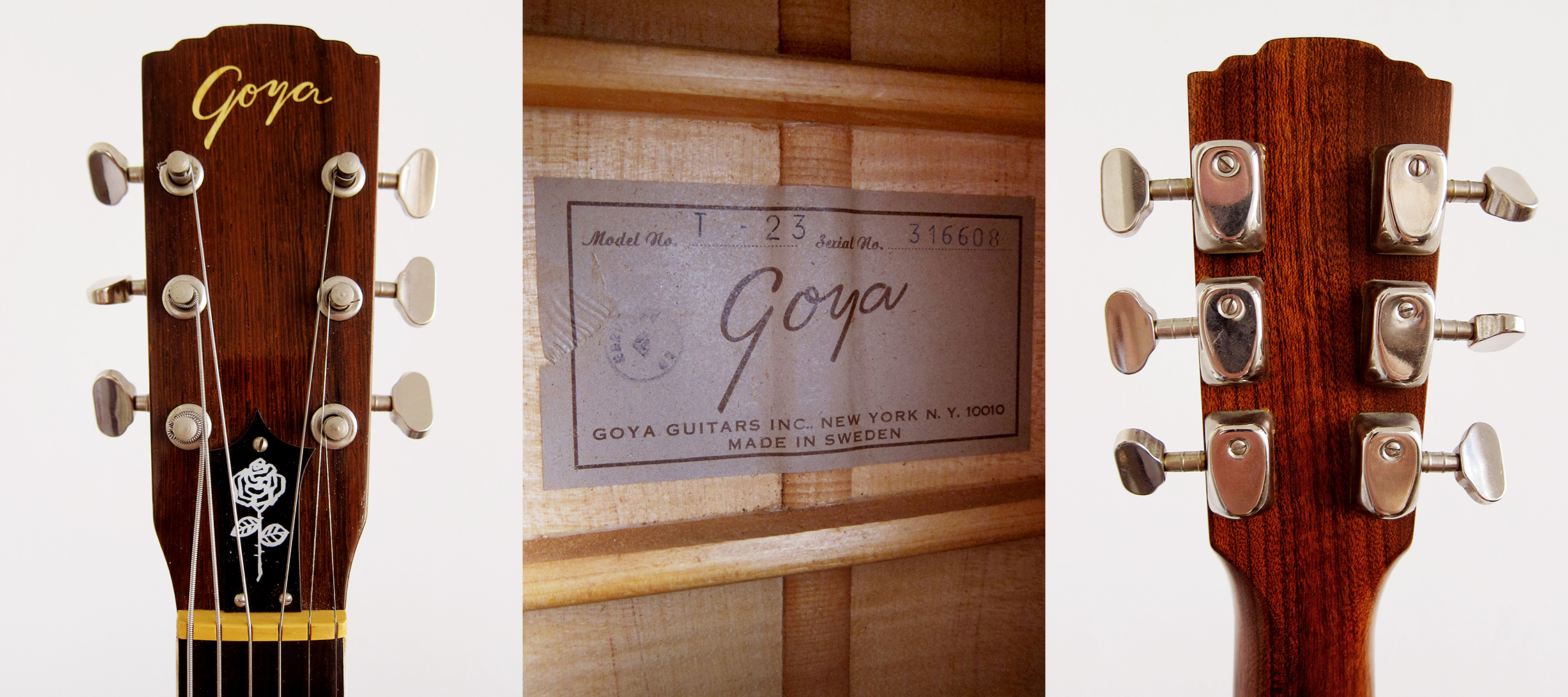
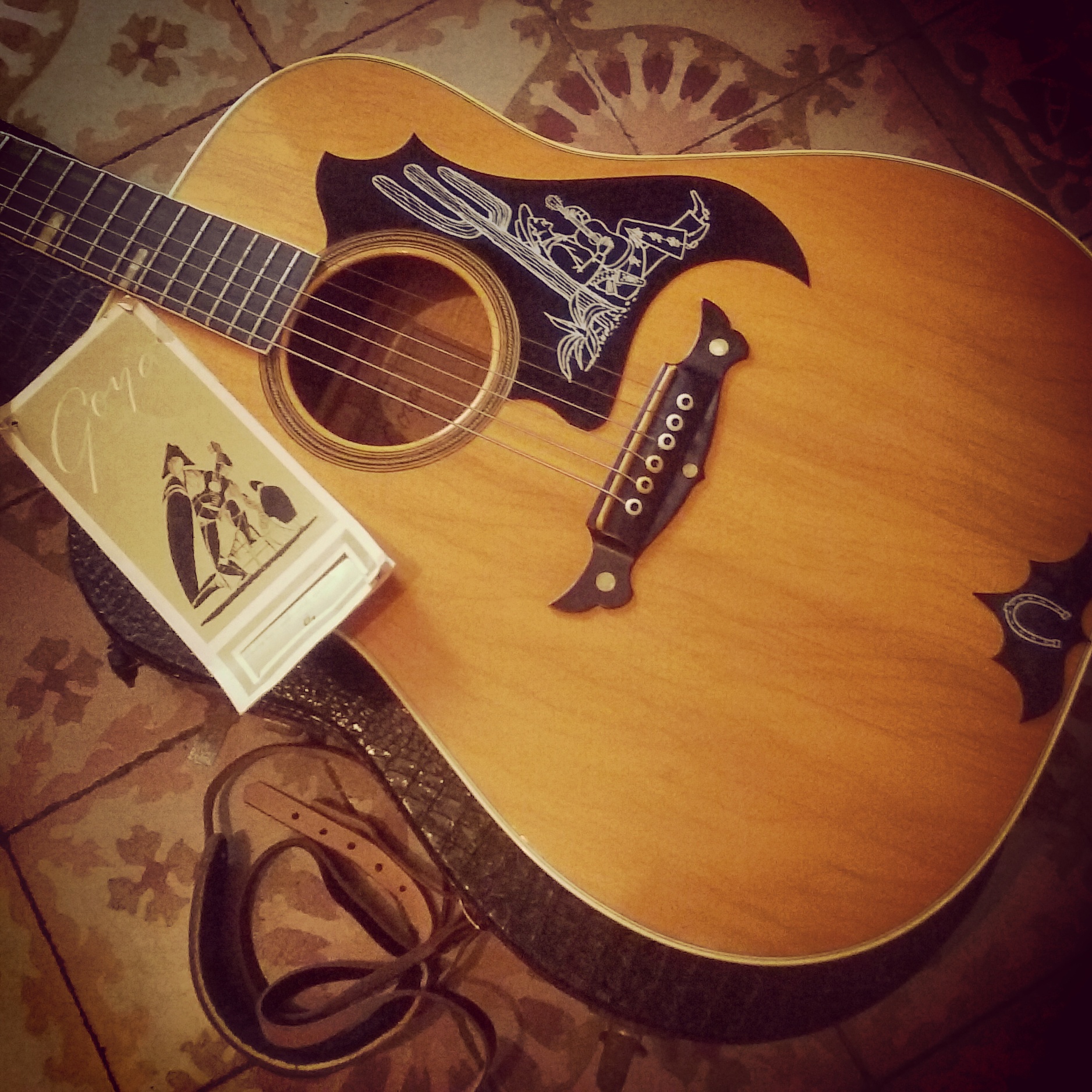
Finally, it took two years but now I’m at last the proud owner of a lovely Goya T-23. When I bought my first Levin back in the summer of 2013 I started to search Vintage Guitars Sweden for different models to study and learn everything I could about Levin. There was 3-4 different guitars that I fell in love with straight away, Levin LM-50 with all it’s bling, Levin De Luxe the king of archtops, Levin 174 which I later found, and of course Levin LT-23, the cowboy version of Levin LT-18. I love my 1966 Goya T-18 so I was pretty sure that this Goya T-23 would sound pretty sweet too, but it sounds even better than I could have imagined. My friend Wolf and I had a little jam last Saturday and it seems like the T-18 and T-23 were made to be played together, I will try to sort a video. I love everything about this guitar, the ebony fretboard with it’s block inlays, the flamed maple back and sides, the amazing cowboy pickguard and plastic details, the bridge shape and most of all, the sound. It has a Gibson like bass response but with a Martin like mid and treble, kind of the best of both worlds. It was well worth the wait, the next holy grail to find would be a Levin LM-50.
I haven’t done any work to this guitar yet, I bought it from a seller in Franklin, Indiana, USA and since it seemed really dry when it arrived I wanted to wait and see how it reacts to the subtropical heat of Barcelona first. Most likely I will have to sand down the heal a bit to get the action down and perhaps even remove the binding on the neck and file down the frets since the fretboard has been dry and shrunk so the frets are poking out a bit. Hopefully the humidity here will help a bit and if not I will sort this issues after the summer. It’s very playable as it is and almost in mint condition with minimal wear.
Levin LT-23/ Goya T-23 Goliath size: Body width: 400 mm, body length: 505 mm, body depth: 95/120 mm. Fingerboard width: 43 mm, scale length: 630 mm. Spruce top with X-bracing, flame maple back and sides, 4-ply bound top, single-bound back. Mahogany bolt-on neck with adjustable truss rod. Single-bound ebony fingerboard with bass side pearloid block inlay. Nickel plated individual Van Gent tuners with metal buttons. Ebony bridge, natural finish and ten year warranty
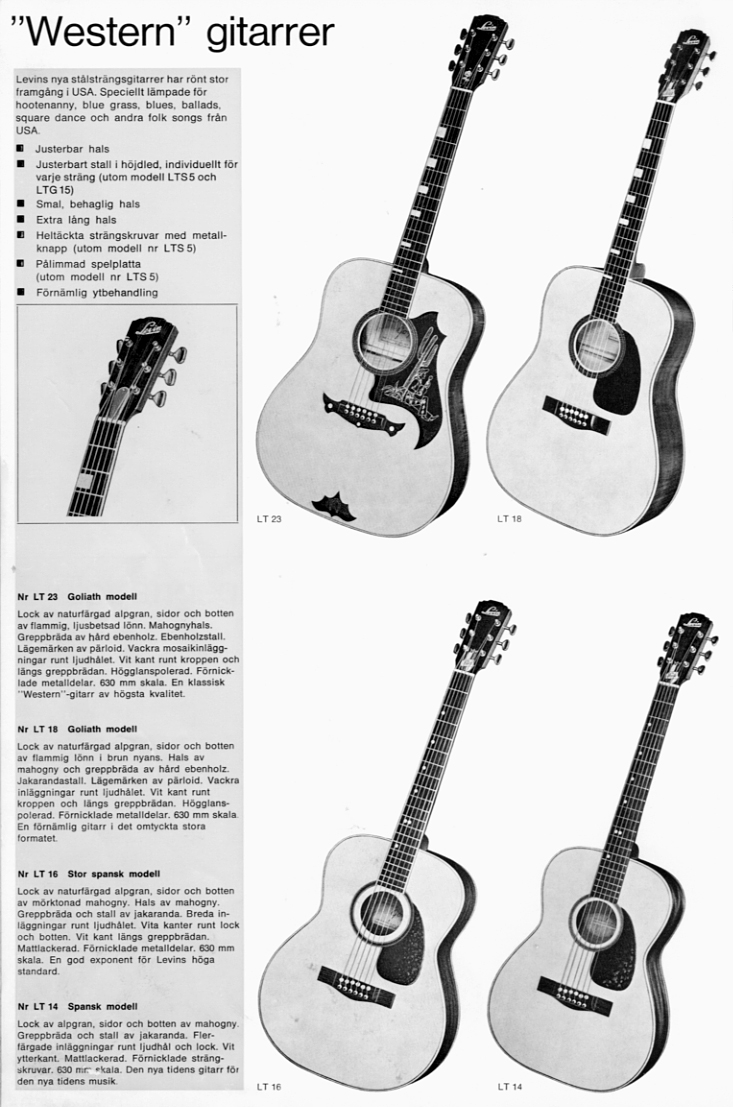
Levin catalogue from 1967. Now I finally have all four of them, the two top as Goya and the bottom two as Levin, but mine are from 1965-66 so they have a proper saddle instead of the adjustable saddle screws. Goya T-23 (1966), Goya T-18 (1966), Levin LT-16 (1966), Levin LT-14 (1965). Taken from Vintage Guitars Sweden
It arrived with the original Goya hang tag, an unused 1960’s leather strap and this awesome looking black alligator hard case that I think is original too. Taken from my Instagram
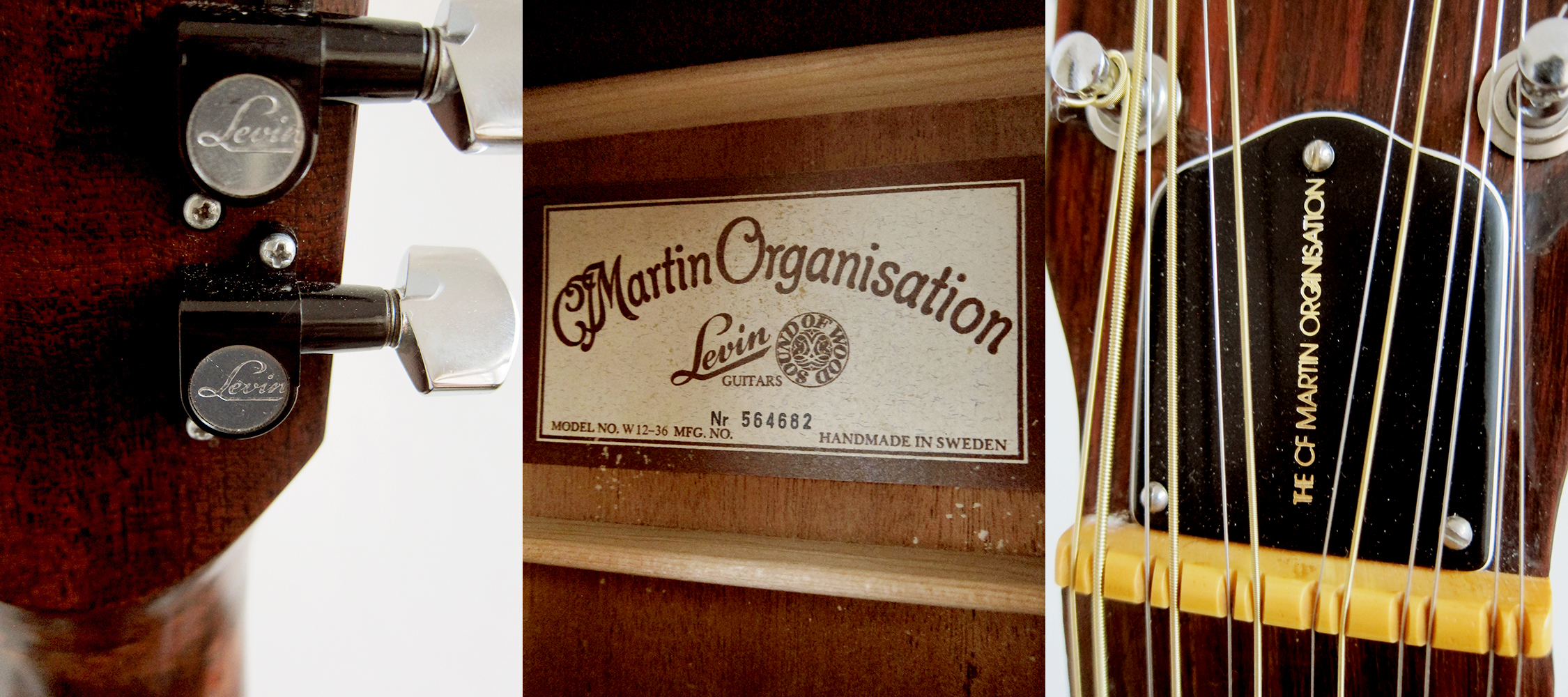
Last week I went a bit bananas and got a 12 string Levin. It wasn’t really planned but sometimes you make a best offer on eBay when you are slightly tipsy and then occasionally you become the new owner of some old guitar, like a 1978 Levin W 12-36. I wasn’t even sure if I liked 12 string acoustics or not, I mean they do make a terrible loud noise and seemed a bit too hippie / folk for me, but then I remembered David Crosby who really likes 12 strings and I really liked David Crosby, so that was it. I got it last Friday and played it quite a lot over the weekend and I think I really have grown to like it. I mean you can’t really play it like a normal guitar since it makes too much noise and the notes tend to just eat each other, so you need to space out your strokes a bit. Once you get a hang of it it’s a pretty powerful and interesting instrument to have in the arsenal even if you wouldn’t use it everyday.
I bought the guitar from a German eBay seller,with a name in Spanish, compravender. I’m not sure if he had fixed it up himself or if it came straight from a luthier but the frets were polished and it was well set up so I didn’t have to do anything to it when I got it. The only downside is that the guitar has suffered a broken headstock at some point but it’s really well repaired and seems solid enough.
This Levin W 12-36 was made in 1978 and seems to be the latest knows to Vintage Guitars Sweden. This is also the “newest” Levin I have, they stopped making them in 1979. I haven’t seen the Martin Organisation label before, or the CF Martin trussrod cover.
Levin W 12-36
12-string, non-cutaway. Body width: 400 mm, body length: 505 mm, body depth: 95/120 mm, fingerboard width: 52 mm, scale length: 630 mm
Spruce top with X-bracing, mahogany back and sides, 5-ply bound top, single-bound back, mahogany neck with two adjustable truss rods
Black plastic truss rod cover, unbound headstock with decal logo, unbound rosewood fingerboard with mother-of-pearl dot inlay, rosewood bridge.
Black and chrome plated individual Levin Schaller tuners
Natural finish and five year warranty
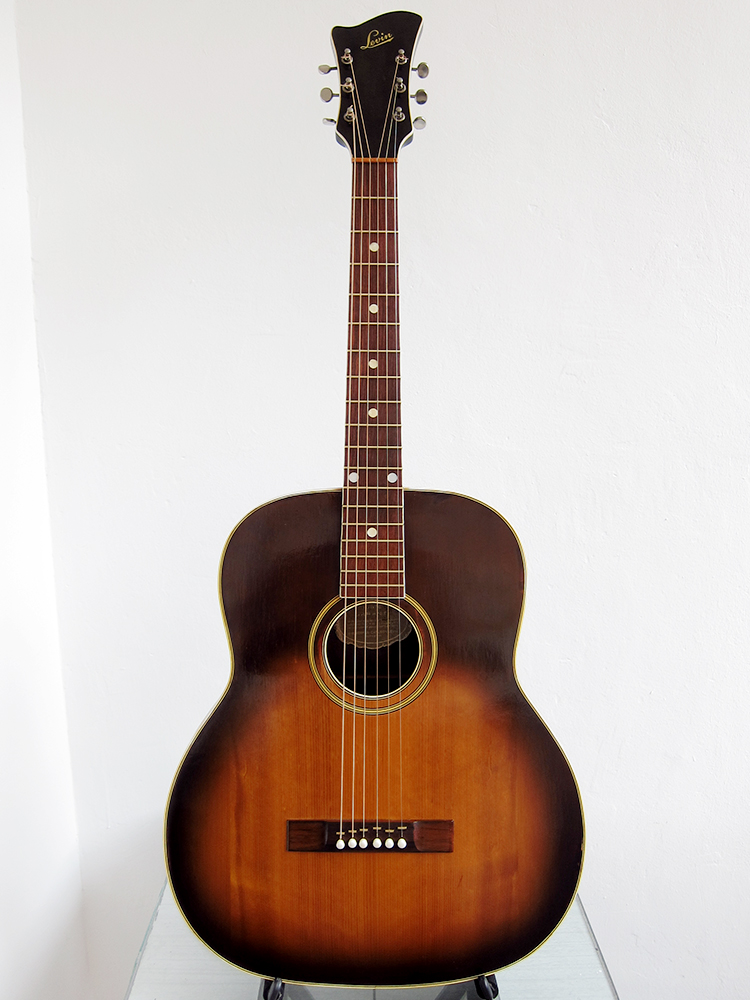
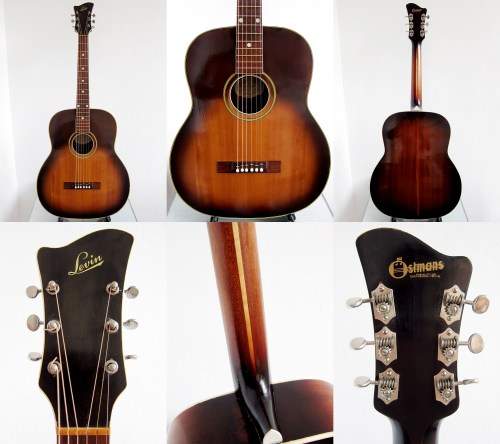
I have decided to thin out my Levin collection a bit, I have 12 at the moment, so the first to go will be my beloved 1950 Levin Model 13 Ambassadör. It was restored a few years ago by GammelGura, a great luthier in Örnsköldsvik, Sweden. With new bronze frets, a neck re-set, cracks glued and a new bridge was created to improve the intonation, the rest is all original. It even has the sticker on the back of the head from the guitar shop in Örnsköldsvik where the guitar was bought 65 years ago. If you are interested in the guitar send me an email or give me a call, all info can be found on the For sale page.
Levin Model 13 Ambassadör
Body width: 400 mm, body length: 480 mm, scale length: 640 mm
Spruce top, walnut back and sides, 4-ply bound top, single-bound back
Mahogany neck with non-adjustable T-shaped duraluminum truss rod
Single-bound rosewood fingerboard with 18 frets and pearloid dot inlay
Single-bound headstock, rosewood bridge, nickel plated individual tuners
Sunburst finish and 10 years warranty
 Taken from a 1907 Levin catalogue, thanks to Vintage Guitars Sweden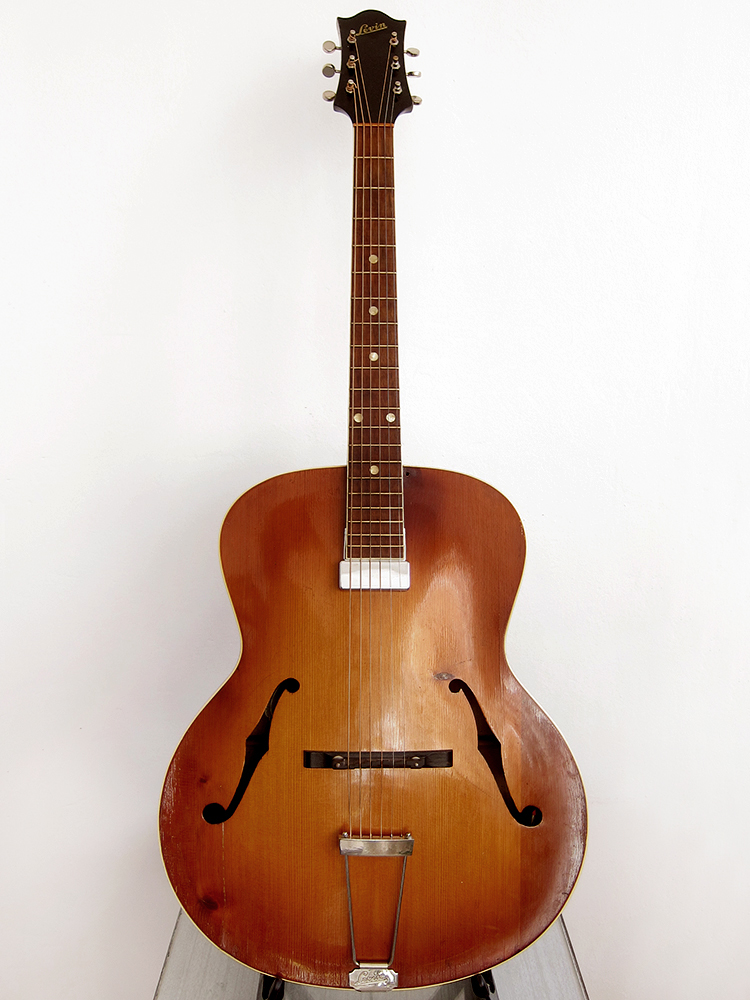




 Levin Model 46 Classic




 Claescaster