Claescaster

Category: Guitars

Martin SWDGT

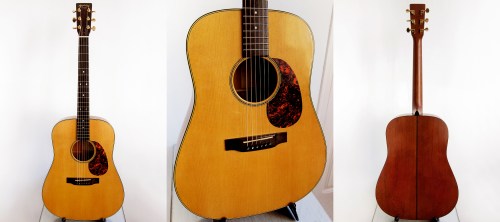
Martin SWDGT, Made in USA 2004Martin SWDGT, Made in USA 2004

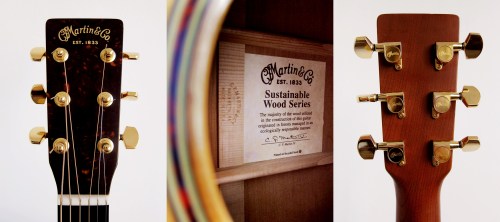
Last weekend I adjusted Sr. Chinarro’s 2004 Martin SWDGT. It’s a really nice guitar and it reminds me a lot of the Martin SPD-16R I got for Christmas. These Martin SWDGT or Sustainable Wood Series are constructed in an ecologically responsible way with alternative woods. It has a really nice coloured sitka spruce top with non-scalloped X-bracing, back, sides and neck are cherry wood and the fretboard is made from katalox. It’s constructed with a simple dovetail neck joint, gold machine heads and a faux tortoise binding all around, just like the Martin SPD-16R, the only difference is that the SWDGT has faux tortoise headplate as well. The Martin SPD-16R has rosewood back and sides and it feels like the cherry wood in the SWDGT is adding more bass, depth and warmth, I really like the sound of it. I’ve always been a big fan of fancy exotic woods, especially Brazilian rosewood, but if you can build guitars this good from woods you can find in your backyard, then perhaps that’s the sustainable way for the future. I have to add that I hate the future and prefer to live in the past with my fancy old exotic woods but we can’t all do that, that wouldn’t be very sustainable.

Martin SWDGT, Made in USA 2004
Martin SWDGT, Made in USA 2004I love the colour of the top, so much nicer than the new made Martin D-18 and D-28.

Martin SPD-16R

Martin SPD-16R Made in USA1999
Martin SPD-16R, Made in USA 1999

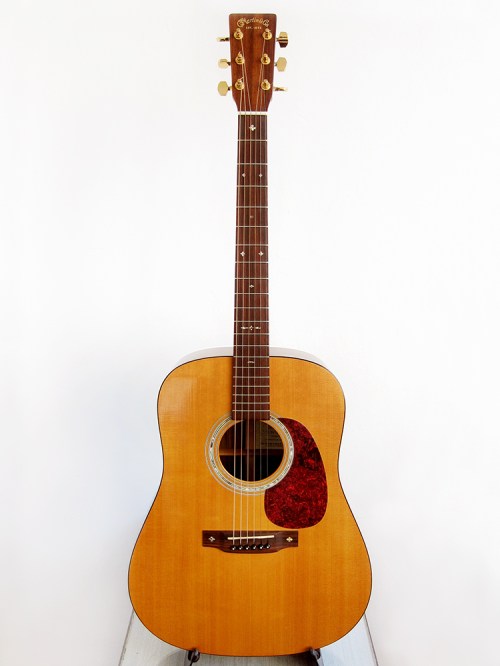
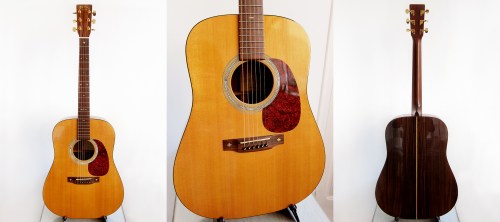
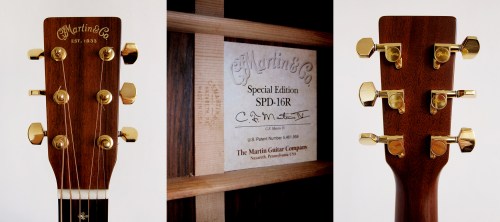
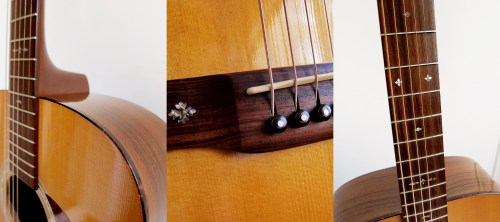
Before Christmas I got myself my first Martin. Like most acoustic guitar players I’ve always dreamt of getting a really old Martin D-28 but since they are so ridiculously expensive I settled for a more modest Martin, a 1999 Martin SPD-16R. I have to say that it’s an amazing guitar for the price, I think these cost between $1500-2000 when they were new in the late 1990’s. One of the problems I have with modern Martin guitars is the Richlite and other weird wood substitutes they use on the Martin 16-series nowadays. I also think that most new Martins look pretty bland and boring, hence why I liked the SPD-16R so much with it’s fancy snowflake inlays and abalone rosette, it even has gold hardware. Unfortunately for me, I’ve realised that I’m not a Martin guy, I feel like I’m cheating on my Levin guitars every time I pick another guitar up so I’ve decided to put this Martin SPD-16R up for sale.

Martin SPD-16R Made in USA1999Martin SPD-16R Made in USA1999

Martin SPD-16R
14 fret Dreadnought with spruce top and Indian Rosewood back and sides. Forward shifted scalloped X bracing. Performance taper, low oval mahogany neck with rosewood fretboard and bridge. Snowflake inlays, abalone rosette and a D-45 style back strip with gold Martin stamped machine heads. Produced in USA between 1996-2001. SPD-16R stands for Special edition, Dreadnought, 16-series in Rosewood.

Player Reviews, taken from Dream Guitars:

“The SPD-16 series offers a lot of guitar for the money. Solid woods, abalone markers and rosette and gold hardward were all standard. Great tone is standard also. This is a true Martin guitar with the punch and wonderful midrange Martin fans will enjoy.” – Paul Heumiller

“This is a great dreadnought for the money. This Special Edition Martin has that vintage look and appears to be a cross between a D-18 and D-28. Pretty darn nice.” – Al Petteway

Martin SPD-16R Made in USA1999

Rickenbacker 330

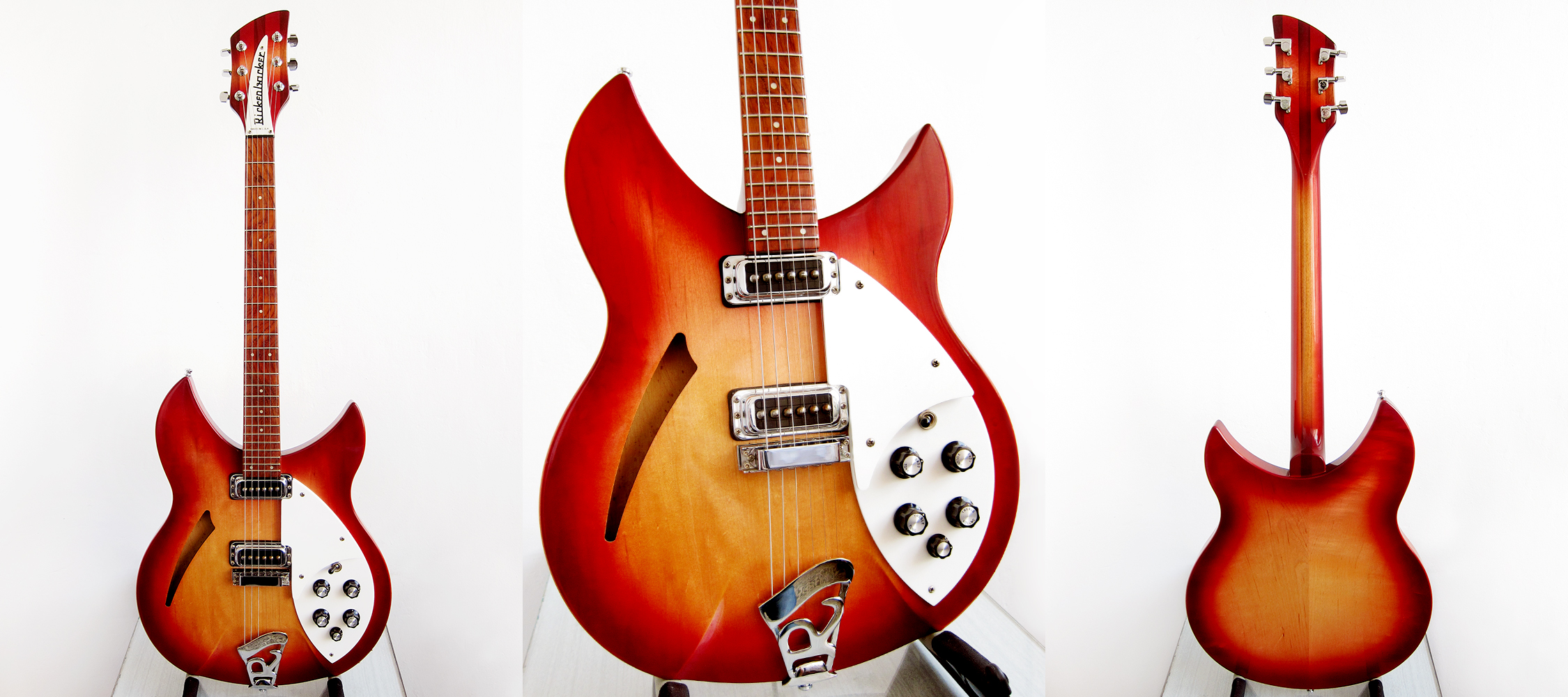
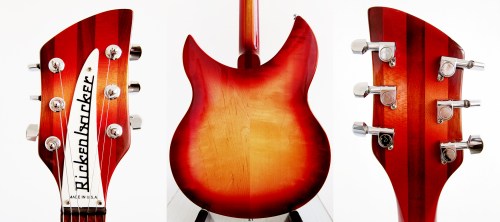
Rickenbacker 330 Made in USA 2000A Rickenbacker 330 in Fireglo, Made in USA April 2000

Last week I had Sr. Chinarro’s Rickenbacker 330 at home for some minor work. This was actually the first Rickenbacker guitar I’ve ever played, I tried a Rickenbacker 4003 Bass ones but that’s all. I’m not sure why I haven’t been more interested in the brand, they look amazing and a million awesome musicians plays Rickenbacker. Perhaps I got lured in to the Telecaster cave early on and never managed to find my way out. The Rickenbacker 330 was introduced in 1958 and it really feels like it was built in an old fashioned way, perhaps not entirely in a good way. I mean when the electric guitars came in the 1950’s all the different brands had to figure things out for themselves for not infringing anyone else’s previous patents, hence why saddles, pickups and constructions varied so much in the beginning. There are a few solutions on the Rickenbacker that feels a bit weird, like the saddle, pickguard or the fact that they have lacquer over the rosewood fretboard. The problem with this guitar was that it had groves in the fretboard that I had to fill in with lacquer, scrape and then buff out with sandpaper and metal polish, which worked really well in the end. I think I will stick to my Levin orchestra guitars when it comes to hollow bodies but I really enjoyed having this Rickenbacker 330 at home so I could finally try one out. I loved the neck, both thickness and the feel of it and the pickups sounds really great, it’s a very versatile guitar.

Rickenbacker 330 Made in USA 2000

Guitars for sale

I’ve decided to thin out my electric guitar collection as well so if you see anything you like, just get in touch claesgellerbrink@gmail.com
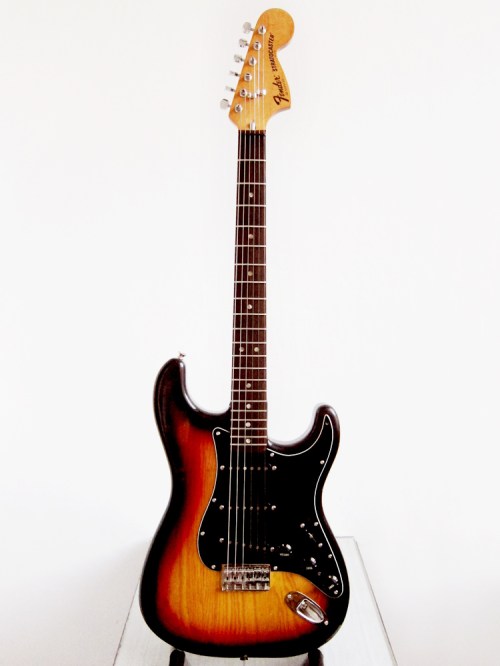
Fender Stratocaster Made in USA 1979, 3 tone Sunburst, hardtailFender Stratocaster, Made in USA, Fullerton plant 1979, 1650€ SOLD
A late 1970’s hardtail Fender Stratocaster in a classic 3-tone sunburst. The neck is stamped with 1978 but body, pickguard and pickups says 1979, very common on late 1970’s Fender. All hardware is original but the volume pot and 5-way switch has been changed and the middle pickup is a bit of a mystery, neck and bridge are original Fender and stamped 1979. It’s in really good state for its age with just a few marks to the body, the grain is amazing and it looks like it’s a one piece ash body. The back of the neck is in great shape just like the original jumbo frets and fretboard. It sounds and feels awesome. You can read more about the guitar here and here and watch this Youtube clip.
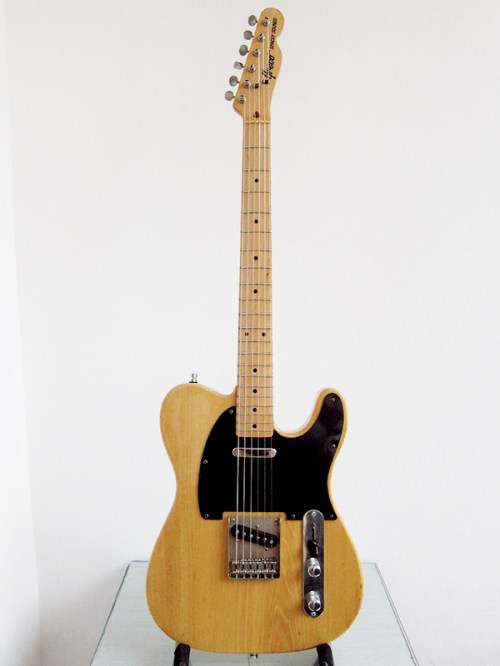
Greco Spacey Sounds TL-500Greco Spacey Sounds TL-500, Made in Japan 1979, 800€ SOLD
This is as close to a vintage Japan made Fender Telecaster you can get, built in the same FujiGen factory just before Fender gave the contract to build the first JV, Japan Vintage, series there. Greco is well known for their build quality and the sound of their Maxon pickups. This is an all original Greco TL-500, built in August 1979. The neck and frets are in great shape but there are some chips and marks around the body. You can read more about the guitar here.
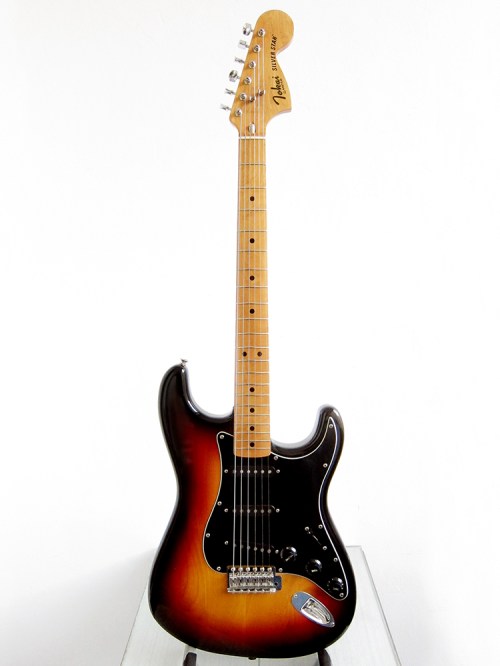
Tokai Silver Star SS-36 Made in Japan 1979Tokai Silver Star SS-36, Made in Japan 1979, 750€ SOLD
This is a beautiful looking Tokai Silver Star with great grain showing through the 3-tone sunburst. It’s all original and in really good state for its age with hardly any marks. Tokai together with Greco was without any doubt the best Japanese copies in the 1970-80’s and the reason why Fender started to produce guitars in Japan, first through FujiGen and later the Tōkai Gakki factory. It has great sustain and together with the legendary grey bobbin pickups it sounds amazing. You can read more about the guitar here and listen to it in this Youtube clip.
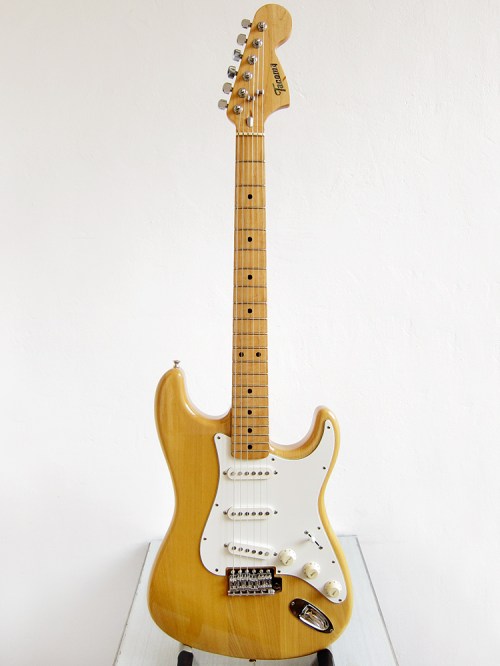
Tacoma Stratocaster Made in Japan 1970'sTacoma Stratocaster, Made in Japan 1970’s, 400€ SOLD
This great looking Tacoma Stratocaster was made in Japan in the late 1970’s, most likely by FujiGen since it’s so similar to a Yamaha Super r’n Roller. It’s all original and in really good state for its age with hardly any marks. Neck, fretboard and frets are fine, it has great sustain and the pickups sounds great. You can read more about the guitar here and listen to it in this Youtube clip.
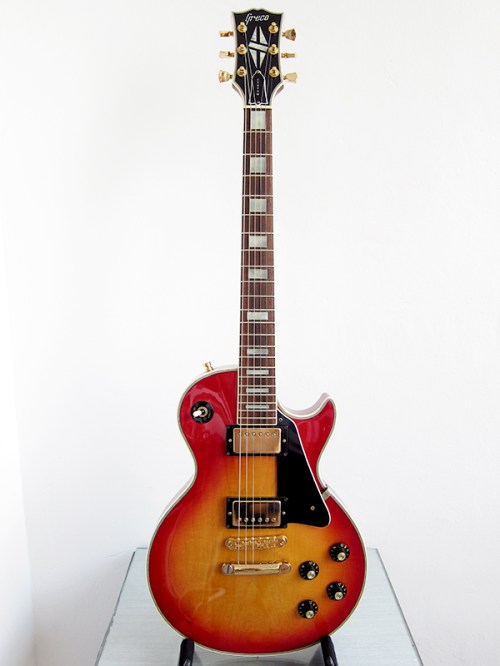
Greco Les Paul Custom EG-600CGreco Les Paul Custom EG-600C, Made in Japan 1980, 750€ SOLD
This is as a great looking FujiGen built Greco Les Paul Custom copy with gold hardware. It’s all original and in great shape for it’s age. Greco is well known for their build quality and the sound of their Maxon pickups. The neck, fretboard and frets are in great shape and there is hardly any marks to the body.  These Greco’s are of course set neck Les Paul copies and of way better quality then all the bolt-on neck guitars built by Matsumoku and other factories. You can read more about the guitar here.
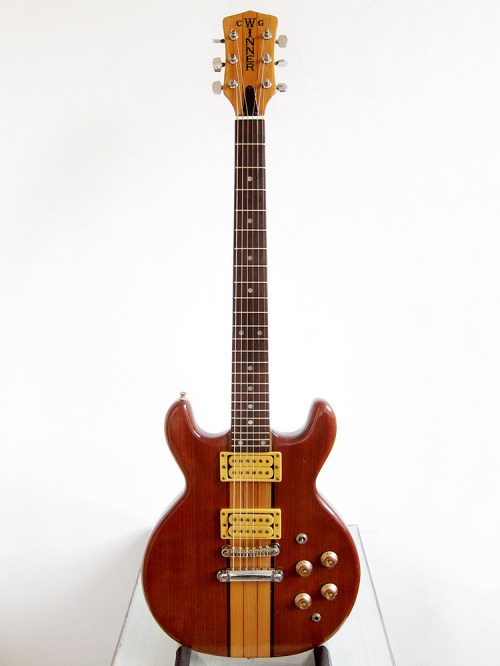
CG Winner AO-410 Made in Japan Neck trough late 1970'sC.G. Winner AO-410, Made in Japan, early 1980’s, 350€ SOLD
A great sounding C.G. Winner AO-410, a well built double cutaway neck trough guitar made in Japan. The brand was created by Clarence Griffith Winner (C.G.Winner), an American luthier and close friend of Leo Fender and built by Matsumoku in Japan, the same factory as Ibanez and Aria Pro II. These guitars are supposed to have Di Marzio humbuckers but I can’t see any markings on them so there might be normal Maxon pickups in this one. It has an awesome baseball bat neck, really fat and nice and plays really well. The hardware is a bit tarnished but it’s in overall really good shape for the age, the neck is straight and frets are fine. You can read more about the guitar here and watch this Youtube clip.
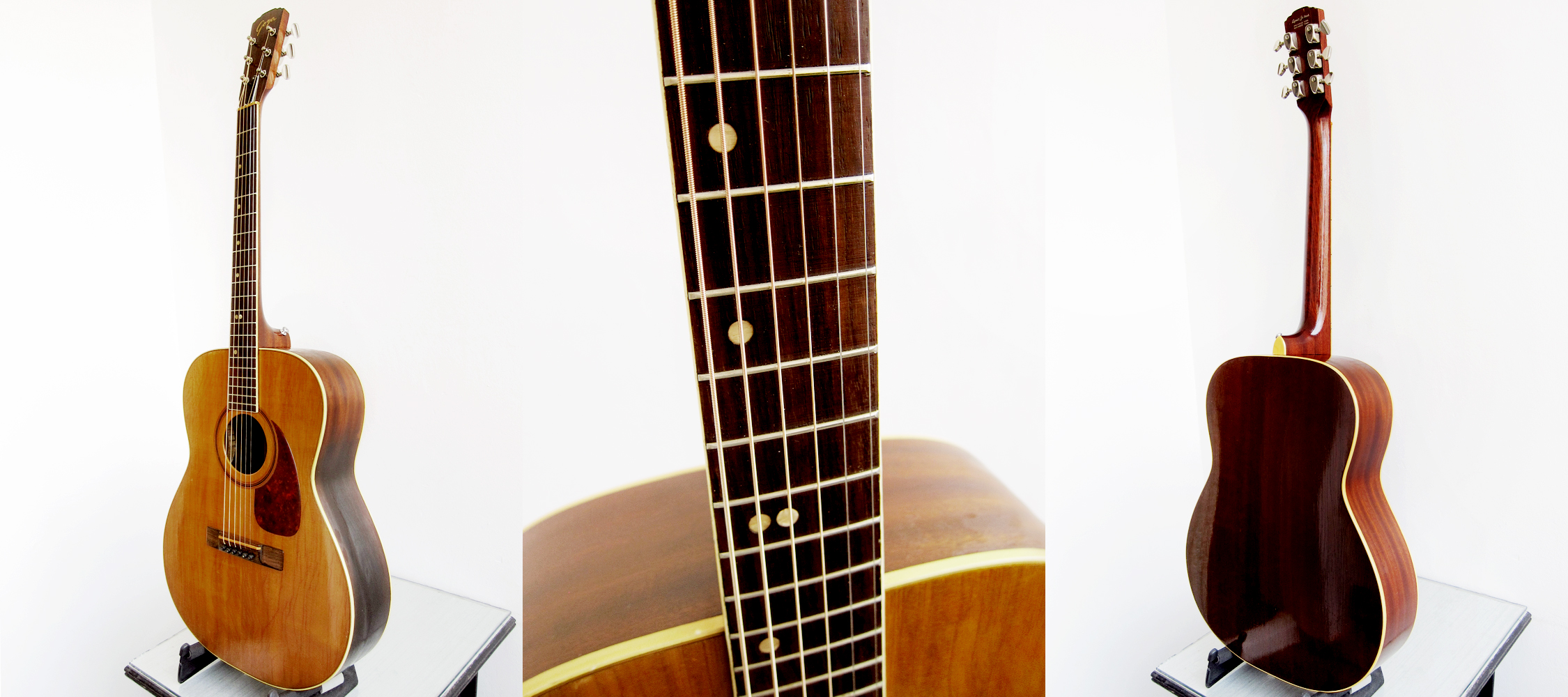
Goya F-11

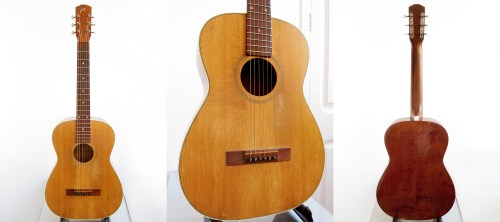
img_7029-2Goya F-11, made in Sweden by Levin in 1963

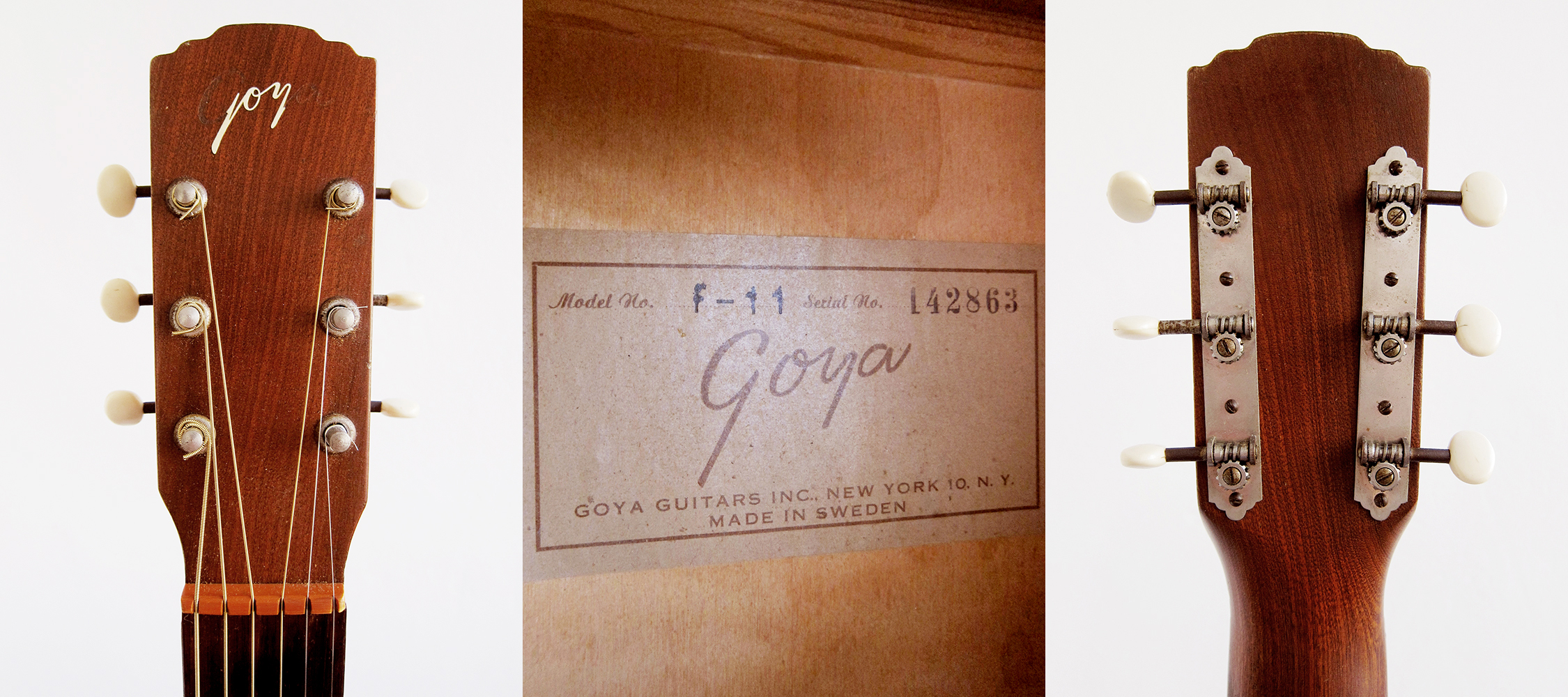
Back in May I bought a 1963 Goya F-11 from a pawn shop San Diego, California. It’s my 18th Levin so far but my first steel stringed classical guitar, or it’s actually more of a Flamenco shape than a normal Spanish guitar. It’s an awesome little finger picker with a wide nut and pretty small body, very comfortable to play in the sofa. The sound is very different, I guess because it’s a steel stringed but fan braced and built like a classical guitar. These type of guitars got really popular in the mid 1960’s during the folk boom in the US and Levin built quite a few under the Goya brand to compete with the Gibson F-25 and other concert sized steel stringed folk guitars of the time. I have never played anything like this before and really like it, even though it doesn’t sound as good as a Goya T-16 for chord playing, it has something almost ladder braced like in the sound that makes it pretty unique.
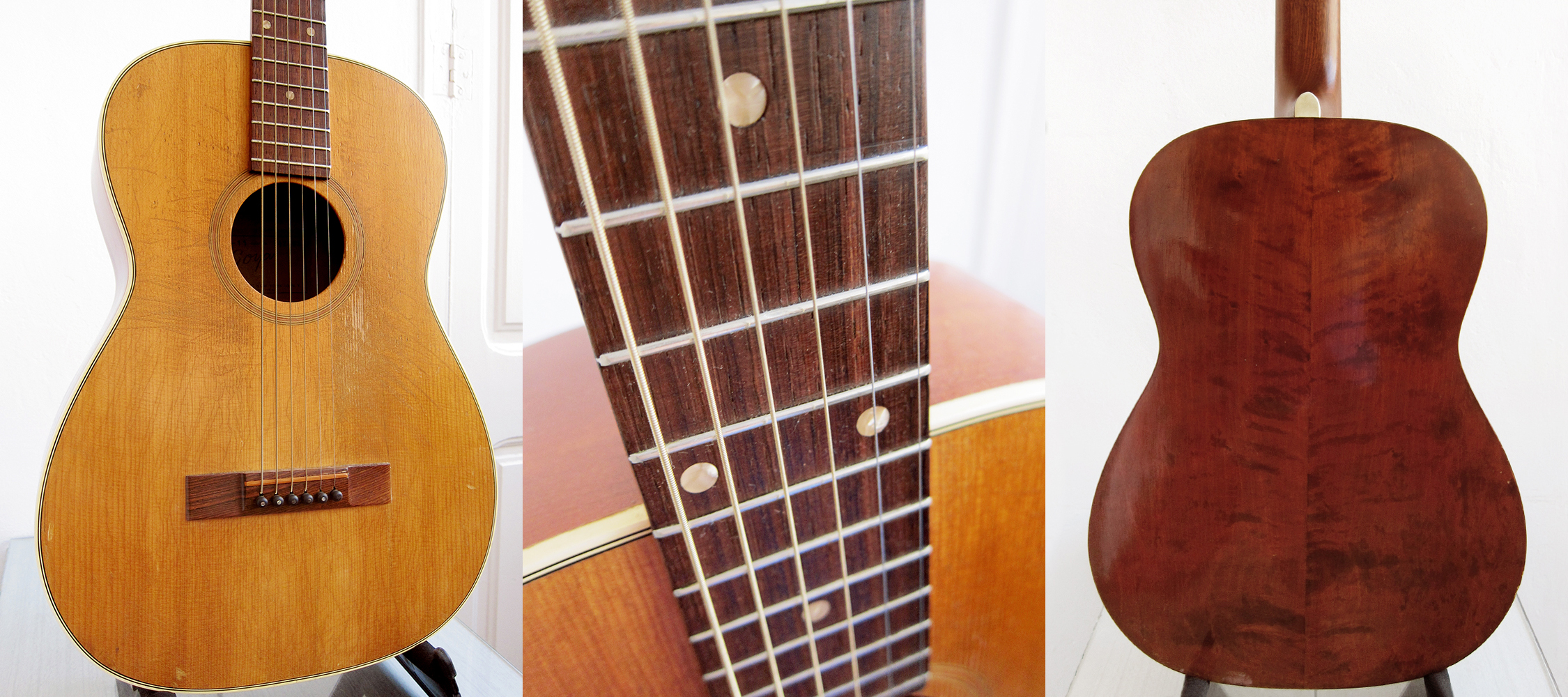
levin-goya-f-11-1Levin Goya F-11 Made in Sweden 1963Levin Goya F-11 Made in Sweden 1963A 1963 Goya F-11, worn, bruised and beaten but still very beautiful, I love the flamed back. It’s fun that half the logo has been removed to read Joy instead of Goya.

Goya F-11
Concert size: Body width: 360 mm, body length: 465 mm, body depth: 98 mm. Fingerboard width: 43 mm, scale length: 630 mm. Spruce top with fan bracing, birch back and sides, 4-ply bound top, unbound back. Mahogany neck with non-adjustable T-shaped duraluminum truss rod. Unbound rosewood fingerboard with pearl dot inlay. Rosewood bridge, double pickguards and nickel plated strip tuners.  Matte natural finish

Goya Catalog 1964Taken from a 1964 Goya catalogue

Claescaster

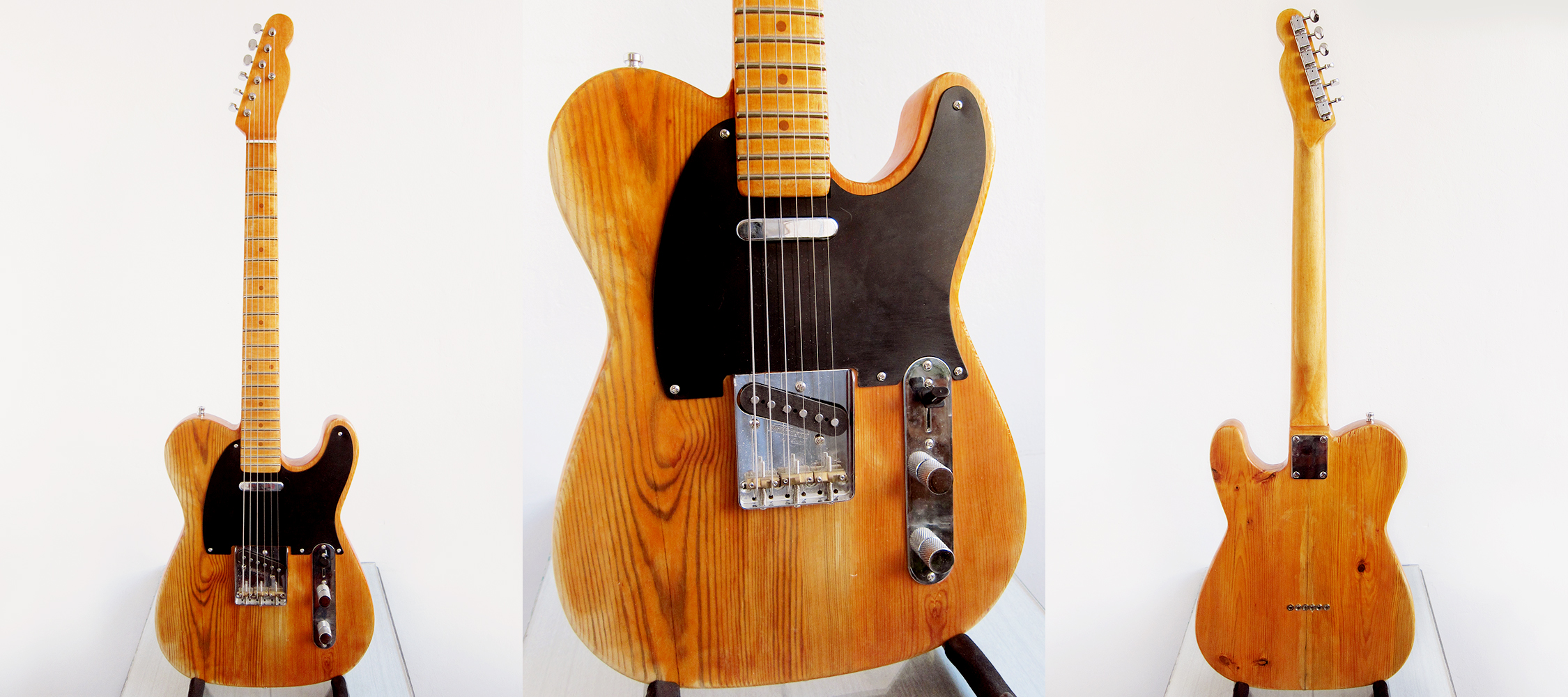
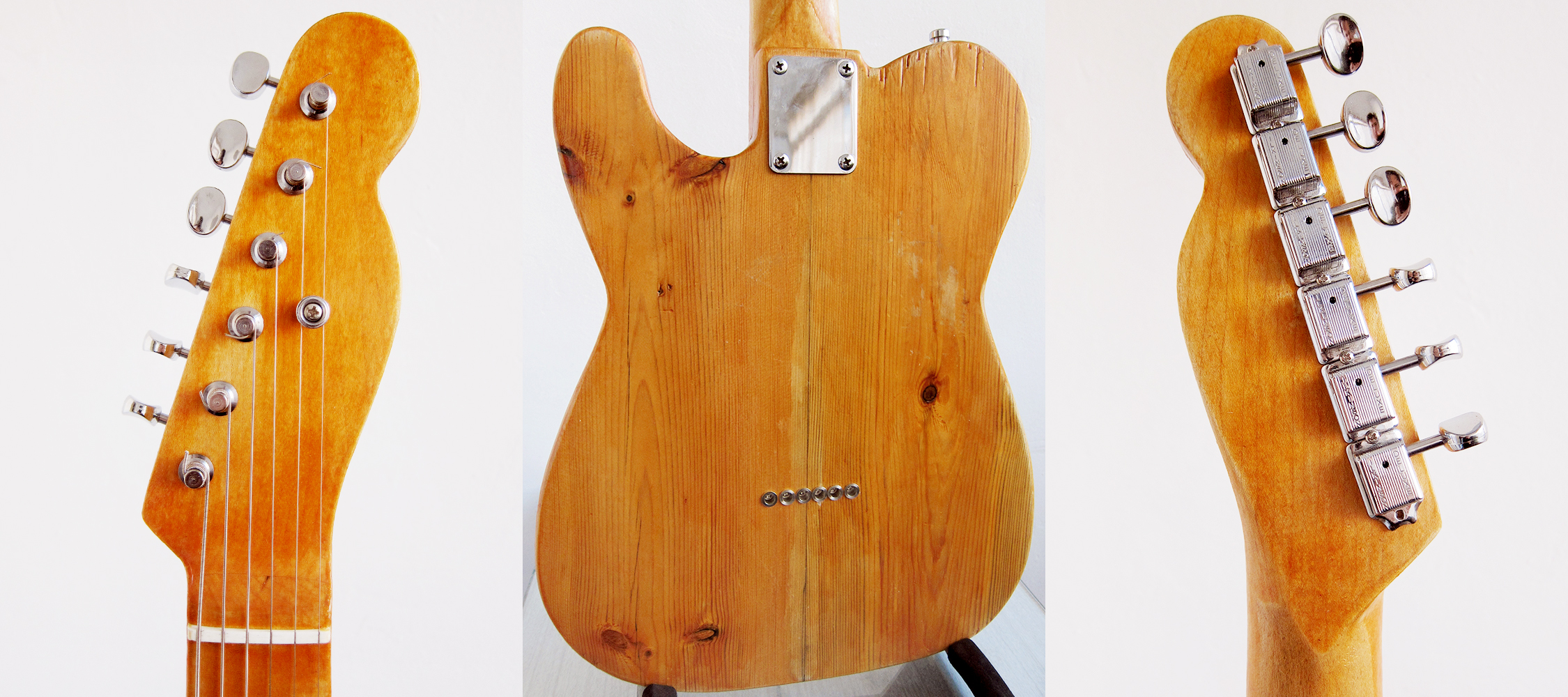
The Claescaster - Frida, built by Claes Gellerbrink 2016The new Claescaster, my second attempt at building a guitar

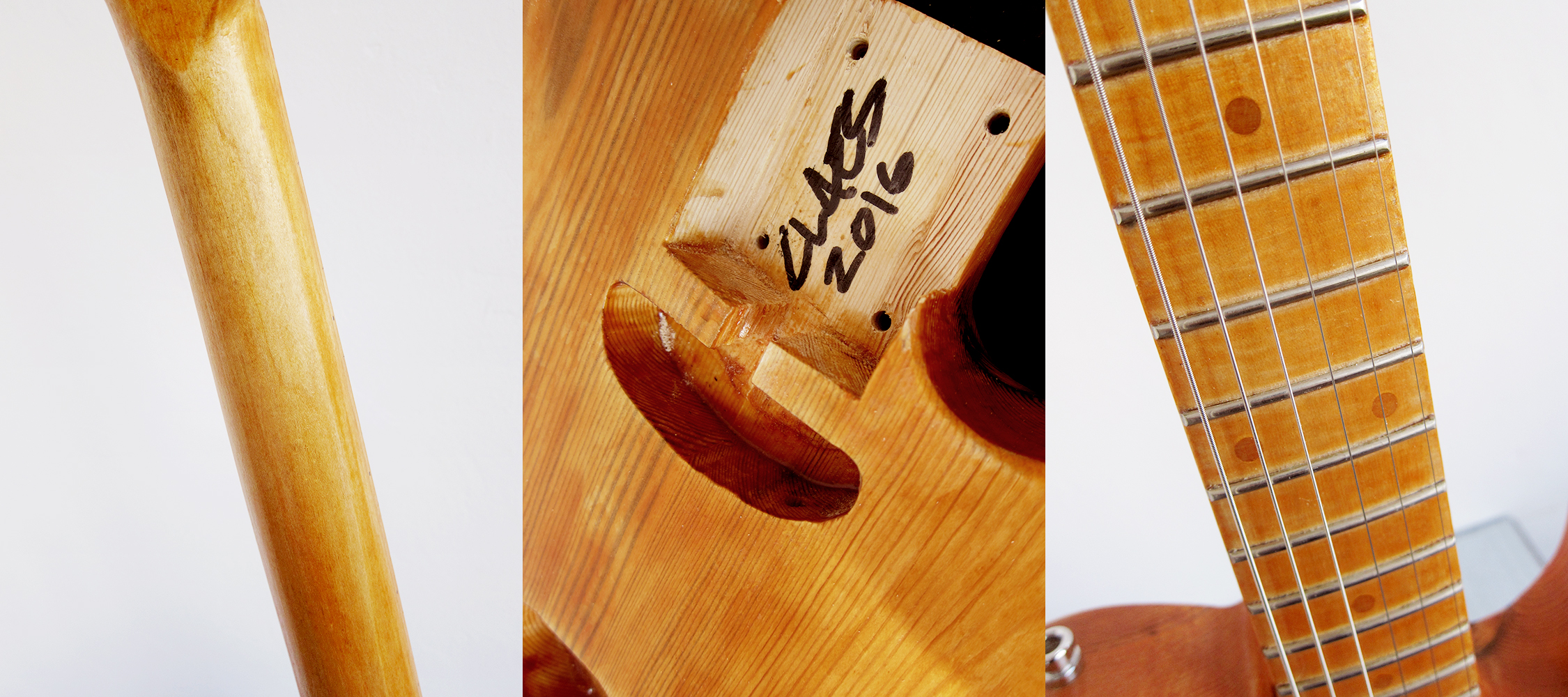
Back in 2014 I built myself my first Claescaster, it was not just my first guitar but pretty much the first anything I ever built. It wasn’t great, but it wasn’t terrible either so I decided to give it second try and here is the result, the new Claescaster. The truth is that two years ago my wife was pregnant and I thought that was a great opportunity to build myself a Telecaster to mark the occasion. Unfortunately we lost that child half way through so I named the first guitar Greta after the daughter we never had. Two years later we tried again and were blessed with our little Frida, and just before she saw the light of day in early May I had my second Claescaster ready and gave it her name. My wife asked if I was going to build a guitar every time she gets pregnant and I might very well do that, it’s a great way for a man to keep himself busy during the nine long months of waiting. I will try to find some more pictures of the building progress, if not there are some more on my Instagram.

The Claescaster - Frida, built by Claes Gellerbrink 2016The Claescaster - Frida, built by Claes Gellerbrink 2016The Claescaster - Frida, built by Claes Gellerbrink 2016Claescaster – Frida, is not the best Telecaster I’ve ever played but it’s still pretty damn good guitar, and ten times better than the first one I built. My plan was to build a 1952 copy so I could be like Bruce Springsteen, Keith Richards or Roy Buchanan with his Nancy. Unfortunately that never happened, or at least not as close as I hoped for. Everything was going great, I had an awesome baseball bat neck with a 7.25 radius, it was actually so fat that I had to reshape it twice, great grain running along the top, everything felt smooth and the edges were pretty straight for being cut and shaped by hand, then I got to the lacquer. I managed to use the wrong lacquer and even though I tried to scrape it off and try again I never got perfect after that. I decided to give up on the brand new look and went for some form of old and worn 50’s vibe instead, which was my secret plan all along, I just wanted to have it perfect before I made it look old. Anyway, I’ve learnt a lot for my next Claescaster.

The Claescaster - Frida, built by Claes Gellerbrink 2016The body comes from a wood pile I found in the streets of Barcelona and most likely pine. If I remember correctly it was a beam or a bed frame, that I cut in half on the length and glued together to get the width. The neck was from a block of North American maple that I bought in a wood shop here and that I had to saw by hand, which took forever. I used a 6 mm stick of wood for the fretboard markers and jumbo frets from Jascar. The pickups are Artec and the hardware is all from Wilkinson. I will try to get video up so you can hear what it sounds like.

Sigma DR-35

Sigma DR-35, Made in Japan 1980, MIJ, C. F. Martin & CoSigma DR-35, Made in Japan 1980

I finally managed to find another Japan made Sigma, this time a 1980 Sigma DR-35. It’s a beautiful looking Martin D-35 copy with a 3-piece rosewood back. They are pretty hard to come by these early 1980’s Japan made Sigma’s and sometimes very expensive too, between 500-1500€ depending on the model. I didn’t buy this for myself, I’m way too happy with my Sigma DR-41 at the moment and on top of that I’m actually trying to thin out my Japanese guitar collection. I got it for my friend Wolf who just like me have gone from a pretty solid Gibson obsession to realise that perhaps that Martin sound is not that bad after all. There is something of that punchy mids and clear ringing highs in the Martin sound that these Japanese made Sigma’s have too, after all they were commissioned by C. F. Martin & Co. I thought my Sigma DR-41 was loud and had a very punchy midrange but this Sigma is one step beyond, I guess because of the 3-piece back. I like the highs and the overtones better in mine but still, this is an amazing sounding guitar that I thought long and hard about keeping for myself. I was sure that my Sigma DR-41 was made in 1982 since the serial number starts with E82 but since this Sigma DR-35’s serial number also starts with E82 and came with a receipt that proves that it was sold in September 1980 it must have been made that year, or earlier.

Sigma DR-35, Made in Japan 1980, MIJ, C. F. Martin & CoSigma DR-35, Made in Japan 1980, MIJ, C. F. Martin & CoThis guitar had apparently been in storage for the last 30 years, since the original owner died and that seems plausible, it’s in really good shape for it’s age.

Sigma DR-35, Made in Japan 1980, MIJ, C. F. Martin & CoThe classic Made in Japan football stamp, burnt in to the back brace that was used from 1978-1983 on Japan made Sigma’s stating: Sigma Guitars – Made in Japan for – C.F. Martin & Co, just like on mySigma DR-41. The rosewood looks really nice on this Sigma, even better than on mine.

Wolf asked me to install a LR Baggs iBeam in the Sigma before he received it and since I recently installed the LR Baggs Lyrics in my Sigma DR-41 it was a pretty easy task. We actually got to try them both out last Saturday when we played live with Cherry & Wolf at La Sonora, it sounded something like this. I did two tests to make it easier to compare the Sigma DR-35 with the iBeam to the Sigma DR-41 with the Lyrics. They both sounds pretty darn great, but in different ways.

Sigma DR-35, Made in Japan 1980, MIJ, C. F. Martin & CoThe original receipt from 26 September 1980. The guitar cost 475 Deutsche Mark which would be around 245€ today and probably a lot more 36 years ago. Taken from my Instagram

Gibson B-15

Gibson B-15 Made in USA 1969Gibson B-15, built in Kalamazoo, Michigan, USA in 1969

Another 1960’s Gibson came in to my hands this weekend. This one is actually not mine, it belongs to Sr Chinarro. The Gibson B-15 was introduced in 1967 as the last model of the famous B-series, the Gibson B-25 was already a huge hit and they continued to manufacture the B-series through out the 1970’s. The B-15 was an all solid model with a natural finished mahogany body, a mahogany stained spruce top and rosewood fretboard and bridge. Gibson referred to the B-series as student models at the time which is a bit misguiding considering what a student guitar sounds like today. These have great even tone and pretty amazing sustain for the size, a perfect little blues machine.

Gibson B-15 Made in USA 1969Gibson B-15 Made in USA 1969

This 1969 Gibson B-15 sounds and plays great and is pretty good shape for it’s age. There is a lot of scratches and wear to the top and sides but the are no cracks or structural issues. It’s all original and even comes with the Gibson made alligator chipboard case. The action is good and the frets has very little wear. This guitar is sold now.

Gibson B-15 Made in USA 1969Gibson B-15 Made in USA 1969


Goya T-16

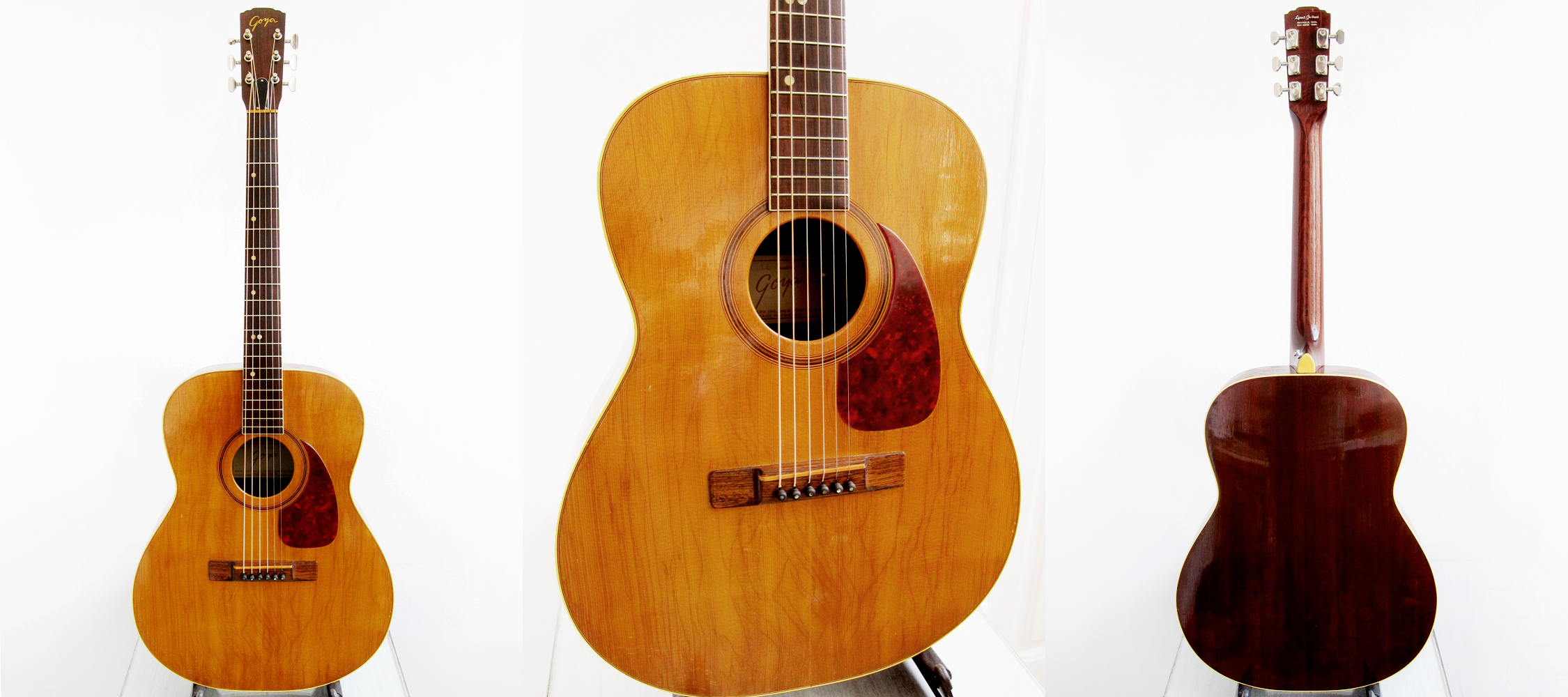
Goya T-16, made in Sweden by Levin in 1966Goya T-16, made in Sweden by Levin in 1966

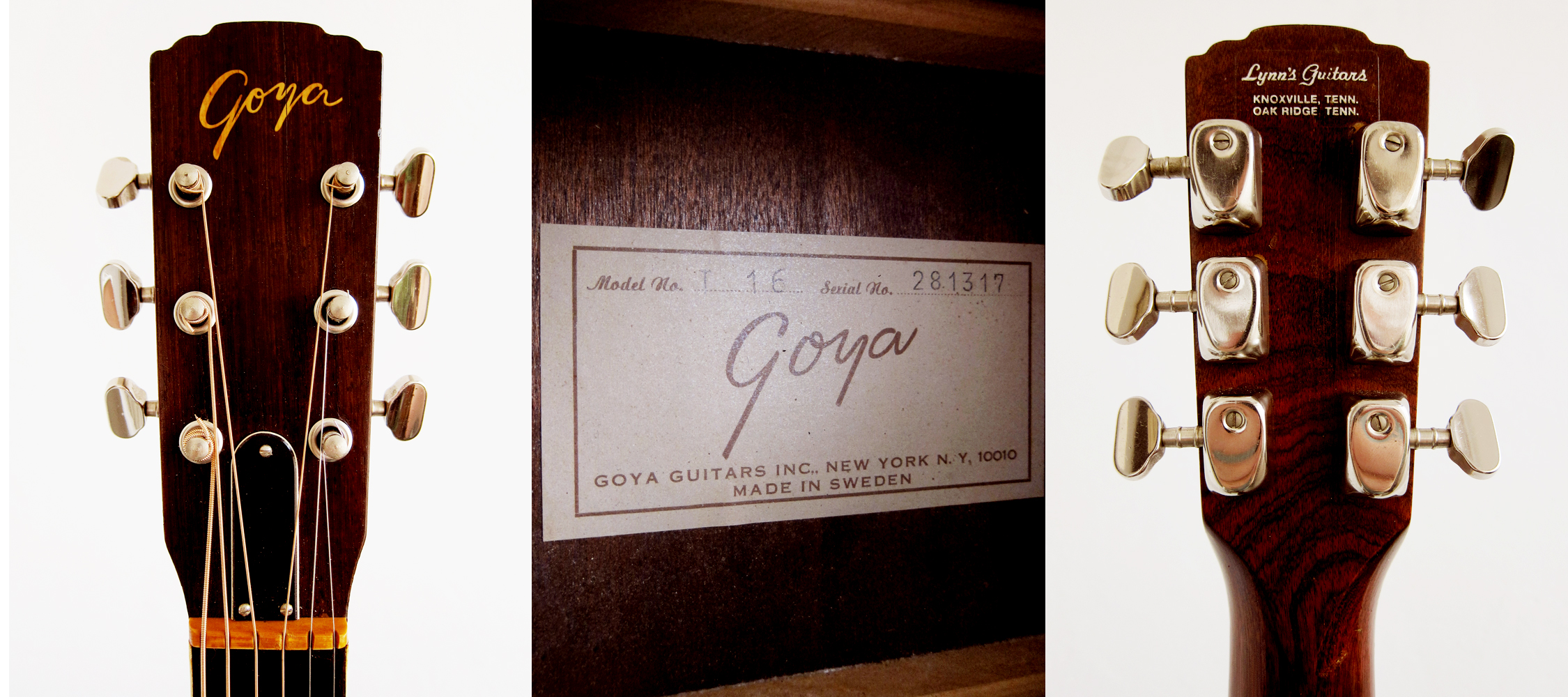
I found another Goya T-16 that I couldn’t resist. I’m not sure why I love these so much, if it’s the sound, shape or the fact that my dad’s old Levin LT-16 was my first guitar. This one seems to have had a crack in the lower bout on the bottom side and when that was fixed they gave the side a light burst to cover it and then lacquered the whole guitar. Back in the 1960’s when these guitars left the factory in Sweden, the Levin LT-16 came with a really nice satin finish and the Goya T-16 with a high gloss that cracked over time. The previous Goya T-16 was sanded down and this one had an extra coat of lacquer so I guess people weren’t entirely happy with the finish on these. They both sounds very different, the old one sounds more woody and dry and this one has a clearer snappier sound, I presume because of the lacquer. I really like the look of the top, more orange and pre-war Martin looking than the normal Goya T-16.

Goya T-16, made in Sweden by Levin in 1966Goya T-16, made in Sweden by Levin in 1966Goya T-16, made in Sweden by Levin in 1966I bought this 1966 Goya T-16 from an eBay seller in Illinois but I guess it first landed at Lynn’s Guitars in Knoxville Tennessee when it came from Sweden in the 1960’s.

Levin LT-16 / Goya T-16
Grand Concert size: Body width: 380 mm, body length: 480 mm, body depth: 98 mm. Fingerboard width: 43 mm, scale length: 630 mm. Spruce top, mahogany back and sides, 4-ply bound top, single-bound back. Mahogany bolt-on neck with adjustable truss rod. Single-bound rosewood fingerboard with bass side pearloid dot inlay. Rosewood bridge, nickel plated individual Van Gent tuners with metal buttons. Matte natural finish and ten year warranty

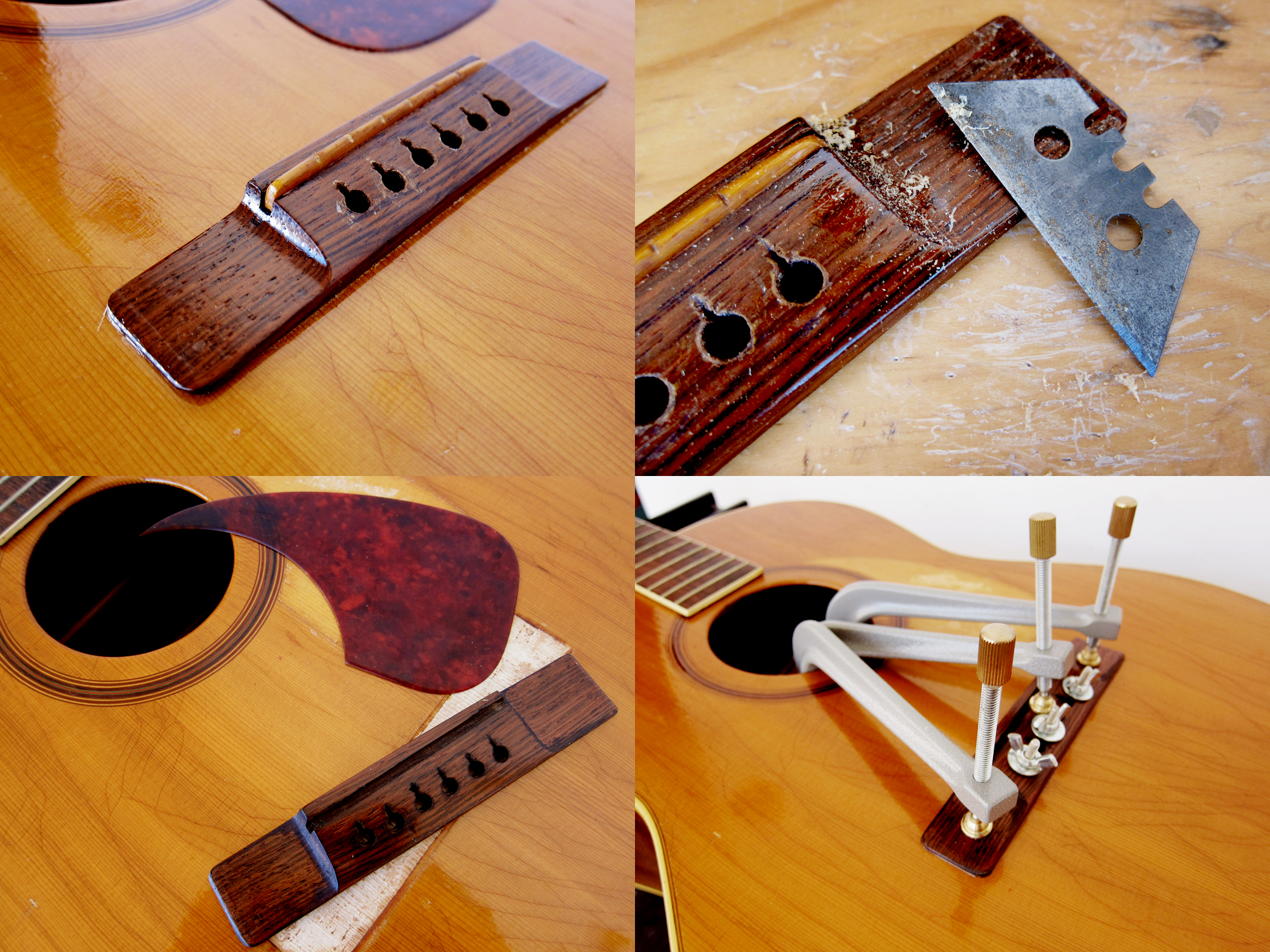
Goya T-16, made in Sweden by Levin in 1966I removed the bridge and pickguard, scraped of the lacquer and then re-glued them. I also adjusted the neck angle by removing the bolts inside and then sanded down the heel a bit with a sandpaper, just like I did on the old Goya T-16.

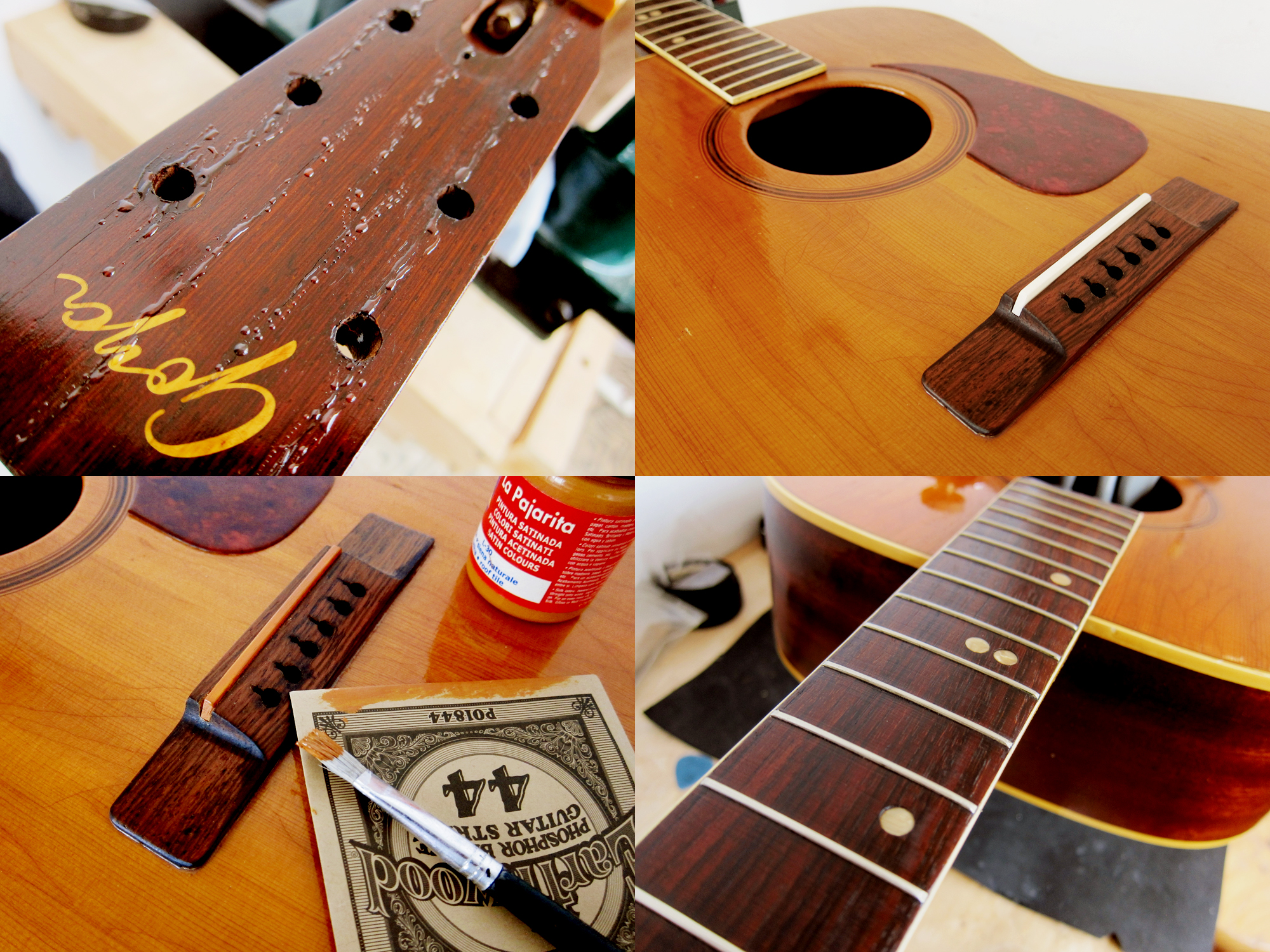
Goya T-16, made in Sweden by Levin in 1966The headstock had some fine cracks that I filled with fish glue and then polished up. I cut a new bone saddle that I painted to match the old Levin Galalith saddle and then I cleaned up the fretboard and polished the frets.

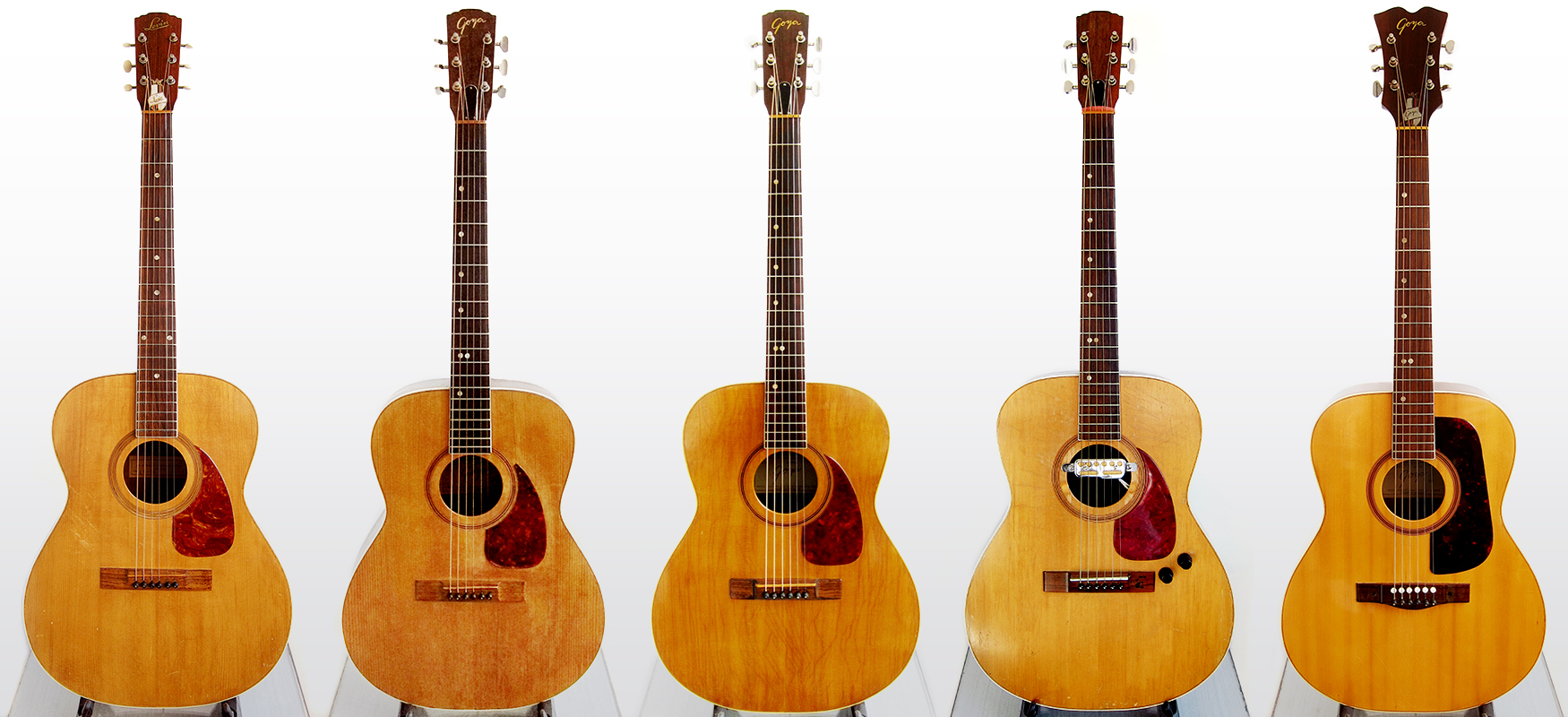
Goya T-16, made in Sweden by Levin in 1966My collection of 000-sized Levin guitars so far, from left to right: Levin LS-16 (1963), Goya T-16 (1965), Goya T-16 (1966), Levin LT-16 (1966), Goya GG-172 (1970)


How to… Replace frets

Hagström Western 6 Made in Sweden 1978Hagström Western 6 Missouri, Made in Sweden 1978

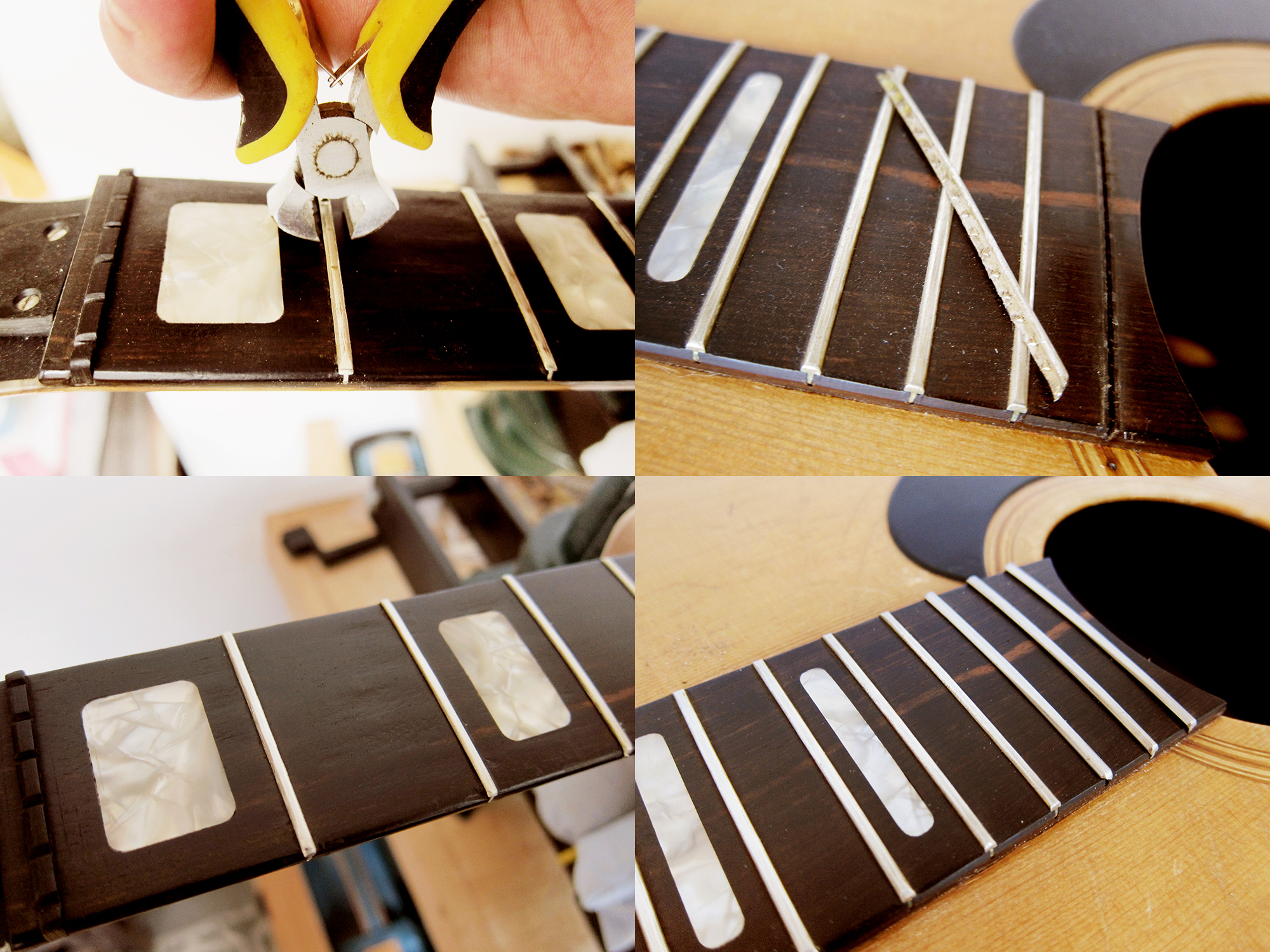
Last weekend I tried a trick that I had seen some old luthier in the US doing on Instagram, replacing the first three worn frets with the last three, instead of re-fretting the whole guitar. This seemed like a really good solutions for my 1978 Hagström Western 6 which had terrible wear on the first three frets.

Hagström Western 6 Made in Sweden 1978It seemed a bit pointless to do a complete re-fret when it was just the first three that was worn, I also like to keep things as original as possible. I just pulled out the first three and the last three and replaced the first three with the last three and then added three new frets where the last three used to be, easy peasy. I just had to nip off the edges with some pliers, file them down and round them a bit to get them smooth. Since you don’t play on the last three frets, or at least I don’t, you don’t have to level and crown them too much.