Claescaster

Category: Acoustic guitars

Levin Model 3

Levin Model 2 Parlour Made in Sweden 1914
Levin Model 3 Parlour Made in Sweden 1914

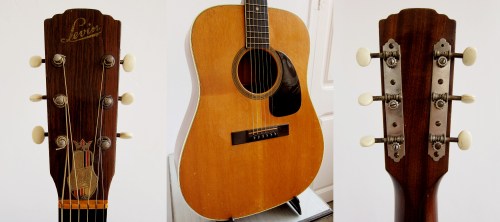
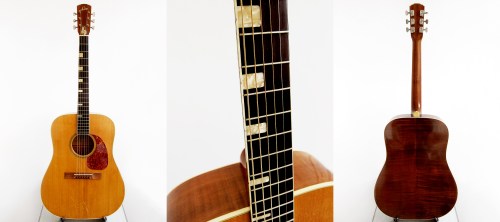
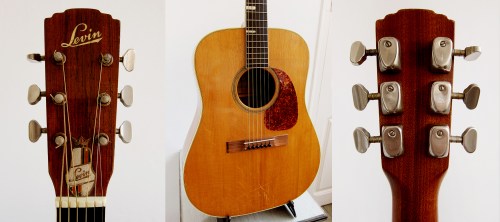
In the year of our Lord 1914 a terrible war broke out in Europe, at the same time this beautiful guitar was made in Sweden. I finally found myself an old Levin parlour, a 1914 Levin Model 3. When I sold the Levin Model 65 back in December I promised myself to find another Levin parlour, but older, and nicer. I did, it took 10 days. I was super lucky and managed to win this Model 3 on an auction the day before Christmas, perhaps that’s why the competition wasn’t so fierce. It’s in pretty decent original shape for being 103 years old, no real damage to it. It looks like the back has been removed and glued back at some point so I guess someone has re-glued some lose braces. I can’t see any signs of a neck reset but since it’s so playable after 100 years I assume that someone has done that too. I love the original machine heads with their bone buttons and the brass medallion on the back of the head is just beautiful. It sounds way better than I expected. I’ve had a couple of early German parlours at home and they have sound very thin, weak and boxy somehow. This Levin is loud, clear and warm at the same time, even though it’s ladder braced. For being one of Levin’s cheapest models I think it’s an amazing guitar and it looks stunning in it’s simplicity.

Levin Model 2 Parlour Made in Sweden 1914
The back and sides are made of birch that is painted to look like Brazilian rosewood. I would have preferred the real deal but I guess it was both expensive and hard to come by exotic woods at the time.

Levin Model 3
Body width: 315 mm, length: 460 mm, depth: 78 mm
Spruce top with ladder bracing, birch back and sides
Unbound walnut fingerboard with mother-of-pearl dot inlay
Triple wood bound top, unbound back and headstock
Brass frets, brass tuners, pyramid bridge, bridge pins and strap button with mother-of-pearl inlay. Rosewood finished back and sides with an orange finished top.

Introduced circa 1900

Levin Model 2 Parlour Made in Sweden 1914The stamp on the right side is from Frälsningsarmén, The Salvation Army in Stockholm. I assume a lot of songs about Jesus has been played on this guitar over the years.

The old Levin factory on Norra Larmgatan 4 in Gothenburg, Sweden 1910-20The old Levin factory on Norra Larmgatan 4 in Gothenburg, Sweden, around 1920. Taken from Vintage Guitars Sweden
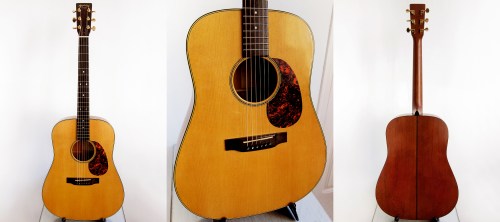
Martin SWDGT

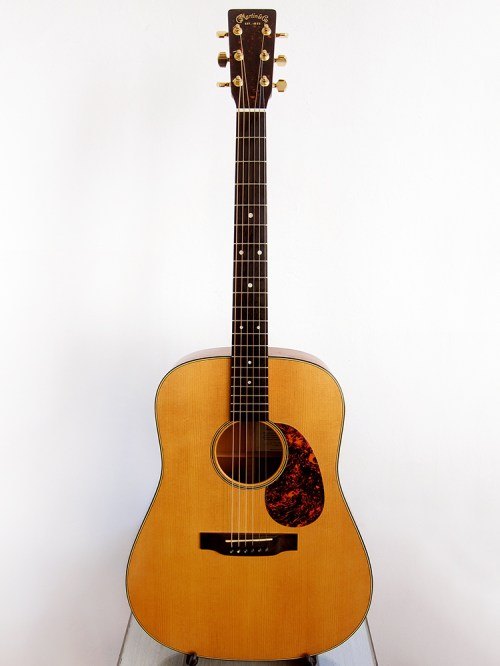
Martin SWDGT, Made in USA 2004Martin SWDGT, Made in USA 2004

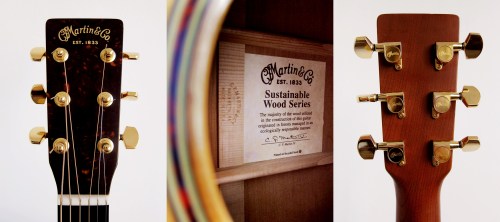
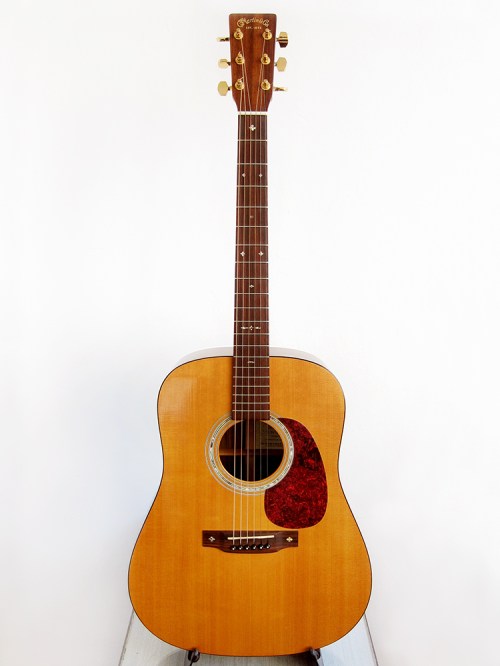
Last weekend I adjusted Sr. Chinarro’s 2004 Martin SWDGT. It’s a really nice guitar and it reminds me a lot of the Martin SPD-16R I got for Christmas. These Martin SWDGT or Sustainable Wood Series are constructed in an ecologically responsible way with alternative woods. It has a really nice coloured sitka spruce top with non-scalloped X-bracing, back, sides and neck are cherry wood and the fretboard is made from katalox. It’s constructed with a simple dovetail neck joint, gold machine heads and a faux tortoise binding all around, just like the Martin SPD-16R, the only difference is that the SWDGT has faux tortoise headplate as well. The Martin SPD-16R has rosewood back and sides and it feels like the cherry wood in the SWDGT is adding more bass, depth and warmth, I really like the sound of it. I’ve always been a big fan of fancy exotic woods, especially Brazilian rosewood, but if you can build guitars this good from woods you can find in your backyard, then perhaps that’s the sustainable way for the future. I have to add that I hate the future and prefer to live in the past with my fancy old exotic woods but we can’t all do that, that wouldn’t be very sustainable.

Martin SWDGT, Made in USA 2004
Martin SWDGT, Made in USA 2004I love the colour of the top, so much nicer than the new made Martin D-18 and D-28.

Levin LS-18

Levin LS-18 Made in Sweden 1960Levin LS-18 Made in Sweden 1960

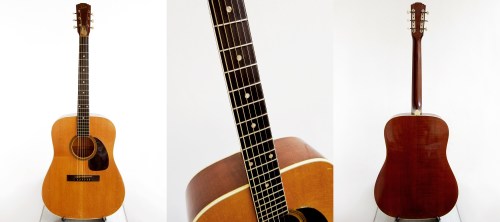
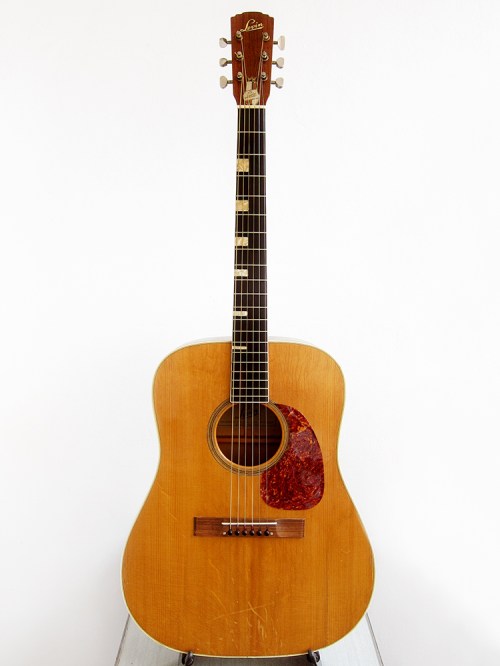
I finally got my hands on a Levin LS-18. Around Christmas 2015 I was offered to buy a Levin LS-16 that I’ve loved since the first time I played it. Therefore I’ve been really curious to hear what a full sized LS sounded like. These guitars seems to be fairly rare, I’ve seen one or two up on eBay in the last year but they have both gone for upwards of a £1000. I’m not sure why there aren’t more of these around in Europe, perhaps people refuse to sell them or they all got badged like Goya S-18 and shipped off to USA. The Levin LS-18 was introduced in 1958 and replaced by the LT-18 in 1964. The only difference sound vice that I’ve noticed between the LS-18 and the LT-18, both of them have flamed maple back and sides, is that the LS-18 seems a bit deeper in the bass. Perhaps it’s just this guitar, or the year, or the wood, it’s impossible to know without trying ten others. Other noticeable differences is that the LS-18 has thicker neck profile, different machine heads and centred pearl dot inlay instead of the LT-18’s bass side pearloid block inlay. It basically looks a bit more 1950’s and I love it.

Levin LS-18 Made in Sweden 1960Levin LS-18 Made in Sweden 1960There was quite a lot of work to do on this when I first got it. The action was so high that I couldn’t even get it in tune properly, the intonation was way off. I reset the neck and cleaned it up and now it both sounds and plays great.

Levin LS-18 / Goya S-18
Goliath size: Body width: 400 mm, body length: 505 mm, body depth: 95/120 mm
Fingerboard width: 43 mm, scale length: 630 mm
Spruce top, flame maple back and sides, 4-ply bound top, single-bound back
Mahogany bolt-on neck with adjustable truss rod
Single-bound ebony fingerboard with with centred pearl dot inlay. Nickel plated strip tuners with plastic buttons. Ebony bridge, metal Levin truss rod cover, natural finish and ten year warranty

Marketed by U.K. distributors as Super Goliath Model 1855

Martin SPD-16R

Martin SPD-16R Made in USA1999
Martin SPD-16R, Made in USA 1999

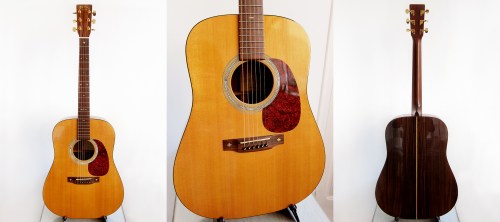
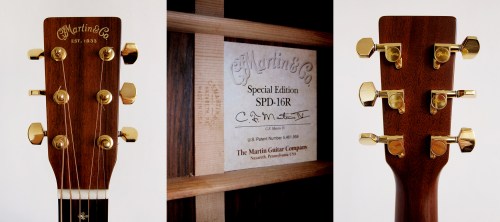
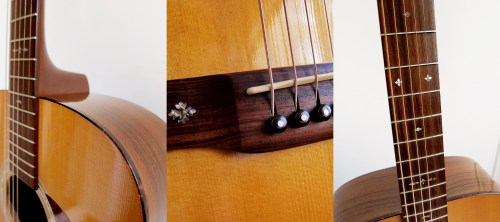
Before Christmas I got myself my first Martin. Like most acoustic guitar players I’ve always dreamt of getting a really old Martin D-28 but since they are so ridiculously expensive I settled for a more modest Martin, a 1999 Martin SPD-16R. I have to say that it’s an amazing guitar for the price, I think these cost between $1500-2000 when they were new in the late 1990’s. One of the problems I have with modern Martin guitars is the Richlite and other weird wood substitutes they use on the Martin 16-series nowadays. I also think that most new Martins look pretty bland and boring, hence why I liked the SPD-16R so much with it’s fancy snowflake inlays and abalone rosette, it even has gold hardware. Unfortunately for me, I’ve realised that I’m not a Martin guy, I feel like I’m cheating on my Levin guitars every time I pick another guitar up so I’ve decided to put this Martin SPD-16R up for sale.

Martin SPD-16R Made in USA1999Martin SPD-16R Made in USA1999

Martin SPD-16R
14 fret Dreadnought with spruce top and Indian Rosewood back and sides. Forward shifted scalloped X bracing. Performance taper, low oval mahogany neck with rosewood fretboard and bridge. Snowflake inlays, abalone rosette and a D-45 style back strip with gold Martin stamped machine heads. Produced in USA between 1996-2001. SPD-16R stands for Special edition, Dreadnought, 16-series in Rosewood.

Player Reviews, taken from Dream Guitars:

“The SPD-16 series offers a lot of guitar for the money. Solid woods, abalone markers and rosette and gold hardward were all standard. Great tone is standard also. This is a true Martin guitar with the punch and wonderful midrange Martin fans will enjoy.” – Paul Heumiller

“This is a great dreadnought for the money. This Special Edition Martin has that vintage look and appears to be a cross between a D-18 and D-28. Pretty darn nice.” – Al Petteway

Martin SPD-16R Made in USA1999

Levin LT-18

Levin LT-18 Made in Sweden 1963 Levin LT-18 Made in Sweden in 1963

2016 might have been the worst year ever when it comes to good musicians dying, last out was Leonard Cohen who meant so much for me in my late teens. Having said that, 2016 has also been the most amazing year ever when it comes to me getting my hands on some mighty fine Levin guitars. I’ve been trying to find another Goliath sized Levin for the past 3 years without much luck, except for the lovely 1968 Levin LT-18 that I found a couple of weeks ago. The full sized Levin guitars don’t come up for sale that often, especially not in Sweden or Germany where people seem to keep them until they die. The 1966 Goya T-18 that I bought back in 2013, which started my obsession with the Levin brand, was imported from USA and they seem to be quite rare there too. I have seen a couple on eBay in the UK but the sellers always want £1000 for them which for me as a Swedish collector is way too much. I was raised with this brand, my first guitar was a Levin and even though they might be worth what they deserve in the rest of Europe, the cheaper models can still be found on yard sales in Sweden for close to nothing. We have to remember that Levin had produced 500,000 guitars by 1970, something that C. F. Martin & Co completed in 1990, so there are still quite a few lying around in peoples attics in Sweden. I must have done something right lately because I’ve been very lucky when it comes to guitars, both these Levin LT-18 was actually offered to me, the sellers had seen my blog and contacted me to see if I was interested in buying them and of course I was. You feel a bit honoured too, when someone offers you a guitar because they know you will restore it, take care of it, play it and cherish it for years to come. This 1963 Levin LT-18 has spent it’s life in Ireland and came to me from a guy called Fintan. It has had some repair work done to it, apparently by a luthier in Dublin about 10 years ago. The pickguard was replaced and a new bridge was cut and for some reason screwed down to the top, madness if you ask me. I just adjusted the neck a bit, cleaned it up and it was ready to go. The guitar sounds pretty damn amazing, not as strong in the mid-range as the 1968 Levin LT-18, especially not after I changed the bridge to ebony, but the highs are great with really nice overtones.

Levin LT-18 Made in Sweden 1963

Levin LT-18 / Goya T-18
Goliath size: Body width: 400 mm, body length: 505 mm, body depth: 95/120 mm
Fingerboard width: 43 mm, scale length: 630 mm
Spruce top, flame maple back and sides, 4-ply bound top, single-bound back
Mahogany bolt-on neck with adjustable truss rod
Single-bound ebony fingerboard with bass side pearloid block inlay
Nickel plated individual Van Gent tuners with metal buttons
Ebony bridge, natural finish and ten year warranty

Marketed by U.K. distributors as Super Goliath Model 1855

How to… carve a bridge

Levin LT-18 Made in Sweden 1968Levin LT-18 Made in Sweden in 1968

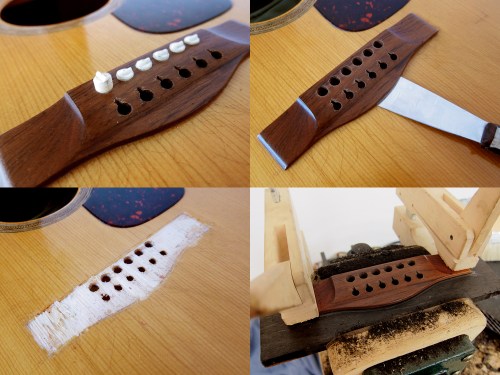
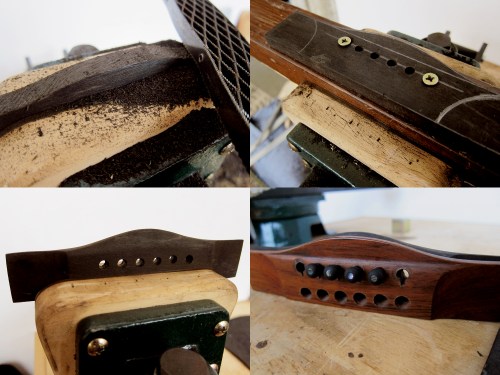
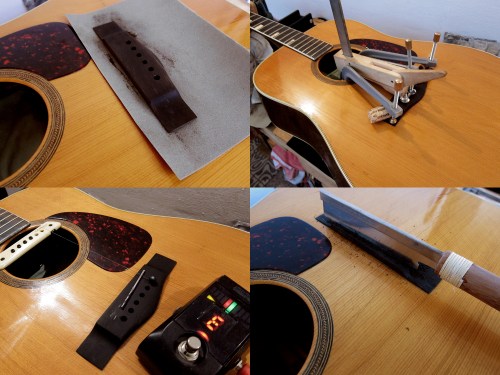
I decided to carve a new bridge for my 1968 Levin LT-18. The old bridge needed to be re-glued anyway so I thought it was a good time to create a new one in ebony instead. I did this once, I carved a new bridge for my 1973 K. Yairi YW-1000. This was a pretty similar job, both ebony and roughly the same shape. I’m really happy with the sound of this guitar now, so much richer than with the original bridge.

Levin LT-18 Made in Sweden 1968First step was to remove the old bridge with a heated spatula and then copy the bridge and drill the holes.

Levin LT-18 Made in Sweden 1968Then shape it as close to the original as possible using my Japanese saw rasp and different files.

Levin LT-18 Made in Sweden 1968Last step, fit the bridge and glue it down. Once the bridge was in place I could check the intonation to get the saddle slot in the perfect spot. Unfortunately I cut the slot 1 mm too wide so the bone saddle got a bit fatter than I had planned. Perhaps that gives tonal qualities I would have missed with a thinner saddle, let’s hope so. I also installed a LR Baggs M1A so I can use the guitar for gigs.

Before: with the original rosewood bridge and the individual height adjustable plastic saddles

After: with the ebony bridge I carved and a bone saddle

Levin LT-18

Levin LT-18 Made in Sweden 1968
Levin LT-18, Made in Sweden in 1968

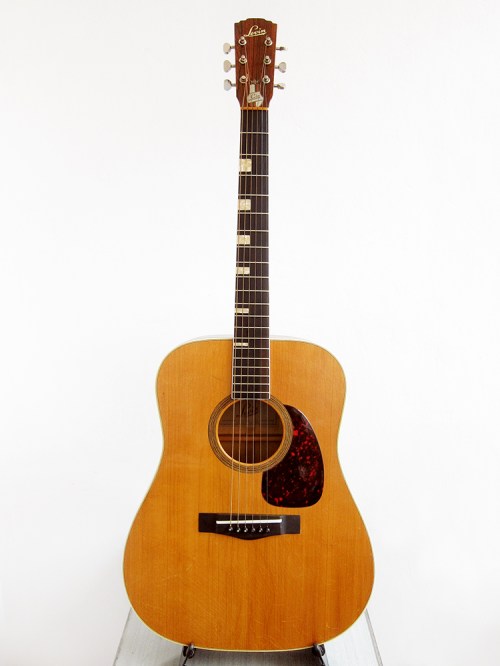
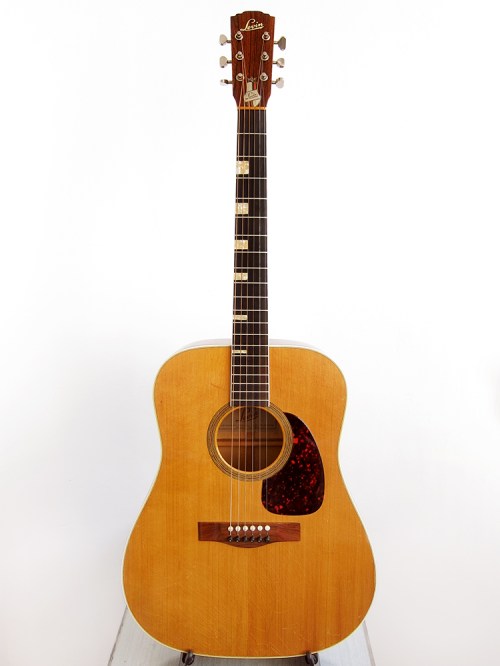
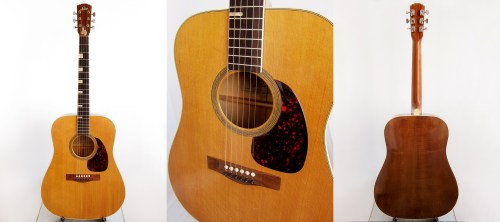
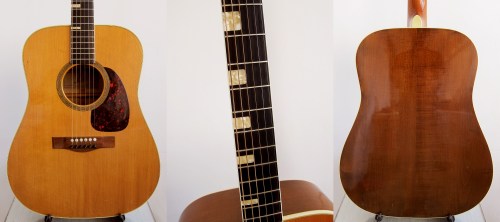
I’ve tried my best not to buy more guitars, hence why I’m selling most of my Japanese acoustics. Having said that, if a Levin LT-18 shows up on eBay and the seller contacts me via email, after a couple of shamefully low best offers from my part, and I happen to lie at home with pneumonia, it was just impossible to resist. I’m so weak for these top of the line Levin flat tops from the 1960’s, they sound amazing and they are pretty rare to find, people tend to cling on to them until they die, and then their kids will sell them. It’s also quite rare to see a Levin branded LT-18 for sale, I already have a Goya T-18 which is the same guitar but branded Goya for the US market and they tend to be a bit easier to come across. I always prefer early to mid 1960’s Levin guitars, before they opened the new factory in Lessebo in 1965, having said that, most of my Levin guitars are actually from 1965-1966 and they sound pretty damn amazing. This one from 1968 is pushing it a bit, I thought it was from 1967 until I got it home and could check the serial number properly. The problem after 1967 is the new invention of Levin, the individual height adjustable plastic saddles, I hate them. I will have to carve a new bridge in ebony, to match the fretboard, and cut a slot for a real bone saddle.

Levin LT-18 Made in Sweden 1968

Levin LT-18 / Goya T-18
Goliath size: Body width: 400 mm, body length: 505 mm, body depth: 95/120 mm
Fingerboard width: 43 mm, scale length: 630 mm
Spruce top, flame maple back and sides, 4-ply bound top, single-bound back
Mahogany bolt-on neck with adjustable truss rod
Single-bound ebony fingerboard with bass side pearloid block inlay
Nickel plated individual Van Gent tuners with metal buttons
Ebony bridge, natural finish and ten year warranty

Marketed by U.K. distributors as Super Goliath Model 1855

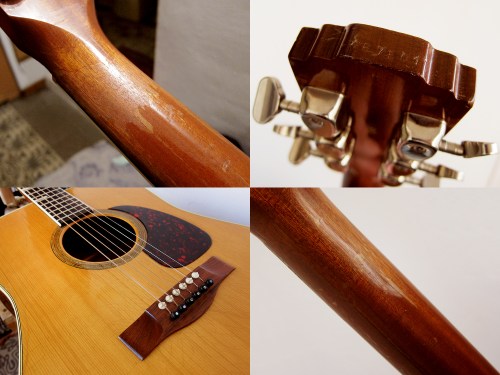
Levin LT-18 Made in Sweden 1968There were two things that I couldn’t stand with this Levin, first the lack of lacquer on the back of the neck, and then the rosewood bridge with the individual height adjustable plastic saddles. I’m not sure how they managed to loose most of the lacquer on the back of the neck but that was easily filled in with a couple of layers of Nitrocellulose lacquer. The second part, with the rosewood bridge and the plastic saddles is something we are going to have to deal with. The sound is not terrible with the plastic saddles, it ads a kind of 1960’s Gibson bass to it but it lacks a lot of clarity in the trebles and I always prefer a bone saddle. I also don’t like the look of a rosewood bridge to a ebony fretboard, they should match. I will try to carve a new bridge in ebony as soon as I get time.  

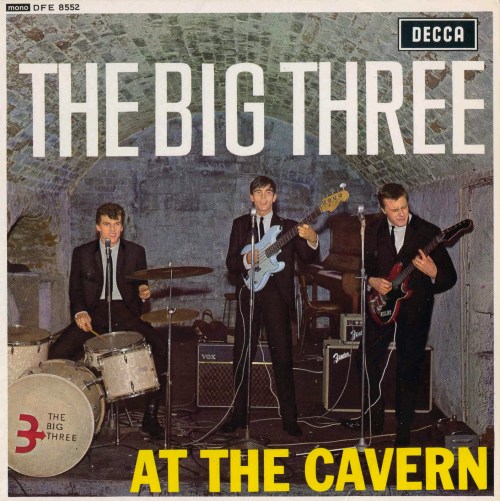
the-big-three-at-the-cavern-decca
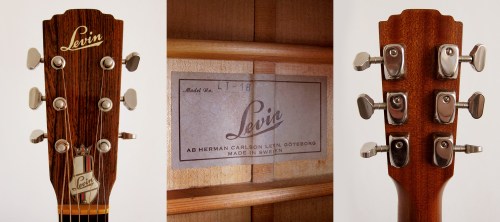
This Levin LT-18 was apparently owned by Brian Griffiths from The Big Three, a Liverpool band that was active during the days of The Beatles. However, since the guitar was made in 1968 he must have bought it long after the Liverpool glory days were over.

Goya F-11

img_7029-2Goya F-11, made in Sweden by Levin in 1963

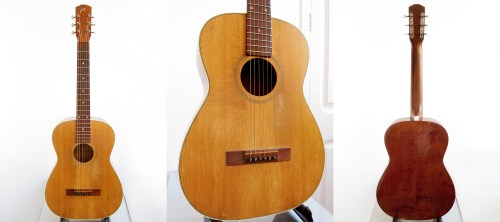
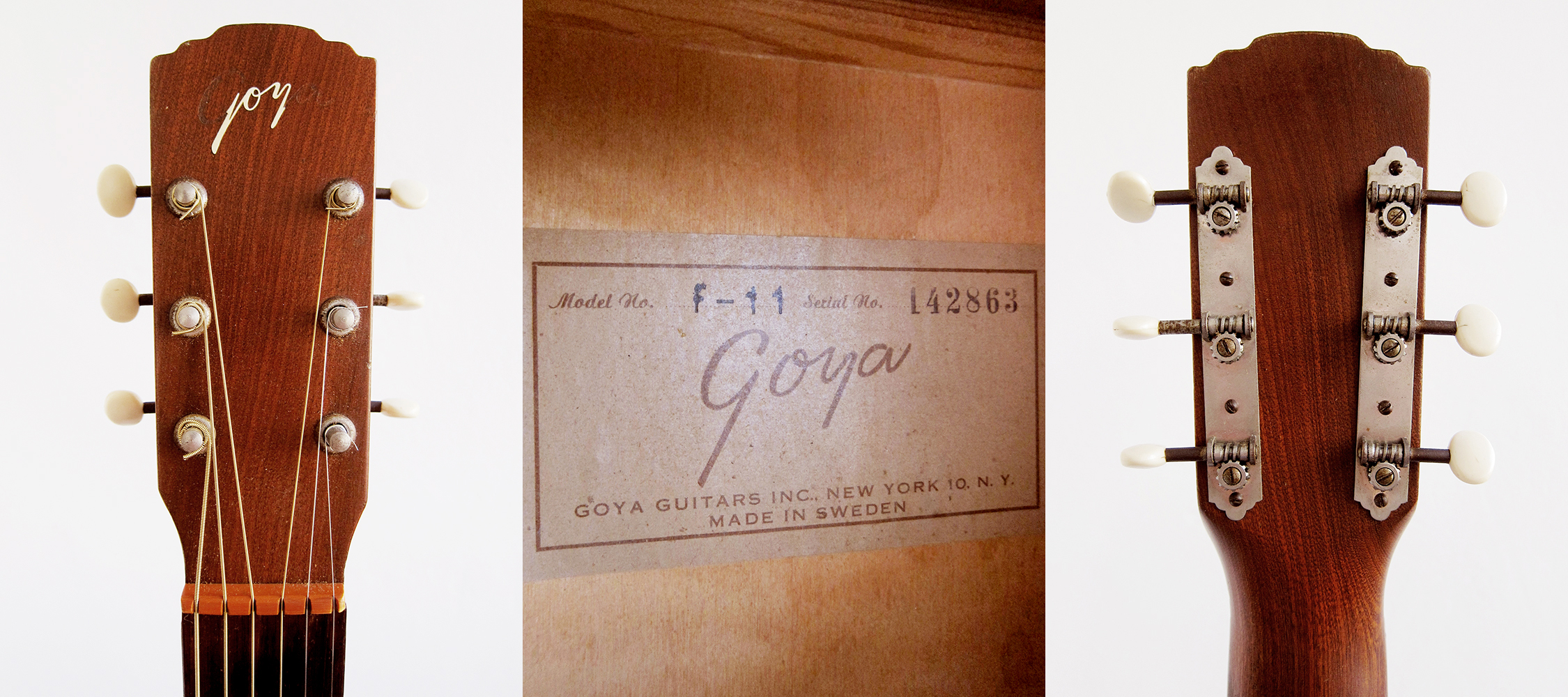
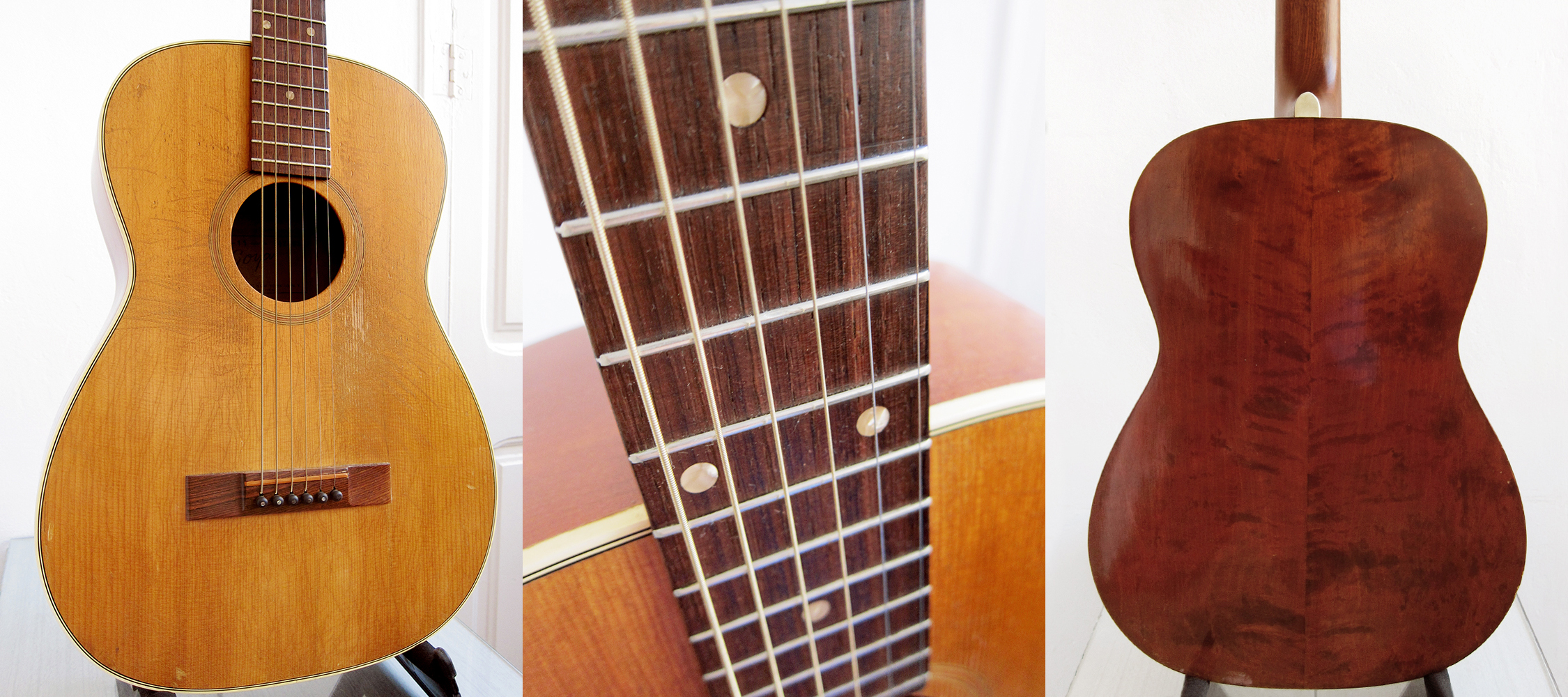
Back in May I bought a 1963 Goya F-11 from a pawn shop San Diego, California. It’s my 18th Levin so far but my first steel stringed classical guitar, or it’s actually more of a Flamenco shape than a normal Spanish guitar. It’s an awesome little finger picker with a wide nut and pretty small body, very comfortable to play in the sofa. The sound is very different, I guess because it’s a steel stringed but fan braced and built like a classical guitar. These type of guitars got really popular in the mid 1960’s during the folk boom in the US and Levin built quite a few under the Goya brand to compete with the Gibson F-25 and other concert sized steel stringed folk guitars of the time. I have never played anything like this before and really like it, even though it doesn’t sound as good as a Goya T-16 for chord playing, it has something almost ladder braced like in the sound that makes it pretty unique.

levin-goya-f-11-1Levin Goya F-11 Made in Sweden 1963Levin Goya F-11 Made in Sweden 1963A 1963 Goya F-11, worn, bruised and beaten but still very beautiful, I love the flamed back. It’s fun that half the logo has been removed to read Joy instead of Goya.

Goya F-11
Concert size: Body width: 360 mm, body length: 465 mm, body depth: 98 mm. Fingerboard width: 43 mm, scale length: 630 mm. Spruce top with fan bracing, birch back and sides, 4-ply bound top, unbound back. Mahogany neck with non-adjustable T-shaped duraluminum truss rod. Unbound rosewood fingerboard with pearl dot inlay. Rosewood bridge, double pickguards and nickel plated strip tuners.  Matte natural finish

Goya Catalog 1964Taken from a 1964 Goya catalogue

Sigma DR-35

Sigma DR-35, Made in Japan 1980, MIJ, C. F. Martin & CoSigma DR-35, Made in Japan 1980

I finally managed to find another Japan made Sigma, this time a 1980 Sigma DR-35. It’s a beautiful looking Martin D-35 copy with a 3-piece rosewood back. They are pretty hard to come by these early 1980’s Japan made Sigma’s and sometimes very expensive too, between 500-1500€ depending on the model. I didn’t buy this for myself, I’m way too happy with my Sigma DR-41 at the moment and on top of that I’m actually trying to thin out my Japanese guitar collection. I got it for my friend Wolf who just like me have gone from a pretty solid Gibson obsession to realise that perhaps that Martin sound is not that bad after all. There is something of that punchy mids and clear ringing highs in the Martin sound that these Japanese made Sigma’s have too, after all they were commissioned by C. F. Martin & Co. I thought my Sigma DR-41 was loud and had a very punchy midrange but this Sigma is one step beyond, I guess because of the 3-piece back. I like the highs and the overtones better in mine but still, this is an amazing sounding guitar that I thought long and hard about keeping for myself. I was sure that my Sigma DR-41 was made in 1982 since the serial number starts with E82 but since this Sigma DR-35’s serial number also starts with E82 and came with a receipt that proves that it was sold in September 1980 it must have been made that year, or earlier.

Sigma DR-35, Made in Japan 1980, MIJ, C. F. Martin & CoSigma DR-35, Made in Japan 1980, MIJ, C. F. Martin & CoThis guitar had apparently been in storage for the last 30 years, since the original owner died and that seems plausible, it’s in really good shape for it’s age.

Sigma DR-35, Made in Japan 1980, MIJ, C. F. Martin & CoThe classic Made in Japan football stamp, burnt in to the back brace that was used from 1978-1983 on Japan made Sigma’s stating: Sigma Guitars – Made in Japan for – C.F. Martin & Co, just like on mySigma DR-41. The rosewood looks really nice on this Sigma, even better than on mine.

Wolf asked me to install a LR Baggs iBeam in the Sigma before he received it and since I recently installed the LR Baggs Lyrics in my Sigma DR-41 it was a pretty easy task. We actually got to try them both out last Saturday when we played live with Cherry & Wolf at La Sonora, it sounded something like this. I did two tests to make it easier to compare the Sigma DR-35 with the iBeam to the Sigma DR-41 with the Lyrics. They both sounds pretty darn great, but in different ways.

Sigma DR-35, Made in Japan 1980, MIJ, C. F. Martin & CoThe original receipt from 26 September 1980. The guitar cost 475 Deutsche Mark which would be around 245€ today and probably a lot more 36 years ago. Taken from my Instagram

Gibson B-15

Gibson B-15 Made in USA 1969Gibson B-15, built in Kalamazoo, Michigan, USA in 1969

Another 1960’s Gibson came in to my hands this weekend. This one is actually not mine, it belongs to Sr Chinarro. The Gibson B-15 was introduced in 1967 as the last model of the famous B-series, the Gibson B-25 was already a huge hit and they continued to manufacture the B-series through out the 1970’s. The B-15 was an all solid model with a natural finished mahogany body, a mahogany stained spruce top and rosewood fretboard and bridge. Gibson referred to the B-series as student models at the time which is a bit misguiding considering what a student guitar sounds like today. These have great even tone and pretty amazing sustain for the size, a perfect little blues machine.

Gibson B-15 Made in USA 1969Gibson B-15 Made in USA 1969

This 1969 Gibson B-15 sounds and plays great and is pretty good shape for it’s age. There is a lot of scratches and wear to the top and sides but the are no cracks or structural issues. It’s all original and even comes with the Gibson made alligator chipboard case. The action is good and the frets has very little wear. This guitar is sold now.

Gibson B-15 Made in USA 1969Gibson B-15 Made in USA 1969