A couple of weeks ago I came across a really nice looking Harmony Monterey H1325. The only way to date these guitars is by the second stamp inside, if you can find it, giving the year and month. Unfortunately I can just see 784H1325 and the second stamp JAN in mine. I assume it’s from the late 1950’s judging by the head logo and the lack of trussrod since that was introduced in 1964. It’s a really nice playing and sounding guitar, not as loud as my Levin archtops, the 1951 Levin Royal or 1946 Levin Model 32, but still a very nice guitar. Harmony guitars were mass produced in Chicago during this time and even though they are made from solid woods they feel a bit low budget, in a good way, I guess that’s why they are so damn awesome and look so rock n’ roll.
Harmony H1325 – Monterey
Acoustic archtop – Brown shaded
Production years: 1952-1972 (other years possible, not verified)
Spruce top, birch body – Grand Auditorium 16 1/2 in. Unusual sunburst pattern in bands. Neck has a trussrod from 1964.
There was a lot of cleaning to do and two cracks that needed to be glued. One large on the upper bout and a smaller one on the top and then I glued down the heel a bit better which got the action down. Except for that it was in pretty good shape for being around 60-years old and all original.
The original case has these awesome looking shipping stickers on it, I presume from when the guitar left America for Germany by boat in the 1950’s carried by the first owner.
The top left looks very much like my Harmony Monterey, having said that, the model number inside mine is H1325 which match the bottom left. Taken from a 1959 Harmony catalogue
I also got myself two late 1960’s H162 from the US that I need to restore. First of all they need a neck reset but then I was actually thinking of removing the back and X-brace at least one of them. Taken from a 1959 Harmony catalogue.
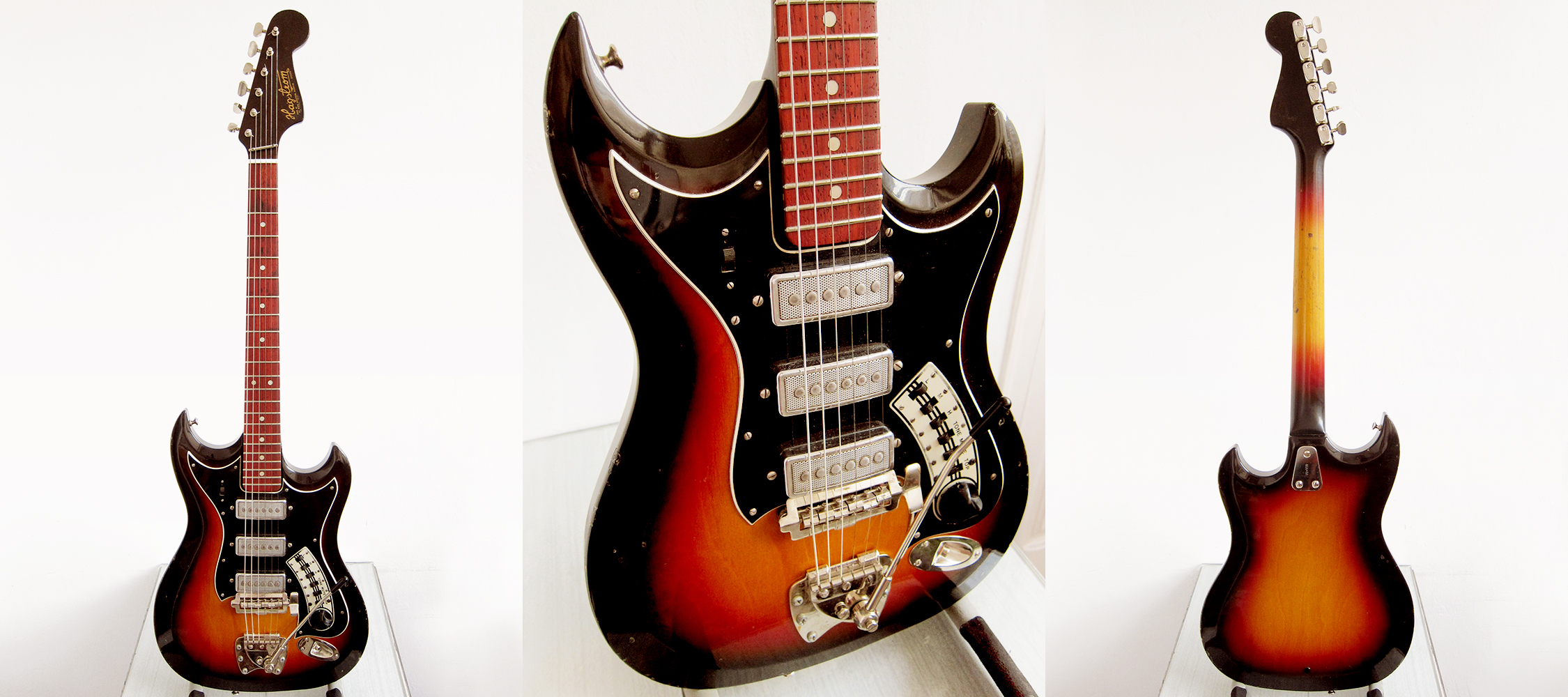
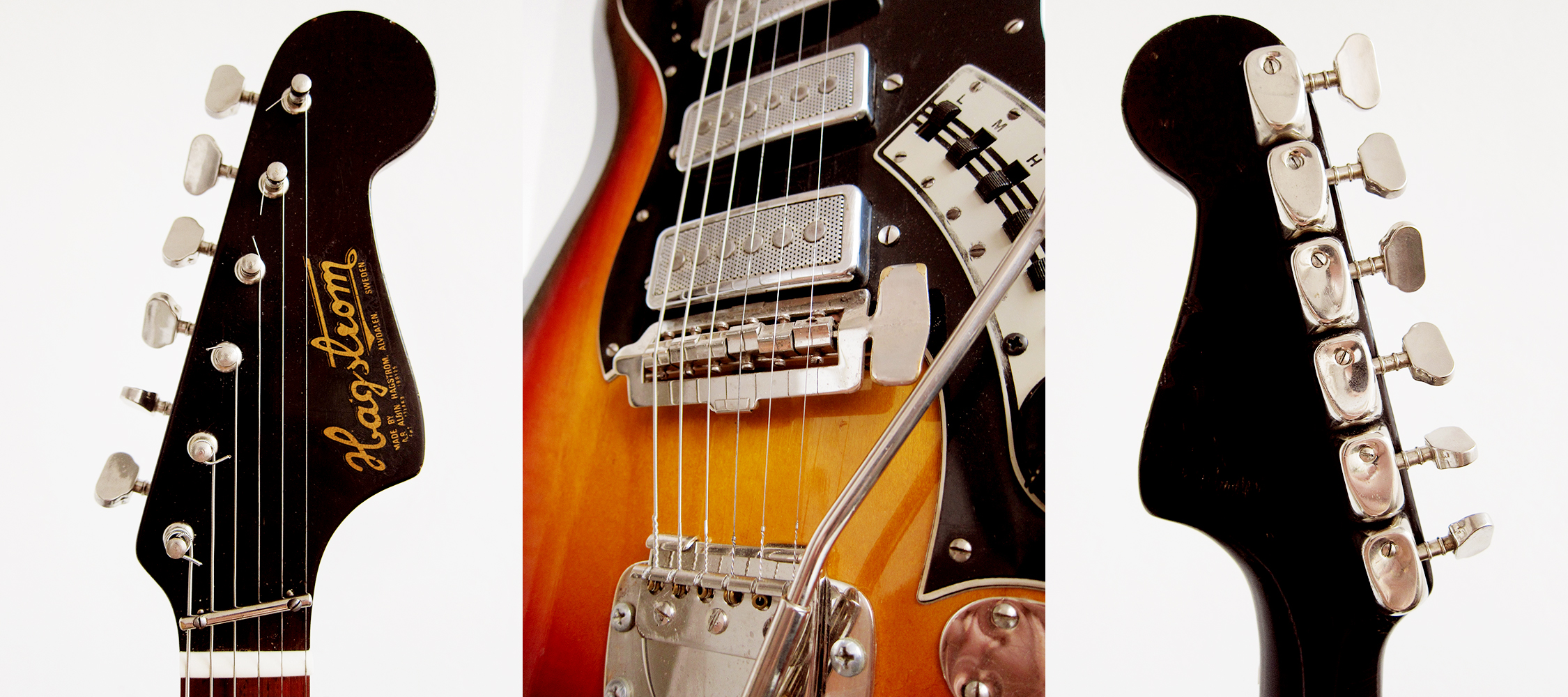
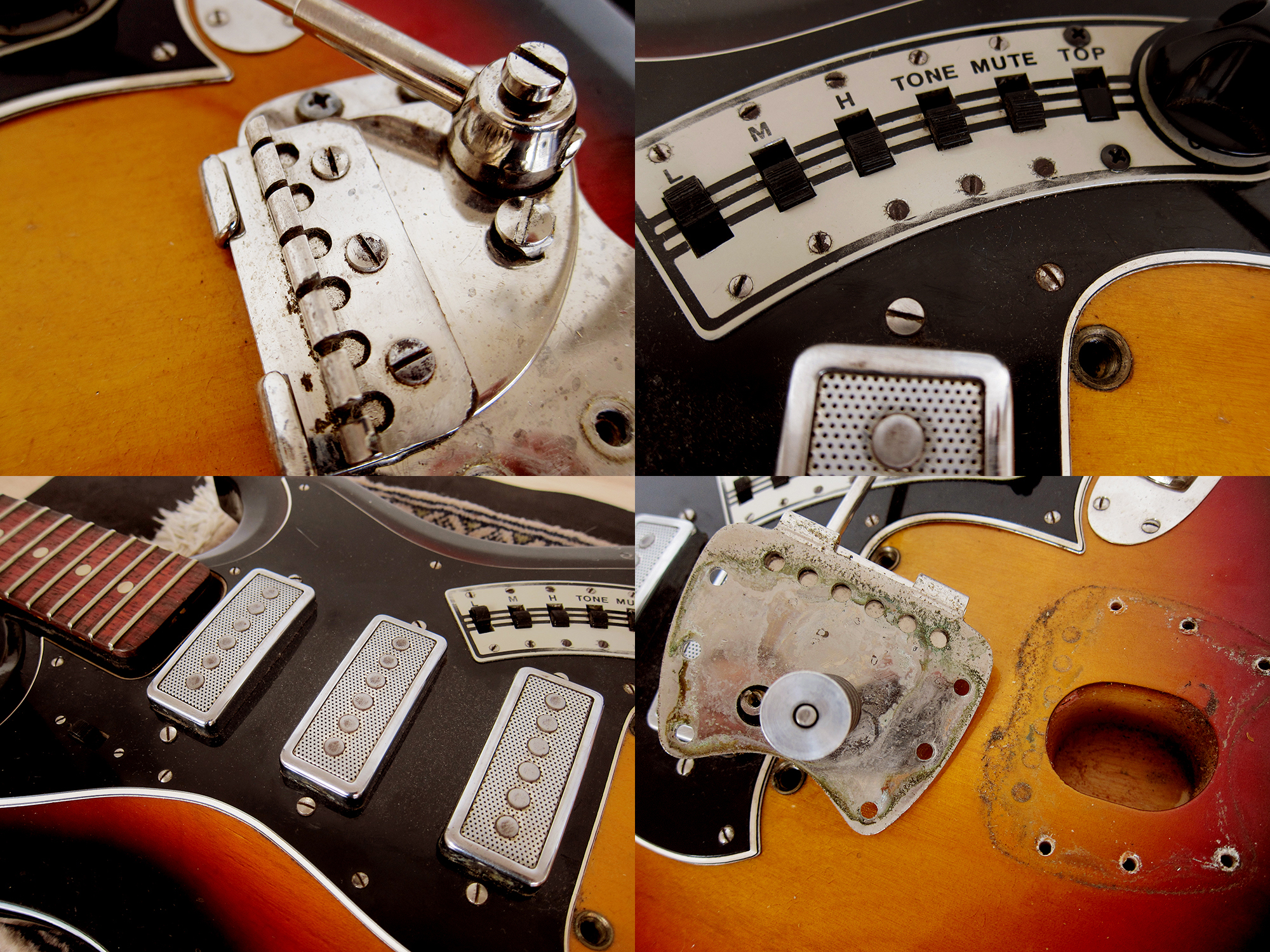
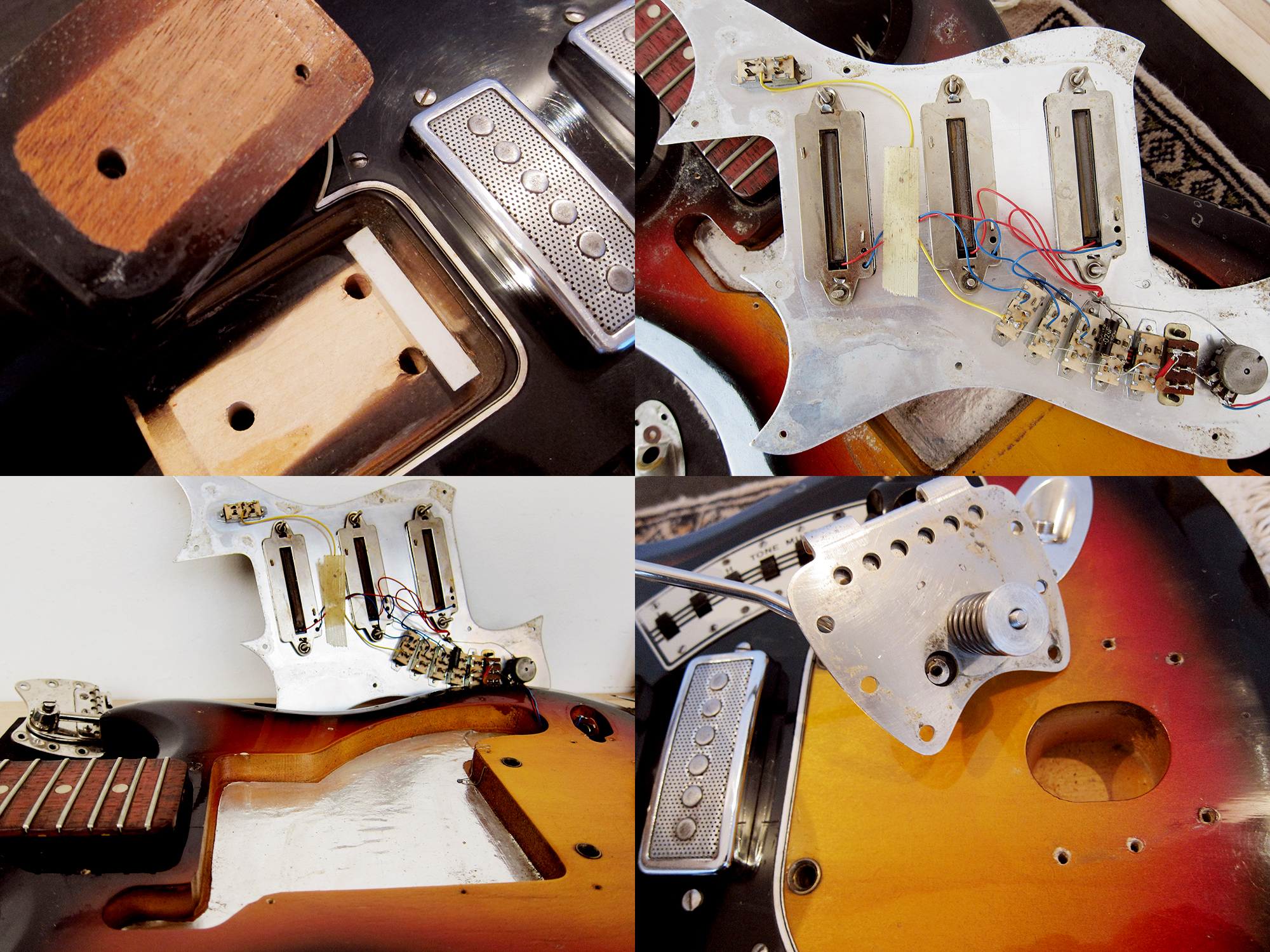
I found a Hagström HIII back in April that I felt really sorry for and had to rescue, or rather save it from being slaughtered and sold for parts by someone else. Unfortunately it wasn’t a bargain and I probably wouldn’t have bought it if I wasn’t drunk at time, I need to stop browsing eBay on Sunday evenings. It had all the parts but the fretboard and frets were in a terrible state and the electronics weren’t working properly, basically a nice guitar and worth the price if it was working. All the hardware cleaned up nicely, I love the Van Gent machine heads, a complete set tend to go for 100€ on their own, and it had the original tremolo, pickups and pickguard. I had to remove the old frets, even out the fretboard and then refret it to get it playable. After waiting for over a month I finally got the switch needed from Hong Kong here we are, a fully restored and working 1970 Hagström HIII. Even though I love the look and sound of this guitar I can’t seem to get used to the fast Hagström neck, the fastest neck in the world, and therefore it’s for sale.
Hagström HIII made in Älvdalen, Sweden between 1970-1972. It’s the 491st HIII made in a series of totally 708 guitars, this was the last run ever of this model since it was replaced by the more 1970’s looking Hagström HIIN
I started with taking the guitar apart and cleaning everything with a toothbrush and some soap and then polish up all the hardware.
The electronics was in fairly good state but needed to be grounded properly. Also the on/off wasn’t plugged in and the bridge pickup’s switch wasn’t working properly so I had to wait a month for a new one from Hong Kong. Now everything is soldered up properly and is working fine.
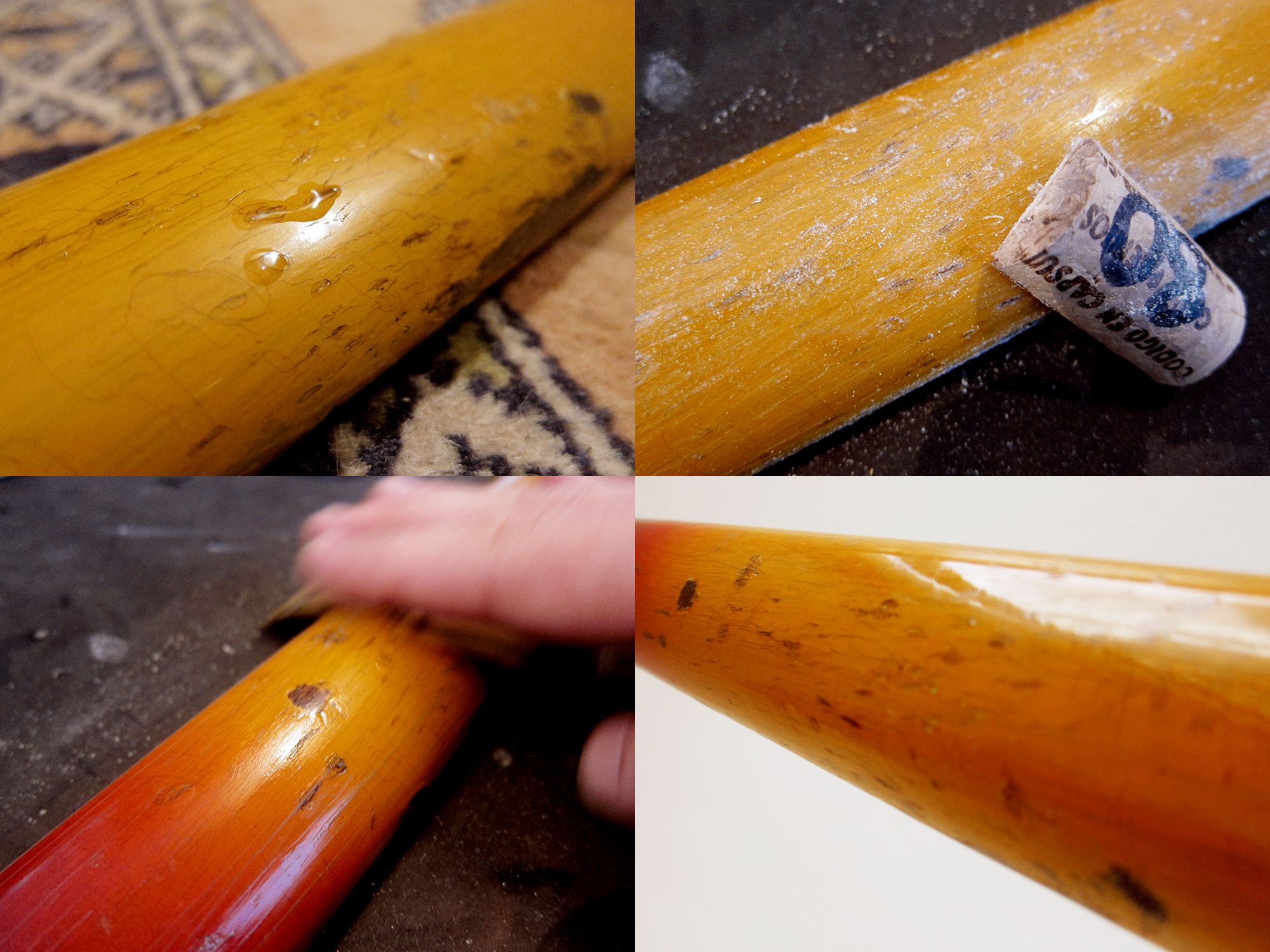
The back of the neck was a mess, dents and groves everywhere so I filled them with Nitro and sanded everything smooth before I buffed it up with metal polish so now you can’t feel it.
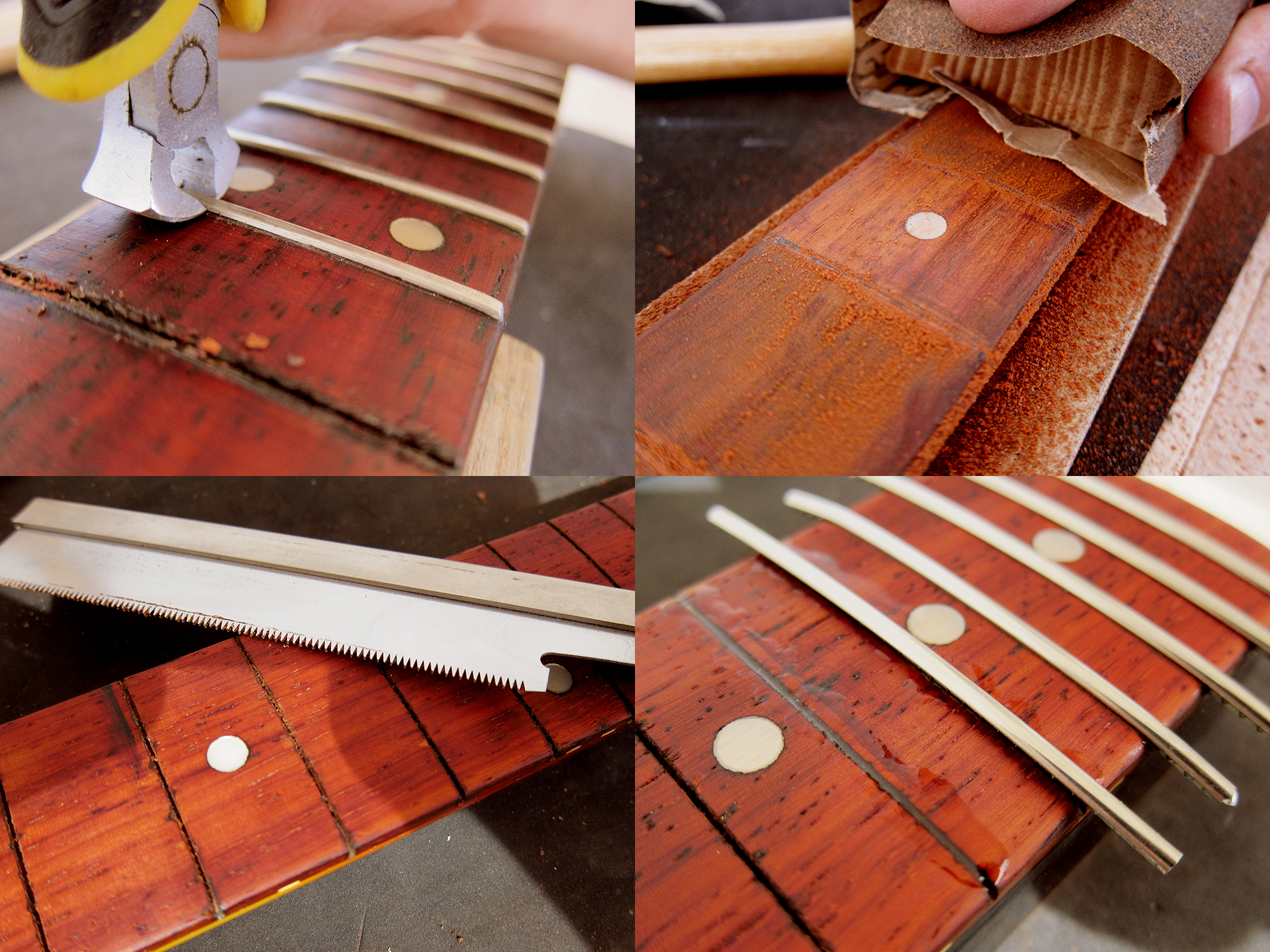
The main problem with the fretboard was the deep groves in it, it almost looked like the first 5-7 frets had been scalloped. The original frets were really uneven too so I decided to refret it completely. I pulled out the old frets, sanded the fretboard even and then gave it 10″ radius before I re-cut the fret slots and installed new Jescar jumbos.
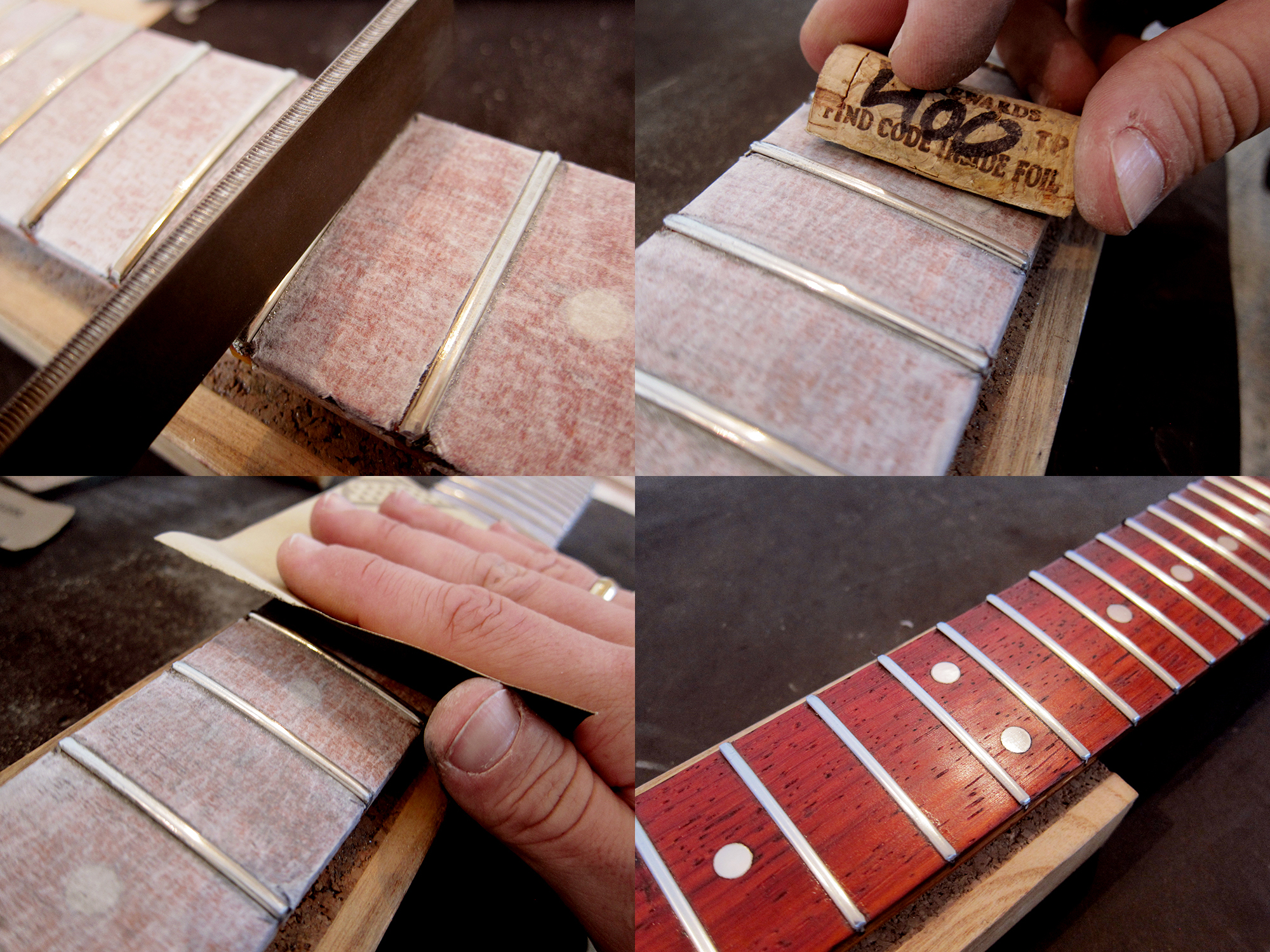
I levelled, crowned and polished the frets and in the end the fretboard looked pretty damn good if I may say so myself.
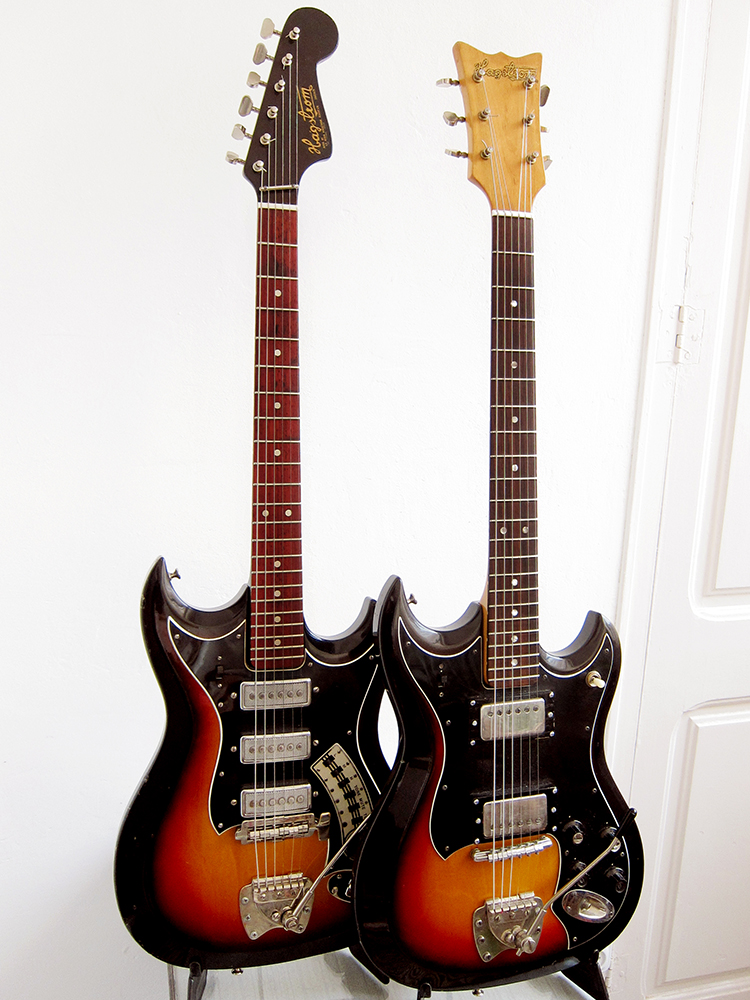
Hagström HIII and my friend Rafa’s Hagström HIIN, both Made in Sweden in 1970, same body but different pickups, electronics and head shape
This video was shot before I changed the bridge pickup’s switch so it’s cutting out occasionally, that has been sorted now with a new switch. I posted these two videos so you can here the difference between Hagström’s fat single coils and their humbuckers.
Here is a new video of the Hagström III with all the switches working, unfortunately my amp is acting up and is making hell of a noise
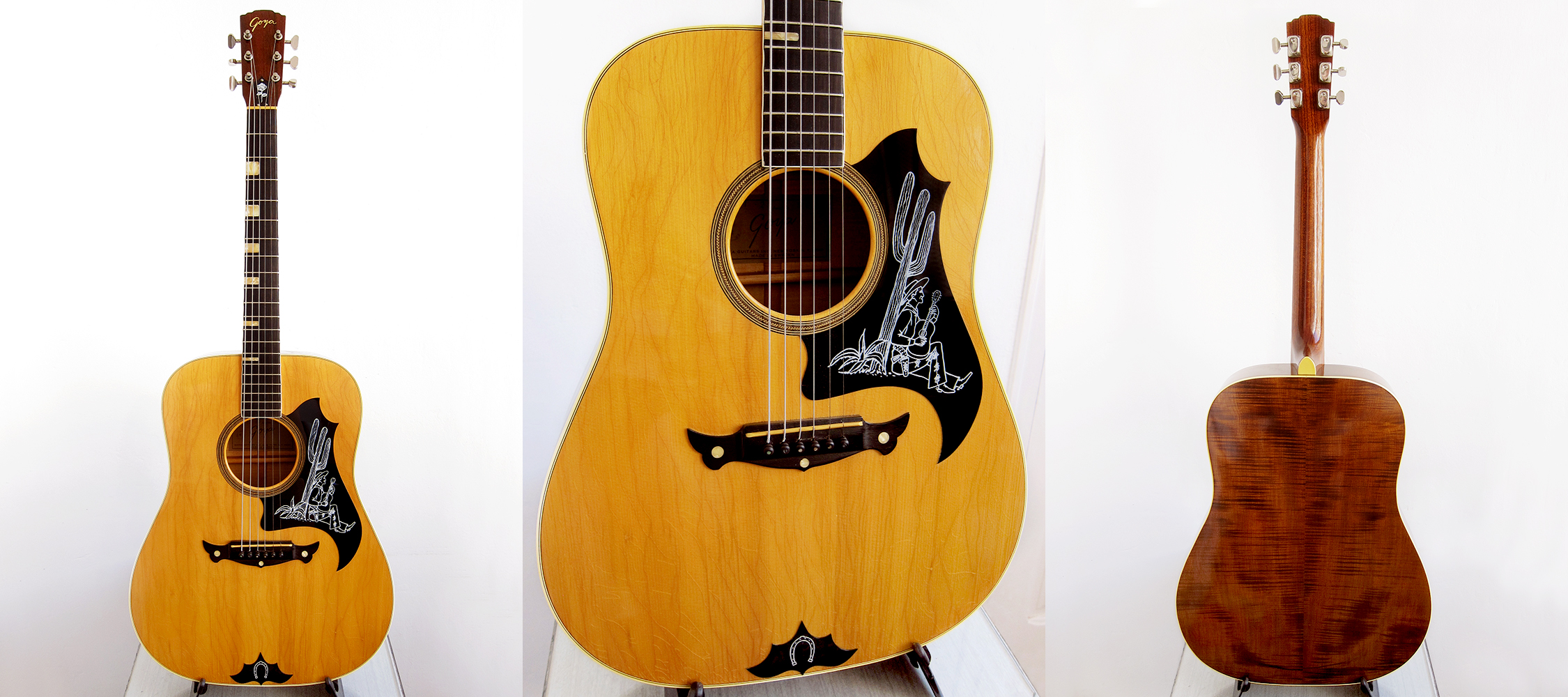
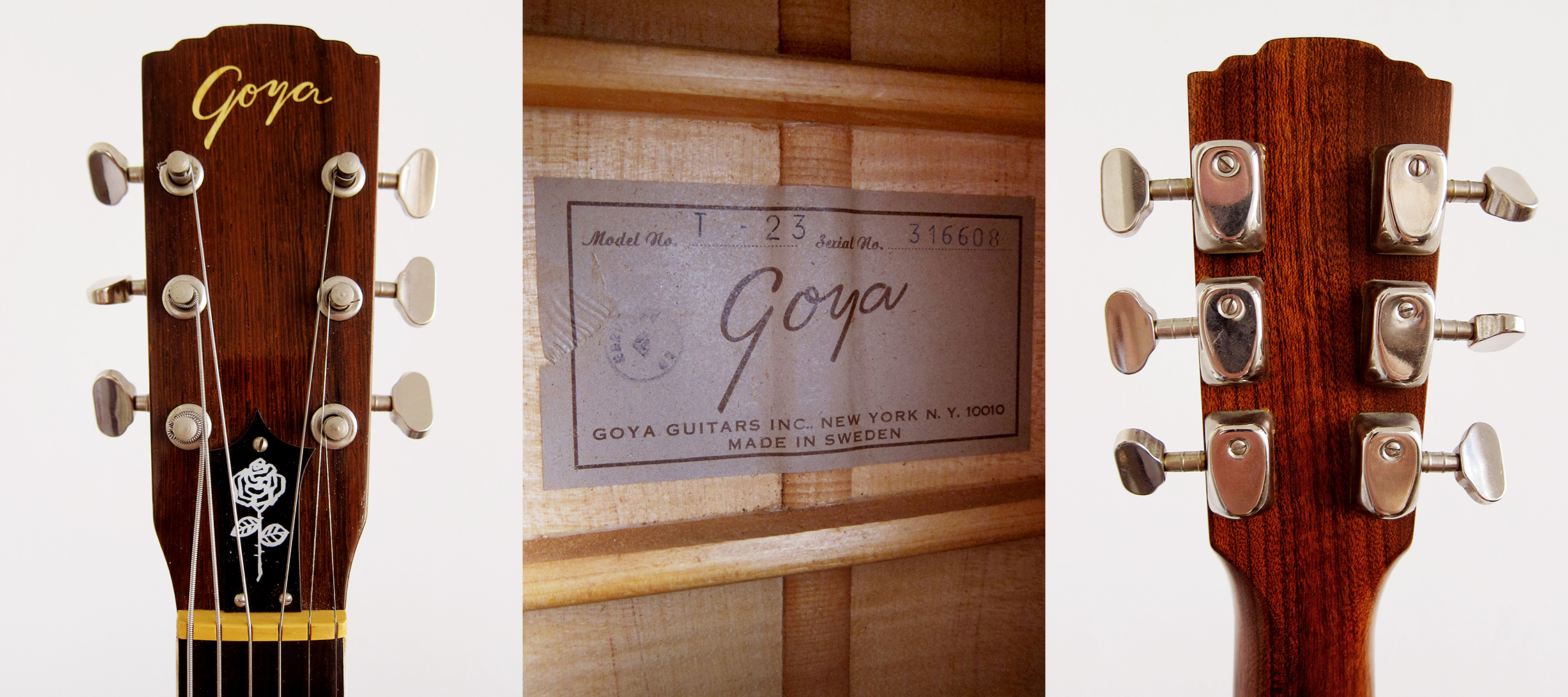
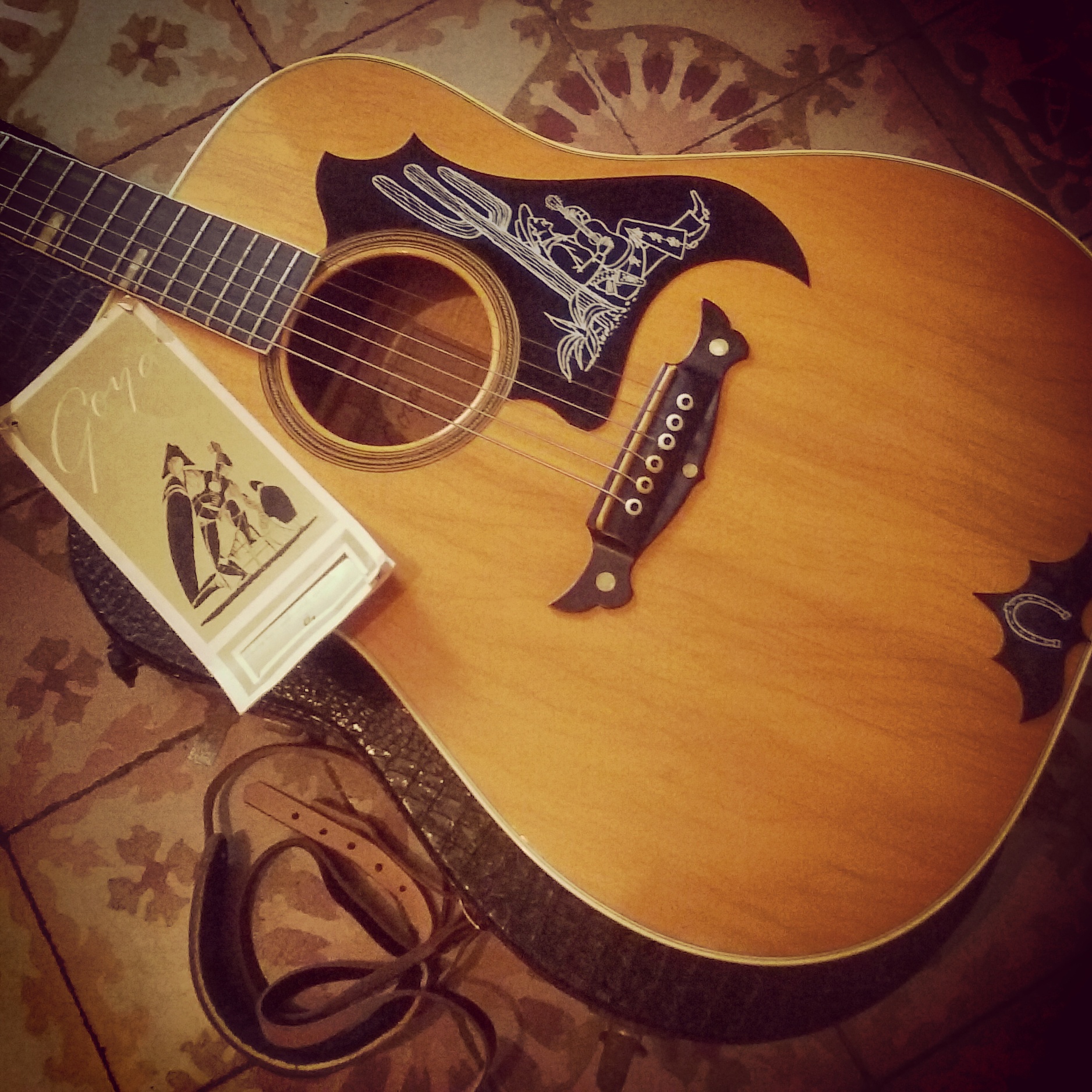
Finally, it took two years but now I’m at last the proud owner of a lovely Goya T-23. When I bought my first Levin back in the summer of 2013 I started to search Vintage Guitars Sweden for different models to study and learn everything I could about Levin. There was 3-4 different guitars that I fell in love with straight away, Levin LM-50 with all it’s bling, Levin De Luxe the king of archtops, Levin 174 which I later found, and of course Levin LT-23, the cowboy version of Levin LT-18. I love my 1966 Goya T-18 so I was pretty sure that this Goya T-23 would sound pretty sweet too, but it sounds even better than I could have imagined. My friend Wolf and I had a little jam last Saturday and it seems like the T-18 and T-23 were made to be played together, I will try to sort a video. I love everything about this guitar, the ebony fretboard with it’s block inlays, the flamed maple back and sides, the amazing cowboy pickguard and plastic details, the bridge shape and most of all, the sound. It has a Gibson like bass response but with a Martin like mid and treble, kind of the best of both worlds. It was well worth the wait, the next holy grail to find would be a Levin LM-50.
I haven’t done any work to this guitar yet, I bought it from a seller in Franklin, Indiana, USA and since it seemed really dry when it arrived I wanted to wait and see how it reacts to the subtropical heat of Barcelona first. Most likely I will have to sand down the heal a bit to get the action down and perhaps even remove the binding on the neck and file down the frets since the fretboard has been dry and shrunk so the frets are poking out a bit. Hopefully the humidity here will help a bit and if not I will sort this issues after the summer. It’s very playable as it is and almost in mint condition with minimal wear.
Levin LT-23/ Goya T-23 Goliath size: Body width: 400 mm, body length: 505 mm, body depth: 95/120 mm. Fingerboard width: 43 mm, scale length: 630 mm. Spruce top with X-bracing, flame maple back and sides, 4-ply bound top, single-bound back. Mahogany bolt-on neck with adjustable truss rod. Single-bound ebony fingerboard with bass side pearloid block inlay. Nickel plated individual Van Gent tuners with metal buttons. Ebony bridge, natural finish and ten year warranty
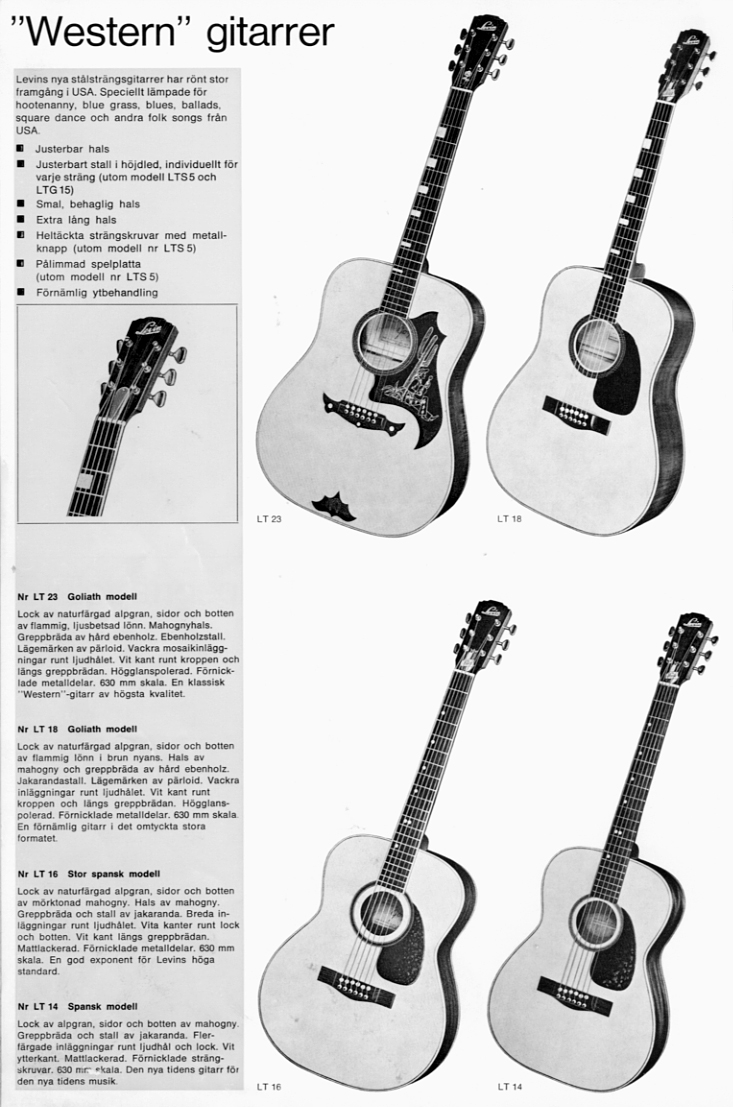
Levin catalogue from 1967. Now I finally have all four of them, the two top as Goya and the bottom two as Levin, but mine are from 1965-66 so they have a proper saddle instead of the adjustable saddle screws. Goya T-23 (1966), Goya T-18 (1966), Levin LT-16 (1966), Levin LT-14 (1965). Taken from Vintage Guitars Sweden
It arrived with the original Goya hang tag, an unused 1960’s leather strap and this awesome looking black alligator hard case that I think is original too. Taken from my Instagram
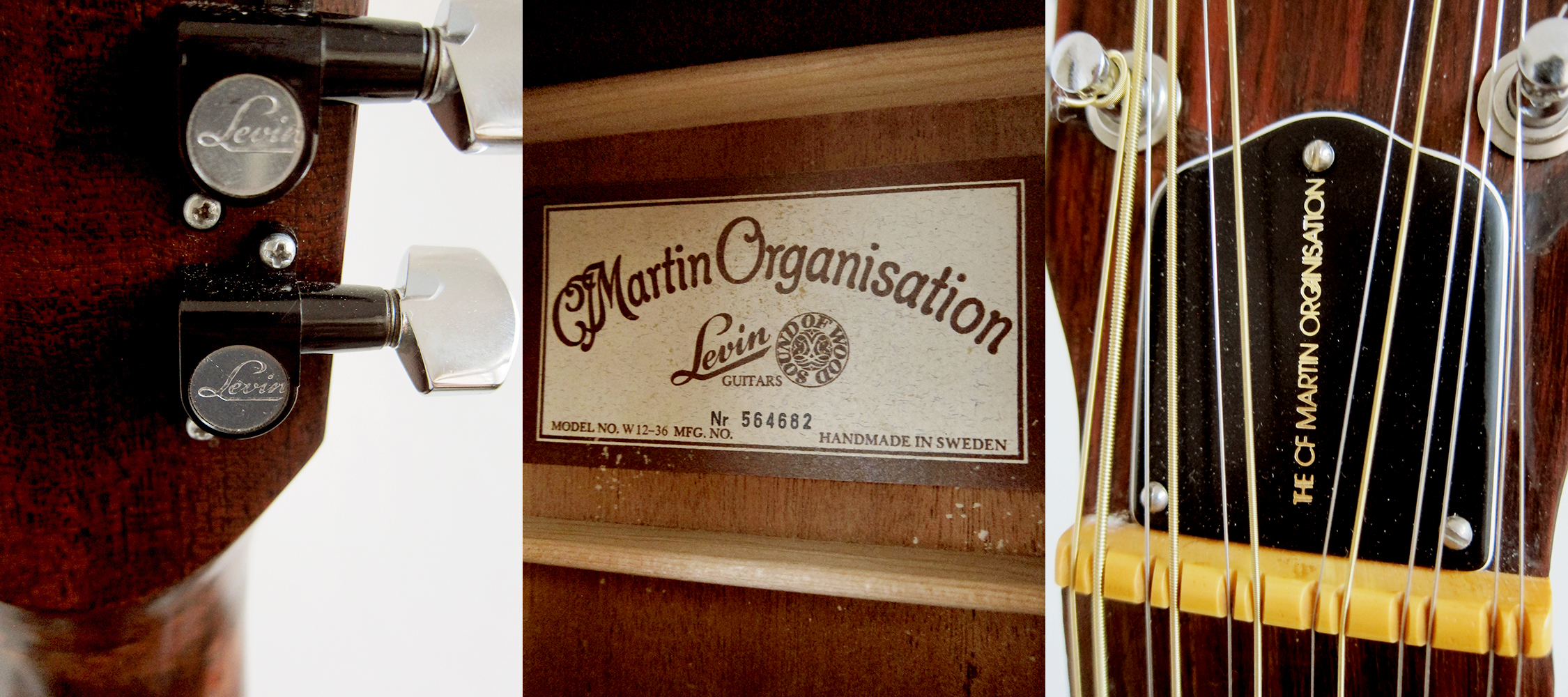
Last week I went a bit bananas and got a 12 string Levin. It wasn’t really planned but sometimes you make a best offer on eBay when you are slightly tipsy and then occasionally you become the new owner of some old guitar, like a 1978 Levin W 12-36. I wasn’t even sure if I liked 12 string acoustics or not, I mean they do make a terrible loud noise and seemed a bit too hippie / folk for me, but then I remembered David Crosby who really likes 12 strings and I really liked David Crosby, so that was it. I got it last Friday and played it quite a lot over the weekend and I think I really have grown to like it. I mean you can’t really play it like a normal guitar since it makes too much noise and the notes tend to just eat each other, so you need to space out your strokes a bit. Once you get a hang of it it’s a pretty powerful and interesting instrument to have in the arsenal even if you wouldn’t use it everyday.
I bought the guitar from a German eBay seller,with a name in Spanish, compravender. I’m not sure if he had fixed it up himself or if it came straight from a luthier but the frets were polished and it was well set up so I didn’t have to do anything to it when I got it. The only downside is that the guitar has suffered a broken headstock at some point but it’s really well repaired and seems solid enough.
This Levin W 12-36 was made in 1978 and seems to be the latest knows to Vintage Guitars Sweden. This is also the “newest” Levin I have, they stopped making them in 1979. I haven’t seen the Martin Organisation label before, or the CF Martin trussrod cover.
Levin W 12-36
12-string, non-cutaway. Body width: 400 mm, body length: 505 mm, body depth: 95/120 mm, fingerboard width: 52 mm, scale length: 630 mm
Spruce top with X-bracing, mahogany back and sides, 5-ply bound top, single-bound back, mahogany neck with two adjustable truss rods
Black plastic truss rod cover, unbound headstock with decal logo, unbound rosewood fingerboard with mother-of-pearl dot inlay, rosewood bridge.
Black and chrome plated individual Levin Schaller tuners
Natural finish and five year warranty
My Westone Stratocaster is getting the strings adjusted to the 7.25″ radius of the fretboard
I recently received my Understring Radius Gauge set from the friendly Portuguese luthier supplier Guitars & Woods. If I had only bought this before I ordered four new sets of Jescar frets from Philaluthiertools. I stupidly thought that most of my old Japanese guitars had a radius of 9.5″, they didn’t feel as curved as my Fender Telecaster TL52-75, which I knew had a radius of 7.25″. It turned out that both my Greco Teles and Hohner and Westone Strats had a vintage radius of 7.25″, so now I have to order new frets for them. I have never really cared about adjusting the strings after the radius, I read somewhere that Eric Clapton and others had the saddles flat so I thought I could have that too but when I received my Greco Spacey Sounds TL-500 back in September and it had really well adjusted action set after the radius I instantly fell in love. It’s such a difference on a Strat or Tele with a 7.25″ radius, you can really see and feel the curve. I adjusted all the guitars I could according to their radius and in most cases I had to raise the string height on the D and G string, which makes them really snappy and twangy, it sounds and feels awesome on my Telecasters.
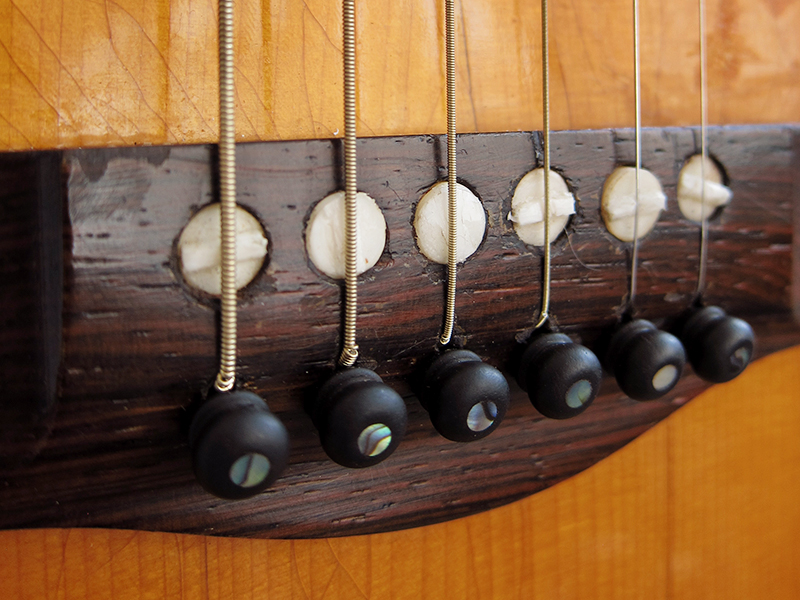
The old plastic saddles before I removed the bridge on my Goya Model 163 from 1968.
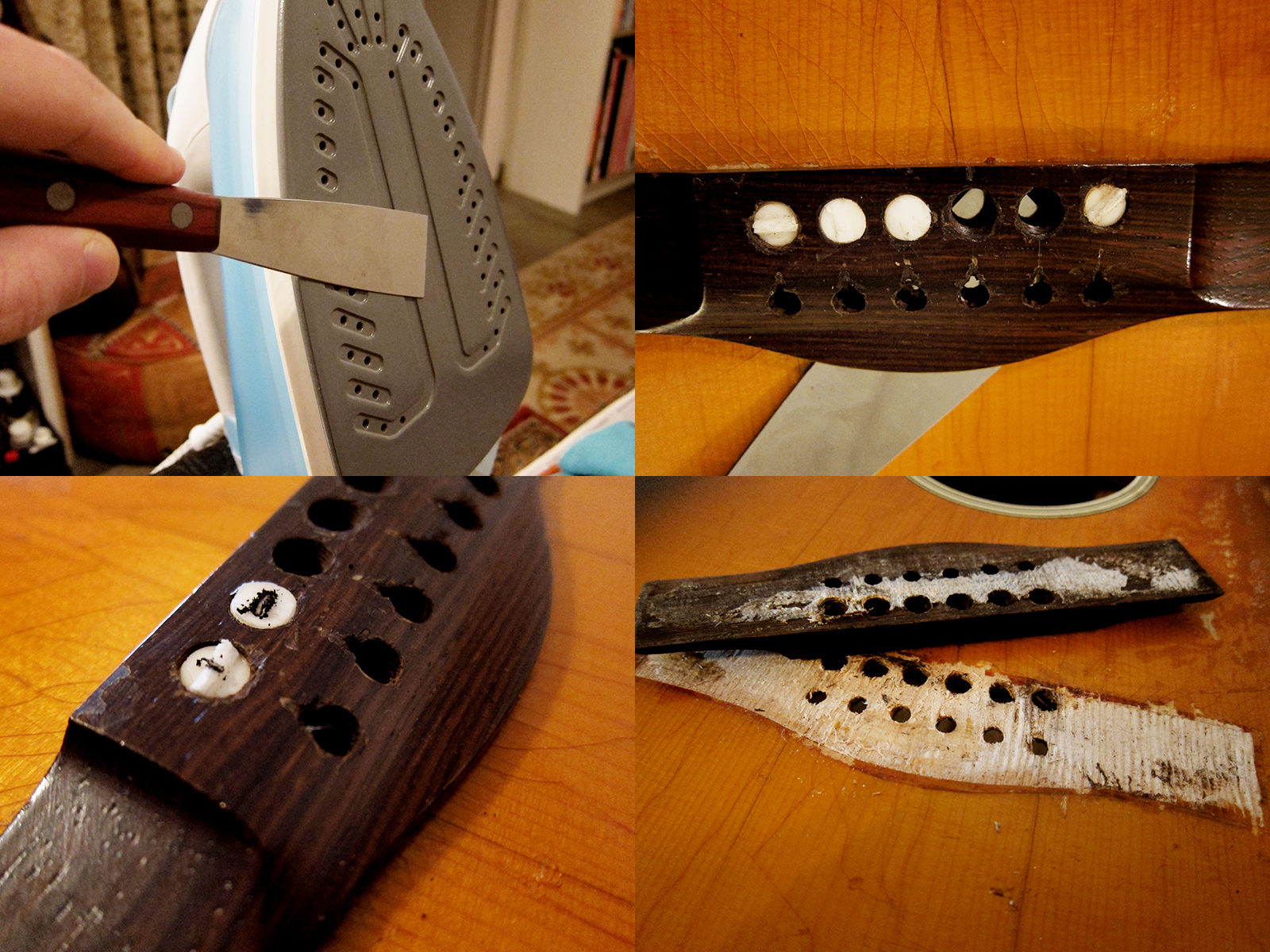
I recently had to remove my first bridge on an acoustic guitar, after removing my first neck it just felt like a natural next step. It turned out to be both harder and easier than I first thought it would be. I needed to do this for two reasons, first because the bridge started to come loose, it felt like the glue had dried up and started to fall apart. Second, I wasn’t too excited about the extremely low individual height adjustable plastic saddles, as Levin calls them, that the previous owner had left me. They were too low to adjust and made some strings sound muted and dull. I watched a Youtube clip before I started with Julyan Wallis, who happened to be working on a Levin guitar as well, and learned a few good tricks. He was heating up the spatula on an normal clothes iron and that way managed to loosen the old glue under the bridge. It worked extremely well.
I heated up the spatula on a normal clothes iron and touched it with my fingers to make sure it didn’t get too hot, I was scared to scorch the lacquer. As soon as you loosened the corners and worked your way around the whole bridge you can keep the tip of the spatula quite hot if you are quick to get it in under the bridge and not resting it on the lacquer. This could have been such a smooth and and easy job if I would have realised earlier that that saddle screws went all the way through and was actually screwed in to the top as well, something that kept the bridge secure even when all the glue was loosened. I tried over and over and even managed to damaged the lacquer in two places in my desperate attempts to get the bridge off. Since I couldn’t get a grip of the saddle screws, two was filed down smooth and the others were too low to hold on to with any pliers. I had to heat up a screwdriver on a candle, I should probably have used the clothes iron, and then melt the tip in to the saddle and that way get a grip and unscrew them. Once all the saddle screws were out the bridge came off straight away. It could have been a cleaner removal if I had realised that the saddles were attached to the top but still, I’m pretty pleased with the result for being my first time.
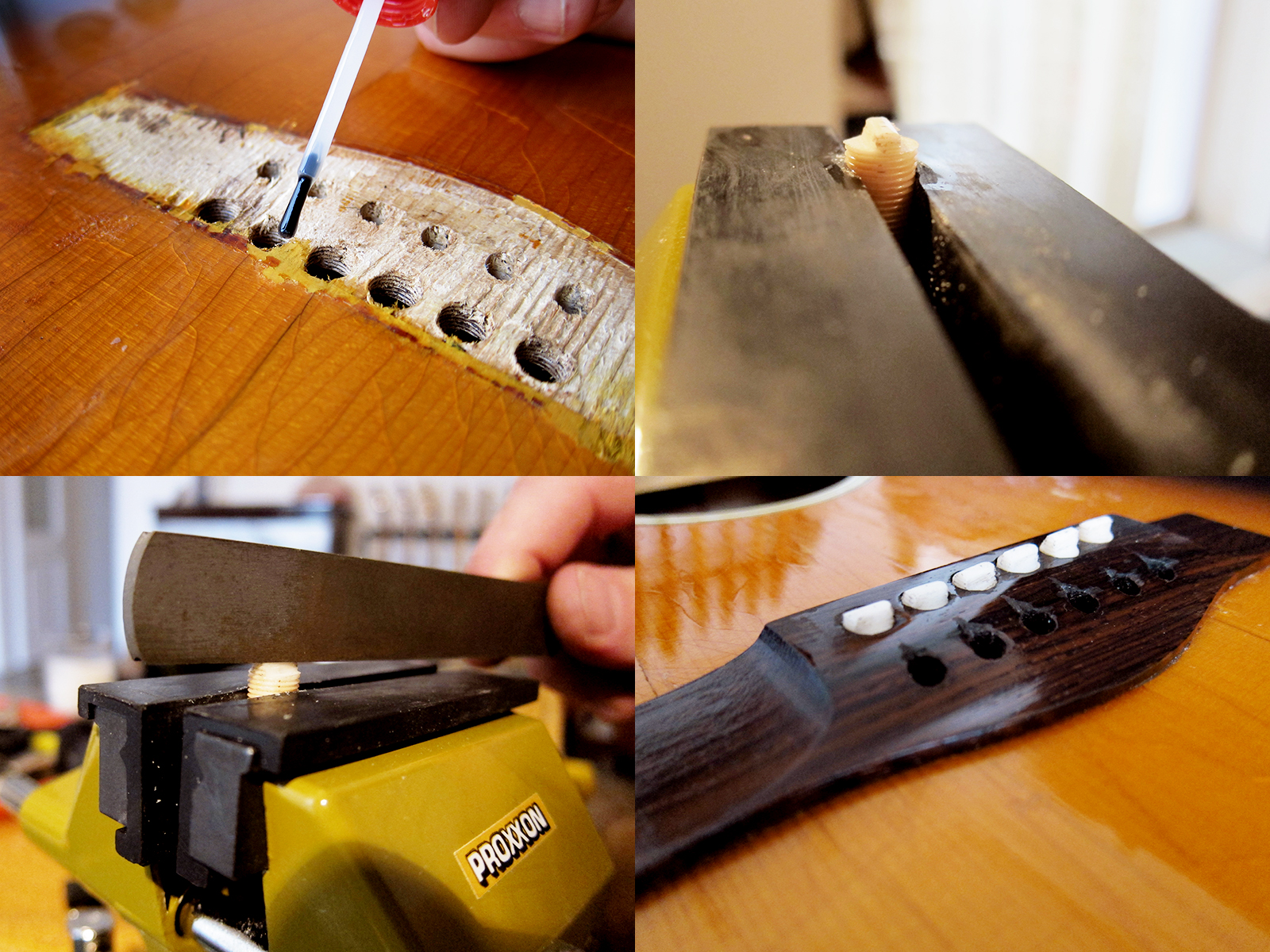
I painted the wood where the finish had come off and then added a bit of nitro lacquer to seal it. Since I had to burn the tip of the saddles to get them out I thought the best I could do in order to save as much material as possible was the flip them over and reshape the bottom instead. I used a normal hand file to shape the saddles, I made the tip both higher and wider to get a better grip with the pliers when I adjust them. Once the shape was good I rounded them off with my fret crowning file. I glued the bridge back in place with fish glue and a couple of clamps and let it set for 24 hours. It worked pretty well, the tone is better and I can now easily adjust the string height like Levin intended 46 years ago.
A fairly unplayable 1959 Levin LM-26 before I reset the neck
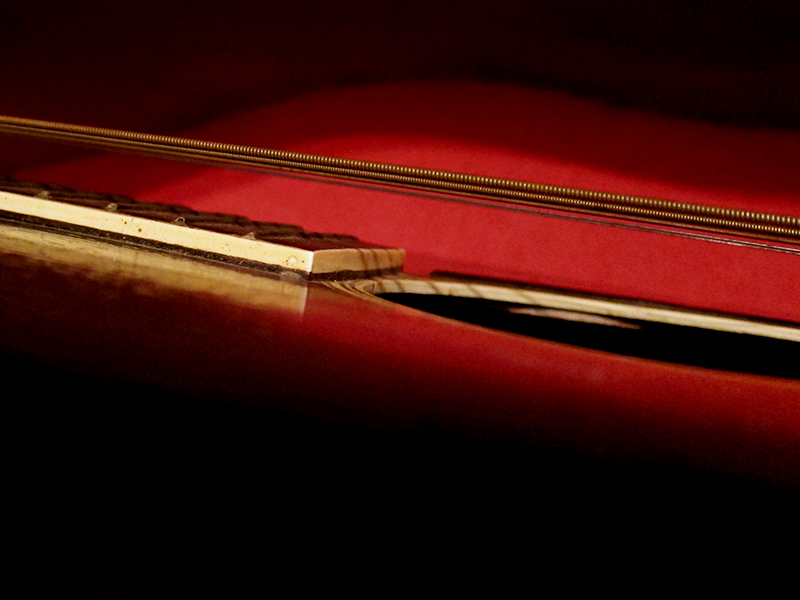
I’ve been very lucky and managed to get my hands on a couple of really nice Levin and Goya guitars over the last year. I would probably have thought twice about getting any random 50 years old acoustic since the action is normally a bit of an issue but with Levin it’s quite easy to reset the neck. They have been using a bolt-on neck system since the 1950’s which makes the job pretty manageable. Remove the two bolts that attach the heel with the neck block, you can see them if you look inside. A normal Philips no 2 screwdriver fits if you don’t have a square Allen key. The heel is normally not glued in so you will feel it loose as soon as you remove the bolts. If not, apply a bit of pressure upwards to loosen the heel. Now you will be able to fit a sanding strip under the heel and can start to sand it down and that way change the neck angle and lower the action. Apply a bit of pressure on the neck and just pull, it might take 40-60 pulls on each side so so be patient. Check the neck angle with a straight edge once in a while so you don’t take it too far. As long as the straight edge doesn’t go over the bridge it should be fine. I have done the sanding strip trick on two guitars so far, my Goya T-18 and a Goya 163. On my Levin LM-26 I felt it was better to remove the whole neck so that made the sanding process even easier.
Update: January 27, 2014 I needed to sand down the heel a bit further on my Goya Model 163 and realised that the fretboard started to come loose. It looked and felt just like the bridge, like the glue had dried up and started to crack and fall apart. I tried a new trick that I learned on Youtube, to heat up the spatula instead of heating the neck, like a did on my Levin LM-26. My God, this was so easy and quick, I think it took me 7 min to remove the neck. When I had sanded down the heel a bit further I glued the neck back with some fish glue and a couple of clamps.
Update: January 26, 2014 My Levin LM-26 from 1959 is now finished
Bell ad from 1962 for the wonderful extra large sized Levin Goliath Model 1795
As I mentioned in my previous post about Levin I managed to win a Levin LM-26 on eBay back in December. It turned out to be in a worse state than I expected which I guess is both good and bad. Bad because it’s unplayable so I still don’t know how it sounds, good because I’m forced to learn a lot of new things, like how to remove the neck on an acoustic guitar. The Levin LM-26 was sold as The Levin Goliath Model 1795 in the UK and I think they sold pretty well, even Pete Townshend had one. They have spruce top with flame maple back and sides, all solid as always with Levin. If you want to know how old your Levin or Goya is then check Vintage Guitars Sweden. Levin serial numbers / Goya serial numbers
Pete Townshend is playing a Levin Goliath LM-26 in 1963 with Detours, later The Who
Levin LM-26/ Goya M-26 Goliath size: Body width: 400 mm, body length: 505 mm, body depth: 95/120 mm
Fingerboard width: 43 mm, scale length: 630 mm
Spruce top, flame maple back and sides, 4-ply bound top, single-bound back
Mahogany bolt-on neck with adjustable truss rod
Metal truss rod cover with a star and “1900”, nickel plated tuners
Single-bound rosewood fingerboard with centered pearl dot inlay, rosewood bridge
Sunburst finish and ten year warranty
Marketed by U.K. distributors as Goliath Model 1795.
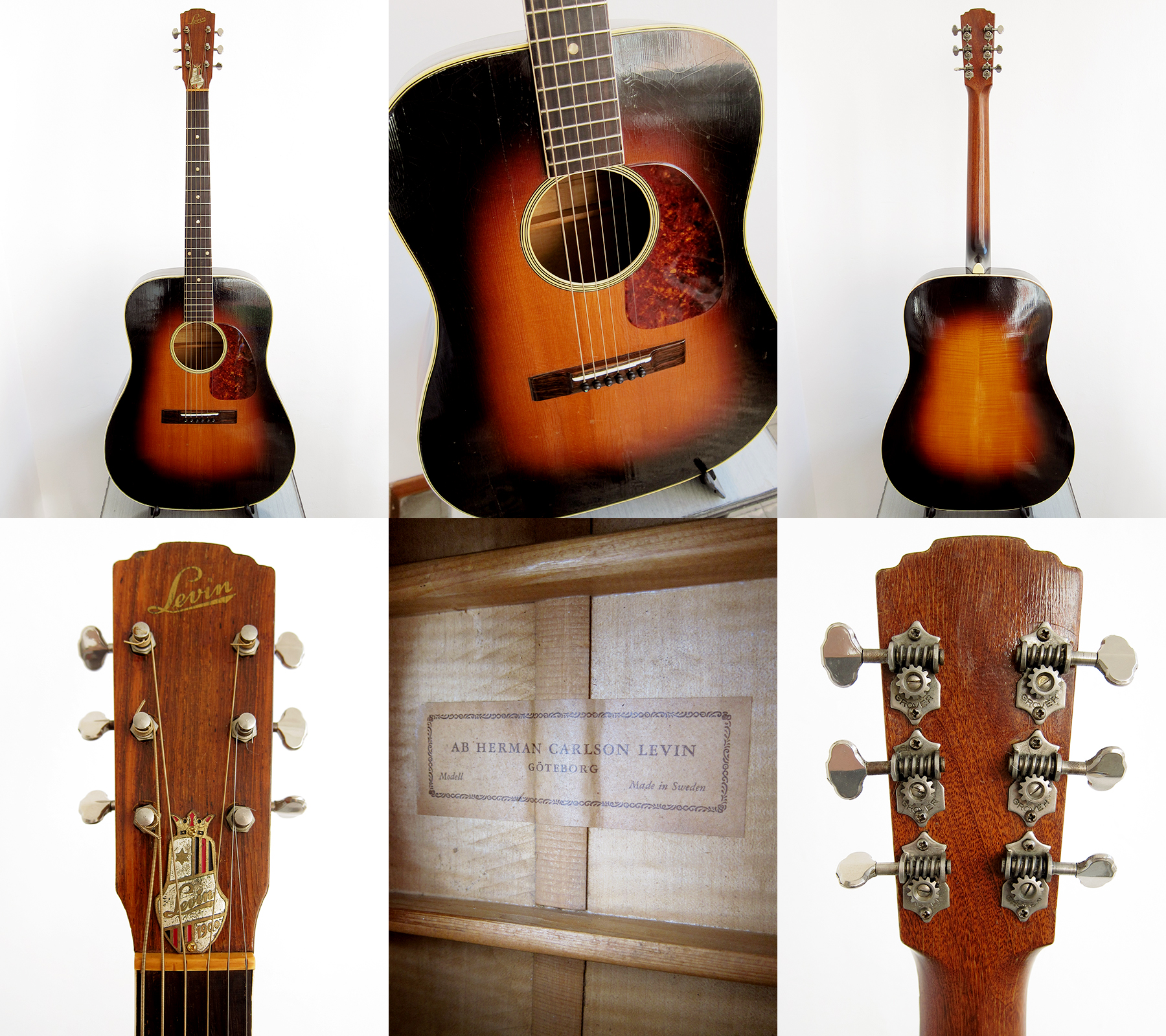
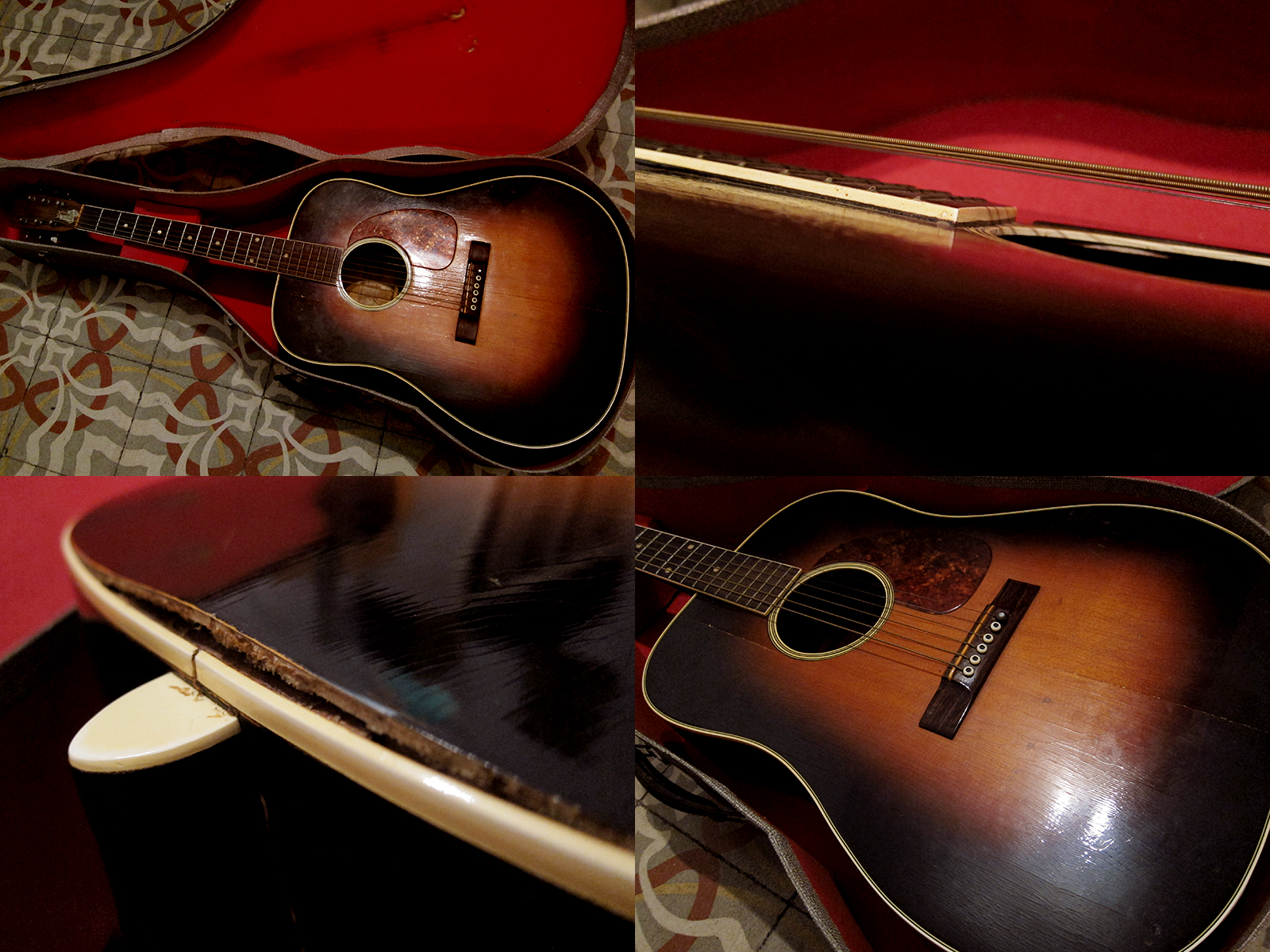
Levin LM-26 from 1959, well the body is actually stamped with a number from 1958, the year this model was introduced. I’m not sure if they used an old body when they put they guitar together at the Levin factory in Gothenburg in 1959 or if someone changed the neck when the guitar came to the UK. The previous owner for the past 51 years, Roger, bought the guitar second hand in 1963 for £40 from Bill Greenhalgh Ltd, 125-127 Fore Street in Exeter. Roger changed the original machine heads to Grovers in 1965, it’s otherwise all original. The action was so high that I could almost fit my hand under the strings so I had to remove the neck and reset it. There are a few things that needs to be glued as well, the back is lose and there are 2-3 cracks in the top.
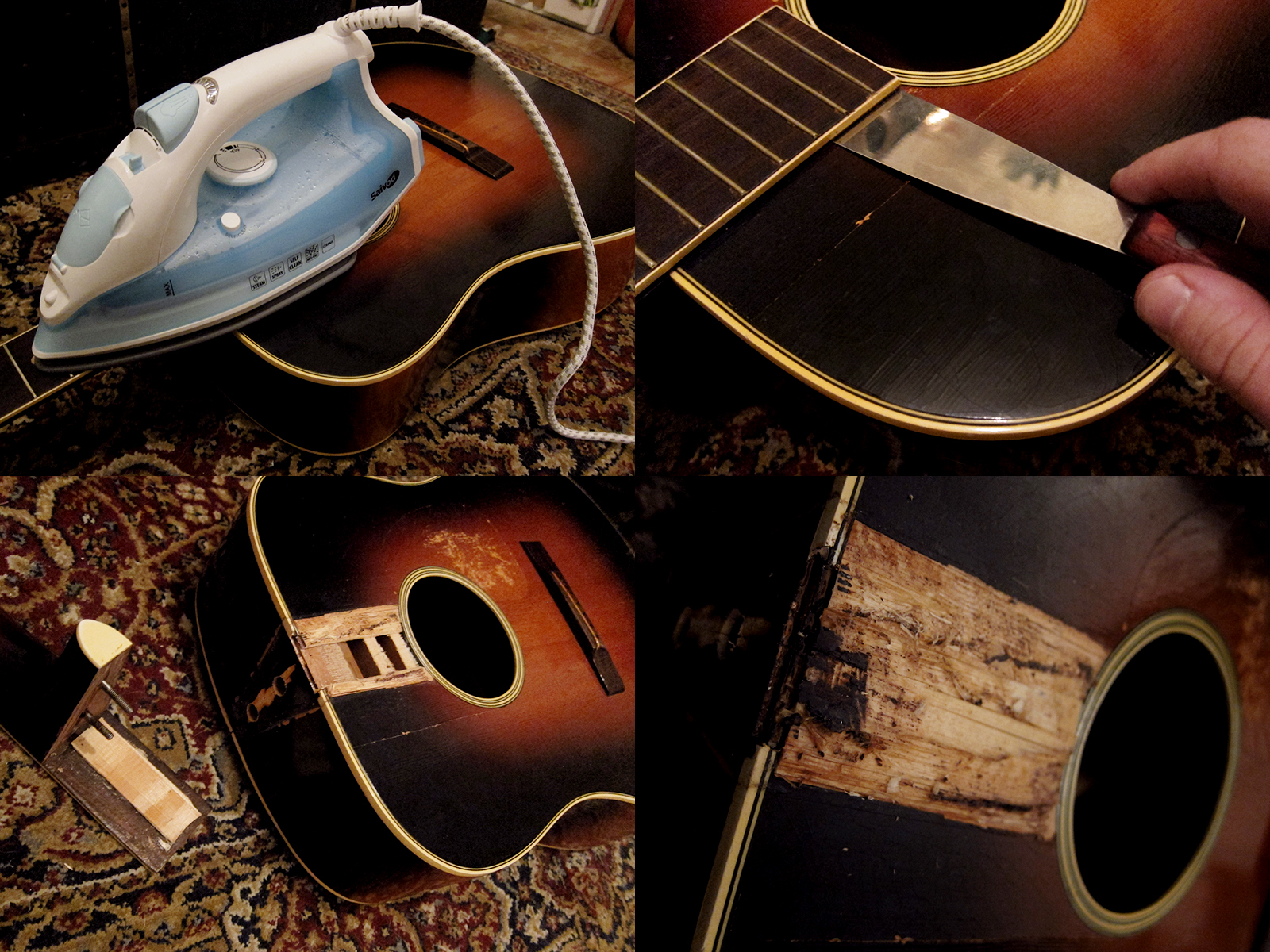
I have never removed a neck before so I was pretty nervous about this part. It’s supposed to be one of the trickier things to sort on an acoustic guitar but luckily this neck was fixed with the Levin bolt-on neck system which made it a lot easier. I removed the two bolts inside and the heel came lose straight away, now I only had to loosen the fretboard overhang. I removed the pickguard with a razor blade, cutting under the edge, just to make sure I wouldn’t melt or damage it while removing the neck. Then I used a normal clothes iron to heat up the fretboard, I don’t have any fancy pants Stew Mac tools or special gadgets. I heated up the fretboard for 1-2 min and felt with my hand every 30 sec to make sure it didn’t get too hot, I thought if I could still touch it maybe I wouldn’t burn or damage the lacquer on the top. It took ages to get it off, I think I probably spent 1-2 hours per night for 3 nights in a row on this. The glue loosened more and more and in the end I could get a flat screwdriver in and bend it loose. Unfortunately a chunk of spruce decided to stick to the neck instead of the body but to be honest I expected worse damage than that on my first attempt to remove a neck. I used my clothes steamer and steamed the spruce loose from the mahogany neck, it peeled right off, and just glued it back in the neck pocket again.
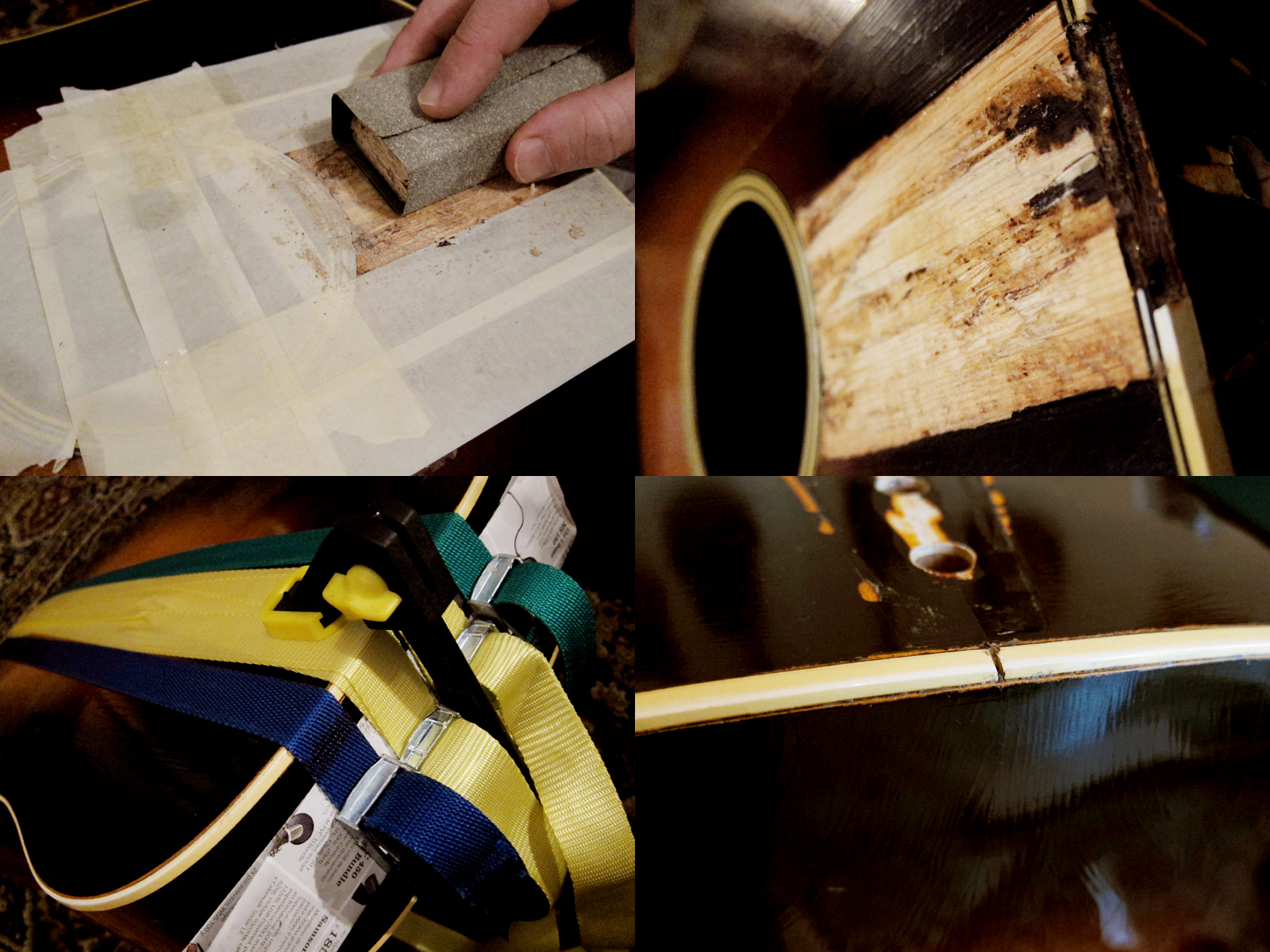
I masked off the top and sanded the pocket even so now the neck will fit fine once I’m ready to put it back on. I had to get the gap on the back closed. I’m not a master gluer and since you pretty much just get one shot, or rather it’s really annoying to remove and re-glue things if they aren’t perfect, I was a bit concerned about this too. I used plenty of fish glue and then 4 strong straps that could not only press in the back but also press down the the sides to close the gap as much as possible. I’m pretty pleased with the result, the gap is gone and it seems pretty solid.
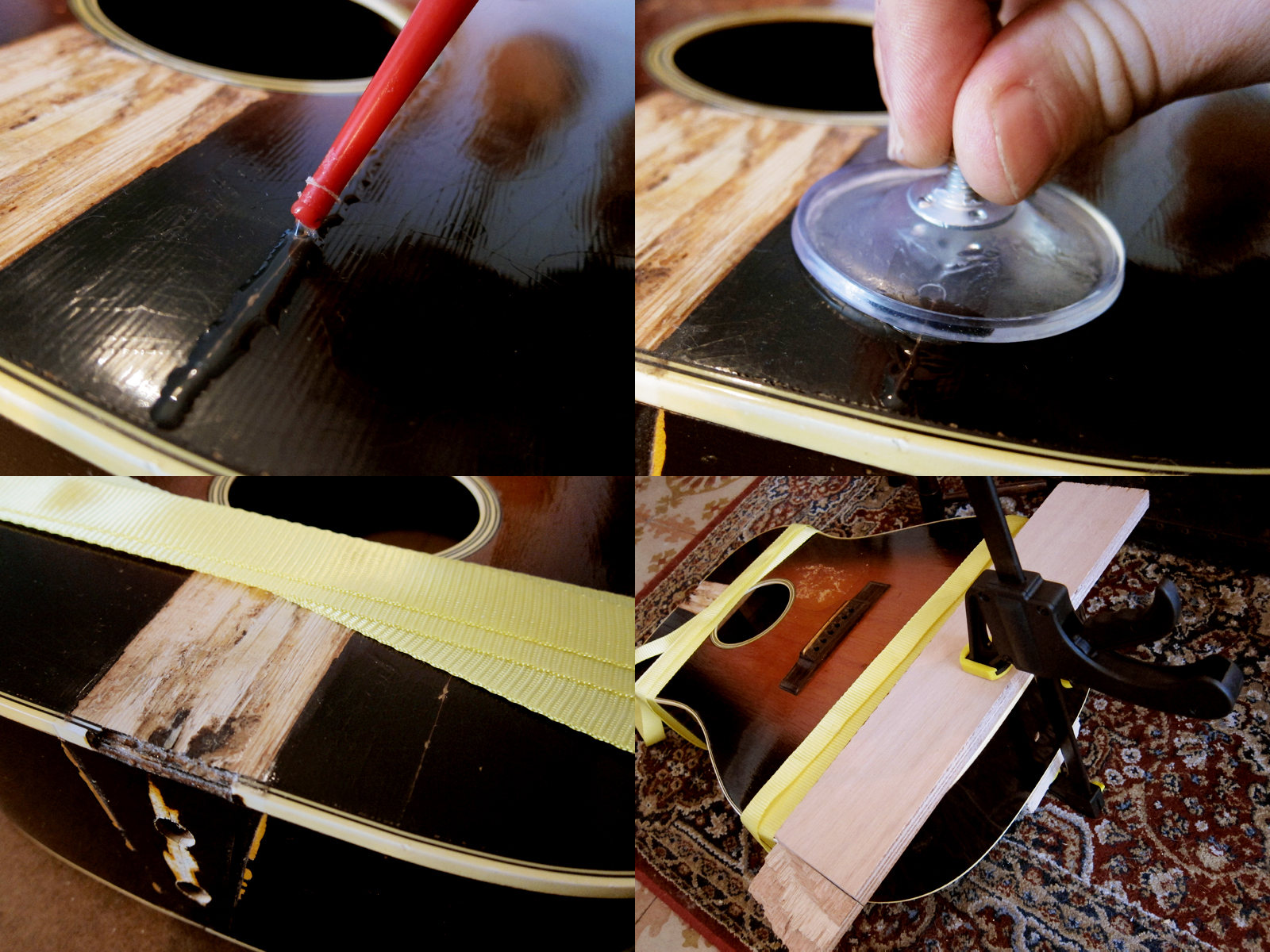
Next thing was to try to close the cracks on the top. One was all the way through and two was smaller hairline cracks. I filled everything with fish glue and used a suction cup to try to push in the glue in the cracks, I saw this on Youtube and it made sense to me so I tried it. Then I just strapped everything up and put a piece of wood the keep the main crack flat while it dries.
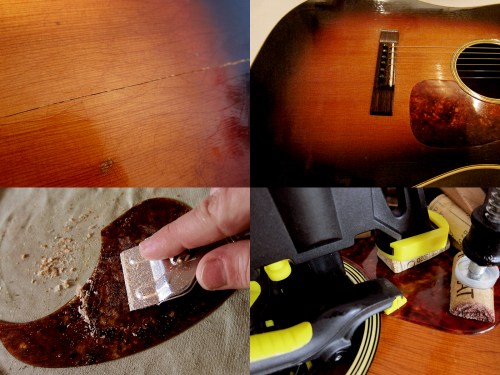
Once I had glued the cracks in the top, the first image shows before I started, I painted and lacquered the crack. I used normal matt black acrylic paint for the dark parts and just darkened the rest with furniture oil before I applied the nitrocellulose lacquer. Once the lacquer was dry I sanded the surface smooth with 400, 800, 1500, 2000 and 2500 grit. It worked really well, it’s actually hard to even see the big crack that went all the way from the edge to the bridge. I removed the old glue from the pickguard and then glued it back again.
The neck was in really poor state, deep groves and marks all over it. I filled it with nitrocellulose lacquer, as mentioned in my previous post about how to repair lacquer damage. I had to take out the heavy artillery in order to get the neck smooth and used 180 grit. Then it was just a matter of sanding it back to it’s former shine using 400, 800, 1500, 2000 and 2500 grit. You can still see the marks but the neck is perfectly smooth and shiny again.
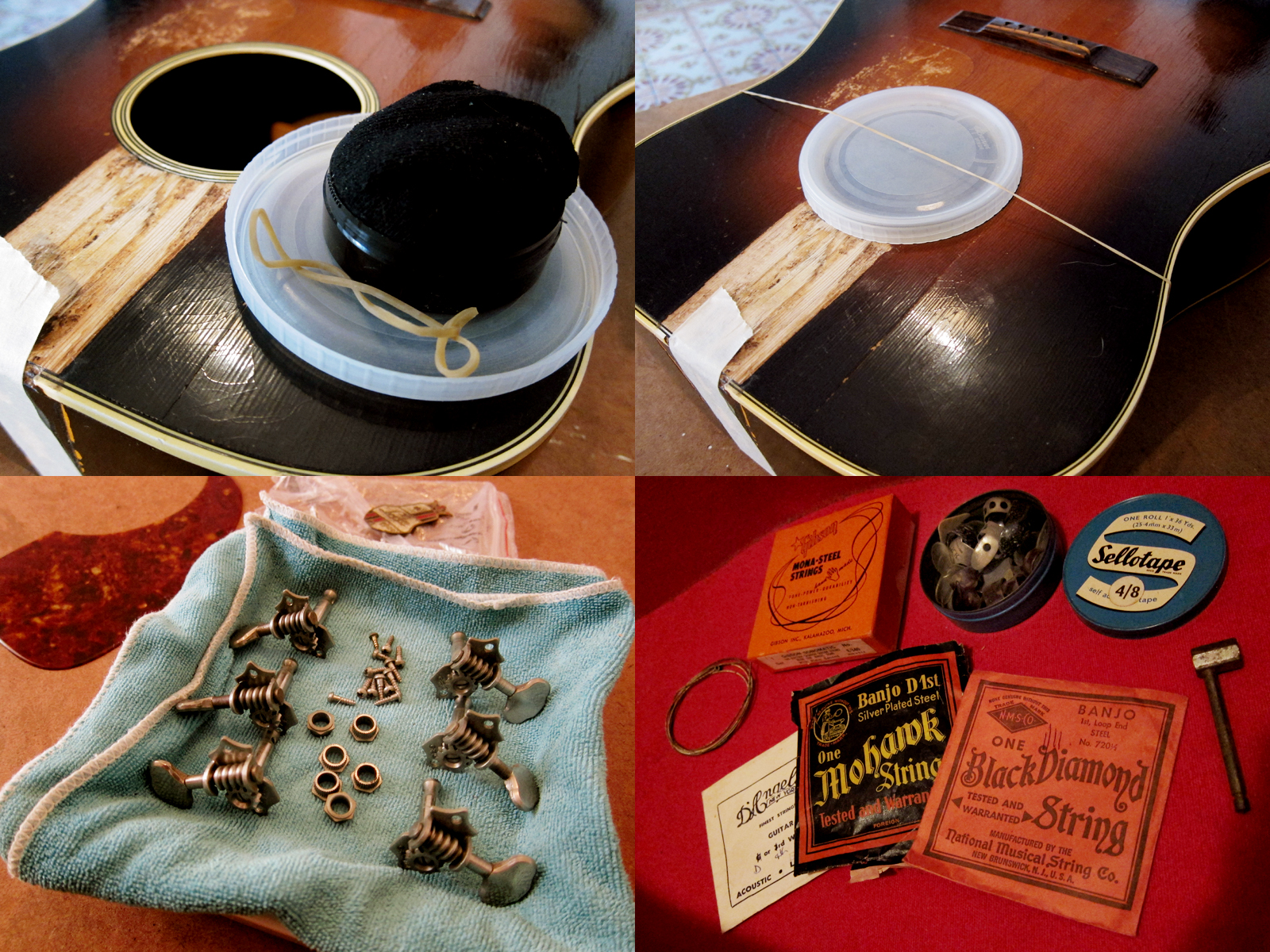
According to Roger the guitar has been stored in a back room in it’s case for the last three decades and I guess the humidity wasn’t ideal, hence the cracks. As soon as I got the guitar I started to humidify it with a wet sock in a plastic container inside the body and then sealed of the hole with a lid from a Mercadona lunch box. The Grover machine heads from 1965 got a good clean and is now oiled up and works fine. In the last picture you can see what lied hidden in the accessory compartment in the old hardcase. Old guitar and banjo strings, an old sellotape box full of fingerpicks and best of all, an original Levin trussrod key. I’ve been looking all over for one of these. Thank you Roger.
I was back in Sweden over the weekend and I was really hoping to extend my Levin collection. I had seen a couple of guitars that I wanted to go and try but in the end I didn’t have time to do anything more than just visit my family, which was the reason why I went back in the first place. I really don’t need any more guitars but since I’m so happy with my Goya T-18 I can’t stop looking for other Levin’s. I actually did manage to extend my collection but not while in Sweden, I won a Levin LM-26 from 1959 on eBay the night before I left Barcelona. It needs quite a bit of work so as soon as it arrives here and I’ll start to fix it up I will post some pictures and write more about it. What I have gathered so far by talking to Levin owners on Swedish forums is that the Sixties ones sound more like old Gibson’s and the Seventies Levin’s are closer to Martin, which makes sense since C.F. Martin & Co bought Levin in 1973. It might all be in my head but I think there is a bit of Gibson sound over my Goya T-18. The three Levin models that I’ve been dreaming of, after the Levin LM-26 but that’s already sorted now, is the stupidly beautiful Levin/Goya M-50, the awesome Levin/Goya 174 and the less impressive looking but supposedly amazing sounding Levin W 32 J. To find a Levin/Goya 174 shouldn’t be too hard, I might actually have already found one that I like. It would be a lot harder to come across a Levin/Goya M-50, I think it will be almost impossible so maybe that’s more of a lifelong Holy Grail project. They were too expensive to produce with all the extra bling, gold machine heads and mother of pearl cloud shaped inlays all over the fretboard so they stopped making them in the early Sixties. The Levin W 32 J is not that rare, they actually produced quite a few but people doesn’t seem to be too inclined to sell them and when they do, they are quite expensive. I have seen one, that I actually wanted to go and try, in Jam a guitar shop in Stockholm for 9500 SEK, around 1100€, which felt a bit much. It’s actually not that overvalued since The Fellowship of Acoustics in the Netherlands are selling their Levin’s on eBay for 1400-1600€. These are top end models we are talking about but since normal people that have inherited an old Levin or want to sell their old guitar see those guitar prices they of course think that their guitar is worth over 1000€ too, which isn’t always the case. I guess this over valuation makes my guitars worth more but at the same time it’s extremely annoying when you want to buy a new one and people wants an arm and a leg for them, or 1000€.
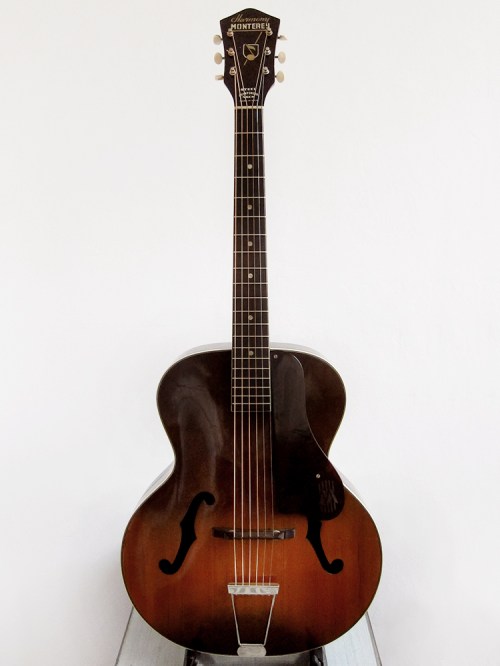 A late 1950’s Harmony Monterey H1325, made in USA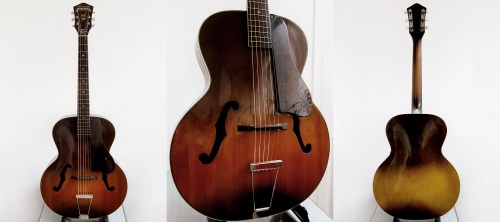

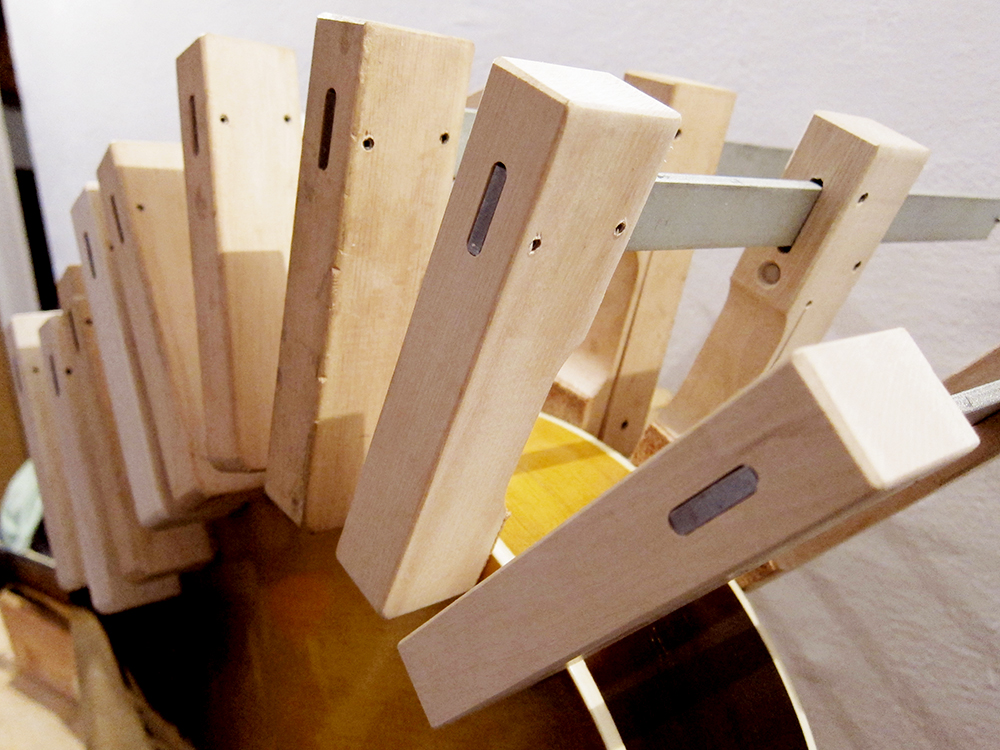 There was a lot of cleaning to do and two cracks that needed to be glued. One large on the upper bout and a smaller one on the top and then I glued down the heel a bit better which got the action down. Except for that it was in pretty good shape for being around 60-years old and all original.
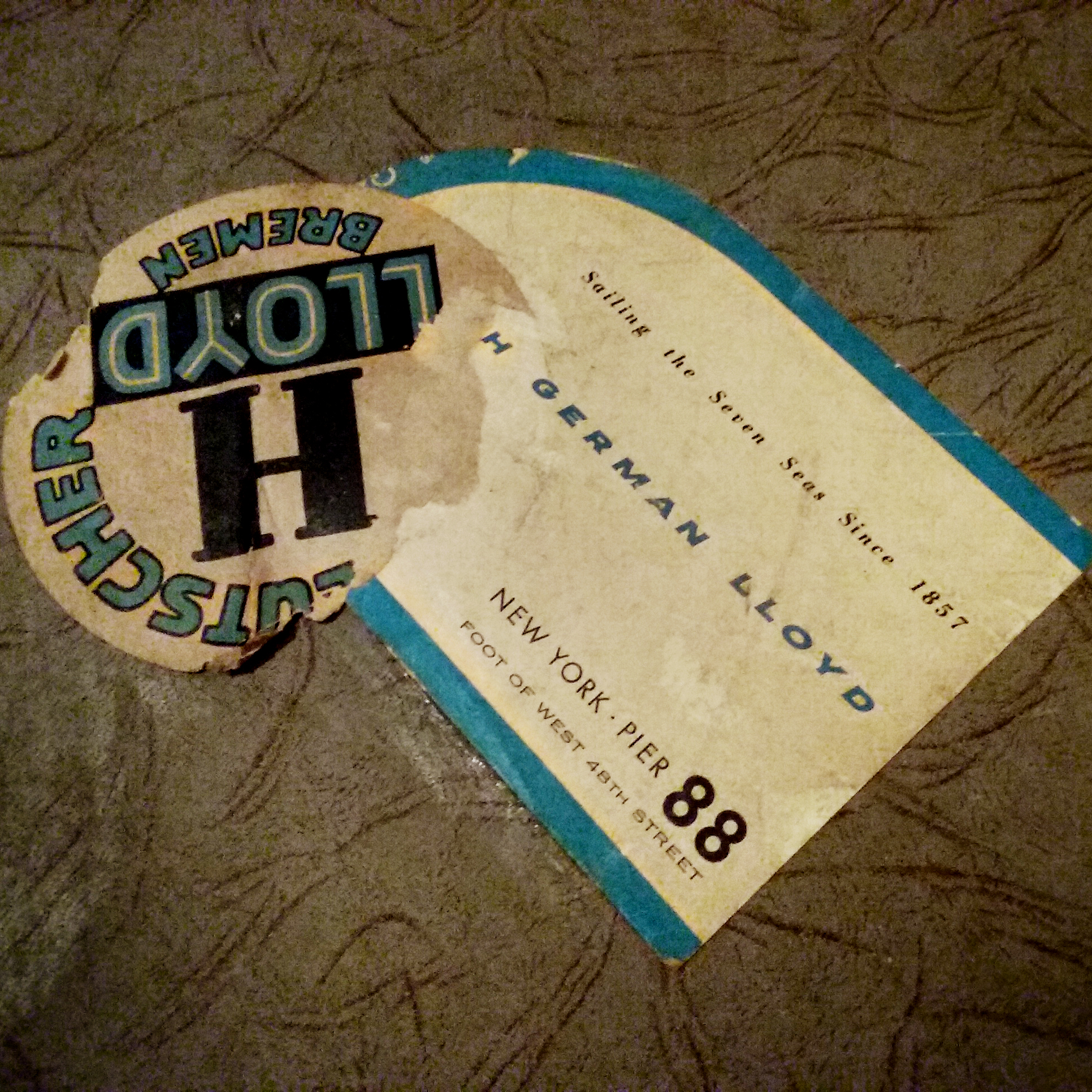 The original case has these awesome looking shipping stickers on it, I presume from when the guitar left America for Germany by boat in the 1950’s carried by the first owner.
 The top left looks very much like my Harmony Monterey, having said that, the model number inside mine is H1325 which match the bottom left. Taken from a 1959 Harmony catalogue
 I also got myself two late 1960’s H162 from the US that I need to restore. First of all they need a neck reset but then I was actually thinking of removing the back and X-brace at least one of them. Taken from a 1959 Harmony catalogue.





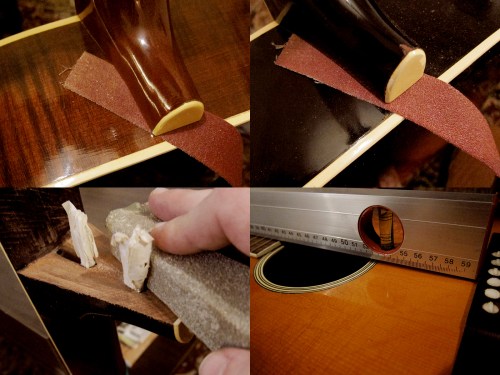 Remove the two bolts that attach the heel with the neck block, you can see them if you look inside. A normal Philips no 2 screwdriver fits if you don’t have a square Allen key. The heel is normally not glued in so you will feel it loose as soon as you remove the bolts. If not, apply a bit of pressure upwards to loosen the heel. Now you will be able to fit a sanding strip under the heel and can start to sand it down and that way change the neck angle and lower the action. Apply a bit of pressure on the neck and just pull, it might take 40-60 pulls on each side so so be patient. Check the neck angle with a straight edge once in a while so you don’t take it too far. As long as the straight edge doesn’t go over the bridge it should be fine. I have done the sanding strip trick on two guitars so far, my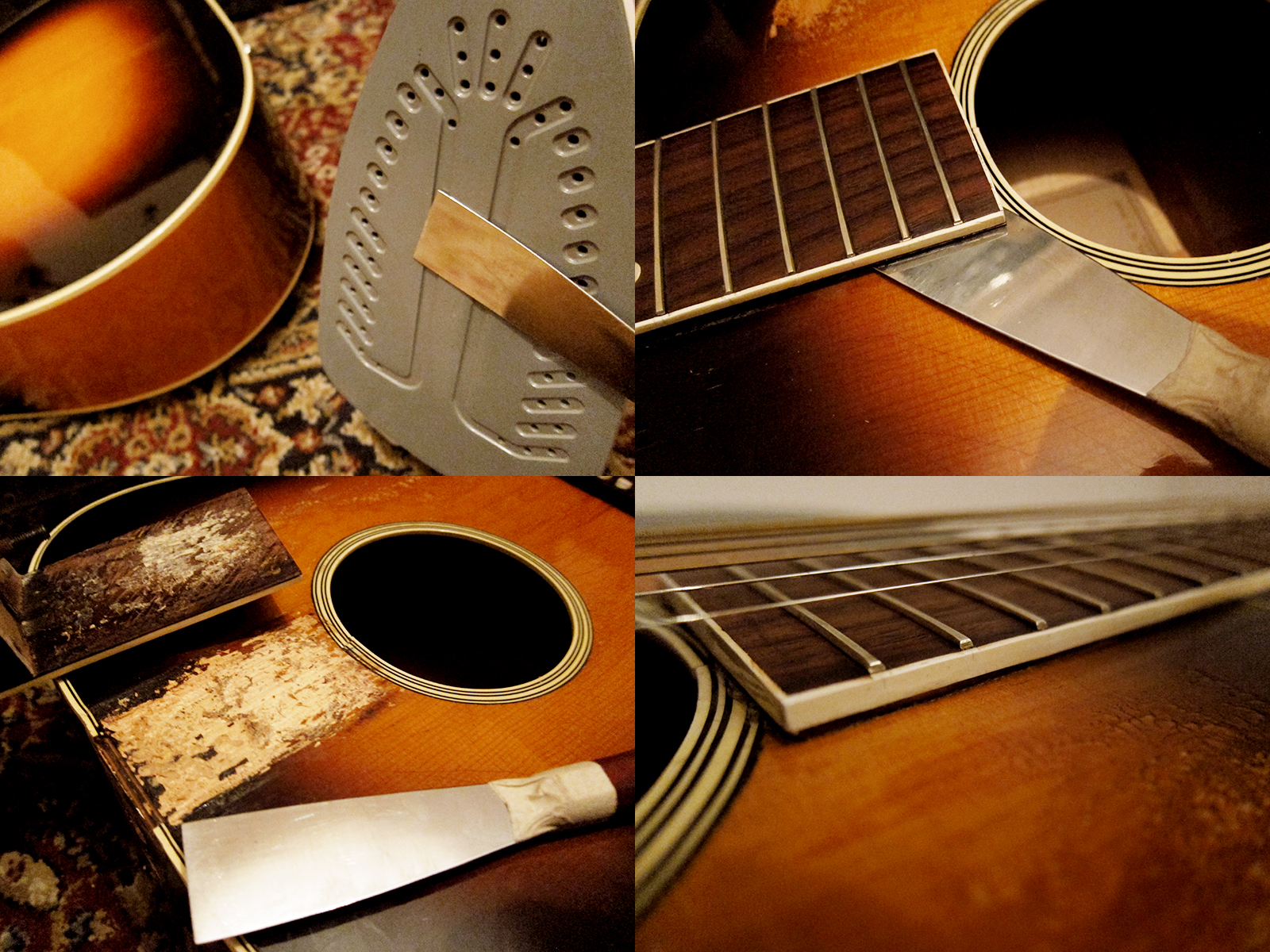




 Once I had glued the cracks in the top, the first image shows before I started, I painted and lacquered the crack. I used normal matt black acrylic paint for the dark parts and just darkened the rest with furniture oil before I applied the nitrocellulose lacquer. Once the lacquer was dry I sanded the surface smooth with 400, 800, 1500, 2000 and 2500 grit. It worked really well, it’s actually hard to even see the big crack that went all the way from the edge to the bridge. I removed the old glue from the pickguard and then glued it back again.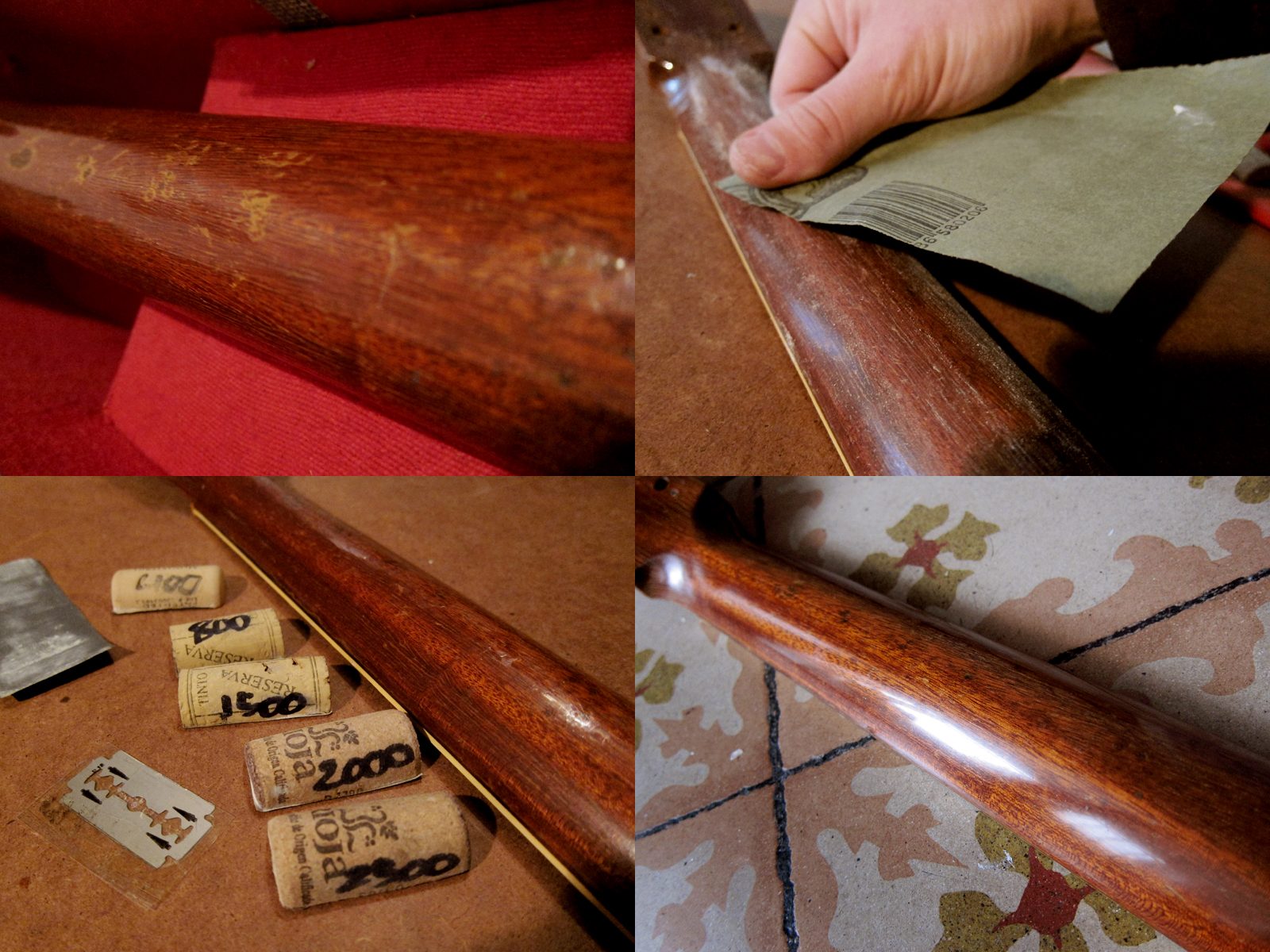

 Claescaster