Claescaster

Tag: C. F. Martin & Co

Sigma DR-35

Sigma DR-35, Made in Japan 1980, MIJ, C. F. Martin & CoSigma DR-35, Made in Japan 1980

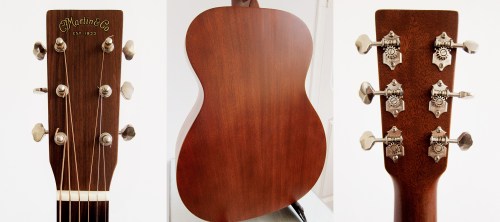
I finally managed to find another Japan made Sigma, this time a 1980 Sigma DR-35. It’s a beautiful looking Martin D-35 copy with a 3-piece rosewood back. They are pretty hard to come by these early 1980’s Japan made Sigma’s and sometimes very expensive too, between 500-1500€ depending on the model. I didn’t buy this for myself, I’m way too happy with my Sigma DR-41 at the moment and on top of that I’m actually trying to thin out my Japanese guitar collection. I got it for my friend Wolf who just like me have gone from a pretty solid Gibson obsession to realise that perhaps that Martin sound is not that bad after all. There is something of that punchy mids and clear ringing highs in the Martin sound that these Japanese made Sigma’s have too, after all they were commissioned by C. F. Martin & Co. I thought my Sigma DR-41 was loud and had a very punchy midrange but this Sigma is one step beyond, I guess because of the 3-piece back. I like the highs and the overtones better in mine but still, this is an amazing sounding guitar that I thought long and hard about keeping for myself. I was sure that my Sigma DR-41 was made in 1982 since the serial number starts with E82 but since this Sigma DR-35’s serial number also starts with E82 and came with a receipt that proves that it was sold in September 1980 it must have been made that year, or earlier.

Sigma DR-35, Made in Japan 1980, MIJ, C. F. Martin & CoSigma DR-35, Made in Japan 1980, MIJ, C. F. Martin & CoThis guitar had apparently been in storage for the last 30 years, since the original owner died and that seems plausible, it’s in really good shape for it’s age.

Sigma DR-35, Made in Japan 1980, MIJ, C. F. Martin & CoThe classic Made in Japan football stamp, burnt in to the back brace that was used from 1978-1983 on Japan made Sigma’s stating: Sigma Guitars – Made in Japan for – C.F. Martin & Co, just like on mySigma DR-41. The rosewood looks really nice on this Sigma, even better than on mine.

Wolf asked me to install a LR Baggs iBeam in the Sigma before he received it and since I recently installed the LR Baggs Lyrics in my Sigma DR-41 it was a pretty easy task. We actually got to try them both out last Saturday when we played live with Cherry & Wolf at La Sonora, it sounded something like this. I did two tests to make it easier to compare the Sigma DR-35 with the iBeam to the Sigma DR-41 with the Lyrics. They both sounds pretty darn great, but in different ways.

Sigma DR-35, Made in Japan 1980, MIJ, C. F. Martin & CoThe original receipt from 26 September 1980. The guitar cost 475 Deutsche Mark which would be around 245€ today and probably a lot more 36 years ago. Taken from my Instagram

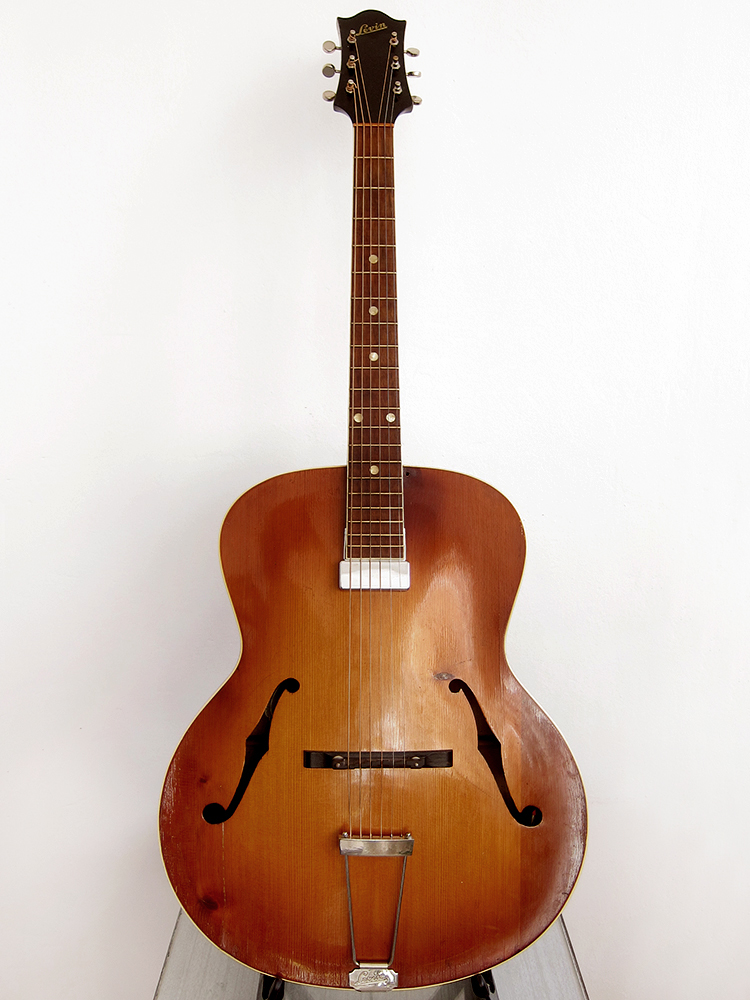
Old Levin Parlour

Old Levin Parlour, 1907 Levin catalogTaken from a 1907 Levin catalogue, thanks to Vintage Guitars Sweden

I have been trying to find a 100-years old Levin parlour for some time now, something built before 1920 and with a pin bridge. If anyone has one that they would like to sell then please get in touch, claesgellerbrink@gmail.com. I would also be interested in any guitar that came out of the greater Chicago area built by Swedish builders, like an Ideal by August Carlstedt or a Maurer or a Prairie State built by the Larson Brothers, if I could afford it. It doesn’t really matter if the guitar is playable or not.


ARTEC MHFC93

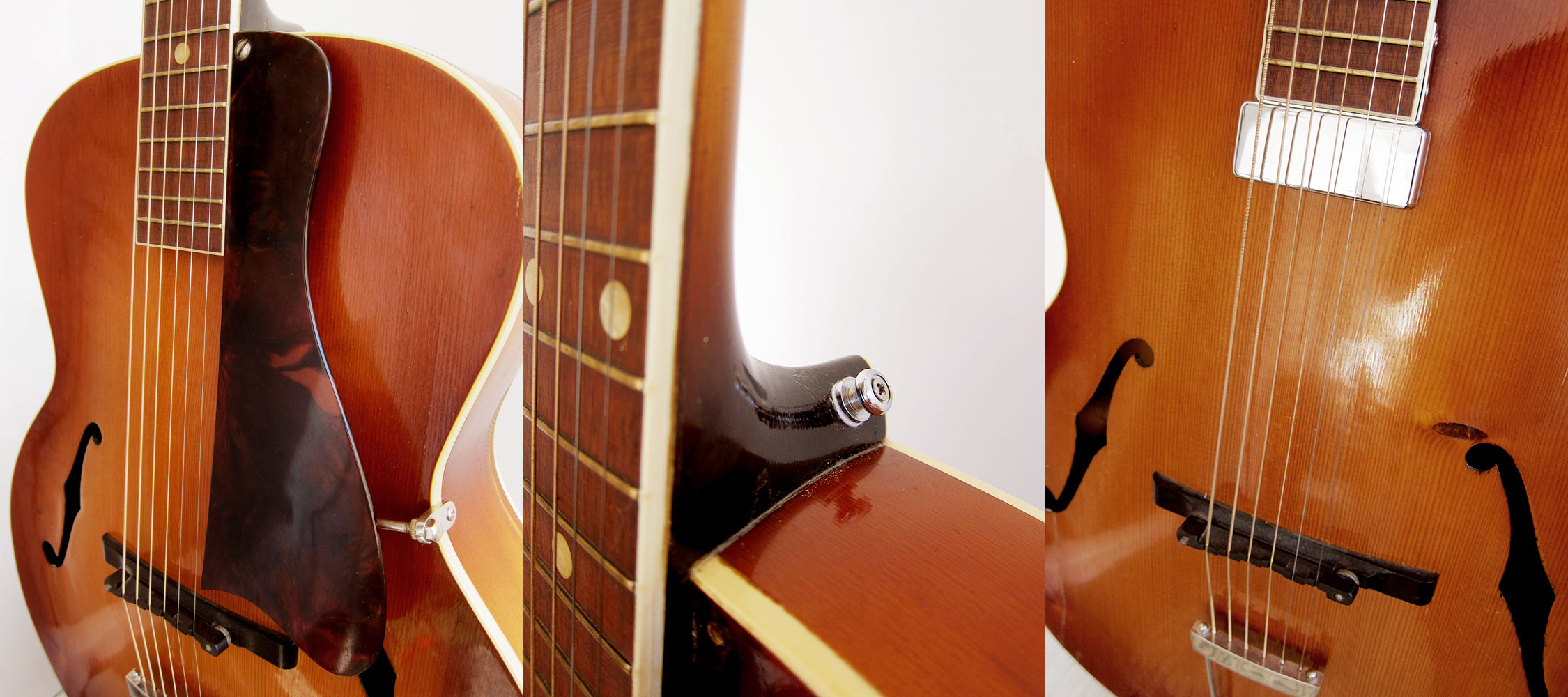
Levin Model 32 Made in Sweden 1946, Artec MHFC93-CRLevin Model 32 made in Sweden by Levin in 1946

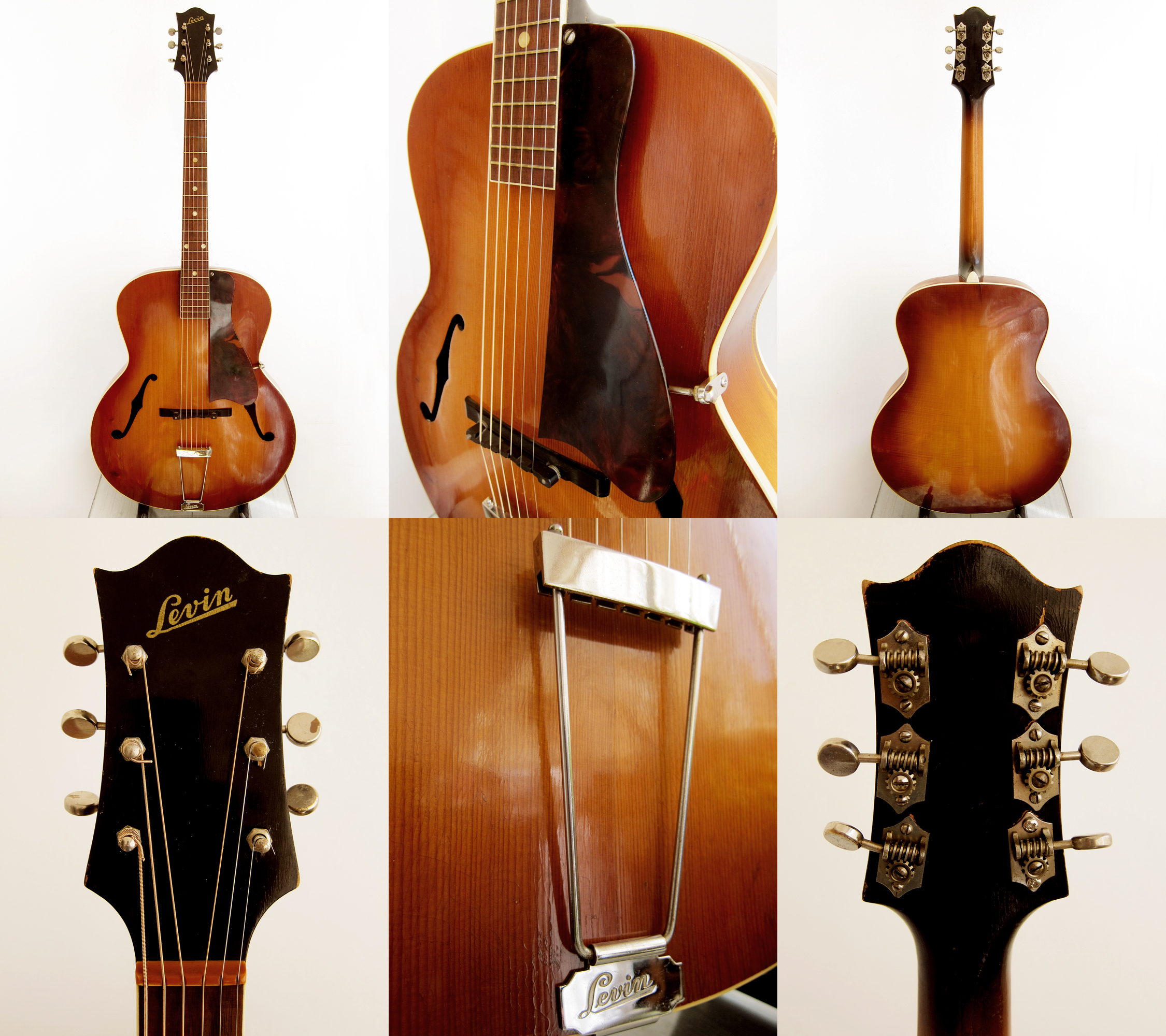
I’ve finally received my Artec MHFC93-CR from EY Guitar, the order got lost and took 3 months to arrive. Last weekend I got around to install it on my 1946 Levin Model 32 and I’m pretty impressed with how good it sounds for being so inexpensive.

Levin Model 32 Made in Sweden 1946, Artec MHFC93-CRUnfortunately I had to remove the pickguard, well it was actually quite annoying and always in the way when I played so it was more of an aesthetic loss. I also installed an old vintage strap button while I fitted the pickup so now the guitar is ready to be gigged.

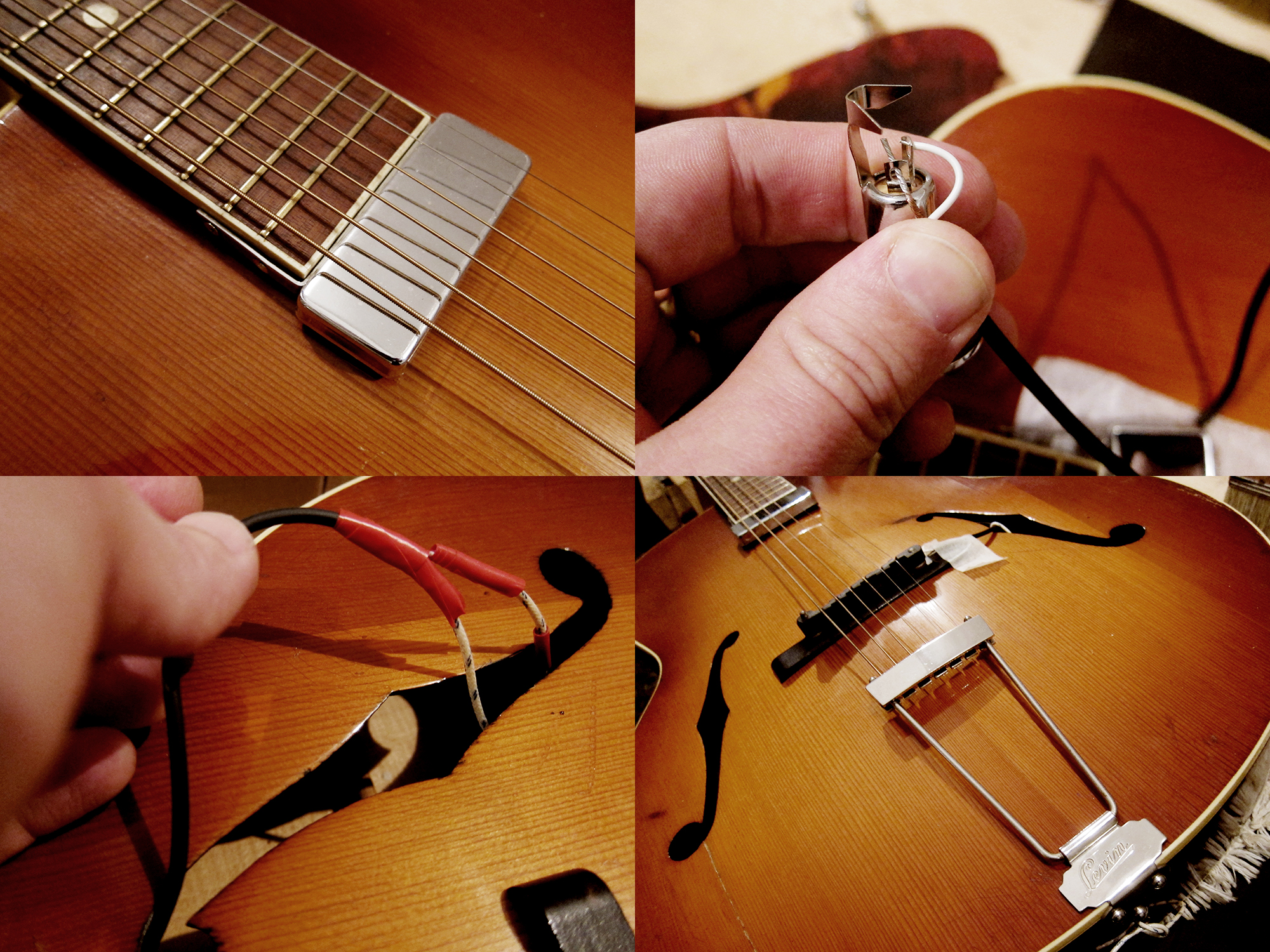
Levin Model 32 Made in Sweden 1946, Artec MHFC93-CRThe installation was pretty straight forward in the end but it took a bit of figuring things out so I completely forgot to take more pictures. First I made a small hole under the fretboard extension on the right side, where the cable from the pickup could enter the body without being visible. Then I drilled a hole for the endpin jack, just like a do when I install the endpin jacks for my LR Baggs, with a 1/2 inch or 13 mm flat spade drill bit straight through the end block. I measured two cables from the endpin to the f hole, fished them up before I cut them and then soldered them to the endpin while taped to the top for not disappearing inside. Once the cable from the pickup was fished up I checked which was which and then soldered them together and stuck them to the top on the inside with a little clip on the bottom side of the f hole so they can’t be seen. 

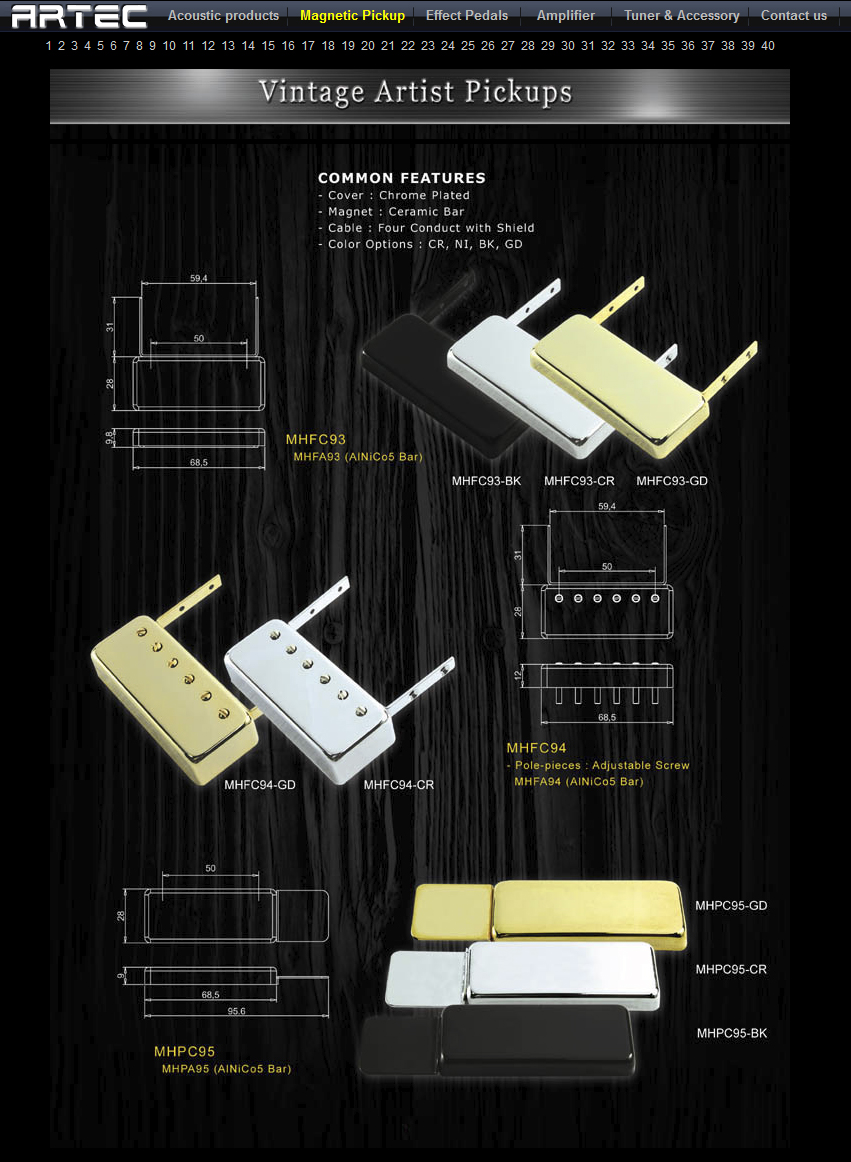
Artec MHFC93-CRArtec is perhaps not the worlds fanciest brand, especially not if you judge them by their website, but I like them and they sound very good for being so cheap.

I will get a video up as soon as possible

Happy New Year!

It’s been a great year for the Levin collection. Let’s hope that 2016 will be even better. Happy New Year everyone!

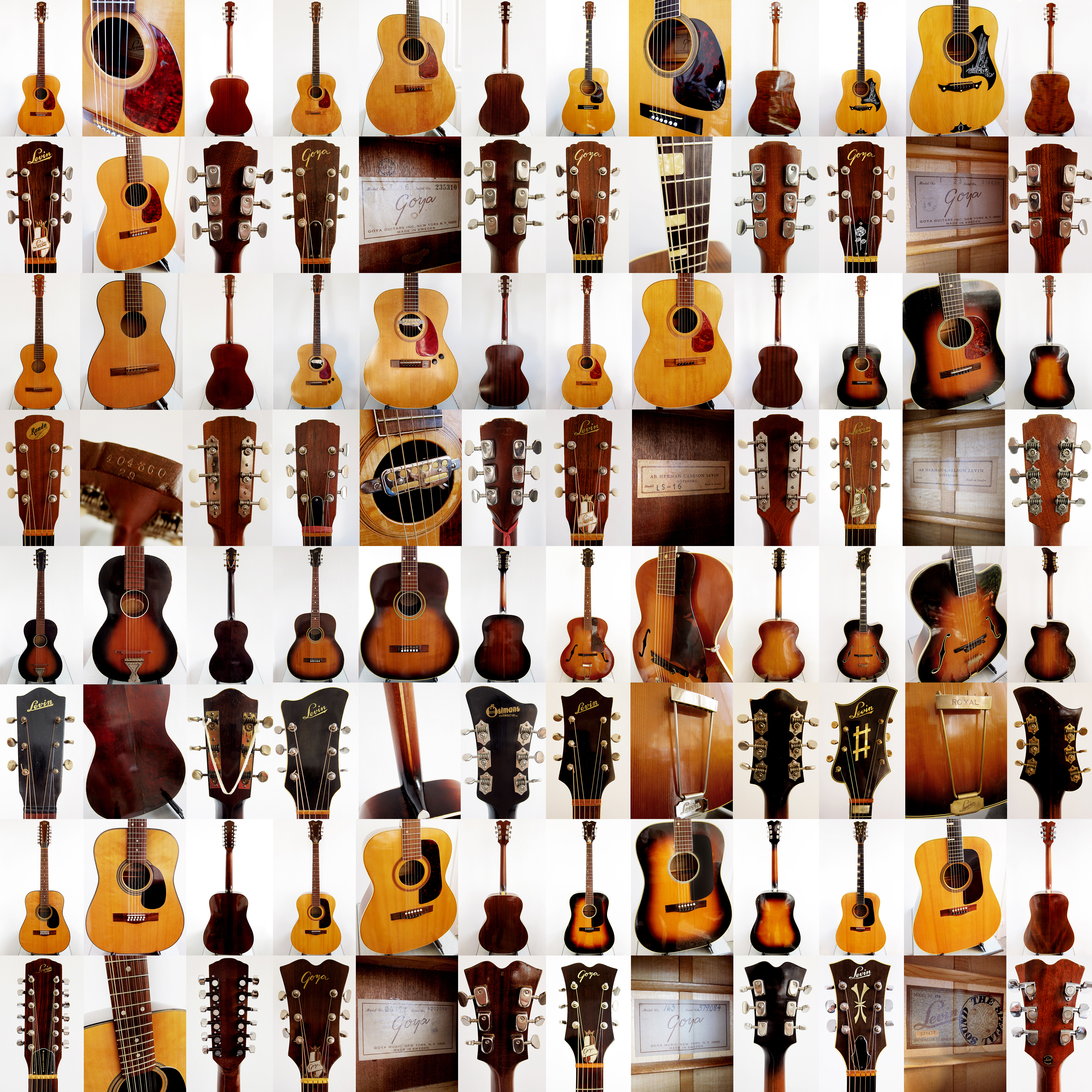
Levin CollectionLevin LT-14 (1965), Levin Goya T-16 (1965), Levin Goya T-18 (1966), Levin Goya T-23 (1966), Levin Rondo Model 29 (1960), Levin LT-16 (1966), Levin LS-16 (1963), Levin LM-26 (1959), Levin Model 65 (1942), Levin Model 13 Ambassadör (1950), Levin Model 32 (1946), Levin Model 3 Royal (1951), Levin W 12-36 (1978), Levin Goya Model GG-172 (1970), Levin Goya Model 163 (1968), Levin Model 174 (1972)

Sigma DR-41

Sigma DR-41 Made in Japan 1980, MIJ, C. F. Martin & CoSigma DR-41, made in Japan in 1982

I have heard a lot of good, and some not so good, things about Sigma guitars over the years but never actually tried one. To be honest, I really didn’t know anything about the brand until this beautiful Sigma DR-41 arrived and I felt curious and started to read up on them. I guess one big reason why there are both avid supporters and fierce haters of Sigma could be the big changes in production over the past 45-years. The brand was Created in 1970 by C.F. Martin & Co as a line of inexpensive guitars to compete with all the far east brands that flooded the market at the time. The first generation of Sigma’s from 1970-76 were made in Japan but came with adjustable bridges and looks very inexpensive to me, I haven’t tried one so they might be great. When the second generation of Sigma’s arrived in the later half of the 1970’s they really started to look like Martin guitars and the build quality seems to have improved a lot, at least by the look of it. From around 1976-1984 Sigma produced the now classic DR-line, these guitars seems to be ridiculously collectable and very popular because you rarely see them up for sale. I have a feeling that most of them live somewhere in the US and are owned by middle aged men that bought them new as their first proper guitar around 1980 and since they still sounds really good they would never sell them. I have nothing against middle aged men or guitar hoarders, I’m 35 and an avid guitar hoarder and of course I still have the first guitar I bought back in 1993.

Sigma D-41 Made in Japan 1982I have had at least 20 different Japanese acoustics in my house over the last couple of years and this 1980 Sigma DR-41 is easily my favourite so far.

The DR line consisted of DR-8, DR-9, DR-11, DR-14, DR-15, DR-28, DR-28S, SDR-28, DR-35, DR-41 and DR-45. I’m not entirely sure what DR-8 to DR-15 were based on, but DR-28 to DR-45 were pretty accurate copies of the Martin models with the same number. The guitar I’ve managed to find, the Sigma DR-41 looks very close to a Martin D-41 and I’ve seen pretty convincing Sigma versions of Martin D-28 and D-35’s too. Apparently there is a very rare version called Sigma DR-14, which is a DR-41 but with a 3-piece back, that was imported through Levin in Sweden, which makes sense since C.F. Martin & Co bought Levin in 1973. There are actually quite a few of the earlier 1970’s low end Sigma’s that were imported through Levin for the European market as well. It seems like the earlier Sigma guitars were made by Tokai through Kasunga Gakki but I really don’t know if all Japan made Sigma’s were produced by them or not. I have a feeling they might have used a lot of different factories during their 13 years in Japan.

Sigma DR-41 Made in Japan 1980, MIJ, C. F. Martin & CoI couldn’t resist so of course I changed the machine heads for Wilkinson WJ28NGD as soon as I got the chance. I just can’t stand those big bulky Japanese 1970’s machine heads.

Sigma stopped the production in Japan around 1983 and moved everything to Korea, later Taiwan and finally Indonesia. Martin claims that all Sigma’s where sent to them in Nazareth, Pennsylvania to be inspected and adjusted by Martin personnel before they sent them out to the dealers, which I doubt for the later Taiwan and Indonesian guitars. In 1981-1982, Martin imported partially assembled Sigma guitars from Japan and then put them together themselves in Nazareth, these were labelled Sigma Martin USA DR-28N and DR-35N. The Sigma story seems to be a bit shady from the 1990-2000, C.F. Martin & Co lost the rights to the name for a while and there seems to have been other companies producing Sigma guitars and then Martin got it back and closed it down in 2007. In 2011 the German company AMI Musical Instruments GmbH purchased the rights to the name and relaunched Sigma Guitars that are now being produced in China. There is quite a lot of information on Wikipedia about Japanese Sigma guitars. I also found this Sigma site really helpful.

Sigma D-41 Made in Japan 1982 guitar ad1980’s ad for Sigma guitars, with my beloved Sigma DR-41 far right

I really didn’t know what to expect when I got myself this Sigma DR-41. I just bought it because I’m so insanely gay for any guitar that looks like a Martin D-41 or D-45, or actually any guitar with a volute on the back of the head, hexagon markers and a lot of mother of pearl inlays. At first I didn’t like this Sigma much, I thought it sounded stiff and boring but after two days with the pump and a week of heavy playing I was sold. I’m not sure if all Japanese Sigma’s are this good, but this guitar is freaking amazing. It’s easily up there with Morris and K. Yairi, perhaps even better, see the second video where I compare it to my K. Yairi YW-1000.

Rondo

Rondo by Levin Made in Sweden 1960Rondo, built by Levin in Gothenburg Sweden in 1960

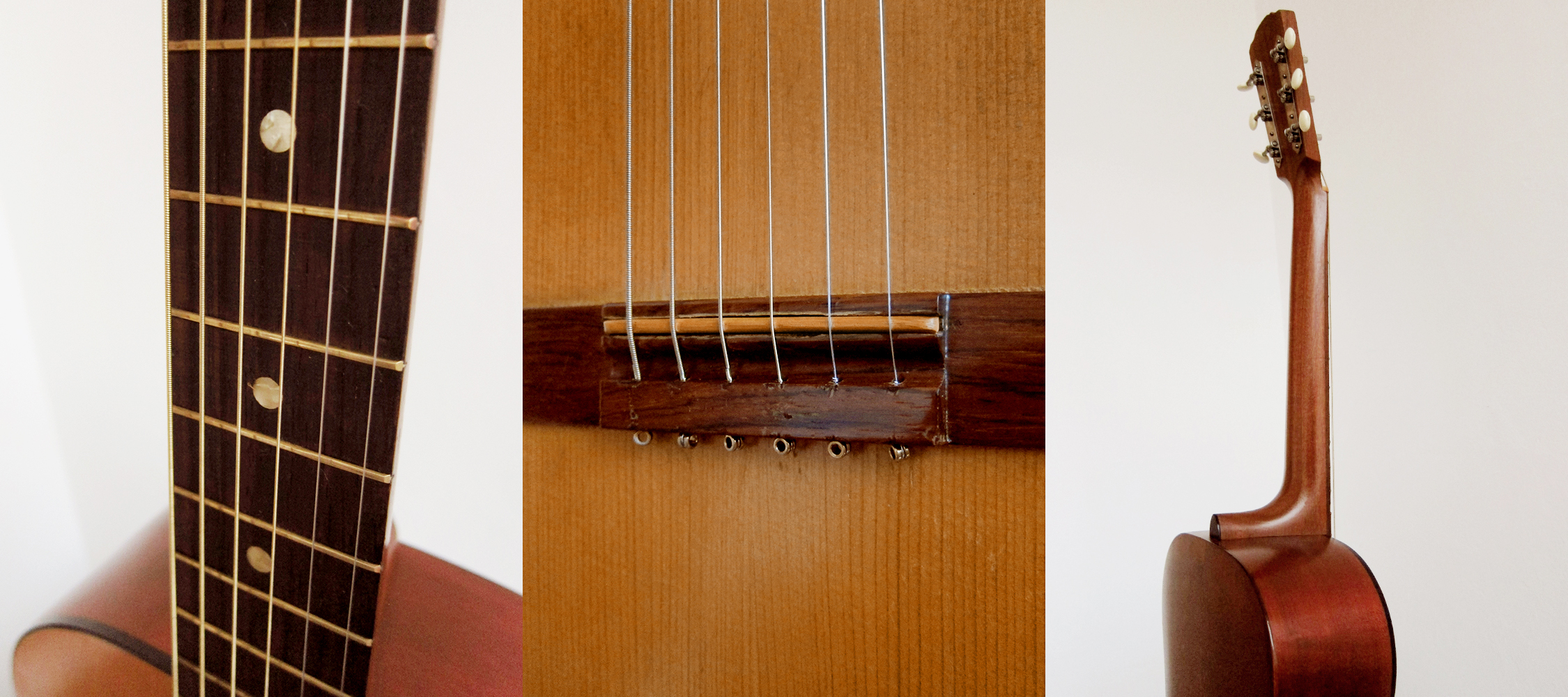
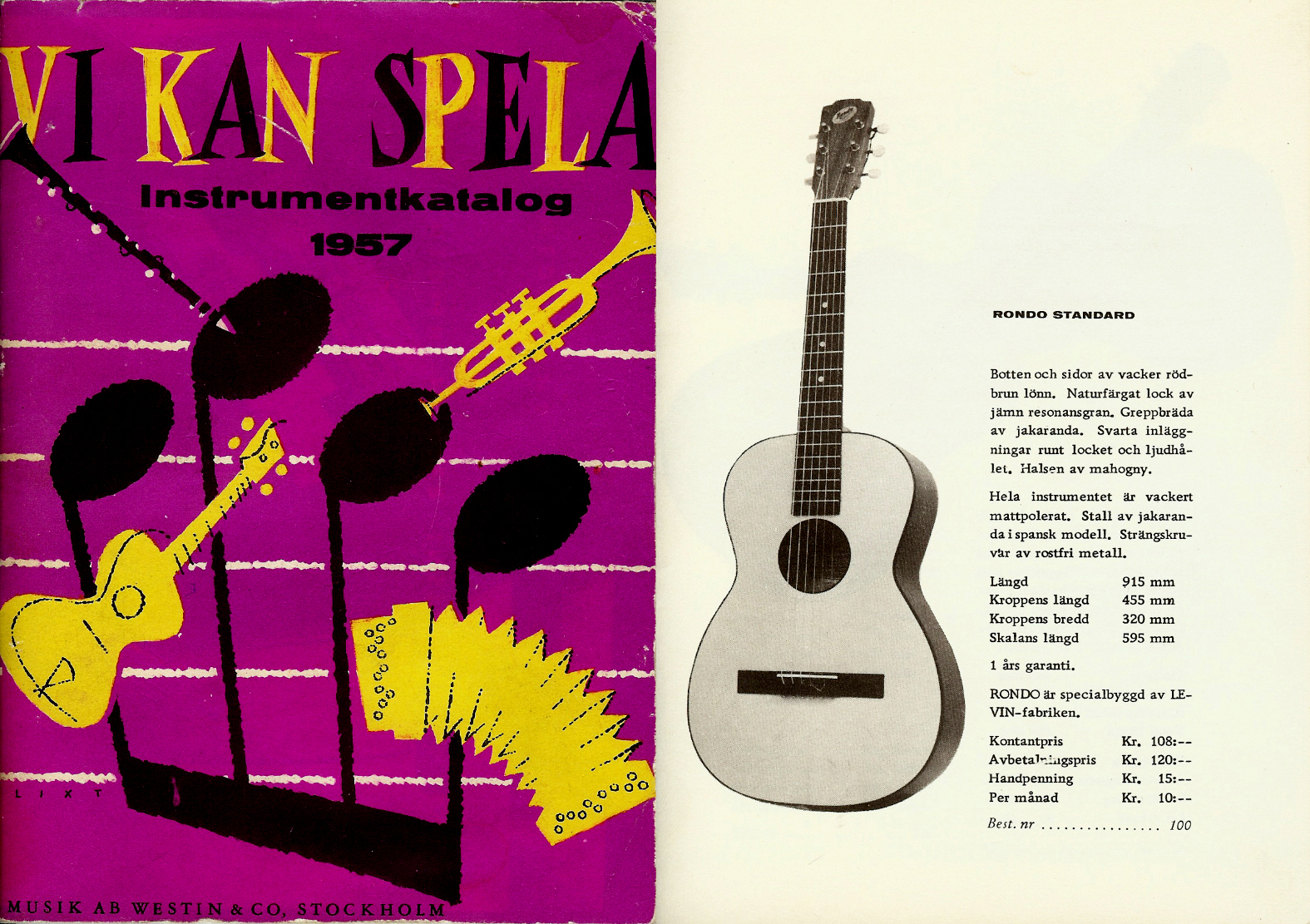
Today is wife’s birthday so tried to be a good husband and got here an old guitar. I found her a little Rondo, a mail order guitar built by Levin in the late 1950’s. I have actually never seen one of these before so I was quite exited when it arrived. It surely feels, plays, smells and sounds like a Levin. Rondo was made by Levin for Musik AB Westin & Co, a music store and publishing company in Stockholm with a large mail order business. It looks pretty similar to a Levin 119 and was made for both steel and nylon strings, this was pretty common on smaller Levin guitars in the 1950-60’s. It’s a very nice little guitar to play and it has more volume and sounds sweeter than I expected, perhaps because it’s fan braced instead of ladder braced. My wife seemed very happy with it too when she got it this morning.

Rondo by Levin Made in Sweden 1960Rondo by Levin Made in Sweden 1960

Rondo
Non-cutaway. Body width: 320 mm, body length: 455 mm
Body depth: 95 mm, scale length: 595 mm
Spruce top, maple back and sides, fan braced
Single-bound top, unbound back, unbound headstock
Unbound rosewood fingerboard with pearl dot inlay
Mahogany neck with non-adjustable T-shaped duraluminum truss rod, rosewood bridge, stainless tuners
Natural finish, one year warranty

Rondo by Levin Made in Sweden 1960It was in pretty good shape when it arrived. I had to glue a couple of small cracks, polish the frets, oil fretboard and machine heads and give her a good clean but that was it. The only problem was that this had to be done when my wife wasn’t around so I’ve been a guitar repairing ninja for the last week.

Rondo guitar, Musik AB Westin & Co 1957 catalogueThe Levin built Rondo guitar in a 1957 catalogue from Musik AB Westin & Co

Martin 000-15M

Martin 000-15M, Made in USAMartin 000-15M, Made in USA 2011

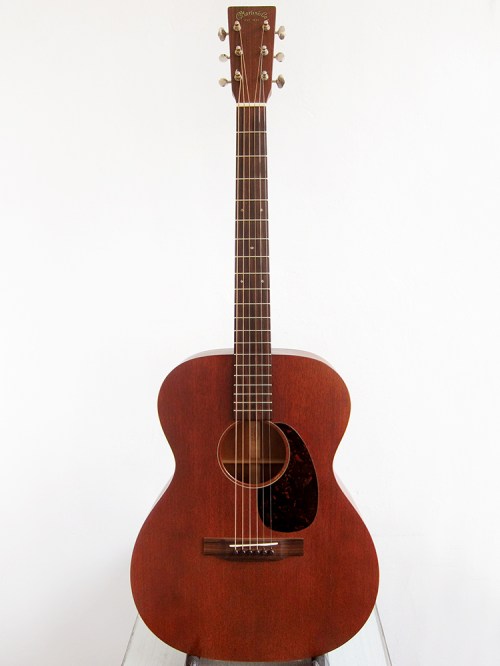
I recently had my friend Rafa’s little Martin 000-15M over for a set up. I didn’t have to do that much to it, just adjust the trussrod and file down the saddle a bit to get the action down. I realised that I have completely mixed up the Martin sizes, I always thought that the 000 was smaller than the 00, apparently it’s the opposite. That means that my dad’s old Levin LT-16 is a copy of a Martin 000, at least size wise, and not a Martin 00. It could be good to know next time I’m looking for some old guitar and they refer to it as being 000 sized, smaller than that is probably not for me. I don’t like jumbo guitars, but I do like the bass response of a good dreadnought sized guitar, and I think that anything smaller than a 000 would most likely sound like a parlour guitar in my ears. These Martins 000-15M have a pretty descent bass response for their size, I guess because of the shape and the all solid Mahogany construction. It’s a beautiful looking guitar, very light and easy to play and with a warm nice sound that I can highly recommend to anyone looking for a new guitar.

Martin 000-15M, Made in USA

Levin Model 32

Levin Model 32 Made in Sweden 1946
Levin Model 32 made in Sweden by Levin in 1946

I recently got this old 1946 Levin Model 32 from an eBay seller in Vienna. The guitar has clearly seen better days but I felt she deserved a second chance in life so I got her home, dolled her up and now she is playable again. I had no idea what model it was when I got it and I was actually hoping that it would be a Model 30 from the late 1930’s, they look very similar but it turned out to be a Model 32 from the mid 1940’s instead, which isn’t bad. I guess I just wanted to have a Levin that was older than my 1942 Levin Model 65. It’s pretty close to my 1951 Levin Royal in sound and feel but with a more casual appearance. I guess there was a shortage of tonewoods all over Europe during the war so they used what they got. This one has a hand carved 3-piece Romanian spruce top and you can even see a couple of knots around the f-holes. I don’t really mind, together with all the cracks it’s just adding to that old worn archtop look and feel. The back is really beautiful though and the neck feels great, really fat and chunky as I like. It also has a quite different sunburst compared to what Levin normally used in 1940-50’s. Levin used to copy Gibson’s tobacco sunburst but this one has more of a cherry sunburst.

Levin Model 32 Made in Sweden 1946

Levin Model 32
Non-cutaway. Body width: 420 mm, body length: 510 mm
Hand carved Romanian spruce top, mahogany back and sides
Single-bound top with unbound f-holes
Single-bound back, unbound pickguard and unbound headstock
Mahogany neck with non-adjustable T-shaped duraluminum truss rod
Single-bound rosewood fingerboard with mother-of-pearl dot inlay
Nickel plated hardware, sunburst finish and ten years warranty
Available between 1940 – 1947

Levin Catalog 1946
Levin Model 32, here between the model above, the beautiful Model 27 and the slightly cheaper Model 35. I love that the case option offered in the bottom of each ad is a plain textile bag with a zip, really, textile? The list price for the guitar in 1946 was 285 SEK, around 30 Euro. The Royal listed that year at 575 SEK an the top of the line, the Deluxe at 1000 SEK. Taken from a 1946 Levin archtops catalog, thanks to Vintage Guitars Sweden

Levin Model 32 Made in Sweden 1946
She looked a bit sad when she arrived, but there was nothing that couldn’t be fixed

Levin Model 32 Made in Sweden 1946
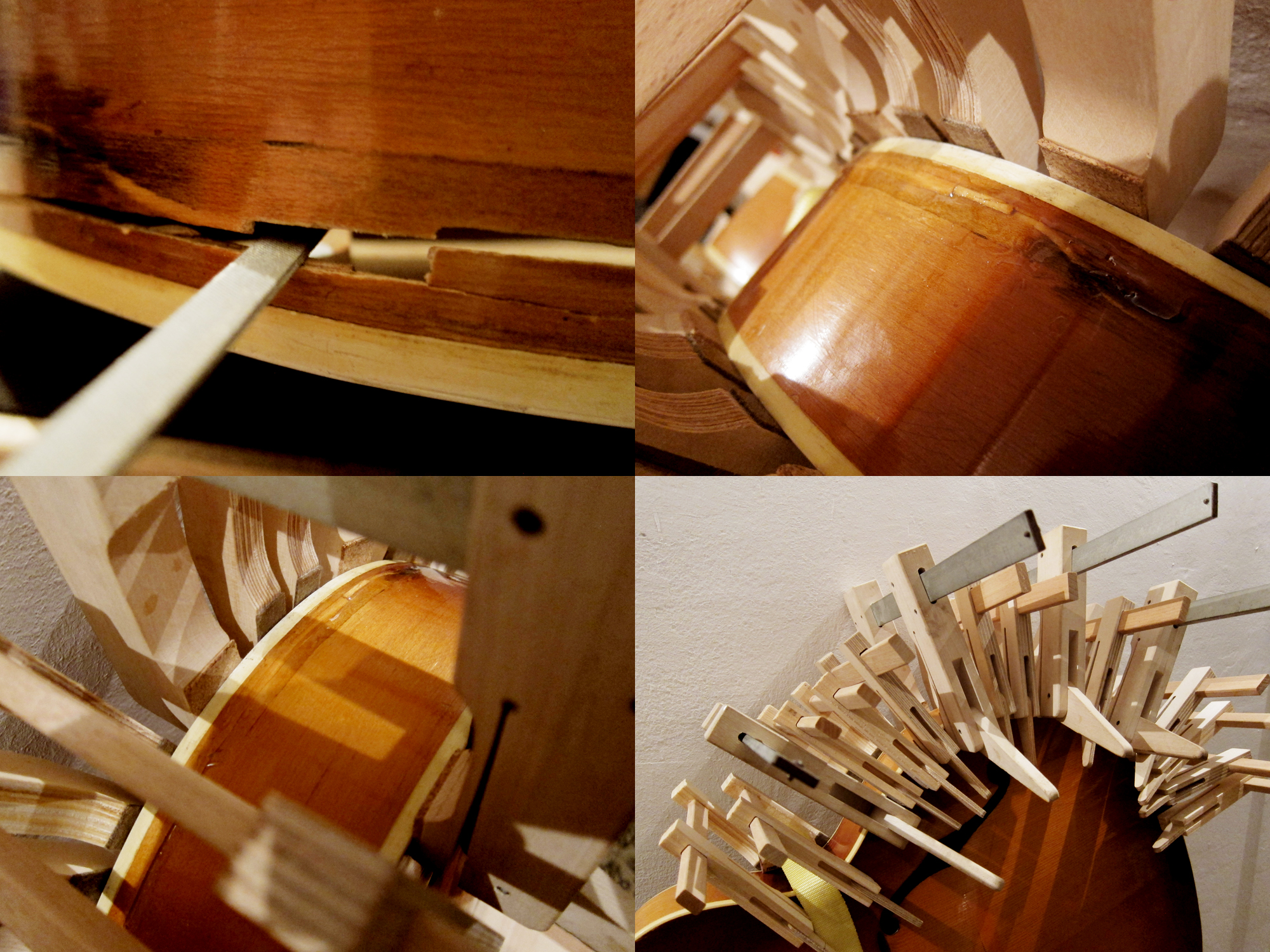
First I had to deal with the crack that was running along the whole bottom side, from the upper bout to the endpin. There was also another crack, or hole, that the previous owner had glued in perhaps not the most discrete fashion.

Levin Model 32 Made in Sweden 1946
I have never attempted to glue anything this big before but there is a first time for everything. I noticed that there was a piece of wood missing so I started with making the hole square and then I fitted a little piece of wood in the exact same size. The main problem I had was that the guitar had been cracked for so long, with the tension of the strings I think, so the whole side had kind of warped. In parts the crack was overlapping in one way then suddenly changed to go the other way. Which meant that when I was trying to close the crack it didn’t line up, at all. I did my best and with a bit of force and a lot a clamps I managed to get it to close at least, even if it didn’t line up perfectly. I know that the correct way of doing this would have been to glue cleats on the inside and perhaps a string coming trough that you can tighten from the outside or even better, magnets, but unfortunately the crack was just over the kerfing which would have made it hard to glue any cleats on top of the kerfing. I also couldn’t figure out a way of getting any magnets inside an archtop, there wasn’t really any way of getting my hands in there.

Levin Model 32 Made in Sweden 1946
It went ok for being my first time and it seems to be very solid after letting the fish glue cure for 48 hours, I added some extra glue over the old crack too just to be on the safe side. I sanded everything smooth and then lacquered with shellac, I was trying to match the original lacquer but it turned out to be impossible to copy the sunburst. Maybe I can figure out a way and redo this part but at least now the guitar is playable. I buffed up the old lacquer and made it blend with the new shellac by polishing it with metal polish, that always works great on old guitars. It’s the same technique I use for the back of the necks, filling the dents with nitro lacquer and then sand it smooth and buff it up with metal polish. The original machine heads are pretty wonky but they work fine and cleaned up nicely, just like the tail piece, so I decided to keep the guitar all original.

Levin LT-14

Levin LT-14 / Goya T-14 Made in Sweden 1965 Levin LT-14 Made in Sweden in 1965

It has been an extremely good Christmas, not only did I manage to find a 1979 Fender Stratocaster, I also received a little Levin LT-14 from 1965. It’s the smallest of the 1960’s Levin guitars and is roughly like a Martin 00 in size. I bought it about two weeks ago from a guy in Heidelberg, Germany and then it got stuck in some warehouse over Christmas until the Spanish post service could be asked to deliver it. It’s an awesome guitar, pretty much like my dad’s old Levin LT-16 but a tiny bit smaller and with a bit less bass but with more clarity in the upper register. It’s also ladder braced instead of X braced which is not necessarily a bad thing in this case, it gives it a pretty great sound. The weirdest thing is that it’s so well kept for being 50 years old, close to mint and it can’t have been played much in it’s life. Well that’s going to change now because I really like it, especially for finger picking and I’m sure it will mature and sound better and better the more it gets played. This is my 10th Levin, or 11th if you count a Levin LS-16 that I have waiting for me in Sweden. Perhaps it’s time to stop buying old Levin guitars but I can’t, they are just too good to turn down. I have liked some of my Levin guitars less and then one day they surprise you and just sound amazing. I guess the more you play them, the better they sound.

Levin LT-14 / Goya T-14 Made in Sweden 1965 It’s the first time I get a 50 years old guitar home and I have to do nothing to it. There are actually no scratches to the top, that’s just in the grain of the spruce.

Levin LT-14 / Goya T-14
Grand Concert size: Body width: 360 mm, body length: 465 mm, body depth: 98 mm
Fingerboard width: 43 mm, scale length: 630 mm
Spruce top, mahogany back and sides, 4-ply bound top, single-bound back
Mahogany bolt-on neck with adjustable truss rod
Unbound rosewood fingerboard with bass side dot inlay
Nickel plated individual Van Gent tuners with metal buttons
Rosewood bridge, matte natural finish and one year warranty

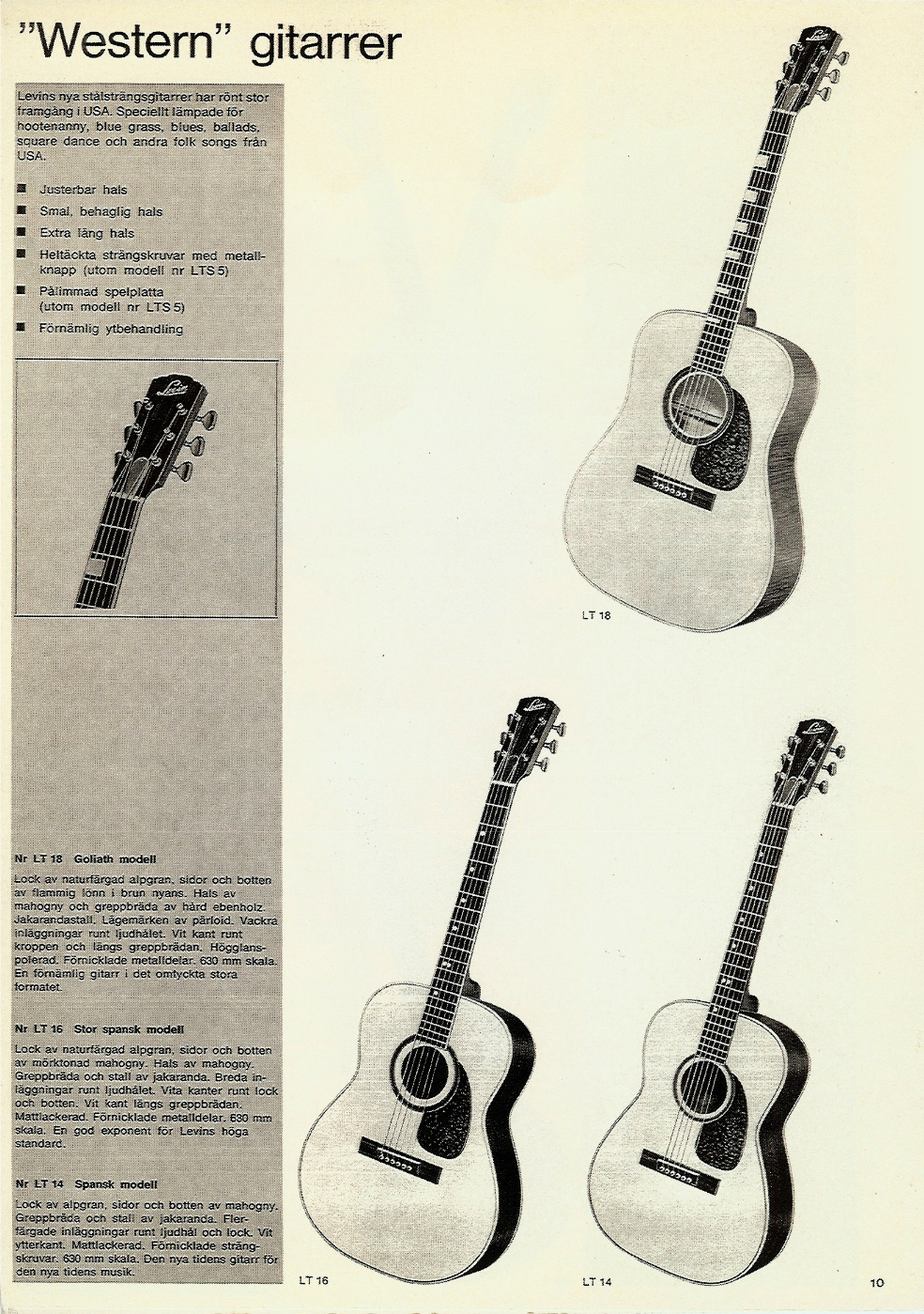
Western gitarrer, Levin / Goya catalogue 1965 Now I actually have all three, the Levin LT-18, well it’s a Goya T-18 but close enough, my dad’s old Levin LT-16 and this new little Levin LT-14. Taken from a 1965 Levin catalogue. Thanks to Vintage Guitars Sweden

Goya GG-172 (1970), Levin Model 13 (1950), Goya Model 163 (1968), Levin Model 174 (1972), Levin Royal (1951), Levin LM-26 (1959), Levin Model 65 (1942), Goya T-18 (1966), Levin LT-14 (1965), Levin LT-16 (1966) The Levin family at the moment, from left to right: Goya GG-172 (1970), Levin Model 13 (1950), Goya Model 163 (1968),  Levin Model 174 (1972), Levin Royal (1951), Levin LM-26 (1959), Levin Model 65 (1942), Goya T-18 (1966),  Levin LT-14 (1965), Levin LT-16 (1966)

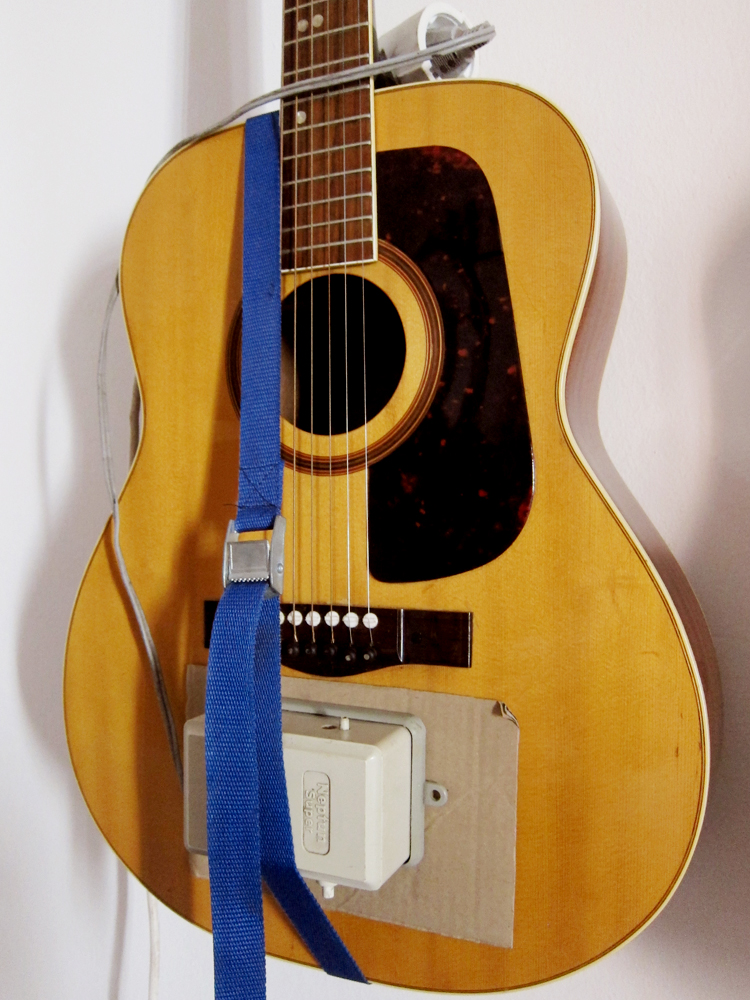
How to… get your acoustic to open up

Levin Goya 172 Made in Sweden 1970 Goya GG-172 Made in Sweden by Levin in 1970

A great way to improve the tone of your acoustic guitar and to get it to open up is to use a normal air pump from a fish tank to give the top a massage. I got an old one, I think the older they are the more they vibrate, that I use on guitars that I buy that hasn’t been played for years. It works great and seems to add both bass, volume and clarity to the guitar. A day or two with the pump is like months of actually playing.