Gibson J-45 ADJ, built in Kalamazoo, Michigan, USA in 1965
As mentioned quite a few times in the past, I’m very gay for the old round shouldered Gibson J-45 / J-50. I’m not entirely sure why, it’s not just for the amazing bass response, I think I really like the look of the round shoulders as well, it’s very woman like. I previously owned a 1970 Gibson J-50 Deluxe which sounded great but it didn’t really have the look or sound I was after so eventually I sold it to a nice older gent living in Kent, no he lived in Asturias here in Spain but he might very well have been from Kent originally.
1965 Gibson J-45 ADJ, round shouldered dreadnought, natural finish spruce top, mahogany back and sides, rosewood fretboard and bridge. All original except for the refinish which turned this J-45 in to a J-50
In the beginning of the year I was contacted by a seller that happened to sit on a 1965 Gibson J-45 ADJ with a natural top, apparently it was refinished in the early 1970’s. It looked exactly like the guitar I was looking for, round shouldered, small headstock with old school Kluson 3-on-a-plate machine heads and a big pickguard. The only downside was a couple of old cracks in the top and the adjustable bridge. The cracks had been fixed 45 years ago and it wasn’t that hard to carve a new bone saddle the size of the old rosewood saddle, insert and all. Finally I had my mid-1960’s round shouldered Gibson J-50, I would of course have preferred a mid-1950’s but the price difference is just insane. Even though it’s a 1965 Gibson J-45, the only difference between the J-45 a J-50 was the sunburst so with that gone it’s a 1965 Gibson J-50.
I wasn’t overly keen on the sound of the original adjustable rosewood saddle so I carved a new one in bone and removed all the nuts and bolts under the bridge. The rosewood saddle didn’t sound bad, just a bit muffled and to me the bone is huge improvement
This is how cool I feel with my 1965 Gibson J-45, like a 1963 Bob Dylan with his late 1940’s Gibson J-50
I recently found a 000-sized Alvarez for my friend Wolf. It’s a really nice little guitar that we both were impressed by. These guitars were made in Japan for the US market and imported by St. Louis Music in Missouri, the guys behind Westone. According to Wikipedia and Alvarez own site it was the legendary Kazuo Yairi that founded the brand in 1965 to make cheaper Yairi guitars for the US market. Having said that, it’s still unclear if all Alvarez guitars were really made in the K. Yairi factory in Kani, Gifu in Japan or outsourced on other factories in Japan, see Jedistar. These early 1970’s Alvarez are a bit different to the later Alvarez-Yairi guitars that got famous in the late 1970’s and 1980’s when musicians like Crosby, Stills & Nash and Bob Weir endorsed them. Not only is the label inside and head inlays different, but they also seems to have their own models, the later Alvarez-Yairi are exact copies of the Yairi models of the time but made for export to the US. Since there is a sticker with a serial number inside that correspond perfectly to the Emperor code that K. Yairi uses things point towards the Yairi factory. As with everything made in Japan during the 1970’s, there are some questions we might never find the answer too. Either way we have an awesome Japan made Martin 000-18 copy that Wolf is very excited to play, especially with my Bill Lawrence A-300 in the soundhole.
The serial number starts with 48 which signify the 48th year of the reign of emperor Shōwa, which was in 1973. You can check the serial numbers of your Yairi or Alvarez here
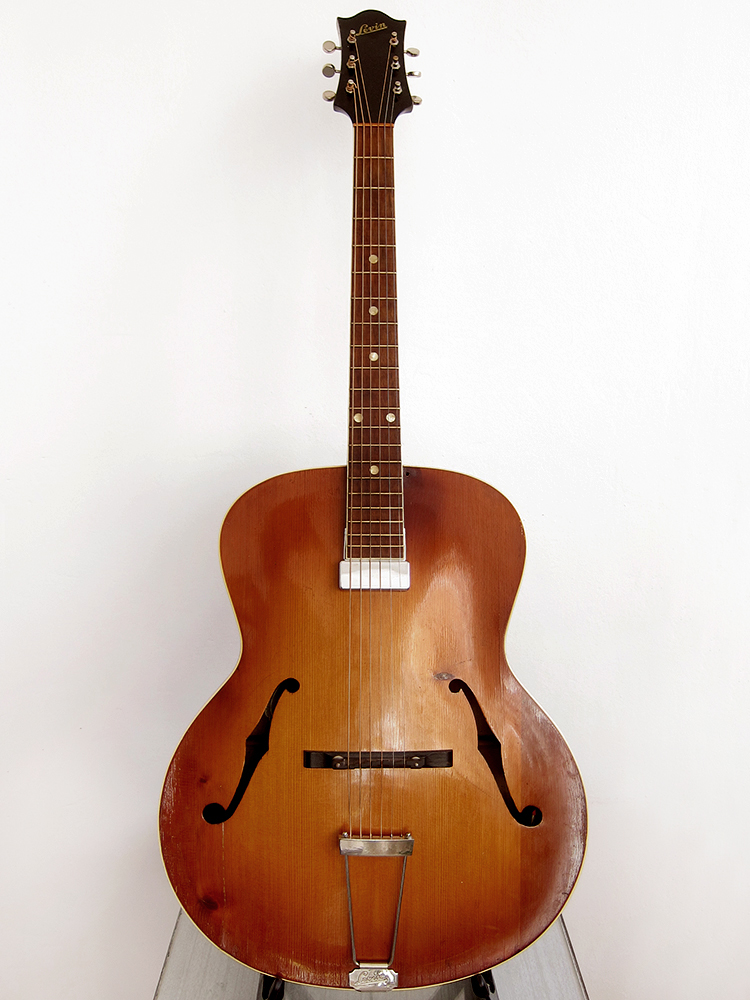
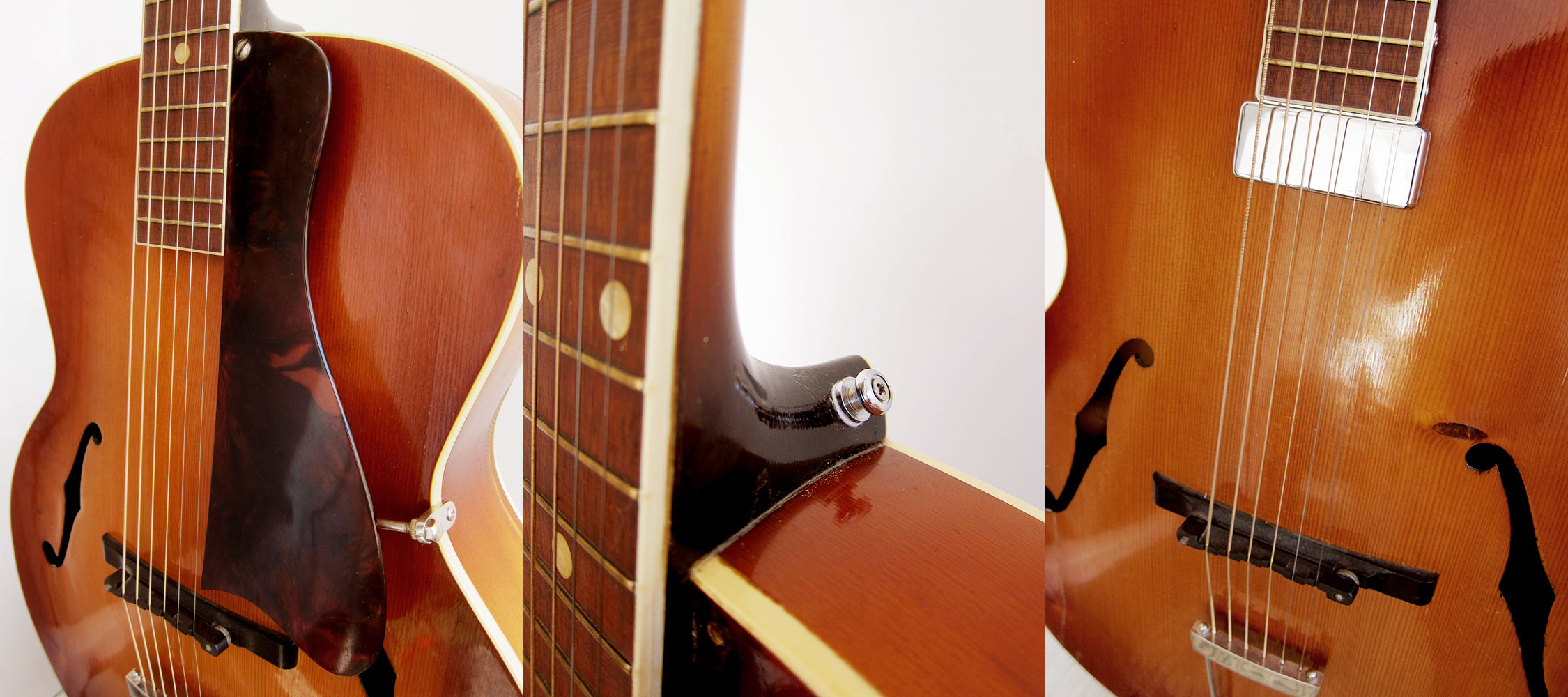
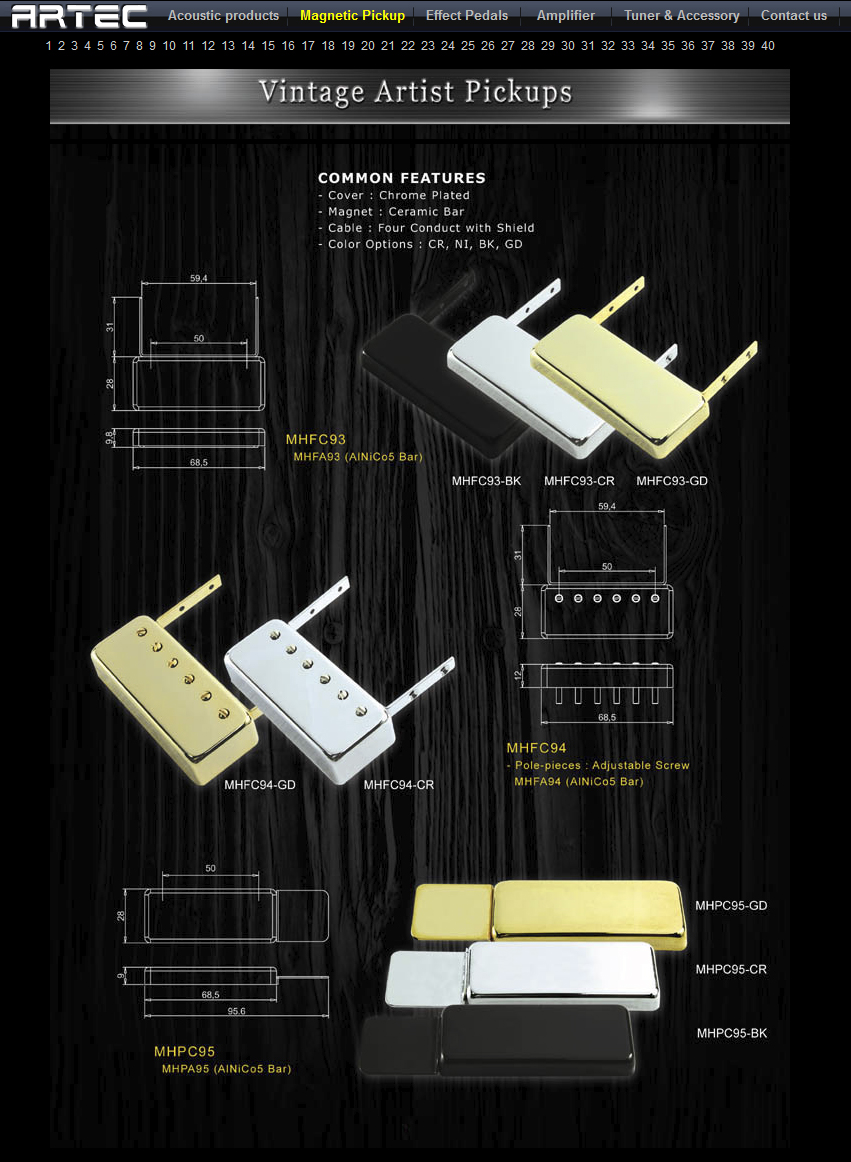
I’ve finally received my Artec MHFC93-CR from EY Guitar, the order got lost and took 3 months to arrive. Last weekend I got around to install it on my 1946 Levin Model 32 and I’m pretty impressed with how good it sounds for being so inexpensive.
Unfortunately I had to remove the pickguard, well it was actually quite annoying and always in the way when I played so it was more of an aesthetic loss. I also installed an old vintage strap button while I fitted the pickup so now the guitar is ready to be gigged.
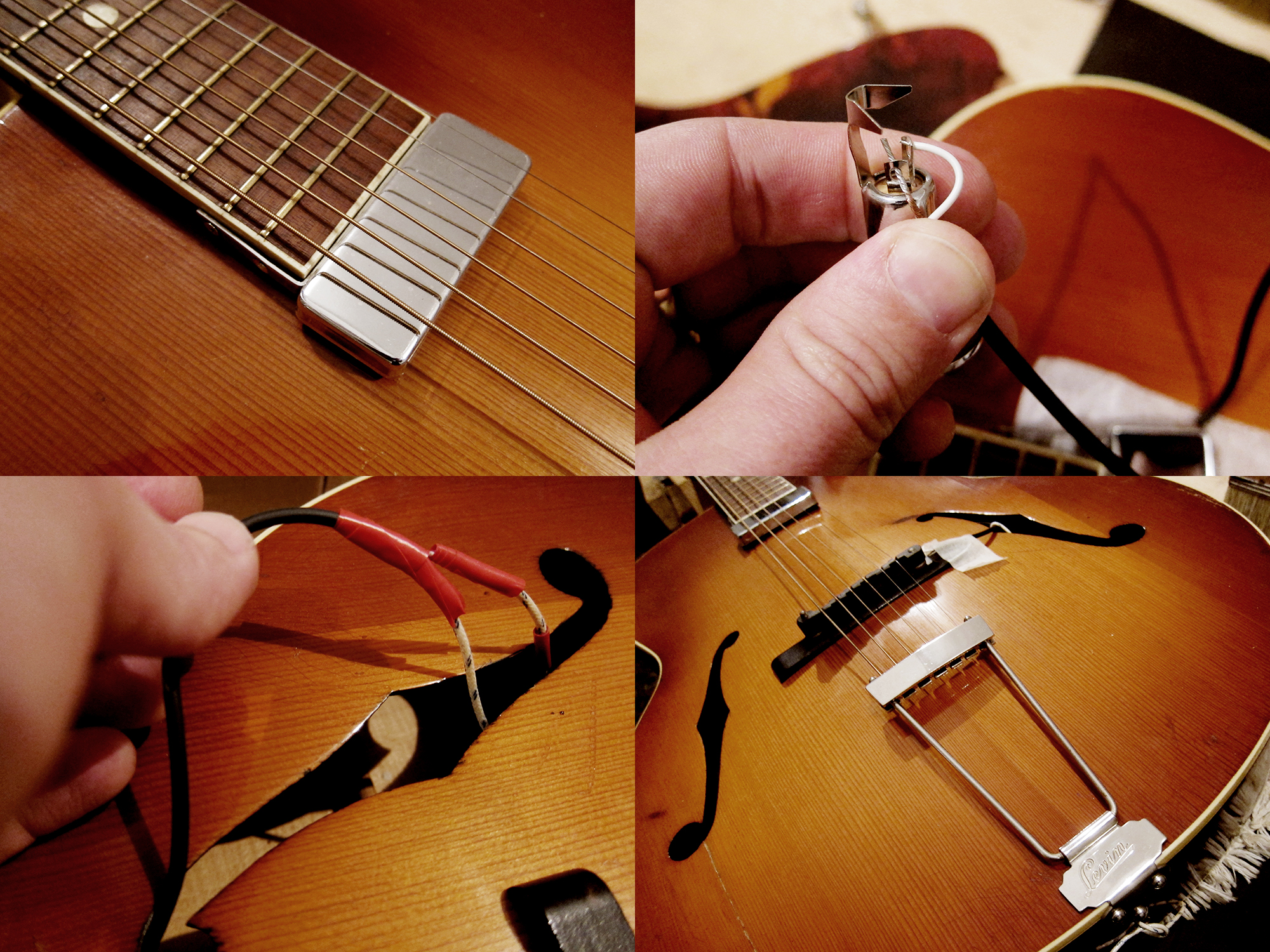
The installation was pretty straight forward in the end but it took a bit of figuring things out so I completely forgot to take more pictures. First I made a small hole under the fretboard extension on the right side, where the cable from the pickup could enter the body without being visible. Then I drilled a hole for the endpin jack, just like a do when I install the endpin jacks for my LR Baggs, with a 1/2 inch or 13 mm flat spade drill bit straight through the end block. I measured two cables from the endpin to the f hole, fished them up before I cut them and then soldered them to the endpin while taped to the top for not disappearing inside. Once the cable from the pickup was fished up I checked which was which and then soldered them together and stuck them to the top on the inside with a little clip on the bottom side of the f hole so they can’t be seen.
Artec is perhaps not the worlds fanciest brand, especially not if you judge them by their website, but I like them and they sound very good for being so cheap.
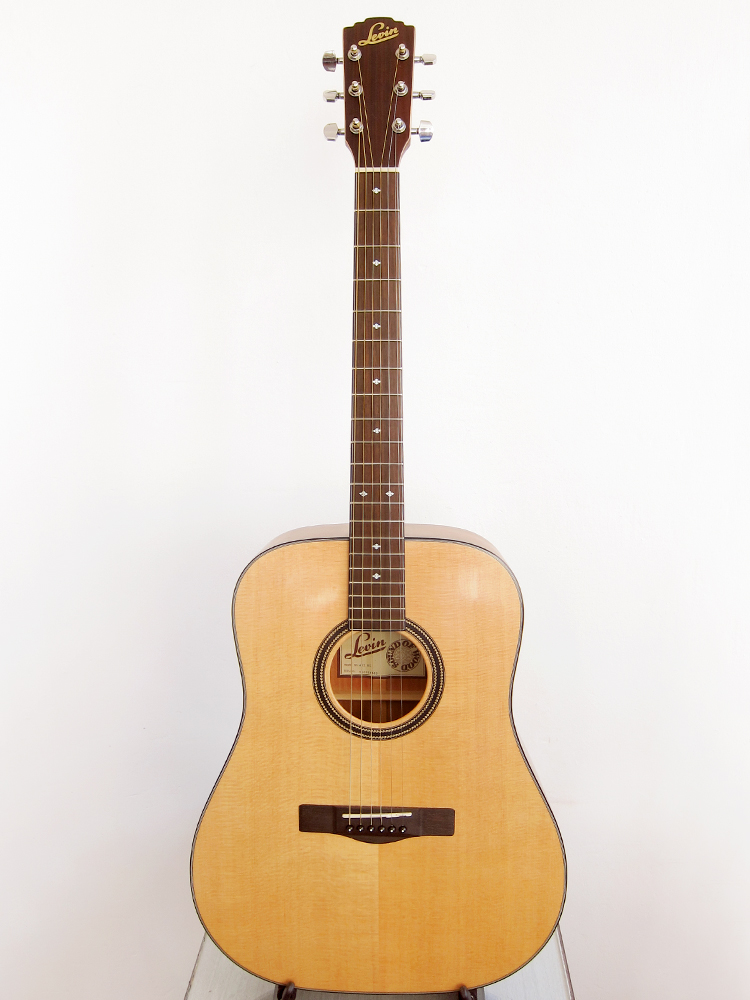
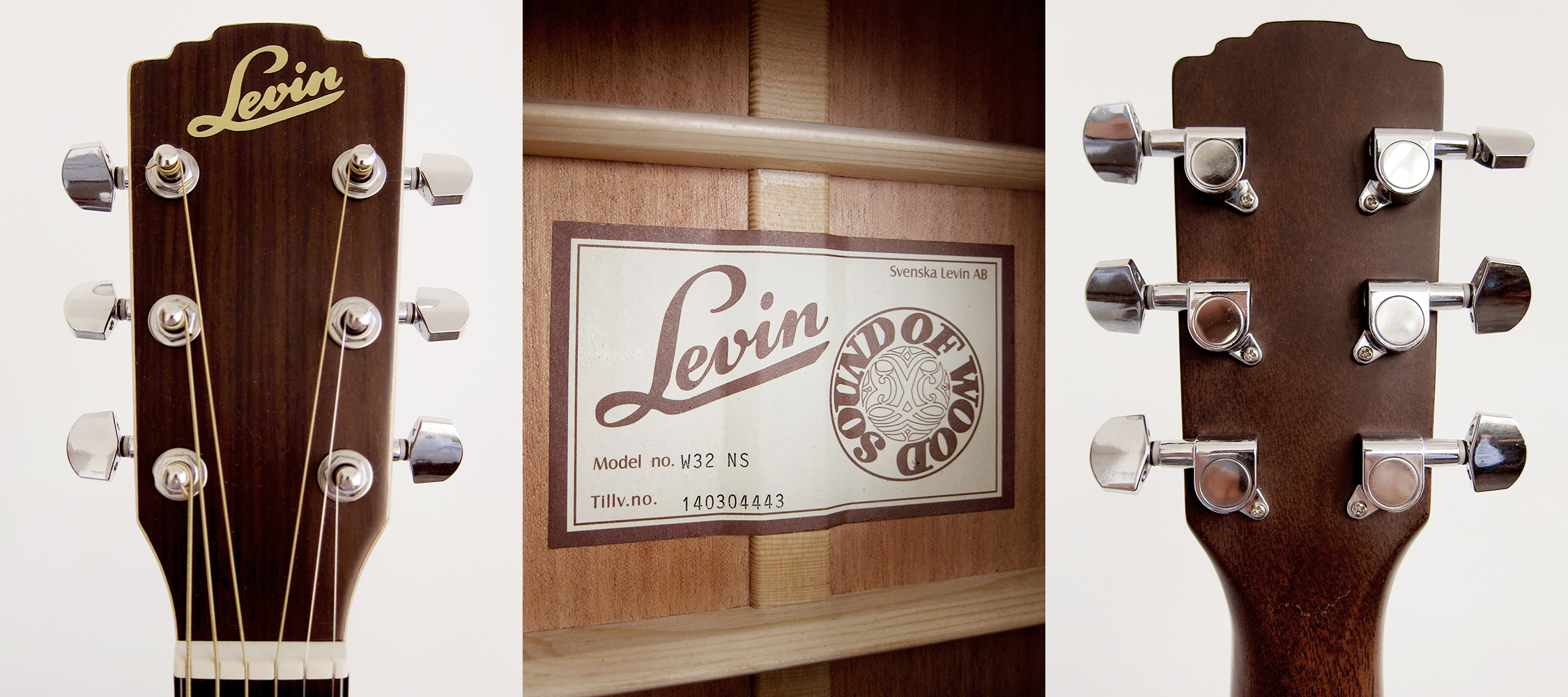
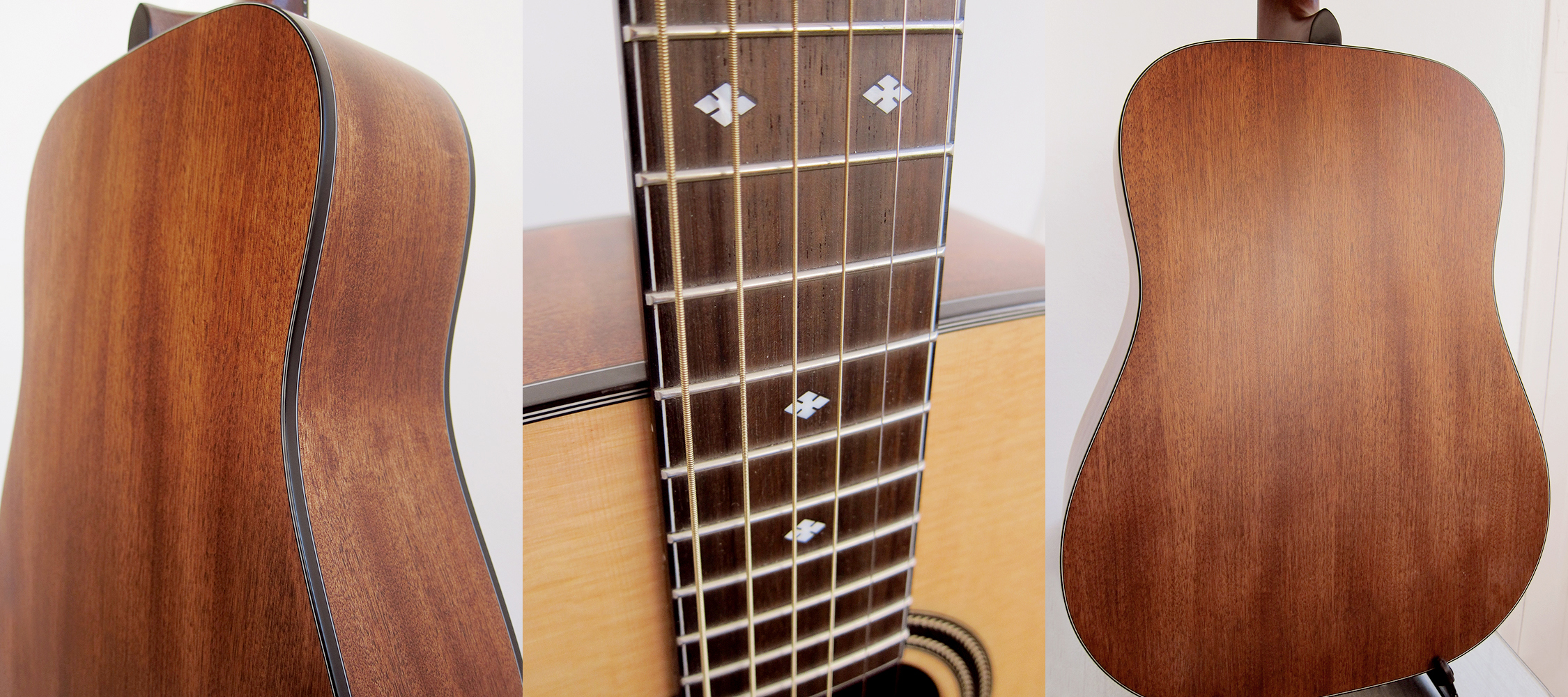
I finally got a chance to try one of the new Chinese made Levin guitars. Levin closed down the factory in Gothenburg, Sweden back in 1981 when Svenska Levin AB bought the name and the remaining stock. A small batch of classical guitars continued to be made in Sweden by Lugnås Gitarr AB, and are still made there today. During the 1990’s there were some electric guitars and amps being produced in the far east under the Levin name, my first amp that I bought around 1997 was Levin branded. It took another 10 years until we started to see some Levin steel string acoustic guitars, these being produced first in Korea, then Indonesia and later China. Of course it’s impossible to compare a Swedish made guitar from the 1960-70’s with something being produced nowadays in Asia but I’m still quite impressed with these new Levin guitars. I emailed the owner and he told me that they had some issues in the beginning to get the finish right and I have to admit that the build quality is far from a Swedish Levin but still, if you see it for what it is then it’s a pretty great guitar for the price.
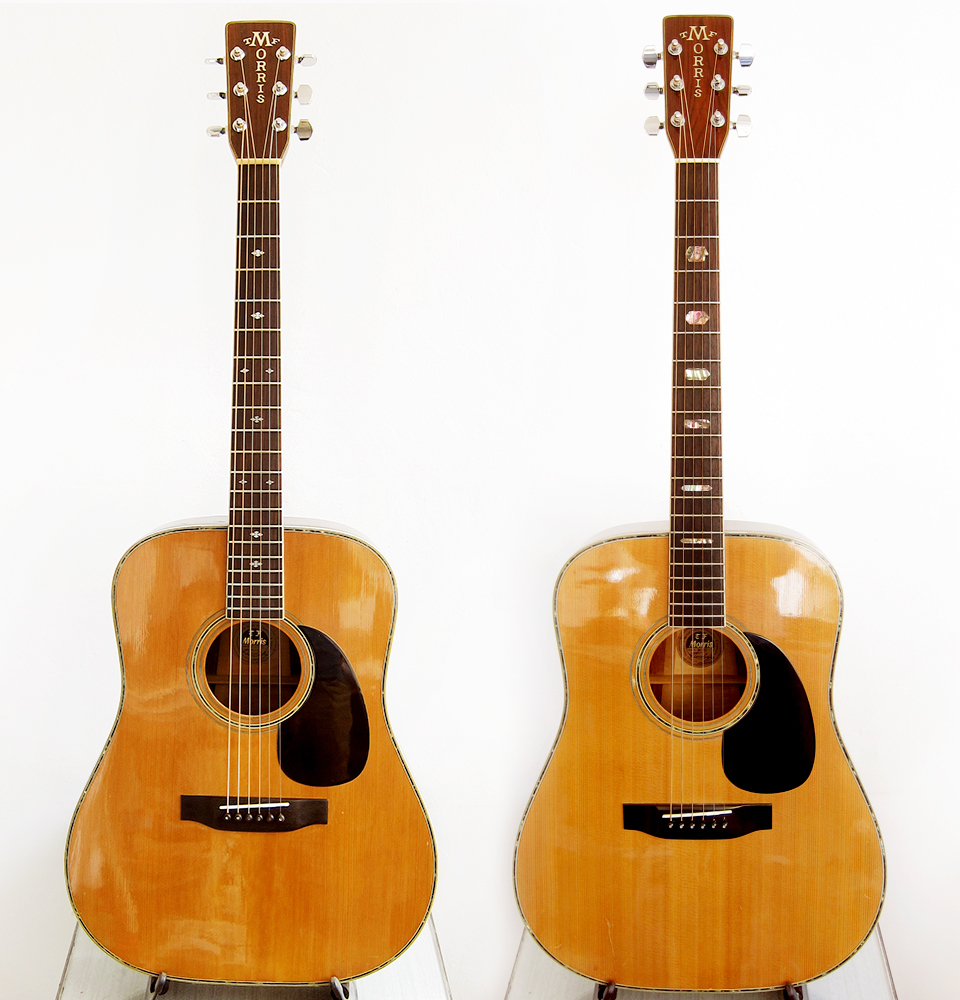
I managed to find another Morris W-50, this time with hexagon inlays instead of snowflakes as on my earlier Morris W-50. They sounds pretty similar, very rich and full tone with clear highs. I guess the 3-piece back is adding to that full sound and of course it makes them very pretty to look at too. In my opinion these TF Morris guitars are almost up there with K. Yairi and the best Japanese builders. It doesn’t look like Brazilian rosewood, but it has some really nice figured dark rosewood back and sides with quilted maple in the middle and a solid spruce top.
The guitar came from a collector in Scotland and was ready to play when it arrived, I didn’t have to do anything to it.
The two TF Morris W-50 together, the left one from around 1976 and the right from about 1979
I’ve just ordered myself a LR Baggs Lyrics, mainly because I needed a second pickups system but also because I thought it would make me as awesome as Sturgill Simpson. Either way, I needed something new and felt that the Lyrics sounded way more realistic than my old LR Baggs M1. My friend Wolf and I recently installed a LR Baggs iBeam in his Luxor Dove copy and that sounded great. I still haven’t decided if I’m going to install the Lyrics system in my new 1982 Sigma DR-41 or the 1973 K. Yairi YW-1000.
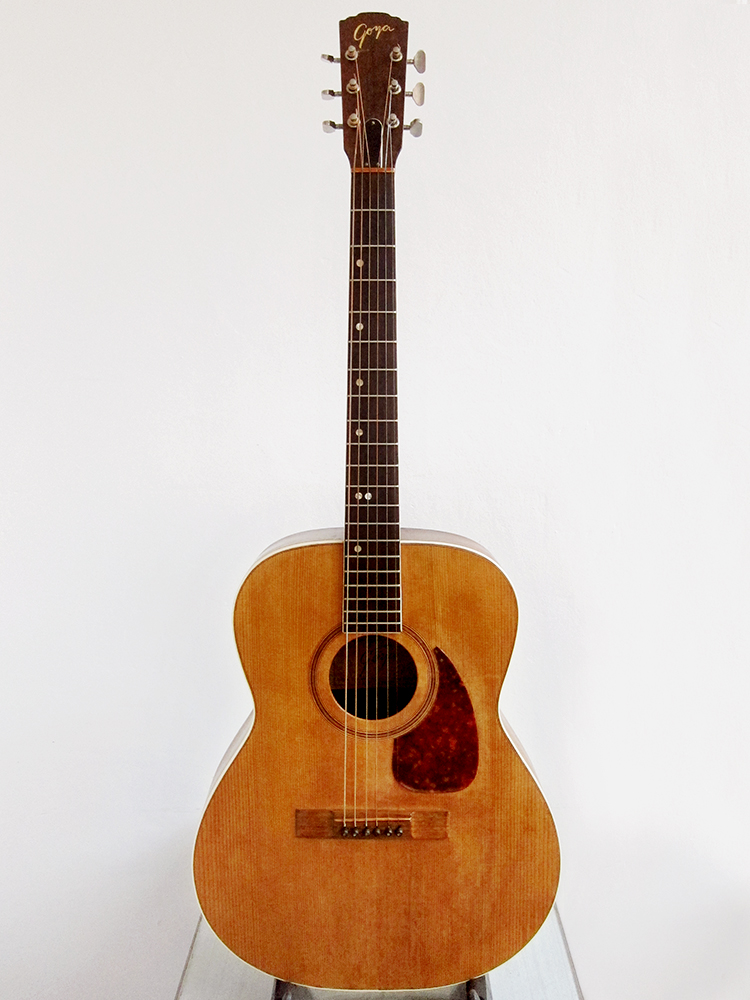
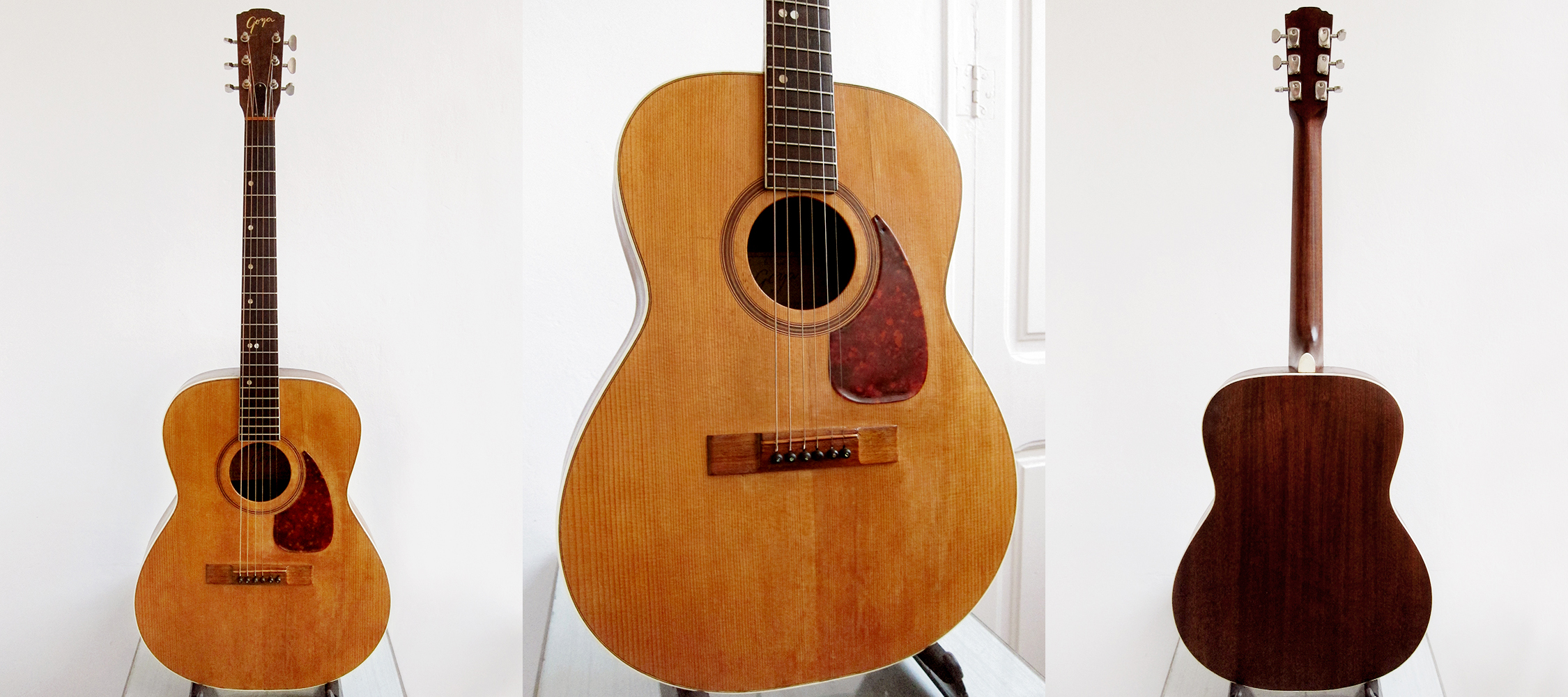
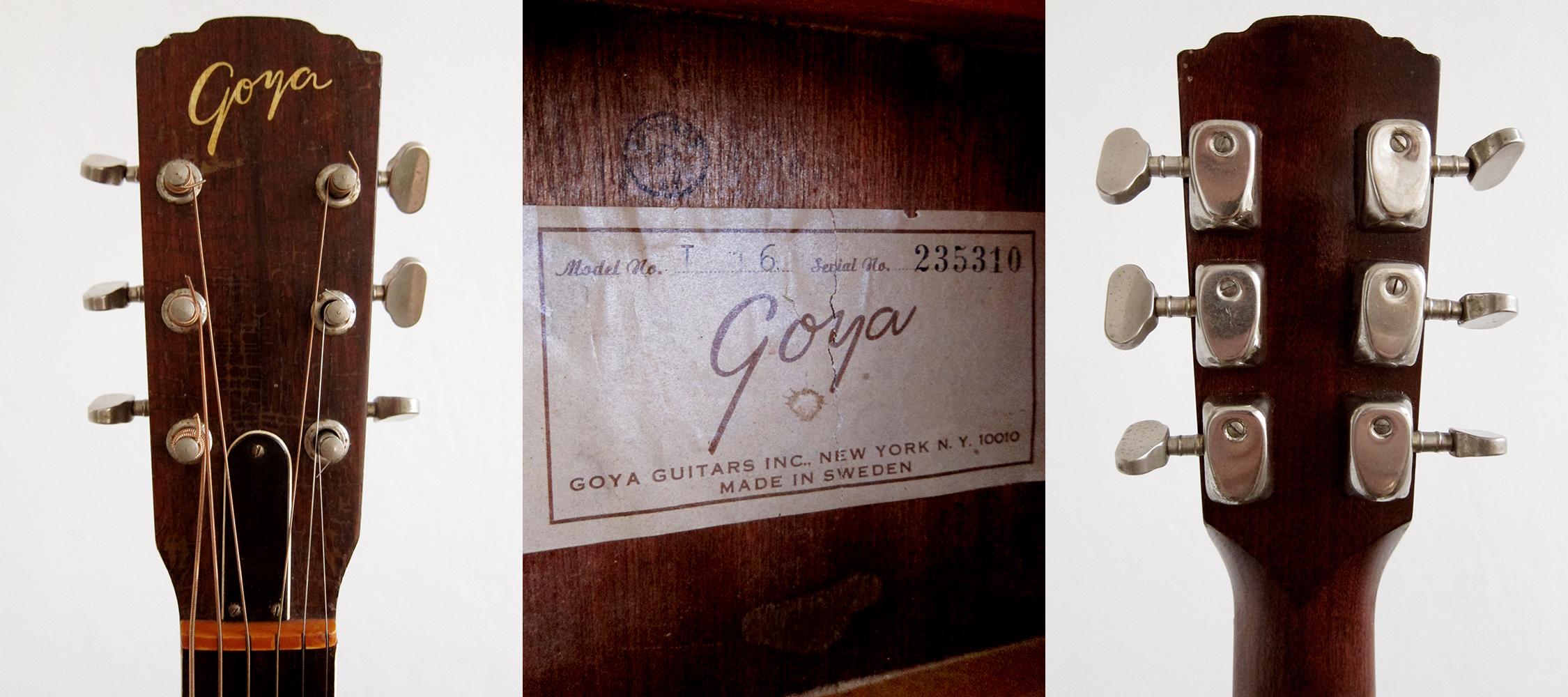
I finally managed to get another Levin LT-16, just like my dad’s old guitar that I learned to play on as a kid. His is a 1966 Levin branded one and this one is from 1965 and has the Goya logo on the head stock. These guitars normally don’t come up for sale that often, I guess because they are really well sounding and perhaps the 000-size is very sought after too. It took two years but finally I managed to get my hands on one, in bad shape when it arrived but now fully playable again.
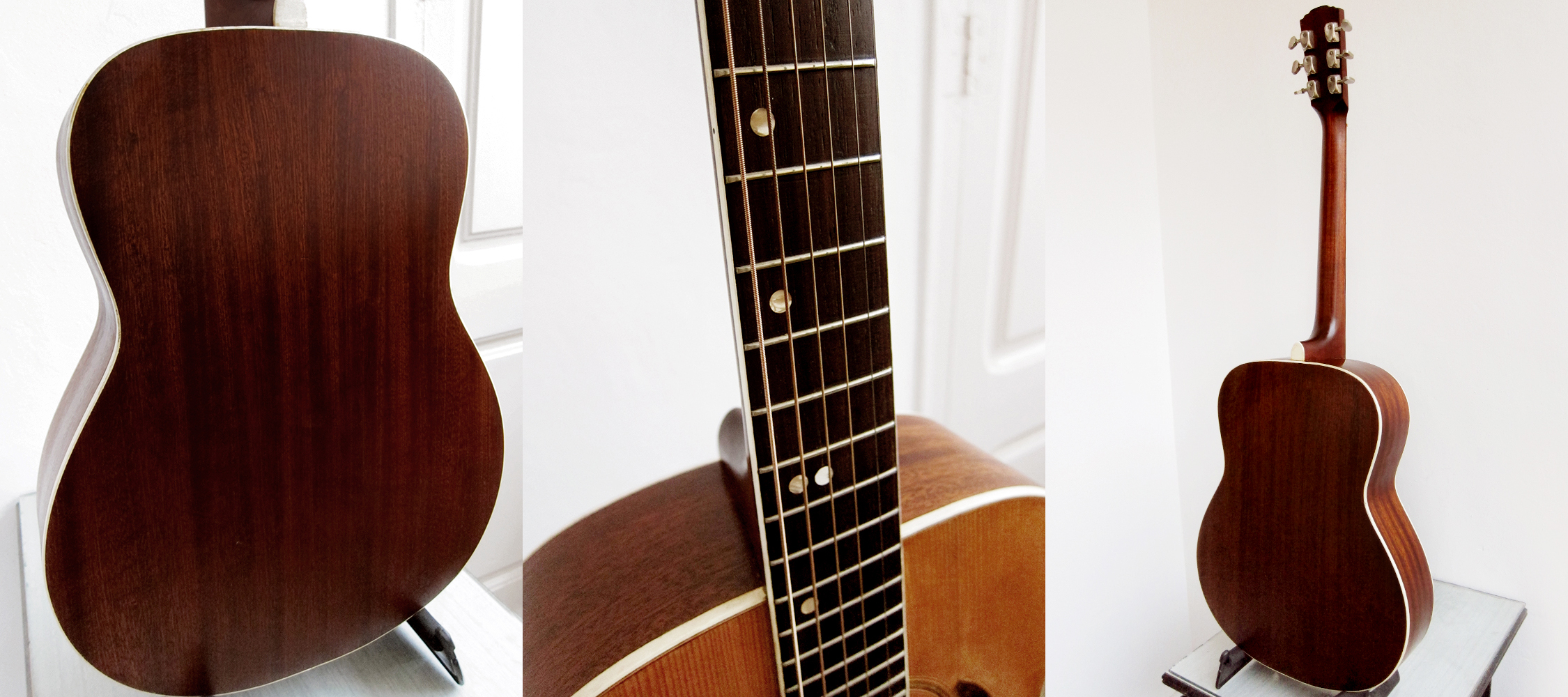
Levin LT-16 / Goya T-16 Grand Concert size: Body width: 380 mm, body length: 480 mm, body depth: 98 mm. Fingerboard width: 43 mm, scale length: 630 mm. Spruce top, mahogany back and sides, 4-ply bound top, single-bound back. Mahogany bolt-on neck with adjustable truss rod. Single-bound rosewood fingerboard with bass side pearloid dot inlay. Rosewood bridge, nickel plated individual Van Gent tuners with metal buttons. Matte natural finish and ten year warranty
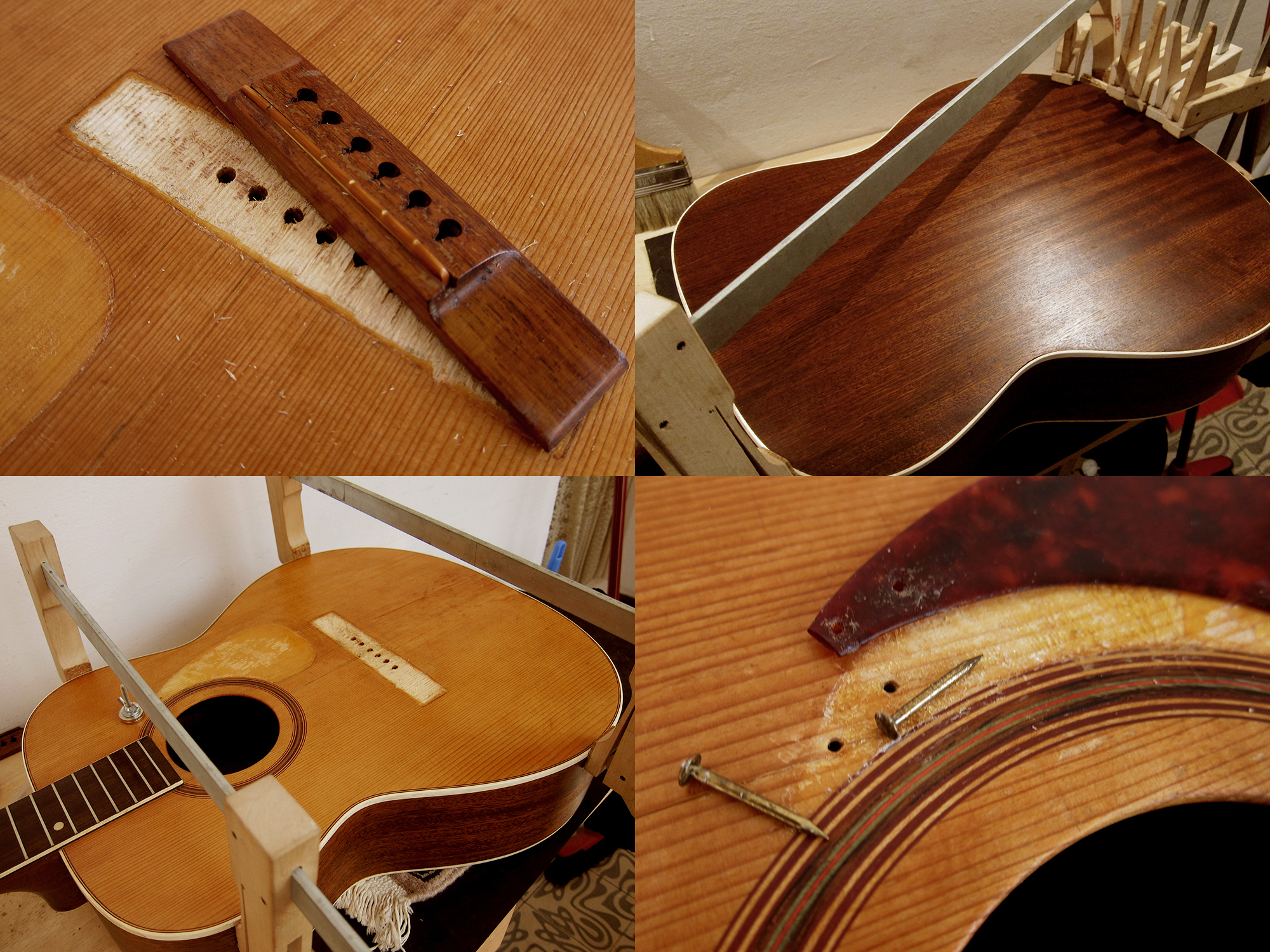
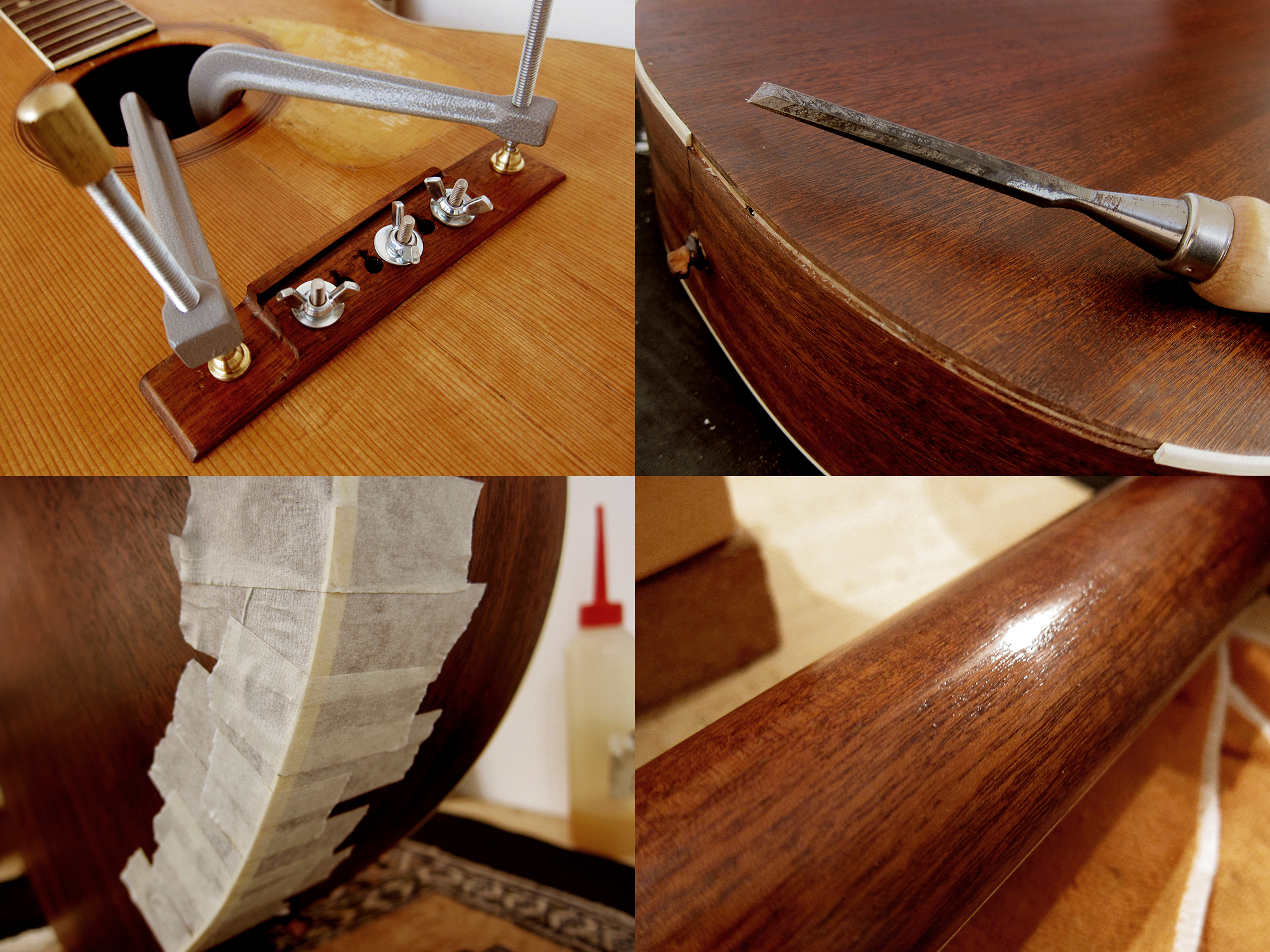
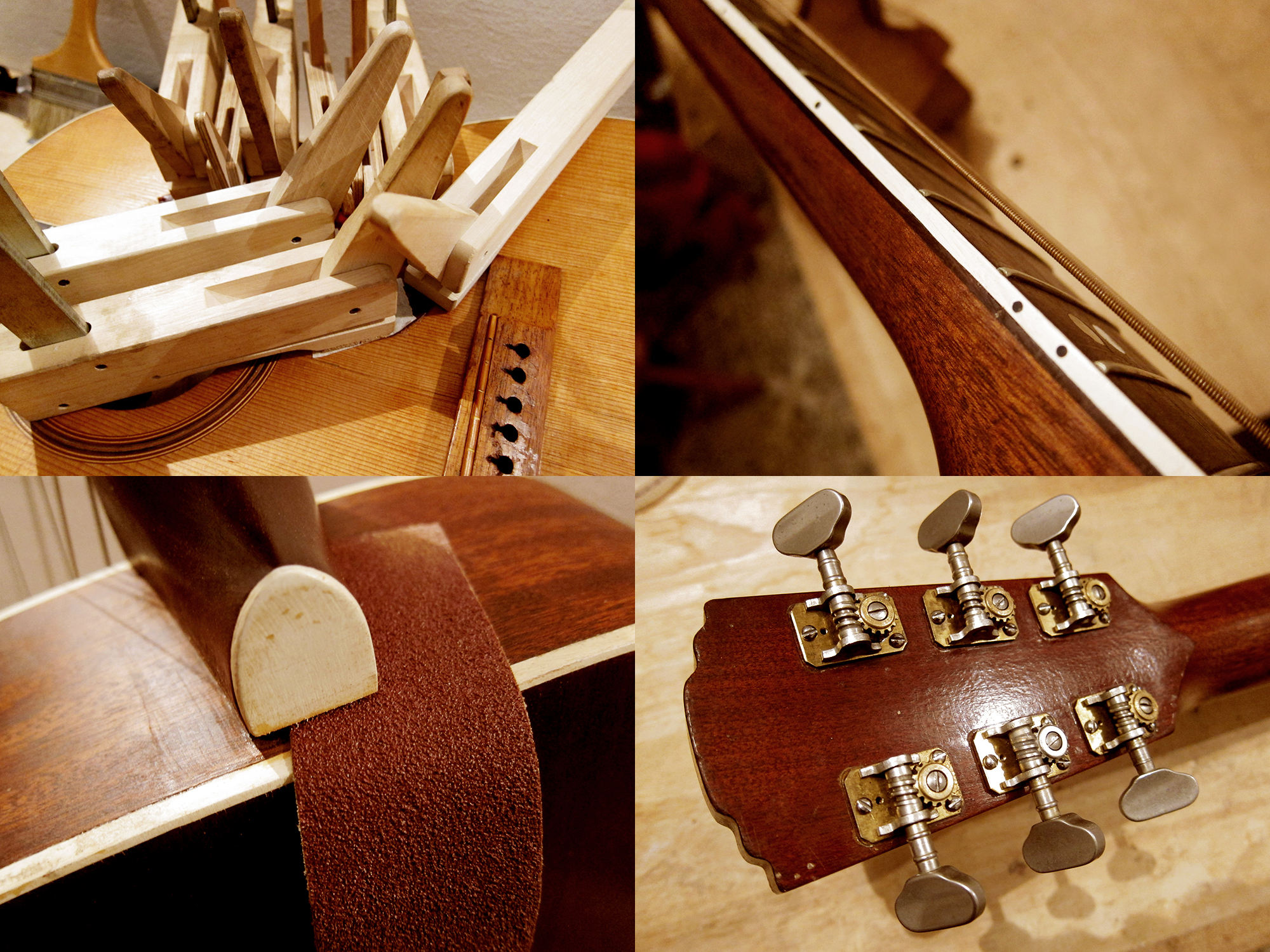
There was quite a lot of work on this one. First I re-hydrated the guitar for a week, just a wet sock in a bowl inside, which made the cracks close up quite a lot. I removed the bridge and the pickguard and glued all the cracks on the top and reattached the back that was coming loose. I also flattened the top, it had a bit of a belly that I managed to get down with a flat piece of wood covering the top that I clamped down for a couple of days.
I re-glued the bridge and replaced the 10 cm of missing binding. Someone had also sanded down the neck, which I hate, so lacquered it with a couple of coats of Nitro and sanded it smooth.
Levin guitars normally lack side dots for the 9th and 12th fret, which always confuse me while playing, so I added 3 dots. I reattached the pick-guard and cleaned up the original Van Gent machine heads. Levin uses a rather clever bolt-on neck system which makes neck-resets very easy. You just loosen the two bolts inside and then you can sand down the heel, it takes time but it was easier than removing the whole neck.
I have heard a lot of good, and some not so good, things about Sigma guitars over the years but never actually tried one. To be honest, I really didn’t know anything about the brand until this beautiful Sigma DR-41 arrived and I felt curious and started to read up on them. I guess one big reason why there are both avid supporters and fierce haters of Sigma could be the big changes in production over the past 45-years. The brand was Created in 1970 by C.F. Martin & Co as a line of inexpensive guitars to compete with all the far east brands that flooded the market at the time. The first generation of Sigma’s from 1970-76 were made in Japan but came with adjustable bridges and looks very inexpensive to me, I haven’t tried one so they might be great. When the second generation of Sigma’s arrived in the later half of the 1970’s they really started to look like Martin guitars and the build quality seems to have improved a lot, at least by the look of it. From around 1976-1984 Sigma produced the now classic DR-line, these guitars seems to be ridiculously collectable and very popular because you rarely see them up for sale. I have a feeling that most of them live somewhere in the US and are owned by middle aged men that bought them new as their first proper guitar around 1980 and since they still sounds really good they would never sell them. I have nothing against middle aged men or guitar hoarders, I’m 35 and an avid guitar hoarder and of course I still have the first guitar I bought back in 1993.
I have had at least 20 different Japanese acoustics in my house over the last couple of years and this 1980 Sigma DR-41 is easily my favourite so far.
The DR line consisted of DR-8, DR-9, DR-11, DR-14, DR-15, DR-28, DR-28S, SDR-28, DR-35, DR-41 and DR-45. I’m not entirely sure what DR-8 to DR-15 were based on, but DR-28 to DR-45 were pretty accurate copies of the Martin models with the same number. The guitar I’ve managed to find, the Sigma DR-41 looks very close to a Martin D-41 and I’ve seen pretty convincing Sigma versions of Martin D-28 and D-35’s too. Apparently there is a very rare version called Sigma DR-14, which is a DR-41 but with a 3-piece back, that was imported through Levin in Sweden, which makes sense since C.F. Martin & Co bought Levin in 1973. There are actually quite a few of the earlier 1970’s low end Sigma’s that were imported through Levin for the European market as well. It seems like the earlier Sigma guitars were made by Tokai through Kasunga Gakki but I really don’t know if all Japan made Sigma’s were produced by them or not. I have a feeling they might have used a lot of different factories during their 13 years in Japan.
I couldn’t resist so of course I changed the machine heads for Wilkinson WJ28NGD as soon as I got the chance. I just can’t stand those big bulky Japanese 1970’s machine heads.
Sigma stopped the production in Japan around 1983 and moved everything to Korea, later Taiwan and finally Indonesia. Martin claims that all Sigma’s where sent to them in Nazareth, Pennsylvania to be inspected and adjusted by Martin personnel before they sent them out to the dealers, which I doubt for the later Taiwan and Indonesian guitars. In 1981-1982, Martin imported partially assembled Sigma guitars from Japan and then put them together themselves in Nazareth, these were labelled Sigma Martin USA DR-28N and DR-35N. The Sigma story seems to be a bit shady from the 1990-2000, C.F. Martin & Co lost the rights to the name for a while and there seems to have been other companies producing Sigma guitars and then Martin got it back and closed it down in 2007. In 2011 the German company AMI Musical Instruments GmbH purchased the rights to the name and relaunched Sigma Guitars that are now being produced in China. There is quite a lot of information on Wikipedia about Japanese Sigma guitars. I also found this Sigma site really helpful.
1980’s ad for Sigma guitars, with my beloved Sigma DR-41 far right
I really didn’t know what to expect when I got myself this Sigma DR-41. I just bought it because I’m so insanely gay for any guitar that looks like a Martin D-41 or D-45, or actually any guitar with a volute on the back of the head, hexagon markers and a lot of mother of pearl inlays. At first I didn’t like this Sigma much, I thought it sounded stiff and boring but after two days with the pump and a week of heavy playing I was sold. I’m not sure if all Japanese Sigma’s are this good, but this guitar is freaking amazing. It’s easily up there with Morris and K. Yairi, perhaps even better, see the second video where I compare it to my K. Yairi YW-1000.
I guess people might have noticed that I’m quite obsessed with Levin guitars, but there are actually other Swedish guitar brands that I care about too, like Hagström Crafton, Bjärton and Lugnås. I recently found my first steel string Bjärton, I have had a nylon string since my mid teens but never actually played on a steel string Bjärton until now. This is an awesome looking Hagström B-60 or Bjärton B-60 as it was called in Sweden, it’s the same guitar but since Hagström was more famous abroad they used that name for the export models. They were built by Bjärton in Bjärnum in the south of Sweden. It’s a pretty great guitar, loosely modelled on a Gibson J-50, Bjärton made a legendary Gibson J-45 copy in the Sixties called Hagström H-45 or Bjärton J-45 which was used by David Bowie and a lot of others. That model came with or without factory installed pickup and they even made a 12-string version. This Hagström B-60 is slightly more modest and looks pretty basic. It’s a nice sounding guitar, even though it has a bolt-on neck which should kill the tone completely, I guess the solid woods and massive neck block is helping with the sound.
Hagström B-60 / Bjärton B-60 Body width: 410 mm, body length: 510 mm, body depth: 120 mm
Spruce top with X-bracing, mahogany back and sides
Mahogany bolt-on neck, unbound rosewood fingerboard
Single-bound top and back, rosewood pin bridge
Van Gent machine heads, natural finish and 10 year warranty
Introduced: ca 1972, available for export under the Hagström brand
The guitar was in pretty good shape when it arrived. I did the normal cleaning, polished frets and oiled the fretboard and then installed a bone saddle and ebony bridge pins to improve the sound
My main challenge was to try to get the Van Gent machine heads clean. The guitar smells like it has spent the past 40 years in the company of an old pipe smoker so I assume that’s actually tar and nicotine that has built up over the years. I’m an old ex-smoker myself so to me it smells like pure heaven.
 Gibson J-45 ADJ, built in Kalamazoo, Michigan, USA in 1965
 1965 Gibson J-45 ADJ, round shouldered dreadnought, natural finish spruce top, mahogany back and sides, rosewood fretboard and bridge. All original except for the refinish which turned this J-45 in to a J-50
  I wasn’t overly keen on the sound of the original adjustable rosewood saddle so I carved a new one in bone and removed all the nuts and bolts under the bridge. The rosewood saddle didn’t sound bad, just a bit muffled and to me the bone is huge improvement
 This is how cool I feel with my 1965 Gibson J-45, like a 1963 Bob Dylan with his late 1940’s Gibson J-50









 Claescaster