Guitar of the day

Neil Young’s 1953 Gibson Les Paul “Old Black.”


Neil Young with his 1953 Gibson back in 1969
Neil Young’s 1953 Gibson Les Paul “Old Black.”
Neil Young with his 1953 Gibson back in 1969
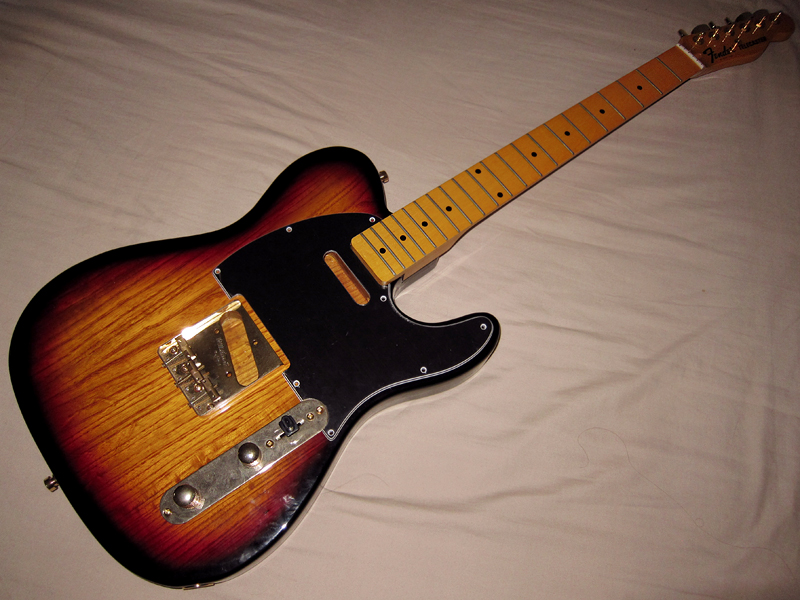
This is what the final Claescaster might look like
Last week I started to put the new Claescaster together. I have never built a guitar before so there has been a bit of figuring stuff out. I decided to go for CTS pots since they are supposed to be the best but regretted my decision as soon as I got them. It turned out that CTS pots, and I guess most things made in the USA, doesn’t fit things made in Europe or Asia. The shafts of the pots was too big for my control plate so the first thing I had to do was to drill the holes bigger. That worked out quite OK with the help of my boss Ralf, someone had to hold while the other one drilled. However, since the shafts were bigger than all the other pots, washers and nuts I had lying around at home I couldn’t take any spare parts to make sure that not too much of the shaft was sticking up. It wasn’t too much work to force on a push on knob, but a lot harder to remove it. I went for a normal import 3-way switch since it cost 3€ and seemed solid and reliable. I bought all the electronics from Stringsfield in Valencia, really cheap and quick delivery.

Fancy CTS pots from the USA that turned out to not be Asian friendly in size
Next problem I had to face was the size of the holes on the back where the strings come through. All my other strings through body guitars has 8 mm holes to fit a 8.25 mm string ferrules but not Mighty Mite. They decided to go for the rather unorthodox 7 mm holes so neither the small 6.3 mm or the big 8.25 mm string ferrules would fit. Thanks a lot. I stupidly tried to drill the hole bigger, which of course cracked the lacquer and made a complete mess. I’m not sure if I used the wrong drill or if the wood is harder than stone but since it was only 1 mm difference the drill just dug in and got stuck in the hole and of course cracked the lacquer when I tried to get it out again. I first tried sandpaper on a pen that made very little to widen the hole. Then I found this round file in the kitchen drawer at work, it looked like a knife sharpener but it’s actually a round file. It took some time and it was hard to make all the holes equal and straight but it worked. I managed to gently tap in the string ferrules with a block of wood over to protect them and a firm stroke of a hammer. It doesn’t look perfect and I wish I would never have thought about trying to drill them bigger but hey, you learn from your mistakes. Or like Bob Ross put it, “we don’t make mistakes, we just have happy accidents”. I’m pretty sure the back will soon have plenty of buckle rash from my big country belt buckles and other battles scars from being happily used over the years. Who looks a the back anyway?
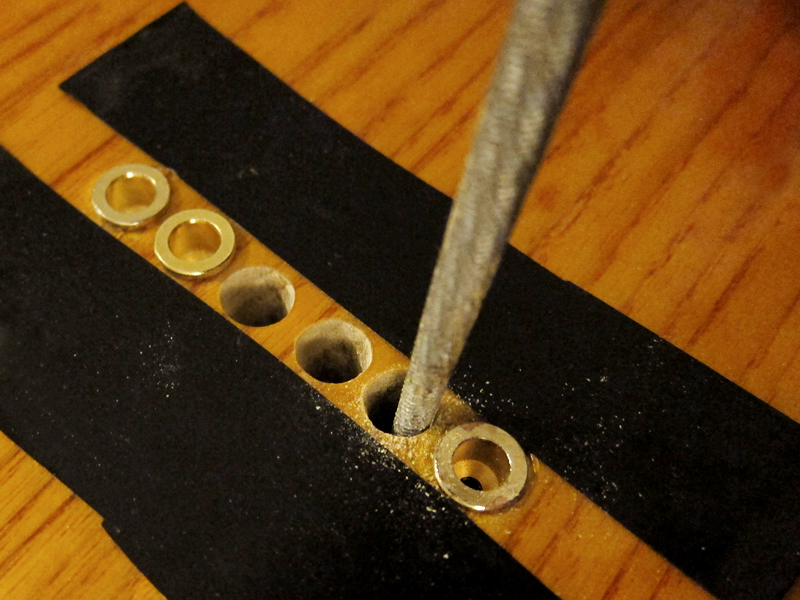
I had to slowly and painstakingly file the holes bigger to fit the 8.25 mm wide string ferrules
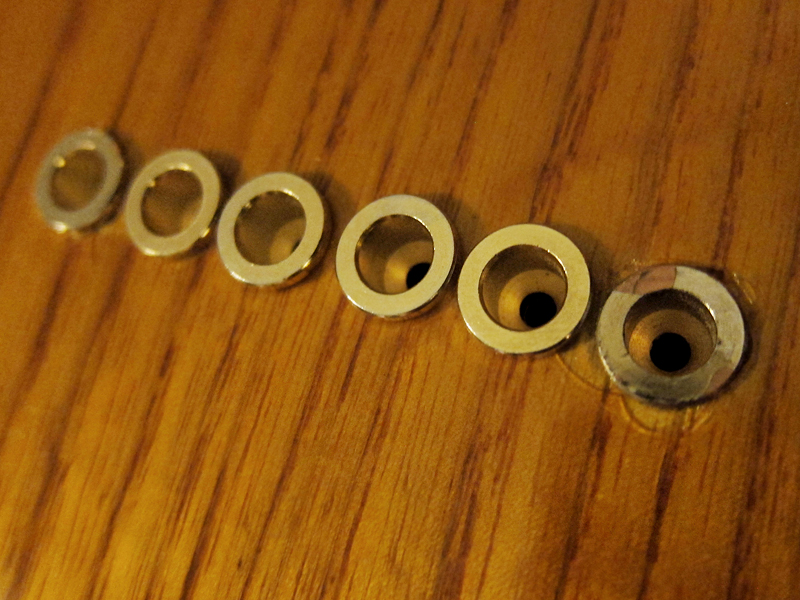
The damage done, cracked lacquer and some missing gold

Tonerider Vintage plus pickups in gold and Wilkinson Vintage telecaster bridge
It was pretty straight forward to fit the bridge and control plate. I had to put the pickguard on and a neck to keep everything in place and then just make sure it all lined up. I drilled pilot holes for everything since the wood seems really hard to screw in. To fit the neck pickups was a bit more of a nightmare than I first expected. I think I will have to redo it once I get the neck so I can fit the pickguard and make everything line up properly first. I hope that the Tonerider Vintage Plus pickups are going to sound amazing because I wasn’t overly impressed when I realised that the came with chrome coloured screws and no plastic on the neck pickup. I had to tape it with cello tape not to scratch it when I fitted it. Luckily I had some gold pickup screws lying around so that was easily changed.
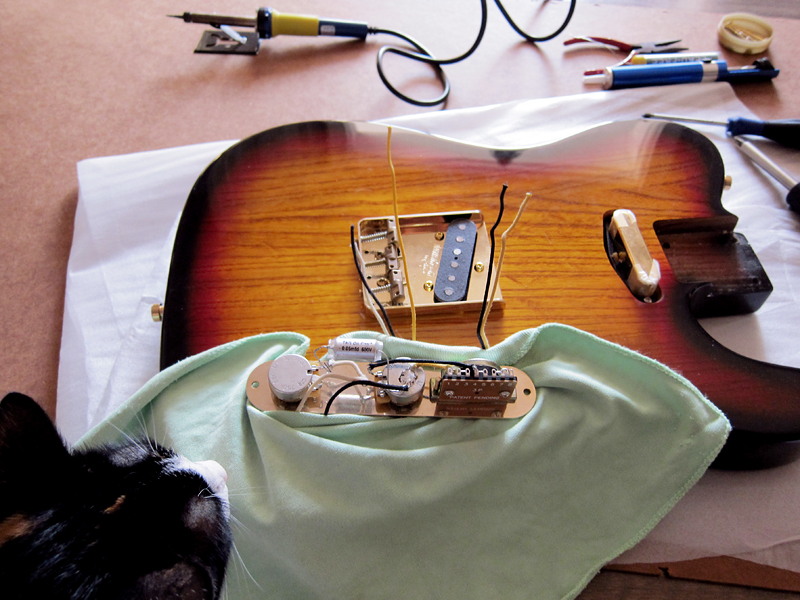
The solder inspector came around to make sure that I was doing my job
Down to what I like best, soldering. I’m glad I bought cloth covered wires, they are really stiff and nice to work with. I fitted a TAD Vintage Oil Cap 0.05uF which I think might go well with the CTS 250k pots. I decided to go for two audio pots in the end, instead of one linear and one audio. I hope that was a good choice. I also bought a backup Orange Drop 0.033Mf just in case I don’t like the oil cap. I did the 50′s vintage wiring, as I did on the old Claescaster since it keeps the treble pretty well when you turn down the volume. I’m not sure if it’s my soldering iron that doesn’t get hot enough but I had some problems soldering the ground wires to the top of the pot. I even sanded it before, maybe the material is different on the CTS pots because I didn’t have any problems with the Alpha pots on the old guitar. The solder inspector, my cat, didn’t approve either so I eventually gave up and decided to try again this weekend when I hopefully have the new neck and machine heads too.

Jimi Hendrix’ “Woodstock” 1968 Fender Stratocaster. Microsoft’s Paul Allen reportedly paid 1.2 million dollars for this guitar in 1998.

It’s finally here, my new Claescaster! The Mighty Mite swamp ash body that I ordered from USA just arrived to my office after spending a month in Spanish customs. It’s not as bright and lovely looking as in the eBay picture but I didn’t expect it to be either since it was a photo taken with flash. It still looks really nice, the grain is just amazing, the 3-tone sunburst is even and the weight is great, it feels really heavy and solid. Now let’s see if the neck from the old Claescaster and all the new hardware and electronics I bought fits. I ordered the Tonerider Vintage Plus pickups from Northwest guitars about two weeks ago but they managed to send out a pair in nickel so I had to send them back. Hopefully the new gold ones will arrive this week so I can spend the weekend putting the Claescaster together. Happy times.
 Mighty Mite swamp ash body
Update: Tuesday 23rd April 2013
I have slowly started to put the Claescaster together, pretty much everything is fitted now except pickups and neck, I’ll try to get some images up. I had a lot of problems with the neck. First I thought I could use the old Claescaster neck until I could afford to buy an Allparts TMNF-FAT, they cost around 280€, but it didn’t fit. I carved off 1 mm on the bottom side and managed to get the neck to fit in the pocket but the holes didn’t line up. To fill and re-drill the holes felt like too much work, especially since I eventually would like to put it back on the old guitar and still have the original Claescaster as a backup. I took off some of my other guitars necks but nothing fitted, maybe it would have been weird with a big headed Strat head on it anyway. I searched eBay high and low for cheap necks but the big problem as always is the decal, I kind of like to have the fake Fender logo on them and people tend to charge a lot for fitting a decal, if they can do it at all. I guess I could have fitted one myself but since I want a layer of lacquer over and I don’t know where to get that here it was easier to find one with a decal already fitted. I emailed First Avenue Guitars, the kind Yorkshire lad that I bought the old Claescaster neck from, he did a great job with the decal last time. He managed to dig this neck out of the basement for me, 50’s decal fitted and 8.5 mm holes for the machine heads so I can fit vintage Kluson style tuners. It’s a 22 fret 2-piece neck of Canadian maple, I would have preferred a 1 piece without the overhang but for £58 (70€) including shipping there wasn’t any point in arguing. I got some gold machine heads from Northwest guitars and now I just hope that it will arrive before the weekend so I can finally get my new Claescaster up and running. I received the Tonerider Vintage Plus pickups this morning so I might fit them tonight if I get a chance.
 The new Claescaster neck from First Avenue Guitars
 I managed to fit the old neck back on my original Claescaster and patch up the damage pretty well. The part I carved out to fit on the new body has been painted black and then filled with some black tape to keep it snug in the pocket.
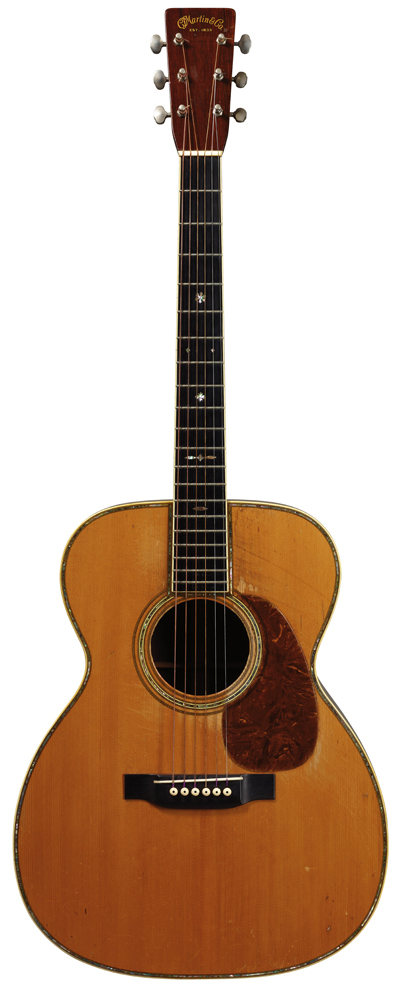
Eric Clapton’s 1939 Martin 000-42. Sold at auction in 2004 for $791,500, the highest price ever paid for an acoustic guitar.
A quick update on my new Claescaster. The Mighty Mite Swamp ash body that I ordered from USA back in the beginning of March might finally be on it’s way. I saw this update when I tracked it this morning, “Customs clearance processing complete”. I presume that means that they will finally send me my body that has been stuck in Madrid since the 14th of March. How can something take a month to clear? The thing that annoys me the most is perhaps not that I had to wait for more than a month, but that they charged 40% on top of the original price including shipping. A body that cost $150 that I paid 170€ for including shipping and then I had to pay an extra 68€ in import tax and custom fees. I have imported two guitars straight from Japan without any problems so I couldn’t even in my wildest imagination think that it would be this bad just because the package came form USA. The Japanese guitars I bought, on two separate occasions, were delivered with DHL Express, cost $125 and was here within 48 hours and the tax was only about 18-20% of the actual price, not price plus shipping. I think I paid around 70-80€ when I imported Nancy, a Fender Telecaster ’52 re-issue Made in Japan from 1987-1989, but she cost six times more than the new body did. Well at least now I know that you can’t buy things from USA if you live in Spain.
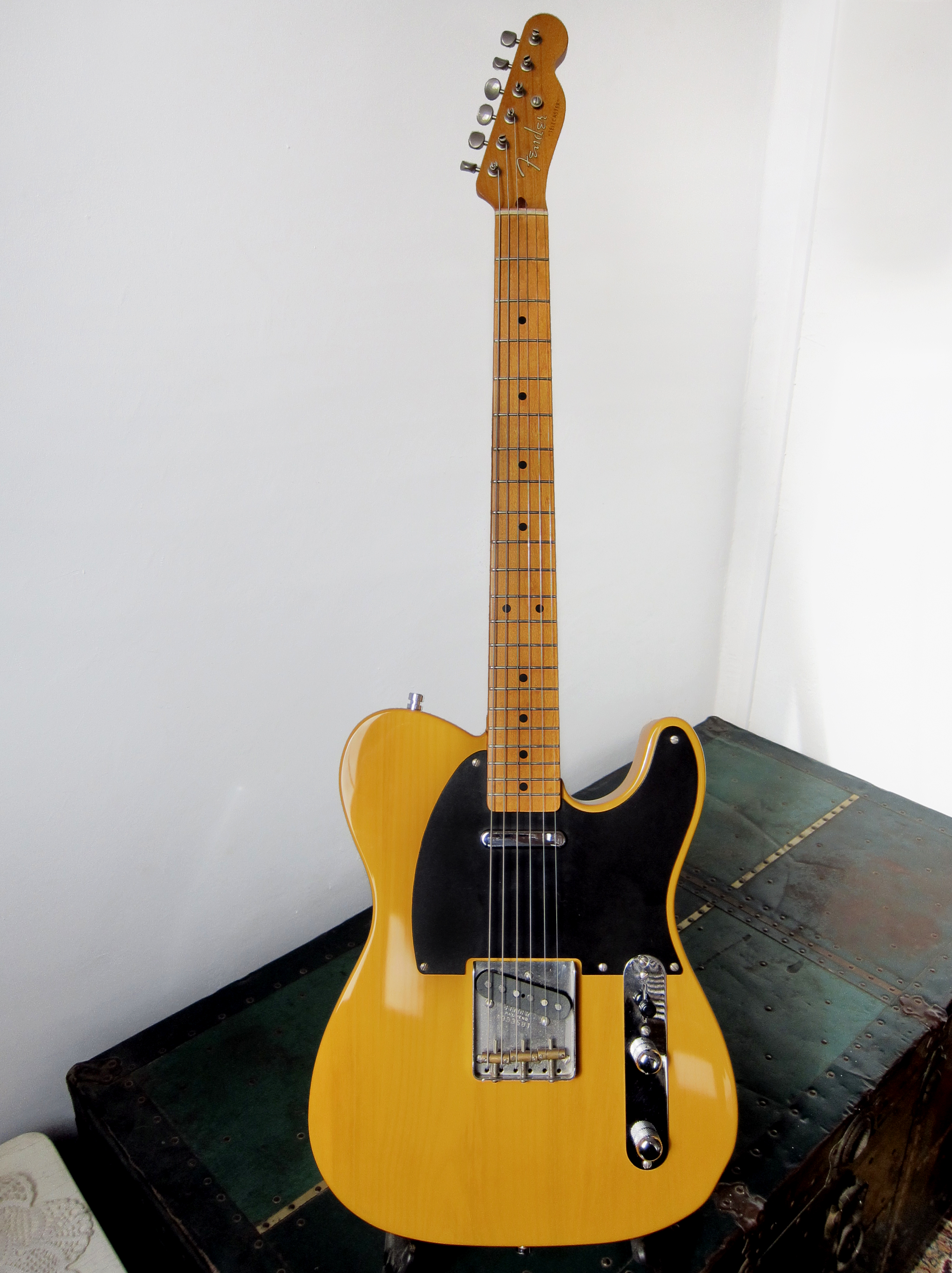 Fender Telecaster TL52-75, ’52 re-issue Made in Japan, FujiGen 1987-1989. There is no way to find the production year of these A-serial Telecaster with the serial number on the bridge plate. However, it must have been made between 1987 and 1989 since it’s a TL52-75. They were called TL52-70 between 1984-1986 and then changed to TL52-700 in 1990
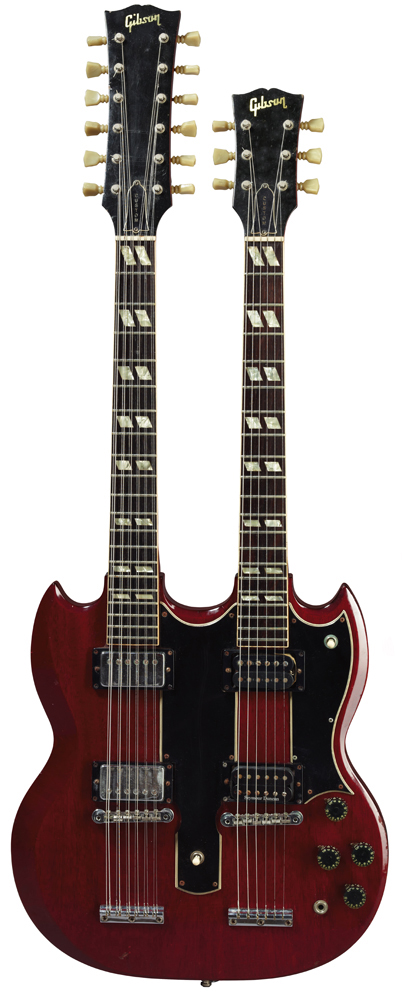
Jimmy Page’s 1971 Gibson EDS-1275

How to change a switch
I spent Saturday doing my new favourite thing, soldering. How could I have lived for thirty two years without realising how exciting this is, well maybe not, but still. It’s a nice past time and probably healthier, even with the fumes, than spending Saturday afternoons in the sun drinking beer in a terrace, that tends to happen when you live in Spain. First I changed the old 3-way switch on my Westone Strat from 1979 to a fancy US made 5-way switch that I got from Swivel Electronics on eBay Japan.
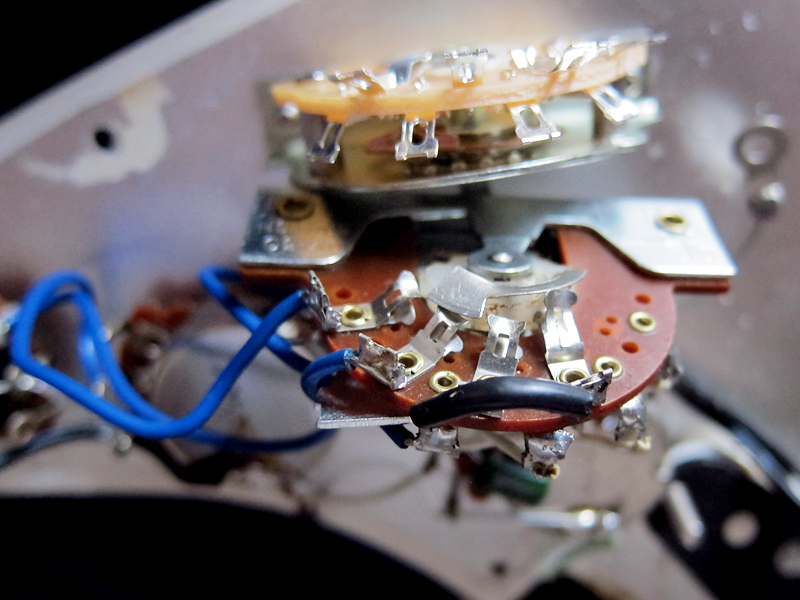 Note how bent the blade of the old switch was
I fitted the new switch and then started to unsolder one cable at the time and moved it from the old to the new switch. Unfortunately I managed to fit the switch the wrong way around so when I was done and had put the pickguard back on and strung up the guitar again I had to take it all off and redo it. I turned out that a 5-switch wasn’t that much more complicated than a 3-way switch for a Telecaster and I know those by heart now. Suddenly I have a fully functioning 70’s Japanese Strat and who knew that the in-between pickup sounds would be so amazing.
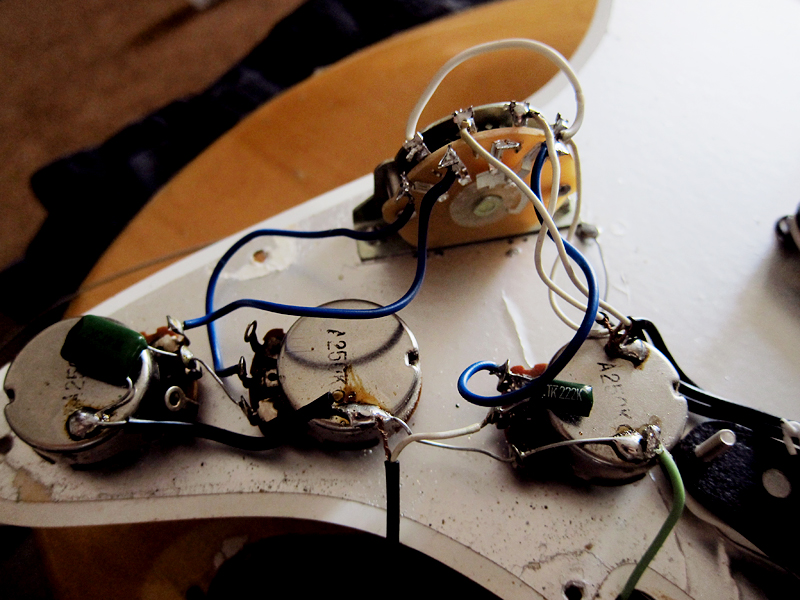 New 5-way switch fitted
How to change a potentiometer
When I ordered all the electronics needed for the new Claescaster I bought two new pots for the old Telecaster as well. I found this great guitar shop in Valencia called Stringsfield with super cheap and quick shipping so I got two Alpha 250k audio pots for my old one and two CTS 250k for my new Claescaster project, my Mighty Mite Swamp ash body that is still stuck in customs in Madrid.
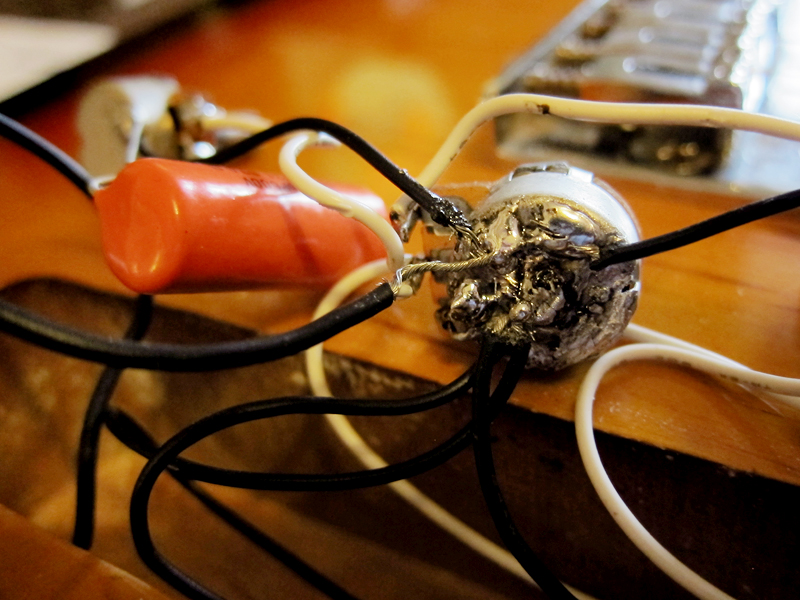 It was time to change the old mini 500k pots for a full size Alpha 250k
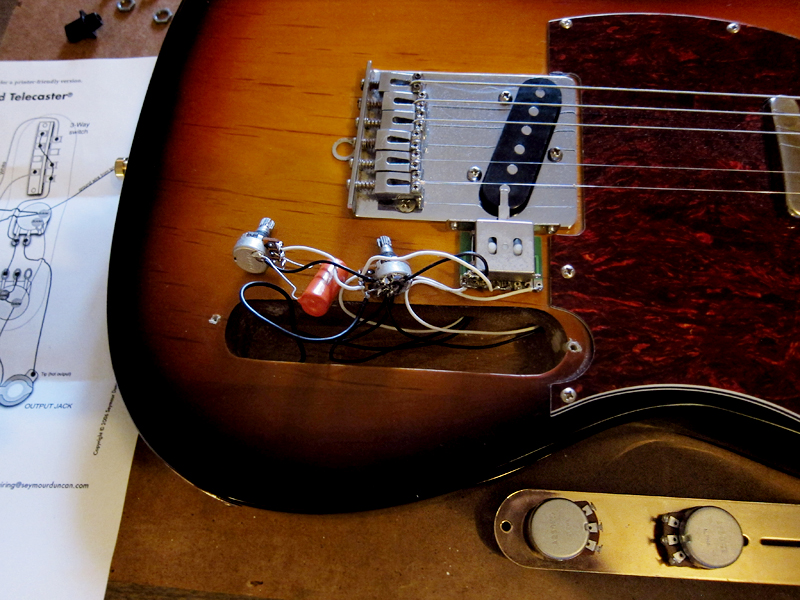 I fitted the new pots on the control plate and then started to move all the cables around
The old electronics was such a mess so I changed the pots but kept cables, switch and my Orange drop capacitor. I figured there was no point buying any better cables since I wasn’t going to change the pickups yet. I might change all of that in the near future, as soon as the new Claescaster is done. I’m tempted to get the Artec Vintage Style AlNiCo Telecaster Pickup Set from Northwest Guitars, they sound really good for the price, £29.99. Of course I did the old 50’s vintage wiring again, I really liked the tone of that modification. I haven’t had time to rehearse with this guitar yet but I’m pretty sure that the new pots will make it a bit less treble sounding and hopefully make it sound a bit warmer.
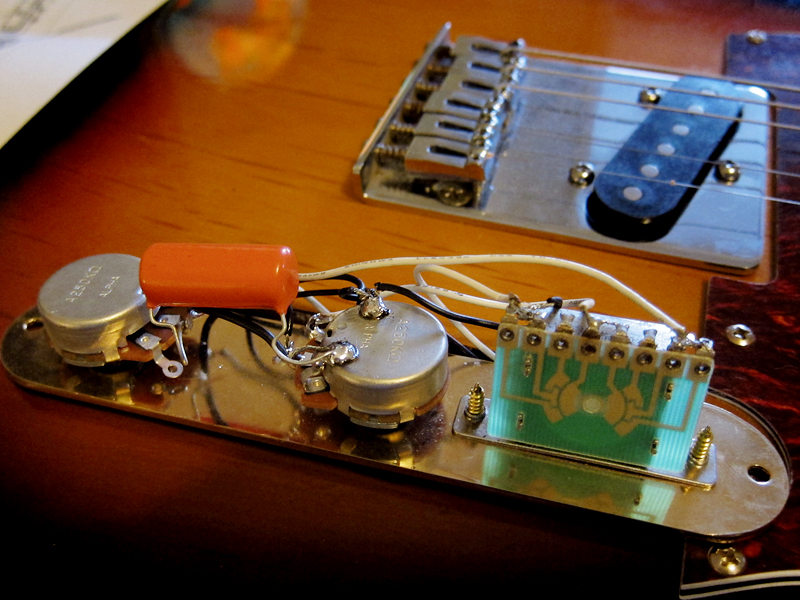 Looks pretty clean and tidy to me

Keith Richards’ “Micawber” 1953 Fender Telecaster Blonde
 Micawber is named after a Charles Dickens character, no one is exactly sure why. Keith’s had this guitar since Exile On Main St. This guitar is kept in Open G tuning (G,D,G,B,D) low to high with no capo, and of course has the famous 5 strings with the 6th string removed (as do all his open G tuned guitars). Taken from the Keith Shrine
 Keith Richards live at Earls Court in 1976
I have never been too impressed with the cheap plastic nut on the Claescaster. When I first got it I brought the guitar to work and used it as my office guitar and after six month of heavy playing most of the string buzz was gone, but not all. I truly believe that if you do any changes and things doesn’t sound perfect straight away then just ignore it for a week or two and let the guitar settle a bit. If I get any slight buzzing or things feels weird after I have adjusted the bridge or saddles on my guitars I tend to leave it until the problem disappears, which it almost always does. However, after two years of playing the Claescaster like crazy I felt that the last bit of buzzing wouldn’t go away unless I changed the nut. I have drilled, soldered and screwed in my guitars, adjusted necks and changed things around but I have never dared to remove a nut. It just felt like one of those things you couldn’t do by yourself. After 3 glasses of cava at work I felt I had the Dutch courage needed to take on this daunting task so on my way home I went passed Herrera Guitars, my favourite guitar shop in Barcelona, and bought a TUSQ PQ-5010-00 slotted nut for Strat and Tele. I started with removing the old nut, something that was way easier than I expected. I took some watch tools, finally I found some use for those, and just lightly tapped the nut from one side with a watch back opener and small hammer, it came loose straight away. I cleaned the slot a bit, removed some left over glue with a knife and then sanded the sides to make it slightly wider to fit the new nut. The TUSQ was a lot bigger than I expected, I did measure the old nut a couple of days ago but maybe I mixed up the measurements or I got the wrong nut because this one was almost 3 mm longer than the existing one, even though the string spacing was the same. I took the old nut as a reference and made a mark on each side and then just cut off the excess with a knife on the chopping board, it’s a very easy material to cut and work with. I filed down the edges with a sandpaper and also scratched all sides so the glue would stick better. Now it was just down to put some super glue in the slot, probably not the best glue for this but the only one I had at home, and then gently tap down the nut in its place. Done. I have to say that this was way easier than I expected and everything went really well. I should of course have masked off the wood with some tape not to scratch it but I was too excited to take those kind of precautions. Now with the new nut fitted this neck is a joy to play, it’s a world of difference. I feel that both tone and resonance has improved a lot and I can easily recommend TUSQ.
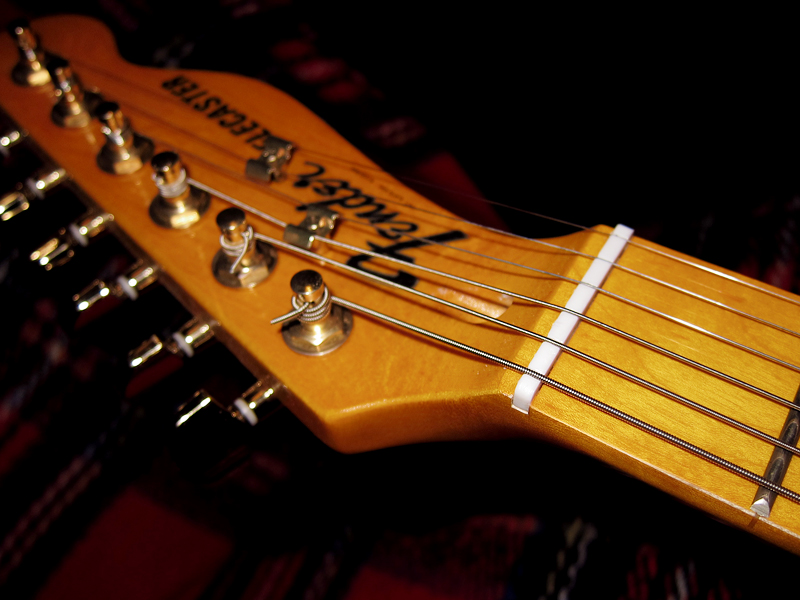 The old plastic nut that this cheap neck came with
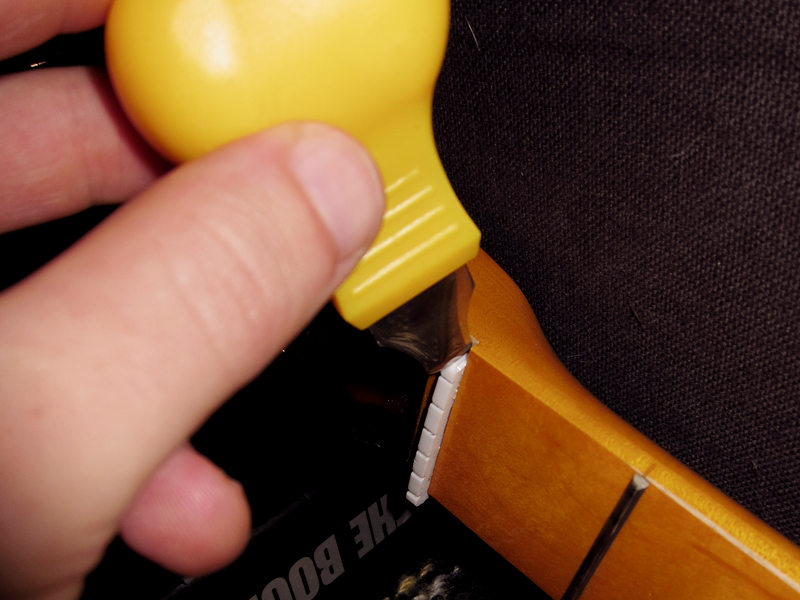 A watch back opener and a little rubber hammer turned out to be excellent tools for this
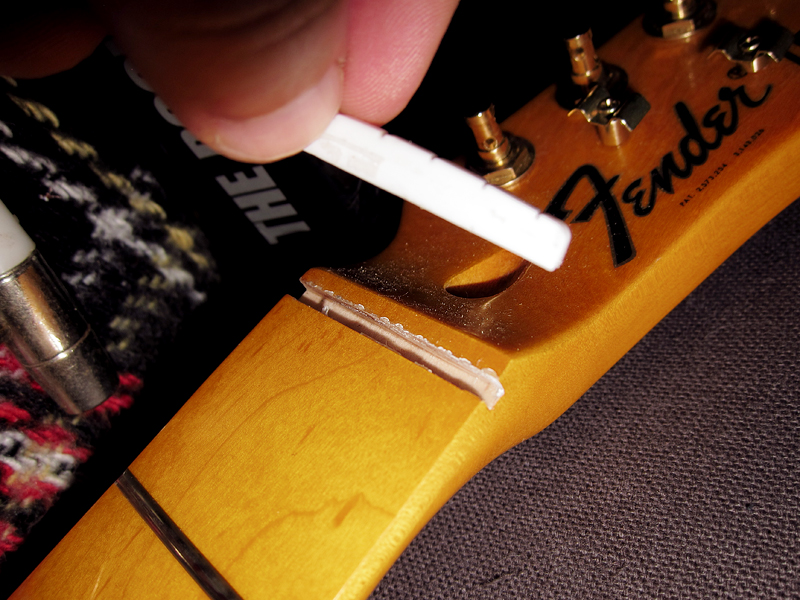 It was way easier than I expected to remove the old nut
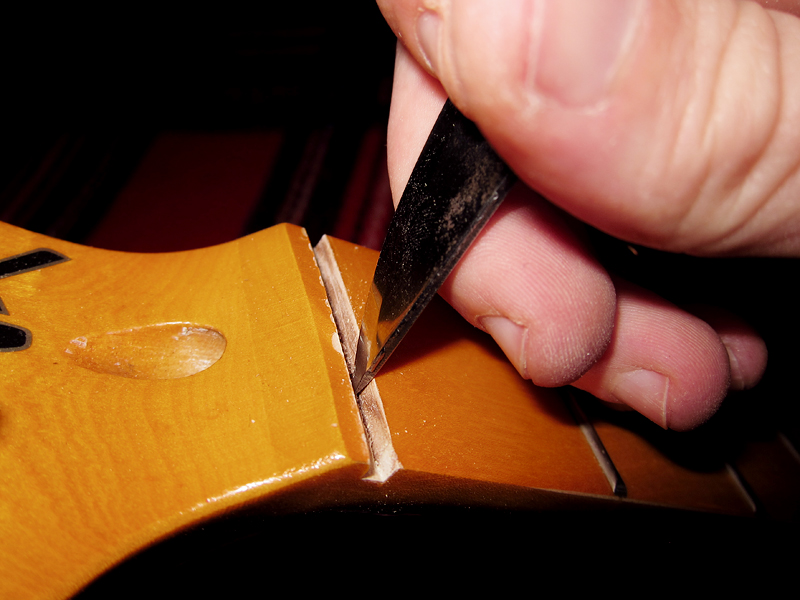 I scraped off some leftover glue with a knife
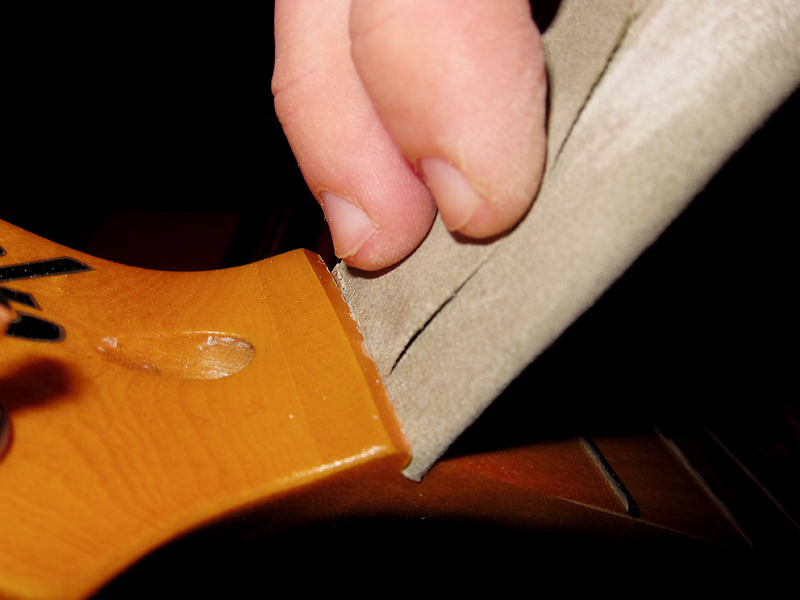 Some sandpaper got the surface smooth and I also needed to widen the slot a bit to fit the new nut
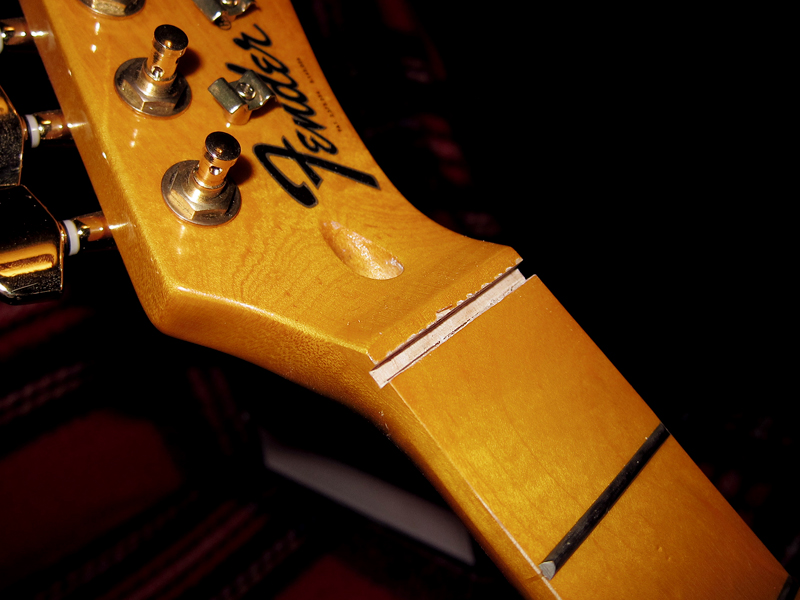 Not the best cut nut slot but I didn’t really expect more from this neck
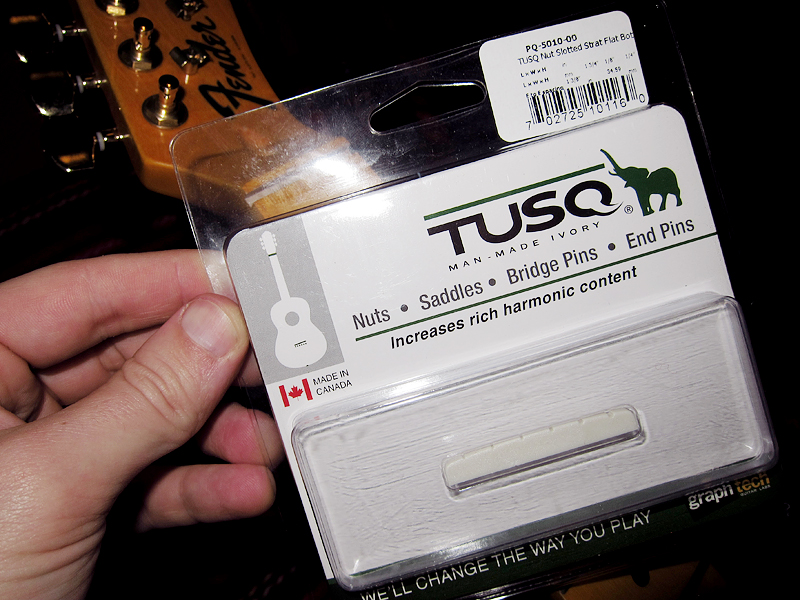 The new TUSQ PQ-5010-00 only cost 8€
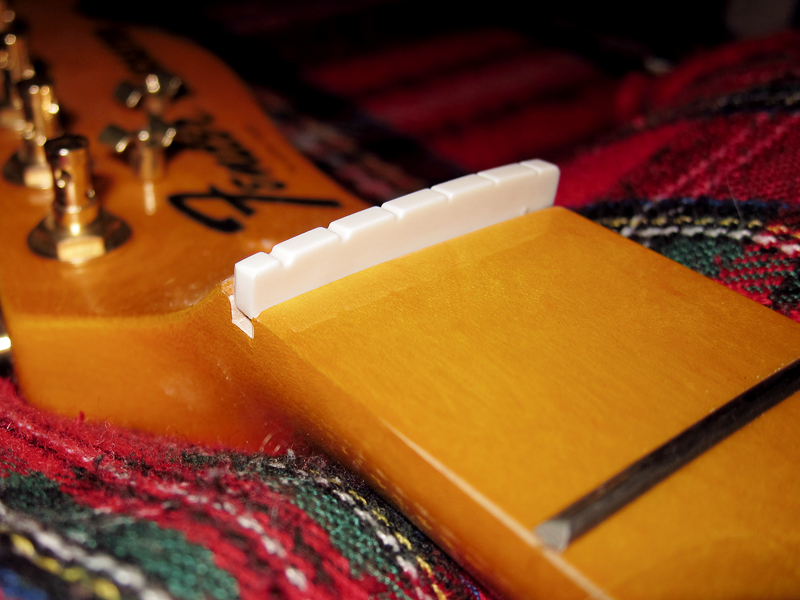 Perfect fit
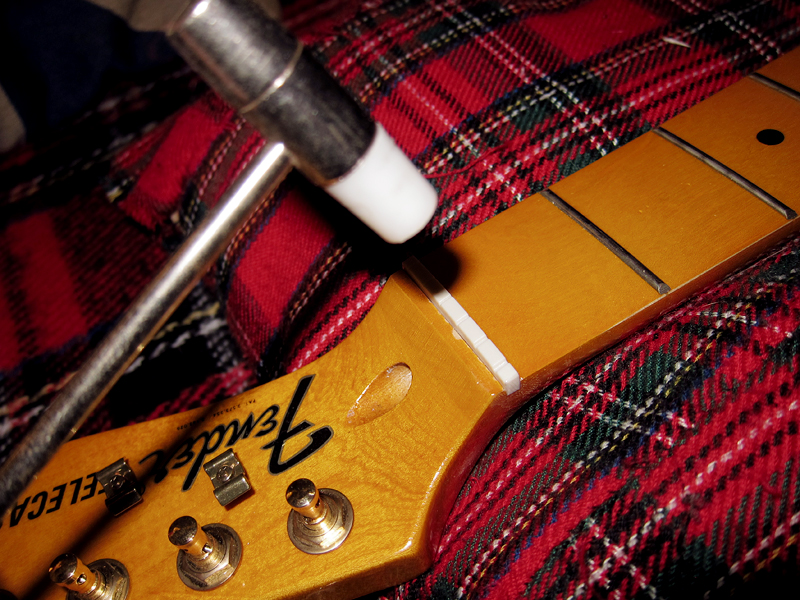 A tiny bit of glue and then just gently tap the new nut in it’s place
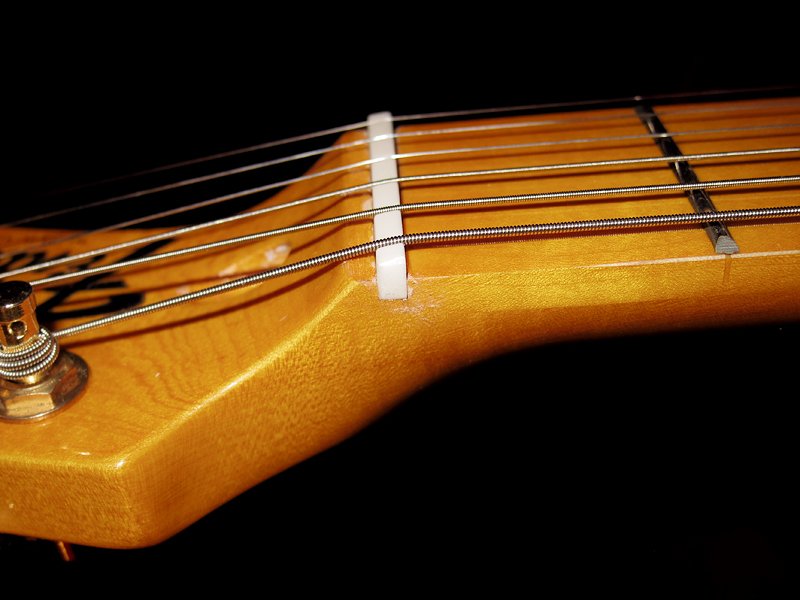 All set, a new nut is fitted on the Claescaster
 Claescaster