Claescaster

Category: Acoustic guitars

Harmony Monterey

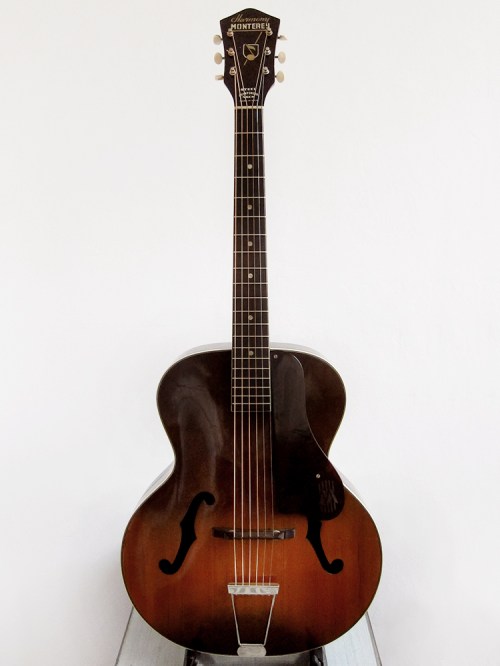
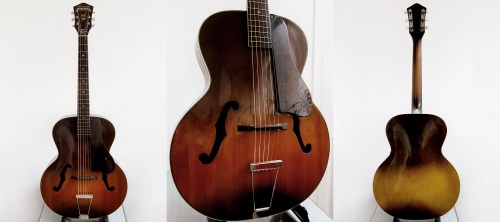
Harmony Monterey, Made in USA 1950's 784H1325A late 1950’s Harmony Monterey H1325, made in USA

A couple of weeks ago I came across a really nice looking Harmony Monterey H1325. The only way to date these guitars is by the second stamp inside, if you can find it, giving the year and month. Unfortunately I can just see 784H1325 and the second stamp JAN in mine. I assume it’s from the late 1950’s judging by the head logo and the lack of trussrod since that was introduced in 1964. It’s a really nice playing and sounding guitar, not as loud as my Levin archtops, the 1951 Levin Royal or 1946 Levin Model 32, but still a very nice guitar. Harmony guitars were mass produced in Chicago during this time and even though they are made from solid woods they feel a bit low budget, in a good way, I guess that’s why they are so damn awesome and look so rock n’ roll.
Harmony Monterey, Made in USA 1950's 784H1325Harmony Monterey, Made in USA 1950's 784H1325

Harmony H1325 – Monterey
Acoustic archtop – Brown shaded
Production years: 1952-1972 (other years possible, not verified)
Spruce top, birch body – Grand Auditorium 16 1/2 in. Unusual sunburst pattern in bands. Neck has a trussrod from 1964.
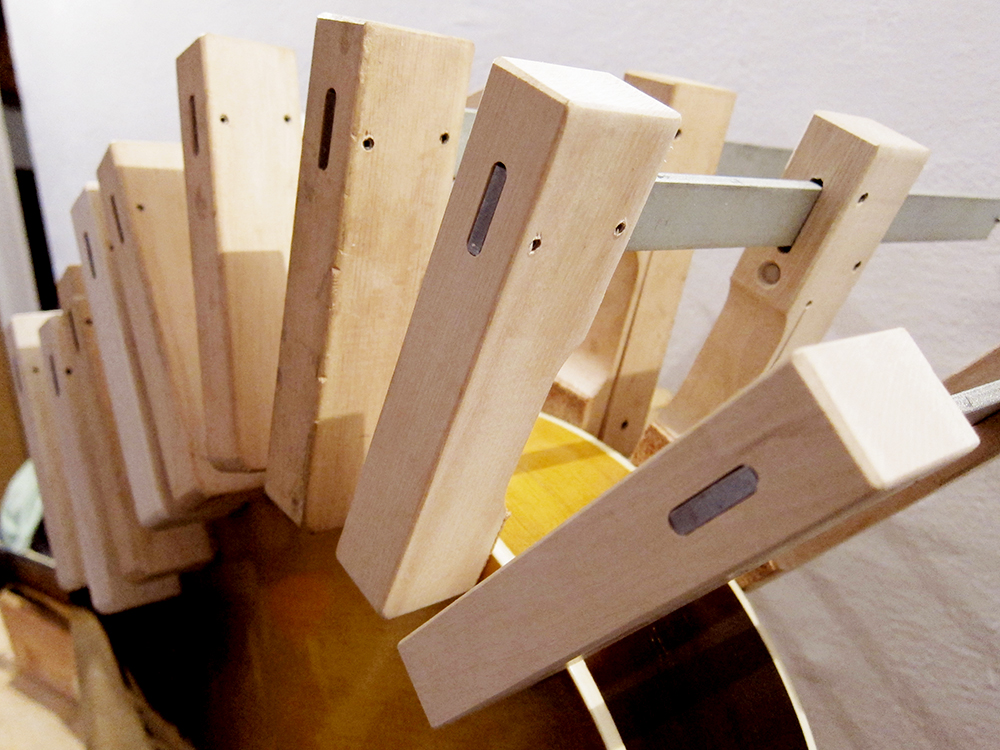
Harmony Monterey, Made in USA 1950's 784H1325There was a lot of cleaning to do and two cracks that needed to be glued. One large on the upper bout and a smaller one on the top and then I glued down the heel a bit better which got the action down. Except for that it was in pretty good shape for being around 60-years old and all original.
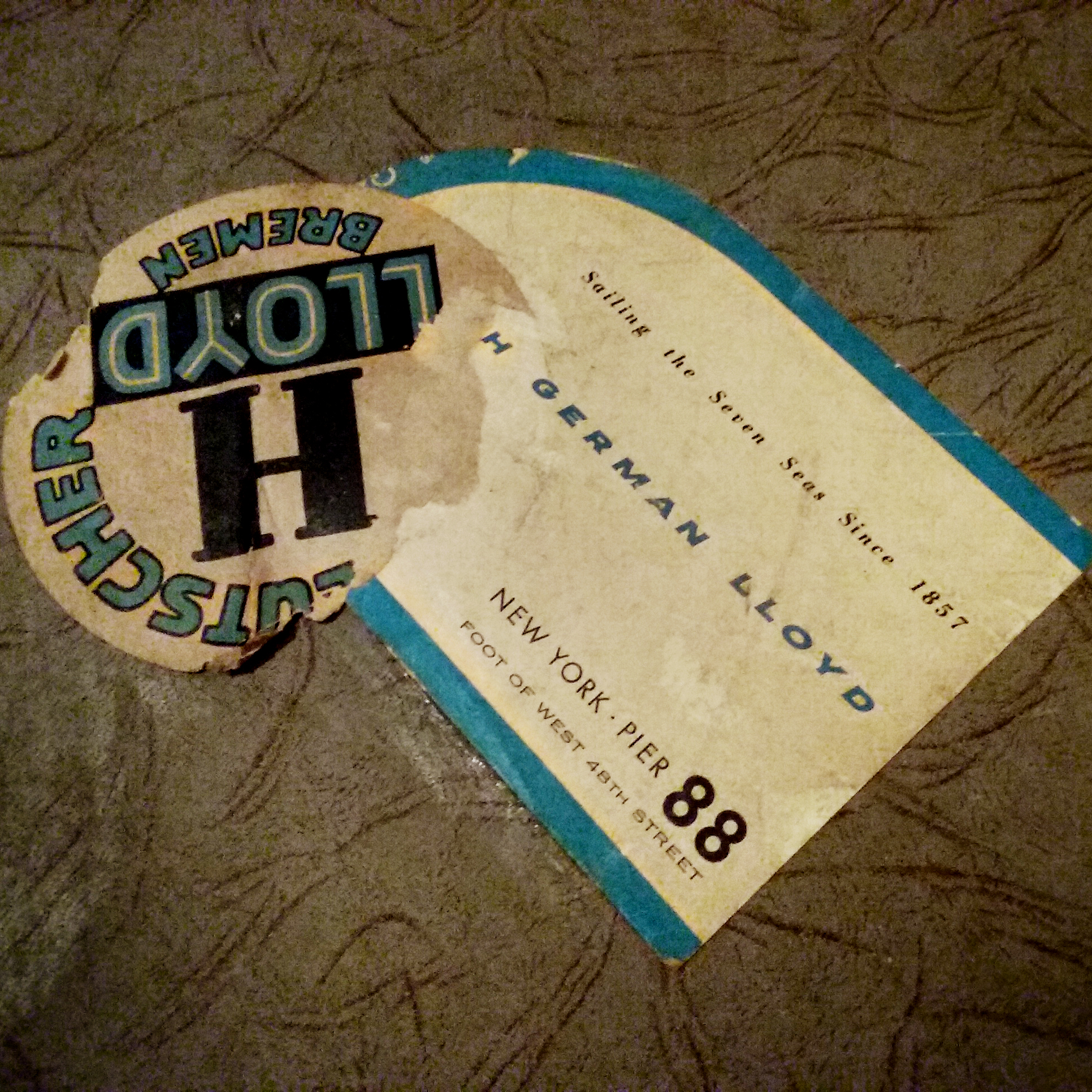
Harmony Monterey, Made in USA 1950's 784H1325The original case has these awesome looking shipping stickers on it, I presume from when the guitar left America for Germany by boat in the 1950’s carried by the first owner.

Harmony Monterey, 1959 Harmony catalogueThe top left looks very much like my Harmony Monterey, having said that, the model number inside mine is H1325 which match the bottom left. Taken from a 1959 Harmony catalogue

Harmony H162, 1959 Harmony catalogueI also got myself two late 1960’s H162 from the US that I need to restore. First of all they need a neck reset but then I was actually thinking of removing the back and X-brace at least one of them. Taken from a 1959 Harmony catalogue.

 

Cherry & Wolf

Cherry & Wolf - La Sonora de Gràcia 10 Oct 2015Cherry & Wolf with me on guitar, La Sonora de Gràcia 10 Oct 2015. © Araceli Perez

Last Saturday I got a chance to play with my friends Cherry & Wolf again. It turned out to be great fun and it seems like I have a few more gigs lined up with them this autumn. Now you can see where the Luxor Dove copy went, it’s Wolf’s main guitar and I’m playing on my beloved Morris W-50.

Rondo

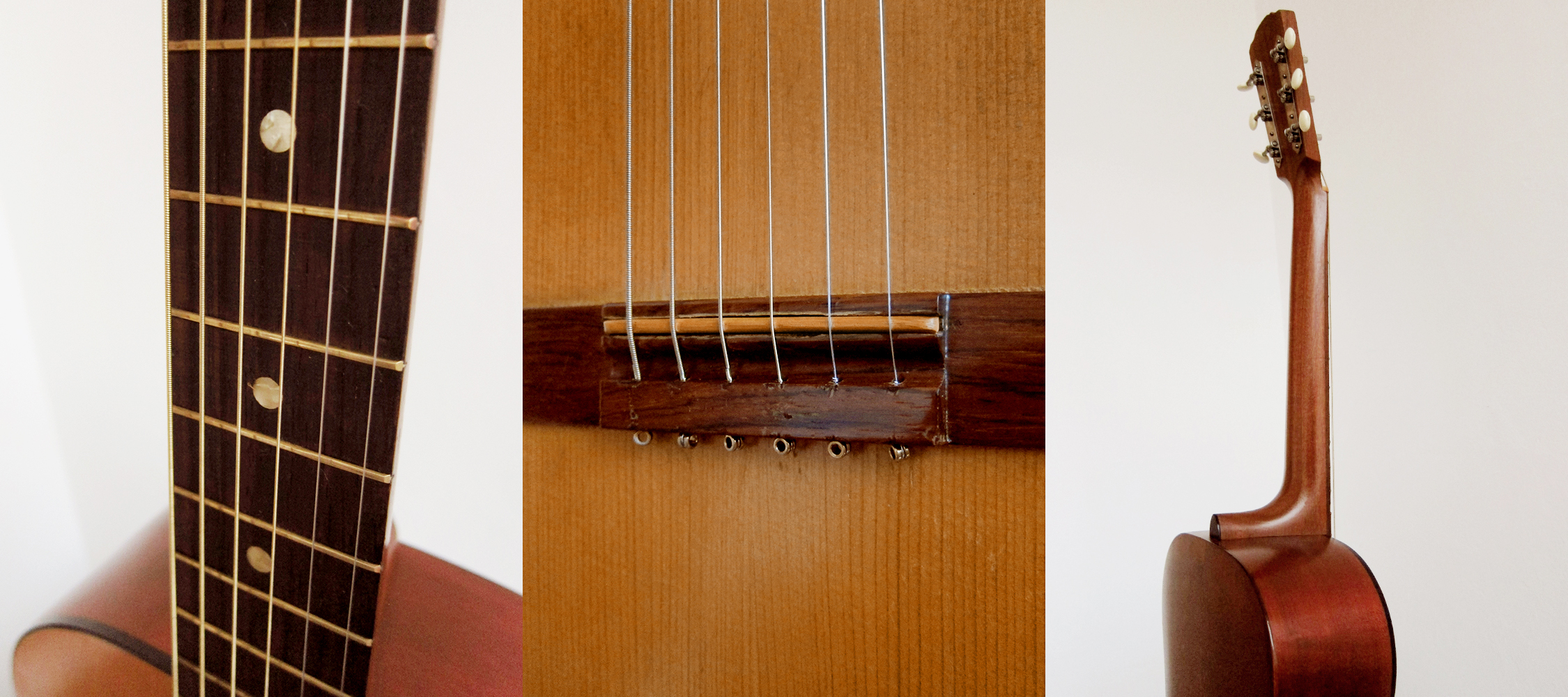
Rondo by Levin Made in Sweden 1960Rondo, built by Levin in Gothenburg Sweden in 1960

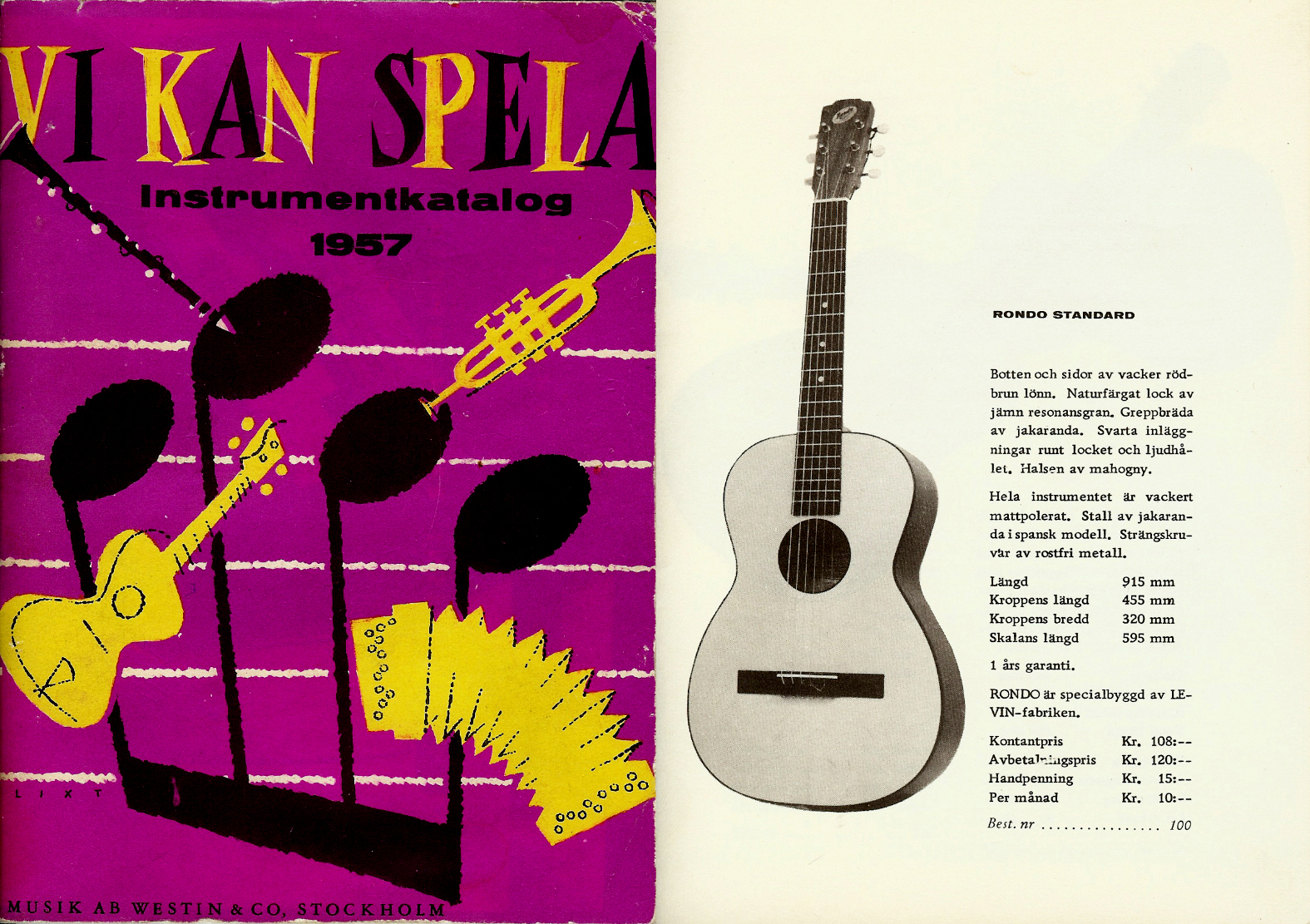
Today is wife’s birthday so tried to be a good husband and got here an old guitar. I found her a little Rondo, a mail order guitar built by Levin in the late 1950’s. I have actually never seen one of these before so I was quite exited when it arrived. It surely feels, plays, smells and sounds like a Levin. Rondo was made by Levin for Musik AB Westin & Co, a music store and publishing company in Stockholm with a large mail order business. It looks pretty similar to a Levin 119 and was made for both steel and nylon strings, this was pretty common on smaller Levin guitars in the 1950-60’s. It’s a very nice little guitar to play and it has more volume and sounds sweeter than I expected, perhaps because it’s fan braced instead of ladder braced. My wife seemed very happy with it too when she got it this morning.

Rondo by Levin Made in Sweden 1960Rondo by Levin Made in Sweden 1960

Rondo
Non-cutaway. Body width: 320 mm, body length: 455 mm
Body depth: 95 mm, scale length: 595 mm
Spruce top, maple back and sides, fan braced
Single-bound top, unbound back, unbound headstock
Unbound rosewood fingerboard with pearl dot inlay
Mahogany neck with non-adjustable T-shaped duraluminum truss rod, rosewood bridge, stainless tuners
Natural finish, one year warranty

Rondo by Levin Made in Sweden 1960It was in pretty good shape when it arrived. I had to glue a couple of small cracks, polish the frets, oil fretboard and machine heads and give her a good clean but that was it. The only problem was that this had to be done when my wife wasn’t around so I’ve been a guitar repairing ninja for the last week.

Rondo guitar, Musik AB Westin & Co 1957 catalogueThe Levin built Rondo guitar in a 1957 catalogue from Musik AB Westin & Co

Ibanez V 637

Ibanez Vintage 637 BS Made in Japan 1978Ibanez Vintage 637 BS, made in Japan by Fujigen Gakki in 1978

I managed to find another a Ibanez Vintage, just like the Ibanez V 300 BS that I got for my friend Miki back in July, but this time it’s a Ibanez Vintage 637 BS. I’m not really sure what the difference is between the V 300 and V 637 because they feel, look and sound very much the same but I assume this one should be a bit better since the model number is higher. Unless they used the old 600-series number for them in 1978 like the used on the Concord earlier and then changed in 1979 to a 300 series. Either way it’s a beautiful and very well sounding guitar. This guitar is now sold.

Ibanez Vintage 637 BS Made in Japan 1978Ibanez Vintage 637 BS Made in Japan 1978I only had to clean her up, polish the frets, oil the fretboard and machine heads and change the nut and saddle to bone and she was ready to go

German parlour

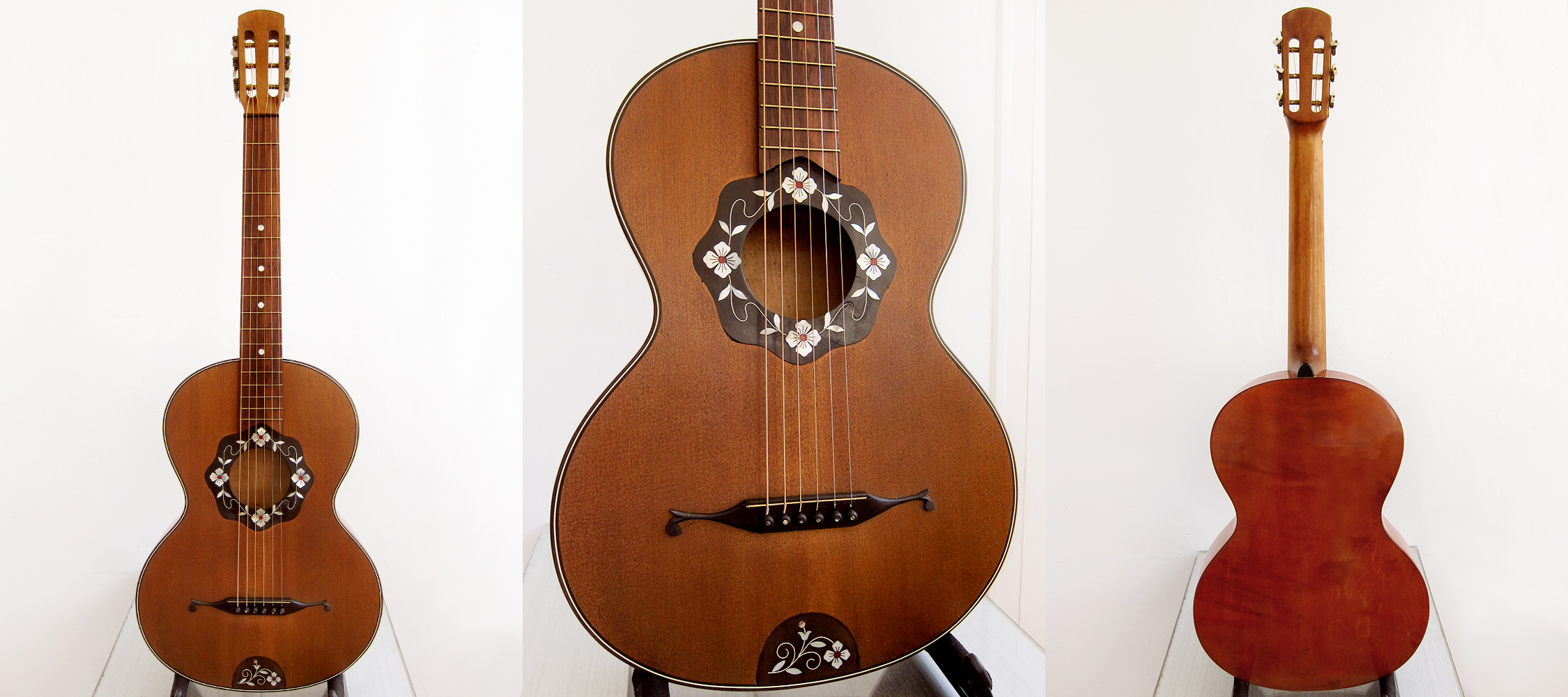
German parlour, unknown maker 1920-30'sMy wife’s little unknown German parlour, probably from the 1920-30’s

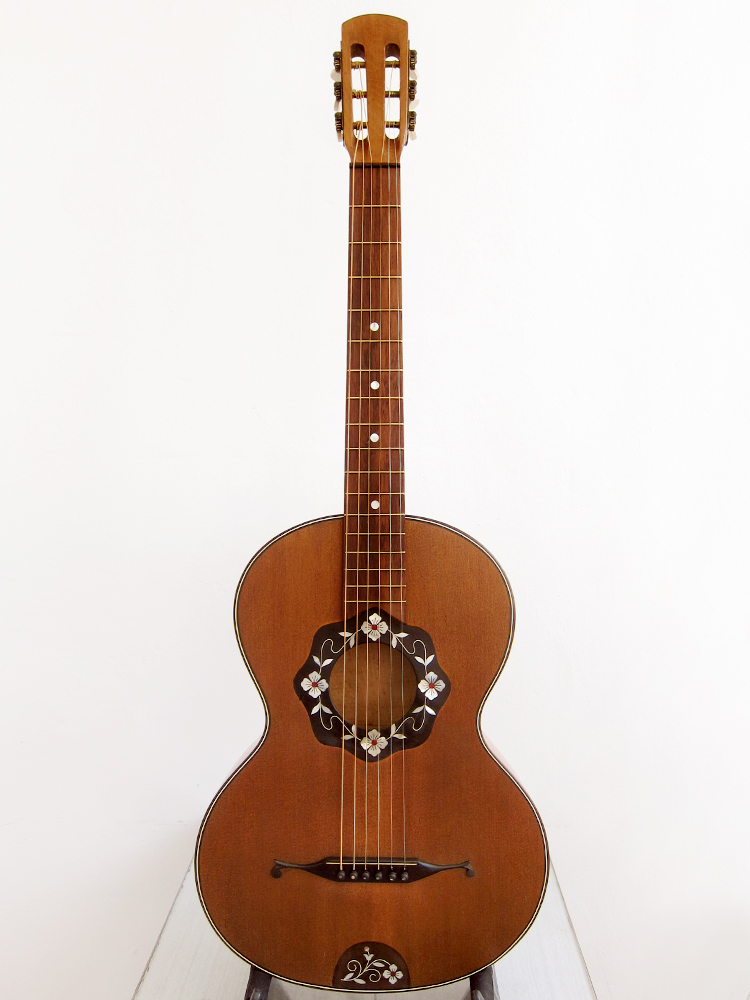
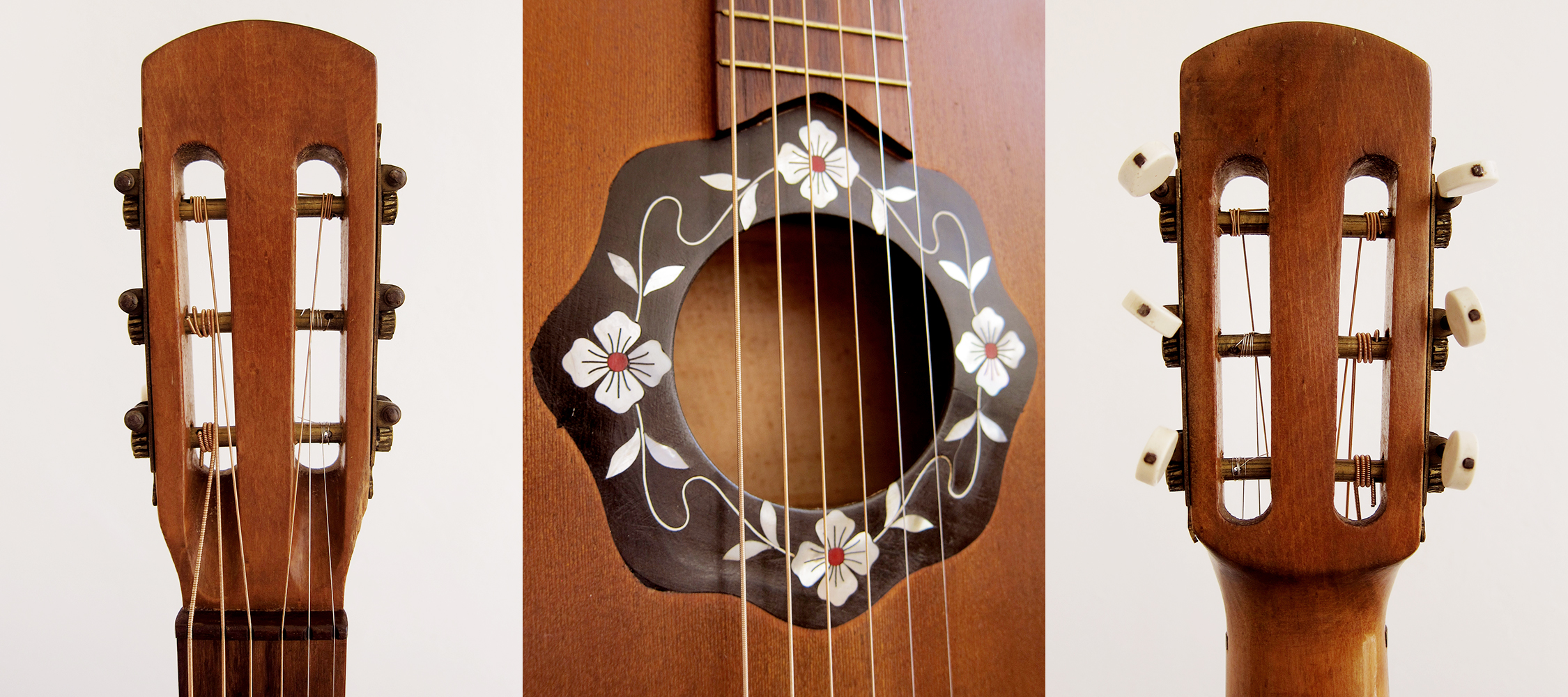
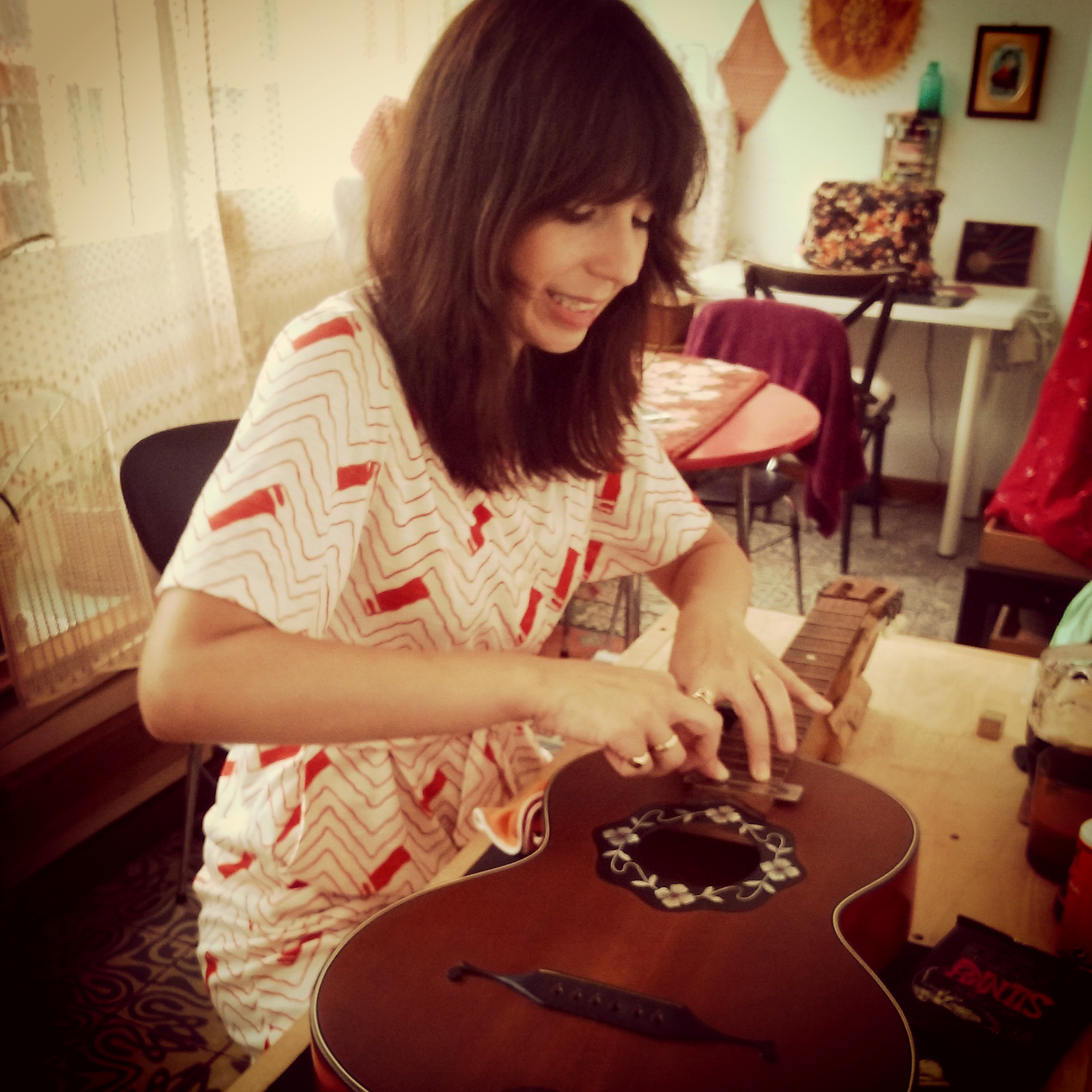
Back in May I found an old German parlour guitar of unknown make, well it later turned out to be a Sonora, but that opened up my eyes for these small beauties. It’s hard to compare them two since the first one had to be completely rebuilt and this parlour was playable when we got it, except for two small cracks in the top. I actually got my wife to fix up her own guitar, it was about time she was introduced to what I normally do when an old guitar arrives. First she had to polish the frets, oil up the fretboard, clean the whole guitar, oil the tuners, ad some fish glue to the small cracks and clamp her up and then when she was ready, restring her.

German parlour, unknown maker 1920-30'sGerman parlour, unknown maker 1920-30'sThe little unknown beauty. There are no makers mark or any further info on this guitar. We just both fell in love with the amazing flower inlays and couldn’t resist her.

German parlour, unknown maker 1920-30'sThere is a first time for everything, now my wife Araceli can take care or her own guitars

Fuji F310

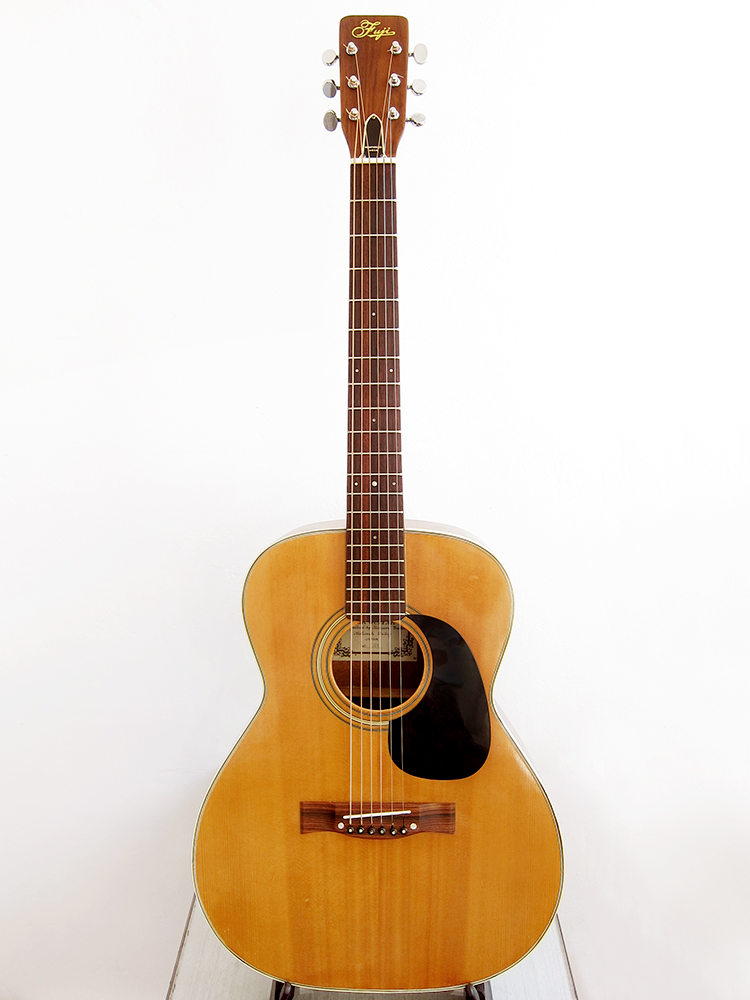
Fuji F310, Kurosawa by Matsumoto Made in JapanFuji F310, made by Kurosawa guitar in Matsumoto, Japan

I recently found a little Fuji F310, a 000-sized Japan made acoustic. The guitar was made by Kurosawa guitar in the Matsumoku factory in the late 1960’s. It says Matsumoto factory on the label and that seems to have been the original name of the Matsumoku factory before they grew too big and had to move, the old Matsumoku factory was in the city of Matsumoto. It’s in great shape for the age and has a great tone, these folk sized Japanese acoustics are pretty hard to come by, especially here in Spain. It’s made with really nice looking tone woods, the rosewood back is beautiful and so is the fretboard. The neck is really fat and feels great, a bit like a 58′ Les Paul and if I needed another 000 I would have kept it myself but I have three Levin guitars in this size. I bought the Fuji F310 for my wife but her hands are too small for the neck and therefore it’s up for sale.

Fuji F310, Kurosawa by Matsumoto Made in JapanFuji F310, Kurosawa by Matsumoto Made in JapanA changed the bridge pins and put in a bone saddle, straightened up the neck and polished the frets. There was a pretty nasty dent on the back of the neck, close to the body, that I filled, painted and lacquered over.
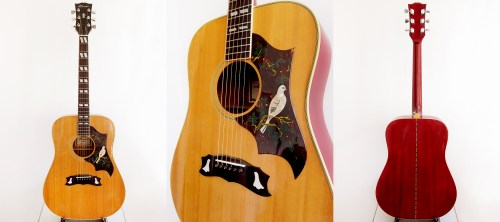
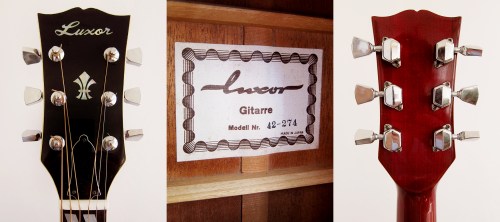
 

Luxor 42-274

Luxor 42-274, Dove copy made in Japan by Ibanez 1970's Luxor 42-274,  Dove copy made in Japan by Ibanez 1970’s

A few weeks ago I got myself my first Luxor guitar, just like C.G. Winner it’s a brand that you see a lot of in Germany but no one outside have ever heard of it. It’s a really well built Dove copy from the 1970’s in great shape, most likely made in the Matsumoku factory in Japan by Ibanez. What we know for sure is that Luxor was a made by Ibanez and imported by Musikhaus Otto Manfred Hack, Göttingen, Germany. This was pretty common in the 1960-70’s that guitars, especially Ibanez, were imported without a brand name on them since it was cheaper and then the importer put their own chosen name on them, like Penco in the US, imported by Philadelphia Music Company, or Antoria or CSL in the UK, imported by Charles Summerfield Ltd, just to name a few. Penco, Antoria and Luxor are all linked to Hoshino Gakki, the owner of the Ibanez but they all claim to have been made in different factories, this is a bit of a problem with Ibanez since it’s just brand, not a factory. Ibanez produced guitars both in the Matsumoku and FujiGen factory, and probably in some others too, so it’s very hard to know what was made where. Ibanez and Cimar, a sub-brand of Ibanez, claims to have been made by FujiGen, while Luxor and a lot of other brands owned by Hoshino Gakki were made by Matsumoku. Having said that, the quality of this Luxor is made with Ibanez standards and not like a lot of the no branded inferior ones that Matsumoku mass produced in the 1970’s. Here you can read more about Japanese guitar brands. Either way, it’s a fabulous looking Dove copy, a pure joy to play and it sounds great. Unfortunately I managed to buy a couple of more guitars than I first intended over the summer so this Luxor 42-274 is for sale.

Luxor 42-274, made in the Matsumoku factory in Japan by Ibanez in the 1970'sLuxor 42-274, made in the Matsumoku factory in Japan by Ibanez in the 1970'sLuxor 42-274, made in the Matsumoku factory in Japan by Ibanez in the 1970’s. Imported to Germany by Musikhaus Otto Manfred Hack in Göttingen


K. Yairi YW-1000

K. Yairi YW-1000 Made in Japan 1973K. Yairi YW-1000, made in Japan in 1973

Since it’s my 35th birthday today I’m going to post this guitar even though it’s not 100% ready yet, it was my birthday present to myself. As I mentioned earlier I recently became the proud owner of a 1973 K. Yairi YW-1000. It’s something I’ve dreamed of for many years and after a bit of hassle it finally arrived. The previous owner didn’t really give much of a description so I wasn’t really sure what to expect. Luckily it sounds at least as good as I had hoped for, if not better and it’s structurally fine. Having said that, there were a couple of things that I wasn’t overly excited about, like the bridge and the scratches on the top. I don’t mind worn guitar but there is one big scratch that is still a real eyesore for me, I’m sure I will get used to it and not even see it in a few weeks. The bridge is a chapter for itself, I really don’t know what has been going on there. It has been removed at some point and re-glued, it also has two screws that I doubt were supposed to be there and on top of that someone has added a bit of rosewood to make it higher and topped it of with a fret as the saddle instead of a normal slot and bone saddle. As soon as the wood shops open again here in Barcelona, a lot of shops are closed in August, I will get a piece of ebony and create a new bridge from scratch. Since I couldn’t wait a whole month to play the guitar I lowered the bridge and cut a saddle slot and installed a bone saddle for now, which has worked fine. It’s a beautiful guitar, it’s smells wonder full and sounds even better. This is my third K. Yairi and I have to say that it’s without any doubt the best Japanese acoustics I’ve played so far. I really love my K. Yairi YW-130 and K. Yairi TG-40 but nothing sounds as good as this K. Yairi YW-1000.

K. Yairi YW-1000 Made in Japan 1973K. Yairi YW-1000 Made in Japan 1973K. Yairi YW-1000 Made in Japan 1973It’s worn and has few scratches but nothing too serious, except for the bridge as mentioned before. I changed the machine heads to Wilkinson WJ28NGD open gear in gold, the original ones were in gold too but most of it had worn off and on top of that they were really heavy. I love all the abalone binding and the hexagon inlays in the ebony fretboard. I’m so gay for bling on guitars, the more the better, perhaps I’m the Liberace of guitars.

K. Yairi YW-1000 Made in Japan 1973As soon as I got the guitar I removed the fret, lowered the bridge by sanding it down and then I cut a proper saddle slot. Apparently the top of the bridge is rosewood on an ebony base so I had to paint the top black to match the rest. The bridge works fine but I’m not happy with how it looks so I will try my best to carve a new one in ebony and replace it.

The fist video is with the old makeshift rosewood bridge that the guitar came with, the second video is with the new ebony bridge that I carved myself from scratch, you can read about it here.

K. Yairi YW-1000

1973 K. Yairi YW-1000K. Yairi YW-1000 Made in Japan 1973, Taken from my Instagram

I did it, finally I found myself a K. Yairi YW-1000. This has been a goal of mine for years, or at least since October 2013. You never see them for sale in Europe and to buy one from the US or Japan would set you back at least $1500-2000 plus import taxes and the risk that it gets confiscated in customs, some countries are really picky about Brazilian rosewood crossing their boarders. This K. Yairi YW-1000 was made in the 48th year of Emperor Shōwa, meaning 1973, I love the Emperor based serial numbers. I will write a lot more about this guitar when I got it all set up, I need to re-glue the bridge first.

Rubenca, Zaragoza

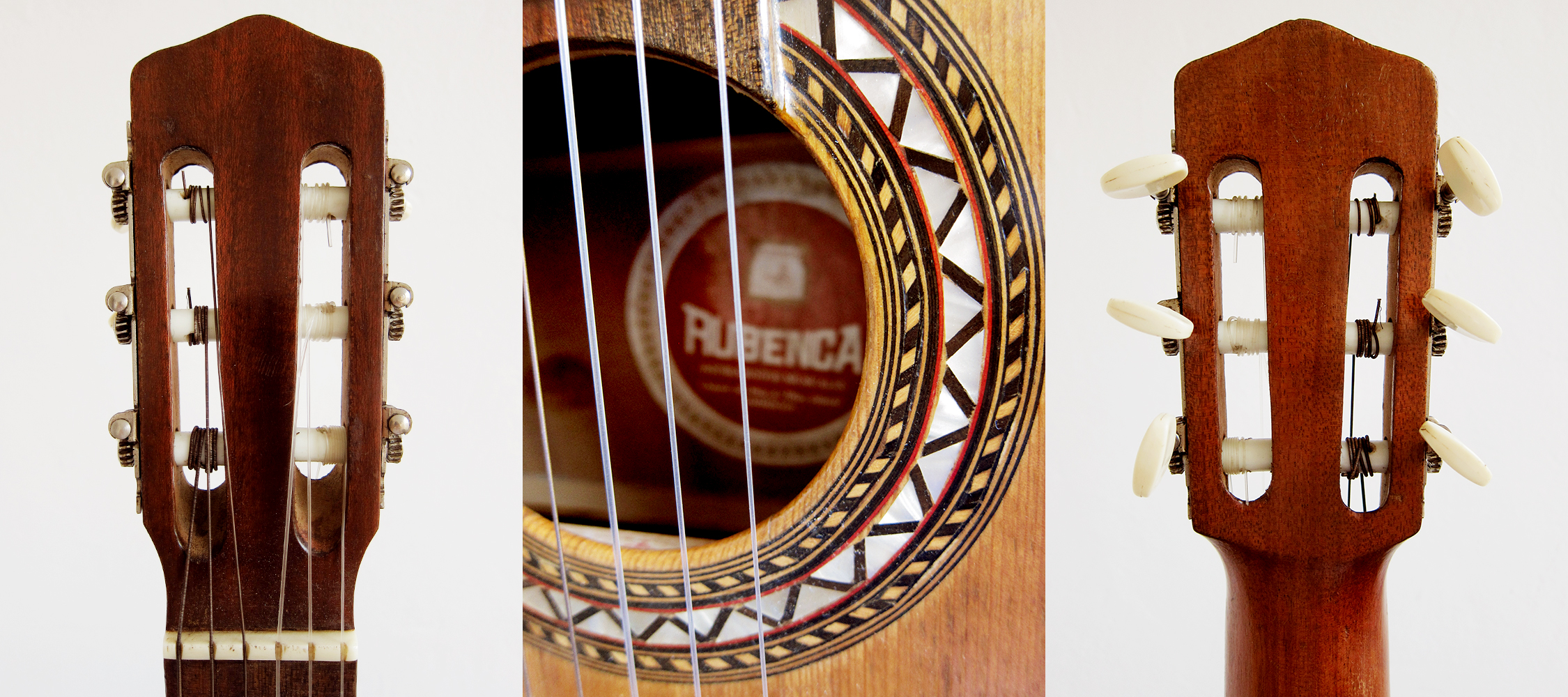
Rubenca Spanish Guitar Zaragoza 1960'sRubenca Spanish Guitar made in Zaragoza in the 1960’s

My guitar playing days started with electric guitars and I never really cared much for acoustics until I moved to Spain in 2010 and now acoustic guitars are my main passion in life. Another thing I never used to pay much attention to was Spanish guitars but after moving here I have occasionally come across some that I really liked, especially my Francisca Montserrat but also the Juan Estruch I got for my friend Rafa. This is one of them, a Rubenca Spanish guitar made in Zaragoza most likely in the 1960’s. The only info I found about the brand is that Rubenca is music store in Zaragoza that is still in business so I assume these guitars were made somewhere in the area and sold as their own brand, unless they made guitars themselves back then. Like most Spanish guitars from the 1960-70’s it has some parts that is way above what you expect, like all solid woods, how well they sound and especially the fancy mother of pearl inlays around the soundhole on this Rubenca. At the same time I’m always surprised how cheaply looking the fretboards tend to be, why they never bothered to smooth out the frets, why the braces seems to be cut with a freaking axe or why the machine heads never work after 50 years. I found this Rubenca when I was down in the south a couple of weeks ago to see my wife’s family. I bought it for the fancy inlays, I’ve never seen anything like that on a Spanish guitar before, but was straight away taken by the the sound and quality of the guitar. The original machine heads still work, the neck is straight and the action is still ok for a guitar that lacks trussrod. I actually didn’t have to do much more than to give it a good clean when I got it. This guitar is for sale, even though I like it a lot, but I can’t justify having more than one Spanish guitar since I hardly play them.

Rubenca Spanish Guitar Zaragoza 1960'sRubenca Spanish Guitar Zaragoza 1960'sThe Rubenca has it’s wear and tear, like a glued crack in the side, but still, the beautiful inlays and the patina makes it’s all worth it