Claescaster

Tag: MIJ

How to… fit a LR Baggs M1

Morris W-40 1973 My new Martin D-45 copy, a Morris W-40 Made in Japan by Terada in 1973

There was a bit of work that needed to be done when I first got my Morris W-40. First of all I polished the frets, cleaned her up and oiled the fretboard. Then I needed to take care of the action which was too low, imagine that on an acoustic guitar. There was a slight forward-bow on the neck which made a bit of rattle when I played solos in the middle of the neck, at least when I hit the strings hard. I adjusted the trussrod and gave her a slight bow the other way, meaning that cowboy chords still sound beautiful and the action is still very low for being an acoustic around the 12th fret. I changed the machine heads to a pair of Grover tulip copies in gold, maybe not the best ones but it looked so much nicer than the original plain ones in chrome. Then I fitted a strap button in gold, I can’t stand having to tie the strap to the head of the guitar. I’m still waiting for the Nitrocellulose lacquer I ordered so I can fill in the three dents on the back of the neck, which is going to be a new adventure since I have never done anything like it before. Last step was to fit my new L.R. Baggs M1 soundhole pickup. I’m getting pretty used to fit endpin jacks on acoustic guitars now so it was pretty straight forward even though it was a bit more hard work on this one. I’m not sure if it was because the wood is older, or the type of wood used in this, it’s Brazilian Rosewood and maple in the 3-piece back, Now it plays and sounds amazing, I’m really pleased with it.

Fitting LR Baggs M1
I prefer to fit the endpin jacks by hand, with a small round file and then even out the hole with sandpaper when it’s big enough

Morris W-40 1973
Morris W-40 1973

Morris W-40 Made in Japan by Terada in 1973, just look at that Brazilian Rosewood and maple 3-piece back

Greco Spacey Sounds TL-500

Greco Spacey Sounds TL-500
Greco Spacey Sounds TL-500, Made in Japan by FujiGen in August 1979

Yesterday the newest member of my Greco family arrived from Japan. I went a bit bananas last week when I saw that my favourite eBay seller Tokyowax was selling a Greco Spacey Sounds TL-500 so I bought it straight away. These Greco TL-500 are pretty rare, there are about 3-4 Greco TE-500, the Thinline version, for sale on eBay at the moment but I have only seen 2-3 Greco TL-500 for sale in the last two years. I’m not sure if they produced more Thinline copies in late Seventies than normal Telecasters or if people refuse to sell them, but you rarely see these and when you do they are normally very expensive. I got mine fairly cheap since one of the string ferrules on the back was missing. Well I shouldn’t really call it cheap and now the import tax from Japan had increased as well, I had to pay 95€ instead of the normal 75-80€.  I didn’t have to do much to her, everything was pretty well set up already. The frets looked pretty bad so I polished them, oiled the machine heads, tightened all the screws and restrung her. She plays amazingly, even better than my old mistress, my Greco Spacey Sounds TE-500 Thinline copy. It might seem weird that I put my old “Nancy”, my Fender Telecaster TL52-75, up for sale and then bought a new one the same week. The truth is that even though I love my Japan made Fender, I don’t dare to use it since it’s in such a good state. I prefer guitars that are older than me and have a couple of battle scars already. I guess I’m also a bit gay for late 1970’s Greco guitars.

Greco Spacey Sounds TL-500

Greco Spacey Sounds TL-500
The body has quite a few marks on it but the back of the neck is like new and that’s the only thing I really care about.

Greco Spacey Sounds TL-500
The frets looked pretty bad so I masked the fretboard and polished them with 400 and 800 grit and then wire-wool. It looked like they had put the frets on before they applied lacquer to the neck and then after 35 years of playing half of it had worn off. The electronics seemed to be in good order and the guitar sounded awesome when I plugged it in so no reason to mess with that.

Greco Spacey Sounds TE-500N, Greco Spacey Sounds TL-500, Greco Les Paul Custom EG-600C
Greco Spacey Sounds TE-500N 1977, Greco Les Paul Custom EG-600C 1980, Greco Spacey Sounds TL-500 1979

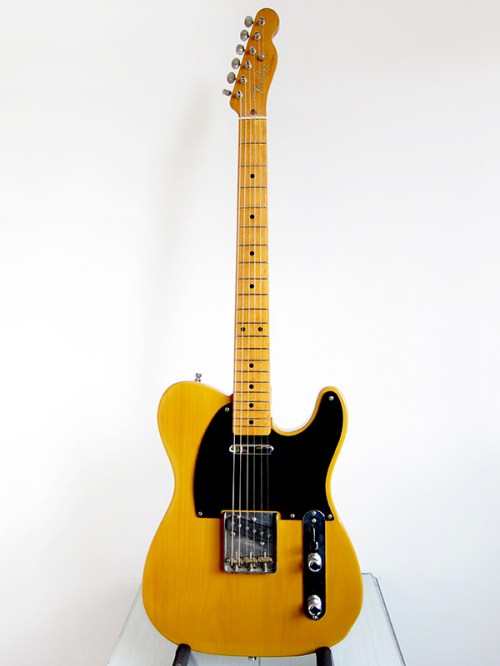
Fender Telecaster Japan TL52-75

Fender Telecaster TL52-75, ’52 re-issue, Made in Japan
Fender Telecaster TL52-75, ’52 re-issue, Made in Japan by FujiGen between 1987-1989

I have thought long and hard about it and now decided to put “Nancy” up for sale. It’s going to be sad to see her go but sometimes you have to sell things you love for the greater good of the collection. I’m going to focus more on Greco and Levin from now on. I also have two guitars on their way so I need to make some room for my new babies.

Fender Japan TL52-75
Fender Telecaster TL52-75,
’52 re-issue Made in Japan, FujiGen 1987-1989.
900€ SOLD
In mint condition, all original, without any doubts the best Telecaster I have ever played. Imported straight from Japan. The only reason for selling is because I prefer fat 70’s necks. There is no way to find the production year of these A-serial Telecaster with the serial number on the bridge plate. However, it must have been made between 1987 and 1989 since it’s a TL52-75. They were called TL52-70 between 1984-1986 and then changed to TL52-700 in 1990.

Fender Japan Twang catalogue 1989

Hondo II P-bass

Hondo II P-Bass
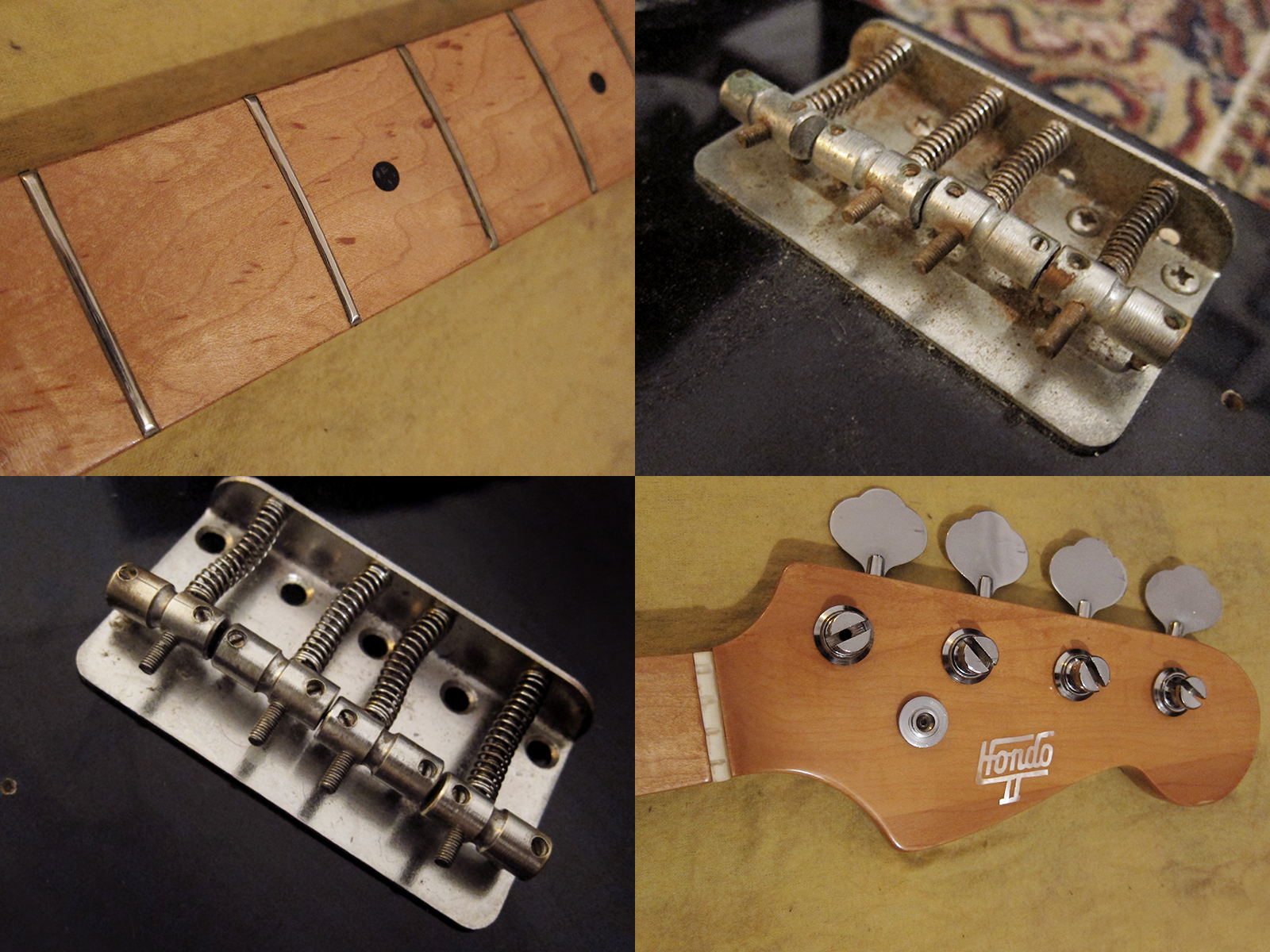
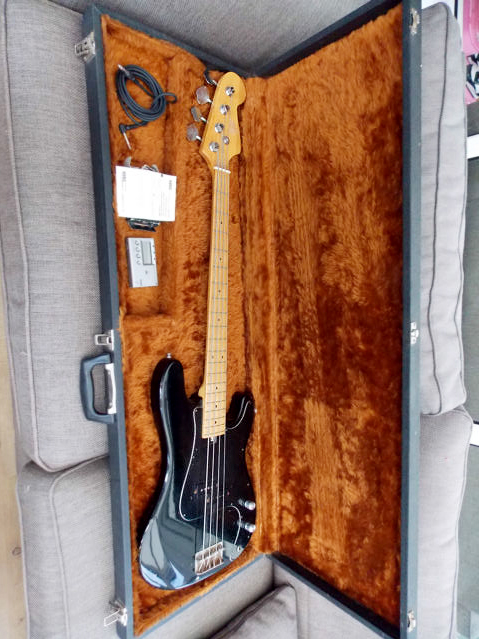
Hondo II P-bass copy, it’s a bit roadworn but the neck is in a really good state and it feels great to play.

Hondo II P-Bass
The machine heads could do with being replaced too, it seems like Hondo II have great necks but cheap hardware and electronics.

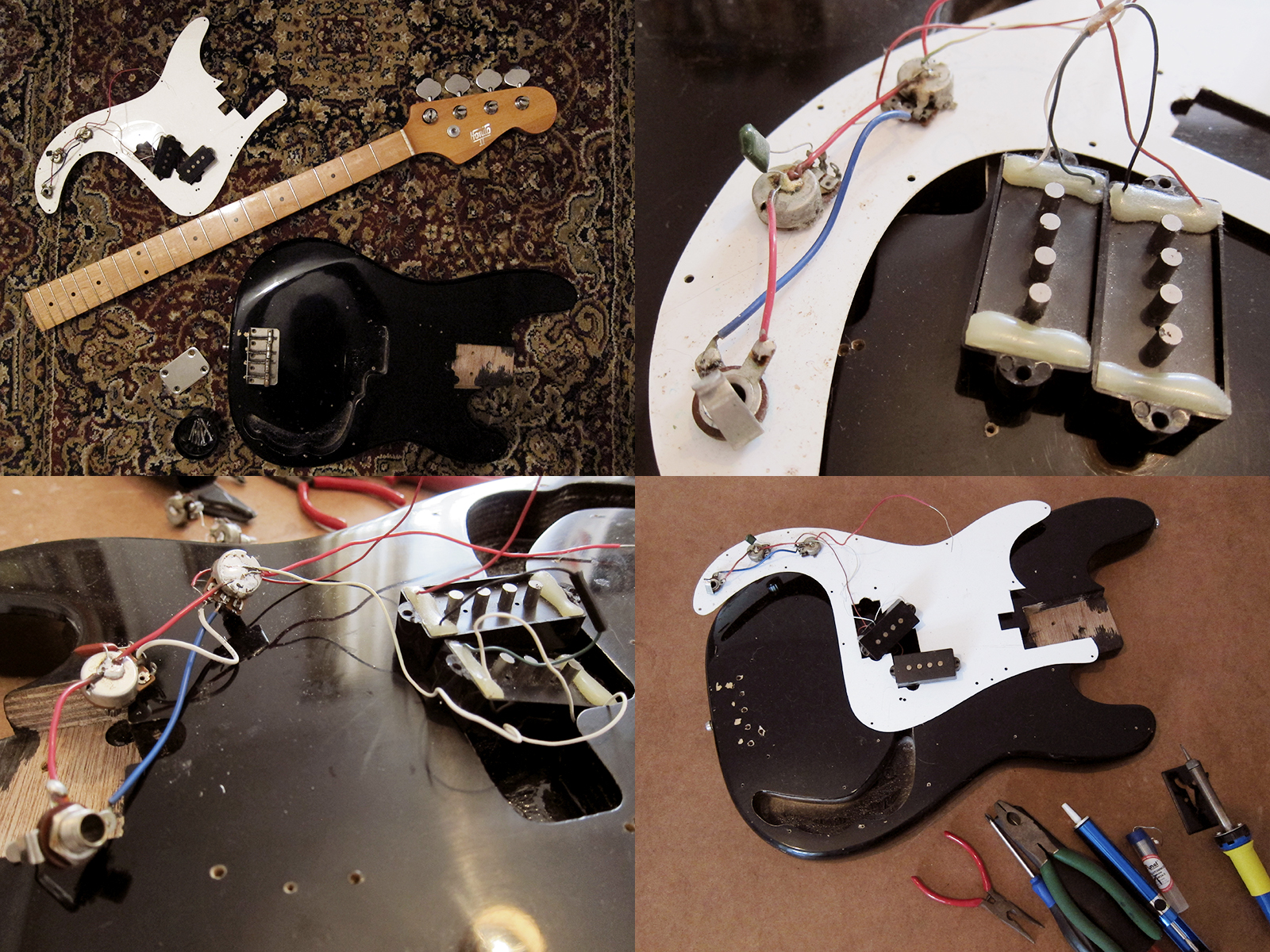
As I mentioned before I got a Hondo II P-bass for my colleague Verushka, she plays in an awesome punk group called Sect. The bass arrived last week and I took it home and had a look at it. It was sold as untested so I presumed that nothing worked, and I was right. The wood seems really solid and good, just like the Hondo II I got for Dani a few months back but the electronics seemed to be pretty bad. I took it a part and cleaned it, polished all the metal and then started to go through the electronics. It turned out that the pickups doesn’t work. Or rather they work, but the output is so low that you can hardly hear them. We ordered a new set of Artec P-bass pickups, new pots and jack from my favourite Hong Kong store EY Parts so as soon as they arrive I can get the bass sorted.

Hondo II P-Bass
I cleaned it, polished the frets and all the hardware with wire wool and metal polish. I have to say that this cheap little bottle of Harley Benton Hardware Polish has proven to be extremely worth the 1.90€ I paid for it. I put in a little shim when I assembled it, just like I did with Dani’s and it made wonders to the action. Now it’s really low and easy to play.

Hondo II P-Bass
I took all the electronics apart, cleaned the jack, cut the ends of all the wires and replaced the mini pots with some newer mini pots I had at home, I did everything I could to make sure that all the connections would be as good as possible but it didn’t help. Well I got rid of the extremely loud humming noise that was there before but the pickups are still way too weak for being usable. Let’s see what it sounds like when the new full size pots, jack and Artec pickups arrive.

Kiso Suzuki WE-150, Made in Japan

Kiso Suzuki Violin Co. LTD. WE-150 Made in Japan
Kiso Suzuki Violin Co. LTD. WE-150 Made in Japan, 1980

Last night I restored a Kiso Suzuki WE-150. There wasn’t anything really wrong with it, it was just extremely dirty and the frets seemed to have been lying around in aquarium. I cleaned it for 2 hours, polished the frets and set it up and now it plays and sounds great. I changed the nut too, from plastic to bone, which improved the tone a lot. It’s actually one of the easier guitars I have played in a while even though it’s a dreadnought. I strung it with 11’s which I normally do on all of my acoustics so I can play them like electrics but this one felt extra easy to play. I tend to find dreadnoughts a lot stiffer compared to folk- and parlour sized guitars even with light gauged strings. I would like to keep it but it has to go so if you are interested you can find it in For sale.

Kiso Suzuki Violin Co. LTD. WE-150 Made in Japan
The frets was extremely dirty and full of something green that almost looked like moss. I cleaned, dressed and polished them and then oiled up the fretboard with lemon oil. I adjusted the neck and set it up so now it plays really well with low action without any buzzing. A great Japanese made Kiso Suzuki WE-150 from 1980 that looks almost new.

Hondo II P-bass

Hondo II P-bass

I just bought another Hondo II P-bass on eBay, this time for my work colleague Verushka from the Barcelona based punk band Sect. The listing stated that the bass was untested so hopefully it doesn’t work and I got a lot of work to do before it’s ready to be played. Dani is selling his Hondo II but Verushka and I decided that black was more her and then we found this beauty.

Hobbs Music P-bass

Hobbs Music
Dani has decided to put the Hobbit up for sale. It’s a really nice bass that I helped him to fix up, more about that here.

Martin D42/D45 Made in Japan copy

51HYDW0Ri3L._AC_SL1200_

I’m after a Japan made Martin D42/D45 copy. If anyone happens to see one for sale, please let me know. It doesn’t have to be a Alvarez or Yairi, Morris, Mountain, Suzuki, Aria and pretty much anything else would do as long as it’s made in Japan in the 1970’s or early 1980’s. However, it has to have the hexagon inlays and binding around the top and soundhole.

Hondo II P-bass

Hondo II P-bass

My friend Dani bought himself a Hondo II P-bass copy the other week, well I had to buy it for him since he doesn’t have a eBay account. I took it home and spent my Sunday morning with her,  it wasn’t much work needed. The electronics are pretty old but it works and sounded pretty cool so I think we should keep it as it is for now. However, the actions was extremely high so I had to first adjust the trussrod a bit and then put in a shim in the neck pocket to get the angle of the neck right. Now it’s as low as it can go without any buzzing and it feels really nice to play.

This bass is now for sale.

Hondo II P-bass I love the wood grain, really beautiful. We bought the bass from a UK seller but it seems to have been sold in Canada originally.

Hondo II P-bass Pretty descent wood, good weight and really solid. I’m not really sure what type of pickup that is but it works and sounds good. I folded a business card and used as a shim to get the neck right and to lower the action. I couldn’t find any markings anywhere so we are still not 100% that it is made in Japan, it could be Korean made. Anyway, it feels really nice and seems to be pretty good quality so it doesn’t really matter.

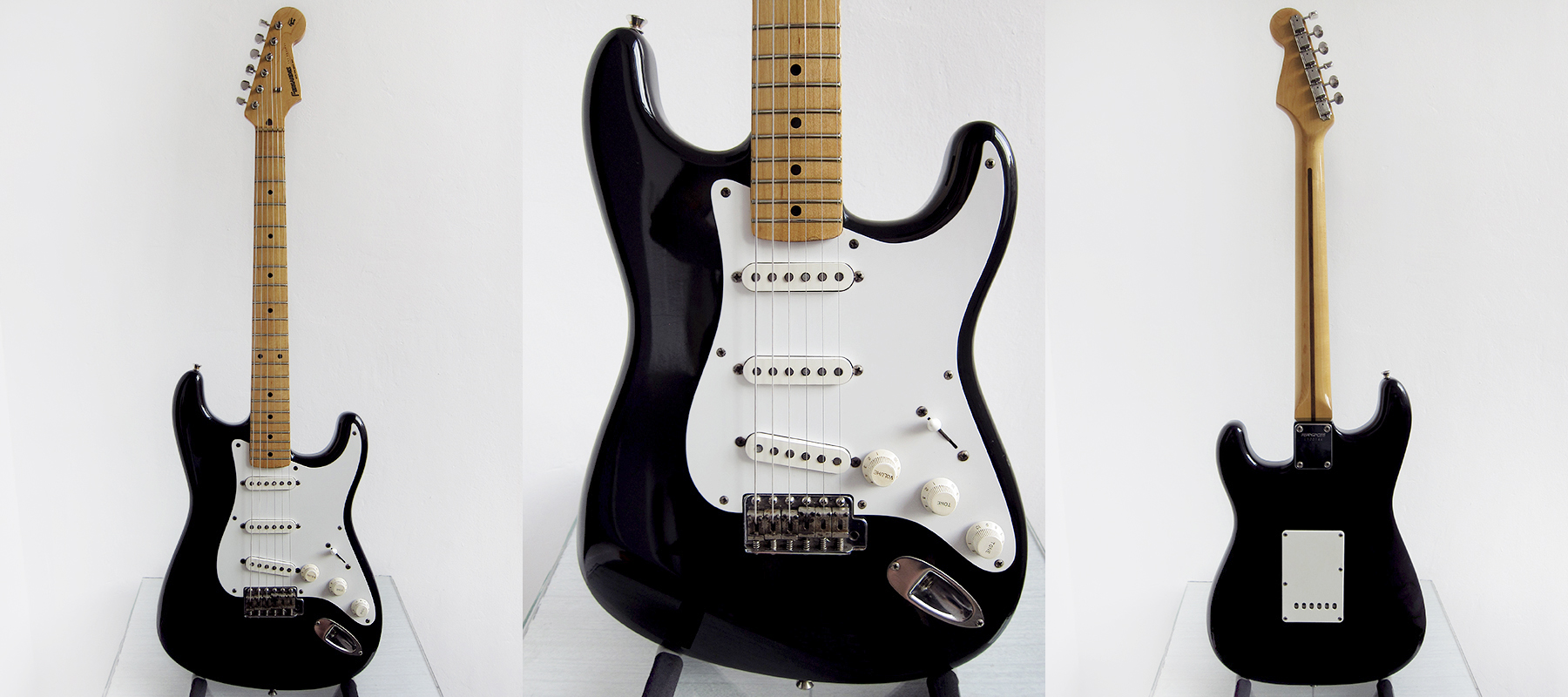
Fernandes The Revival RST-50 ’57

Fernandes The Revival '57 Stratocaster
Fernandes The Revival RST-50 ’57 Stratocaster
Made in Japan, 1988

We were up in Vitoria last weekend for the Azkena rock festival, I had to see The Black Crowes, and I managed to find this little beauty in a Cash converter. It’s a Fernandes The Revival RST-50 ’57 Stratocaster made in Japan probably in 1988. It’s a bit of detective work left to do, I’m still not sure if these were made in the FujiGen or the Tokai factory. It’s most likely made in 1988, well if you can trust Guitar world crazy in Japan, but he seems to know his stuff. The number on the back plate has nothing to do with the year but the first digit of the number stamped on the neck seems to indicate the production year, at least during the 1980’s. Mine has #Y80801 and ’57 stamped and the heal so that should be a Fernades RST-50 ’57 Strat from 1988. However, this guy on eBay claims that Fernandes changed from the proper Fender head to a sharpier head in 1986. He claims that mine should have been made between 1982-85 since it has “Electric Sound Research Group” under the Fernandes The Revival logo on the headstock. I think I’ll go with the Guitar world crazy guy, he seems to know a thing or two. We can be pretty sure that the material is the following, both Guitar world crazy and Music-Trade Japan says the same. The RST-50 ’57 were made between 1981-90, came with Revival Logo, had a 3-piece alder body a Small head and a 1-piece maple neck, poly lacquer, L-5000 Vintage Arched PP Gray Bobbin pickups, separate Diecast & FSRG Press saddle. However, then it says that from 1984 the pickups changed to VS-2 and the saddle to non press marked which is weird since mine clearly has “Revival F.S.R.G” stamped on them. It has quite a lot of fret wear but since the neck felt so amazing I couldn’t resist. Now I finally have an awesome “Blackie” copy so you all can call me Claes Clapton from now on.

Update 2013-07-06
Fernandes have found a new dad. She got adopted this Saturday by a lovely sound engineer, that happened to live two streets away from me, so she could be the jewel in his growing collection of Japanese guitars. I wish the best to both of you.

Fernandes The Revival '57 Stratocaster

Fernandes The Revival '57 Stratocaster

Fernandes The Revival '57 Stratocaster