Claescaster

Tag: DIY

How to… change pickups

Morgan Telecaster, Claescaster

Last Sunday I decided to change the pickups on my old Claescaster. I had ordered a cheap $24.00 set of Artec ones, just regular Alnico V pickups from EY Guitars. I also ordered a new Wilkinson vintage bridge, without any doubt my favourite Telecaster bridge, since I took the old one and put on the new Claescaster. It was a pretty straight forward procedure as usual, I didn’t even have to check Seymour Duncan’s wiring diagram this time.
IMG_9082 copy
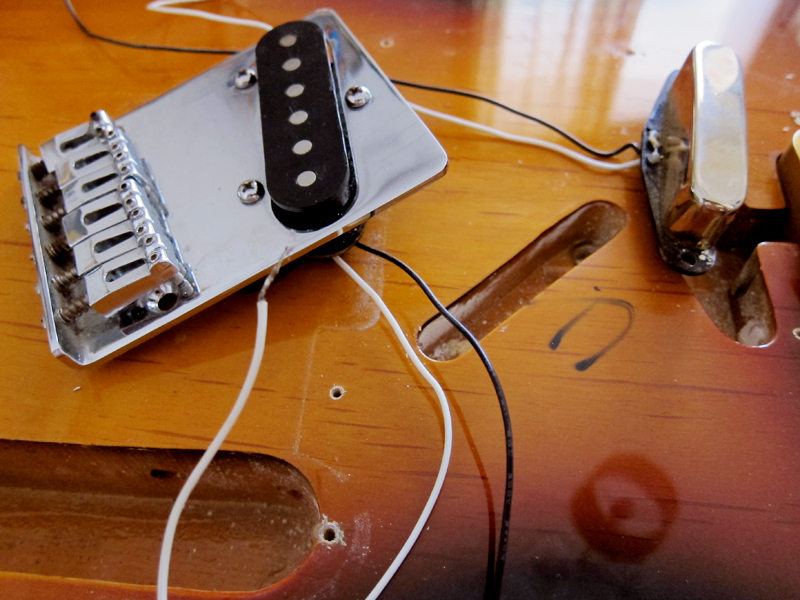
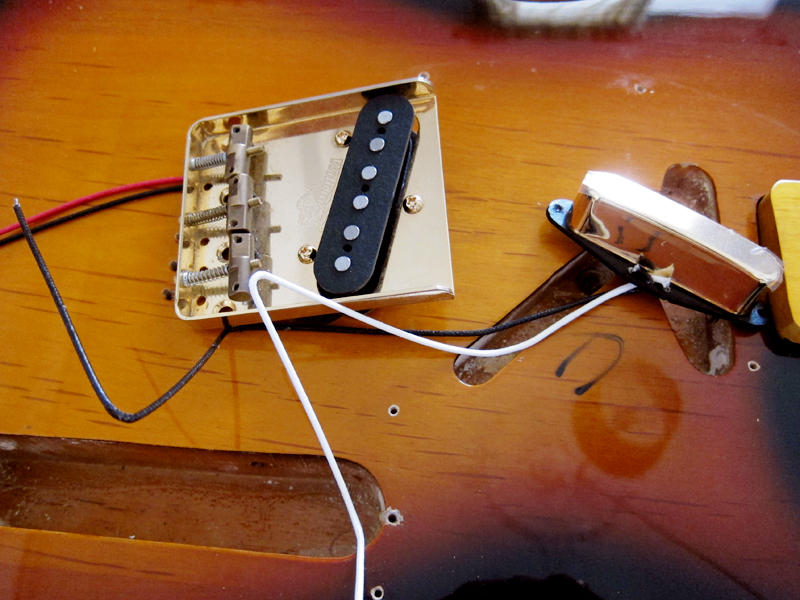
The old stock pickups and bridge from my Morgan Telecaster, aka the old Claescaster
IMG_9084 copy
The new Artec Alnico V pickups in gold, mounted on a Wilkinson WTB bridge, in gold of course
IMG_9085 copy
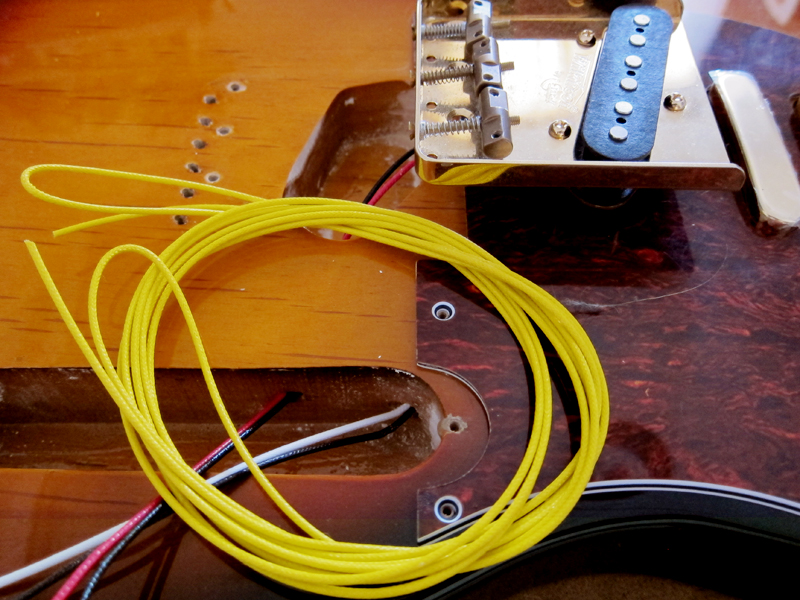
I got 3 Meters (9.8 Feet) of wax coated cloth wire, 22awg, for $1.70, that’s about a tenth of the price here
IMG_9078 copy
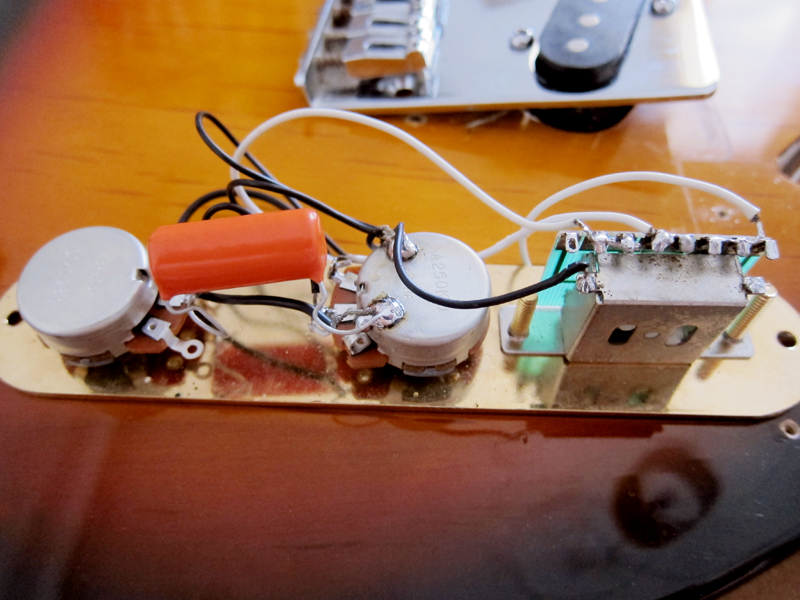
I changed the pots a while ago to nice full size Alpha 250k audio pots. I should probably get a new switch as well but the old one is still working fine
IMG_9090 copy
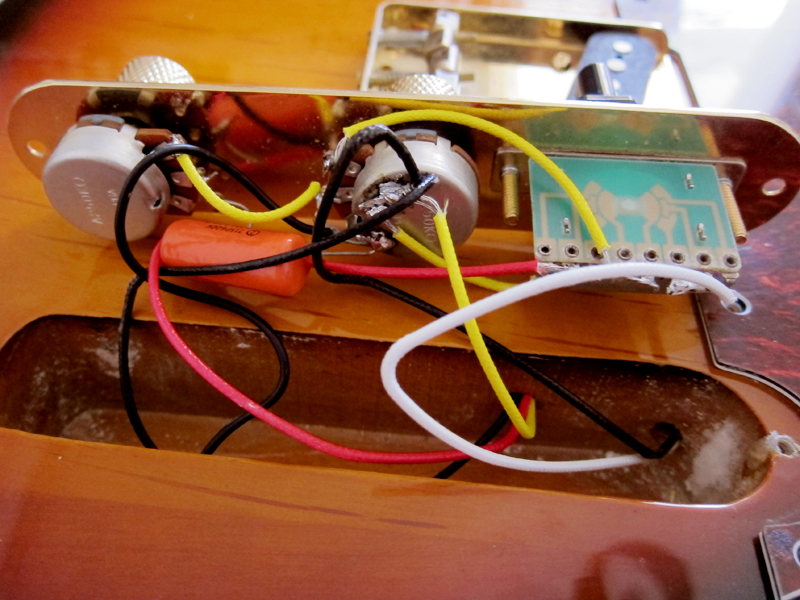
Since the new Artec pickups came with cloth wire I thought I should change all the old crappy pvc wires for some fancy 22awg cloth wire, not sure why I chose yellow though. I stuck to the old 50′s vintage wiring like I had it before

I haven’t tried them properly yet, just plugged them in to see if they worked, well I did a quick little sound clip just to see if there was any difference. I really like the bridge sound of the new ones, really twangy but the neck might be a bit too muffled. I’m rehearsing tonight so then I will get a chance to play loud and see if it was worth $24.00 or not. Hopefully the neck pickup will sound less muffled when I play it through my Fender Blues Deluxe which tends to make even humbuckers sound clear and crisp. Please don’t judge my guitar playing too hard, it was after all a Sunday morning after a long weekend. I think you can hear both my cat and my woman going about their business in the background.

Claescaster Morgan stock pickups (Neck, middle, bridge)

Claescaster ARTEC pickups (Bridge, middle, neck)

Update 2013-07-12I might have got a bit too carried away last night because the two sound clips I recorded are very LOUD. I guess I had more fun with my new pickups than I expected. I think they sound pretty good, I’m not the worlds greatest guitar player but to me they sound way better than the old stock pickups. The neck pickup didn’t sound muffled at all through my Fender Blues Deluxe, and the middle sounds sweat like hell, well worth $24.00.

Claescaster ARTEC pickups with Fender Blues Deluxe (Bridge, middle, neck)
https://soundcloud.com/claescaster/011-claescaster-artec-pickups

Claescaster ARTEC pickups with Fender Blues Deluxe (Bridge, middle, neck)
https://soundcloud.com/claescaster/014-claescaster-artec-pickups
How to… solder electronics

How to change a switch
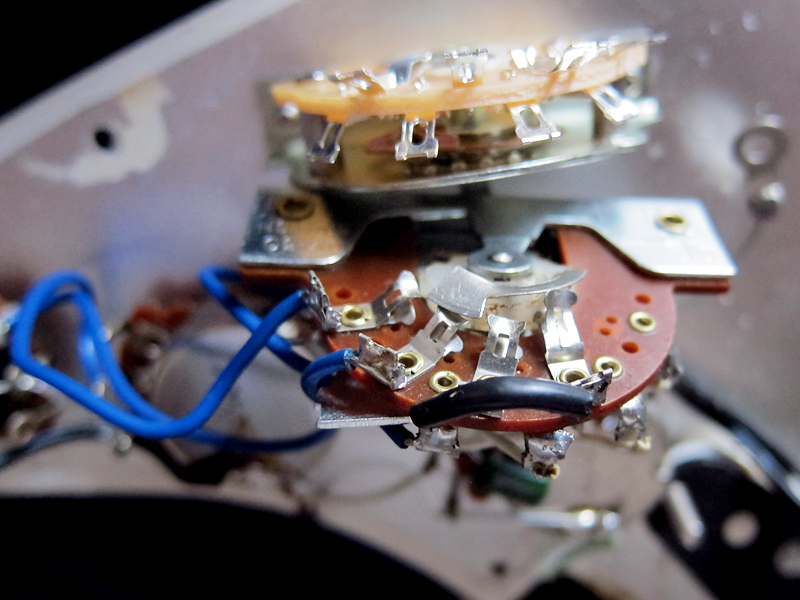
I spent Saturday doing my new favourite thing, soldering. How could I have lived for thirty two years without realising how exciting this is, well maybe not, but still. It’s a nice past time and probably healthier, even with the fumes, than spending Saturday afternoons in the sun drinking beer in a terrace, that tends to happen when you live in Spain. First I changed the old 3-way switch on my Westone Strat from 1979 to a fancy US made 5-way switch that I got from Swivel Electronics on eBay Japan.

Westone Strat from 1979 Note how bent the blade of the old switch was

I fitted the new switch and then started to unsolder one cable at the time and moved it from the old to the new switch. Unfortunately I managed to fit the switch the wrong way around so when I was done and had put the pickguard back on and strung up the guitar again I had to take it all off and redo it. I turned out that a 5-switch wasn’t that much more complicated than a 3-way switch for a Telecaster and I know those by heart now. Suddenly I have a fully functioning 70’s Japanese Strat and who knew that the in-between pickup sounds would be so amazing.

Westone Strat from 1979 New 5-way switch fitted

How to change a potentiometer
When I ordered all the electronics needed for the new Claescaster I bought two new pots for the old Telecaster as well. I found this great guitar shop in Valencia called Stringsfield with super cheap and quick shipping so I got two Alpha 250k audio pots for my old one and two CTS 250k for my new Claescaster project, my Mighty Mite Swamp ash body that is still stuck in customs in Madrid.

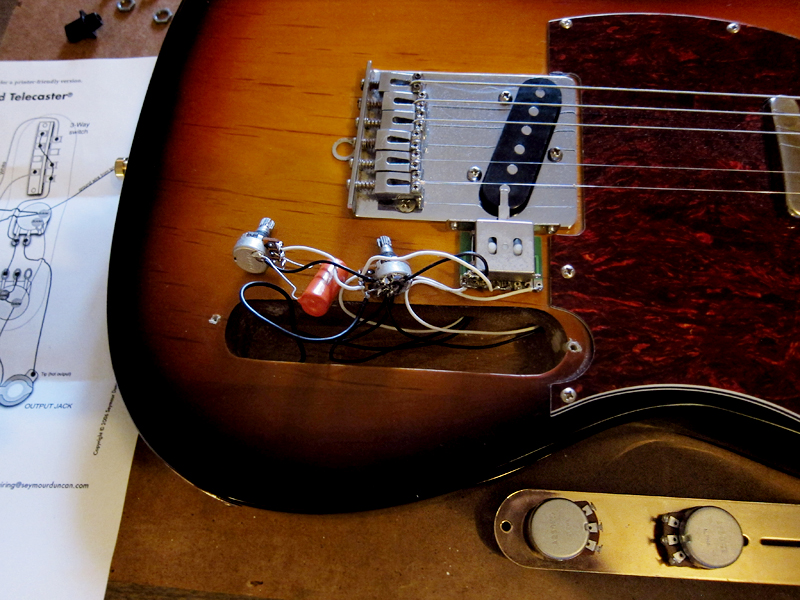
Morgan Telecaster, Claescaster It was time to change the old mini 500k pots for a full size Alpha 250k

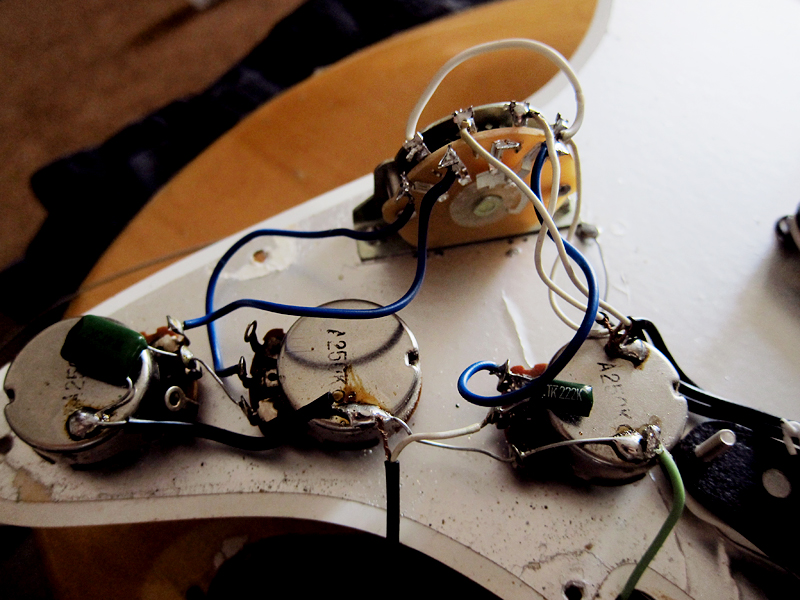
Morgan Telecaster, Claescaster I fitted the new pots on the control plate and then started to move all the cables around

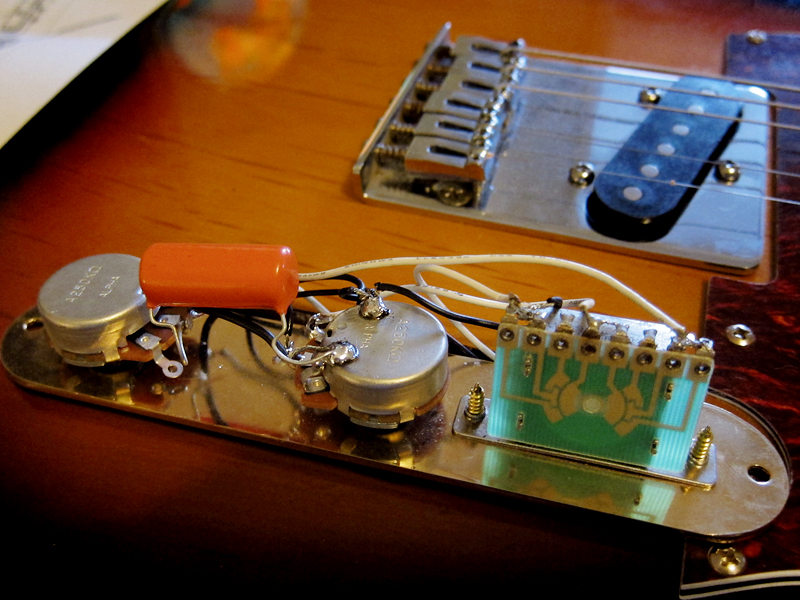
The old electronics was such a mess so I changed the pots but kept cables, switch and my Orange drop capacitor. I figured there was no point buying any better cables since I wasn’t going to change the pickups yet. I might change all of that in the near future, as soon as the new Claescaster is done. I’m tempted to get the Artec Vintage Style AlNiCo Telecaster Pickup Set from Northwest Guitars, they sound really good for the price, £29.99. Of course I did the old 50’s vintage wiring again, I really liked the tone of that modification. I haven’t had time to rehearse with this guitar yet but I’m pretty sure that the new pots will make it a bit less treble sounding and hopefully make it sound a bit warmer.

Morgan Telecaster, Claescaster Looks pretty clean and tidy to me

How to… change the nut

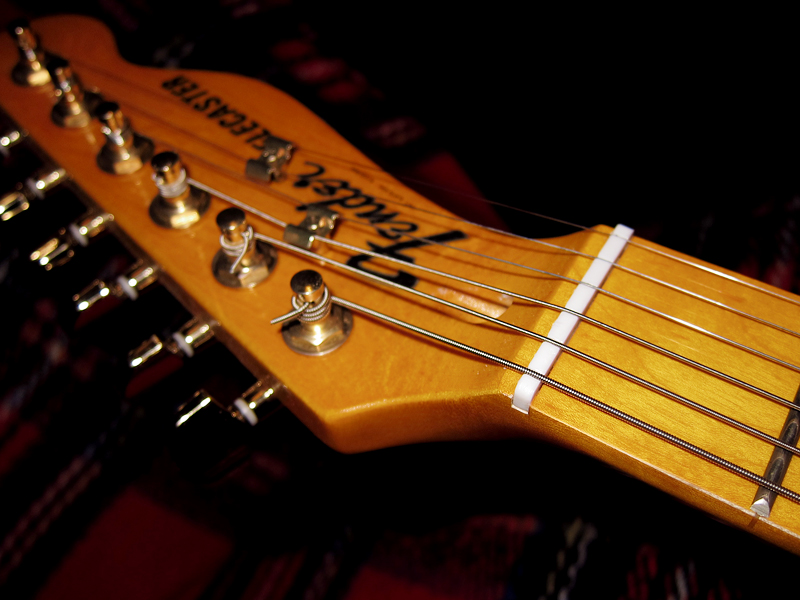
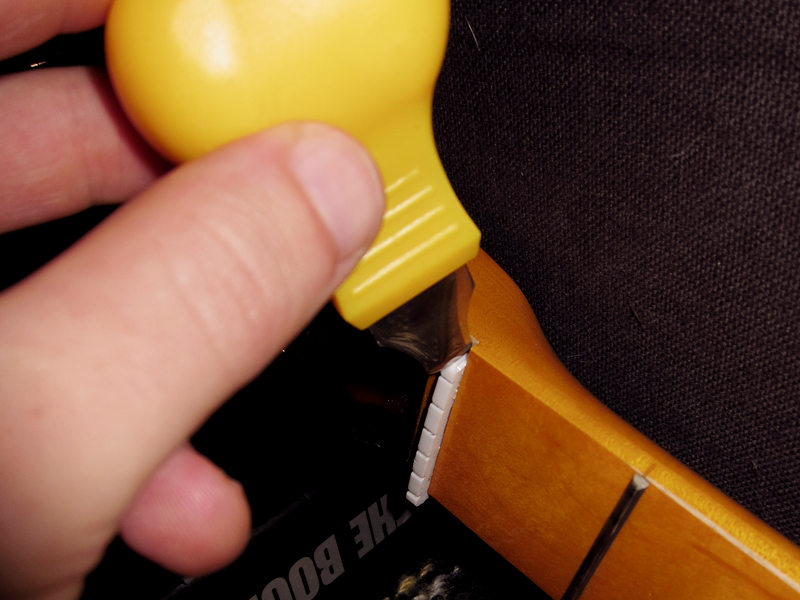
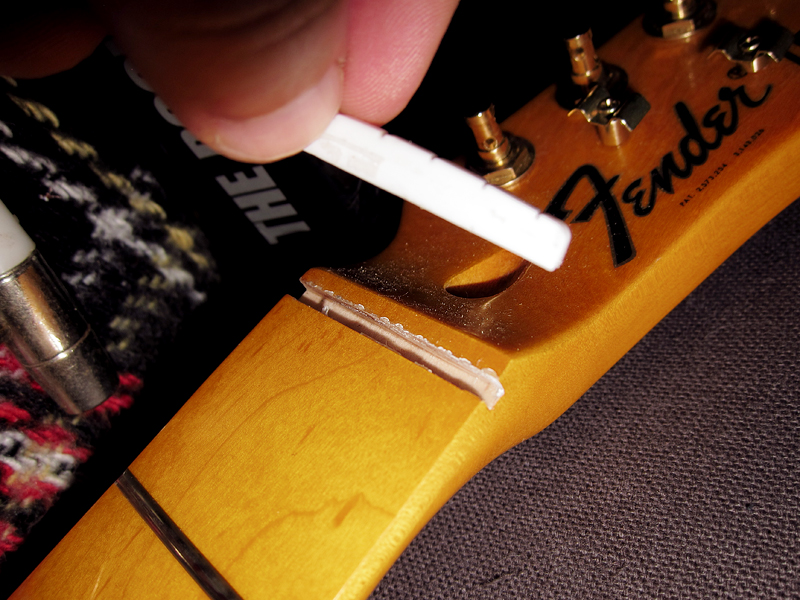
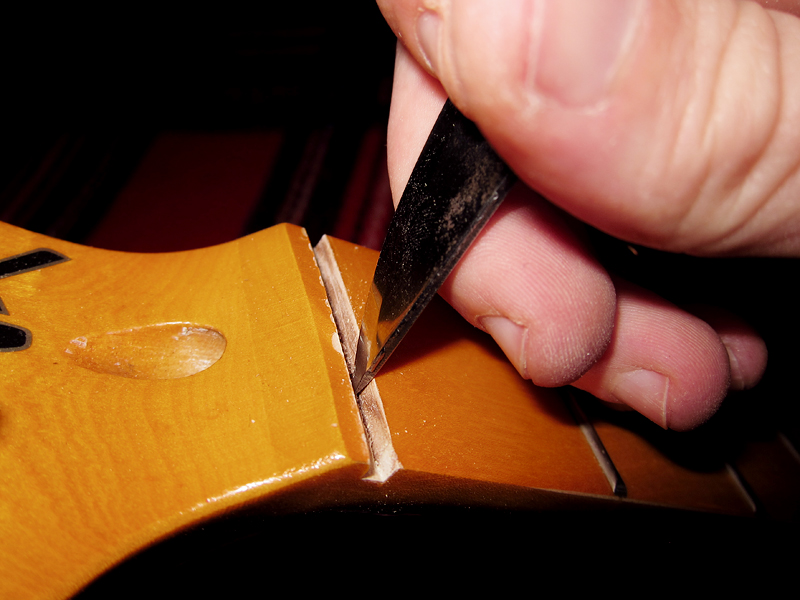
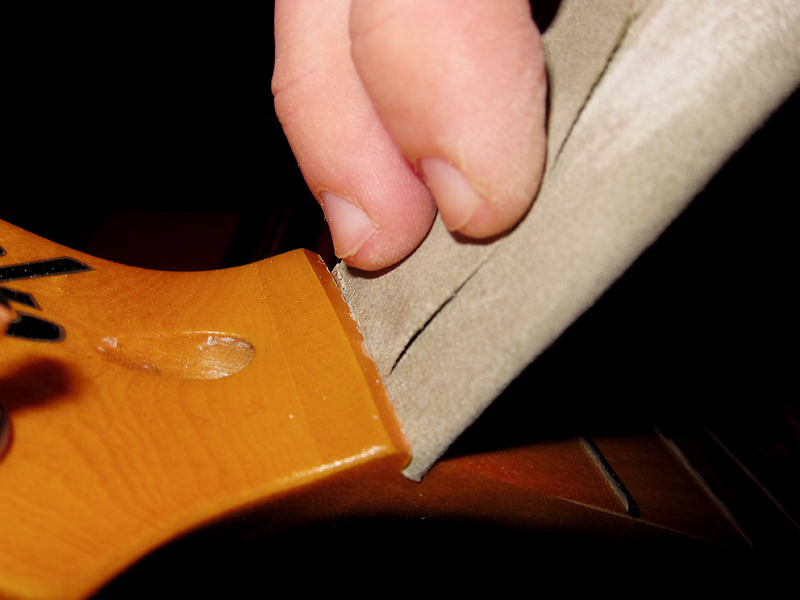
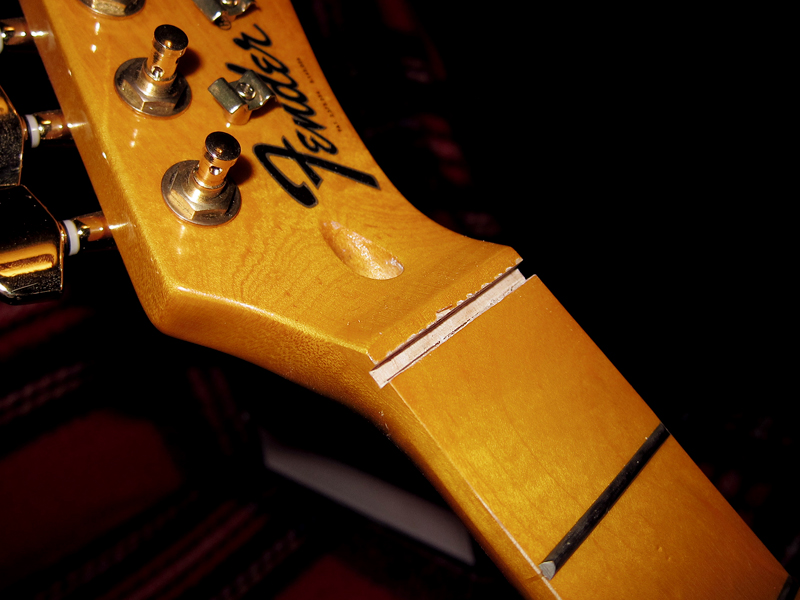
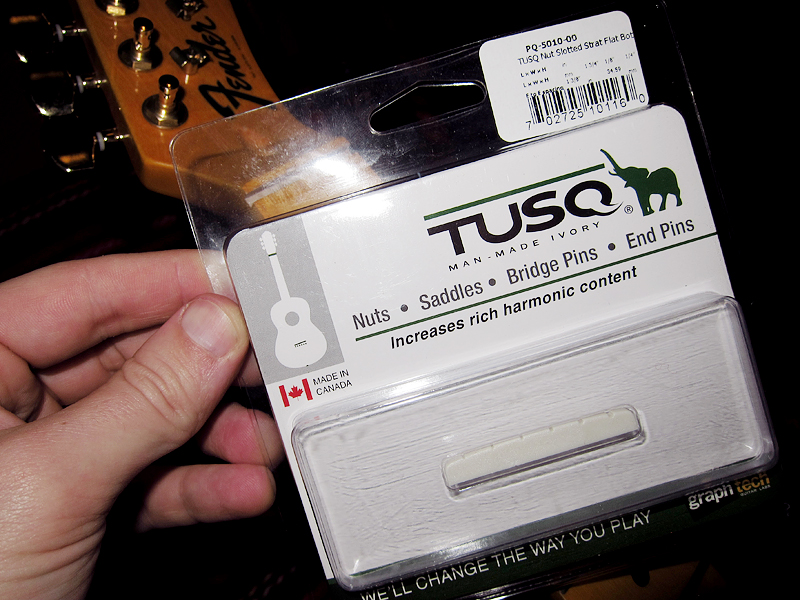
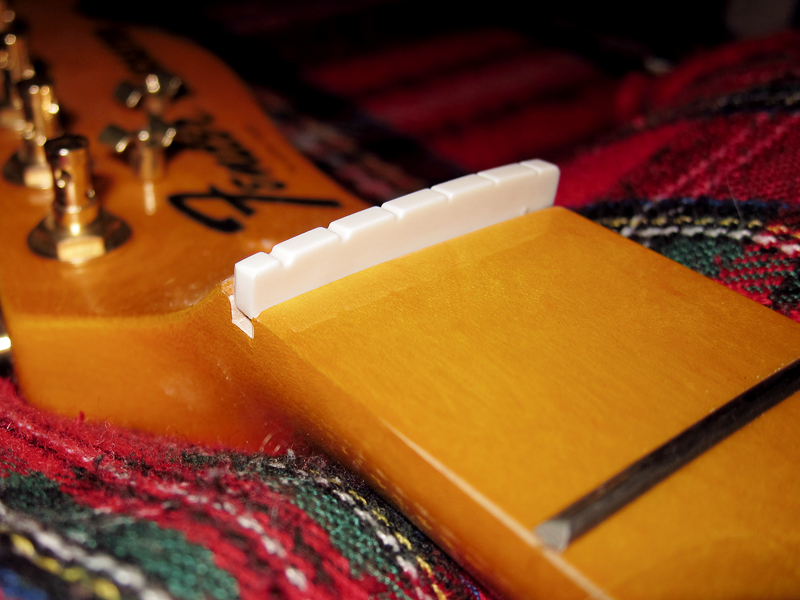
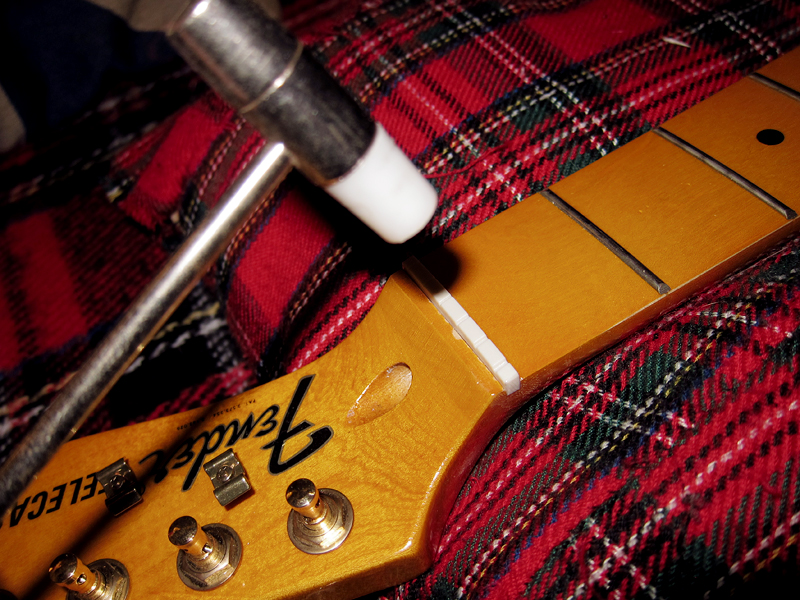
I have never been too impressed with the cheap plastic nut on the Claescaster. When I first got it I brought the guitar to work and used it as my office guitar and after six month of heavy playing most of the string buzz was gone, but not all. I truly believe that if you do any changes and things doesn’t sound perfect straight away then just ignore it for a week or two and let the guitar settle a bit. If I get any slight buzzing or things feels weird after I have adjusted the bridge or saddles on my guitars I tend to leave it until the problem disappears, which it almost always does.  However, after two years of playing the Claescaster like crazy I felt that the last bit of buzzing wouldn’t go away unless I changed the nut. I have drilled, soldered and screwed in my guitars, adjusted necks and changed things around but I have never dared to remove a nut. It just felt like one of those things you couldn’t do by yourself. After 3 glasses of cava at work I felt I had the Dutch courage needed to take on this daunting task so on my way home I went passed Herrera Guitars,  my favourite guitar shop in Barcelona, and bought a TUSQ PQ-5010-00 slotted nut for Strat and Tele. I started with removing the old nut, something that was way easier than I expected. I took some watch tools, finally I found some use for those, and just lightly tapped the nut from one side with a watch back opener and small hammer, it came loose straight away. I cleaned the slot a bit, removed some left over glue with a knife and then sanded the sides to make it slightly wider to fit the new nut. The TUSQ was a lot bigger than I expected, I did measure the old nut a couple of days ago but maybe I mixed up the measurements or I got the wrong nut because this one was almost 3 mm longer than the existing one, even though the string spacing was the same. I took the old nut as a reference and made a mark on each side and then just cut off the excess with a knife on the chopping board, it’s a very easy material to cut and work with. I filed down the edges with a sandpaper and also scratched all sides so the glue would stick better. Now it was just down to put some super glue in the slot, probably not the best glue for this but the only one I had at home, and then gently tap down the nut in its place. Done. I have to say that this was way easier than I expected and everything went really well. I should of course have masked off the wood with some tape not to scratch it but I was too excited to take those kind of precautions. Now with the new nut fitted this neck is a joy to play, it’s a world of difference. I feel that both tone and resonance has improved a lot and I can easily recommend TUSQ.

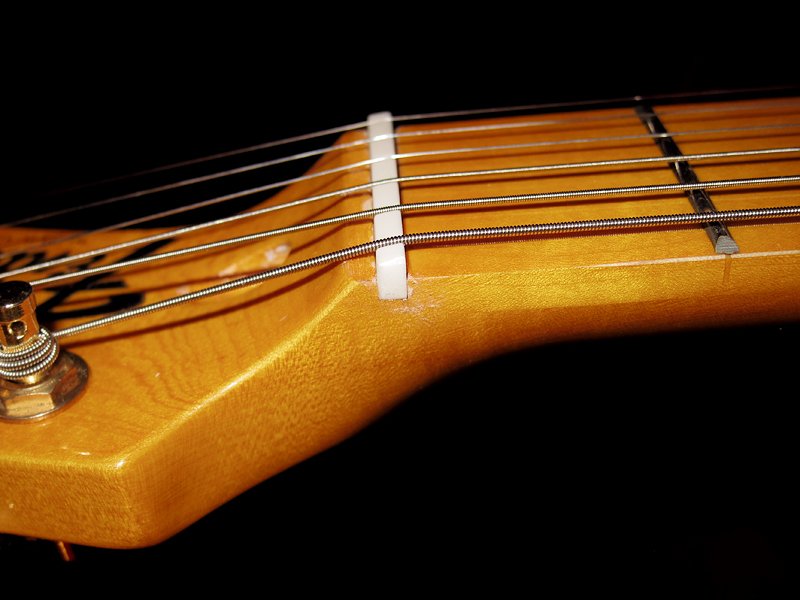
How to change the nutThe old plastic nut that this cheap neck came with

How to change the nutA watch back opener and a little rubber hammer turned out to be excellent tools for this

How to change the nutIt was way easier than I expected to remove the old nut

How to change the nutI scraped off some leftover glue with a knife

How to change the nutSome sandpaper got the surface smooth and I also needed to widen the slot a bit to fit the new nut

How to change the nutNot the best cut nut slot but I didn’t really expect more from this neck

How to change the nutThe new TUSQ PQ-5010-00 only cost 8€

How to change the nutPerfect fit

How to change the nutA tiny bit of glue and then just gently tap the new nut in it’s place

How to change the nut All set, a new nut is fitted on the Claescaster

How to… solder electronics

How to change a potentiometer
When I found my Tokai Love Rock it had a broken shaft on one of the potentiometers so I’ve been planning to change that for the last month or two. This weekend I finally got around to do it. I changed the broken one for a Alpha 500k pot, not the most expensive replacement but I had heard quite good things about Alpha so I thought I would give it a try. I have no experience what so ever when it comes to soldering so I decided to play it safe and move one cable at the time from the old to the new pot. My main concern was of course that I would get confused and not manage to get all the bits back in the right place. Everything went fine, well maybe not the cleanest soldering but pretty good for being my first time. I should of course have scratched the new pot with a bit of sandpaper to get the solder to stick better, I didn’t think of that until after.

Tokai Love Rock electronicsI changed the pot one cable at the time to not mess anything up

Tokai Love Rock electronicsThe final result, my newly fitted Alpha 500 k pot. Perhaps not the cleanest soldering but OK for being my first time.

Tokai Love Rock electronicsTokai Love Rock with 4 brand knew knobs, straight from China via eBay.

How to do a 50’s vintage wiring mod for Telecaster
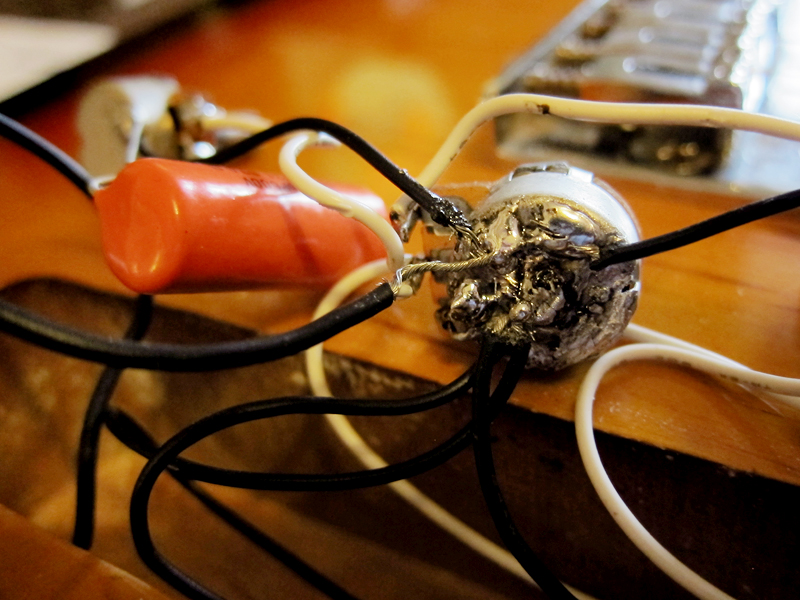
When I had to soldering iron out I thought I might as well sort some other stuff too. I’ve been reading about different ways of keeping the tone on a Telecaster when you turn the volume down and decided to go for the old 50’s vintage wiring on my Claescaster. It’s a really easy procedure since you just need to move one cable but when I opened the Claescaster up I realised that it wasn’t wired like the standard Telecaster, not according to Seymour Duncan’s excellent wiring diagrams, so I had to move the capacitor and another cable as well. The capacitor is the worlds biggest Orange drop but it does the trick, I might go for something smaller and a bit more suitable when I build the new Claescaster.

Telecaster 50's vintage wiringThe cables I swapped around on the Claescaster. It sounds great now and keeps the tone when you turn the volume down.

How to solder a endpin jack for acoustic guitars.
I found this nice old Shadow humbucker pickup for acoustic guitars when I was back in Sweden. I have a 12 string guitar from the 70’s that I bought cheap from an old Jazz musician and I had completely forgotten that it was equipped with a Shadow pickup. I brought the pickup back to Barcelona and have spent some time trying to figure out how to fit it in my Cort that I normally use for rehearsals. I bought a gold endpin jack and then I just needed to solder a mini jack cable to connect it. The question was, how the hell do I do that? I found and old RCA to mini jack cable that I decided to slaughter for this project but couldn’t find any info online how to connect it. I tried every single combination I could think of but just couldn’t get any sound out of it. Then it hit me, of course, a guitar cable has only on cable inside and then the shield around, so I have to make something similar to this. I twined the left and right together and then the same with the shield from both and it worked perfectly. It might not be the best cable in the world but it was what I got at home and it seems to work fine.

RCA to mini jackStandard RCA to mini jack.

Mini jack for acoustic guitarI connected the left and right and then twined the shield together

endpin jack to mini jackThe left and right soldered together to the shortest pin and then the shield to the longest.

Shadow humbucker pickupShadow humbucker pickup for acoustic guitars, newly fitted on my old Cort.

The Claescaster

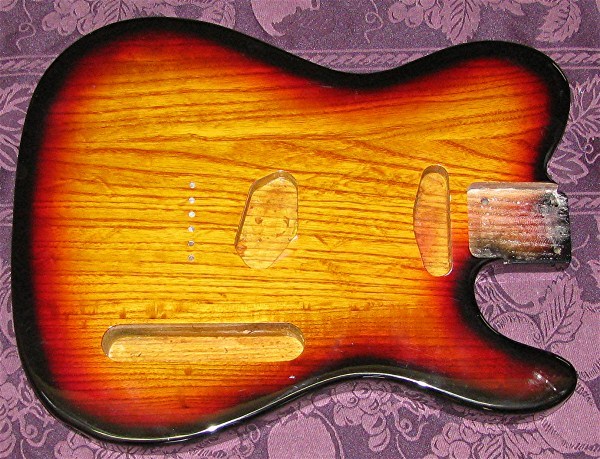
Late last night I bought a new body for the Claescaster, or rather I got the first part of my new Claescaster. The idea is to build a new guitar from scratch with the best bits I can afford after the specifications of a Seventies Fender Telecaster. I have thought about this for a while and I really don’t like the grain and look of my Morgan Telecaster, especially not now when she has darkened so much since I moved to Spain, and now I found my ideal body. It’s a Mighty Mite Swamp ash body in 3 tone sunburst and I haven’t seen any Mighty Mite bodies, not even on their website, in this lovely red sunburst.

ClaescasterMighty Mite Swamp ash Telecaster body in 3 tone sunburst

It’s quite heavy for being a modern body, around 3.2 kg, which I really like. Most modern bodies I’ve seen weighs 1.5-2.5 kg, does all guitarist have back problems or why doesn’t anyone want heavy guitars any more? Or maybe it’s just the quality and density of the wood that has changed over the years and you can’t find proper wood nowadays. I’m going to build a nice blackguard Seventies Telecaster out of this with gold hardware, just because I love gold. I can’t afford a real Seventies Fender so the best I can do is to create my own, and I think I might enjoy building it too. I bought it from AZGuitarParts a US eBay seller so let’s see how it goes with import tax to Spain, I shouldn’t have to pay anything since it cost under 150€ but you never know. I bought all the gold hardware for the Claescaster from the US 2 years ago but that was a smaller package so it slipped through customs just fine, I just have to wait and see how it goes this time. I can’t afford to buy a new neck, pickups and all the hardware now so this is going to be my ongoing project over the spring. First I’m going to just change the body, meaning unsolder and move all the hardware, pickups and pots from the Claescaster and take that neck too. Then when I get some more money I will start to collect and exchange all the bits with parts I really like. Cloth covered wires, CTS pots, Oak switch and some swanky pickups, I was thinking of the Tonerider Vintage Plus, in gold of course. I also think it could be a good idea to practice soldering on the old Morgan pots and pickups so I don’t buy anything new and expensive and ruin it straight away. Then in a couple of month I will suddenly have two guitars, my Morgan Telecaster in it’s original form and the new Claescaster, a Swamp ash 1970’s Fender Telecaster copy built from scratch by me. My secret plan is to force my first born to learn how to play guitar on my old Claescaster and when they turn 20 they will inherited the new Claescaster. “Here is a guitar that I built 20 years ago and have been playing heavily ever since just too keep it warm, I built it for you”. How nice would that be, damn it, why didn’t my dad build me any guitars.

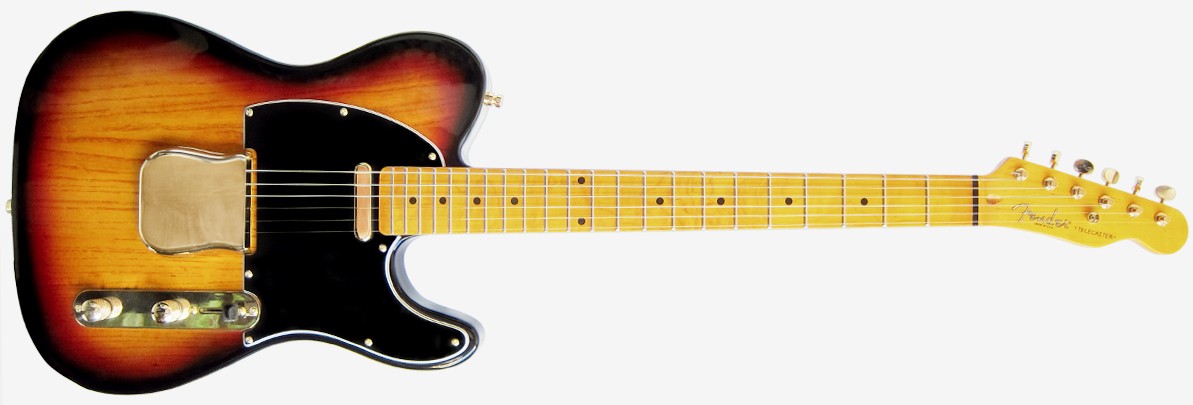
Fender Telecaster Sunburst 1977Fender Telecaster Sunburst 1977, the inspiration for the new Claescaster

Update May 6, 2013:Claescaster This is what the final Claescaster came to look like

How to… fit a strap button

I have never been a big fan of having straps attached to the head of acoustic guitars. Therefore I decided to fit strap buttons to the base of the neck on my acoustics. I checked some Youtube clips and got fed up with people talking too much so here is the quick version. Find a strap button you like, ideally in gold, everyone loves gold or at least I do. Find a screw that fits and a drill that is slightly smaller than the screw. Put a bit of tape on the drill to mark how long the screw is, or rather slightly shorter than the actual screw. Decide where to put the strap button and then drill the pilot hole. Put some wax or soap on the end of the screw, this makes the screw go in easier and apparently keeps the wood happy. Done.

Now some thoughts on this procedure. First of all, make sure you don’t have any extra hidden metal parts inside the neck before you start. I wasn’t aware that Levin had an extra metal plate for the truss rod running in the heel. When I tried to screw in the screw it broke in half and got stuck so I had to make a second hole just above and screw in a shorter screw. Not the end of the world maybe but still annoying and unnecessary. Second, make sure you find a good flat spot to fit the strap button. In the last example below you can see how close to the fretboard they are factory fitted on some guitars. I hate that. It’s really hard to reach if you want play solos or do some fiddly bits high up on the neck. Make sure you can fit your hand comfortably and remember there is going to be a strap attached which creates extra bulk. If you put the strap button too close to the bottom it will mess with the balance of the guitar and it will tend to fall forward when it’s not supported, the same if you fit it in the bottom of the heel.

strap buttons

Levin LT-16, Vintage V880N, Tanglewood Rosewood Grand Reserve TGRP 73 VS E. I installed the strap button on the first two, as low as possible to be able to reach all the way up the neck. Notice how high up, close to the fretboard they were factory fitted on the Tanglewood. In this case it’s just a 12th fret parlour guitar so you can’t play much solos up there anyway but I do find it a bit annoying.