Merle Haggard

Even though he has been ill lately it was very sad to hear about the passing of one country musics greatest and easily my favorite, Merle Haggard. He passed away today on his 79th birthday.
Even though he has been ill lately it was very sad to hear about the passing of one country musics greatest and easily my favorite, Merle Haggard. He passed away today on his 79th birthday.
 Taken from a 1907 Levin catalogue, thanks to Vintage Guitars Sweden
I have been trying to find a 100-years old Levin parlour for some time now, something built before 1920 and with a pin bridge. If anyone has one that they would like to sell then please get in touch, claesgellerbrink@gmail.com. I would also be interested in any guitar that came out of the greater Chicago area built by Swedish builders, like an Ideal by August Carlstedt or a Maurer or a Prairie State built by the Larson Brothers, if I could afford it. It doesn’t really matter if the guitar is playable or not.

If you have missed The Wrecking Crew, I can highly recommend this documentary about the real musicians behind some of the worlds biggest hits.
 Gibson J-45 ADJ, built in Kalamazoo, Michigan, USA in 1965
As mentioned quite a few times in the past, I’m very gay for the old round shouldered Gibson J-45 / J-50. I’m not entirely sure why, it’s not just for the amazing bass response, I think I really like the look of the round shoulders as well, it’s very woman like. I previously owned a 1970 Gibson J-50 Deluxe which sounded great but it didn’t really have the look or sound I was after so eventually I sold it to a nice older gent living in Kent, no he lived in Asturias here in Spain but he might very well have been from Kent originally.

 1965 Gibson J-45 ADJ, round shouldered dreadnought, natural finish spruce top, mahogany back and sides, rosewood fretboard and bridge. All original except for the refinish which turned this J-45 in to a J-50
In the beginning of the year I was contacted by a seller that happened to sit on a 1965 Gibson J-45 ADJ with a natural top, apparently it was refinished in the early 1970’s. It looked exactly like the guitar I was looking for, round shouldered, small headstock with old school Kluson 3-on-a-plate machine heads and a big pickguard. The only downside was a couple of old cracks in the top and the adjustable bridge. The cracks had been fixed 45 years ago and it wasn’t that hard to carve a new bone saddle the size of the old rosewood saddle, insert and all. Finally I had my mid-1960’s round shouldered Gibson J-50, I would of course have preferred a mid-1950’s but the price difference is just insane. Even though it’s a 1965 Gibson J-45, the only difference between the J-45 a J-50 was the sunburst so with that gone it’s a 1965 Gibson J-50.
 I wasn’t overly keen on the sound of the original adjustable rosewood saddle so I carved a new one in bone and removed all the nuts and bolts under the bridge. The rosewood saddle didn’t sound bad, just a bit muffled and to me the bone is huge improvement
 This is how cool I feel with my 1965 Gibson J-45, like a 1963 Bob Dylan with his late 1940’s Gibson J-50
 Hagström Western 6 Missouri, Made in Sweden 1978
Last week a new Hagström acoustic arrived from Sweden. Just like my 1975 Hagström B-60 this was made by Bjärton in the south of Sweden. Hagström / Bjärton guitars feels pretty different from Levin, a bit more boxy somehow, less refined. Having said that they are very well sounding guitars with a pretty unique tone, not quite the Gibson bass but that’s the best comparison I can think of. This Hagström Western 6 comes with more or less a Hagström Swede electric guitar neck. Same head shape, inlays and ebony fretboard, I love ebony. These actually came not only with ebony fretboard and bridge, they had ebony nut and saddle too. Mine has a rosewood bridge for some reason but it doesn’t seem to have been re-glued so I assume that someone at the factory took the wrong bridge or just preferred rosewood. Everything can happen in a guitar factory, hence all the mismatched mystery guitars that doesn’t exactly match the catalogue images. I really like this guitar, it looks awesome, sounds great and has something quite Swedish Country about it, a bit like me I guess.
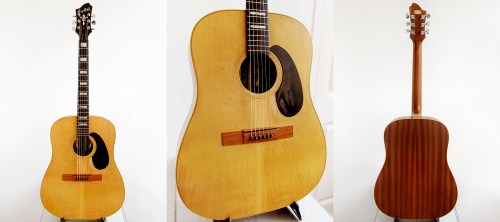
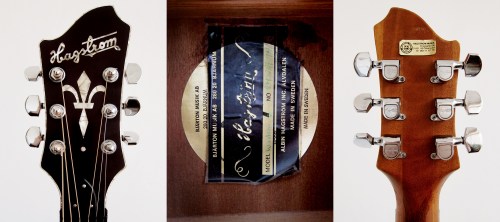
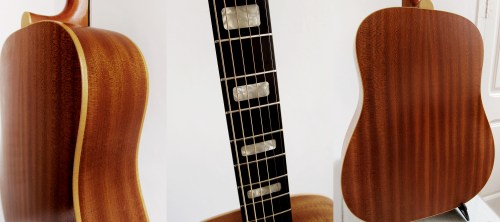 The guitar has quite a few battle scars, I presume it has lived through a Swedish midsummer or two. The head has been glued at some point, looks to have been done a very long time ago. There are quite a lot of scratches on the top and the back of the neck had some dents but I filled them so now you can hardly feel it. Notice the double sticker inside, one for Bjärton and then a Hagström on top.
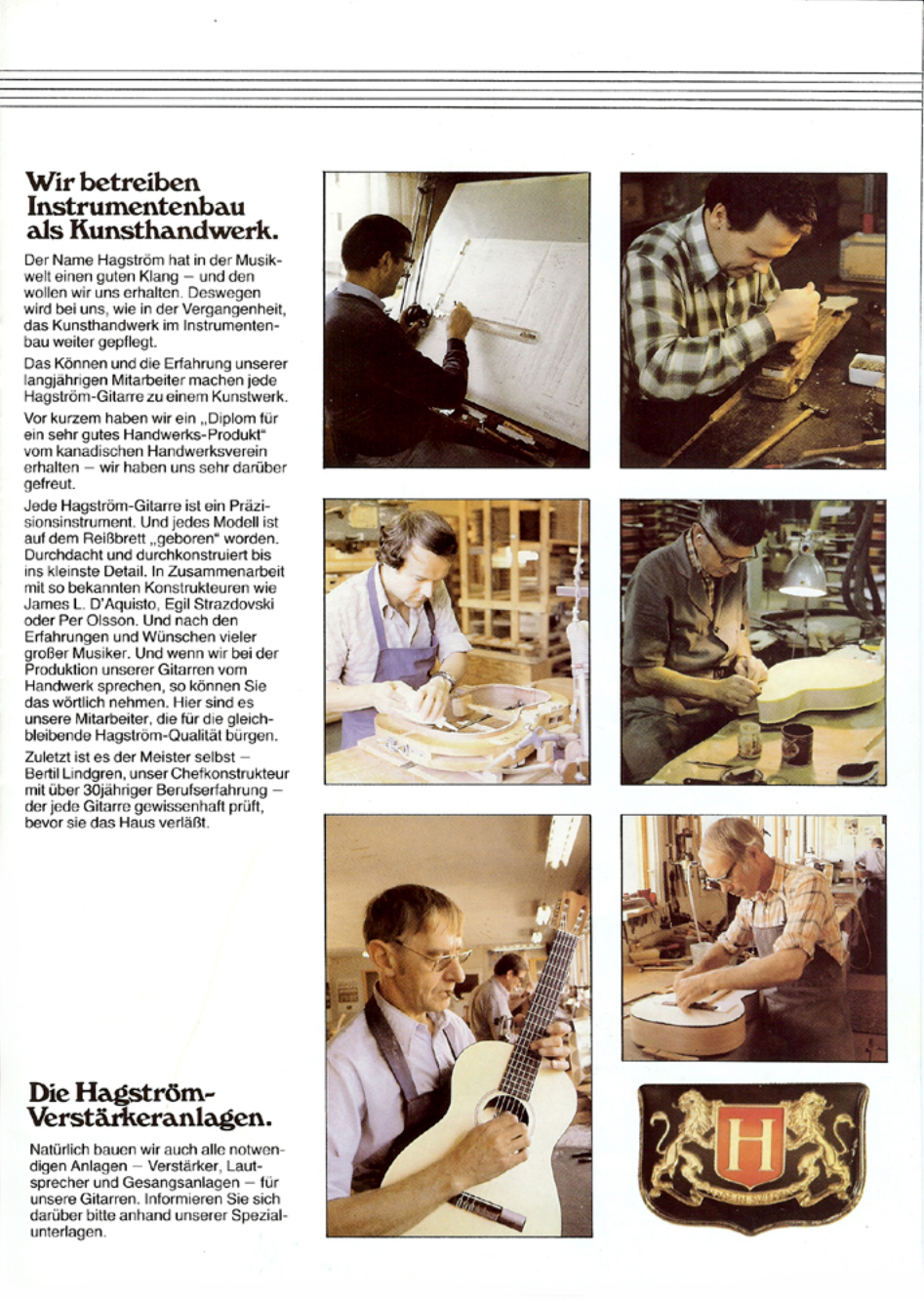
 Hagström Western 6 in a 1979 German Hagström catalogue
Hagström Western 6
Specifications: Body width: 410 mm, body length: 510 mm, body depth: 120 mm, scale length: 630 mm. Spruce top with X-bracing, mahogany back and sides. 4-ply bound top and bound back. Unbound ebony fingerboard and ebony bridge, mahogany neck. Matte natural finish and 10 year warranty. Offered in two versions: Fully acoustic (Western 6) or with pickup and controls (Western 6 EL). Marketed in Germany as Missouri. Introduced around 1977.
 Hagström Western 6 and 12 in a 1979 Hagström catalogue
I tried the guitar last night at Alfa en Viu and it sounded pretty good, even with just a cheap removable Belcat pickup
 Alvarez 5014, made in Japan in 1973
I recently found a 000-sized Alvarez for my friend Wolf. It’s a really nice little guitar that we both were impressed by. These guitars were made in Japan for the US market and imported by St. Louis Music in Missouri, the guys behind Westone. According to Wikipedia and Alvarez own site it was the legendary Kazuo Yairi that founded the brand in 1965 to make cheaper Yairi guitars for the US market. Having said that, it’s still unclear if all Alvarez guitars were really made in the K. Yairi factory in Kani, Gifu in Japan or outsourced on other factories in Japan, see Jedistar. These early 1970’s Alvarez are a bit different to the later Alvarez-Yairi guitars that got famous in the late 1970’s and 1980’s when musicians like Crosby, Stills & Nash and Bob Weir endorsed them. Not only is the label inside and head inlays different, but they also seems to have their own models, the later Alvarez-Yairi are exact copies of the Yairi models of the time but made for export to the US. Since there is a sticker with a serial number inside that correspond perfectly to the Emperor code that K. Yairi uses things point towards the Yairi factory. As with everything made in Japan during the 1970’s, there are some questions we might never find the answer too. Either way we have an awesome Japan made Martin 000-18 copy that Wolf is very excited to play, especially with my Bill Lawrence A-300 in the soundhole.

 The serial number starts with 48 which signify the 48th year of the reign of emperor Shōwa, which was in 1973. You can check the serial numbers of your Yairi or Alvarez here
 Sonora parlour guitar made in Germany 1920-30’s
I’ve recently managed to do some more work to the Sonora parlour. I decided to reset the neck to try to get rid of the banana neck and high action and it worked pretty well. I also redesigned the fretboard and added some wooden dot markers. Now the action is low and the guitar is easy to play.

 The new Sonora parlour and here is what she looked like before
 My initial plan was to steam the neck off by drilling two small holes under the 13th fret and that way get steam straight in to the dove tail. That didn’t work, I think it was too much old glue stuck in the joint and also the needle tip I used for my home built steamer was too thin. I decided to remove the whole fretboard instead, I used a spatula heated on a normal clothes iron which worked like a charm. Once the fretboard was off I could just steam the hell out of that joint and eventually the glue softened and then neck came off.
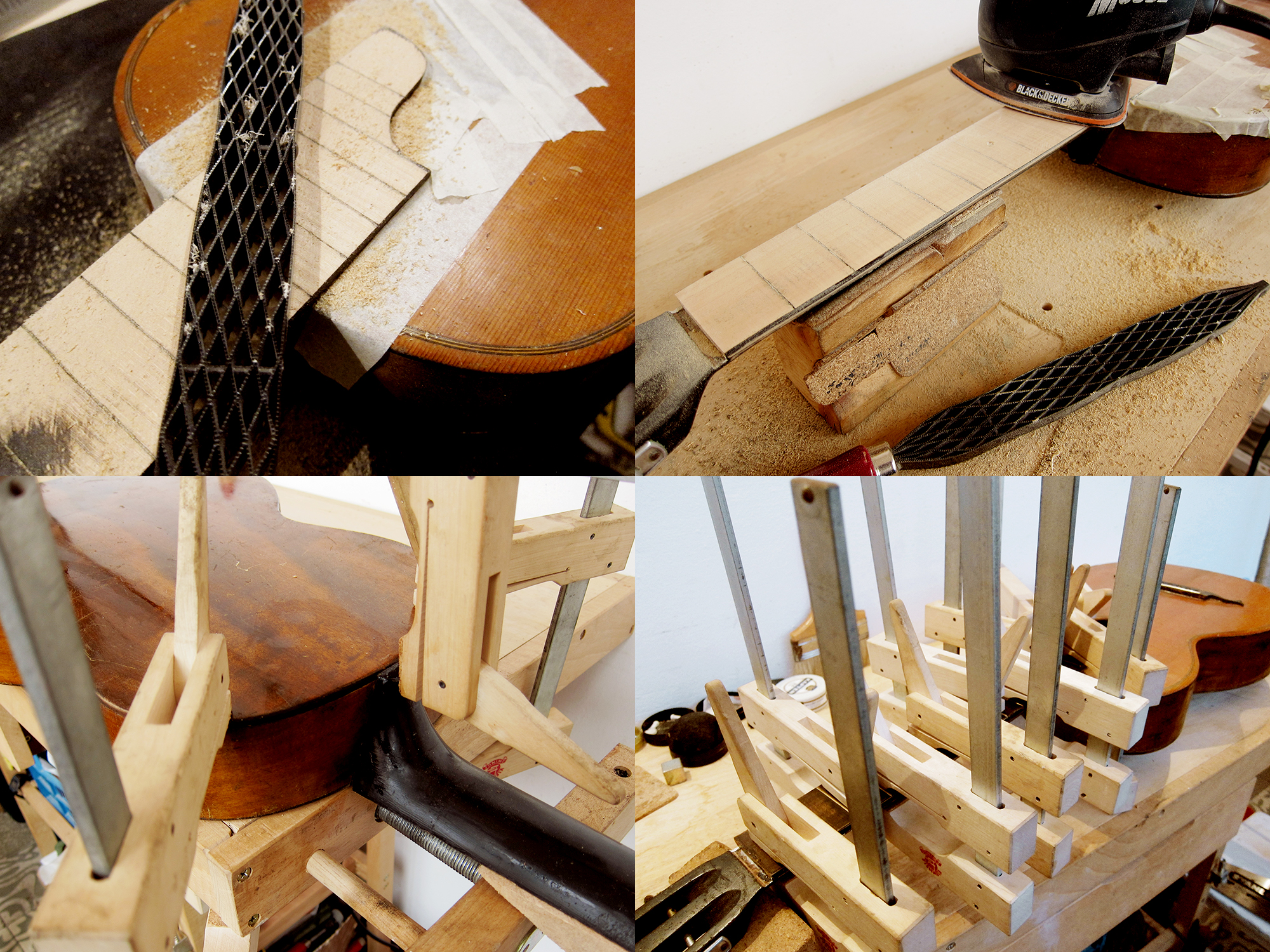 Next I had to try to remove the hump on the fretboard where the neck and body meet. I removed all the frets, and kept them in the correct order to make it easier to reinstall them later. To get rid of the hump I had to remove almost 6 mm of the overhang and then sand the rest to get the fretboard straight.
 I re-cut all the fret slots, reinstalled the frets and added four wooden dots in different grain directions as position markers. I gave the fretboard a coat of lacquer and then painted everything black except for the 3rd, 5th, 7th, 9th and 12th fret. I added a layer of lacquer on top and then sanded it smooth and polished out the frets again.
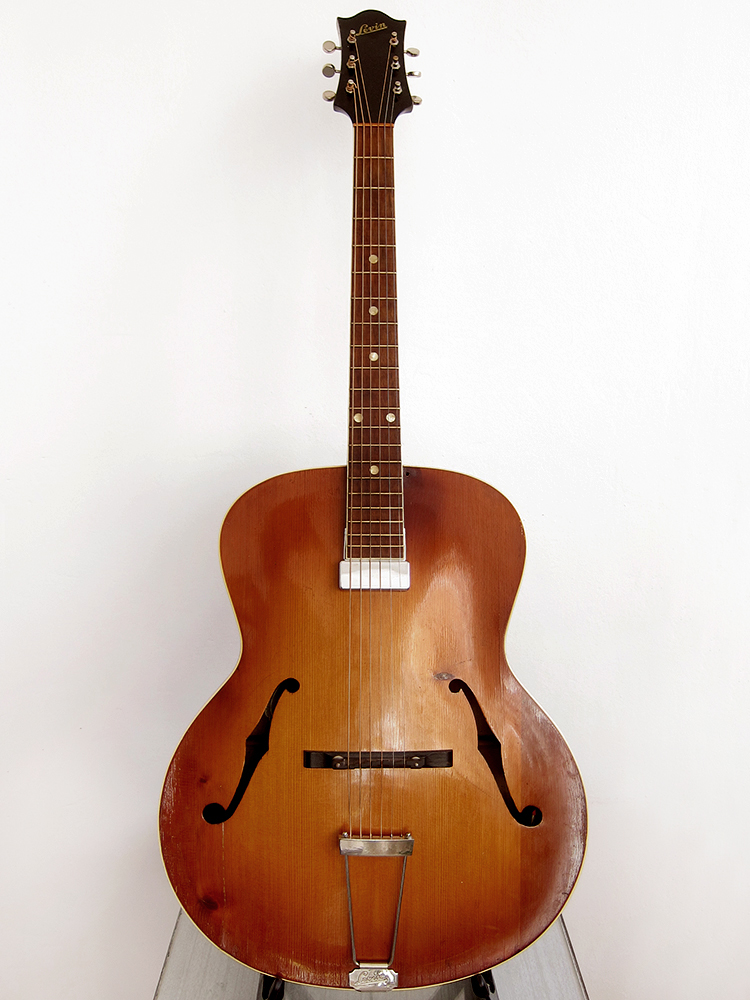 Levin Model 32 made in Sweden by Levin in 1946
I’ve finally received my Artec MHFC93-CR from EY Guitar, the order got lost and took 3 months to arrive. Last weekend I got around to install it on my 1946 Levin Model 32 and I’m pretty impressed with how good it sounds for being so inexpensive.
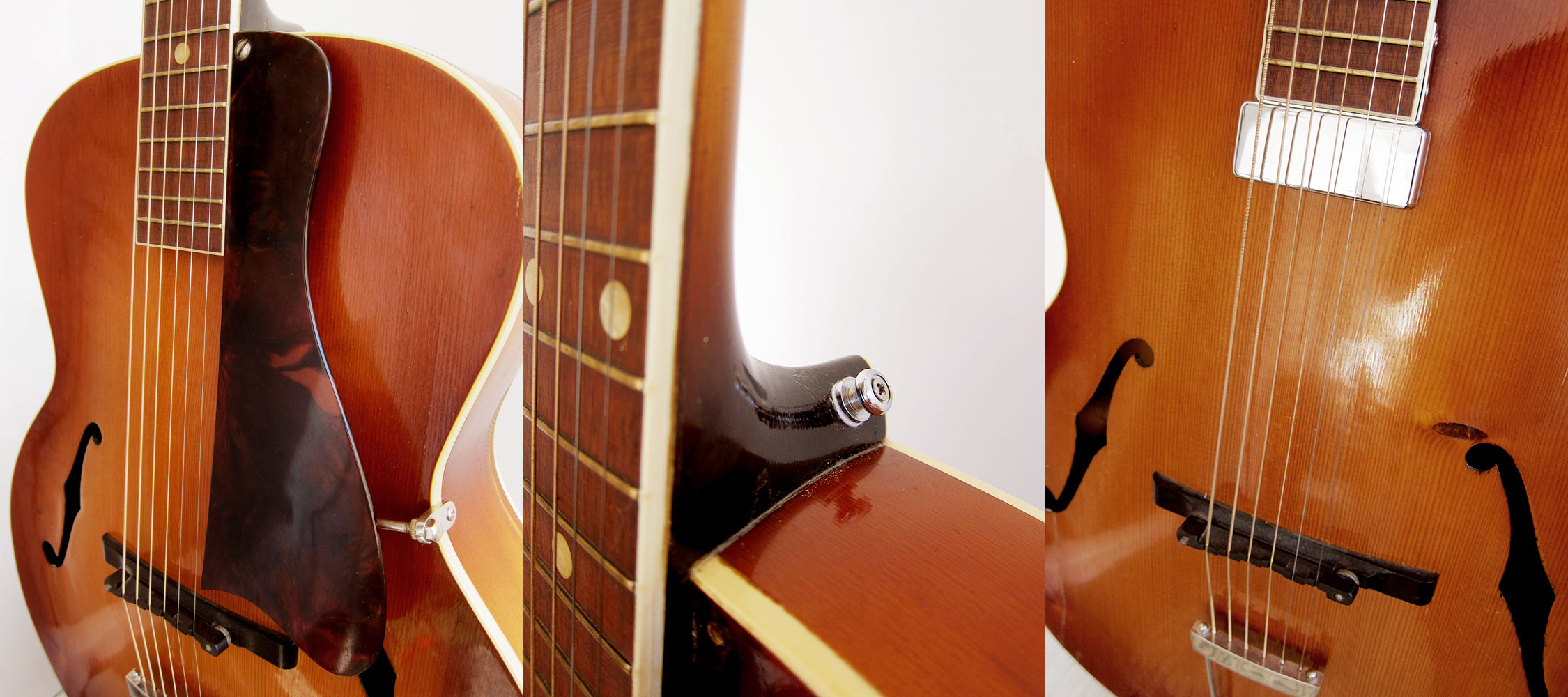 Unfortunately I had to remove the pickguard, well it was actually quite annoying and always in the way when I played so it was more of an aesthetic loss. I also installed an old vintage strap button while I fitted the pickup so now the guitar is ready to be gigged.
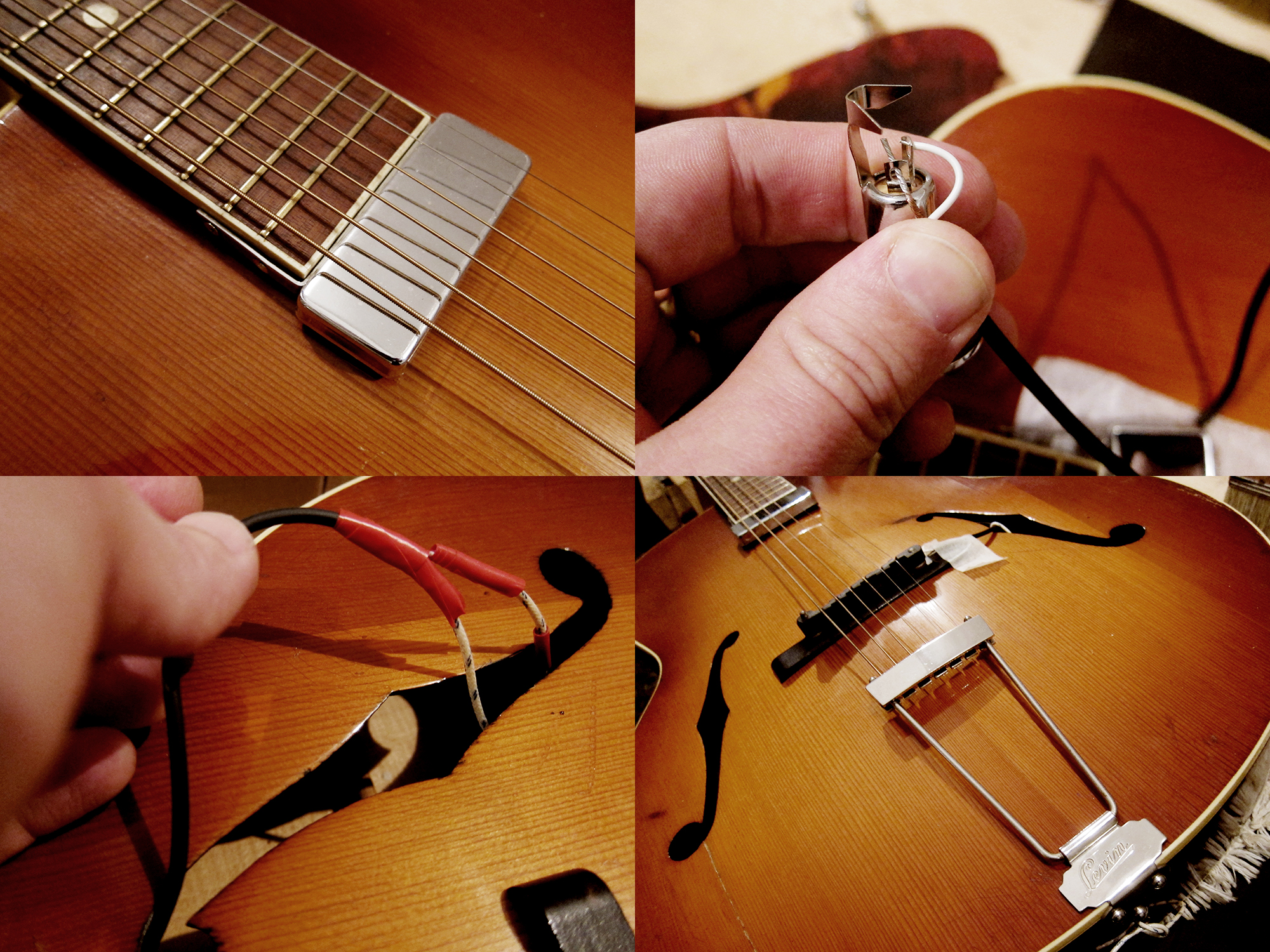 The installation was pretty straight forward in the end but it took a bit of figuring things out so I completely forgot to take more pictures. First I made a small hole under the fretboard extension on the right side, where the cable from the pickup could enter the body without being visible. Then I drilled a hole for the endpin jack, just like a do when I install the endpin jacks for my LR Baggs, with a 1/2 inch or 13 mm flat spade drill bit straight through the end block. I measured two cables from the endpin to the f hole, fished them up before I cut them and then soldered them to the endpin while taped to the top for not disappearing inside. Once the cable from the pickup was fished up I checked which was which and then soldered them together and stuck them to the top on the inside with a little clip on the bottom side of the f hole so they can’t be seen.
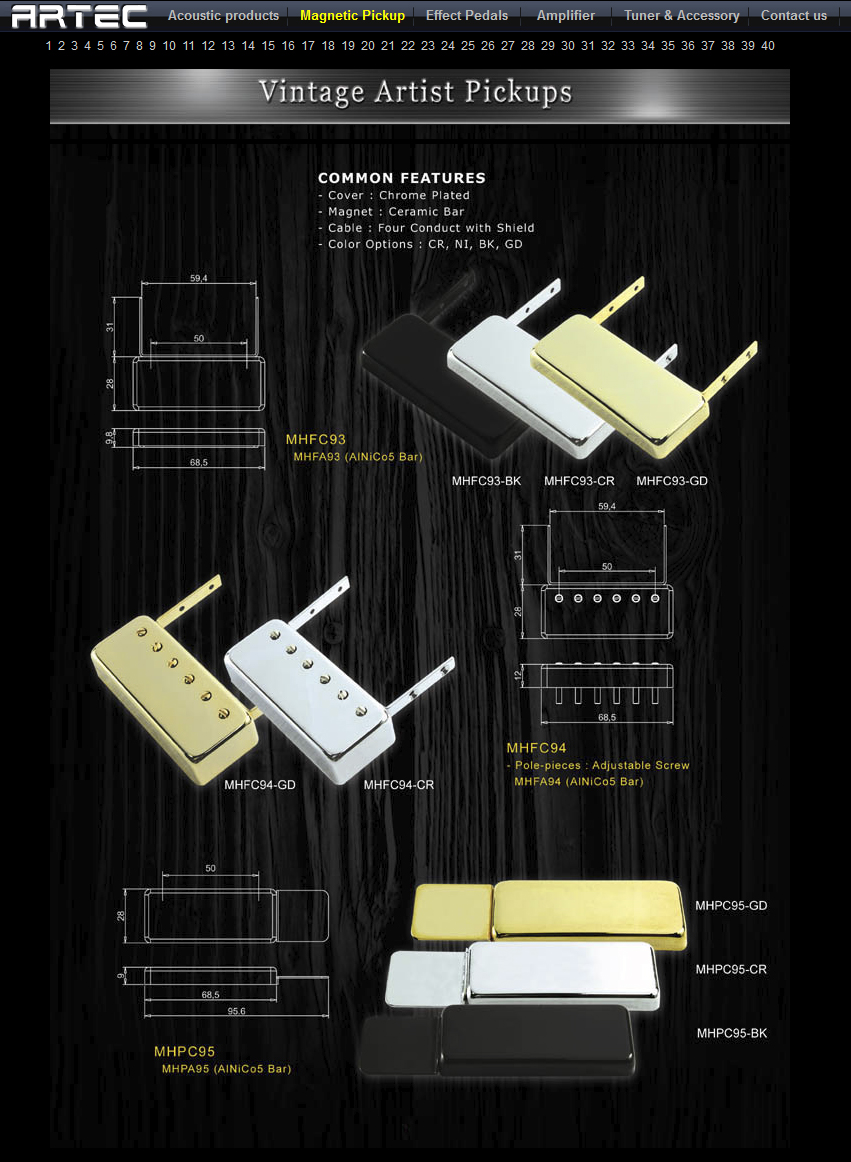 Artec is perhaps not the worlds fanciest brand, especially not if you judge them by their website, but I like them and they sound very good for being so cheap.
I will get a video up as soon as possible
My new country favorite, Sturgill Simpson is finally coming to town. He’s playing Sala Rocksound here in Barcelona on Thursday 21st of January 2016. I was damn jealous when he was gigging around Europe last year but never came to Spain. I think it’s a solo show, which is a shame it would have been nice to see his band too. Having said that, I’m pretty sure Sturgill’s voice and guitar is enough to fill the room. If you want to learn more about Sturgill you can listen to this interview.
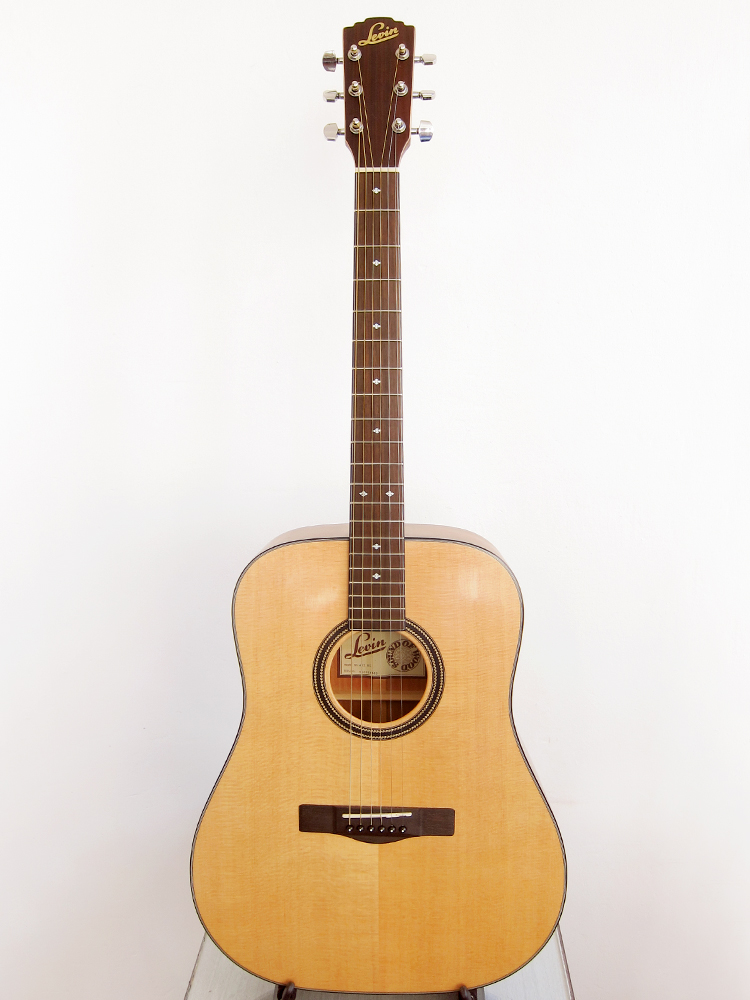 Levin W32 NS, Made in China in 2014 by Svenska Levin AB
I finally got a chance to try one of the new Chinese made Levin guitars. Levin closed down the factory in Gothenburg, Sweden back in 1981 when Svenska Levin AB bought the name and the remaining stock. A small batch of classical guitars continued to be made in Sweden by Lugnås Gitarr AB, and are still made there today. During the 1990’s there were some electric guitars and amps being produced in the far east under the Levin name, my first amp that I bought around 1997 was Levin branded. It took another 10 years until we started to see some Levin steel string acoustic guitars, these being produced first in Korea, then Indonesia and later China. Of course it’s impossible to compare a Swedish made guitar from the 1960-70’s with something being produced nowadays in Asia but I’m still quite impressed with these new Levin guitars. I emailed the owner and he told me that they had some issues in the beginning to get the finish right and I have to admit that the build quality is far from a Swedish Levin but still, if you see it for what it is then it’s a pretty great guitar for the price.

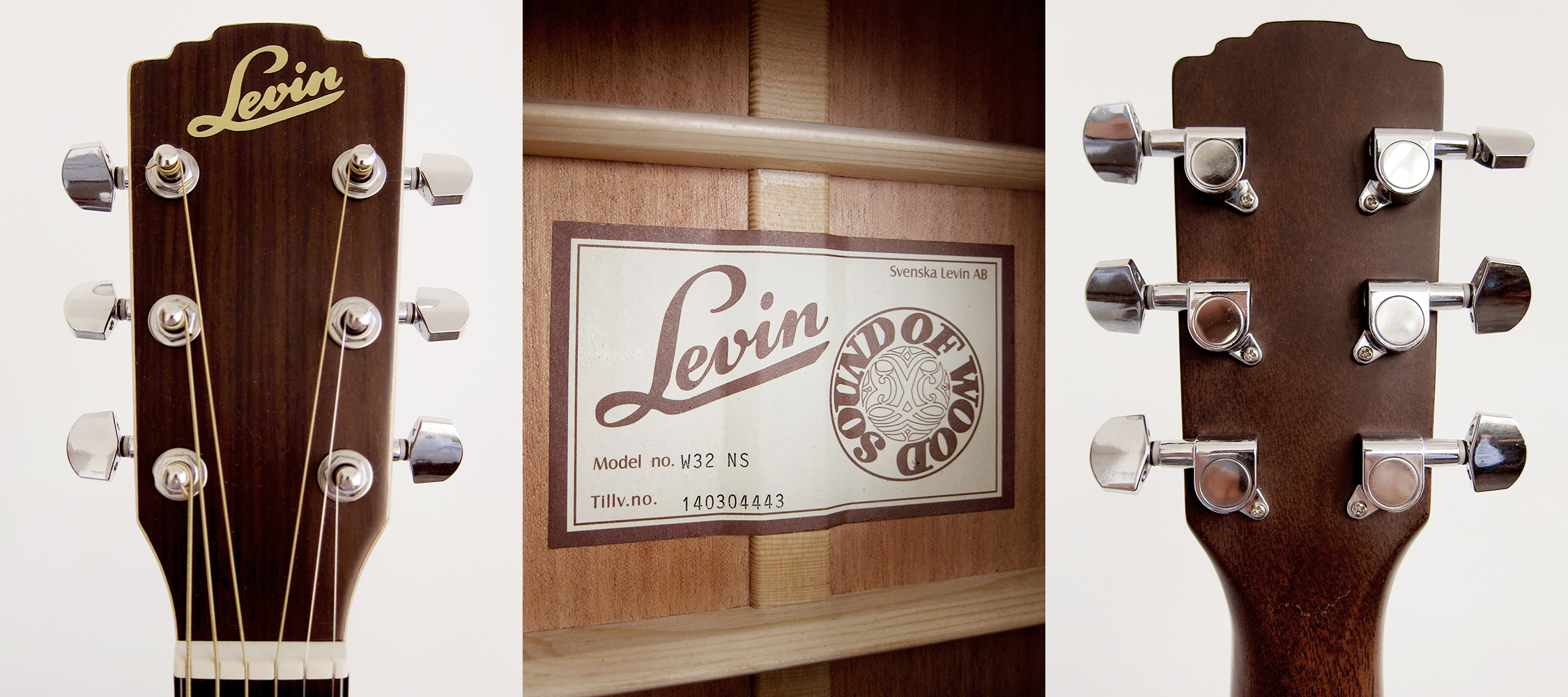
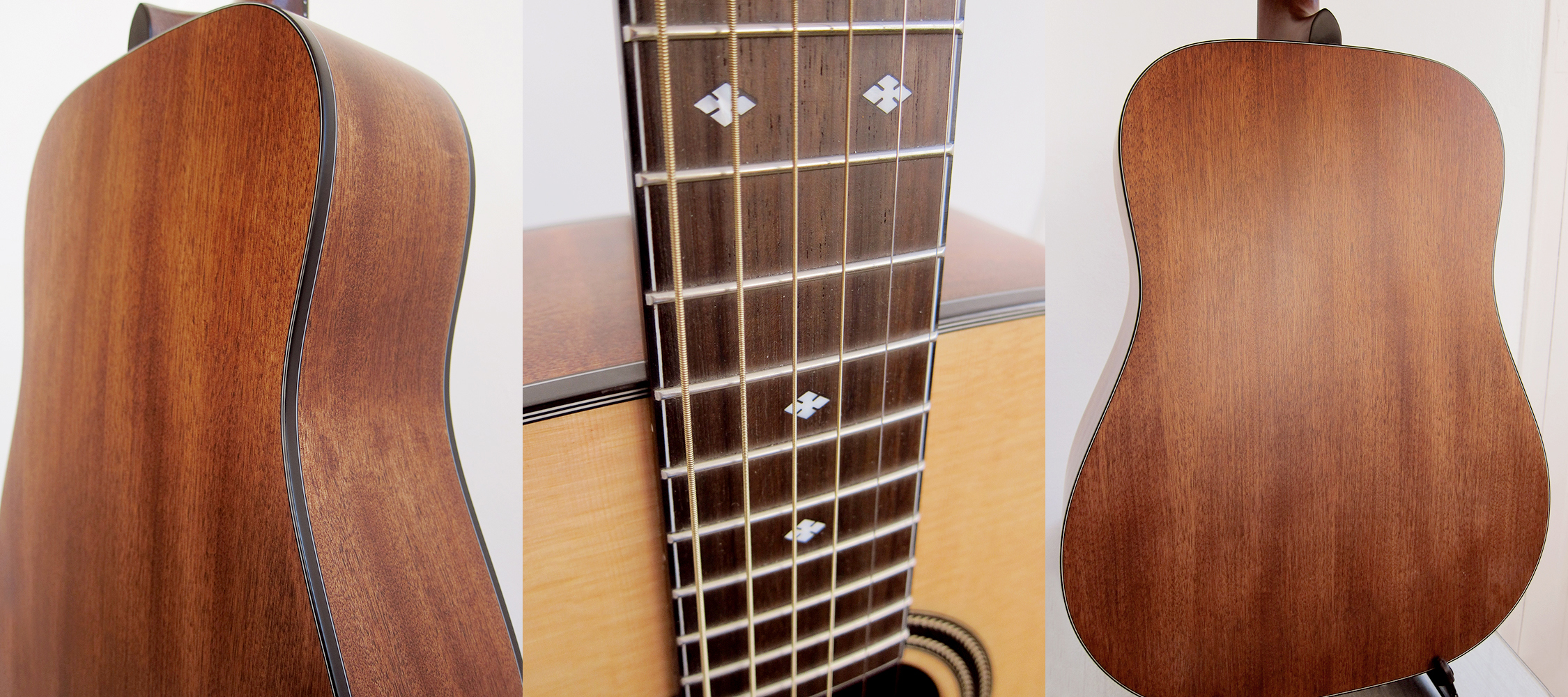 A modern Levin, built in China for Svenska Levin AB
 Claescaster