Claescaster

Ad of the day

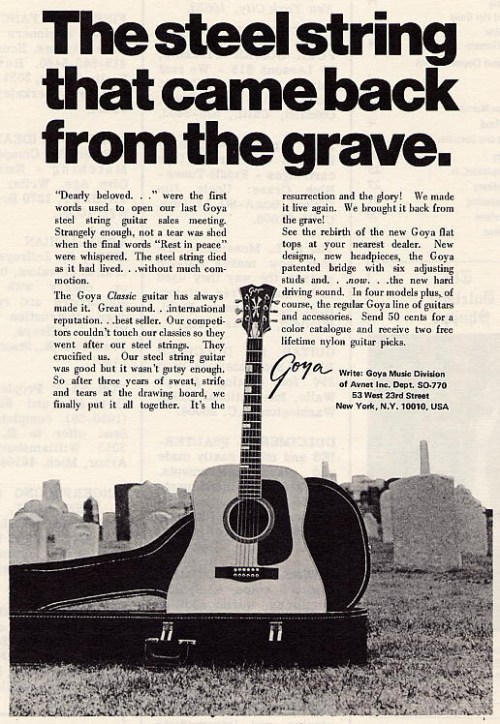
Back from the grave, Goya 174 ad from 1970 2
Back from the grave, Goya 174 ad from 1970

It seems like I will soon be the proud owner of an early 1970’s Levin 174. A nice Danish chap by the name of Orla wrote a comment on my previous post about Levin, saying that he had one for sale. I will write more about it as soon as I get it but for now, enjoy this Goya ad for the same guitar from 1970.

Gibson Walnut SG Standard

1977 Gibson Walnut SG Standard
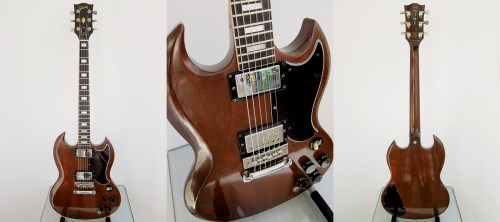
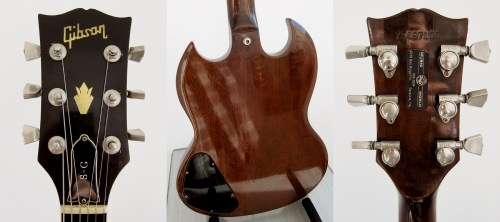
1977 Gibson Walnut SG StandardGibson Walnut SG Standard made in Kalamazoo, USA in 1977

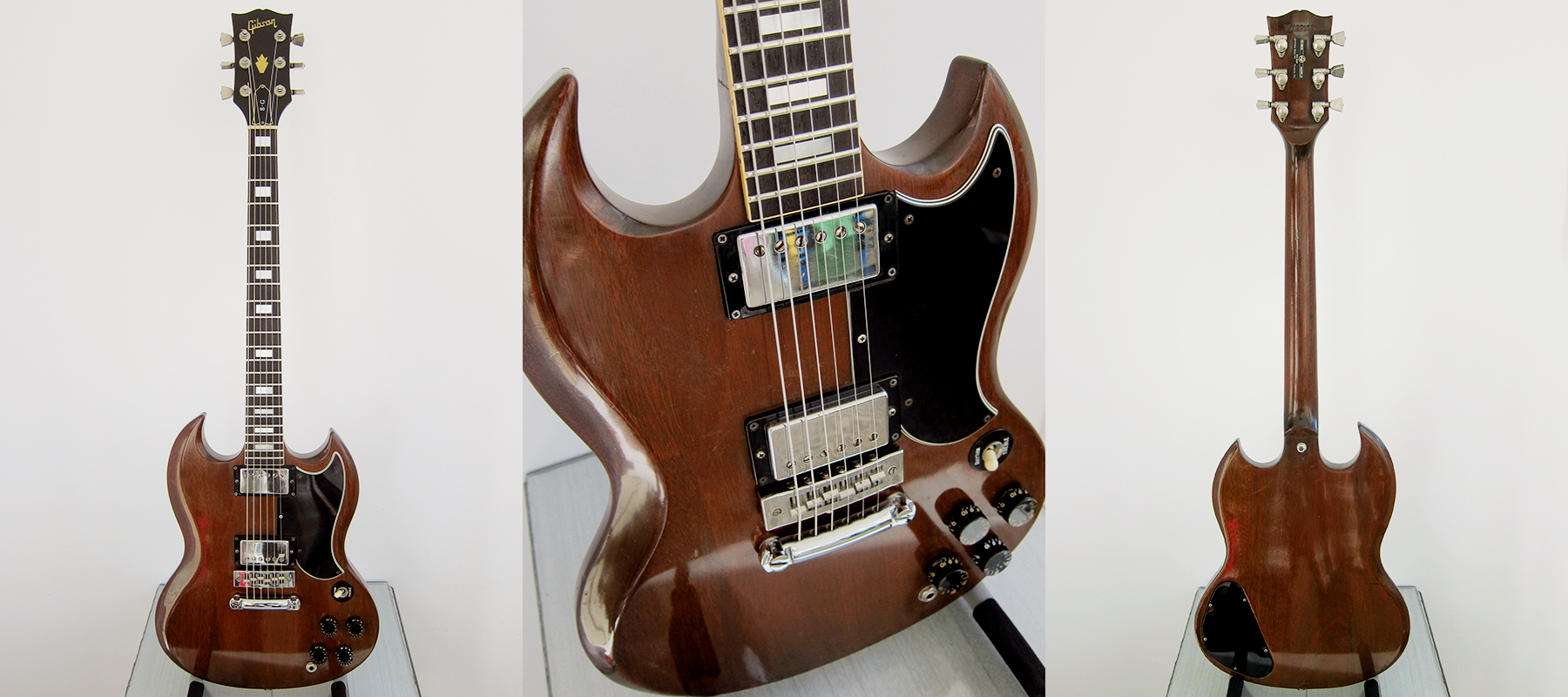
I recently had the pleasure of having an awesome 1977 Gibson Walnut SG Standard at home to play with. Well the idea was to look over the electronics and make sure it was fit to gig with for Patrycja, a friend of Verushka that I sorted the Hondo II bass for. According to The Guitar Dater Project it was made at the Kalamazoo Plant, USA on December 15th 1977, production number 103. It was great that I got a chance to play around with a Gibson Walnut SG Standard from the Seventies, that’s exactly what I was tempted to get myself, see my previous post about Gibson SG. Luckily I tried one before I bought one and I realised straight away that I still prefer Telecasters, SGs have too much neck for me. It was interesting to try a 1970’s Gibson made in USA just to compare it to all the made in Japan copies in my collection. I have to say that the feel and quality of the Japanese guitars are right up there with the American originals.
1977 Gibson Walnut SG Standard
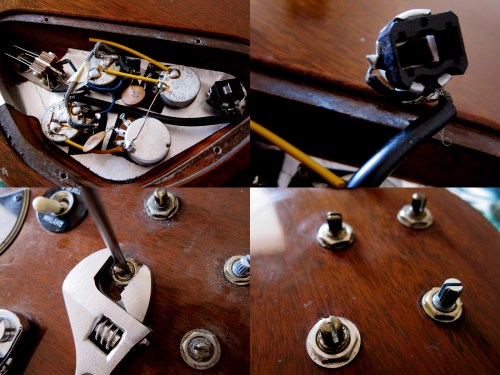
Everything seems to be original, except one pot, so I thought it was unnecessary to change the original jack just because of a bit of crackle so I cleaned it instead. I cleaned all the contact surfaces with wire wool and contact spray, it seems to be enough. I tightened the pots and all the screws on machine heads, strap buttons, pickguard, pickup rings, bridge and polished up the wood a bit.
1977 Gibson Walnut SG Standard
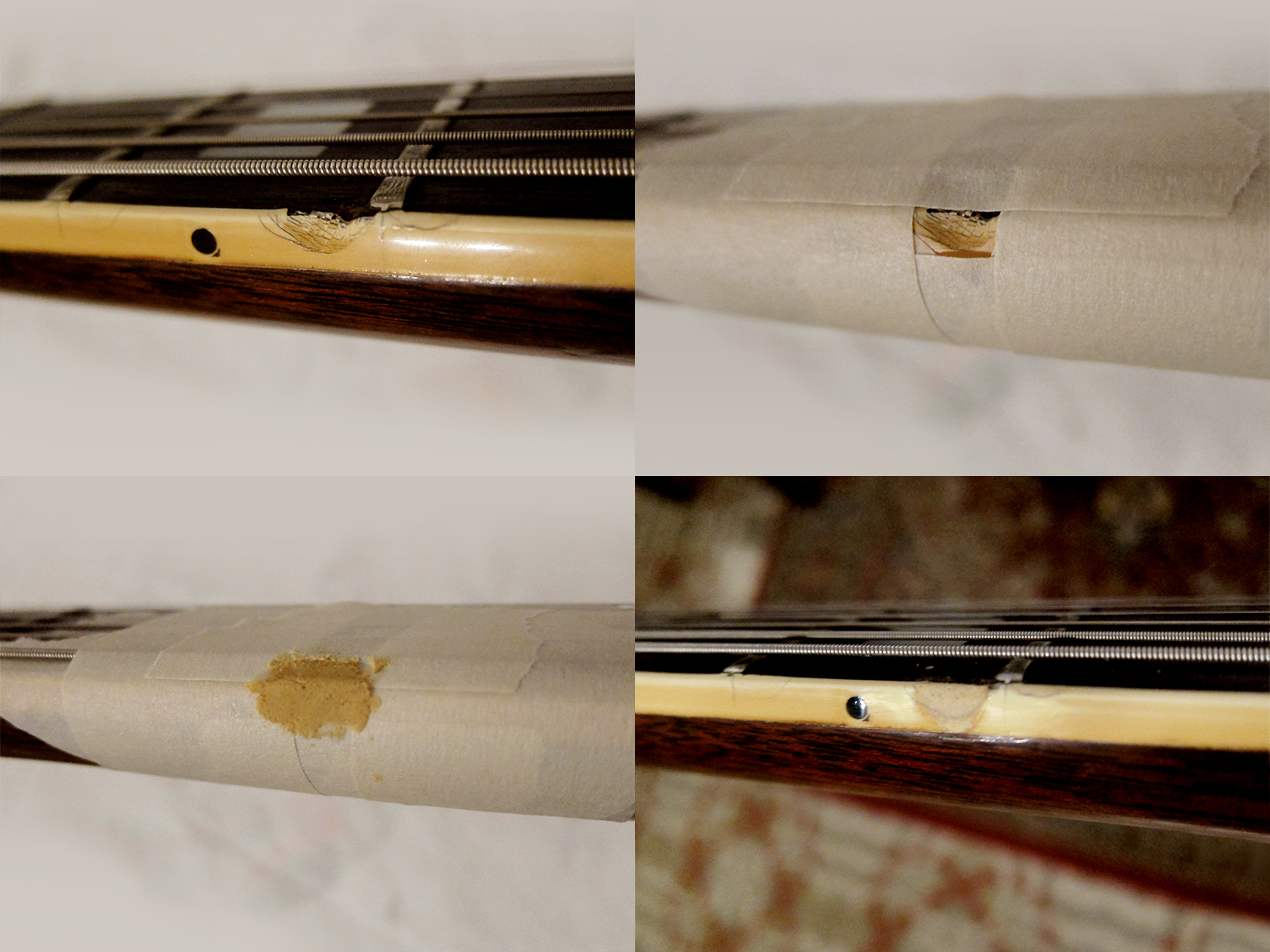
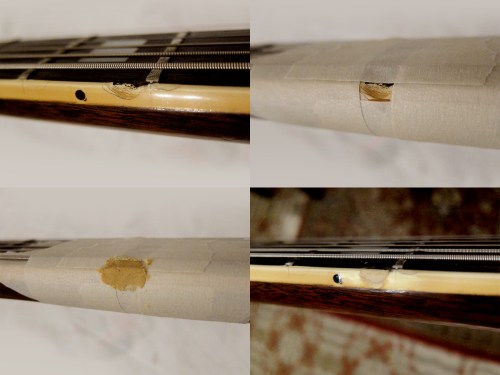
There was a fairly nasty cut in the edge binding on the 5th fret. You could feel it when you played so I masked it off and then filled it with wood filler, that happened to match in colour, then sanded it smooth and dropped a bit of nitro lacquer over it. Unfortunately I forgot to take a picture when it was all done, the last picture is before the lacquer and the final sanding with 2500 grit.
1977 Gibson Walnut SG Standard
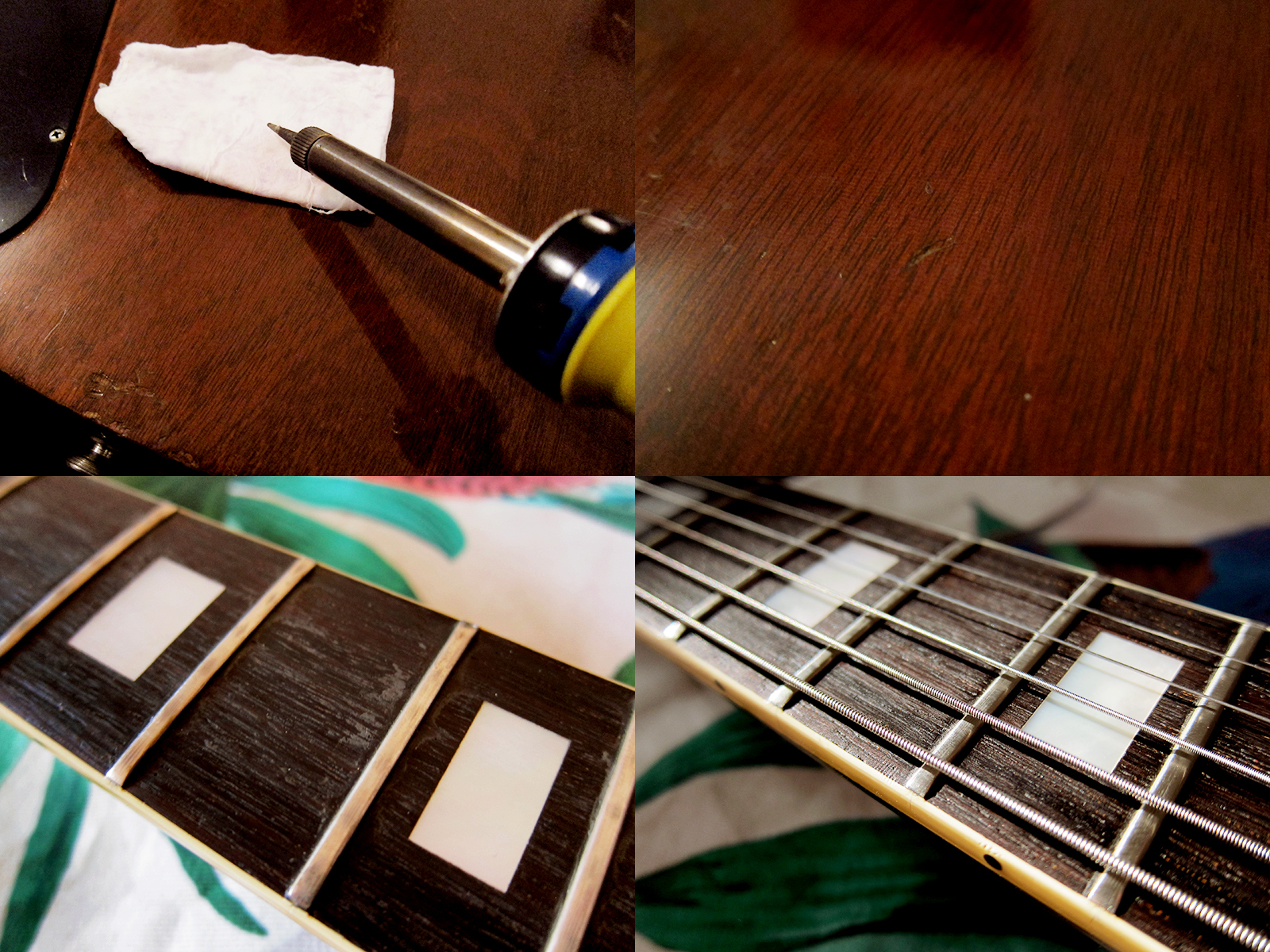
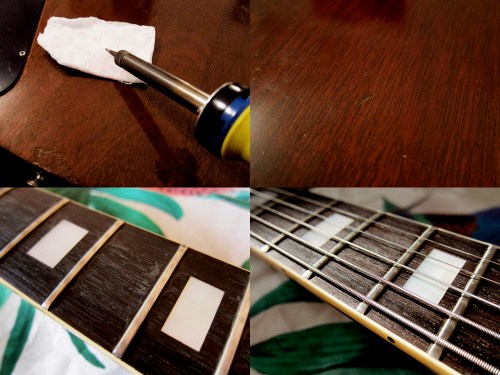
Patrycja wanted to keep the dents and scratches to the body and I agreed, it’s nice when a guitar shows it’s real age. However, nobody likes dents in the back of the neck so I did what I could to soften them a bit. I recently learned a great way of removing dents and scratches, or at least making them stand out less. Use a soldering iron and some wet paper folded up, the steam from the iron will make the wood swell and that way make the dent less deep. Sometimes this works extremely well, especially on surface scratches, and sometimes it makes no difference at all so it’s a bit hit and miss but it’s quick and easy and therefore at least worth a try. Make sure you move the soldering iron and just hold it down for a sec to not damage the surface. The last step was to polish the frets and fretboard, put on some lemon oil and then new strings. The action and intonation was already great so I didn’t have to adjust that.
Album of the day

Bruce_Springsteen_Greetings_From_Asbury_Park_N.J.

Bruce Springsteen – Greetings From Asbury Park N.J.
This is probably one of the best debut albums ever made, so full of energy and youthful manhood. Say what you want about Bruce Springsteen but I think that the music and lyrics on Greetings From Asbury Park N.J. is just brilliant.  It’s a perfect album for a beautiful and sunny Friday like this.

How to… remove a bridge

Levin / Goya 163 individual height adjustable plastic saddles
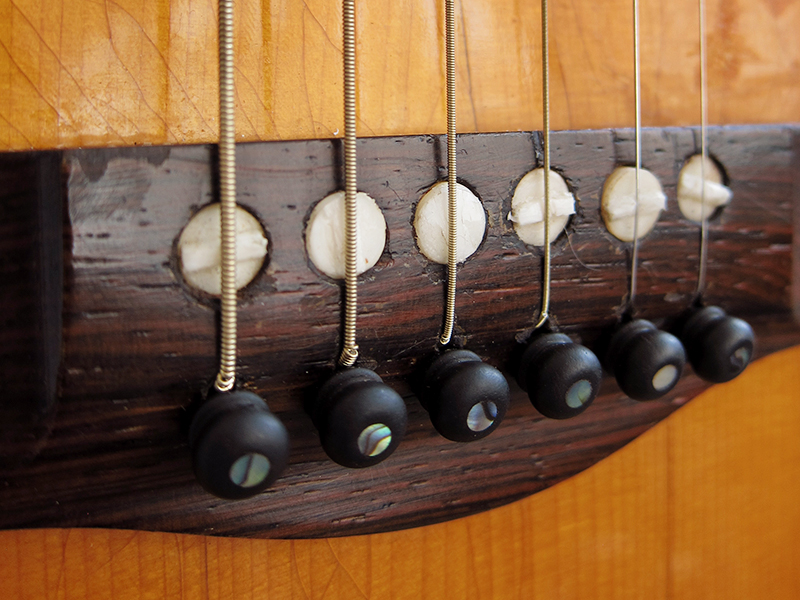
The old plastic saddles before I removed the bridge on my Goya Model 163 from 1968.

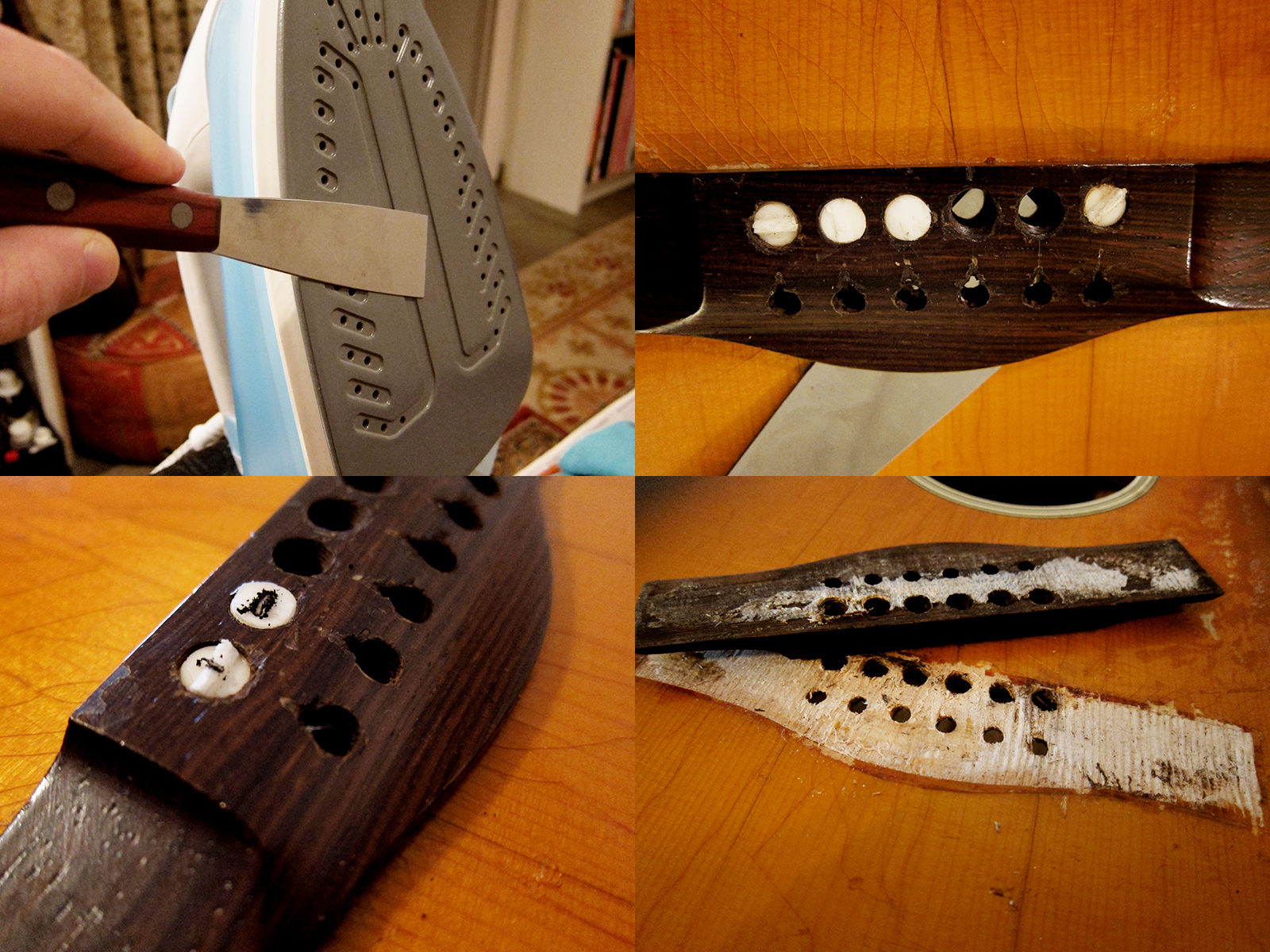
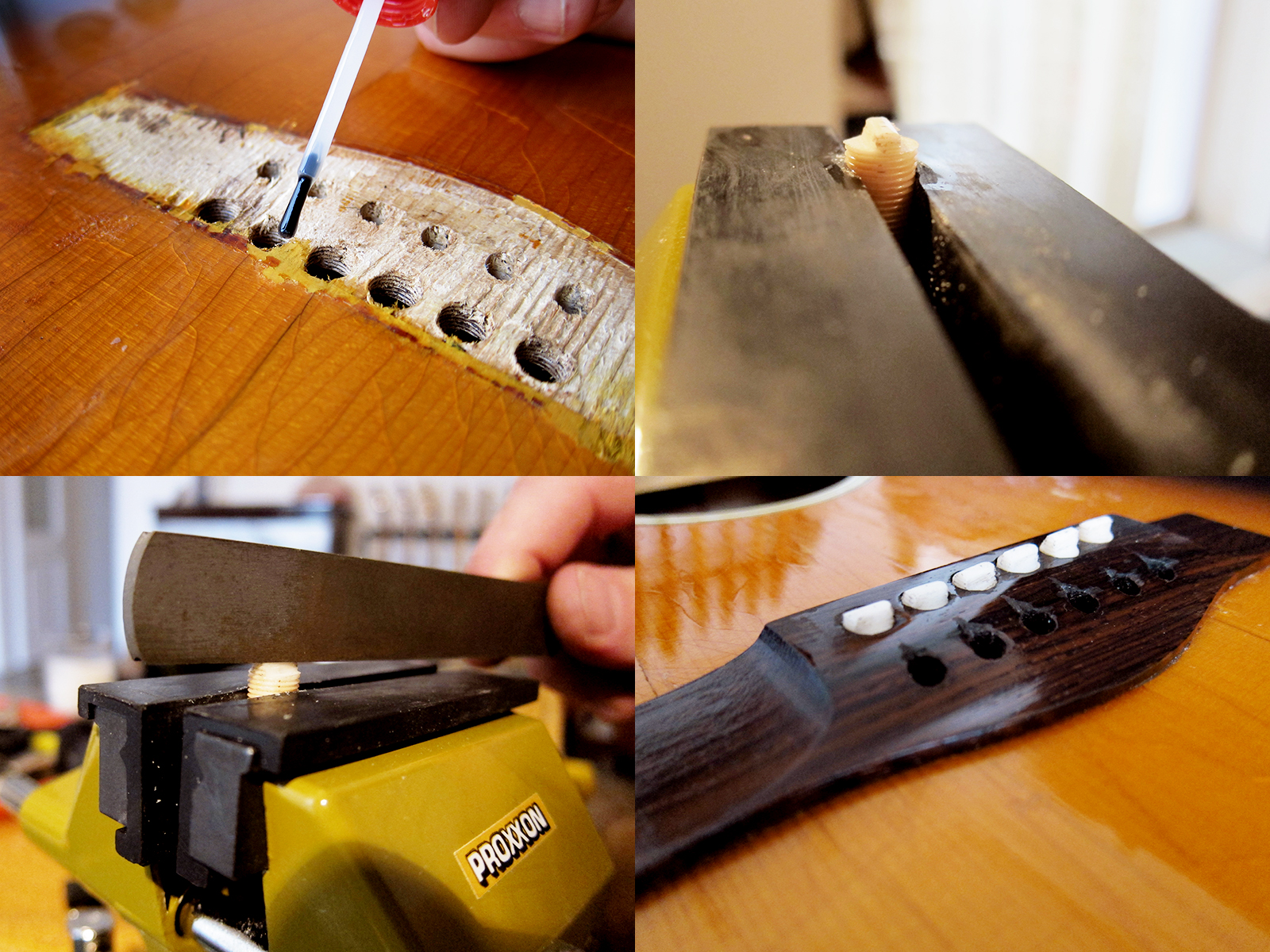
I recently had to remove my first bridge on an acoustic guitar, after removing my first neck it just felt like a natural next step. It turned out to be both harder and easier than I first thought it would be. I needed to do this for two reasons, first because the bridge started to come loose, it felt like the glue had dried up and started to fall apart. Second, I wasn’t too excited about the extremely low individual height adjustable plastic saddles, as Levin calls them, that the previous owner had left me. They were too low to adjust and made some strings sound muted and dull. I watched a Youtube clip before I started with Julyan Wallis, who happened to be working on a Levin guitar as well, and learned a few good tricks. He was heating up the spatula on an normal clothes iron and that way managed to loosen the old glue under the bridge. It worked extremely well.

Goya 163 bridge removal
I heated up the spatula on a normal clothes iron and touched it with my fingers to make sure it didn’t get too hot, I was scared to scorch the lacquer. As soon as you loosened the corners and worked your way around the whole bridge you can keep the tip of the spatula quite hot if you are quick to get it in under the bridge and not resting it on the lacquer. This could have been such a smooth and and easy job if I would have realised earlier that that saddle screws went all the way through and was actually screwed in to the top as well, something that kept the bridge secure even when all the glue was loosened. I tried over and over and even managed to damaged the lacquer in two places in my desperate attempts to get the bridge off. Since I couldn’t get a grip of the saddle screws, two was filed down smooth and the others were too low to hold on to with any pliers. I had to heat up a screwdriver on a candle, I should probably have used the clothes iron, and then melt the tip in to the saddle and that way get a grip and unscrew them. Once all the saddle screws were out the bridge came off straight away. It could have been a cleaner removal if I had realised that the saddles were attached to the top but still, I’m pretty pleased with the result for being my first time.

Goya 163 bridge removal
I painted the wood where the finish had come off and then added a bit of nitro lacquer to seal it. Since I had to burn the tip of the saddles to get them out I thought the best I could do in order to save as much material as possible was the flip them over and reshape the bottom instead. I used a normal hand file to shape the saddles, I made the tip both higher and wider to get a better grip with the pliers when I adjust them. Once the shape was good I rounded them off with my fret crowning file. I glued the bridge back in place with fish glue and a couple of clamps and let it set for 24 hours. It worked pretty well, the tone is better and I can now easily adjust the string height like Levin intended 46 years ago.

Movie of the day

Mark Knopler's first guitar
Mark Knopfler with his first guitar, a Höfner Super Solid

Global Shipping Program

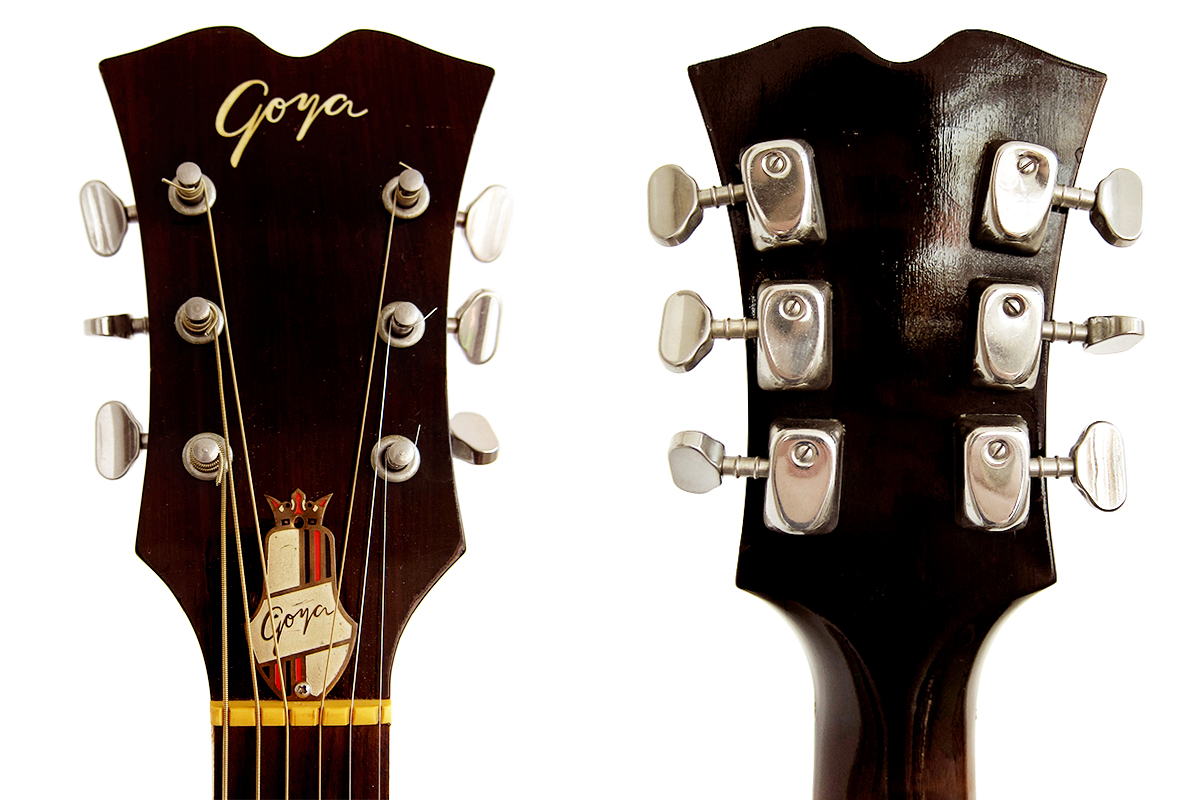
1968 Levin / Goya 163 head
Goya Model 163 , made by Levin in Sweden in 1968

You might have noticed that eBay have started with something new, well fairly new, called Global Shipping Program. Basically you pay all the import taxes and charges straight away and therefore don’t have to go through the customs when the item arrives to your country. I have had some issues in the past when I have bought things from the US, like my Claescaster body and my Goya T-18. It took the Spanish customs a month the process the item and deliver it to me and they charged me 40% of the original price including shipping in import tax and other fees. I recently purchased a lovely Goya 163 from Massachusetts using the Global Shipping Program and it took exactly 14 days to get it and I only had to pay 32.5 % tax on the actual price of the guitar, not final price plus shipping as they normally charge me when it goes through the Spanish customs in Madrid and best of all, no paperwork. So for anyone living in Spain I can highly recommend buying things from the States using the Global Shipping Program.

Roy Buchanan

Roy Buchanan
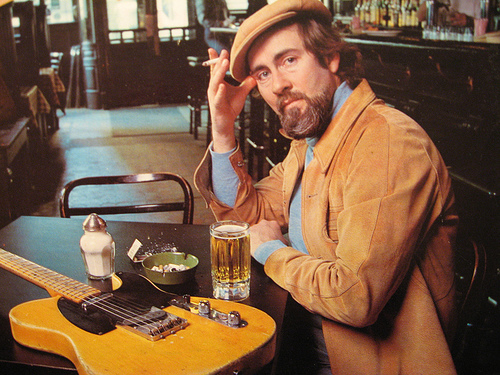
Roy Buchanan and Nancy, from the 1977 album Loading Zone

As I’ve mentioned in a previous post I’m a huge fan of Roy Buchanan. I even got myself a Nancy, well it’s a Japanese Fender ’52 re-issue Telecaster from the late 1980’s but close enough. I was watching Youtube documentaries on my lunch and came across Roy Buchanan – P.B.S. Greatest Unknown Guitarist in the World from 1971. Roy’s life story is both sad and quite amazing, you can read more about him if you click the links above. I love the fact that he had give up on music and trained to be a hairdresser when he found Nancy and that he was kicked out of The Hawks for being too weird. This is the song that made me fall in love with him and I’m still not sure if I’m more impressed by his singing or his guitar playing, Roy Buchanan – CC Rider.

How to… reset a Levin neck

Levin LM-26 1959A fairly unplayable 1959 Levin LM-26 before I reset the neck

I’ve been very lucky and managed to get my hands on a couple of really nice Levin and Goya guitars over the last year. I would probably have thought twice about getting any random 50 years old acoustic since the action is normally a bit of an issue but with Levin it’s quite easy to reset the neck. They have been using a bolt-on neck system since the 1950’s which makes the job pretty manageable.
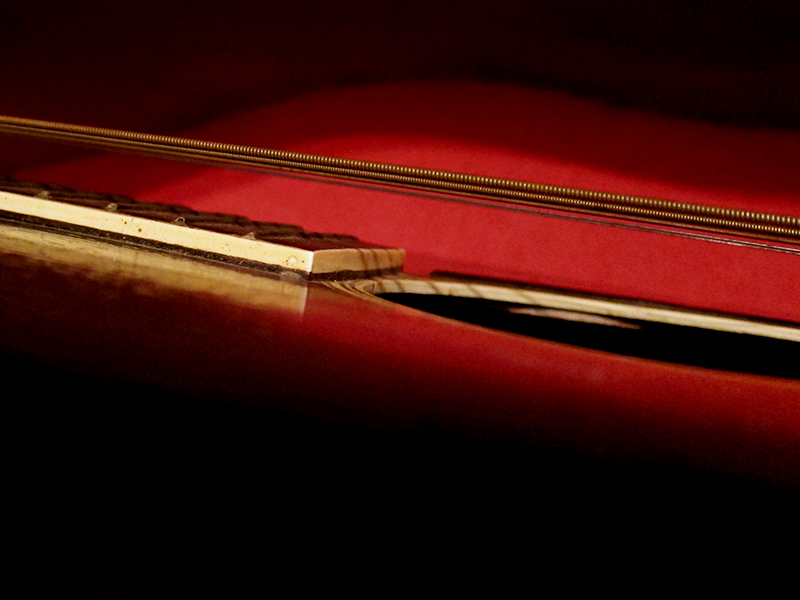
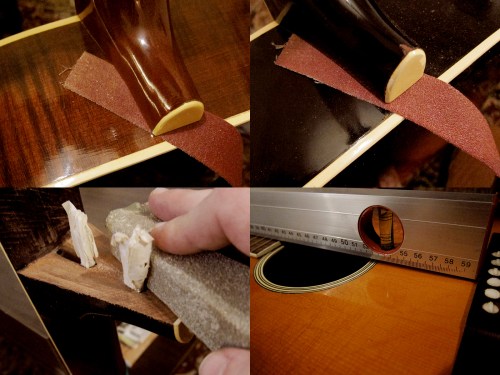
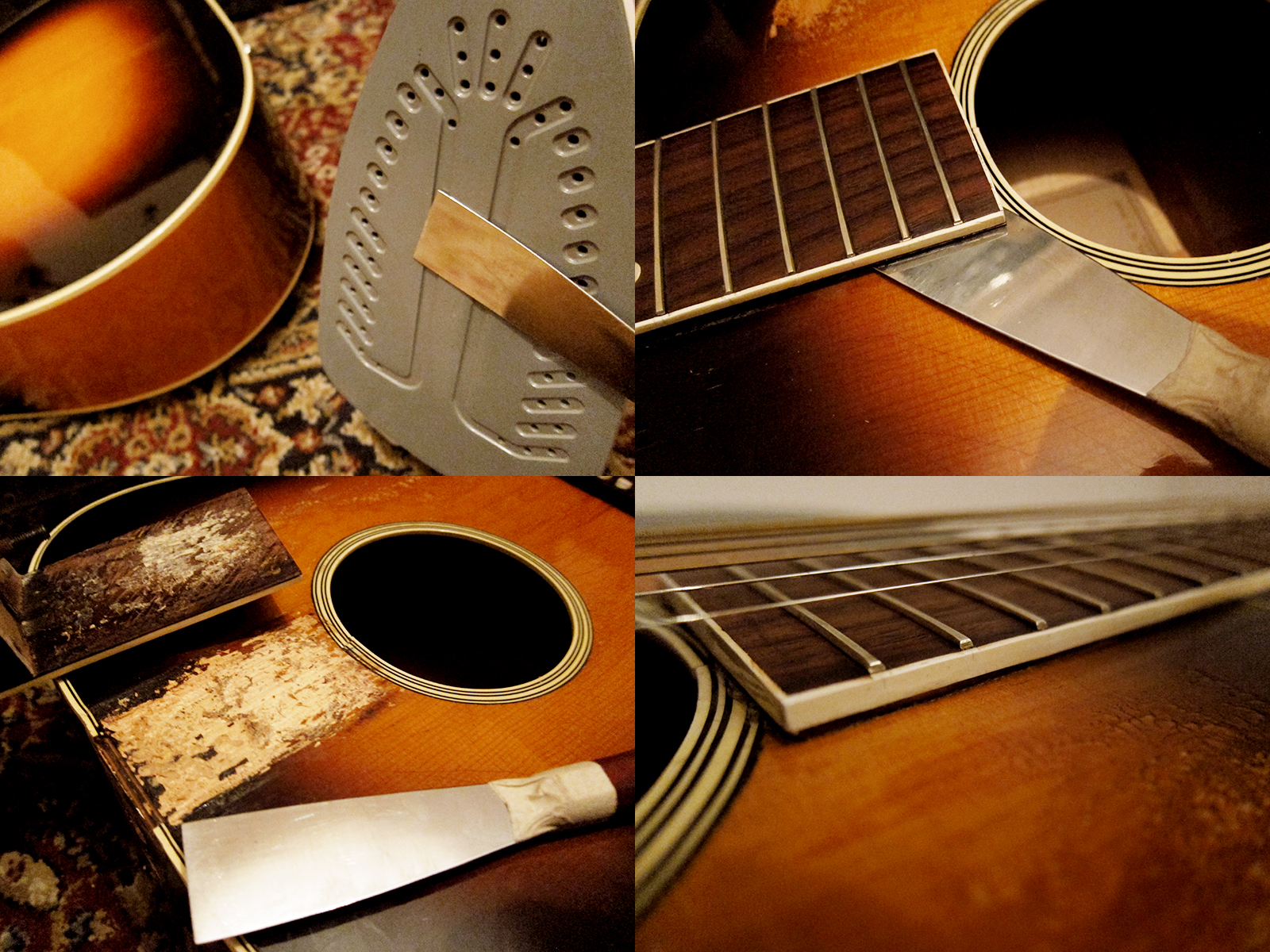
How to reset a Levin neckRemove the two bolts that attach the heel with the neck block, you can see them if you look inside. A normal Philips no 2 screwdriver fits if you don’t have a square Allen key. The heel is normally not glued in so you will feel it loose as soon as you remove the bolts. If not, apply a bit of pressure upwards to loosen the heel. Now you will be able to fit a sanding strip under the heel and can start to sand it down and that way change the neck angle and lower the action. Apply a bit of pressure on the neck and just pull, it might take 40-60 pulls on each side so so be patient. Check the neck angle with a straight edge once in a while so you don’t take it too far. As long as the straight edge doesn’t go over the bridge it should be fine. I have done the sanding strip trick on two guitars so far, my Goya T-18 and a Goya 163. On my Levin LM-26 I felt it was better to remove the whole neck so that made the sanding process even easier.
Goya 163 neck removal
Update: January 27, 2014
I needed to sand down the heel a bit further on my Goya Model 163 and realised that the fretboard started to come loose. It looked and felt just like the bridge, like the glue had dried up and started to crack and fall apart. I tried a new trick that I learned on Youtube, to heat up the spatula instead of heating the neck, like a did on my Levin LM-26. My God, this was so easy and quick, I think it took me 7 min to remove the neck. When I had sanded down the heel a bit further I glued the neck back with some fish glue and a couple of clamps.

Levin bolt-on neck

Video of the day

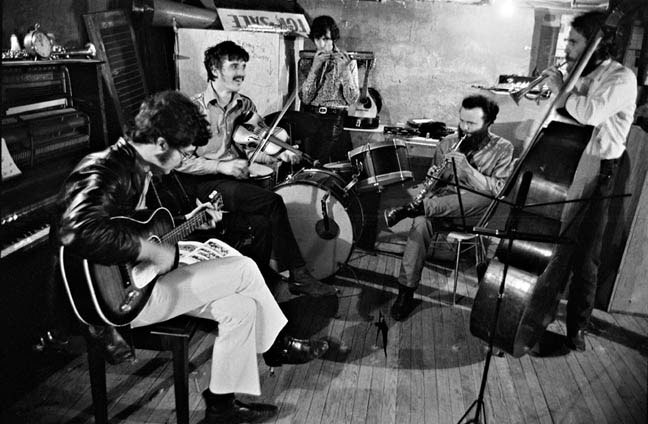
The Band in the basement of Rick Danko’s Zena Road home. Woodstock, New York, 1969
The Band in the basement of Rick Danko’s home, Woodstock 1969. © Elliott Landy

Guitars for sale

This is the last acoustic guitar I have left for sale, all the others are gone now. If you’re interested or have any questions just send me an email claesgellerbrink@gmail.com or give me a call 639586158.

Suzuki Three-S F-120
Suzuki Three-S F-120 Dreadnought acoustic, Made in Japan, 1976, 250€ SOLD
A nice Suzuki Violin Co. LTD, Suzuki Three-S F-120 built in Japan in 1976. It’s in really good shape with just a few scratches on the back and sides, nothing that stands out. The tone is great, very clear sounding and it’s really easy to play with low action and no buzzing. It seems to be solid spruce top, nato back and sides, with nato neck and rosewood fingerboard. It looks like it’s a Martin D-18 copy. The neck is straight, no marks on the back and everything works as it should. A well built Japanese acoustic from one of the most famous guitar makers. You can find videos on Youtube here: Suzuki Three-S F-120 and here: Suzuki Three-S F-120 (bonus).