This is the last acoustic guitar I have left for sale, all the others are gone now. If you’re interested or have any questions just send me an email claesgellerbrink@gmail.com or give me a call 639586158.
Suzuki Three-S F-120 Dreadnought acoustic, Made in Japan, 1976, 250€ SOLD A nice Suzuki Violin Co. LTD, Suzuki Three-S F-120 built in Japan in 1976. It’s in really good shape with just a few scratches on the back and sides, nothing that stands out. The tone is great, very clear sounding and it’s really easy to play with low action and no buzzing. It seems to be solid spruce top, nato back and sides, with nato neck and rosewood fingerboard. It looks like it’s a Martin D-18 copy. The neck is straight, no marks on the back and everything works as it should. A well built Japanese acoustic from one of the most famous guitar makers. You can find videos on Youtube here: Suzuki Three-S F-120 and here: Suzuki Three-S F-120 (bonus).
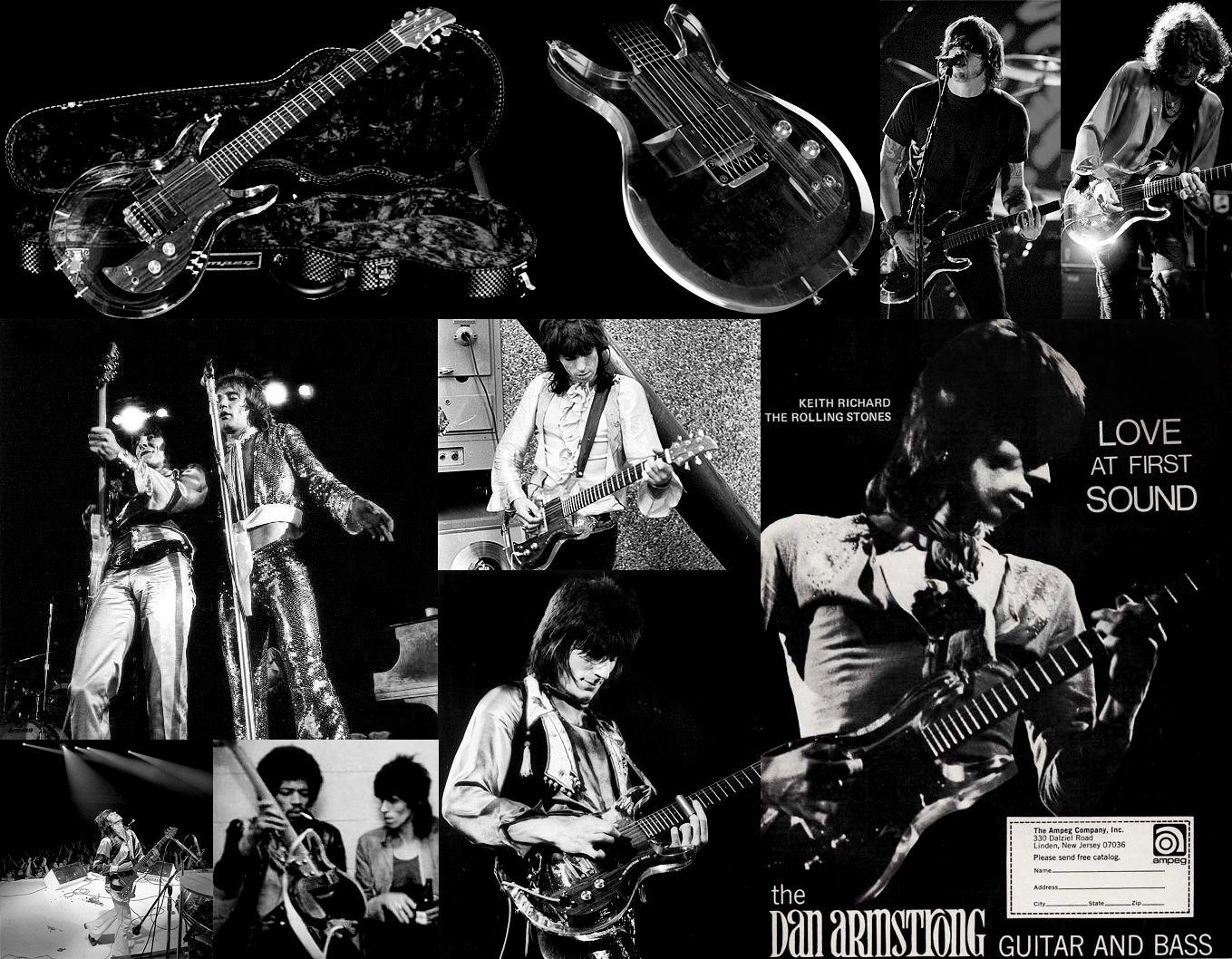
In 1969 Ampeg and guitar super-guru Dan Armstrong set about revolutionizing the electric guitar. What came next was “clearly” innovative, technologically advanced and well, clear! The Rolling Stones took the stage with Keith Richards sporting the ‘See Through’ guitar and Bill Wyman playing the companion bass. The legend was born.
I have such a love / hate relationship with Dan Armstrong’s plexi guitar. A part of me finds them quite ugly and the other part would love to have one, just to be as cool as Ron and Keith. When Ampeg reissued this model I got super excited and really wanted one, then I realised that unless I played in some Stones or Faces like rock band, it wouldn’t make much sense. They actually have one of these reissues in a Cash Converters here in Barcelona for 900€ which is probably quite cheap.
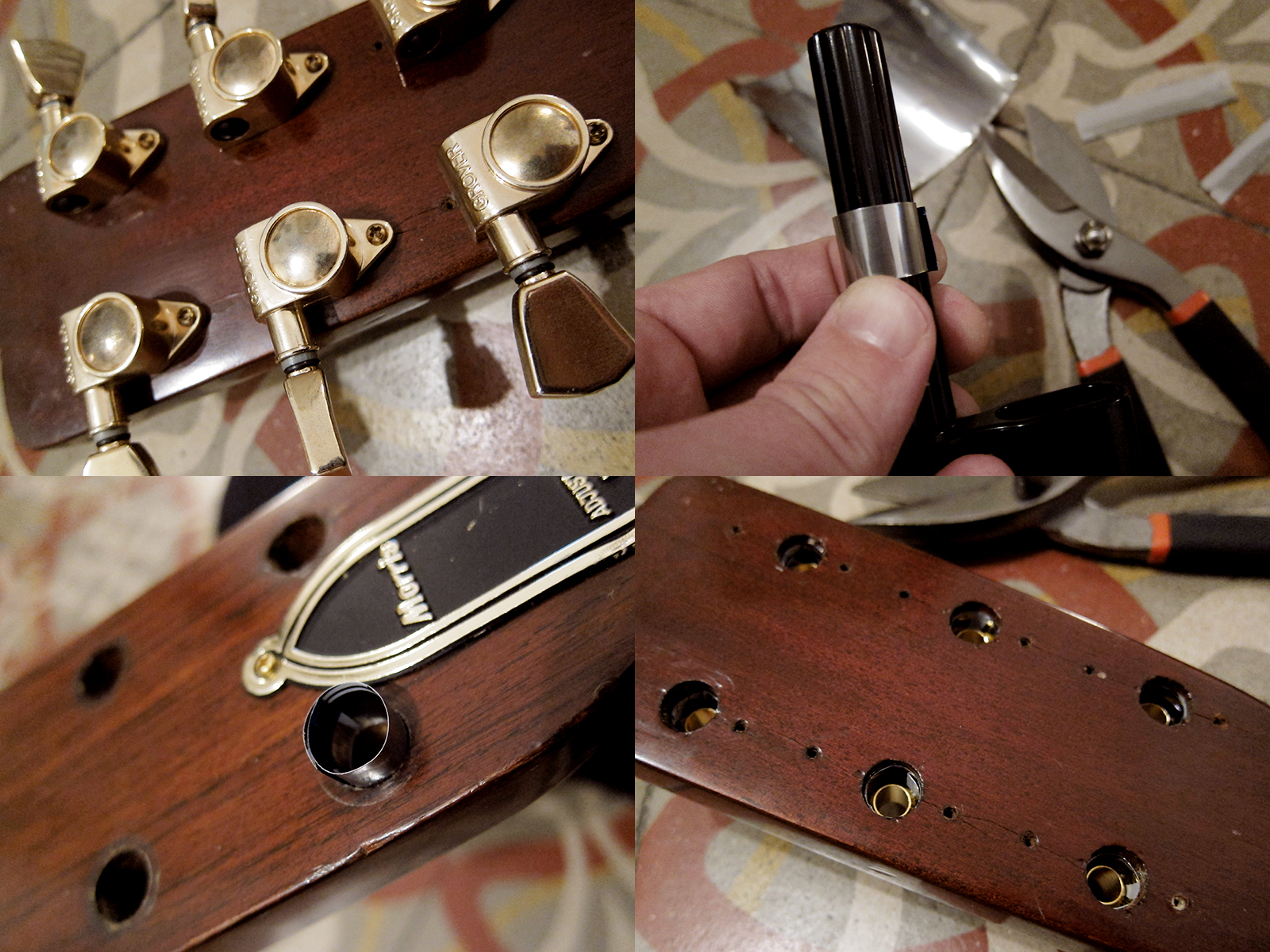
I just installed a new set of Wilkinson WJ44 in gold on my Morris W-40. I wasn’t happy with the fake 10€ tulip Grovers I had before so I decided to get some Wilkinson Deluxe tuners instead. They cost me about 33€ including shipping from Vansonguitars on eBay. I really love the tulip shape and will always chose that if possible but I really don’t like the green buttons that most companies use, even the big ones like Schaller, Kluson and Grover. Luckily Wilkinson has started to make their deluxe tuners in both vintage green and cream white so I could get my beloved gold deluxe tuners in off white instead of hospital green. Another good thing with these Wilkinson’s is that they have a 9mm bushing instead of 8mm which makes them easier to fit if you have modern 10mm holes for the tuners. Wilkinson are manufactured in Korea by Jin Ho and I’m very impressed with their quality considering how the cheap they are. I have both Wilkinson tuners and bridge on my Claescasters, I love their vintage bridge with compensated brass saddles.
Since the Morris W-40 has 10mm holes I had to try to make the 9mm bushings 1mm bigger. I decided to try the beer can trick which turned out to work pretty well. Cut a can open and remove the top on the bottom and then just cut strips as wide as the bushing. 1mm might sound like nothing but the bushing needs to sit tight in the holes otherwise they will be pulled out or move from the string tension. I had to go for about 1.5 strip to fill the gap and there was a lot of fiddling and pain in my thumbs to get it in place but I eventually succeeded.
I was hoping that the screw spacing matched the old Morris tuners but they didn’t so I had to drill new holes. They are going to be hidden under the original tuners if I restore it but for now, I prefer gold and tulip buttons to the original Japanese 70’s chrome tuners.
I recently came across this Suzuki Three-S F-120 that I have fixed up and it’s now for sale. It seems to be a copy of an early Martin D-18, it feels less bulky than most dreadnoughts. Built in 1976 by Suzuki Violin Co. LTD in Nagoya Japan. It’s a beautiful guitar in a really good shape for being almost 40 years old. It’s very easy to play with low action and it has a great tone, very warm and rich.
I took the machine heads a part, cleaned, polished and oiled them before I put them back together. I polished the frets and oiled the fretboard and then made a new compensated saddle in bone. Now it sounds and plays great.
I have another Suzuki for sale, however, these guitars were not made by the same company. Both were originally building violins so both are called Suzuki Violin Co. LTD but they were based in different parts of Japan. Kiso-Suzuki manufactured guitars in the region of Kiso-Fukushima. Nagoya Suzuki manufactured guitars in the region of Nagoya.
I finally found an old catalogue for it. It seems to be spruce top, nato back and sides and nato neck with rosewood fingerboard
One of the most famous and highly collectable vintage guitars of all time, the infamous Peter Green Les Paul. Most Blues fans will know that as well as being revered for his amazing tone and unmistakeable vibrato, B.B. King once remarked “He has the sweetest tone I ever heard. He’s the only one who gave me the cold sweats.”, over the years Peter’s Les Paul has built up a similar legend in guitar folklore. Now in the hands of a private collector, it made it’s journey through Peter Greens hands and into the arms of Gary Moore who put it to good use on a number of his albums and live shows. Earlier on in his career, Peter Green played a Harmony Meteor, a cheap hollow-body guitar, but quickly started playing a Gibson Les Paul with The Bluesbreakers after he replaced Eric Clapton in the band. Green’s guitar was often referred to as his “magic guitar”. “I never had a magic one. Mine wasn’t magic…It just barely worked” said Green in 2000. “I stumbled across one when I was looking for something more powerful than my Harmony Meteor. I went into Selmer’s in Charing Cross Road [central London] and tried one. It was only £110 and it sounded lovely and the color was really good. But the neck was like a tree trunk… It was very different from Eric’s Les Paul, which was slim with a very fast action.”
In part, his unique tone derived from a modification to the neck pickup which was reversed and rewired, a modification made after 1967. For anyone looking to modify their guitar in the same way, we found a link to a nice blog here on how to perform the tone mod in detailed steps http://www.geetarz.org/axes/green.htm
It was in the early 70’s when Green passed the guitar over to Gary Moore. Peter was suffering from mental health problems and would put his guitar down for the best part of 8 years. At the time, the Irishman was a friend and close neighbor of Green’s in London. Green initially tried to give the Les Paul to him on the understanding that he could ask for it back when he was well enough to play again but Moore insisted on paying the £110 that it originally cost and Peter Green never did ask for it to be returned. Once in the hands of Gary Moore, the guitar went on to be used on a number of recordings, most notably the ‘Blues For Greeny’ album of Fleetwood Mac covers dedicated to the orginal owner. Green used it extensively until he sold the guitar in 2006.
Peter Green and Gary Moore with the 1959 Les Paul Standard
Gary Moore explained why he parted ways with the iconic instrument: “It’s a long story. The instrument itself was a very special instrument, obviously. But it got to the point where I couldn’t take it anywhere. I didn’t want to sell it. I had to sell it for various reasons because I injured my hand a few years ago and the insurance didn’t pay up, and I had to cover the tour costs for canceled shows with my own money, and I didn’t get paid for any of the shows, obviously, or for anything. I ended up with debt. So it was kind of a financial thing, really, and that was the quickest way to do anything about it. So I never wanted to sell it. I mean, why would I? I kept the other ’59 Les Paul and I sold that one. That guitar was played by Jimi Hendrix, Jeff Beck, Rory Gallagher played it, and I’ve played it. It was a very special instrument. Les Pauls are all so different. That one is a big old battle axe. Peter Green never really liked that guitar because the neck was too big. He wanted me to have it because he said he wanted it to go to a good home.” Taken from Interactive Guitar
I’m still trying to figure out what I like and what I’m after when it comes to acoustic guitars. It’s a quite new thing for me, to play acoustic. I mentioned in an earlier post that it’s a bit like understanding and appreciating fine wine, you need to train your pallet and know what you are looking for, otherwise wine just taste like wine and acoustic guitars sounds more or less drang drang. I’m not sure if all Morris are as good as the two I got but these sounds better than pretty much anything I have ever heard before. I love the look of the Morris W-40 but it’s not as well sounding as the WL-35. I guess the W-40 has that typical Martin D-45 sound, a really dark bass and still nice highs, but a bit weak on the treble side for me. It’s not that good for finger picking, it’s lacking a bit of volume on the high E and B string, something that might be because of the light string gauge, I’m using 11’s at the moment. I’m going to string it with 12’s and see if the volume improve. The Morris W-40 still has one of the best sounds for open chords playing that I’ve ever heard, so much warmth and body, I guess because of the Brazilian rosewood. The Morris WL-35 is probably a better all-round guitar, finger picking, chords, solo playing, everything sounds good on it. I’m just struggling a bit since it’s so big. I think it’s based on some old Guild model, at least the head looks very Guild inspired. Anyway, I can strongly recommend Morris as a brand to anyone looking for a good sounding high quality built Japan made acoustic.
Moridaira (Morris Guitars) Founded in 1967 by Toshio “Mori” Moridaira, the Moridaira factory produced high-quality guitars, including the infamous Morris badged guitar. Moridaira also produced badged guitars for Hohner including Coronado, Futurama, H.S. Anderson, Lotus (some) and Sakai.
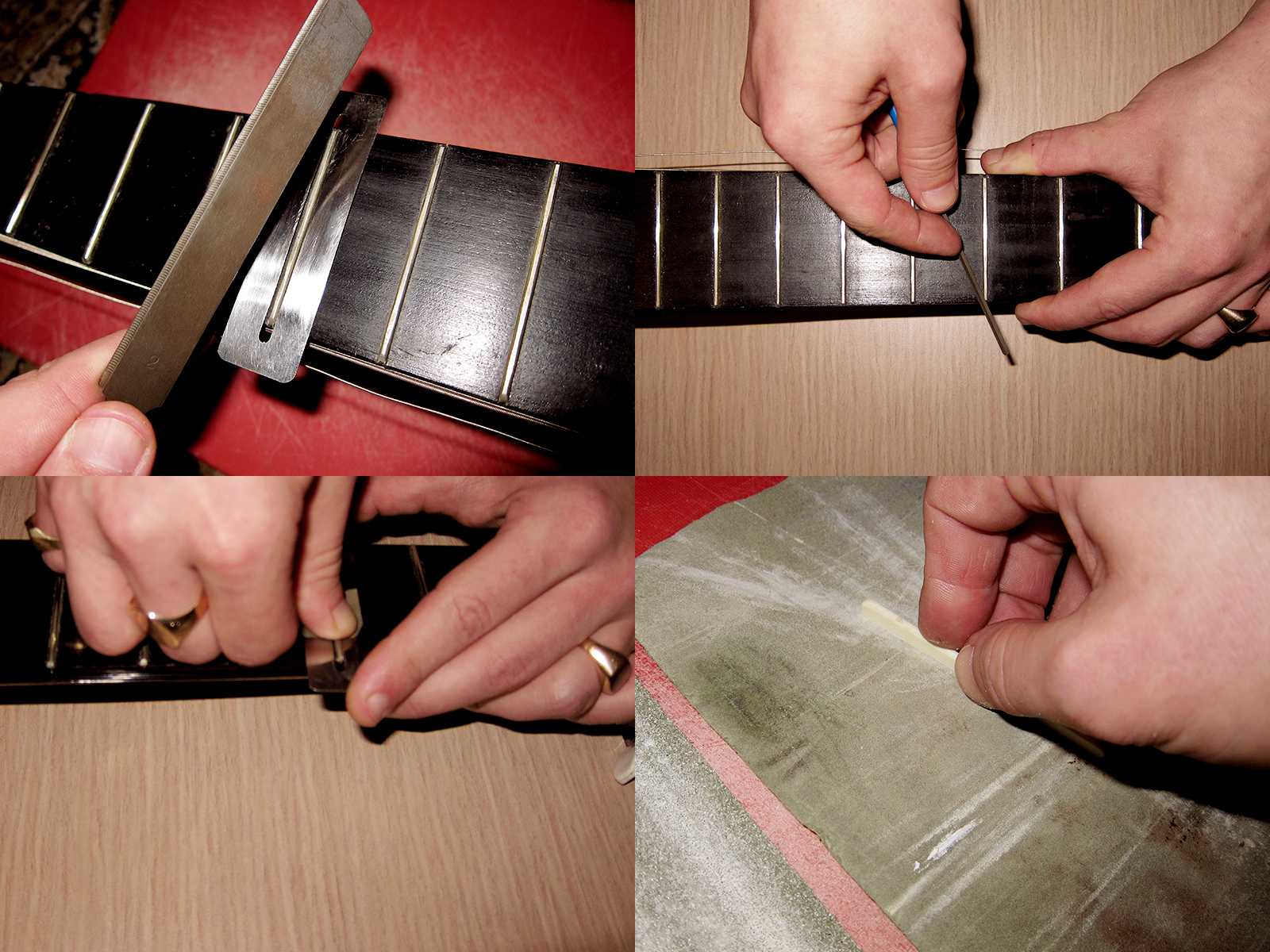
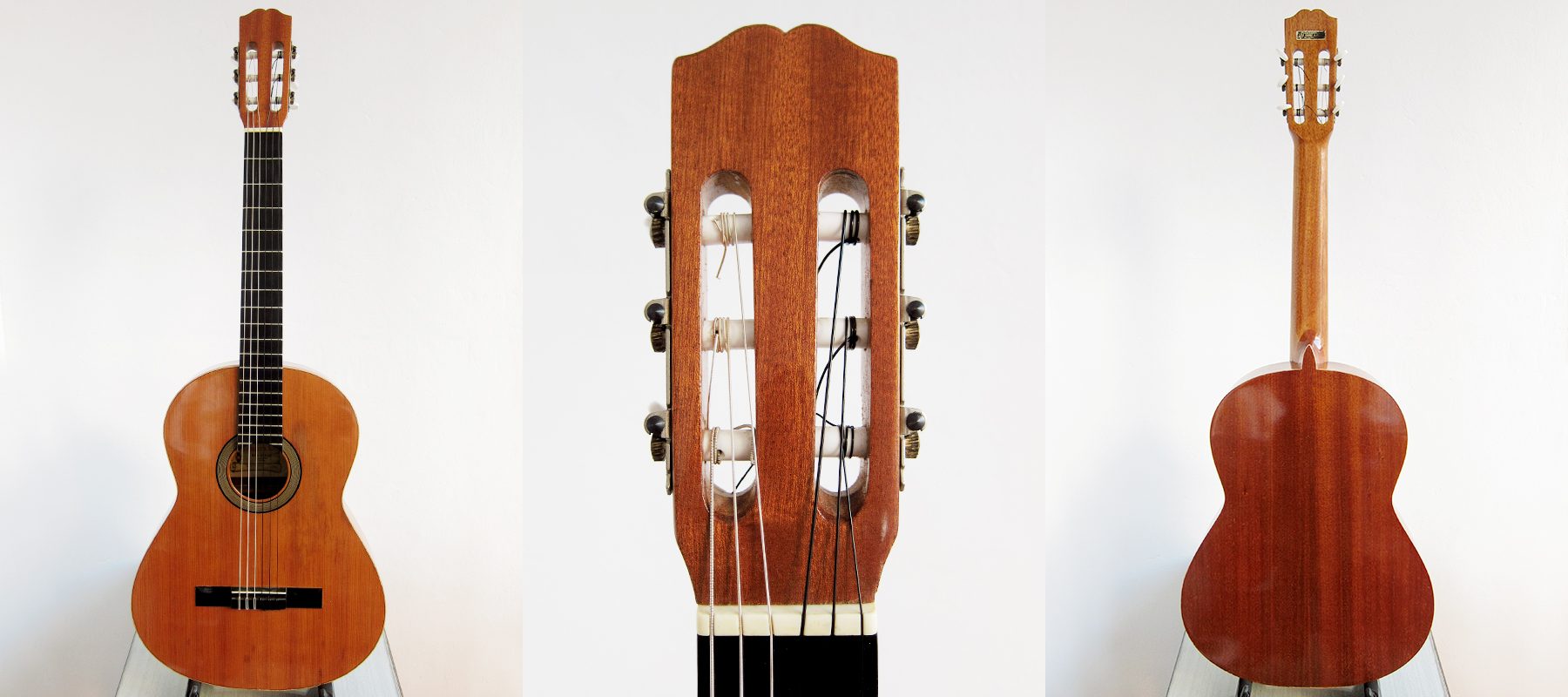
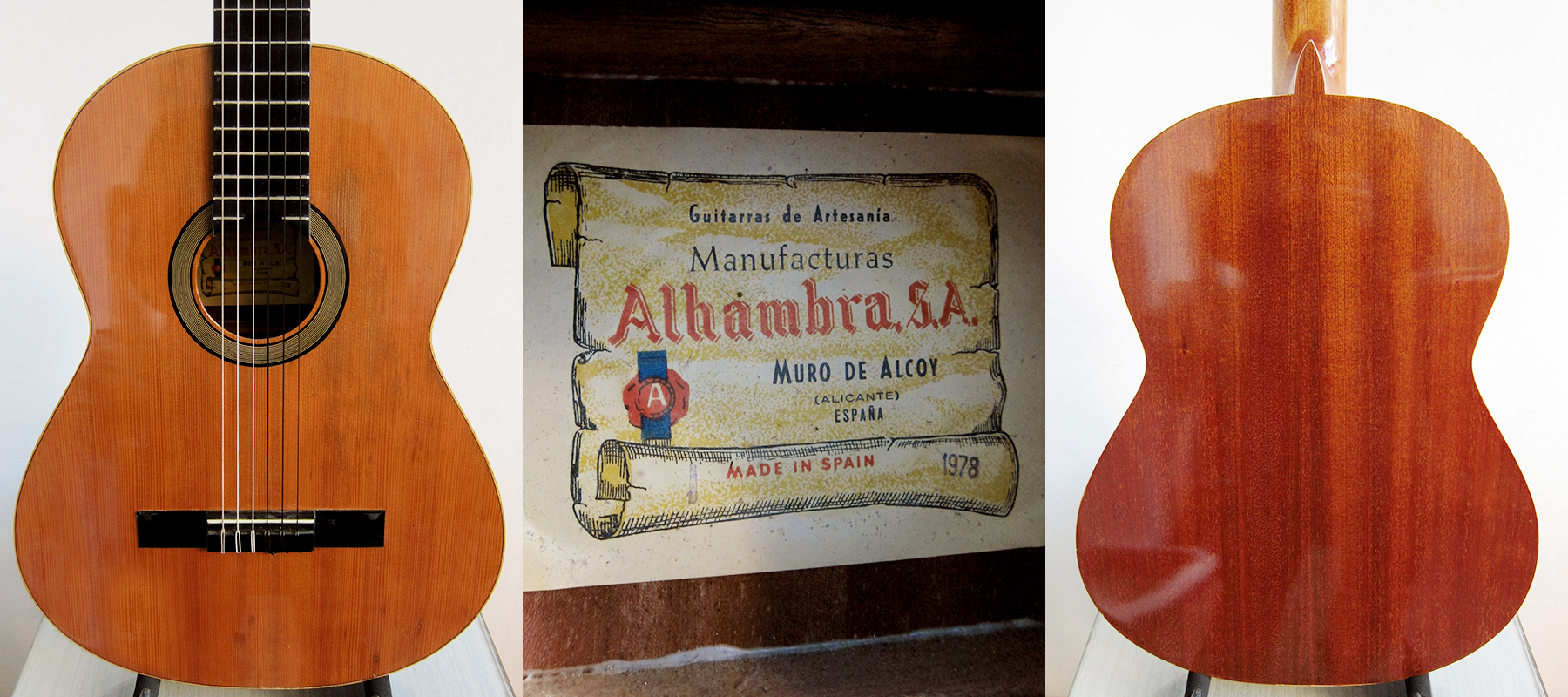
This beautiful old Alhambra arrived to the office yesterday. It’s a present for my father-in-law, Marcos. He picked up a guitar for the first time a couple of years ago when he was in his late Sixties, which proves that it’s never too late. Now he felt that he had outgrown his beginners guitar and wanted something else so Araceli and I bought this one for him. He really wanted an Alhambra, not only for their reputation but also because they are built in Muro de Alcoy, a small village in the mountains north of Alicante, not far from where Marcos grew up in Cartagena. The only problem is that the second hand markets for guitars in Spain is pretty bad and even worse in the South so his only option would have been to spend 700€ on a new one, the prices are quite high down there since there isn’t much competition. So we decided to help him out and found this fairly cheap from Germany on eBay. I wasn’t really sure what to expect, nowadays Alhambra is one of the worlds best and biggest guitar builders known for their great quality, but how were things 30-40 years ago? I had only played one once, a beat up Alhambra from 1976 that I found in a Cash Converter. It had a terrible belly and the bridge was coming off too but they still wanted 120€ for it and refused to lower the price since it was an Alhambra. These Seventies models doesn’t seem to have any model indications so it’s hard to know if a certain guitar was made for the tourists in the 1960-70’s or if it was made to be played properly. The machine heads, fretboard and frets are on the cheaper side but the wood is amazing and they have really great tone. So even if this was made fairly cheap for a tourist to bring back home to Germany they still knew how to build great guitars because the volume and tone is far better than on any modern Spanish guitar that I have played lately. I levelled the frets a bit, crowned them and softened the edges and then polished everything. I also sanded down the saddle since the action was a bit high but now it feels nice and plays really well, maybe not as nice as my Francisca Montserrat but still. Now we just have to wait and see what Marcos feels about his new guitar, hopefully he will like it as much as Araceli and I do.
The frets felt pretty uneven so I levelled, crowned and polished them and then sanded down the saddle a bit
The most beautiful Martin D-45 copies in the world, a 1976 K. Yairi YW-1000
I’m extremely happy with the two Morris I have and think that Terada is one of the better acoustic guitar builders in Japan. Having said that, I think everyone that is in to Japanese acoustics dream of owning a K. Yairi, at least I do. Unfortunately they are a bit too expensive for me, I’m sure they are worth it but you can get an old Martin, Gibson or Guild for that money. One thing that I really like with Yairi is that they use the year of the Emperor of Japan to determine the production year of their instruments, how awesome is that. See the list below.
http://youtu.be/ky56o9gBDR4 Good materials are hard to find so it’s better to make guitars through limited production by hand instead of mass production. Trees are very important “precious” things so we should make good use of them. Guitars made with “heart” are the best use of trees. Kazuo Yairi
When was my Yairi made? By reading the number stamped on the heel block of your Yairi, you can tell in which year it was made. The first two numbers correspond to the year of the Emperor of Japan at that time, see chart below. The second two numbers refer to the month of production. Taken from The Fellowship of Acoustics







 I finally found an old catalogue for it. It seems to be spruce top, nato back and sides and nato neck with rosewood fingerboard
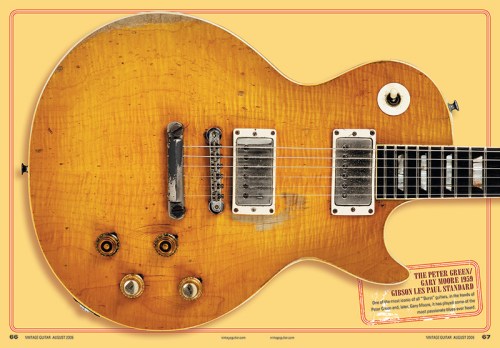 Peter Green 1959 Gibson Les Paul Standard


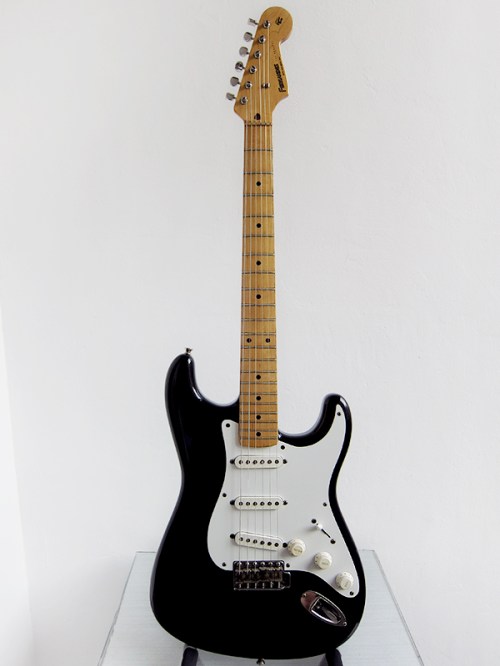


 Claescaster