Claescaster

Category: For sale

Hagström HIII

Hagström III Made in Sweden 1970Hagström HIII, Made in Sweden 1970

I found a Hagström HIII back in April that I felt really sorry for and had to rescue, or rather save it from being slaughtered and sold for parts by someone else. Unfortunately it wasn’t a bargain and I probably wouldn’t have bought it if I wasn’t drunk at time, I need to stop browsing eBay on Sunday evenings. It had all the parts but the fretboard and frets were in a terrible state and the electronics weren’t working properly, basically a nice guitar and worth the price if it was working. All the hardware cleaned up nicely, I love the Van Gent machine heads, a complete set tend to go for 100€ on their own, and it had the original tremolo, pickups and pickguard. I had to remove the old frets, even out the fretboard and then refret it to get it playable. After waiting for over a month I finally got the switch needed from Hong Kong here we are, a fully restored and working 1970 Hagström HIII. Even though I love the look and sound of this guitar I can’t seem to get used to the fast Hagström neck, the fastest neck in the world, and therefore it’s for sale.
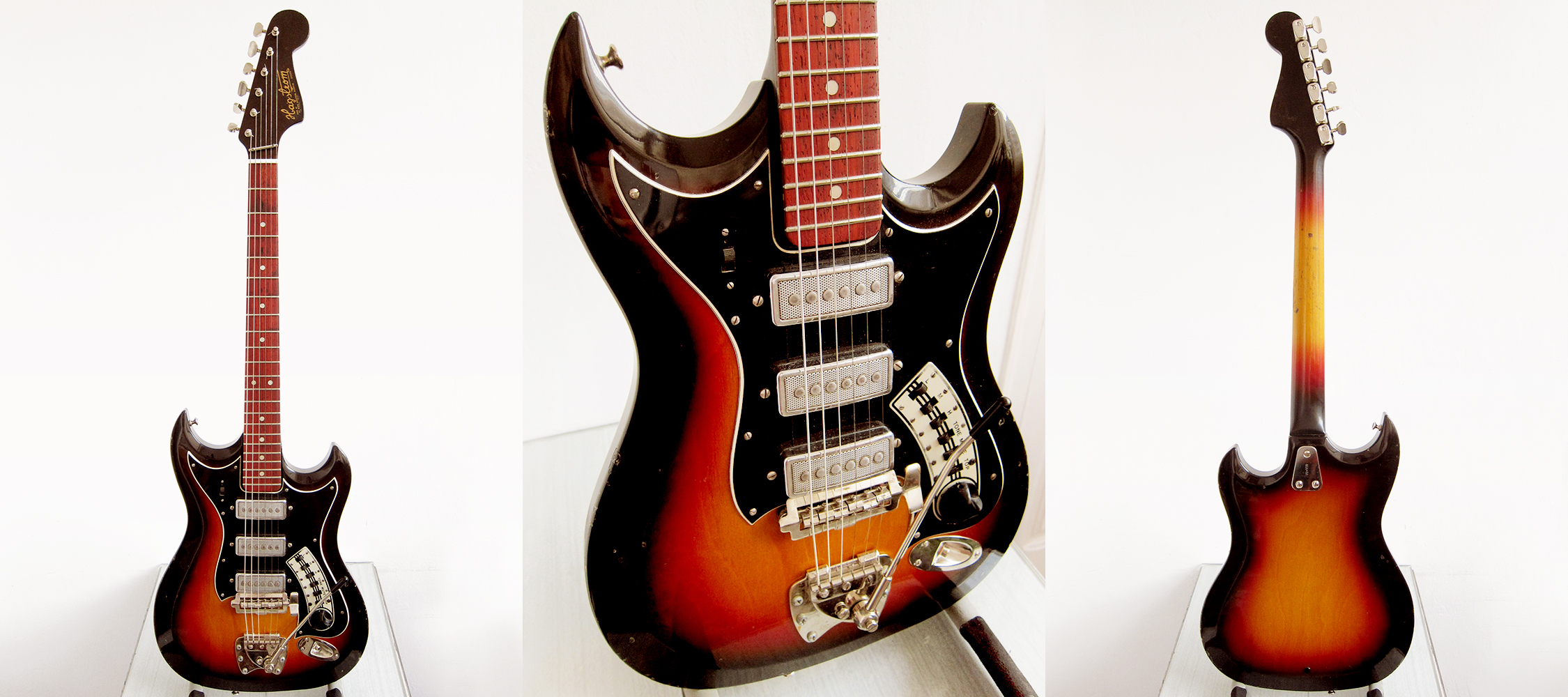
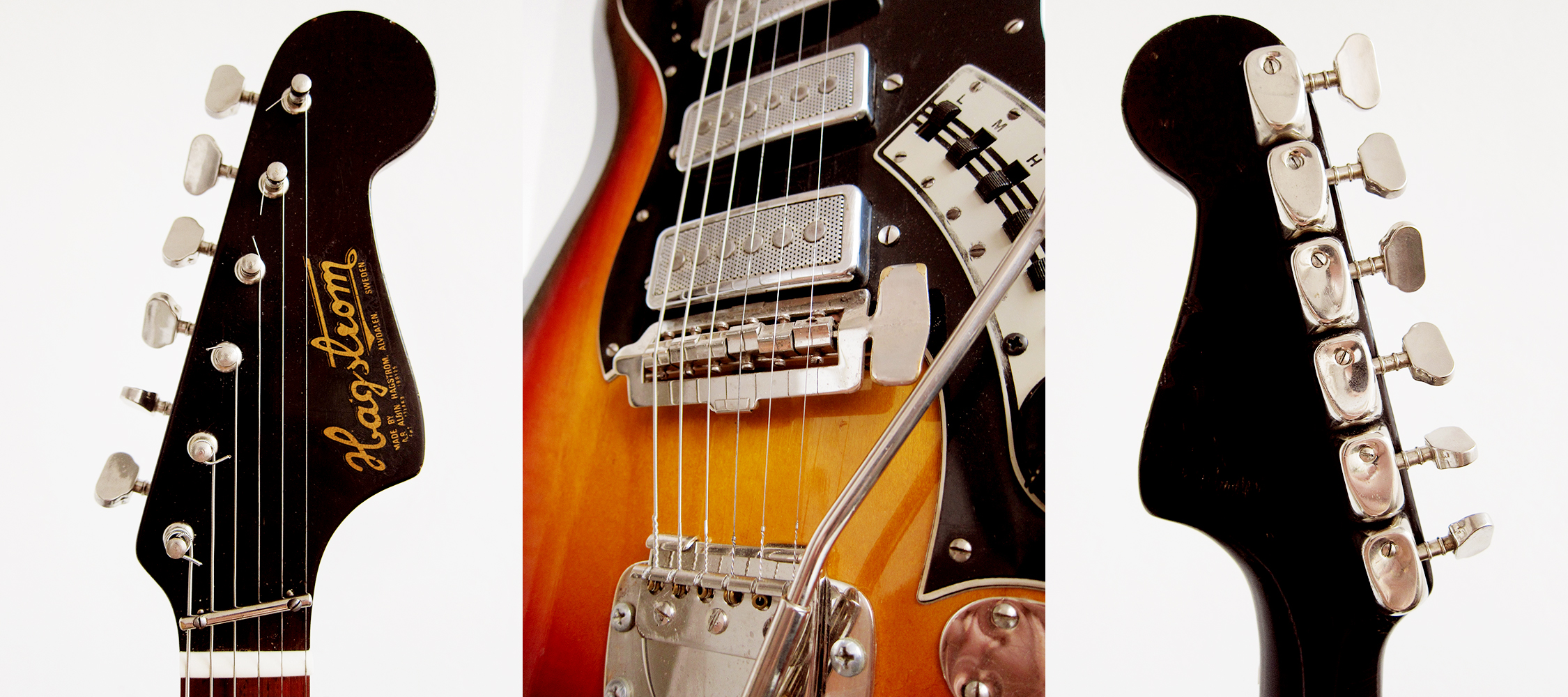
Hagström III Made in Sweden 1970Hagström III Made in Sweden 1970Hagström HIII made in Älvdalen, Sweden between 1970-1972. It’s the 491st HIII made in a series of totally 708 guitars, this was the last run ever of this model since it was replaced by the more 1970’s looking Hagström HIIN
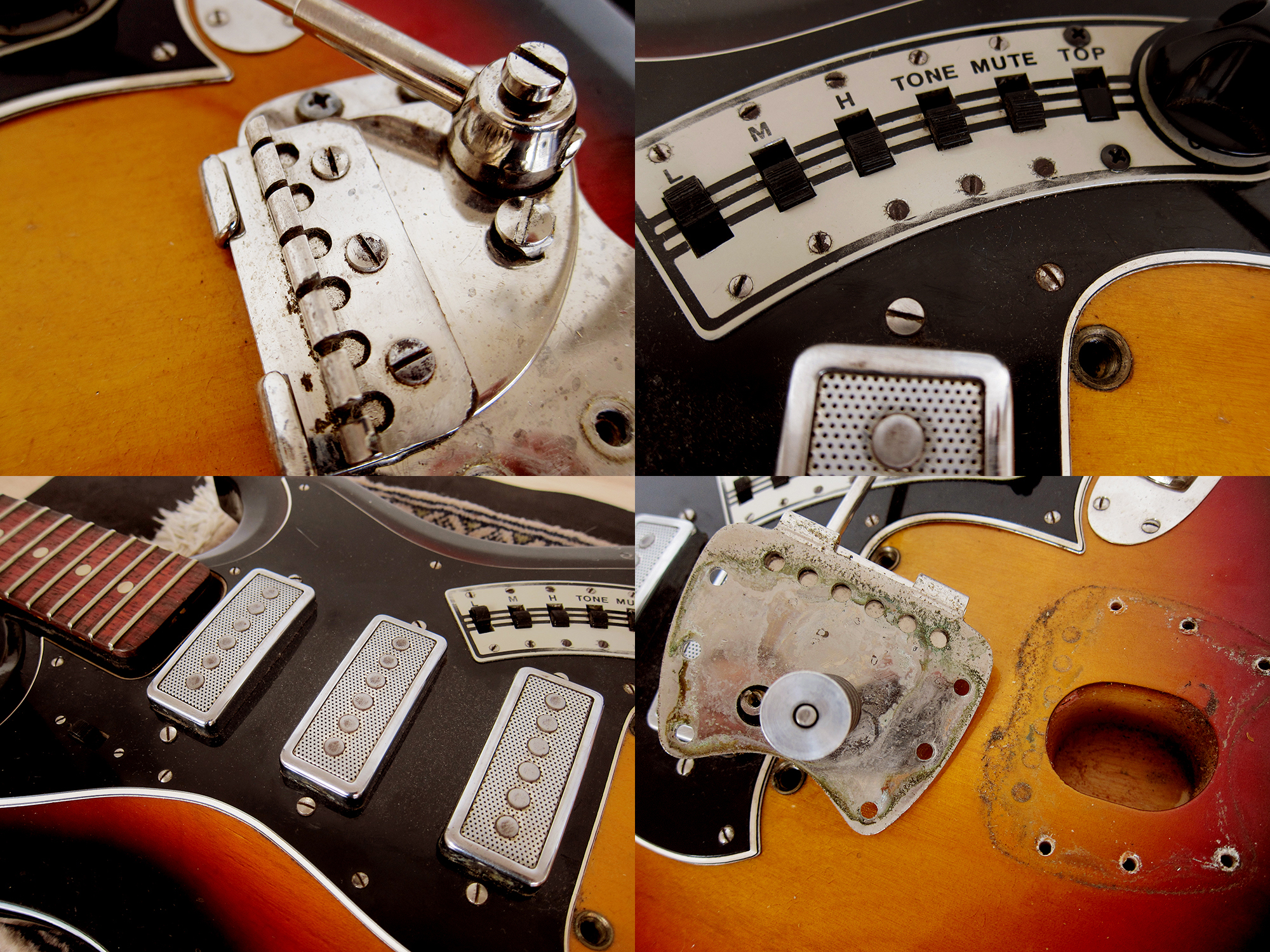
Hagström III Made in Sweden 1970I started with taking the guitar apart and cleaning everything with a toothbrush and some soap and then polish up all the hardware.
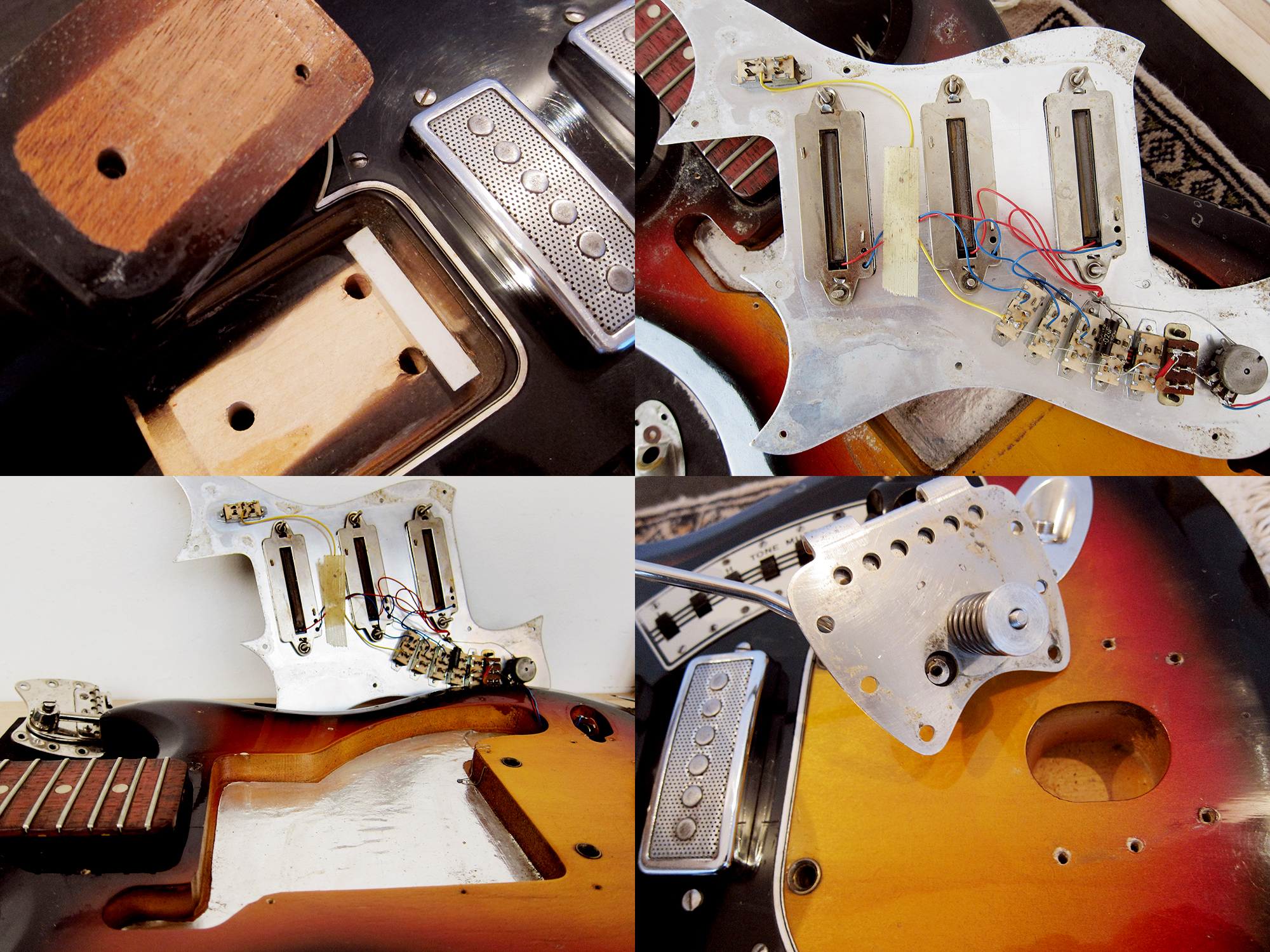
Hagström III Made in Sweden 1970The electronics was in fairly good state but needed to be grounded properly. Also the on/off wasn’t plugged in and the bridge pickup’s switch wasn’t working properly so I had to wait a month for a new one from Hong Kong. Now everything is soldered up properly and is working fine.
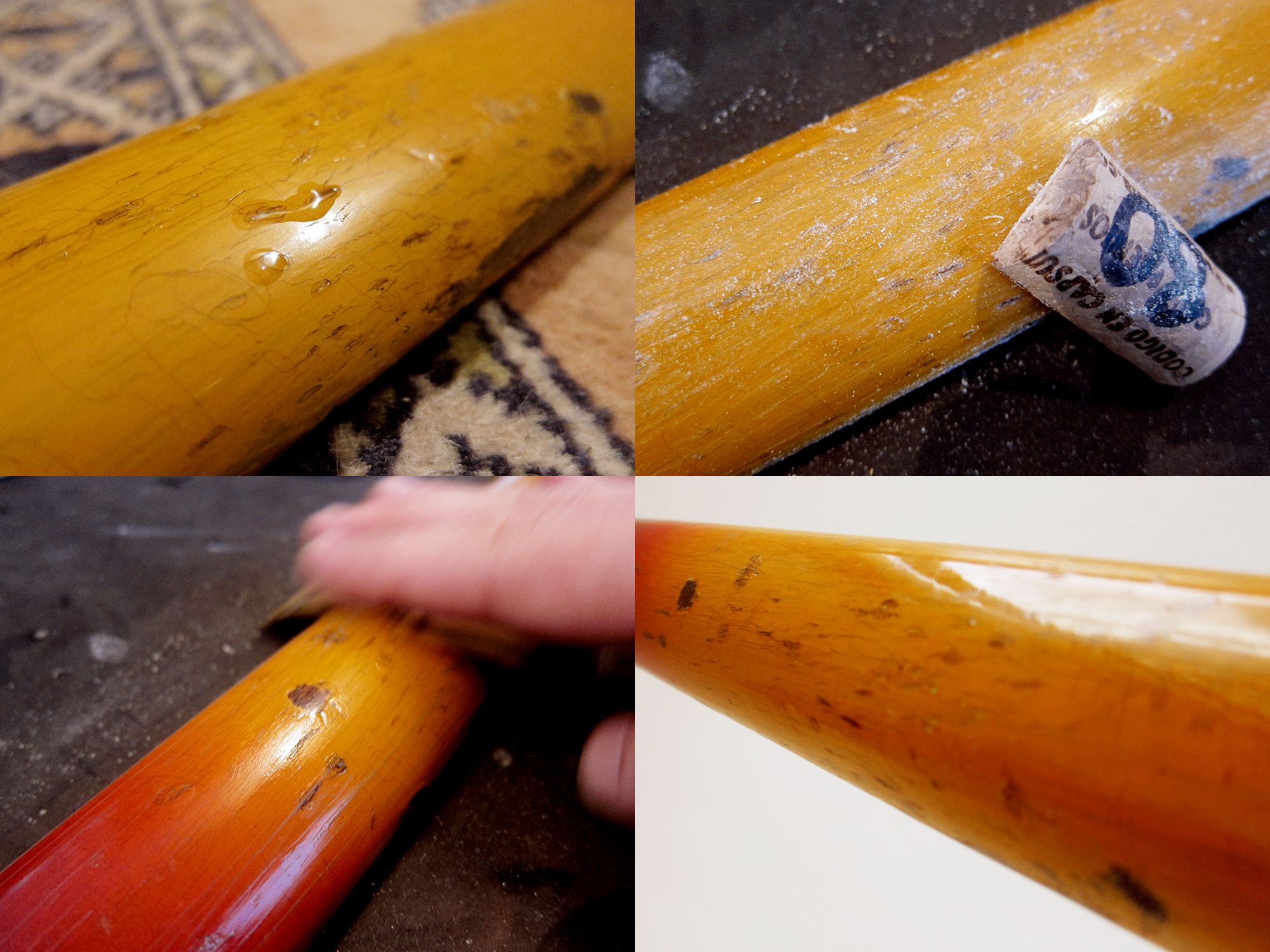
Hagström III Made in Sweden 1970The back of the neck was a mess, dents and groves everywhere so I filled them with Nitro and sanded everything smooth before I buffed it up with metal polish so now you can’t feel it.
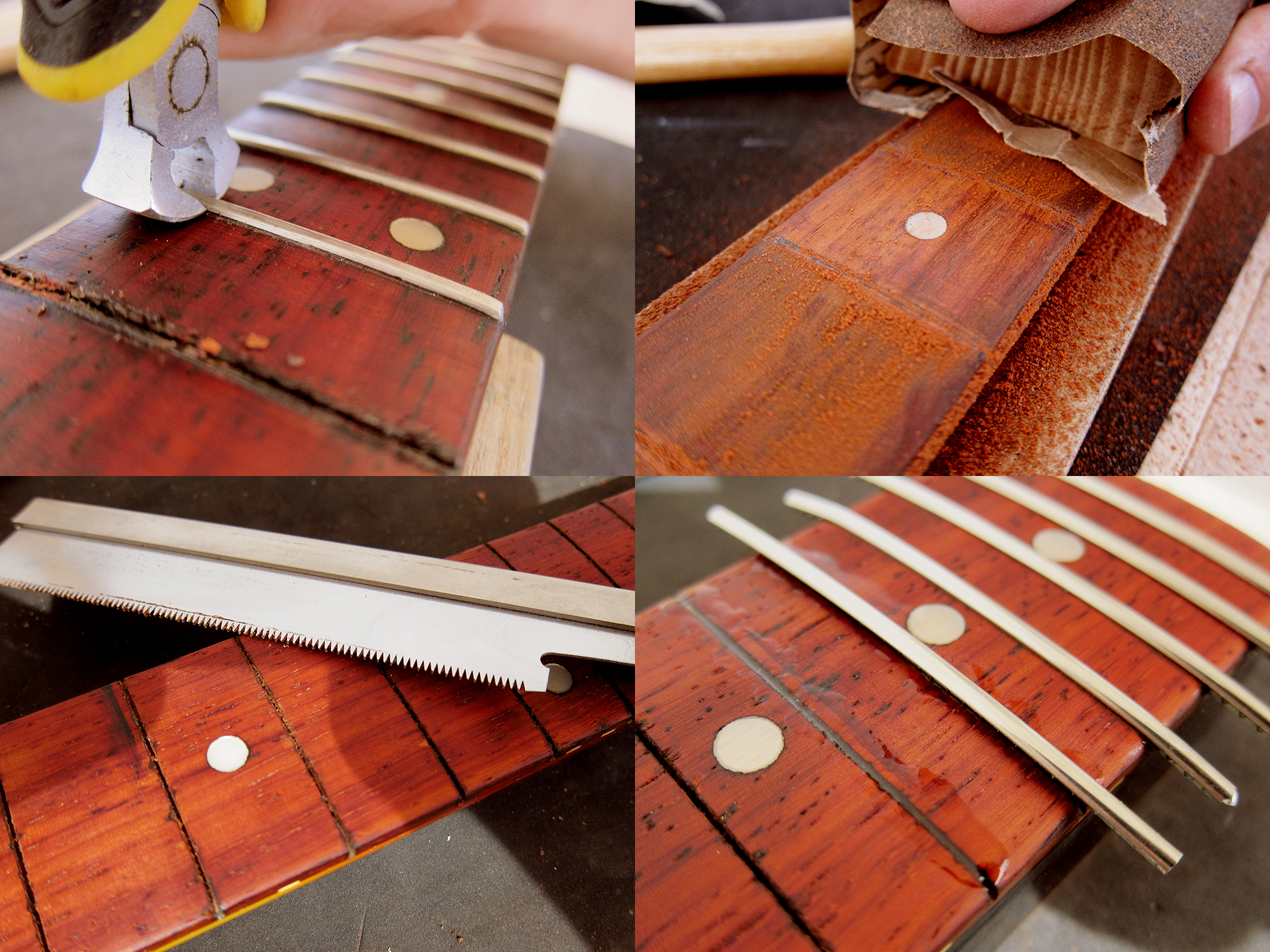
Hagström III Made in Sweden 1970The main problem with the fretboard was the deep groves in it, it almost looked like the first 5-7 frets had been scalloped. The original frets were really uneven too so I decided to refret it completely. I pulled out the old frets, sanded the fretboard even and then gave it 10″ radius before I re-cut the fret slots and installed new Jescar jumbos.
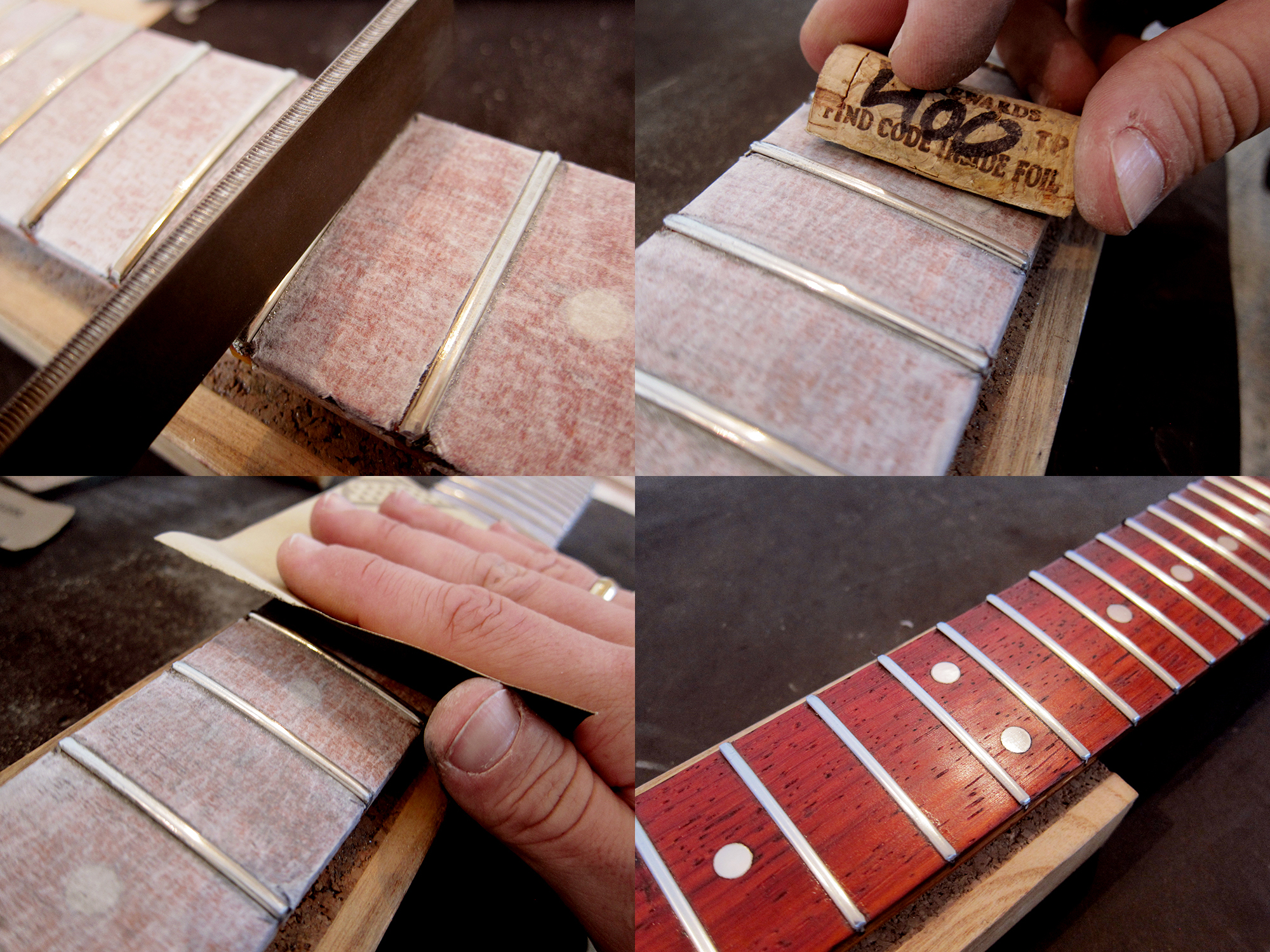
Hagström III Made in Sweden 1970I levelled, crowned and polished the frets and in the end the fretboard looked pretty damn good if I may say so myself.
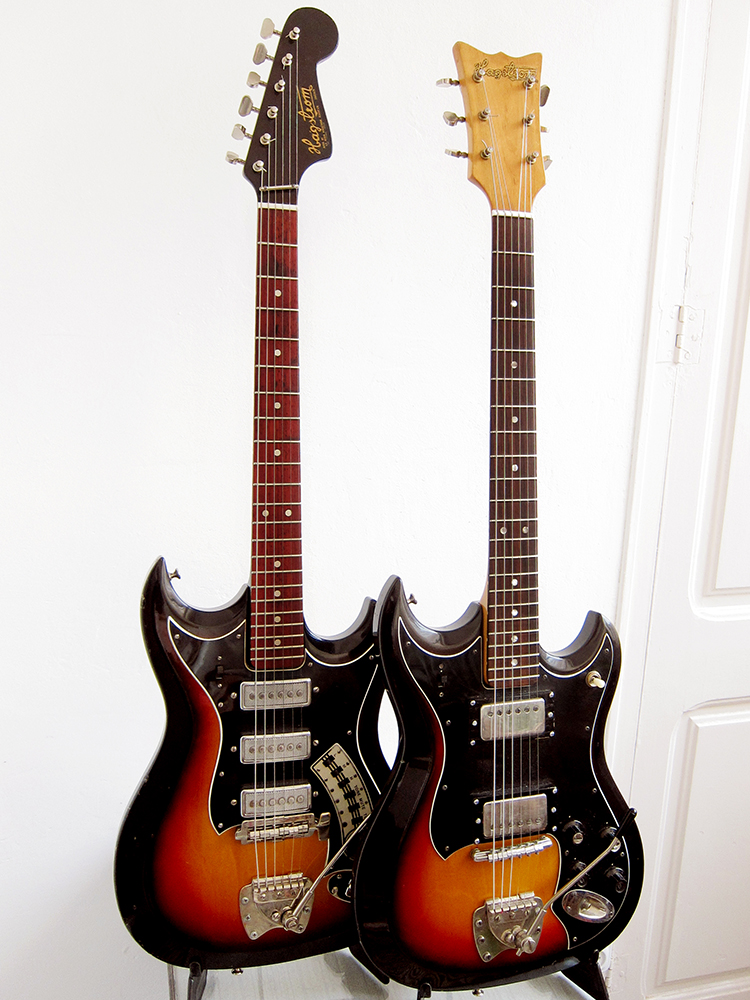
Hagström HIII and Hagström HII Made in Sweden 1970Hagström HIII and my friend Rafa’s Hagström HIIN, both Made in Sweden in 1970, same body but different pickups, electronics and head shape

This video was shot before I changed the bridge pickup’s switch so it’s cutting out occasionally, that has been sorted now with a new switch. I posted these two videos so you can here the difference between Hagström’s fat single coils and their humbuckers.

Here is a new video of the Hagström III with all the switches working, unfortunately my amp is acting up and is making hell of a noise

Tacoma Stratocaster

Tacoma Stratocaster Made in Japan 1970'sTacoma Stratocaster, made in Japan in the late 1970’s

I haven’t paid much attention to electric guitars lately but then I saw this beautiful looking Tacoma Stratocaster and I couldn’t resist. I actually had a natural wood coloured Japanese Westone Strat that I really liked but sold last year since the neck profile was a bit too flat for my liking. This Tacoma has a neck profile right up there with my Tokai Silver Star SS-36 and my Fender Stratocaster, both made in 1979. I got confused when I bought this Tacoma, the auction was ending and I didn’t have time to do my research. I really thought that Tacoma had something to do with Tama for some reason, but apparently not. The only thing related to Tacoma that I have found so far is that Wutzdog guitars in Germany has two Strats from the mid 1970’s for sale and neither match mine. Mine has a fancy pants real inlay logo on the headstock while theirs have printed logos but then at least one of theirs have grey bottom pickups which I wished mine had too, my Tokai Silver Star SS-36 has that and they sound awesome. This Tacoma has some weird looking brass plate in the bottom but that might good too, I haven’t had time to play this properly through my Fender amp yet. Either way I really like this guitar and the neck is just a pure joy to play.

Tacoma Stratocaster Made in Japan 1970'sTacoma Stratocaster Made in Japan 1970'sI assume the guitar is from the late 1970’s considering the big head and feel of it, but who knows, they might have made Fender copies in the early 1980’s too. There is an American guitar company called Tacoma but I doubt that they have anything to do with these old Japan made guitars. If anyone knows anything about Tacoma then please get in touch.

Tacoma Stratocaster Made in Japan 1970'sThe wood is in great shape and it has a nice weight to it. This is the first time I’ve seen single coils with those heavy brass plates.

Tacoma Stratocaster Made in Japan 1970's pickupsAfter a bit of research I’ve come to think that perhaps my Tacoma was made by FujiGen. The guitar on the left is a Yamaha Super r’n Roller SR-400 and what I gathered they were made by FujiGen in the 1970’s. The guitar in the middle is an early 1970’s Matsumoku built Univox Strat. On the right we have my Tacoma and even though all three looks very similar I still think that the Tacoma and the Yamaha has the most in common.


Rubenca, Zaragoza

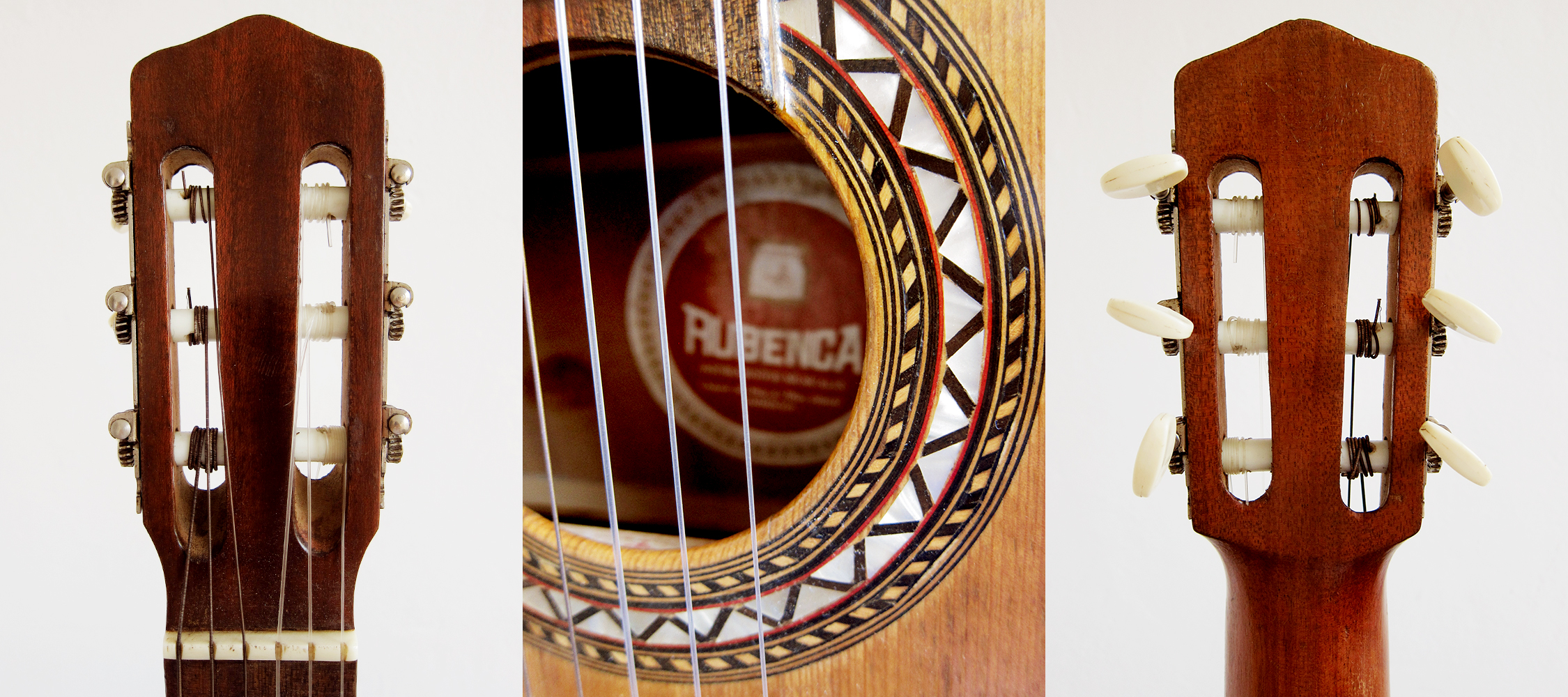
Rubenca Spanish Guitar Zaragoza 1960'sRubenca Spanish Guitar made in Zaragoza in the 1960’s

My guitar playing days started with electric guitars and I never really cared much for acoustics until I moved to Spain in 2010 and now acoustic guitars are my main passion in life. Another thing I never used to pay much attention to was Spanish guitars but after moving here I have occasionally come across some that I really liked, especially my Francisca Montserrat but also the Juan Estruch I got for my friend Rafa. This is one of them, a Rubenca Spanish guitar made in Zaragoza most likely in the 1960’s. The only info I found about the brand is that Rubenca is music store in Zaragoza that is still in business so I assume these guitars were made somewhere in the area and sold as their own brand, unless they made guitars themselves back then. Like most Spanish guitars from the 1960-70’s it has some parts that is way above what you expect, like all solid woods, how well they sound and especially the fancy mother of pearl inlays around the soundhole on this Rubenca. At the same time I’m always surprised how cheaply looking the fretboards tend to be, why they never bothered to smooth out the frets, why the braces seems to be cut with a freaking axe or why the machine heads never work after 50 years. I found this Rubenca when I was down in the south a couple of weeks ago to see my wife’s family. I bought it for the fancy inlays, I’ve never seen anything like that on a Spanish guitar before, but was straight away taken by the the sound and quality of the guitar. The original machine heads still work, the neck is straight and the action is still ok for a guitar that lacks trussrod. I actually didn’t have to do much more than to give it a good clean when I got it. This guitar is for sale, even though I like it a lot, but I can’t justify having more than one Spanish guitar since I hardly play them.

Rubenca Spanish Guitar Zaragoza 1960'sRubenca Spanish Guitar Zaragoza 1960'sThe Rubenca has it’s wear and tear, like a glued crack in the side, but still, the beautiful inlays and the patina makes it’s all worth it

Guitarras de artesanía, Artículos J.A.R.

Guitarras de artesanía, Artículos J.A.R. Mataró 1970'sGuitarras de artesanía, Artículos J.A.R. Spanish guitar made in Mataró outside Barcelona 1970’s

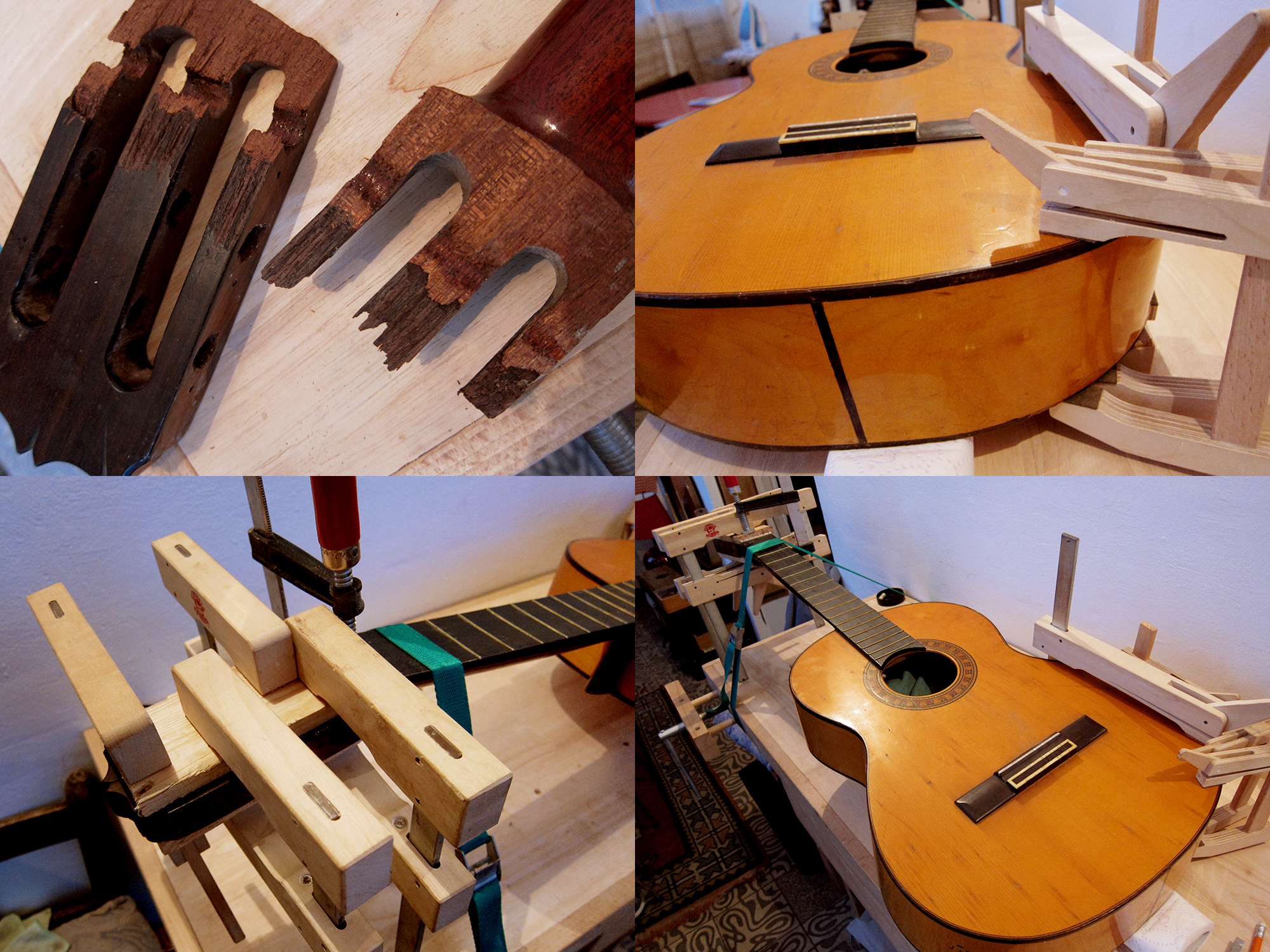
I found this guitar in a Cash converters last week and felt so sorry for it. It had a broken head, a cracked brace, loose back and looked so sad that I felt I had to save it and bring it back to life. A week later she is up and running and sounds pretty damn sweet.

Guitarras de artesanía, Artículos J.A.R. Mataró 1970's

I couldn’t find any info about the brand so if anyone knows anything more about it then please get in touch. It has a solid spruce top and what looks to me like solid maple back and sides. It says “Guitarras de artesanía” which should indicate hand crafted but I’m not sure, quality wise it feels pretty much like the Juan Estruch I got for my friend Rafa’s birthday. Perhaps all Spanish guitars were more or less hand crafted back then, the big business guitar factories hadn’t really kicked in yet. I have put this guitar up for sale since I mainly play steel string acoustic guitars and on top of that I have a Francisca Montserrat that I really like.

Guitarras de artesanía, Artículos J.A.R. Mataró 1970'sFirst I had to try to clean her up, I have never seen a top with that much grease and grime. I used a normal furniture spray and a toothbrush, it worked like a charm. When I had cleaned the fretboard I polished the frets and oiled up the fretboard with lemon oil. She came out looking pretty descent after that.

Guitarras de artesanía, Artículos J.A.R. Mataró 1970'sNow I just had to take care of the broken head and glue the back. I have actually never glued a head on before but I assumed that you do something like this. I used to thin pieces of wood on each side to stabilise it and keep things in place, and also for not damaging the head any further with the force of the clamps. I guess it could have worked with normal wood glue too but I used my trusty old fish glue that I use for pretty much everything when it comes to guitars. It came out looking very solid after being clamped for 48 hours. I also glued the open back and a cracked brace, which was pretty straight forward. The machine heads was broken on one side so I replaced them with the leftovers from the Juan Estruch I fixed last year. They don’t match exactly but at least they are from the same time and region, that’s close enough for me. Compared to the state I found her in I think she is looking pretty good. More images can be found here.

Guitars for sale

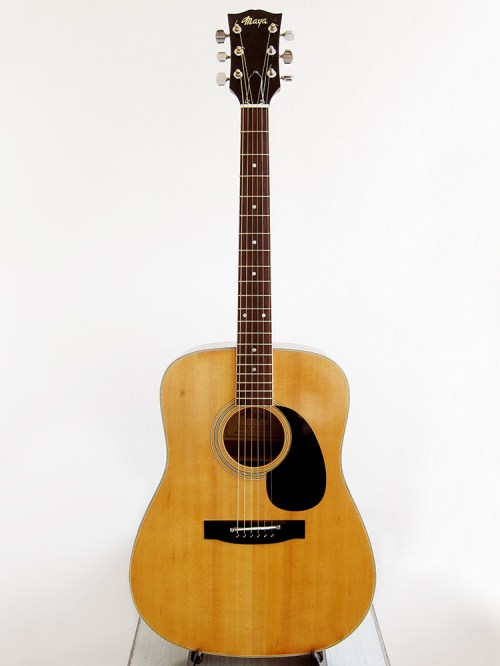
Maya F335G, Dreadnought, Made in Japan, 1970’sMaya F335G, Dreadnought acoustic, Made in Japan, 1970’s, 200€ SOLD
Japan made Gibson J-50 copy in a pretty good state for it’s age. I couple of marks on the spruce top and few knocks on the head but structurally very sound without any cracks. This Maya F334G was made by Chushin Gakki in Kobe, Japan, during the 1970’s. It has a really fat neck, it’s feels great to play, adjustable bridge with both bone nut and saddle. The sound is very full with a great booming bass. If you want more pictures  you can check the post I wrote about it.

There are a couple of more guitars for sale here

Suzuki Three-S F-120

Suzuki Three-S F-120 Made in Japan #780721
A really well kept Suzuki Three-S F-120. Built in 1978 by Suzuki Violin Co. LTD in Nagoya Japan.

I recently found another Suzuki Three-S F-120. These are great little Japanese built guitars that I can highly recommend. Really sweet tone and pretty descent build quality for being so inexpensive. Of course they can’t compare to Morris or K. Yairi but next to Aria, Maya, Shiro or the normally Suzuki’s they are great. It’s a simple Martin D-18 copy built in 1978 by Suzuki Violin Co. LTD in Nagoya Japan. What always surprises me with these Suzuki Three-S F-120 is how light they are compared to a lot of Japanese dreadnoughts from the 1970’s that can feel pretty heavy and bulky. Unfortunately this one was sold straight away so I only got time to fix it up and make a Youtube video of it before it was gone. If you want to know more about different Japanese guitar brands then check my previous post.

Suzuki Three-S F-120 Made in Japan #780721

Suzuki Three-S catalogue USA 1979
Suzuki Three-S F-120 in an old Japanese catalogue from 1979. It has spruce top, might actually be solid, with a laminated nato back and sides. Nato neck with a really dark rosewood fingerboard and bridge, it almost looks like ebony.

Levin Model 13 Ambassadör

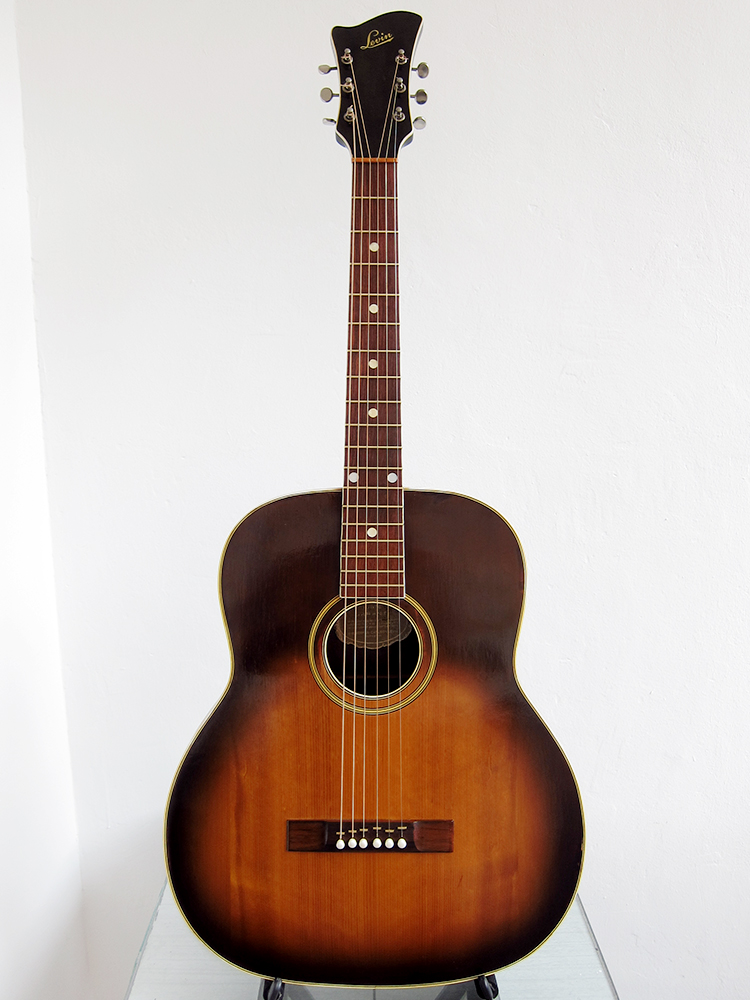
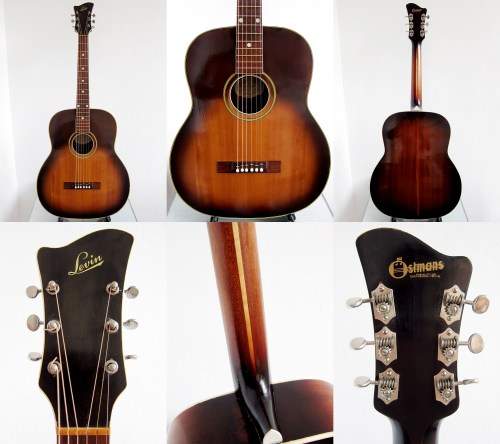
Levin Model 13 Ambassadör Made in Sweden 1950

I have decided to thin out my Levin collection a bit, I have 12 at the moment, so the first to go will be my beloved 1950 Levin Model 13 Ambassadör. It was restored a few years ago by GammelGura, a great luthier in Örnsköldsvik, Sweden. With new bronze frets, a neck re-set, cracks glued and a new bridge was created to improve the intonation, the rest is all original. It even has the sticker on the back of the head from the guitar shop in Örnsköldsvik where the guitar was bought 65 years ago. If you are interested in the guitar send me an email or give me a call, all info can be found on the For sale page.

Levin Model 13 Ambassadör Made in Sweden 1950

Levin Model 13 Ambassadör
Body width: 400 mm, body length: 480 mm, scale length: 640 mm
Spruce top, walnut back and sides, 4-ply bound top, single-bound back
Mahogany neck with non-adjustable T-shaped duraluminum truss rod
Single-bound rosewood fingerboard with 18 frets and pearloid dot inlay
Single-bound headstock, rosewood bridge, nickel plated individual tuners
Sunburst finish and 10 years warranty

Tanglewood TRP-73VSE

Tanglewood Rosewood Grand Reserve TRP-73VSE 2011

Tanglewood Grand Reserve TRP-73VSE, Parlour guitar 2011, 400€ 350€
Araceli and I have decided to put one of our Tanglewood’s up for sale and just keep her favourite Tanglewood Premier TW133. The Tanglewood Grand Reserve TRP-73VSE is a very beautiful and well sounding little parlour, especially plugged in, designed in the UK and hand built in China.  Solid Sitka spruce top and rosewood back and sides this model produces a great rich tone with brilliant resonance for a small bodied guitar especially with the superb onboard B-band A3 pickup system. Other features include quality gold Kluson style machine heads, maple and herringbone binding and a lovely vintage sunburst high gloss finish. TRP-73VSE RRP £399.00

Fender Telecaster Japan TL52-75

Fender Telecaster TL52-75, ’52 re-issue, Made in Japan
Fender Telecaster TL52-75, ’52 re-issue, Made in Japan by FujiGen between 1987-1989

In loving memory of Nancy, my Fender Telecaster TL52-75, that was sold last night. I miss her already but I’m glad she went to a good home. She lives in Zaragoza now with Juan and I’m sure she will get more love than I could ever give her. Two guitars have left me in the same week, I think I’m still in shock, sad but kind of happy at the same time.

Fender Japan TL52-75


Westone, Made in Japan

 Westone Stratocaster Made in Japan, Matsumoku 1979
Westone Stratocaster copy, made in Japan by Matsumoku in 1979

This weekend my Westone Stratocaster found a new owner. It felt kind of sad, I don’t normally miss guitars that I sell, well that’s I lie, I have missed all of the guitars I’ve sold but normally not this much. Oh well, I needed to make room for my new Tokai Silver Star SS-36 so it had to go. I have had two Westone guitars, a Strat and a Les Paul copy and I really liked both of them. Westone built Fender and Gibson copies in the late 1970’s before they started on their own heavy metal influenced creations of the 1980’s that owned the brand it’s name. You can read more about the brand Westone here. I have to say that the quality was pretty good for being a less known brand from the Matsumoku factory. I’ve always claimed that FujiGen was better than Matsumoku but I start to think that might have been more about when and not so much where. There was a huge change in Japanese guitars around 1975, not just the quality but perhaps more about how well they managed to copy the big American brands.Therfor a Greco guitar from 1978 would be better built than one from 1972, not just because the first was made by FujiGen but because it was made after 1975. You can read more about in my earlier post, Are all Japanese guitars good? I think what I would miss most of the Westone Strat is the Sen ash body, the wood was amazing and without any doubt the heaviest and most solid Strat I have ever seen with a fantastic sustain. The pickups were pretty great too, not Grey Bobbin pickups like on my Tokai Silver Star SS-36, but still, pretty sweet sounding. The pickups were pretty great in the Westone Les Paul too, maybe there was something special about these late 1970’s Matsumoku built Westone guitars.

Westone Les Paul, Made in Japan, Matsumoku 1970's
Westone Les Paul copy, made in Japan by Matsumoku in 1970’s

Matsumoku
Matsumoku is one of the Japanese manufacturers that did not survive long after the heyday of the 1970’s guitar market despite having a long tradition of quality stringed instrument craftsmanship. Matsumoku produced guitars for major manufacturers Greco, Guyatone and Yamaha. Matsumoku made Arai, Aria, Aria Pro II and Aria Diamond badges, with Aria being their primary badge for a majority of this time frame. Badged guitars known to have been made by Matsumoku include Apollo, Arita, Barclay, Burny, Capri, Columbus, Conrad, Cortez (electrics only), Country, Cutler, Dia, Domino, Electra, Epiphone, Granada, Hi Lo, Howard, Ibanez, Lindberg, Lyle, Luxor, Maxitone (this guitar differs from Tama’s Maxitone badge), Mayfair, Memphis, Montclair, Pan, Pearl (electrics only), Raven, Stewart, Tempo, Univox ,Vantage, Ventura, Vision, Volhox, Washburn (in 1979 and 1980), Westbury, Westminster and Westone. Possible Matsumoku badges include: Bruno, Crestwood, Conqueror, Eros, Mako, Memphis, Orlando and Toledo. Taken from my previous post about Japanese guitar brands