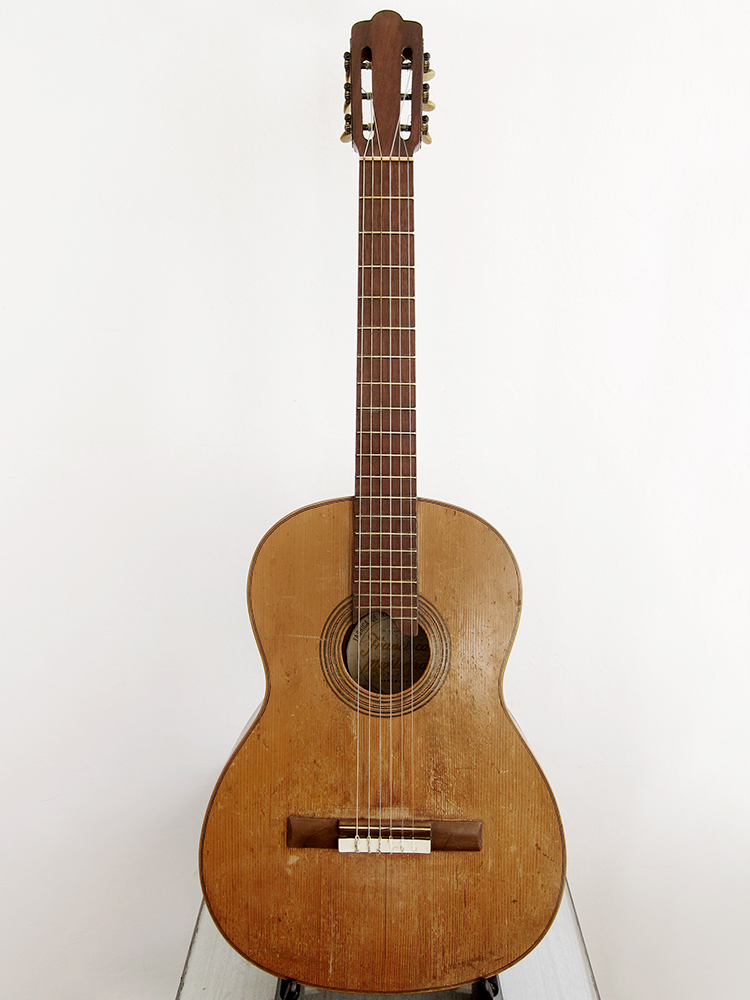
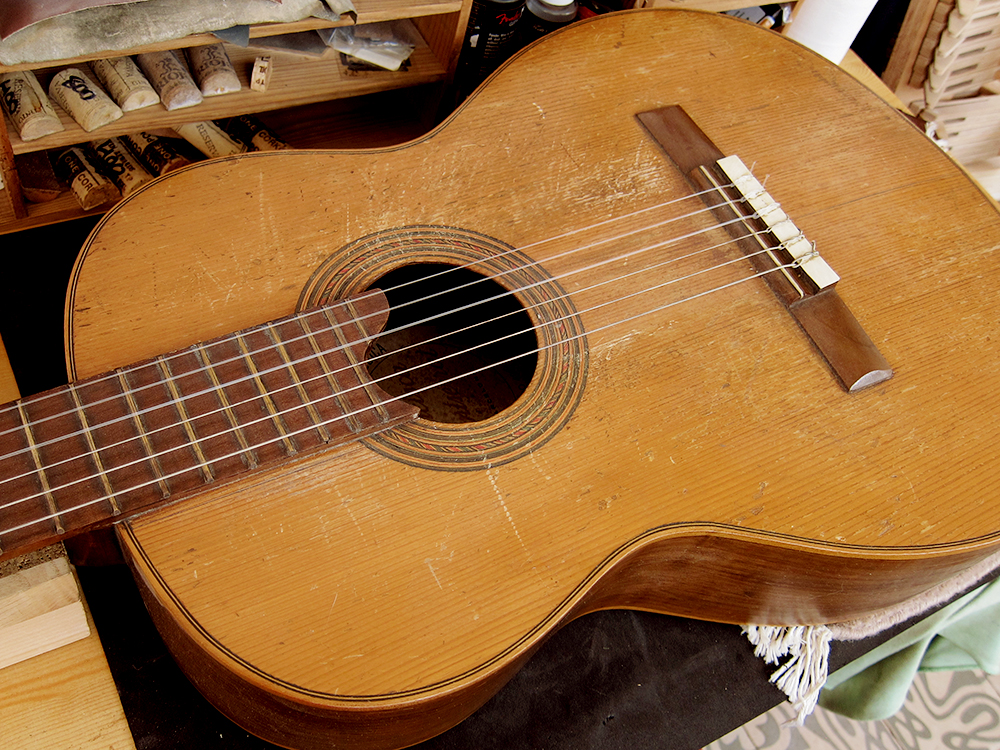
I recently reglued the bridge on my Francisca Montserrat and just wanted to show how easy it is if anyone out there feels a bit scared of doing it yourself. It’s very straight forward and only takes a couple of minutes.
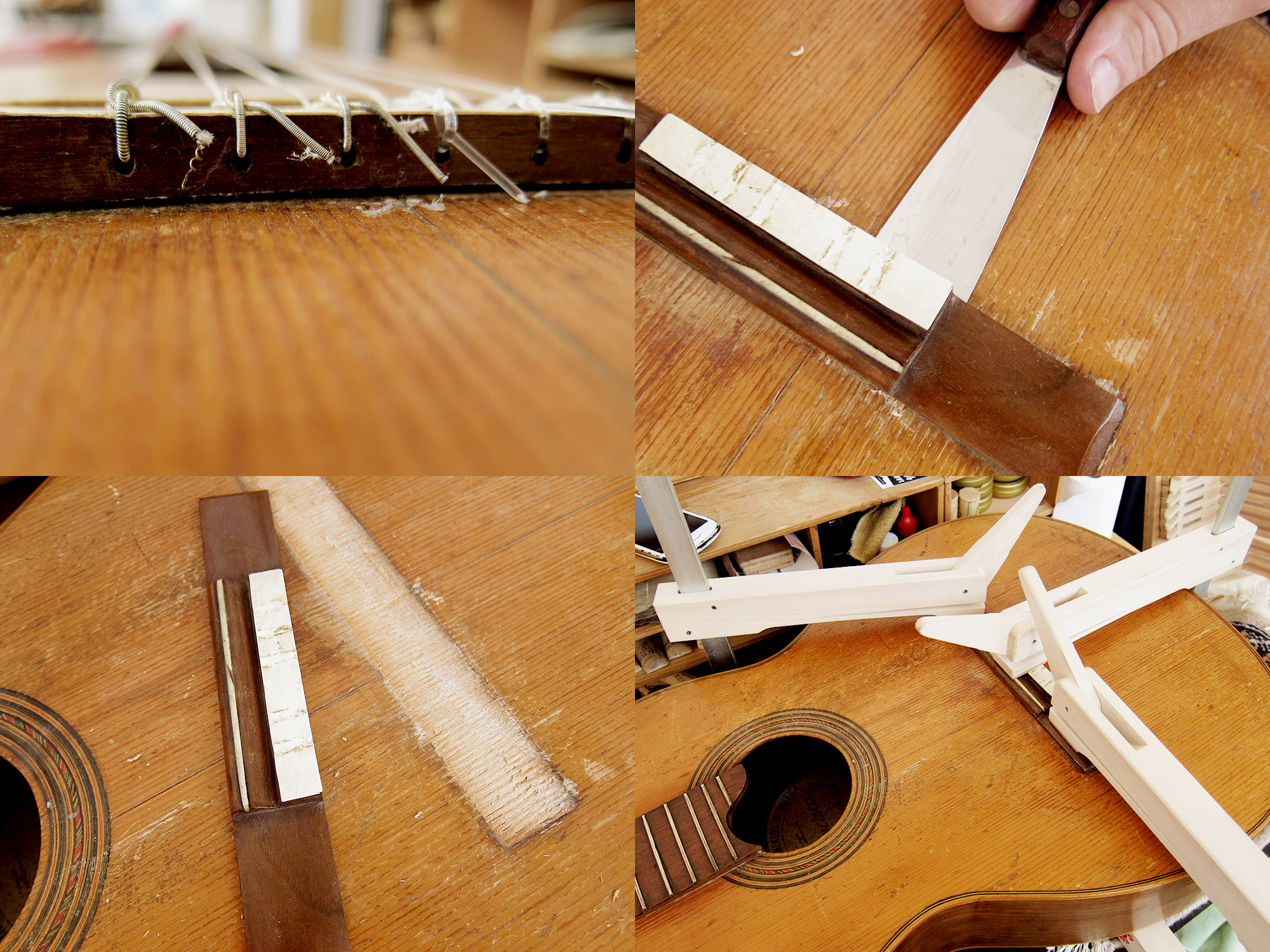
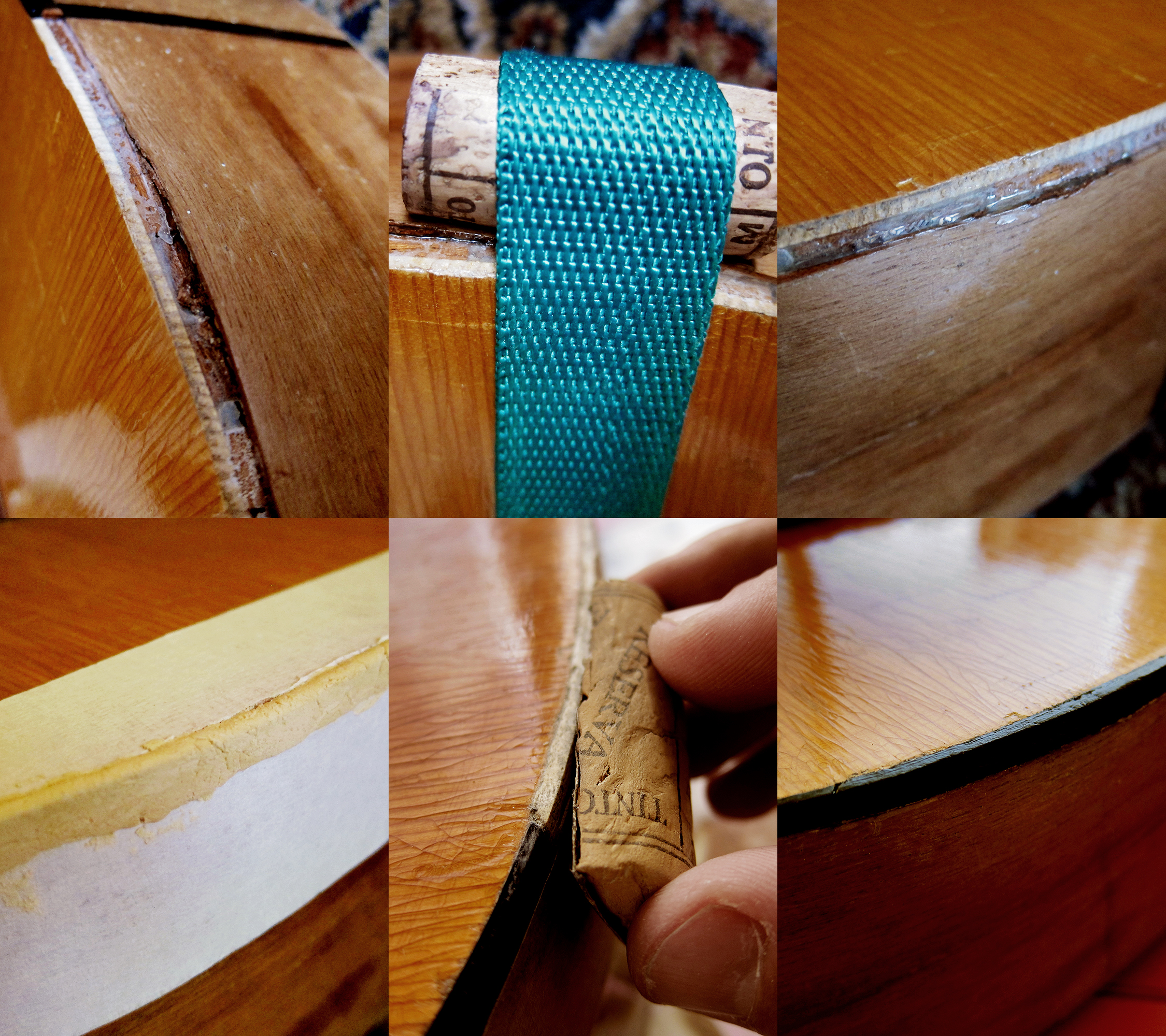
Heat a spatula on a normal clothes iron, it’s good to keep a finger on it so it doesn’t get too hot and scorch the lacquer. Insert the spatula under the bridge, start with the edges and work your way to the middle to loosen the bridge. I prefer to reheat often instead of working with a really hot spatula from the start, less risk of damaging the top that way. Be careful when you do the last push so you don’t break it off, it’s supposed to come off without any direct force if the spatula is warm enough to loosen the glue. Once the bridge is off, clean the guitar top and the bottom of the bridge with some sandpaper to get a smooth surface. I earlier thought that it was good to scratch the bottom of the bridge with a knife to get something for the glue to grip to but have later been told that’s an old myth and it’s better to keep the surfaces smooth. Apply plenty of glue on both the guitar top and the bottom of the bridge, I always use fish glue for my guitars. Put the bridge in place, apply some pressure with your hands and remove all the extra glue that comes out on the side and then apply a couple of clamps to keep it in place over night. I recently got myself a couple of deep throated, 200 x 195 mm, Klemmsia clamps from German eBay that worked great.
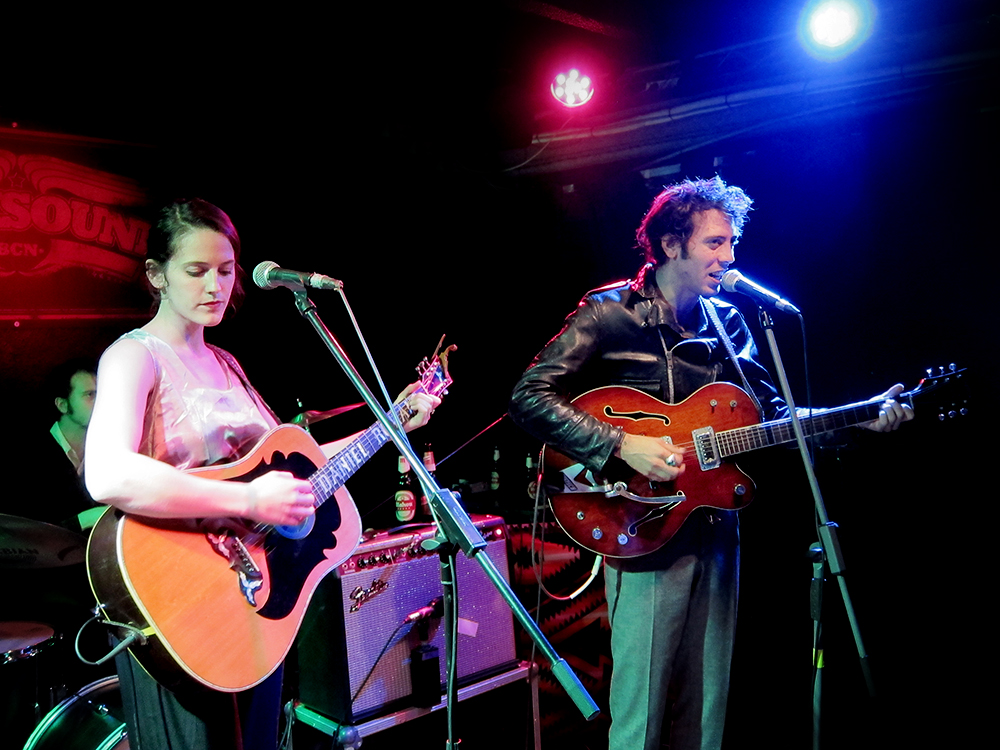
Daniel Romano last night in Sala Rocksound Barcelona
Araceli and I finally got to see Daniel Romano last night. It was my wife’s birthday so it was a pretty good ending to her special day. The gig was great, the sound was good and the band was awesome live. The only let down was perhaps that Daniel Roman wasn’t wearing his awesome cowboy suit, but what can you do on a Tuesday in small venue in the north of Spain after a long European tour. I got a chance to say hi to him after the gig and managed to ask the question that has been nagging me since the first time I heard him. What Gibson model is his awesome sounding acoustic, the one with the Daniel Romano inlays over the freatboard? My guess was a re-issue Gospel and it turned out I was right, it’s a 1995 Gibson Gospel.
I have a couple of more guitars for sale now so if you’re interested or have any questions just send me an email claesgellerbrink@gmail.com or give me a call 639586158.
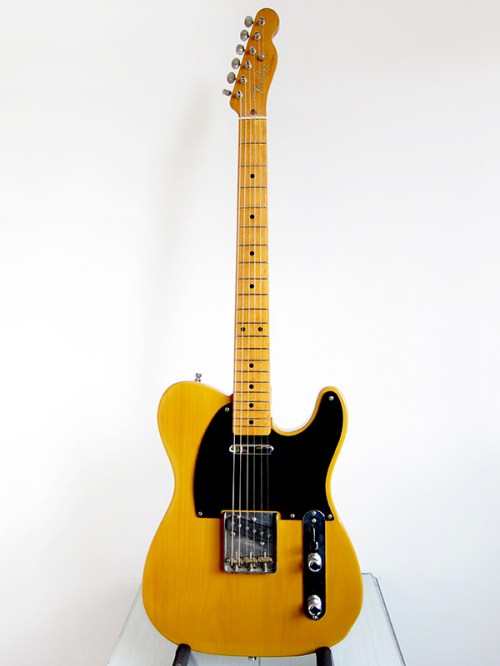
Hohner Telecaster, Made in Japan, Moridaira factory, 1970’s, 500€ SOLD A great Telecaster copy in a good shape for age but with some dings to the bottom of the body. Frets are in great condition and there isn’t a single mark on the back of the neck. It’s a pretty heavy Telecaster with great sustain and nice feel to it. The pickups sounds awesome and everything is working fine, all original except for the 3-way switch that wasn’t working properly so I replaced it with a new one. Really fast and smooth neck, lovely to play. A great sounding guitar with amazing sustain and great Japanese build quality. Made in Japan by Morris in the Moridaira factory, where H.S. Anderson made the Mad Cats that Prince uses. You can read more about the guitar here and here is a Youtube clip.
VOX Les Paul, Made in Japan, 1970’s, 350€ SOLD This is the first Japan made VOX guitar I’ve found in Spain. It’s a pretty decent copy of a 1958′ Les Paul with a great feeling fat neck and narrow head. The body has a lovely grain and the guitar is in pretty good shape for the age with a couple scratches and a few dents. Frets show some wear but are still fine and everything is working perfectly. The humbuckers have a nice tone too them, not too heavy or muffled. A pretty versatile and nice guitar to play with great Japanese build quality. You can read more about the guitar here and here is a Youtube clip.
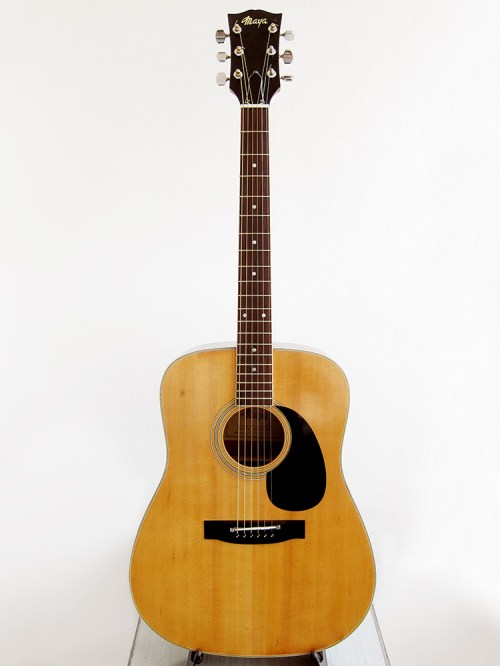
Maya F335G, Dreadnought acoustic, Made in Japan, 1970’s, 250€ SOLD Japan made Gibson J-50 copy in a pretty good state for it’s age. I couple of marks on the spruce top and few knocks on the head but structurally very sound without any cracks. This Maya F334G was made by Chushin Gakki in Kobe, Japan, during the 1970’s. It has a really fat neck, it’s feels great to play, adjustable bridge with both bone nut and saddle. The sound is very full with a great booming bass, you can listen to it here. If you want more pictures you can check the post I wrote about it.
Fender Telecaster TL52-75, ’52 re-issue Made in Japan, FujiGen 1987-1989. 900€ SOLD In mint condition, all original, without any doubts the best Telecaster I have ever played. Imported straight from Japan. The only reason for selling is because I prefer fat 70’s necks. There is no way to find the production year of these A-serial Telecaster with the serial number on the bridge plate. However, it must have been made between 1987 and 1989 since it’s a TL52-75. They were called TL52-70 between 1984-1986 and then changed to TL52-700 in 1990. You can read more about the guitar here and listen to it in this Youtube clip.
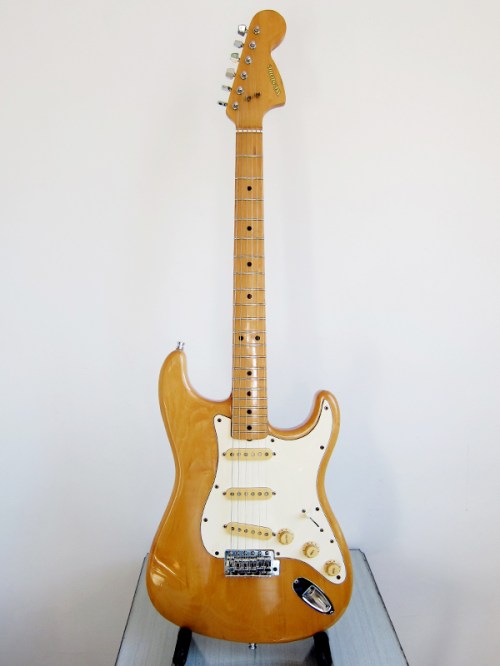
Westone Stratocaster, Made in Japan, Matsumoku factory, 1979, 400€ SOLD An amazing Stratocaster copy from 1979 made in Japan by Matsumoku. In really good shape for age but with some dings and scratches to the body. Frets are in great condition and there isn’t a single mark on the back of the neck. The wood in the body is amazing, without any doubt the heaviest and most solid Strat I have ever seen with fantastic sustain. Really nice tone in the pickups and everything is working fine, the original 3-way switch has been replaced with an Oak Grigsby 5-way switch. Really fast and smooth neck, lovely to play. A great sounding guitar with amazing sustain and great Japanese build quality.Here is some more info about the Westone brand. Here is a Youtube clip with the guitar.
On Saturday I found myself a Maya F335G. As mentioned before, I’ve been after a Gibson J-45 or J-50 for quite a while so when I saw this Japan made Gibson J-50 copy I couldn’t resist. It was in a terrible state and strung with 4 nylon strings so I couldn’t test it but I trusted my gut feeling. It doesn’t sound like a Gibson J-50, I didn’t really expect it too either, but it does sound pretty good. I would say that it sounds better than the two Suzuki’s I used to have, the Kiso Suzuki WE-150 and Suzuki Three-S F-120, even though the build quality is pretty much the same. There is a huge step up to my Morris WL-35 and Morris W-40 and my beloved K.Yairi TG-40, both in build quality and sound. Having said that, there is something with this Maya that I really like, it has way more bass then the Suzuki’s and overall a pretty nice and full sound. The only downside is that it feels pretty stiff to play so I will probably put 011’s on it next time I change the strings. According to my previous post about Japanese guitar brands Maya was made by Chushin Gakki in Kobe, Japan, during the 1970-80’s. Even though I really like this guitar I have it listed for sale if anyone is interested in buying it.
Maya F335G made by Chushin Gakki in Kobe, Japan
The previous owner had used a collection of random oversized wood screws to keep the machine heads in place so the first thing I did was to remove them and fill the holes. I polished the frets and oiled the super dry fretboard and then put on a bone nut and saddle which improved the tone quite a lot.
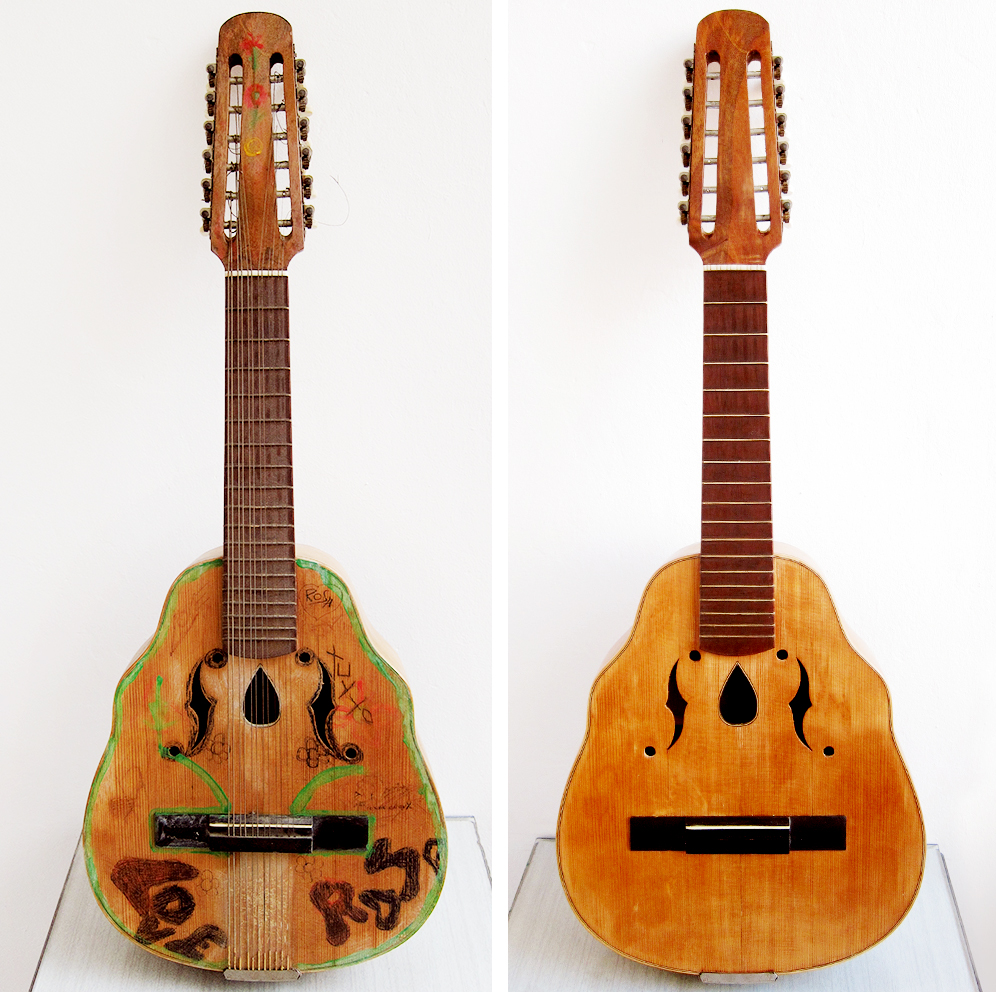
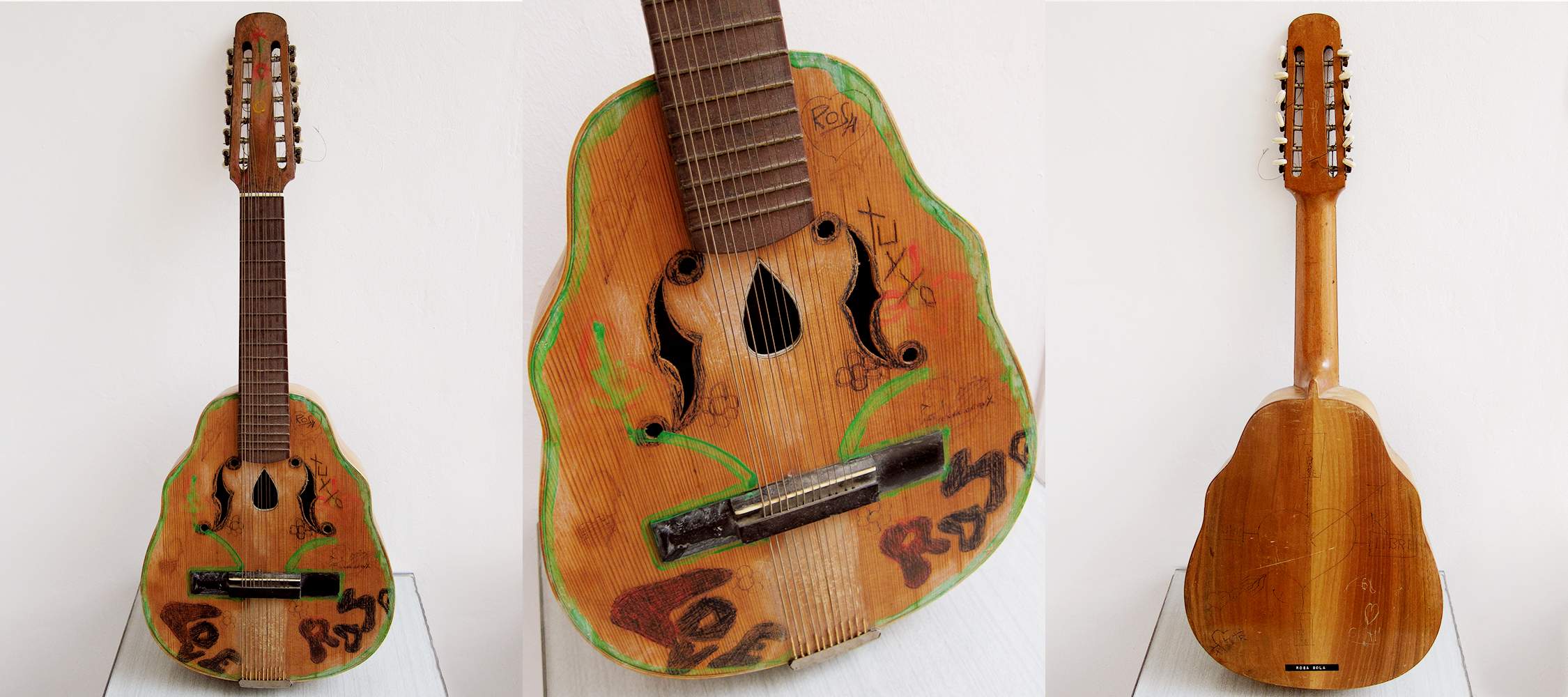
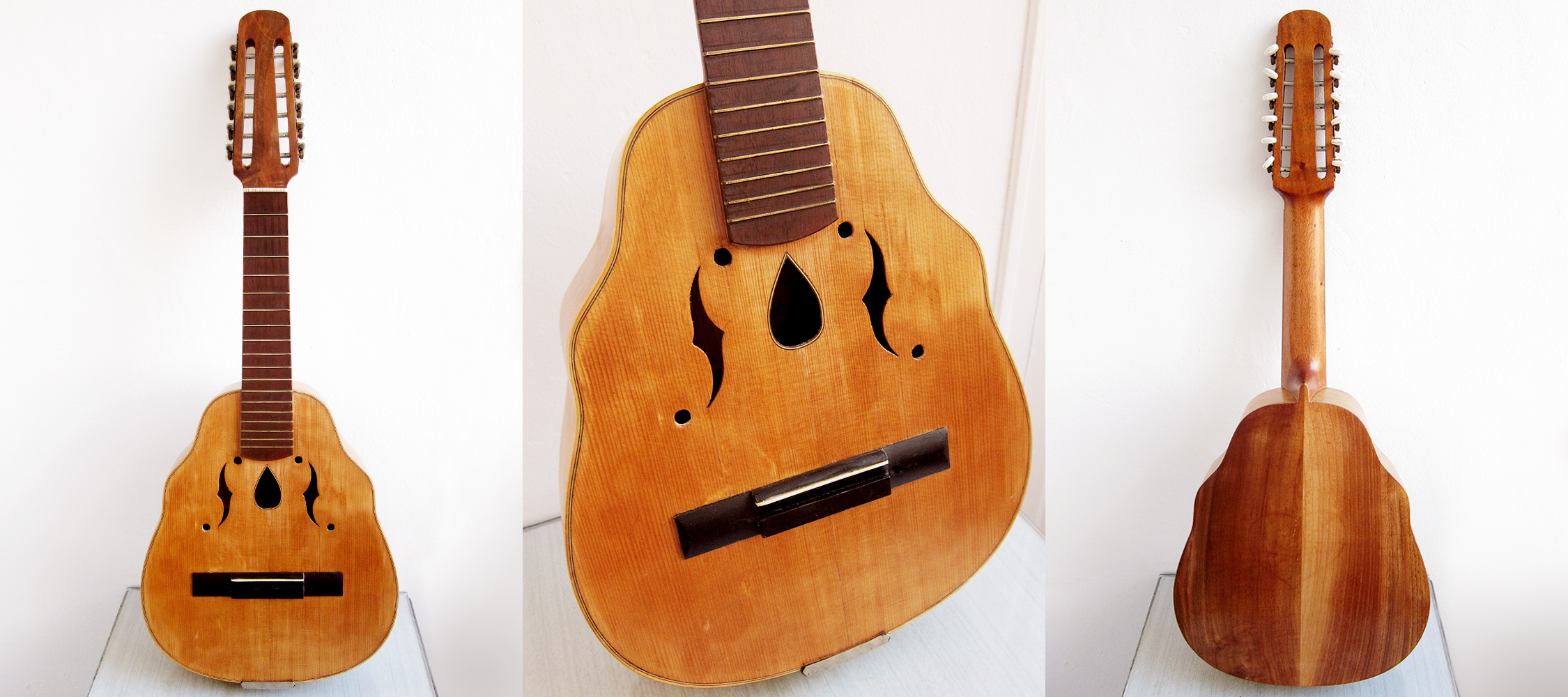
Before and after, a Spanish Laúd, made by Casa Parramon, Barcelona
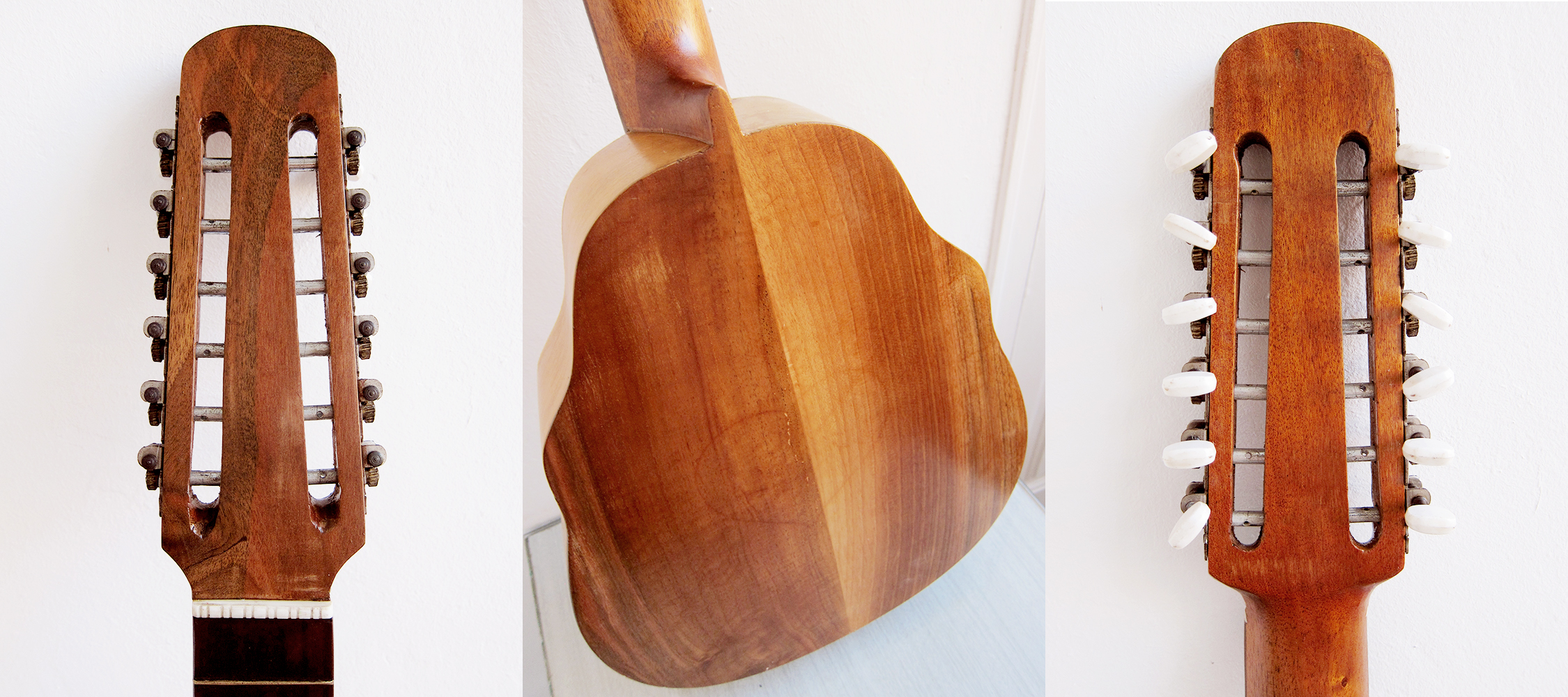
When Araceli and I first moved to Barcelona we found this Laúd in the streets, we took it home, put it in the back of a wardrobe and completely forgot about it for four years. It was so ugly so we couldn’t have it out, on top of that we didn’t even know if it was a laúd, a bandurria or some other weird Spanish instrument. It was therefore tucked away and quickly forgotten. Until recently when Araceli’s dad Marcos mentioned that he wanted to learn to play a new string instrument, or as he put it, I need something new to make noise on. We suddenly remembered that ugly thing with strings on in the wardrobe and I thought that maybe I could restore it for him. I mentioned earlier that we managed to find a really nice Spanish made Alhambra from the late 1970’s that we gave him for Christmas.
Someone called Rosa Sola had gone crazy bananas, full blown hippie on this poor laúd when we found it
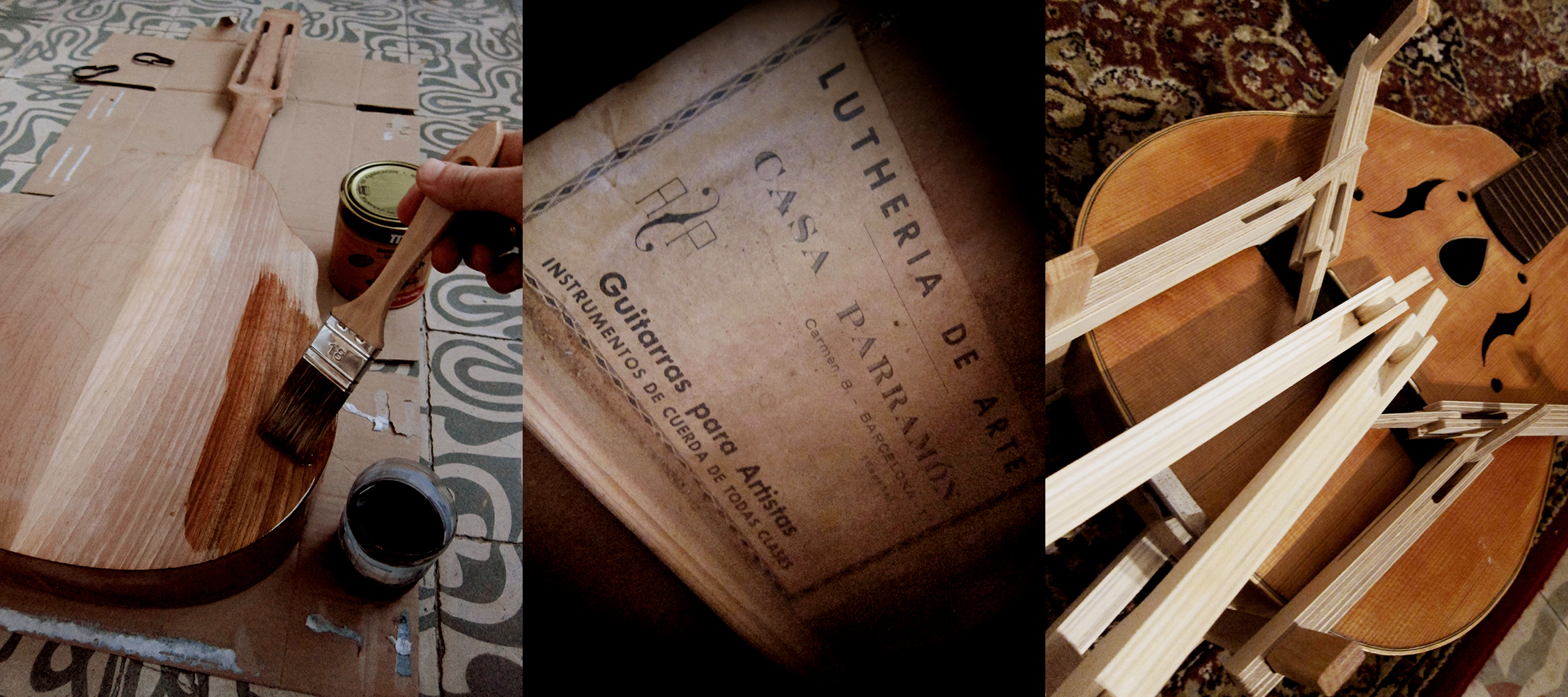
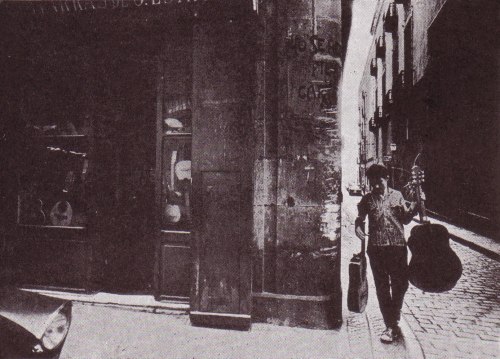
I have no idea how old this laúd is but it was built by Casa Parramon here in Barcelona. The workshop was started in 1897 by Ramon Parramon and I think he mainly built violins. Casa Parramon is actually still in the same place today as they were 117 years ago, C/ Carme 8. Now I think they are mainly building violins again but I guess they would have had time to build both laúds, bandurrias and guitars over the last hundred years.
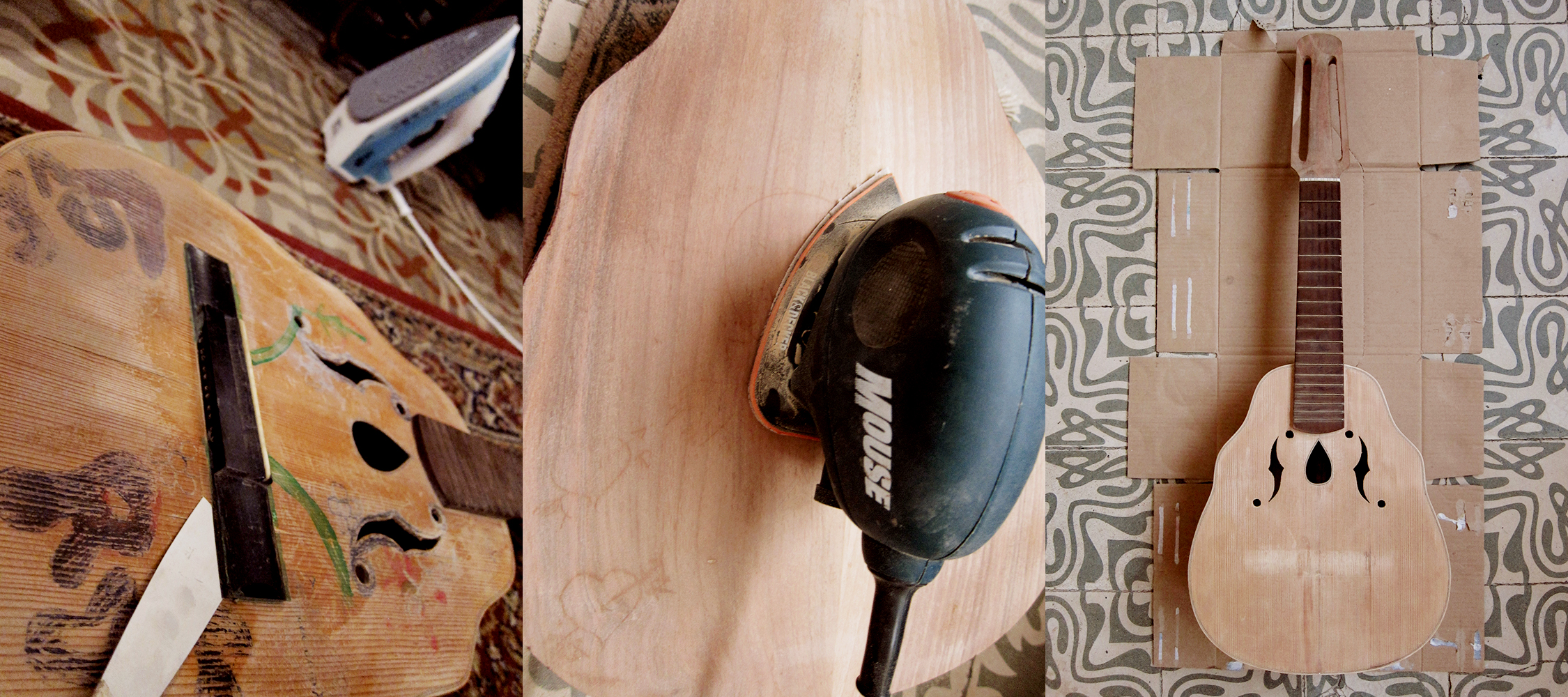
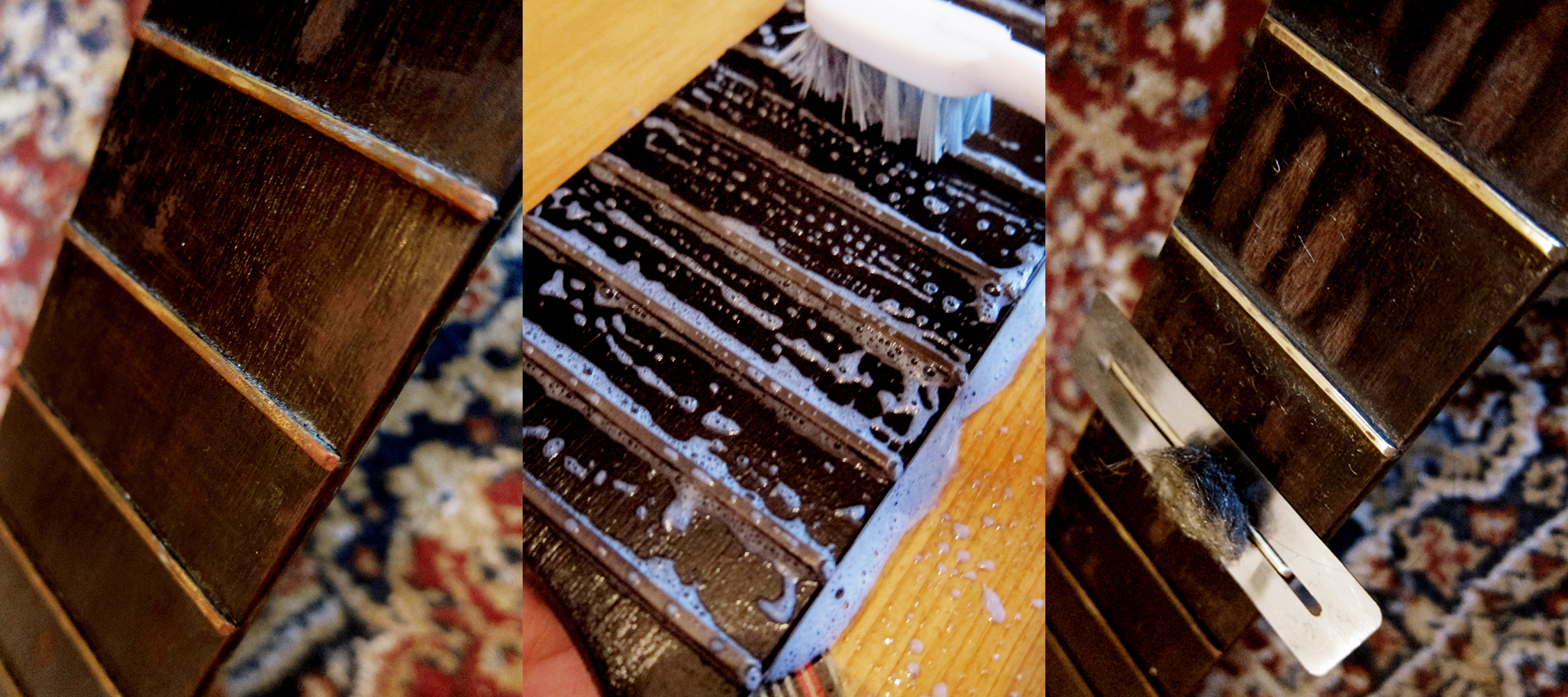
I stripped the laúd completely, took off machine heads, tail piece and bridge. I got the bridge off with a spatula heated on a normal clothes iron, it works like a charm every time. I cleaned and oiled the fretboard and polished the frets. Then I sanded down all the wood with an electric sander, this felt a bit harsh on an instrument but most of the text was actually scratched in to the wood and not painted on so I had to take out the heavy artillery. On top of that, the solid spruce top felt really thick so I thought that the sound might actually benefit from a thinner top. I glued some cracks in the top with my trusty old fish glue and then I waited and waited for the shellac I had ordered from Germany that unfortunately never arrived. I really wanted to use shellac on this instrument, both for practice for myself for future builds and projects, but also for the laúds sake, it felt like the healthiest option. In the end I went and bought normal clear lacquer, or varnish, I’m not really sure what the guy sold me but he said it would work and it did. It applied two coats and sanded lightly in between and it looks ok but I guess if I would have looked even better if I had spent more time on sanding and getting it super smooth in between the coats. I had to paint this at night in poor light and got some drips that should have been taken out properly, I just scraped them off with a razor and then applied new lacquer. I guess I have learnt a few things for the next time. One trick I can share though, that everyone might already know about but anyway. Before I started with the lacquer I marked out where the bridge was going to be and then masked that off with tape so I wouldn’t have to remove the lacquer before I glued the bridge back on and that worked really well.
The final result, Marcos new laúd, now I just have to string it up and try to figure out how it’s tuned
Update: August 16, 2014Marcos seemed very pleased with his new laúd
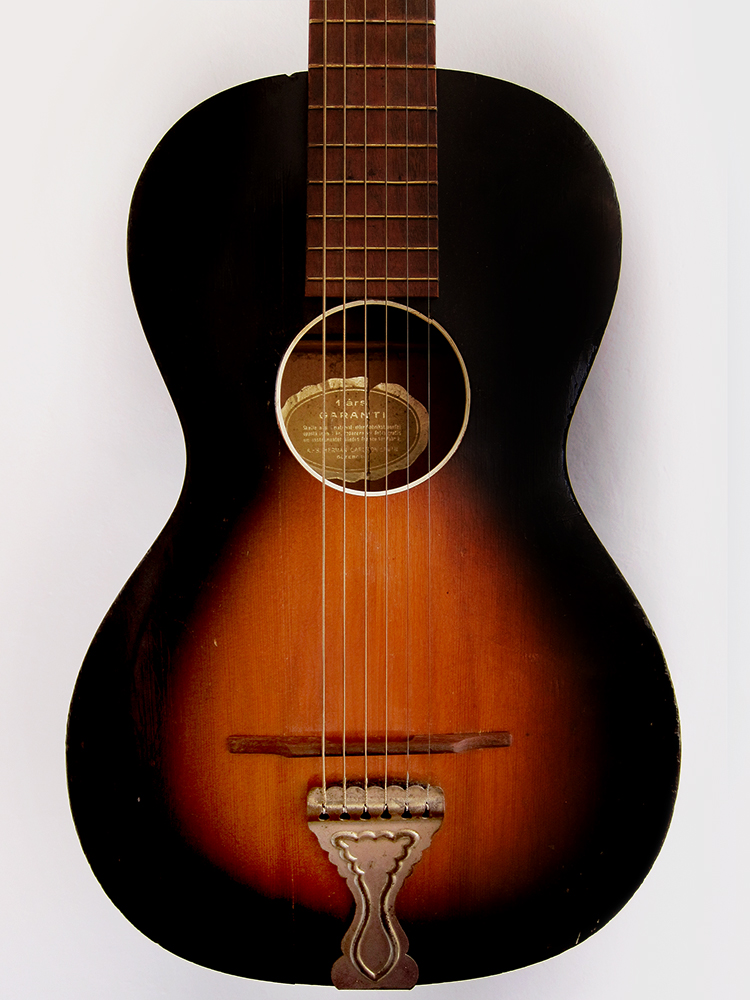
Last weekend I decided to make a new bridge for my 1940’s Levin model 65. I actually did the same thing about a year ago but with less success, you can read about it here. This time I had more tools, better material and at least some knowledge of working with wood.
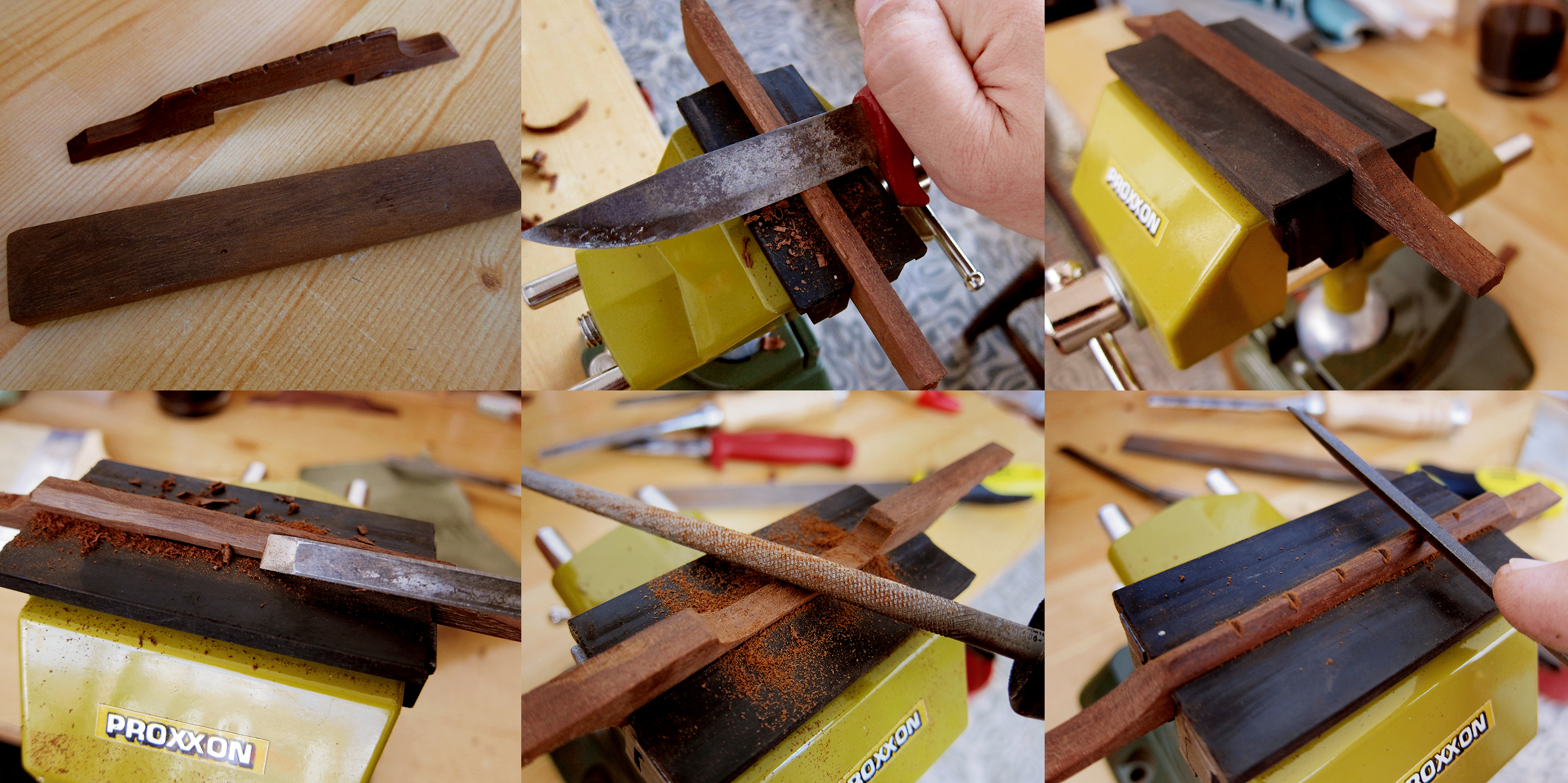
I started with a rosewood blank that I carved roughly to the right height with my trusty old Mora kniv, a cheap Swedish knife that solves most of my guitar related problems. Then I carved the shape of the edges, I just marked where to start and then carved it in to a rounded slope. I got the top in to a nice triangle shape with a narrow chisel and then cut out the arch in the bottom with a round file. I compared it to the old bridge to get the string spacing right and then just made little groves with a small triangle file. After a bit of lemon oil I was ready to try it out and it worked perfectly.
The final result, a new bridge for not only the oldest Levin I own but the olderst guitar I’ve ever actually had in my hands.
The 1960’s Juan Estruch Barcelona guitar before and after I cleaned it up.
I recently bought an old Juan Estruch guitar for my friend Rafa. He has mentioned numerous times, actually since the day that I found my Francisca Montserrat, that he would love to have an old Spanish guitar. So for his birthday Araceli and I went to all the Cash converters we could think of an eventually found a beat up Juan Estruch for him. The brand was founded here in Barcelona by Juan Estruch Rosell in 1880. This guitar seems to have been made between 1960-1969, according to the label, and has a solid top. There was a few things that needed to be sorted to get it playable but I could tell straight away, even with strings missing, that it had a nice tone and great projection.
This is what it looked like when I bought it
Here is some info about the brand taken from Wikipedia, unfortunately in Spanish for you English readers: Guitarras Juan Estruch es una marca de guitarras y otros instrumentos musicales de Barcelona. La compañía fue fundada por Juan Estruch Rosell en 1880, siendo maestro de otros luthiers de fama como Enrique Sanfeliu1 de quien exponen una guitarra en el ministerio de educación de Uruguay. Después de la guerra civil, su hijo Joan Estruch Sastre se hizo cargo del taller de la calle Ample continuando con la construcción artesanal de guitarras siguiendo la tradición familiar. A su muerte (1970), su hijo Joan Estruch Pipó, se hizo cargo de la empresa hasta su muerte en 1989. Hoy en día la empresa sigue en Rubí, con el nombre ESTRUCH Luthiers , a cargo de la viuda y el antiguo encargado del taller Rafael Montes que entró a los 14 años, aunque la mayor parte de su producción es para la exportación. En los años sesenta muchos de los cantautores de la nueva canción catalana fueron clientes del taller de la calle Ample haciendo un lugar de encuentro con animadas tertulias.
The normal cleaning, polishing frets and oiling the fretboard
I wasn’t really sure how to fix the missing binding. In the end I decided to do a MacGyver and just use what every I could find at home. First I closed the gap between the side and top with fish glue and then I filled it up with wood filler. When it was dry I sanded it in to shape, got it smooth and then painted it black to match the original plastic binding.
Unfortunately I had to change the machine heads since one was broken, I would have loved to keep it all original
The final result, a fully playable birthday present for my friend Rafa
Rafa from the band Cobarde with his new Juan Estruch guitar
K.Yairi TG-40 a Guild D-40 copy from 1977. Every K.Yairi guitar is given birth in Kani, a small community in the beautiful mountainside area of Honshu, Japan.
My new K.Yairi TG-40 has finally arrived, after 40 days stuck in Spanish customs. I have mentioned earlier that it’s a lot easier to import things from Japan to Spain compared to buying things from the US, well that was a lie. I have bought three electric guitars, mainly Greco’s from an eBay seller called Tokyowax. They all arrived within 48 hours so I stupidly assumed that everything from Japan would arrive quickly and without any problems, but no. Tokyowax uses DHL Express and they tend to deliver things within 2-5 days and you pay the taxes straight to them when they deliver the guitar. It wasn’t that easy with EMS Japan, that package went straight to customs in Madrid and spent 40 days in their lazy company. How can anything take that long? K. Yairi could probably have built me a new guitar in that time, if he was still alive. It seems like the only option now when buying guitars on eBay is to use the Global Shipping Program, that worked for my Goya 163 at least. Anyway, the guitar is amazing so it was well worth waiting for.
It has a really nice tone with great bass response. It easily has the best bass of all my acoustics, even better than my Morris W-40 which has that Martin D-45 bass sound, this is nicer and a lot clearer. I guess it sounds like an old Guild D-40, at least if I can trust the Youtube clips I have seen since I haven’t had the chance to play one myself. It actually reminds me a bit of a Gibson Jumbo, like I mentioned in my Gibson J-45/J-50 post: “The Yairi TG-40 is a Guild D-40 copy, which was introduced in the Sixties as a competitor to Gibson’s J-45. The Guild D-40 became famous as the Bluegrass guitar for their even response over all the strings and I really like the sound of them, it’s actually not too far off from a Sixties Gibson J-45. With a bit of luck it’s going to be an awesome Yairi copy of an Guild which might sound a bit like a Gibson.”
I didn’t have to do much to it, it was ready to play when I got it. However, the pickguard was loose so I had to remove that, clean it up and then glue it back again with my trusty fish glue. When the strings was off I quickly polished the frets and oiled the ebony fretboard. I also installed a jack for my LR Baggs M1 and a strap button.
I bought this K.Yairi TG-40 from a really nice eBay seller called montebell86 who was a pleasure to deal with. The guitar was listed as “Taniguchi Gakki” Japanese guitar shop original model, very rare. Solid spruce top, sides and back in solid mahogany, neck in Honduras mahogany, bridge and Fretboard in black ebony. The label states it was made in 1977 but the serial number starts with 51 which was the 51st year of Emperor Shōwa and puts it to 1976.
I got this K.Yairi TG-40 fairly cheap since the pickguard needed to be reglued and one machine head wasn’t working properly. It also has two cracks, one on each side that has been professionally repaired and can’t be seen from the outside. Since the machine heads needed to be replaced I decided to change them for Wilkinson WJ-309 in gold, just like I did on my Levin 174
Here is a quick little comparison between the K.Yairi TG-40 and my Morris W-40, they sound pretty similar and I don’t think I would be able to tell them apart in a blind test. Well the Morris has a bit more bass and is a slightly weaker on the treble side, I feel that the Yairi is more even over all the strings.
K.Yairi TG-40in the Japanese catalogue from the late 1970′s. List price ¥60.000, around 420€, which must have been a fortune back in 1977. Then again, this was a fairly cheap guitar for being K Yairi, the top model cost ¥200.000, about 1400€.
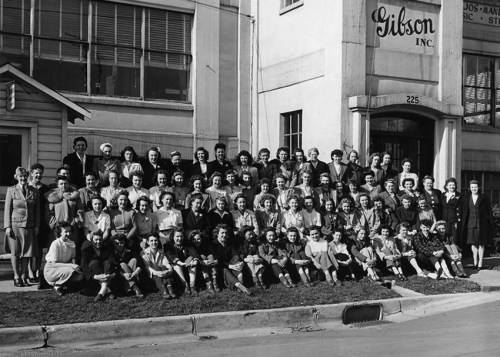
The book revolves around the interviews of a dozen women who appeared in the Gibson Guitar Company’s 1944 workforce photograph. Prior to my discovery of these women, Gibson had claimed in Wartime advertisements and in a 1973 company history authored by its WWII personnel director that it ceased producing guitars during the War. The younger members of its workforce had left to serve the military War effort. The remaining seasoned craftsmen repaired some instruments but, because of their limited numbers and wartime restrictions on the use of raw materials, were unable to construct new musical instruments. I discovered that the female workforce produced nearly 25,000 instruments during the war. Taken from Banner Gibson












 Claescaster
