How to… reset a neck
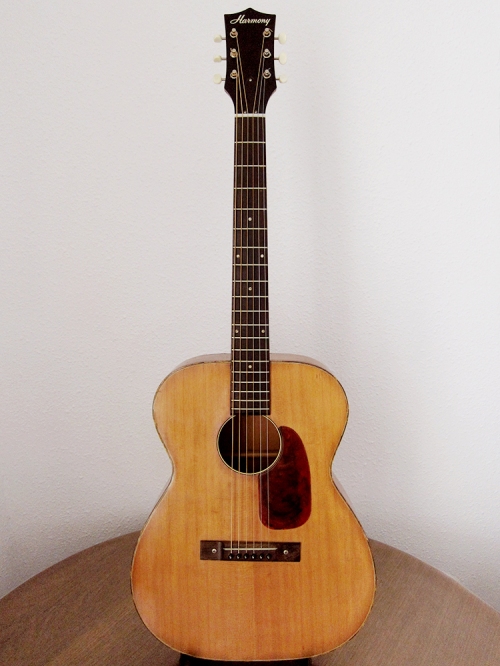 Harmony H-162, Made in Chicago, USA in the late 1960’s
This is a project that could have been done in two days but has taken two years. I guess it’s partly my fault, I wasn’t really sure how to reset a neck so I kept putting it off. I also have a 1.5 years old daughter and she is like a black hole when it comes to making time disappear. Anyway, now it’s done and everything worked out pretty great. I steamed off the necks back in April and then I had a lot of gigs and moved house in the middle and then last week I finally managed to get the guitar back together.
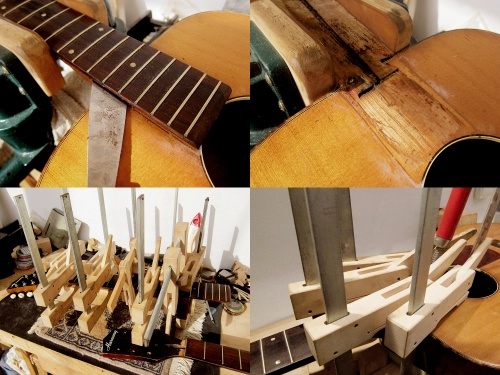
I drilled a small hole under the 14th fret and tried to steam it off that way but it worked really badly so in the end I got frustrated and just removed the fretboard and got the neck off that way instead. I glued the fretboard back straight away so I wouldn’t mix the parts between the two late 1960’s Harmony H-162 that I had lying around at home. Once the neck angle was corrected I glued the neck back with Titebond 506/4 classic wood glue.

The late 1960’s Harmony H-162 in parts, it was actually quite easy to reset a neck. It’s pretty worn but the solid woods are really nice, mahogany back and sides with a two piece spruce top.
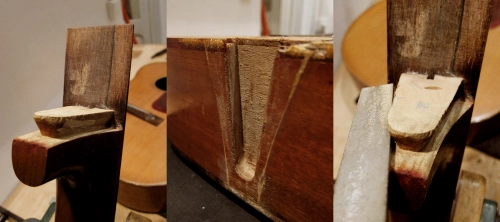
I cleaned up the dovetail and heel with a chisel and then adjusted the neck angle with a file, it felt less risky than doing it with a chisel. I didn’t have to remove much for getting the action down and making it playable again.
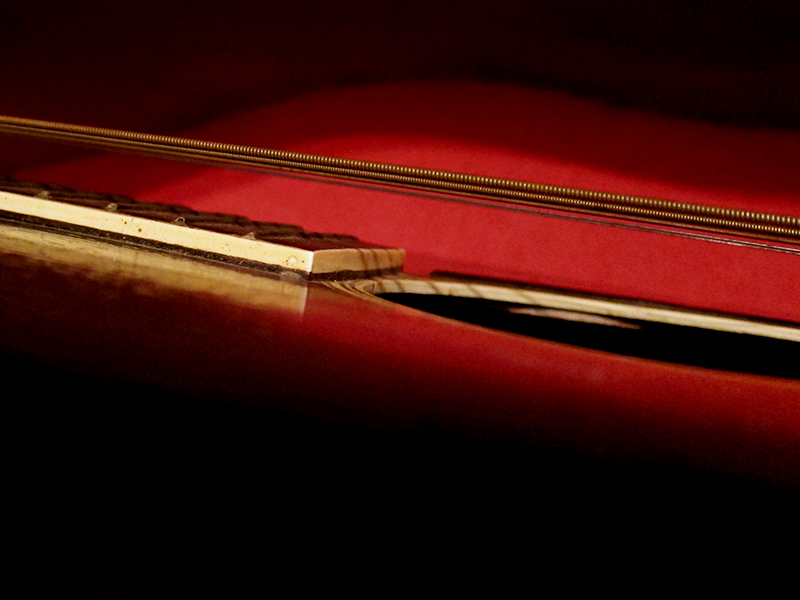
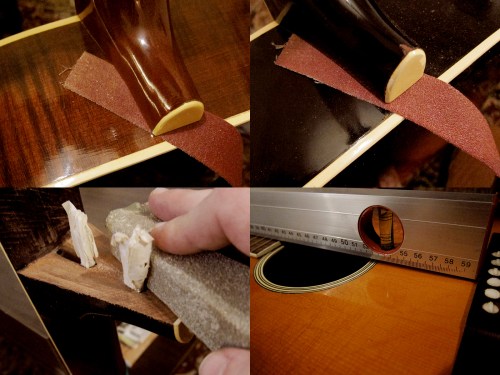 Remove the two bolts that attach the heel with the neck block, you can see them if you look inside. A normal Philips no 2 screwdriver fits if you don’t have a square Allen key. The heel is normally not glued in so you will feel it loose as soon as you remove the bolts. If not, apply a bit of pressure upwards to loosen the heel. Now you will be able to fit a sanding strip under the heel and can start to sand it down and that way change the neck angle and lower the action. Apply a bit of pressure on the neck and just pull, it might take 40-60 pulls on each side so so be patient. Check the neck angle with a straight edge once in a while so you don’t take it too far. As long as the straight edge doesn’t go over the bridge it should be fine. I have done the sanding strip trick on two guitars so far, my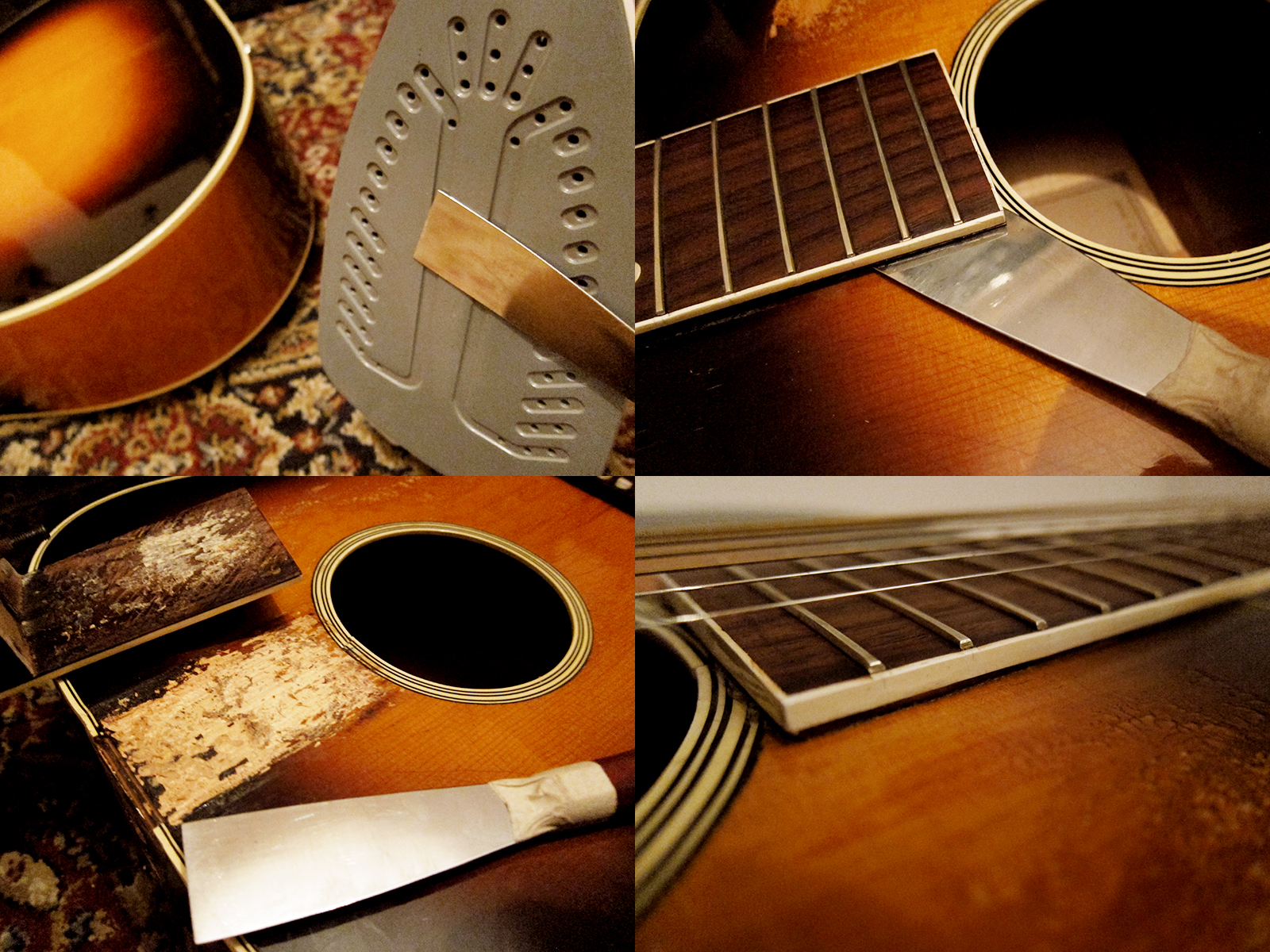

 Claescaster