Claescaster

Category: Acoustic guitars

Fish glue

Fish glue
My newly glued Levin LT-16

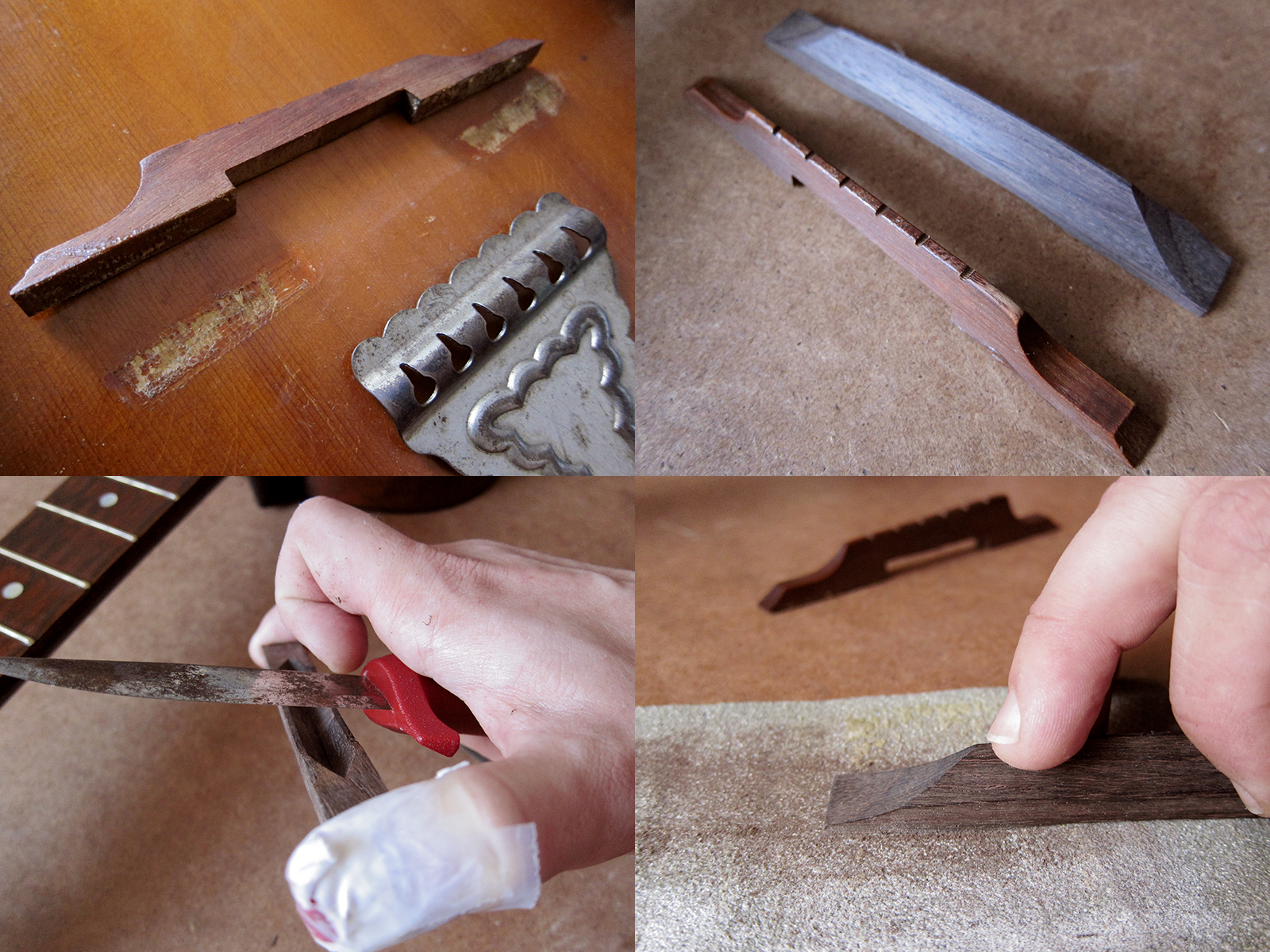
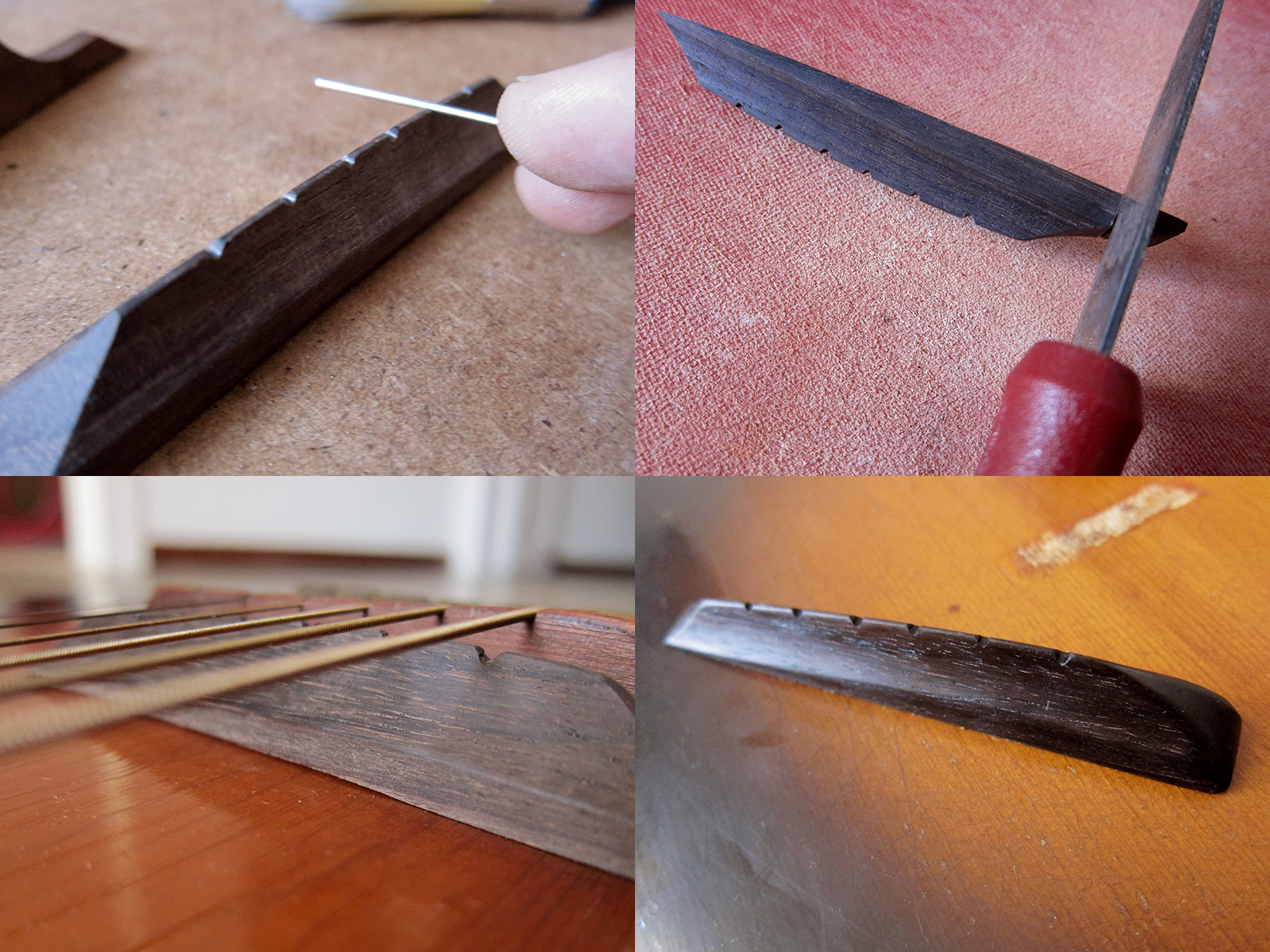
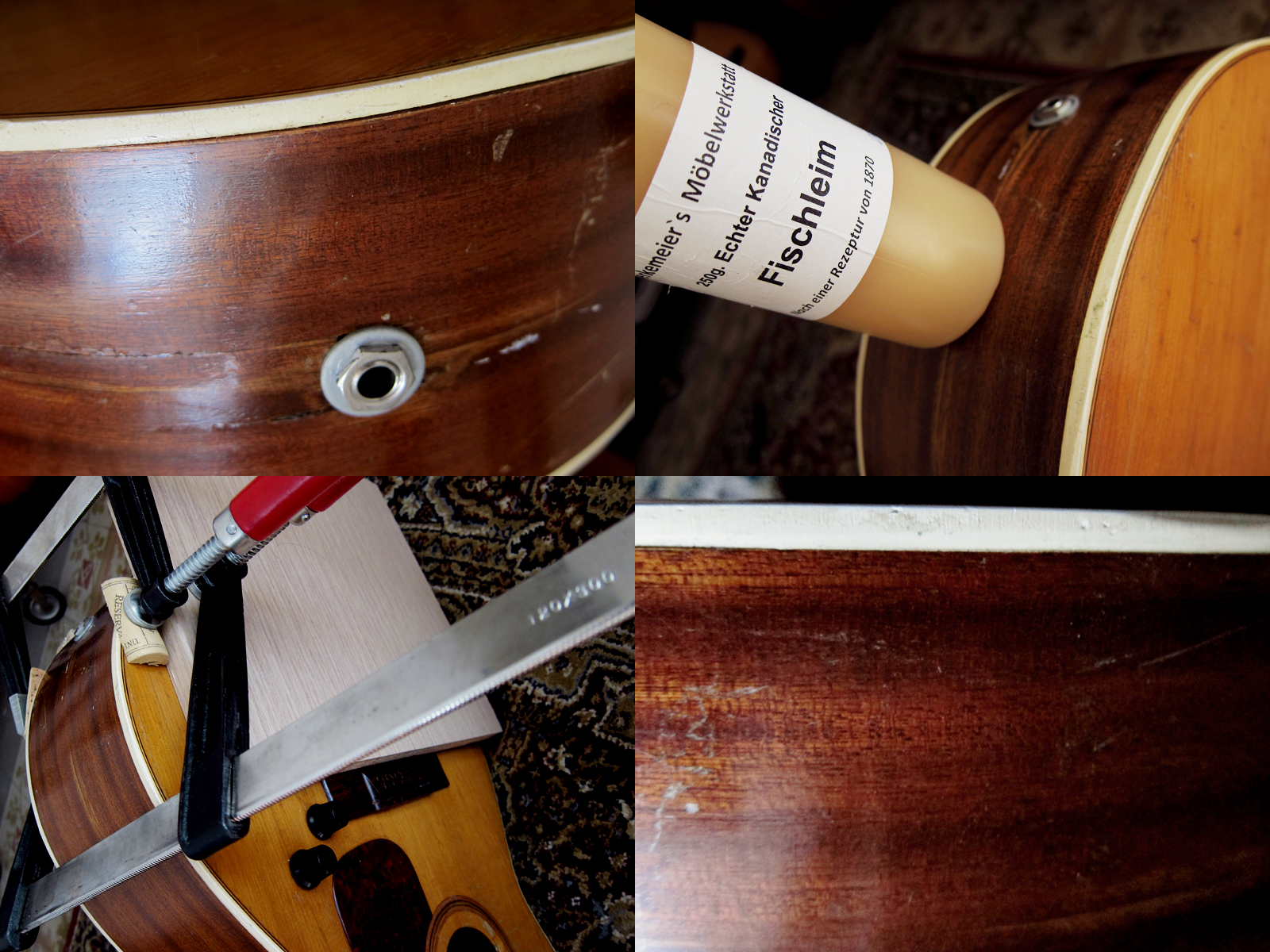
My dad’s old Levin LT-16 has quite a few crack, well it had, because now most of them are fixed. I tried to figure out what type of glue would be best for repairing wood cracks and all the articles I read said the same thing, warm hide glue. The only problem is that I didn’t feel too intrigued by the idea of having to have melted horse hoves and other animals parts on the stove so I was desperately seeking for an alternative. Then my new found guitar building friend Roger in Sweden told me about fish glue. It has the same awesome properties as warm hide glue but can be used cold. It took some time to locate someone selling fish glue but eventually I found die-moebelwerkstatt, a German eBay seller specialised products for furniture restoration. I got myself some Canadian fish glue made from a recipe from 1870 and it’s amazing. I practised on my Francisca Montserrat and some other old guitars that had cracks in them before I dared to touch my Levin. It has gone pretty well so far, no major difficulties, but I wished that the glue pulled a bit more. I read that the special thing with warm hide glue, and apparently cold fish glue too, is that it is pulling the wood together when it dries, hence why it is so good for cracks and similar repairs. It might be my glue that is a bit old, or just the recipe from 1870 not being the best, but I wished it pulled a bit more. It still works really well, way better than I expected. I feel a lot safer now, not only when it comes to buying old guitars that might have a crack or two, but to dare to use mine because if I happen to crack them I can always repair them with my fancy new fish glue.
Lowden guitars

I’m not a huge fan of the look of the Lowden guitars, a bit modern and fat looking for me, but the sound is very impressive. Here are two clips where George Lowden talks about different tone woods which I found very interesting. It’s amazing how different combinations of wood can change the sound so much.

“Designing and building guitars is a matter of the wood choice first, the design second and the workmanship third. All woods give slightly different tonal responses and I will often advise players which might suit them best according to their playing style.” George Lowden


Goya T-18

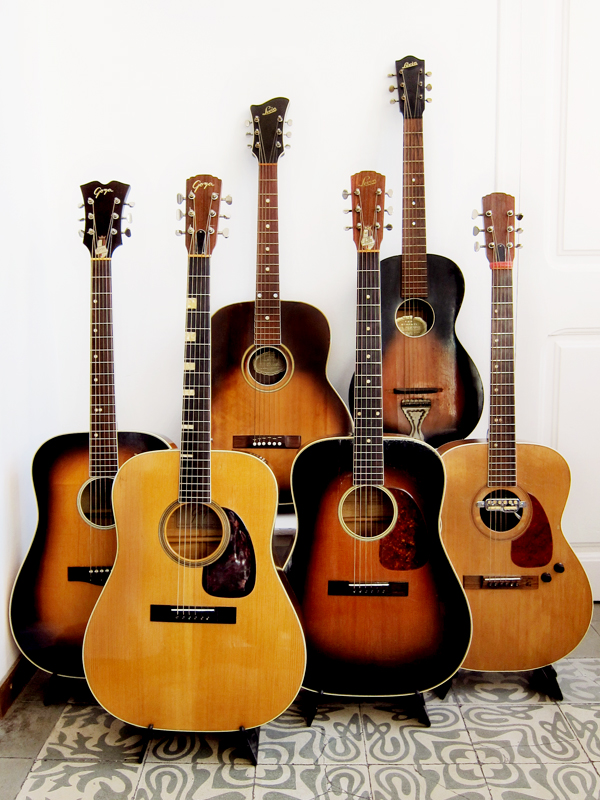
Goya Model 163, Goya T-18, Levin Model 13, Levin LM-26, Levin Model 65, Levin LT-16
The Levin family, Goya Model 163 (1968), Goya T-18 (1966), Levin Model 13 (1950), Levin LM-26 (1959), Levin Model 65 (1941), Levin LT-16 (1966)

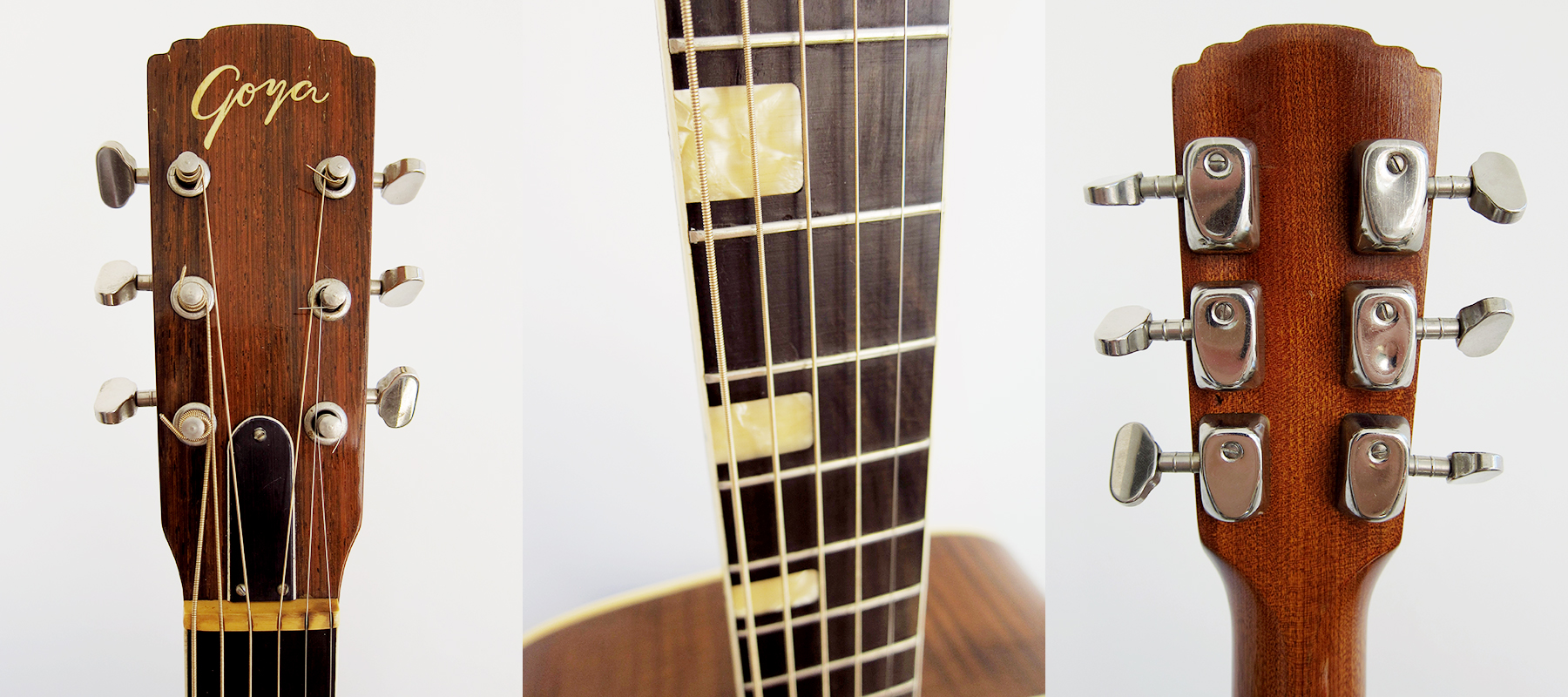
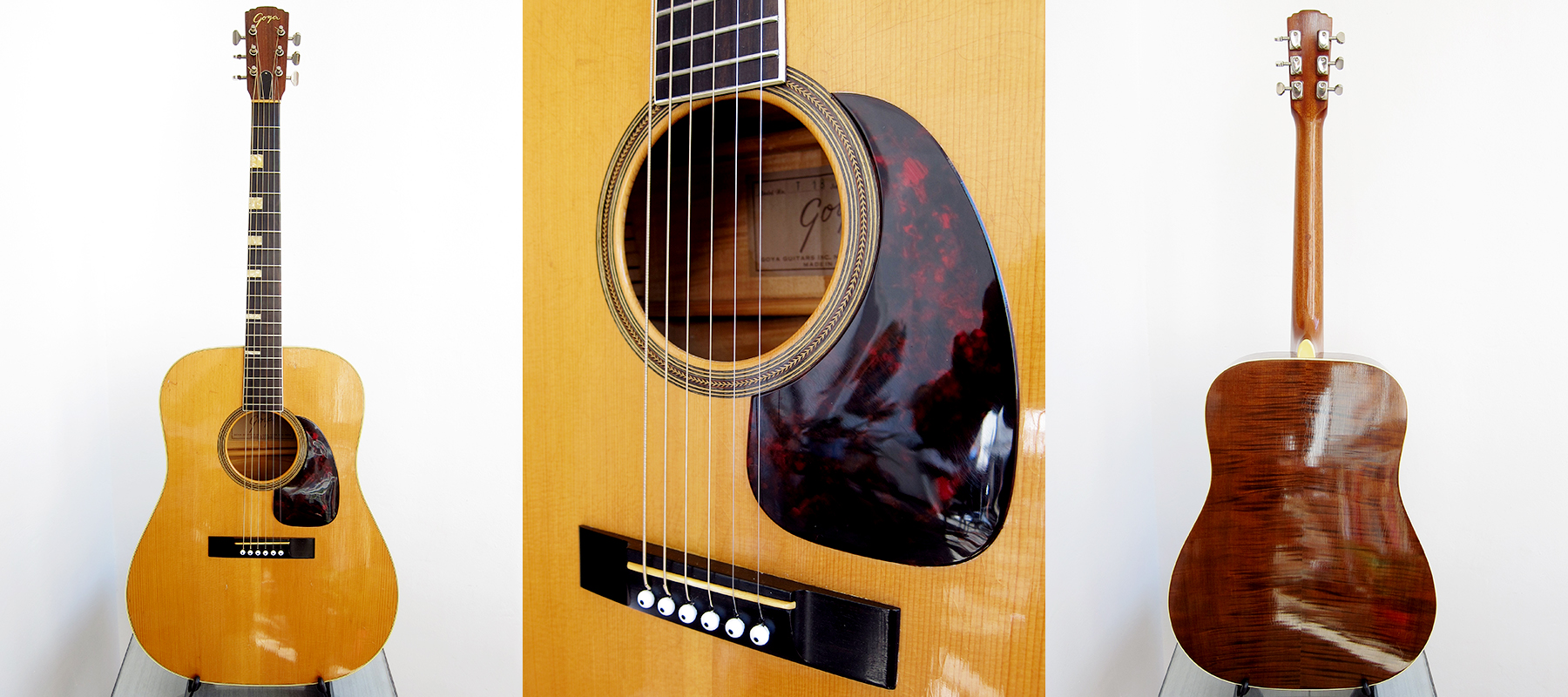
Last week I received my latest project, a lovely Goya T-18 made in Sweden by Levin in 1966. It sounds really nice and works great for cowboy chords but there are a few things that needs to be sorted before I can play her properly. First of all there are two dents on the back of the neck, it almost seems like the lacquer has melted or reacted with the the leather flap for the accessory department in the case. It came with what seems to be the original hard case and who knows, maybe she has been stored in there for decades. So these dents or groves needs to be filed with lacquer and evened out, let’s see how that goes. I also need to re-glue the pickguard, but that shouldn’t be too hard as soon as I receive my fish glue that I’ve ordered from Germany. The Van Gent machine heads looks almost new and it could be the original nut and saddle but not bridge pins. There is a few marks on her but overall she is in really good state for her age. The lacquer on the top has cracked a bit but that seems to be standard on these late 1960’s Goya T-18, but not on the Levin LT-18 so they must have used different lacquer for them. The big thing that needs to be done is to try to reset the neck. I have never done anything like it but since these are quite cleverly bolted on maybe it wouldn’t be impossible, if I just find the right square key to loosen the bolts inside. The Goya T-18 sounds a lot bigger and fuller than my dad’s old Levin LT-16 which could be down to the size more than the materials, I’m not sure. She sounds bright but still with a lot of bottom which I like, I actually think this is my best sounding acoustic after my Morris W-40. I’m trying to get the biggest Levin collection in Spain, well I might already have it, who knows.

Update: December 6, 2013
I finally managed to get my beloved Goya T-18 sorted and now it plays beautifully

Levin Goya T-18 Made in Sweden 1966

Levin Goya T-18 Made in Sweden 1966

How to… fit a LR Baggs M1

Morris W-40 1973 My new Martin D-45 copy, a Morris W-40 Made in Japan by Terada in 1973

There was a bit of work that needed to be done when I first got my Morris W-40. First of all I polished the frets, cleaned her up and oiled the fretboard. Then I needed to take care of the action which was too low, imagine that on an acoustic guitar. There was a slight forward-bow on the neck which made a bit of rattle when I played solos in the middle of the neck, at least when I hit the strings hard. I adjusted the trussrod and gave her a slight bow the other way, meaning that cowboy chords still sound beautiful and the action is still very low for being an acoustic around the 12th fret. I changed the machine heads to a pair of Grover tulip copies in gold, maybe not the best ones but it looked so much nicer than the original plain ones in chrome. Then I fitted a strap button in gold, I can’t stand having to tie the strap to the head of the guitar. I’m still waiting for the Nitrocellulose lacquer I ordered so I can fill in the three dents on the back of the neck, which is going to be a new adventure since I have never done anything like it before. Last step was to fit my new L.R. Baggs M1 soundhole pickup. I’m getting pretty used to fit endpin jacks on acoustic guitars now so it was pretty straight forward even though it was a bit more hard work on this one. I’m not sure if it was because the wood is older, or the type of wood used in this, it’s Brazilian Rosewood and maple in the 3-piece back, Now it plays and sounds amazing, I’m really pleased with it.

Fitting LR Baggs M1
I prefer to fit the endpin jacks by hand, with a small round file and then even out the hole with sandpaper when it’s big enough

Morris W-40 1973
Morris W-40 1973

Morris W-40 Made in Japan by Terada in 1973, just look at that Brazilian Rosewood and maple 3-piece back

Hank Williams 1941 Martin D-28

Hank Williams 1941 Martin D-28 Neil Young

This Old Guitar – Hank Williams 1941 Martin D-28
A one hour radio program of an interview with Neil Young on CD called Companion contains extensive insight into Prairie Wind’s recording, as well as, much other interesting stuff. In the interview by JODY DENBERG, Neil is asked about the Martin guitar that belonged to Hank Williams.

NEIL YOUNG: Yeah. I bought it from, uh, uh, off a friend of mine Grant Boatwright put me together with, uh, this fellow Tut Taylor he had an old, uh, collection of guitars. And, uh, I went down there and there it was, and he took it out of the back and brought it out and I bought it. I couldn’t believe that I could buy it. That I, you know, but I did. And now I have it. And, you know, I’ve got it for a while and I’m taking care of it.

JODY DENBERG: But you’re generous with it. You’ve lent it to some of your friends?

NEIL YOUNG: You know, Bob Dylan was using my bus. He, he didn’t have his own tour bus yet. And he was just getting into using buses, and, uh, so I let him use mine and, uh, when I gave it to him I, I told him that, uh, Hank was in the back and that if he wanted to use Hank, that Hank would be there for him. And so I don’t know what he did with it, but he had it with him for a long time. And I don’t know what he wrote or what he did, but I know, you know, something must have happened back there. Taken from Bob Dylan’s gear

Hank Williams 1941 Martin D-28 Neil Young

Morris W-40

Morris W-40 1973
Morris W-40 1973

My new found love just arrived to the office, a 1973 Morris W-40. I have been looking for a Japan made Martin D-45 copy for a while and I’m really glad I went for a Morris. I have never played a guitar that sounds this good, amazing tone with really low action. She is a bit more worn than I expected, which doesn’t really bother me that much since the wood looks so good. I might put some gold tulip machine heads on her tonight, if my Gibson PMMH-025 fits. This Monday is just getting better and better. First I got to celebrate my girlfriends birthday, which meant getting up at 5.45 am and prepare breakfast in bed for her, and then I got this baby delivered and she arrived in one piece. Thank you Monday.

Martin D-45

Bob Dylan 1975 with A. Ginsberg playing a Martin D-45
Bob Dylan in 1975 with A. Ginsberg playing a Martin D-45

Neil Young Martin D-45
Neil Young in 1971 playing his Martin D-45 which was given to him by Stephen Stills in 1969

I just found my Japan made Martin D-45 copy that I was looking for, at least for now. I have managed to became the very proud owner of a 1973 Morris W-40, which is as close to a Martin D-45 that my budget could allow. Ideally I would have liked a Yairi YW- 1000 but they tend to go for 1000-2000€ so I had to settle for a Morris W-40. I’ve read a lot of good things about Morris, at least the ones made in the 1970’s so hopefully I will not only look like Neil Young, I will sound like him too, or maybe not. It doesn’t have the vertical logo, which is a shame but those tend to cost 500-600€ if you get one straight from Japan and are pretty rare here in Europe. Well at least it has hexagon mother of pearl inlays and the beautiful 3-part back with Brazilian rosewood and maple. Let’s see how good it sound and looks when it arrives next week. Here are some random photos I found of other Morris W-40.

Morris W-40
Some random Morris W-40 pictures I found online. Moridaira (Morris Guitars). Founded in 1967 by Toshio “Mori” Moridaira, the Moridaira factory produced high-quality guitars, including the infamous Morris badged guitar.

Acoustic guitar demo

After watching Kris Kristofferson the other day I got really curious and wanted to know what a Gibson Southern Jumbo really sounds like. I know that Jackson Browne plays a lot of these old Gibson guitars and they sound amazing when he plays them but what is the difference between a Southern Jumbo, J-50 and J-45? I’ve never played a real Gibson acoustic or a proper Martin and doubt I ever will in this town since people are so extremely unfriendly in the guitar shops here, that’s why I have to buy everything online. Luckily I managed to find these great demo’s so I could finally hear the difference between them all and unfortunately it’s not always a good thing. I’ve always loved the Hummingbirds and been looking for a Japan made copy for some time but it the originals sound this thin and boring then I’m not sure how good a copy will sound, even if it’s made in Japan. Maybe I have to rethink this again, I mean the Southern Jumbo sounds the best. Full and deep but not muffled when strummed like the SJ-200 or some of the other Jumbo’s. When I saw that awesome Youtube concert with Dan Tyminski the other day I thought that his 1946 Martin D-28 was the best sounding guitar in the world and wanted to find a copy of that, I doubt I can afford a real Martin from the 1940’s. I guess all guitar shapes have their purpose in life, I just need to find the one that is right for me.

1952 Gibson Southern Jumbo

1964 Gibson J-50

1944 Gibson J-45

2012 Gibson SJ-200

1978 Gibson Hummingbird

1959 Martin D-28

1947 Martin 00-21

Levin Model 13 Ambassadör

Levin Model 13 Ambassadör Made in Sweden 1950

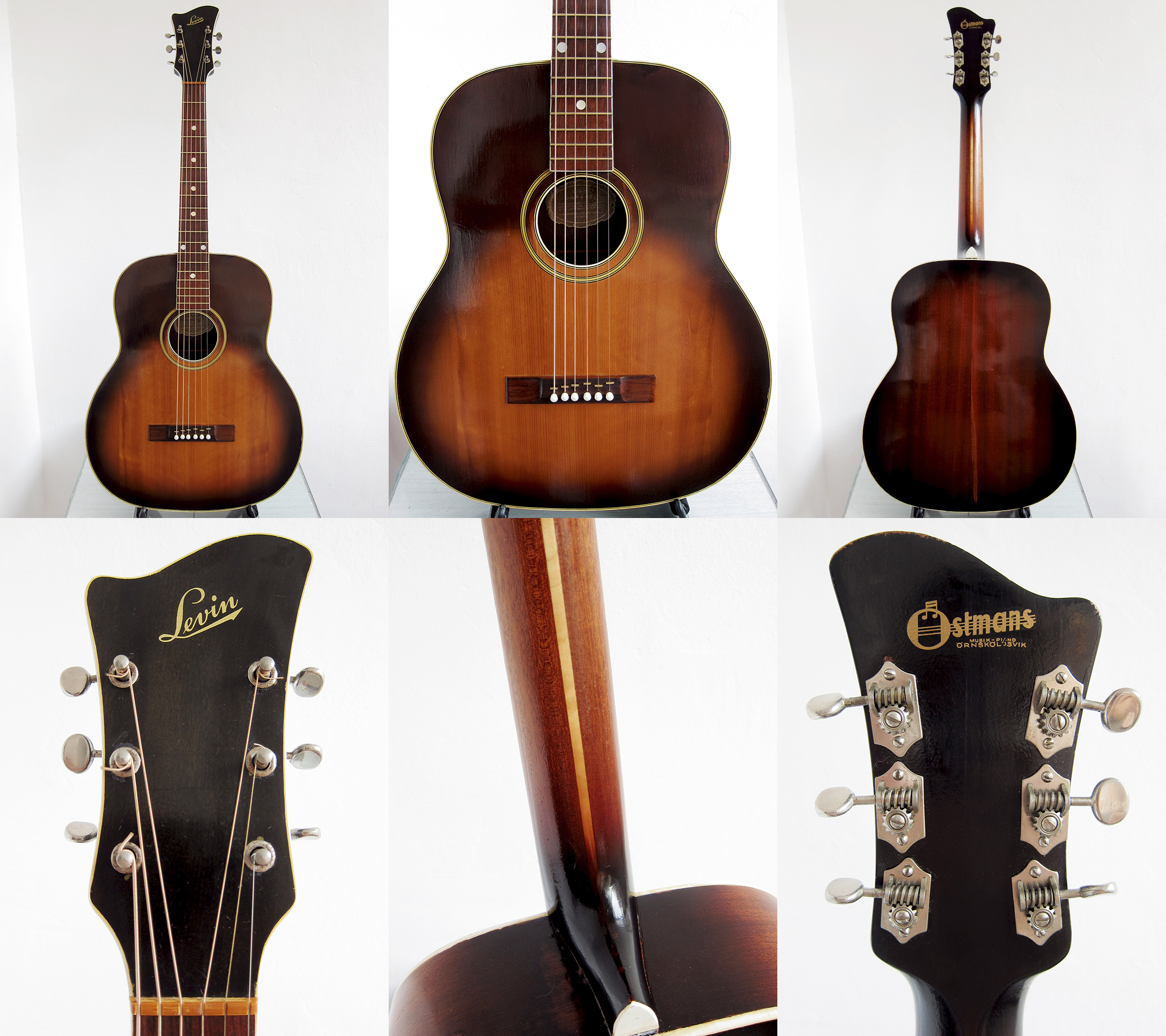
I have recently befriended Roger Häggström, a great luthier in Örnsköldsvik, Sweden. He is also the man behind my Levin Model 13 Ambassadör. It’s been great to hear from the man himself what he did to it to get it to play and feel so good. He created a new bridge and made new brass saddles to get it to intonate better, refretted it with brass frets, reset the neck, fixed up some cracks and touched up the lacquer. I think he did a great job, just look at it. I have so much things to learn but I’m really happy taking it one step at the time and who knows, maybe one day I will be as awesome as Roger. Here is his site GammelGura

Levin Model 13 Ambassadör
Body width: 400 mm, body length: 480 mm, scale length: 640 mm
Spruce top, walnut back and sides, 4-ply bound top, single-bound back
Mahogany neck with non-adjustable T-shaped duraluminum truss rod
Single-bound rosewood fingerboard with 18 frets and pearloid dot inlay
Single-bound headstock, rosewood bridge, nickel plated individual tuners
Sunburst finish and ten year warranty

Levin model 65

Levin Model 65 parlour guitar Made in Sweden 1942

Last weekend I decided to try to improve the playability a bit on my little parlour Levin model 65 from 1942. It doesn’t have an adjustable trussrod, few guitars did before the 1960’s, and would probably benefit from a neck reset but I thought I should start with the easy things first. Like making a new bridge that is a bit lower and that way get the action down and it worked really well. The easiest would have been to just file down the original bridge but I felt I rather make a new one than mess with the old one.

Update: July 31, 2014
I actually carved a new bridge from scratch, you can read about it here: How to… carve a bridge, that worked out ten times better.

Levin Model 65 parlour guitar Made in Sweden 1942

Levin Model 65
Body width: 315 mm
Spruce top, birch back and sides.
Unbound top, back and headstock.
Unbound walnut fingerboard with mother-of-pearl dot inlay
Rosewood bridge, brass tuners, nickel plated tailpiece
Dark brown finished neck, back & sides.
Sunburst finished top and one year warranty

Levin Model 65 parlour guitar Made in Sweden 1942
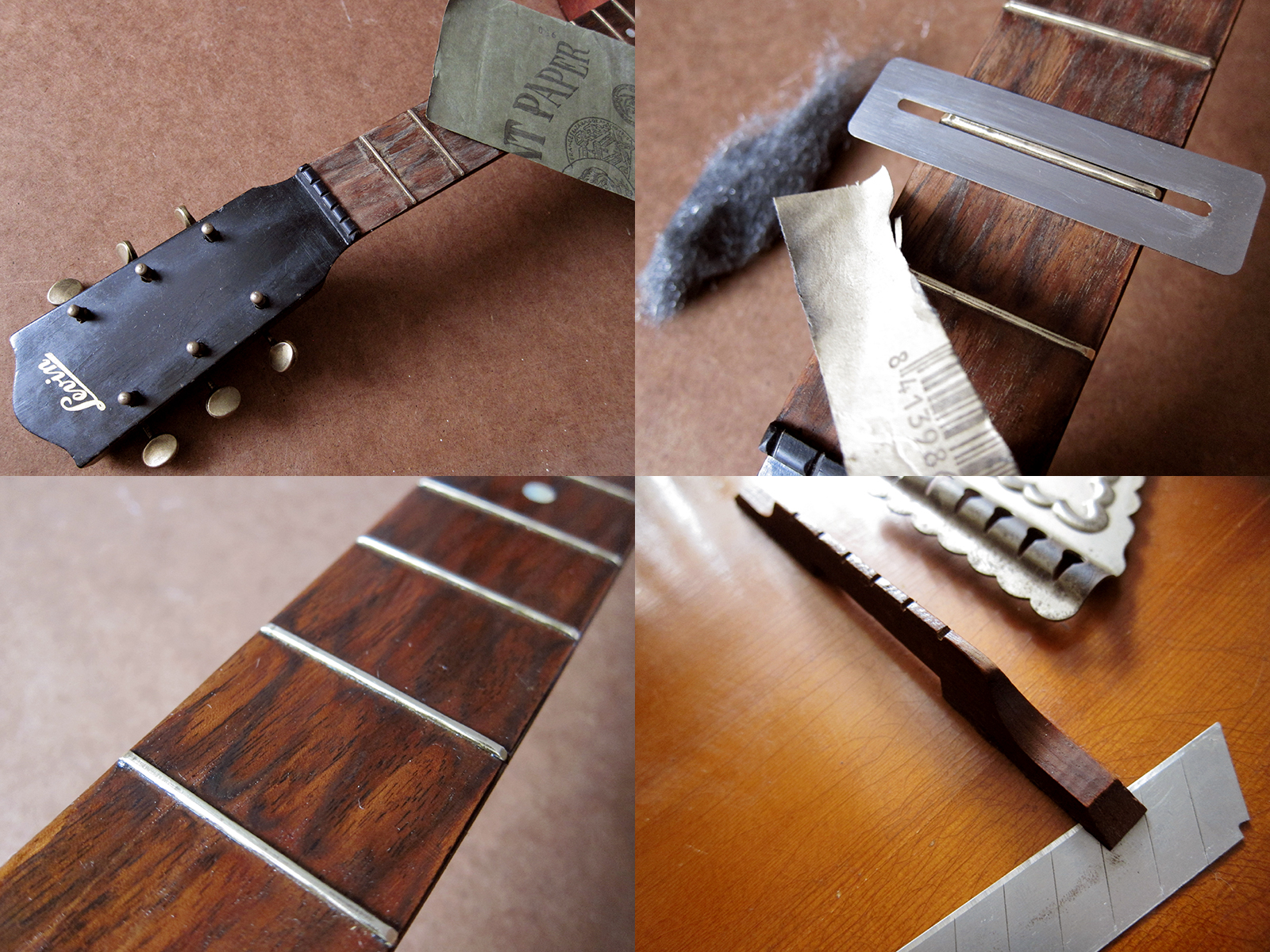
Since the strings were off I thought I mights as well even out the fretboard a bit and polish the frets. I cleaned the edges of the frets with a toothbrush and then oiled up the fretboard with lemon oil. I managed to cut through the old glue with a razor blade and that way get the old bridge off.

Levin Model 65 parlour guitar Made in Sweden 1942
I think this bridge has been re-glued a couple of times since 1942 and that’s why some of the nitro lacquer came off. It’s hard to tell, it might have looked like that for 60 years under the bridge, who knows. Either way there isn’t much to do about it so I will just try to ignore it for now. If I can’t stand it I can always put the original bridge back. I got a cheap replacement rosewood bridge from eBay, straight from China for 3.50€. Now I just had to get the angle right, Levin always has their floating bridges in an angle, maybe it’s the same for all floating bridges. I copied the old bridge to get the angle right and started to make it as low as possible. Of course I cut my thumb after about 12 sec and had to rethink my methods of getting the bridge lower. In the end it was a combination of knife, a Swedish Morakniv of course, and sandpaper before I oiled it up with lemon oil to get it dark and nice. I read on Swedish forum that a great trick to get this parlour guitars to sound less jangly or rattly is to mute the tail piece. Apparently the main reason why these small bodied guitars sound like they do is because of the rattling tail piece. I muted mine with half a black sock that I tucked in so you can’t see it and it really made wonders to the sound. It’s a lot warmer and more woody now.

Levin Model 65 parlour guitar Made in Sweden 1942
I copied the string spacing from the old bridge, made a notch with a knife and then filed it down with folded fine sandpaper and a round file. I also realised that since I had to take so much off in the bottom on the high E side, the bridge looked really unbalanced so I cut of a chunk on the other side and rounded off all the edges to try to create a nice looking bridge.